
The Old-School Michigan Cement Site With Massive Ruins Few Locals Talk About
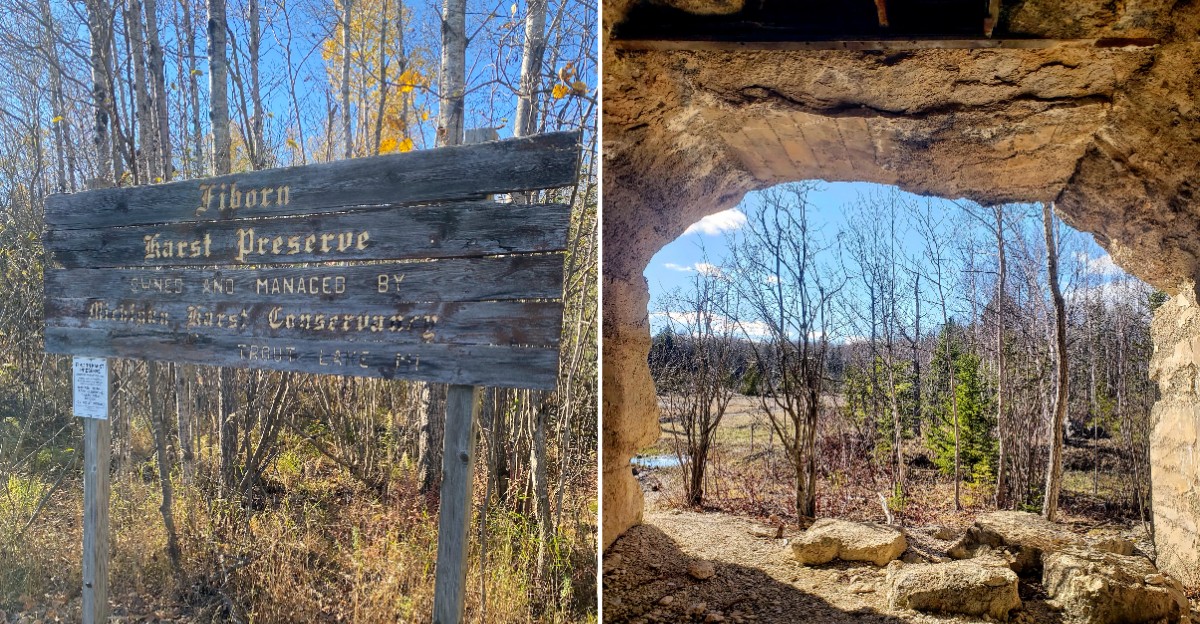
A whole company town once stood here, and its only telephone sat inside the company store. Today, concrete skeletons rise from an empty quarry floor. No quarrying has taken place here since 1936.
The stone pulled from this ground fed a steel mill in Canada for decades. Then boats from another port got cheaper, and the village emptied out fast. By the end of that year, almost everyone was gone.
As it happens, the ruins are only half the story. The ground underneath is full of sinkholes, springs, and a creek that vanishes into the earth.
One cave here is the longest known cave in Michigan.
I can’t help but think this spot deserves more chatter than it gets. Old walls, swallowed streams, and a former governor’s name baked into the town itself?
That’s a lot of story for one quiet patch of woods.
Two Last Names Mashed Together Built This Whole Town
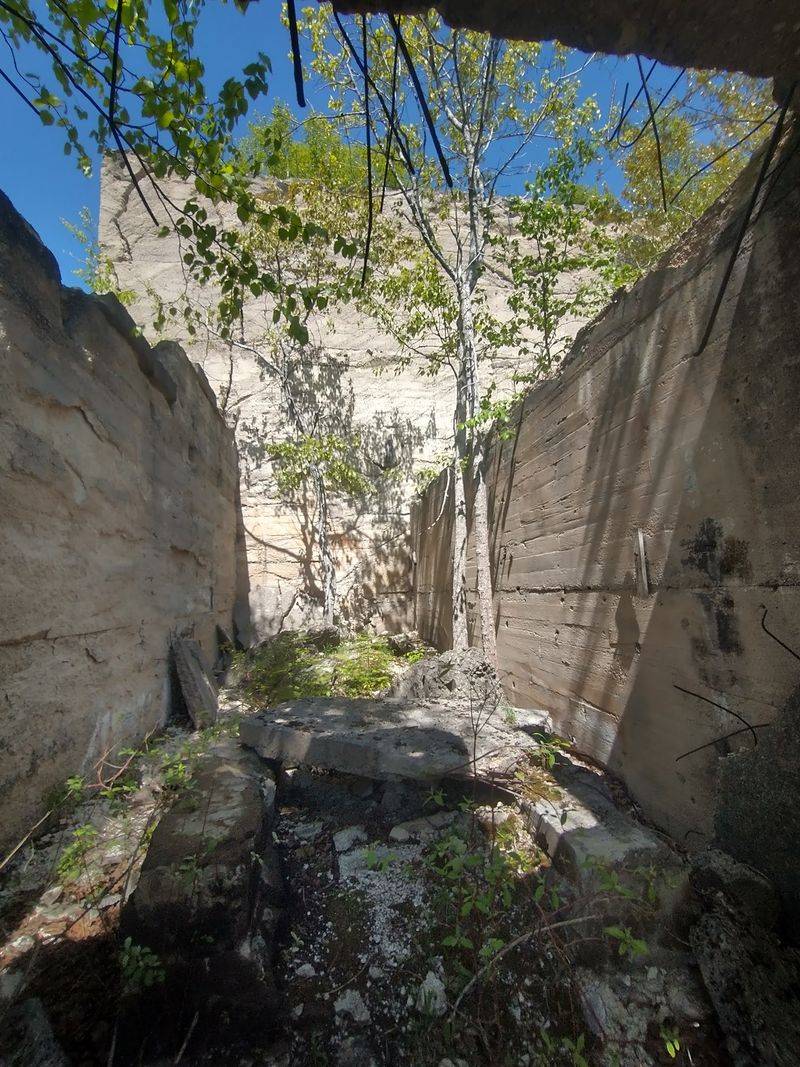
Chase Osborn and William Fitch opened a limestone quarry here in 1905. A year later, they made it official with a name built from both surnames: Fiborn.
That clever mashup lives on today as the Fiborn Karst Preserve. Osborn later became governor of Michigan, which gives this quiet site a surprisingly famous backstory.
The quarry ran from 1905 to 1936. Its main job was digging high-calcium limestone for a steel company across the border.
Algoma Steel, based in Sault Ste. Marie, Ontario, bought the quarry and land around 1908 or 1909.
Steelmakers need limestone to clean impurities out of iron, so this rock mattered a lot.
Things changed in January 1936. Shipping stone by boat from Rogers City had become cheaper, and the Fiborn site needed costly repairs.
The quarry closed, and the story could have ended there. Instead, the Michigan Karst Conservancy bought the property in 1987 and protected it.
Knowing this history before you go makes every crumbling wall feel more alive. Read up a little, then walk the grounds with fresh eyes.
You’ll start spotting the bones of a busy workplace everywhere.
Those Concrete Giants Still Stand Guard Over the Quarry
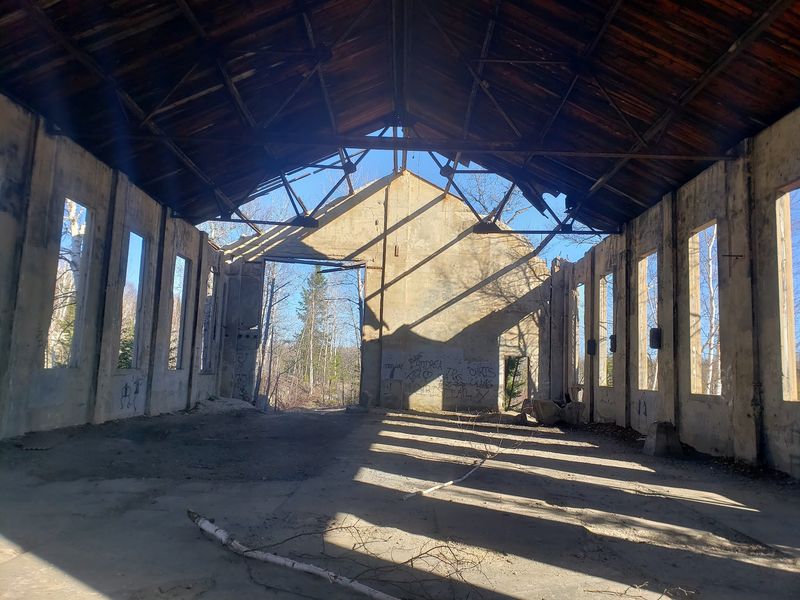
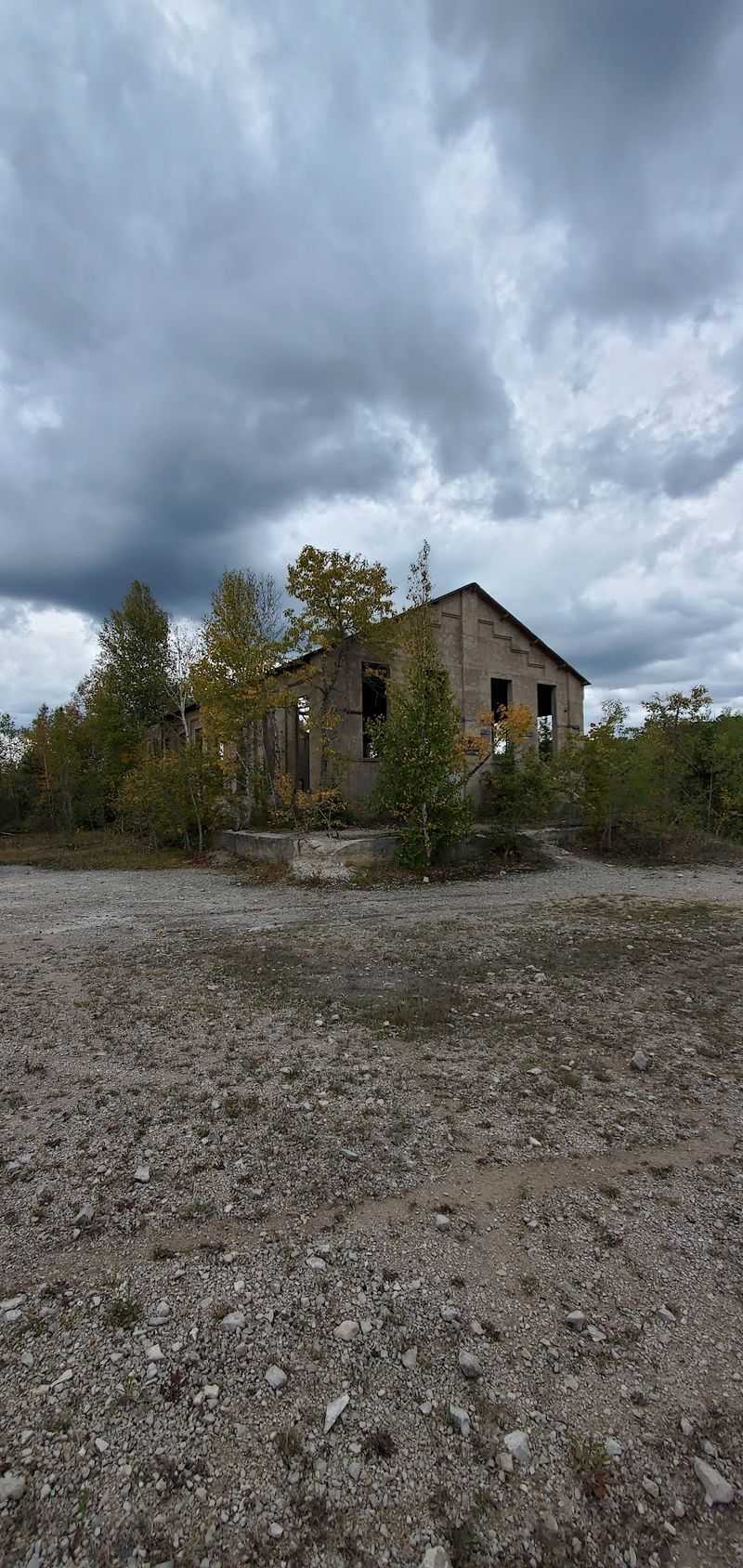
Big, gray, and covered in color, the ruins are the first thing most people want to see. The railroad house and the ore car loader rise like concrete skeletons in the middle of the old quarry.
Those structures once helped move stone onto rail cars. Now they stand silent, roofless, and oddly dramatic against the trees.
More remnants wait nearby. You can find the powerhouse and the foundation of the building where limestone was crushed and loaded.
The old locomotive sheds remain too. Together, these pieces help you picture the noise and motion of a working quarry.
Some walls wear graffiti and chalk art, which adds a splash of modern color. Michigan Karst Conservancy volunteers do clean graffiti from time to time, so the look can change.
A camera is a must here, but so is caution. These are old, weathered structures, so admire them from a safe distance and skip the climbing.
Sturdy hiking boots help a lot on the rocky quarry floor. Your ankles will thank you after an afternoon of wandering between those massive concrete shapes.
A Ghost Town Once Had School, Dances, and Church Under One Roof
One building did triple duty for a whole village. The boarding house served as town hall, dance hall, and church, which sounds like a very busy weekend schedule.
A small community grew up around the quarry to keep things running. It had employee housing, a school, and a post office.
The company store held the town’s only telephone. Imagine lining up to make a call while everyone nearby listened in.
Once the quarry closed in 1936, the village emptied quickly. By the end of that year, it was nearly deserted.
The last superintendent stayed on until the mid-1940s. After that, the forest slowly took back what people had built.
You can still find foundations of the employee houses and the boarding house along Fiborn Quarry Road. They’re low and easy to miss, so keep your eyes on the ground.
These quiet outlines feel different from the towering quarry ruins. They show where families slept, ate, and gathered, which makes the place feel personal.
Take a slow lap and let those small rectangles tell their story.
The Ground Under Your Boots Is Quietly Dissolving
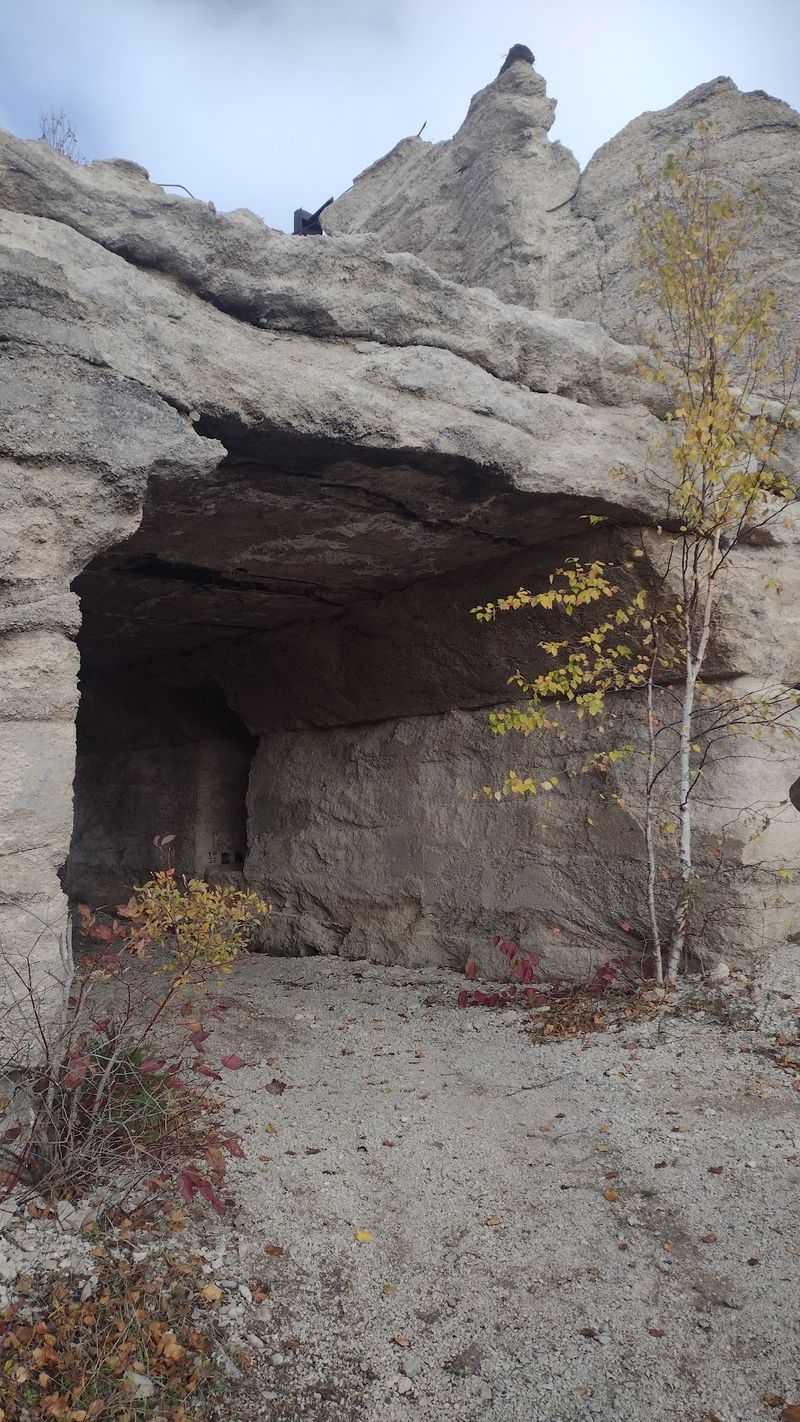
Water is the sneaky sculptor here. Over time, it dissolves the limestone underground, and that process creates something called karst.
Karst landscapes come packed with sinkholes, springs, and caves. The Fiborn Karst Preserve shows off all three, which is pretty rare in Michigan.
Sinkholes form when the ground sags or drops into spaces carved out below. Some look like gentle bowls in the forest floor.
Springs pop up where underground water finds its way back to the surface. It’s a reminder that a whole hidden plumbing system runs beneath your feet.
This is why the preserve exists. The Michigan Karst Conservancy manages 480 acres to protect these natural features and the history layered on top.
The rules help keep it all intact. Altering natural features, littering, and polluting are not allowed, and neither is collecting firewood.
Bring curiosity more than gear for this part. Look for dips, cracks, and spots where water behaves strangely.
Once you know what karst is, you’ll notice it everywhere on the trails.
Watch a Creek Pull a Disappearing Act on the Sinkhole Trail
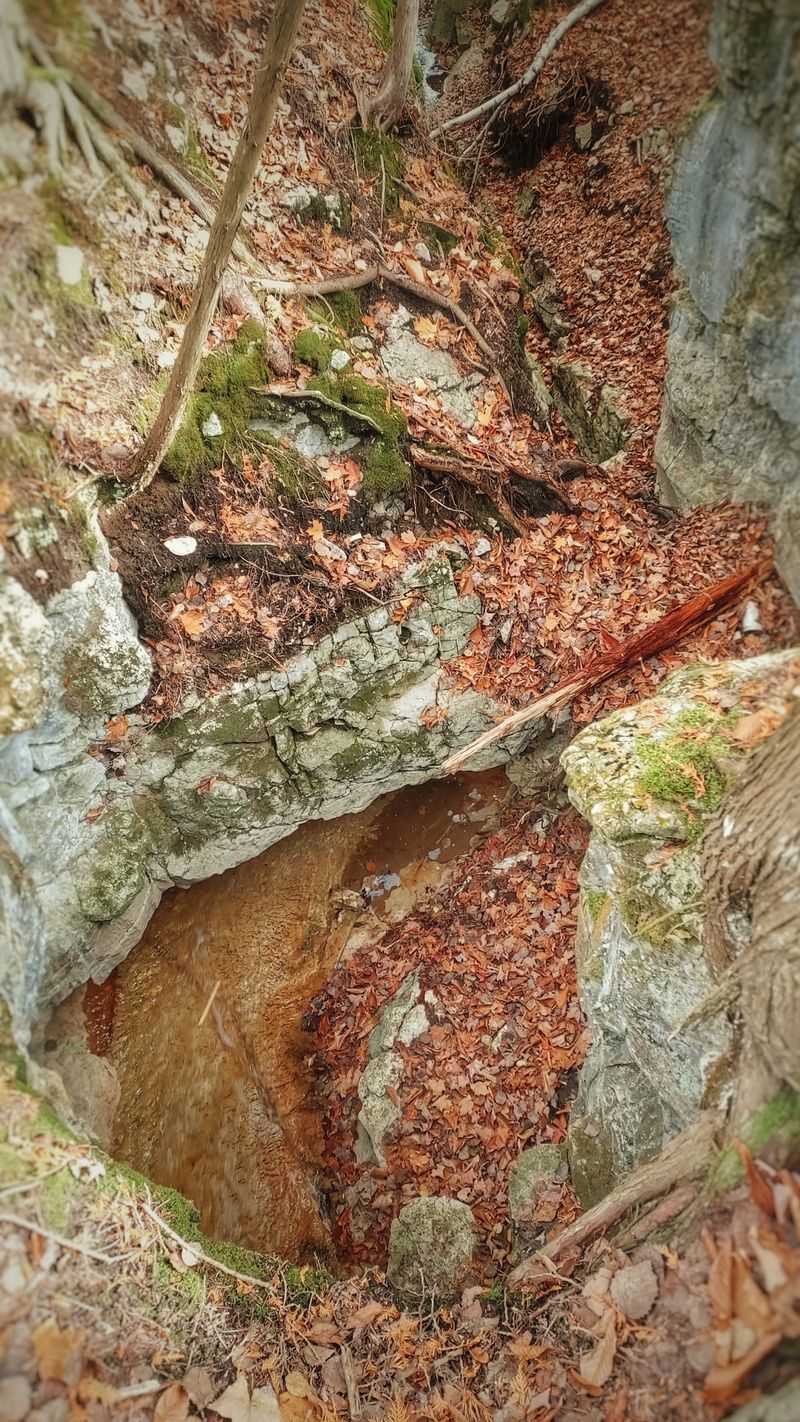
Short trail, big payoff. The Sinkhole Trail is the shorter of the two self-guided loops at the Fiborn Karst Preserve.
It winds past many shallow sinkholes scattered through the woods. Each one hints at the empty spaces hiding below.
The real showstopper is the creek. It flows along like any normal stream, then simply disappears underground.
That moment feels like a magic trick, but it’s pure geology. The water slips into openings in the limestone and keeps traveling out of sight.
This loop works well if you’re short on time or traveling with younger hikers. It packs a lot of karst wonder into a manageable walk.
Keep in mind the trails aren’t designed for personal assistance mobility devices. Rocks and uneven ground are part of the deal here.
Stay on the path and avoid poking at the creek’s vanishing point. Disturbing natural features is against preserve rules, and the formations took ages to shape.
Watching quietly is the best way to enjoy it.
Take the Long Way Around the Quarry Rim
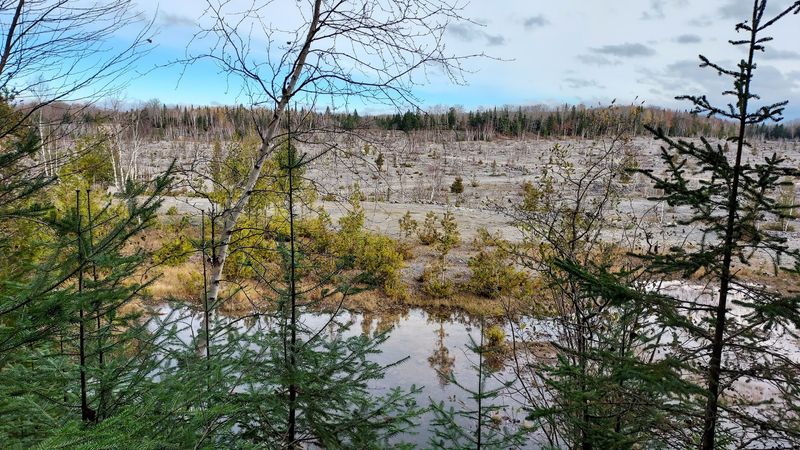
About 1.5 miles of trail gives you the bigger picture. The Barbara Ann Patrie Memorial Trail follows the edge of the old quarry.
From the rim, you get a sweeping sense of how much rock workers removed. The scale is honestly impressive.
The path also moves through second-growth forest. These are trees that grew back after the land was cleared, so nature’s comeback is on full display.
Along the way, you’ll pass more sinkholes. Then the trail reaches Fiborn Pond, a calm stop that contrasts nicely with the rugged quarry.
This loop is the better choice for anyone who wants a real hike. Pair it with the Sinkhole Trail, and you’ll see most of the preserve’s highlights.
Michigan Karst Conservancy volunteers maintain the trails from May through October. That care helps keep the route walkable during the warmer months.
Pack water, sunscreen, and bug spray before you set out. The Upper Peninsula woods can get buggy in summer, and the rim offers plenty of sunny stretches too.
Michigan’s Longest Known Cave Hides Right Here
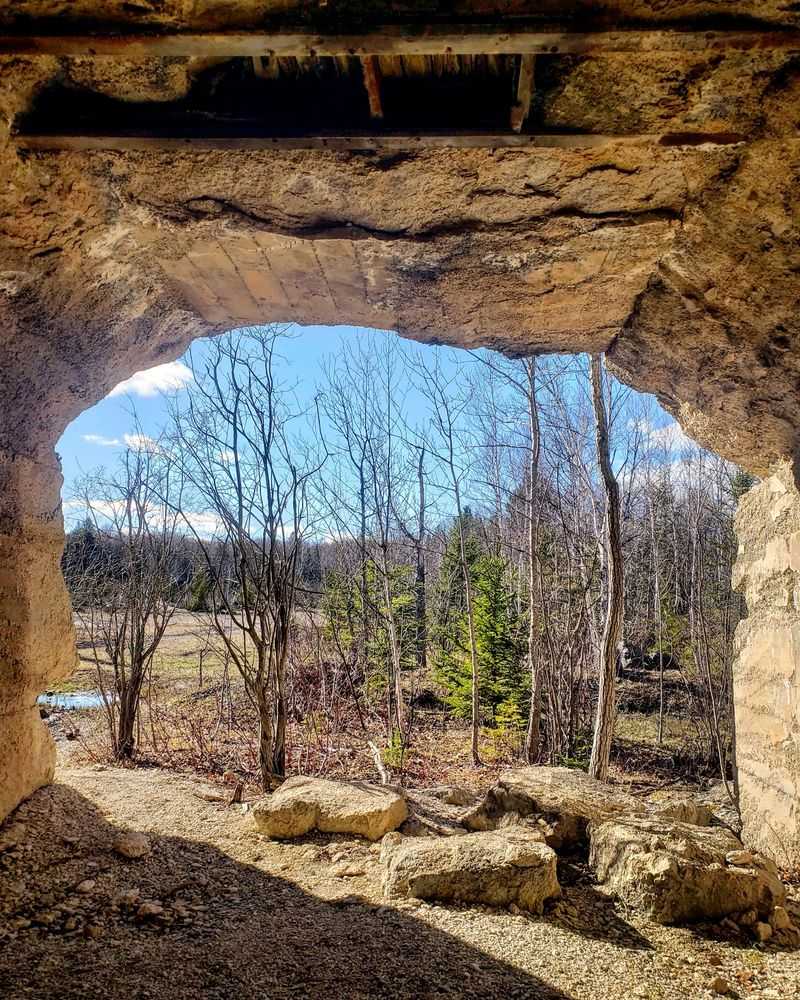
Here’s a fun bragging fact. The Hendrie River Water Cave is recognized as the longest known cave in Michigan.
Estimates of its length run from about 1,500 to just over 2,000 feet. A flowing stream runs through it, which makes it extra wet and tricky.
Don’t expect a casual stroll inside. The cave is narrow, difficult, and potentially dangerous for untrained explorers.
Entry is limited to guided trips that require a permit from the Michigan Karst Conservancy. That system protects both people and the cave itself.
Timing matters too. The cave closes from mid-October to mid-May to protect hibernating bats, including the Little Brown Bat and the Northern Long-eared Bat.
Those bats need quiet winters to survive the cold months. Even a little disturbance can drain their energy reserves.
Several smaller, wetter caves also exist on the preserve. They’re generally not suited for amateur exploring, so admire them from outside.
If going underground is on your wish list, plan ahead and reach out to the Conservancy about a permit.
Getting There Takes a Little Detective Work
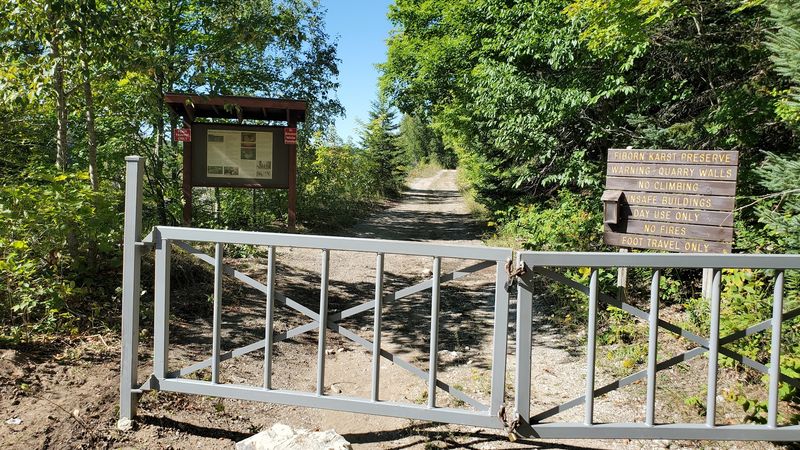
Remote is the right word. The preserve sits in Mackinac County in Michigan’s Upper Peninsula, between St. Ignace and Newberry near Trout Lake Township.
Plug in Fiborn Karst Preserve, Naubinway Rd, Naubinway, MI 49762, United States, and you’ll be close. Download offline maps first, because cell service can be spotty in this area.
The north entrance is the way to go. A short walk from the gate brings you to the quarry.
Parking space is limited, so plan accordingly. RVs and vehicles pulling trailers can reach the site, but turning around is a challenge.
Leave larger rigs somewhere roomier if you can. A smaller car makes the whole trip much easier.
Gates and signs mark the preserve as foot traffic only. Off-road vehicles are prohibited, so walking is the only way in.
Fires, camping, and firewood collecting are also off-limits. Treat it as a day trip and enjoy the quiet.
There’s no ticket booth here, so arriving prepared is your job.
Volunteers Keep the Whole Story From Crumbling Away
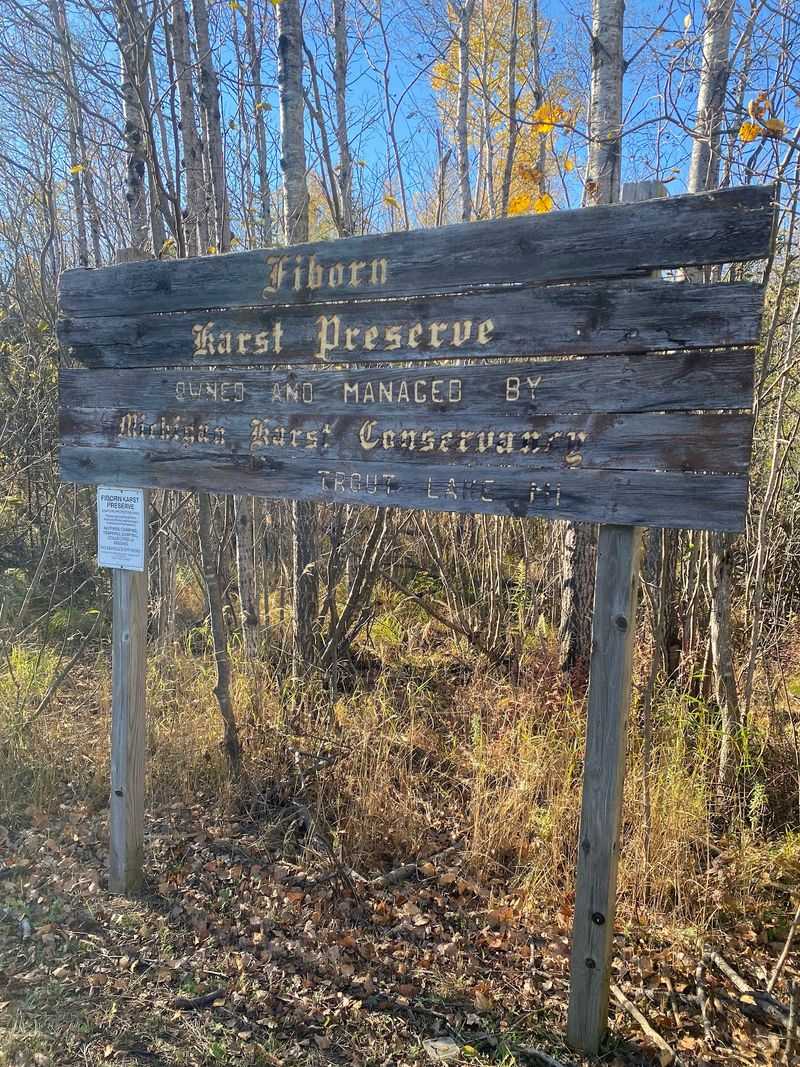
Nobody pays an entrance fee, yet someone keeps the trails open. That job falls to volunteers with the Michigan Karst Conservancy.
From May through October, they tend the trails and facilities. Graffiti cleanup is part of the work, too.
The Conservancy bought this land in 1987. Since then, it has guarded both the karst features and the quarry’s history.
That mix is what makes the place so unusual. Few spots in Michigan let you study sinkholes and an industrial ghost town on one walk.
Visitors play a part in keeping it special. Pack out every scrap of trash, and leave rocks and formations where you find them.
Stick to foot travel and respect the gates. Vehicles can damage fragile ground and disturb the wildlife that calls the preserve home.
A little effort goes a long way here. Follow the rules, share the story with a friend, and leave the ruins looking just as wild as you found them.
The next curious hiker deserves that same jaw-dropping first view.