
The Overlooked Coastal Escape In Washington That Feels Like A Hidden Paradise
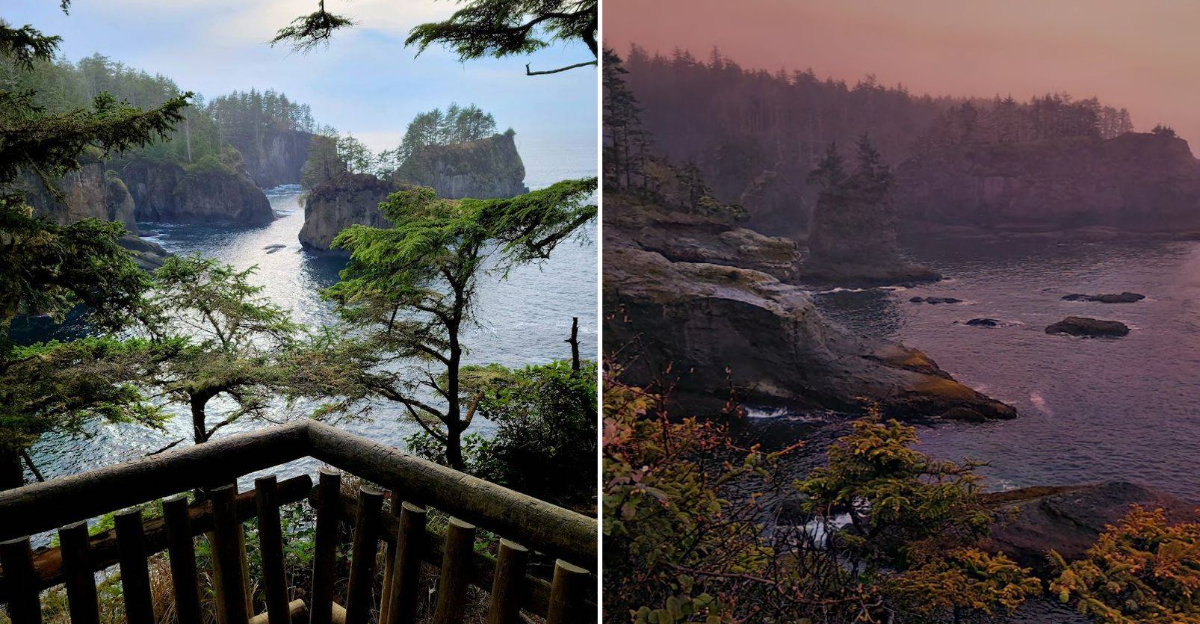
You’ve done Seattle. You’ve done the Olympics.
But this little coastal escape is the one Washington trip you’ll actually want to repeat. Most people think they’ve seen it all after hitting the usual stops.
They haven’t. Sitting along a stretch of coastline that somehow never made it onto the tourist maps, this place operates on its own quiet frequency.
Rugged cliffs drop into glassy tide pools. Fishing boats still outnumber selfie sticks.
The kind of town where the guy at the bait shop knows every family by name. No crowds fighting for parking.
No influencer-approved overlooks clogged with tripods. Just raw, unhurried Pacific coastline doing exactly what it has done for centuries.
This is not a place that wants your attention. That is precisely why it deserves it.
Unique Marine Wildlife In The Region
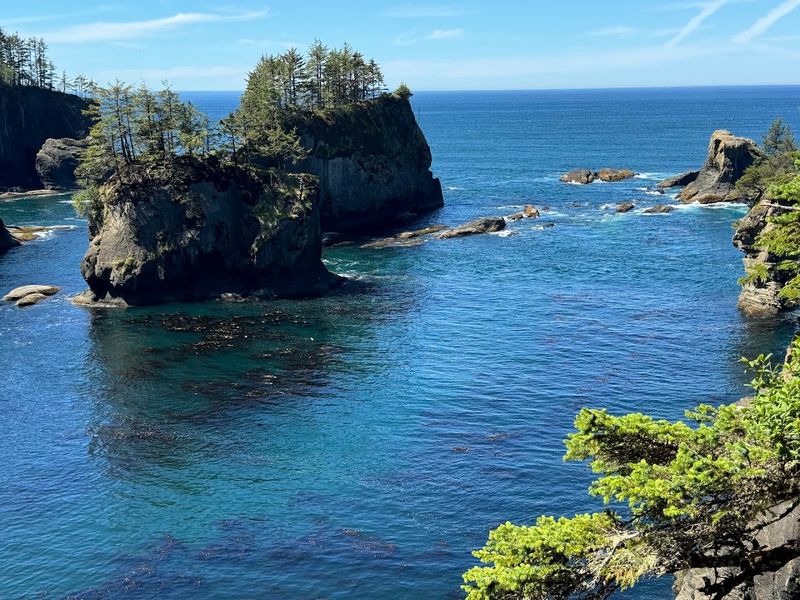
A place like this is one of the best wildlife-watching spots on the entire West Coast. The ocean here is incredibly active.
Gray whales, orcas, and humpback whales pass through during migration, and spotting one from the cliffside viewpoints is absolutely unforgettable.
The Makah Tribe has declared Cape Flattery a nature sanctuary. That protection means the wildlife here is thriving.
Sea otters float lazily in kelp beds while harbor seals lounge on rocky outcroppings just below the trail overlooks.
Bald eagles are a regular sight above the treeline. Sea lions bark loudly from the rocks below.
Tufted puffins, pigeon guillemots, common murres, and black oystercatchers all nest along the cliffs here. Binoculars are not optional.
They are essential gear for this trail.
The convergence of two major bodies of water creates a rich marine environment. Cold, nutrient-dense currents draw fish, and the fish draw everything else.
You are essentially watching a full ocean food chain play out in real time from a wooden boardwalk.
Cape Flattery is also a recognized stop on the official Washington Whale Trail. Plan your visit between March and May for the gray whale migration.
This place is located in Washington, 98357, on the Makah Reservation at the northwesternmost tip of the contiguous United States.
Picturesque Coastal Hiking Trails
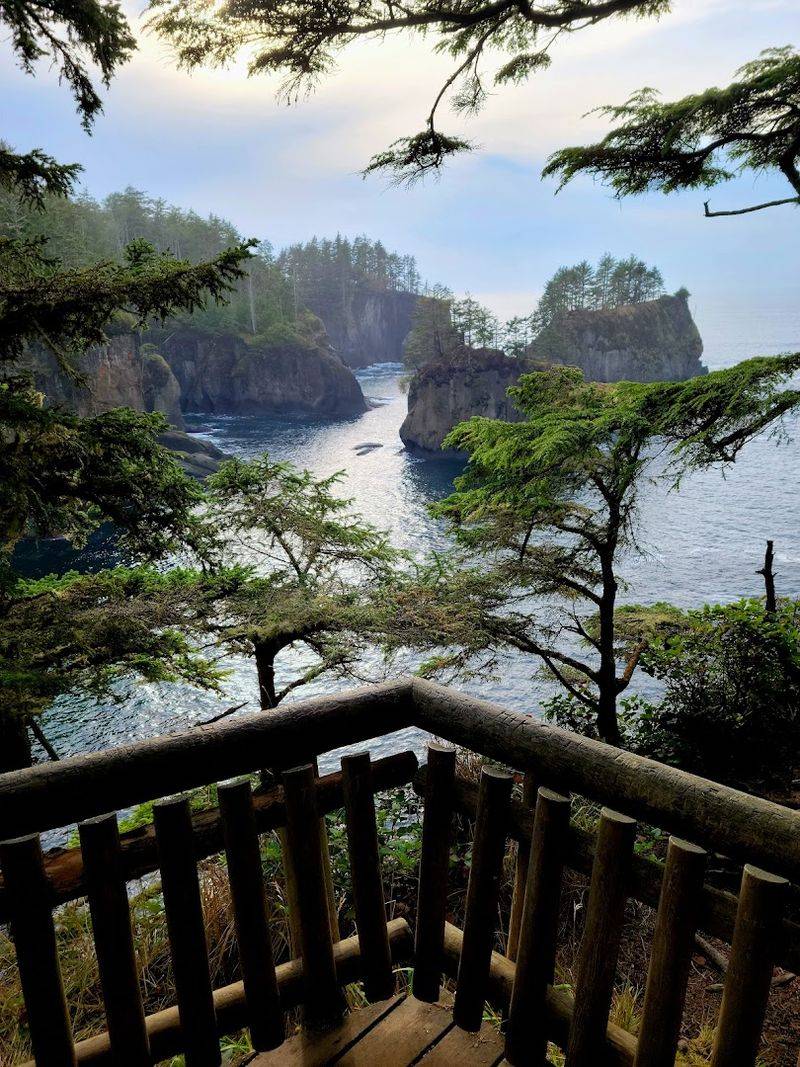
The Cape Flattery Trail is short but absolutely packed with scenery. The round-trip distance is roughly 1.2 to 1.5 miles.
Do not let that small number fool you into wearing flip-flops. The trail has roots, muddy sections, steep wooden steps, and narrow boardwalks that demand real footwear.
The path winds through a dense temperate rainforest. Sitka spruce and western hemlock tower overhead.
Ferns carpet the forest floor, and the air smells like rain and cedar even on dry days. It genuinely feels like walking through a living painting.
Four separate observation platforms wait at the end of the trail. Each one offers a completely different angle of the coastline.
Some face the sea stacks directly. Others look out toward Tatoosh Island, where a historic lighthouse stands against the horizon.
On clear days, Vancouver Island in Canada is visible across the Strait of Juan de Fuca. That view alone justifies every muddy step.
The trail is open from dawn to dusk, and early morning visits are the quietest and most atmospheric.
Dogs are welcome on the trail as long as they are leashed. Restrooms are available at the trailhead parking area.
Sturdy shoes, a light jacket, and a camera are the three things every visitor should bring without question.
Pristine Beaches And Secluded Coves
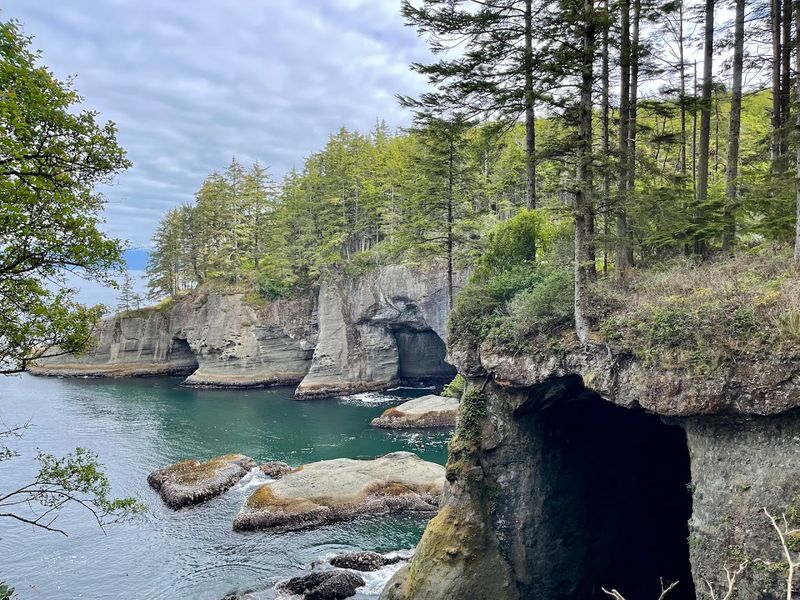
Cape Flattery does not have a traditional sandy beach you can walk down to. What it has is far more dramatic.
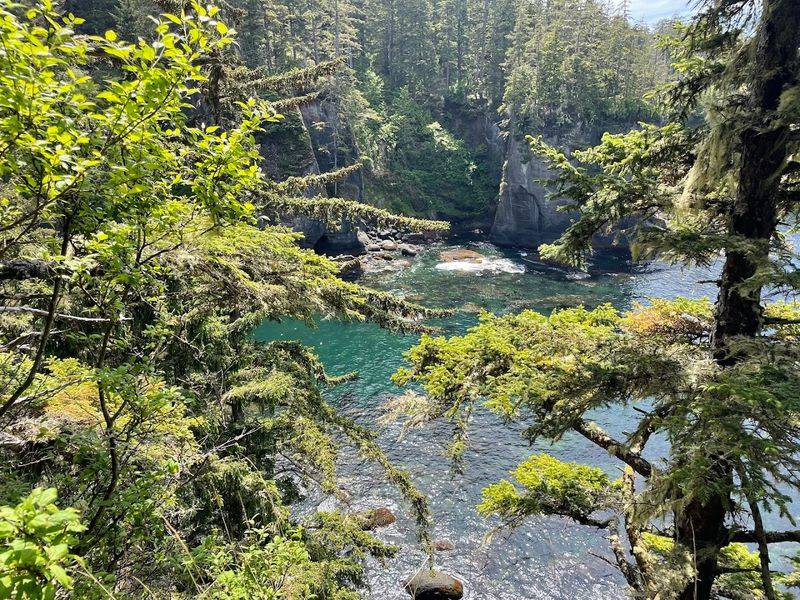
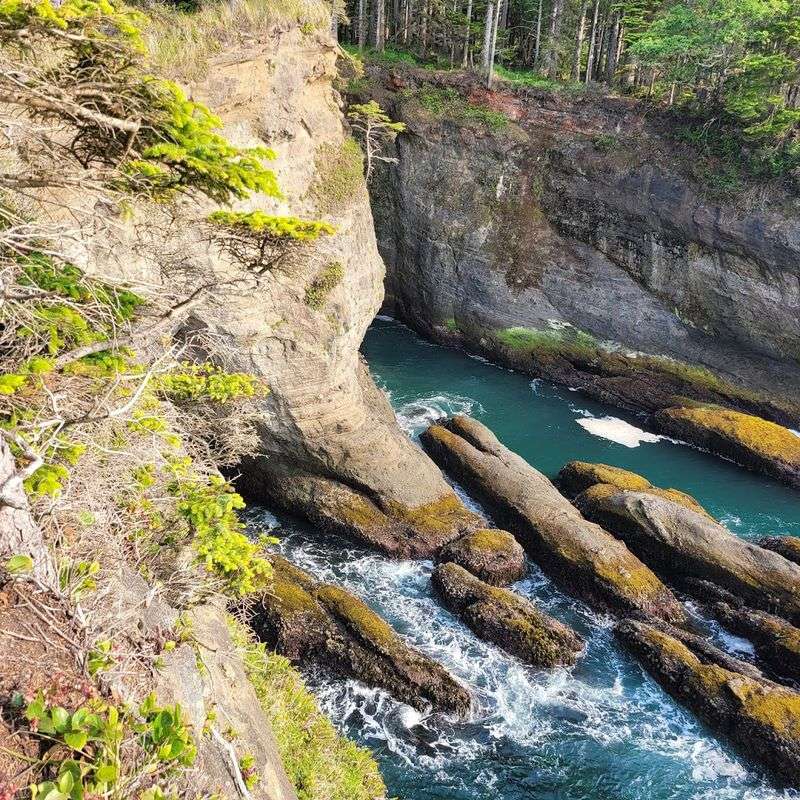
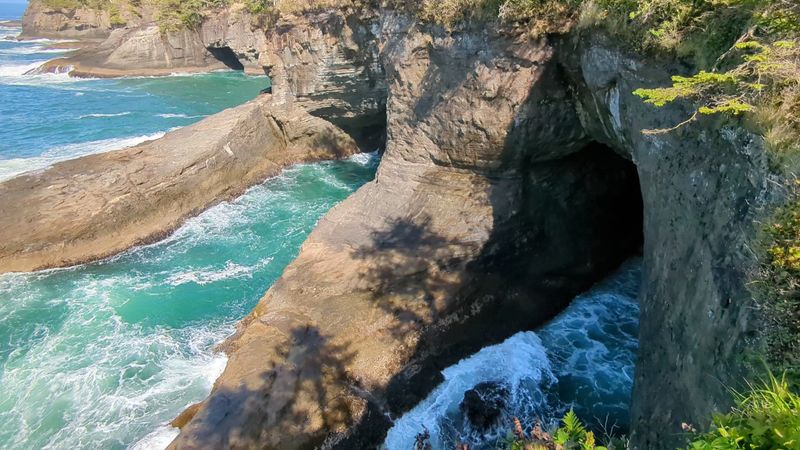
Wave-carved sea caves open up below the cliffs, and the water inside them glows a deep turquoise color that looks almost unreal on sunny days.
The coves visible from the observation platforms are completely inaccessible by foot, which actually adds to their appeal. They sit undisturbed.
No footprints, no crowds, no noise. Just crashing waves and raw Pacific energy doing their thing.
Sea stacks rise dramatically from the water near the cave entrances. These tall rock pillars have been sculpted by thousands of years of ocean erosion.
They look like something out of a fantasy novel, honestly. Standing above them on the cliffside boardwalk puts everything in perspective.
Kayakers and experienced paddlers sometimes explore the sea caves from the water during calm conditions. That is a completely different experience from the trail, and it requires serious preparation and local knowledge.
The ocean here is powerful and unpredictable.
Tatoosh Island sits just offshore and is visible from the cape. It holds a lighthouse and a long history connected to the Makah people.
The island is off-limits to visitors, but watching it from the cliffs with binoculars is a rewarding experience on its own.
Rich Cultural History And Native Heritage
Cape Flattery sits entirely within the Makah Reservation. The Makah people have lived here for thousands of years.
They call this place the Beginning of the World, and that phrase carries enormous cultural weight. Visiting here means entering living indigenous land, not just a scenic overlook.
A Makah Recreation Permit is required for all visitors. The permit is affordably priced per vehicle and stays valid for a full year.
It also covers access to other tribal lands, including Shi Shi Beach. Permits are sold in Neah Bay at the Makah Marina, the Makah Cultural and Research Center Museum, and several local stores.
The Makah Museum in Neah Bay is worth a dedicated visit on its own. It displays artifacts recovered from the Ozette Archaeological Site, a Makah village buried by a mudslide roughly 300 years ago.
The preservation was extraordinary, and the artifacts offer a rare window into pre-contact coastal life.
The Makah are the only tribe in the United States with a federally protected treaty right to hunt whales. That tradition stretches back centuries and is deeply connected to their identity.
Understanding that history changes how you experience the landscape around Cape Flattery.
Spending money in Neah Bay before or after visiting the cape directly supports the Makah community. That is not just a nice thing to do.
It is the respectful thing to do when visiting sovereign tribal land.
Challenging Photography Opportunities
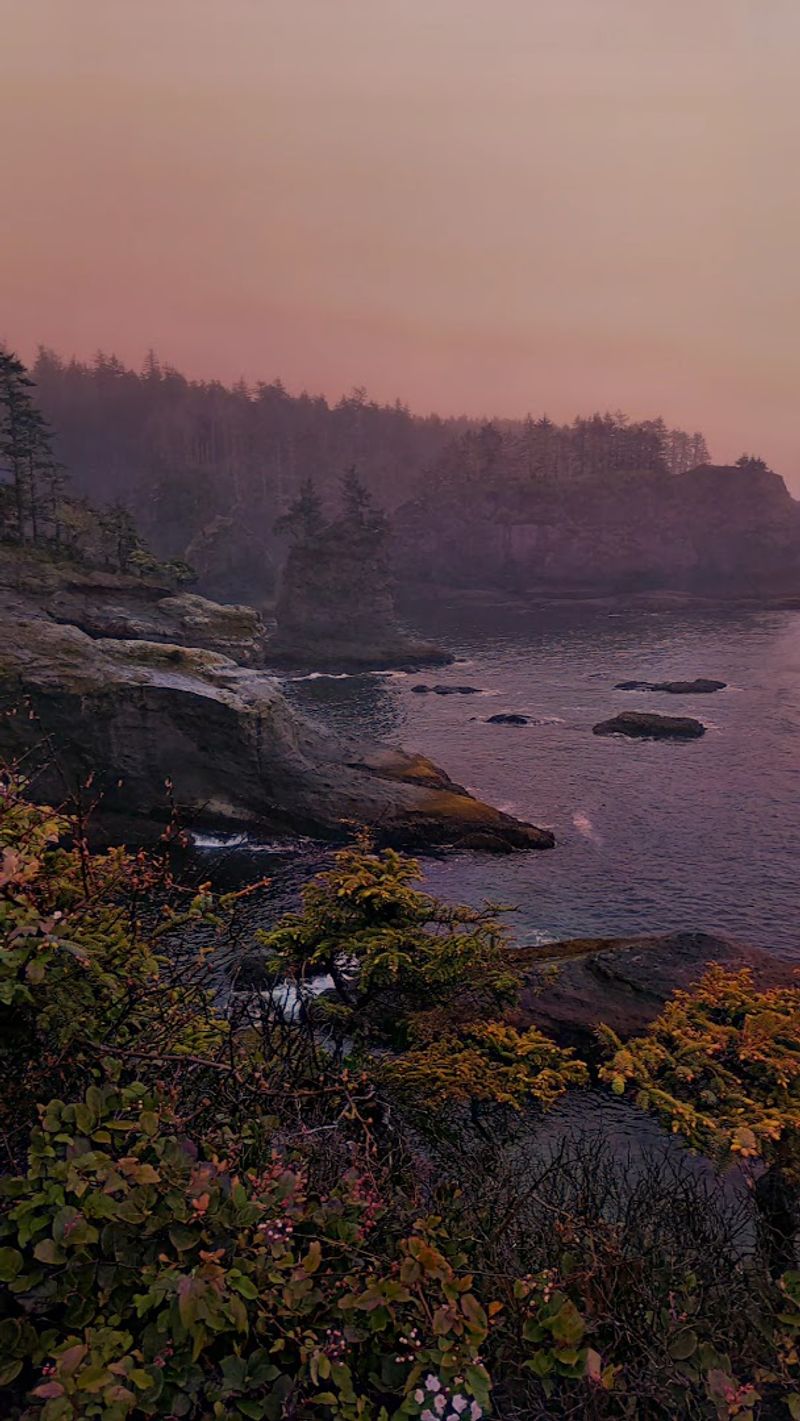
Cape Flattery hands photographers a full menu of dramatic subjects in one compact location. Sea stacks, crashing waves, misty sea caves, dense rainforest, and a lighthouse on a distant island all exist within view of the trail.
Choosing what to shoot first is genuinely difficult.
Golden hour at Cape Flattery is extraordinary. The low sun catches the ocean spray and turns the cliff faces a warm amber.
Sunset visits require arriving at the trailhead at least 40 minutes early to hike down without rushing. That buffer also gives you time to settle at your preferred platform.
Rainy days create their own photographic mood. Fog rolls in from the Pacific and softens the edges of everything.
The forest looks more saturated and alive when wet. Some of the most compelling coastal images from this area were captured on overcast days, not bright sunny ones.
Wildlife photography is a real possibility here. Bald eagles patrol the treeline regularly.
Seabirds nest on the cliff faces just below the viewpoints. A telephoto lens will serve you well, especially when sea otters or seals appear on the rocks far below.
The four observation platforms each offer distinct compositions. Platform angles shift the relationship between Tatoosh Island and the sea stacks.
Moving between them slowly and deliberately, rather than rushing, is how you find the strongest shots at Cape Flattery.
Seasonal Weather Patterns And Best Times To Visit
Washington’s northwestern coast plays by its own weather rules. Cape Flattery gets significant rainfall throughout the year because of its position at the edge of the Olympic Peninsula.
Even summer visits can include sudden fog, cool winds, and light rain. Layering is not optional here.
June through October is considered the best window for visiting. Summer months bring the most consistent clear skies and the highest chance of long ocean views.
July and August are peak season, so expect more people on the trail and at the trailhead parking area during those months.
Early morning visits are consistently better than midday ones. The light is softer, the crowds are thinner, and wildlife tends to be more active near the water.
Arriving around 8 AM on a weekday gives you the closest thing to a private Cape Flattery experience.
Spring visits in late March through May offer gray whale migration viewing. Fall visits bring dramatic storm light and fewer tourists.
Winter is possible but the trail can become very muddy, and storms roll in fast from the Pacific with little warning.
Always check the weather forecast before making the drive. The road to Cape Flattery is long, winding, and isolated.
Running out of gas on Highway 112 is a real concern. Fill your tank in Port Angeles or Sequim before heading northwest toward Neah Bay.
Local Flora And Botanical Diversity
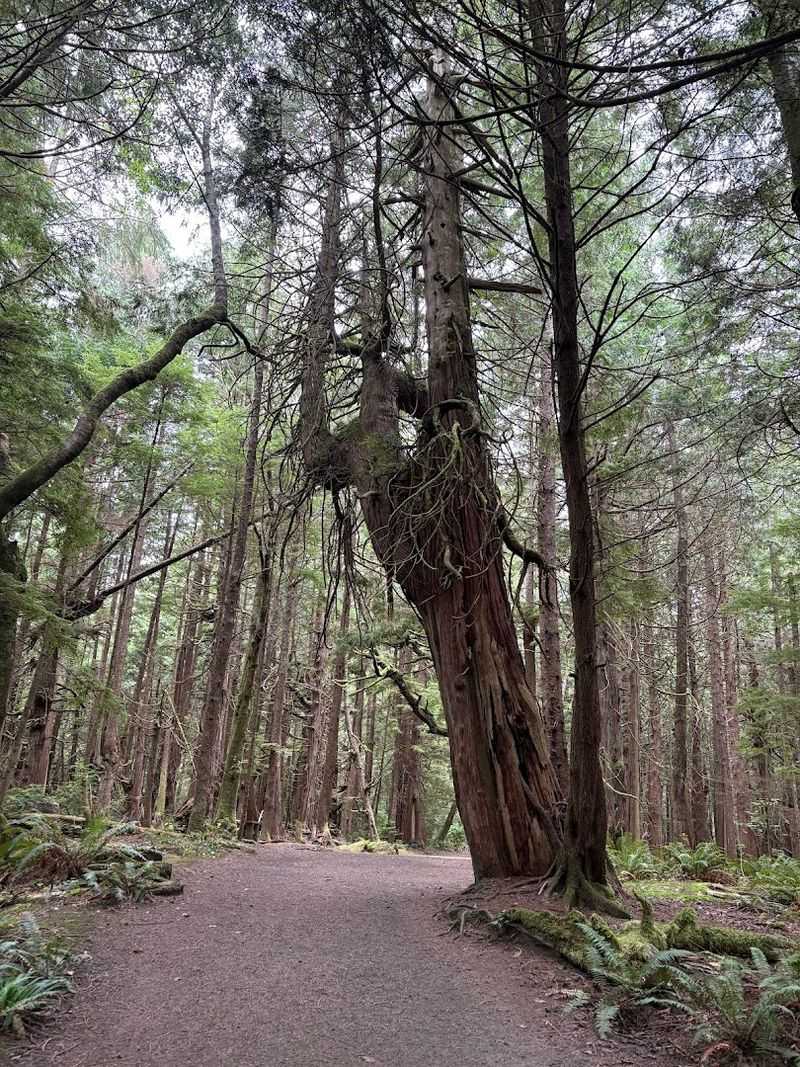
The forest at Cape Flattery is a temperate rainforest, and it looks the part. Sitka spruce trees dominate the canopy, growing tall and wide on the moisture-rich air that rolls in from the Pacific.
Western hemlock fills the understory, and the combination creates a layered, cathedral-like canopy overhead.
Ferns are everywhere along the trail. Sword ferns, deer ferns, and lady ferns grow in thick clusters along both sides of the boardwalk.
After rain, every frond catches water droplets and sparkles. It sounds overly poetic, but standing in that forest is genuinely calming in a way that is hard to explain.
Moss coats every available surface. Tree trunks, fallen logs, and even the wooden boardwalk railings grow a thick green layer of moss in the wetter months.
The forest floor is perpetually damp, which supports an entire ecosystem of fungi, lichens, and small woodland plants.
Wildflowers appear in spring along the forest edges. Oxalis, also called wood sorrel, creates a low green carpet beneath the trees and occasionally blooms with small white flowers.
Skunk cabbage grows in the wetter depressions near the trail in early spring.
The botanical diversity here reflects the Olympic Peninsula’s status as one of the wettest regions in the contiguous United States. That rainfall creates one of the most lush and visually striking forest environments anywhere on the Pacific Coast.
Outdoor Activities For Adventurers And Nature Lovers
Cape Flattery rewards people who show up ready to explore. The trail itself is the main event, but the surrounding area offers plenty more for people who want to extend their outdoor day.
Neah Bay has a boat launch, and fishing in the Strait is popular among locals year-round.
Birdwatching is a serious activity here. The cliff faces and offshore rocks support nesting colonies of seabirds.
Bring a field guide and binoculars. Checking off tufted puffins, rhinoceros auklets, and pigeon guillemots in a single morning is entirely realistic at Cape Flattery during summer.
Kayaking the sea caves is possible for experienced paddlers during calm ocean conditions. The caves are only accessible from the water, and the color of the water inside them is remarkable.
Local outfitters in the region offer guided sea kayak tours for those who want expert help navigating the coastline.
Whale watching from the cape requires patience but delivers real results. Bring a camp chair, set up at one of the four observation platforms, and scan the water with binoculars.
Gray whales, orcas, and humpbacks all pass through these waters, particularly during spring and fall migration periods.
Nearby Shi Shi Beach is another option for hikers. The Makah Recreation Permit covers access there, too.
It is a longer, more demanding hike, but the payoff is a wild and beautiful beach that very few people visit on any given day.