
The Scenic California Town That’s A Secret Escape For Nature Lovers
Tucked along California’s rugged northern coastline, Trinidad is a tiny seaside city that most travelers overlook on their way to bigger destinations.
With fewer than 400 residents and dramatic cliffs meeting ancient forests, this quiet spot offers an escape into wild beauty without the crowds.
Nature lovers looking for untouched beaches, towering redwoods, and abundant wildlife will find Trinidad to be exactly what they’ve been searching for.
One Of California’s Smallest Coastal Towns Hides Big Natural Beauty
Trinidad sits on a dramatic headland in Humboldt County, roughly eight miles north of the Arcata-Eureka Airport.
Population numbers hover around 360 people, making it one of California’s tiniest incorporated cities.
What the town lacks in size, it more than compensates for with natural splendor.
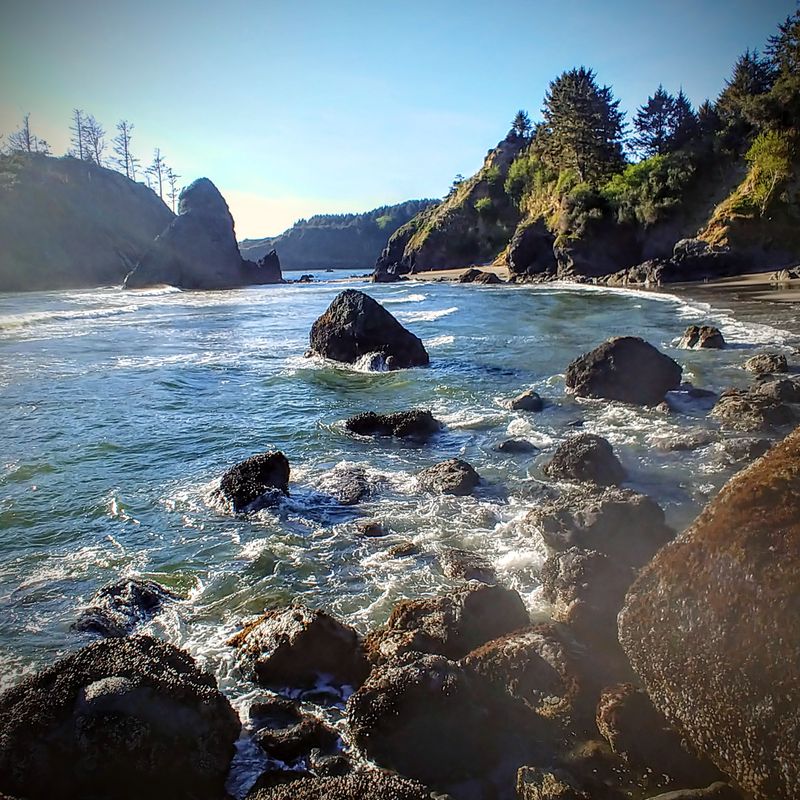
Rocky outcrops punctuate the coastline, while dense forests press right up against the ocean’s edge.
Visitors often remark that Trinidad feels frozen in time, a place where nature still dictates the rhythm of daily life rather than commerce or development.
Ocean Cliffs And Redwood Forests Meet In One Place
Few places on earth offer such a dramatic collision of ecosystems within walking distance.
Towering redwood groves stand just minutes from windswept ocean bluffs, creating a landscape that feels almost impossibly varied.
Morning fog rolls in from the Pacific, wrapping itself around ancient trees before burning off to reveal brilliant blue skies.
This unique convergence means visitors can hike among centuries-old redwoods in the morning and watch sea otters play in kelp beds by afternoon, all without driving more than a few miles.
Trinidad State Beach Feels Like A Hidden Cove
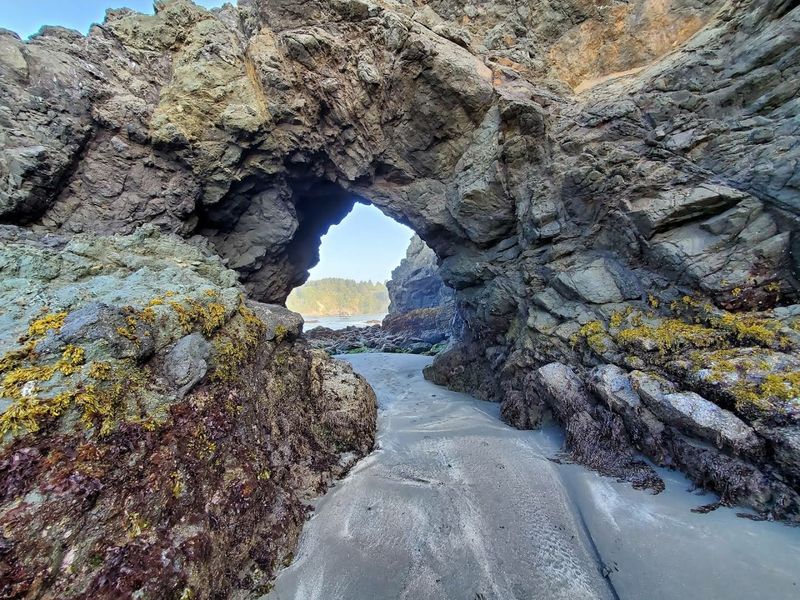
Accessible via a short trail from a small parking area, Trinidad State Beach rewards those who make the descent with a sense of discovery.
Rock formations create natural barriers that shelter the beach from wind, while tide pools teem with starfish and anemones.
The beach never feels crowded, even during summer months when other California coastal spots become overwhelmed.
Driftwood logs scattered across the sand provide perfect spots for quiet contemplation, and the sound of waves against stone creates a constant, soothing backdrop.
A Headland Trail Delivers Sweeping Coastal Views
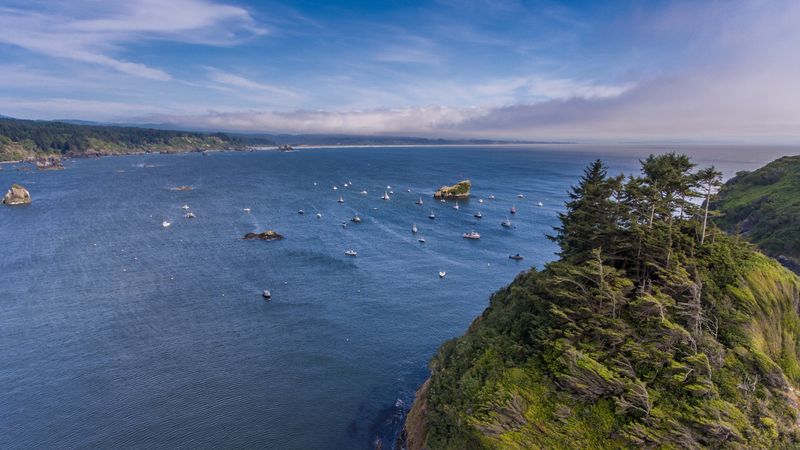
Trinidad Head Trail loops around a prominent headland jutting into the Pacific, offering perspectives that change with every turn.
The path itself remains relatively easy, suitable for most fitness levels, yet the views rival those found along far more strenuous routes.
Gray whales migrate past this point twice yearly, making it an excellent spot for whale watching without needing a boat.
On clear days, visibility extends for miles in both directions along the coastline.
Native plants line the trail, and interpretive signs share information about the area’s natural and cultural history.
Sue-meg State Park Showcases Northern California At Its Wildest
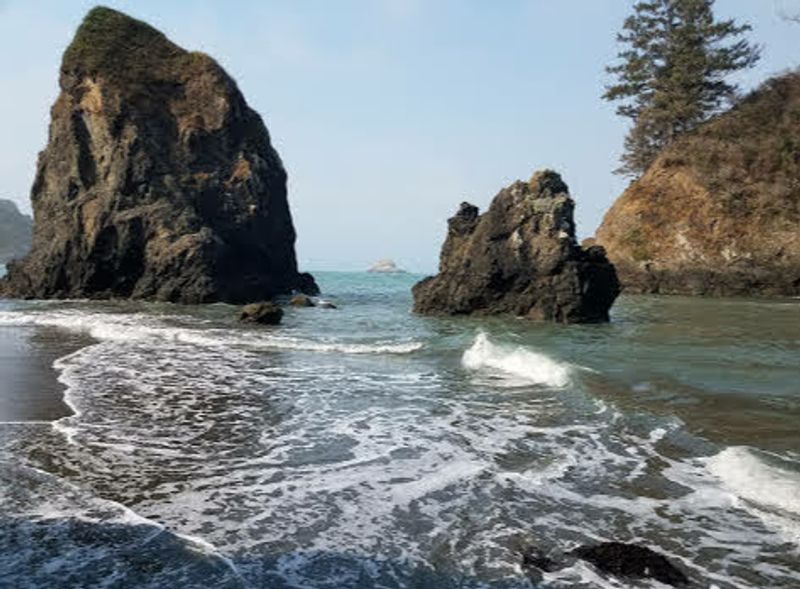
Formerly known as Patrick’s Point, Sue-meg State Park encompasses over 600 acres of coastal wilderness just north of Trinidad proper.
Ancient Yurok village sites dot the park, and a reconstructed ceremonial village helps visitors understand the area’s Indigenous heritage.
Trails wind through spruce forests before emerging onto dramatic overlooks where sea stacks rise from churning waters.
Agate Beach, accessible via a steep but manageable trail, draws rockhounds searching for polished stones among the pebbles.
Wildlife sightings happen frequently here, from Roosevelt elk to migrating raptors.
County Beaches Keep Crowds Away
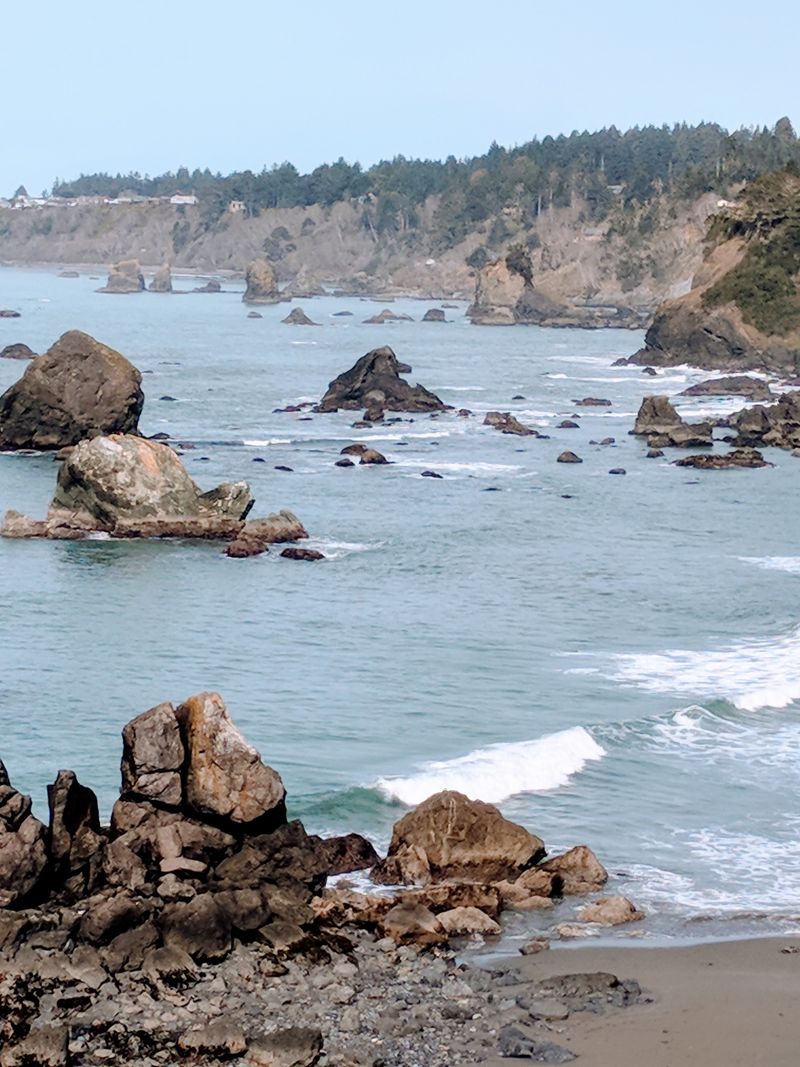
Beyond the state beaches, several county-managed coastal access points remain largely unknown outside the local community.
These spots lack facilities and signage, which keeps visitor numbers low and preserves their wild character.
Luffenholtz Beach, south of Trinidad, offers a particularly striking combination of black sand and jade-colored waters.
Baker Beach provides another quiet alternative where driftwood piles create sculptural forms against the horizon.
Parking areas remain small and unpaved, reinforcing the feeling that these places exist outside the typical tourist circuit entirely.
Redwood National And State Parks Begin Just Minutes Away
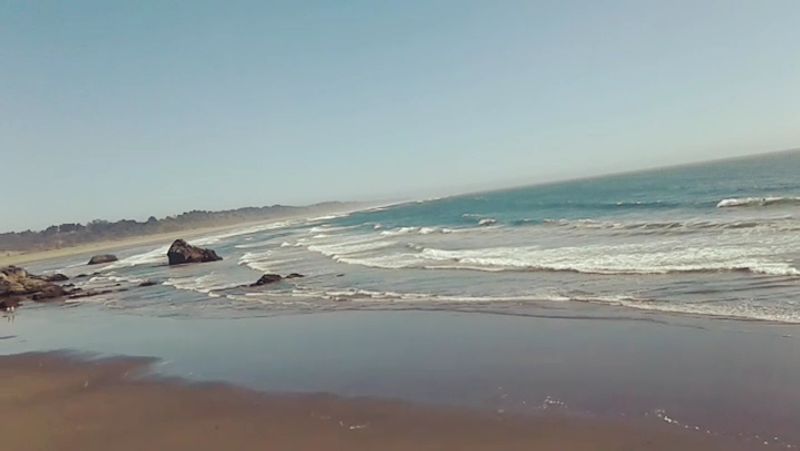
Trinidad serves as an ideal base camp for exploring the vast Redwood National and State Parks system, which begins immediately north of town.
These protected lands contain roughly half of the remaining old-growth coast redwood forest on the planet.
Trees reaching heights over 300 feet create cathedral-like spaces where light filters down in golden shafts.
Trails range from short nature walks to multi-day backpacking routes, accommodating every interest and ability level.
Using Trinidad as a home base means avoiding the more congested areas near park headquarters while maintaining easy access to the most spectacular groves.
Fern Canyon Feels Like A Secret World
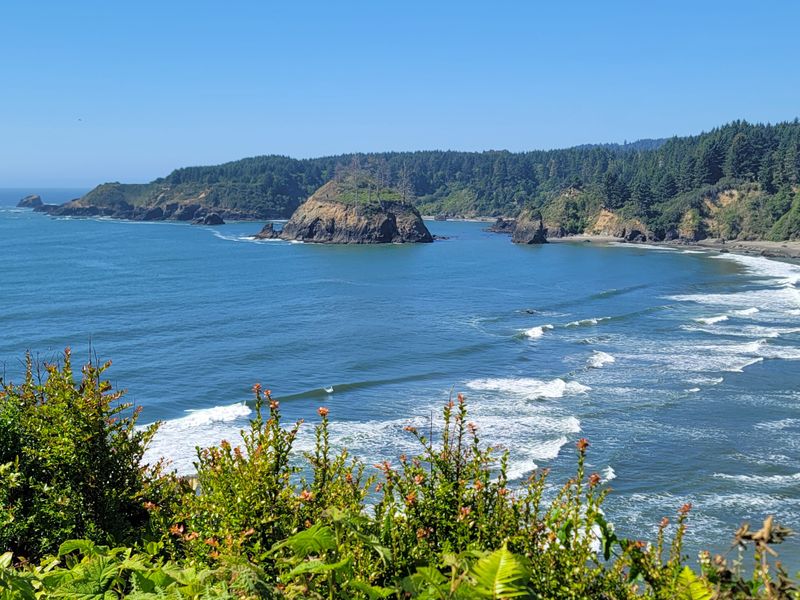
About 45 minutes north of Trinidad, Fern Canyon presents one of the region’s most photographed natural features.
Vertical walls rising 50 feet on either side are completely covered in five-finger ferns, creating an emerald corridor that feels transported from another era.
A small creek meanders through the canyon floor, requiring visitors to hop across stones or wade through shallow water.
The canyon gained fame as a filming location for Jurassic Park, and standing within its narrow confines makes that choice entirely understandable.
Visiting early in the day increases chances of experiencing the canyon in solitude.
Wildlife Sightings Are Part Of Everyday Life
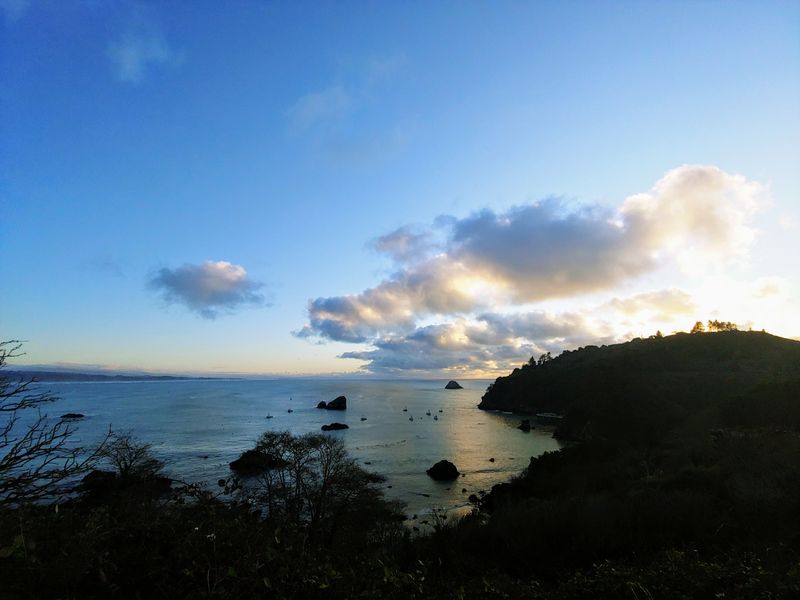
Trinidad’s location at the intersection of multiple ecosystems creates exceptional wildlife viewing opportunities.
Roosevelt elk graze in coastal prairies, often visible from Highway 101.
Harbor seals haul out on offshore rocks, their barking audible from shore.
Birdwatchers record impressive species lists here, with everything from marbled murrelets to peregrine falcons making appearances.
River otters frequent Trinidad Bay, and lucky observers occasionally spot gray whales breaching close to shore during migration seasons.
Binoculars become essential equipment for anyone spending more than a day in the area.
The Town’s Slow Pace Matches Its Natural Setting
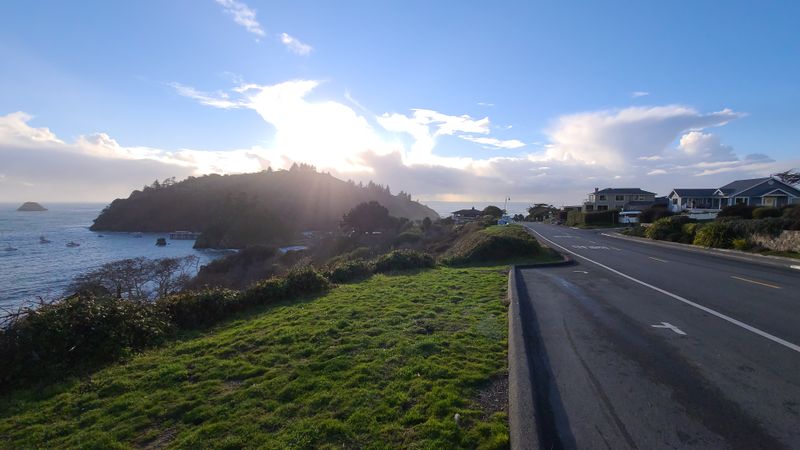
Trinidad maintains a rhythm that feels increasingly rare in modern California. No chain restaurants or big-box stores interrupt the town’s character.
A handful of local businesses serve residents and visitors without rushing anyone through their experience.
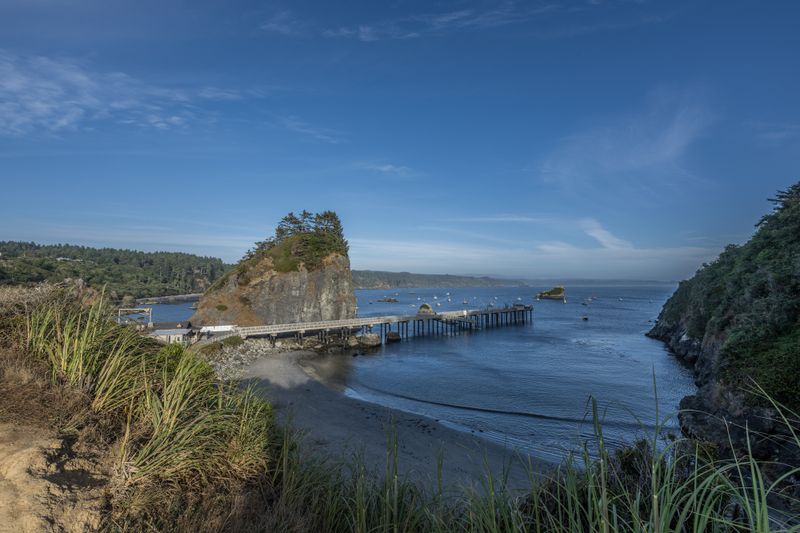
The commercial fishing fleet still operates from Trinidad Harbor, bringing in fresh catch that appears on menus the same day.
People stop to chat on the street, and conversations happen at a measured pace.
This unhurried atmosphere allows visitors to genuinely disconnect, something that becomes increasingly difficult in more developed coastal communities.
Trinidad Memorial Lighthouse Stands Watch Over The Harbor
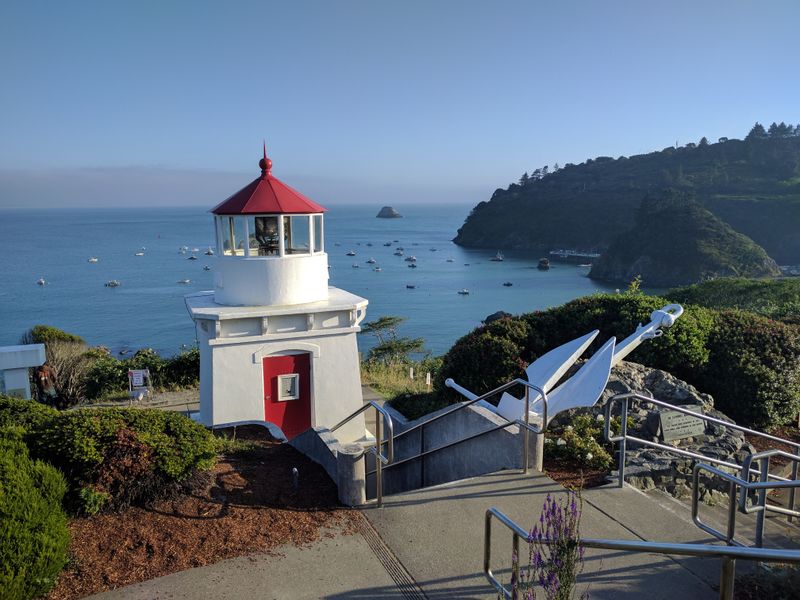
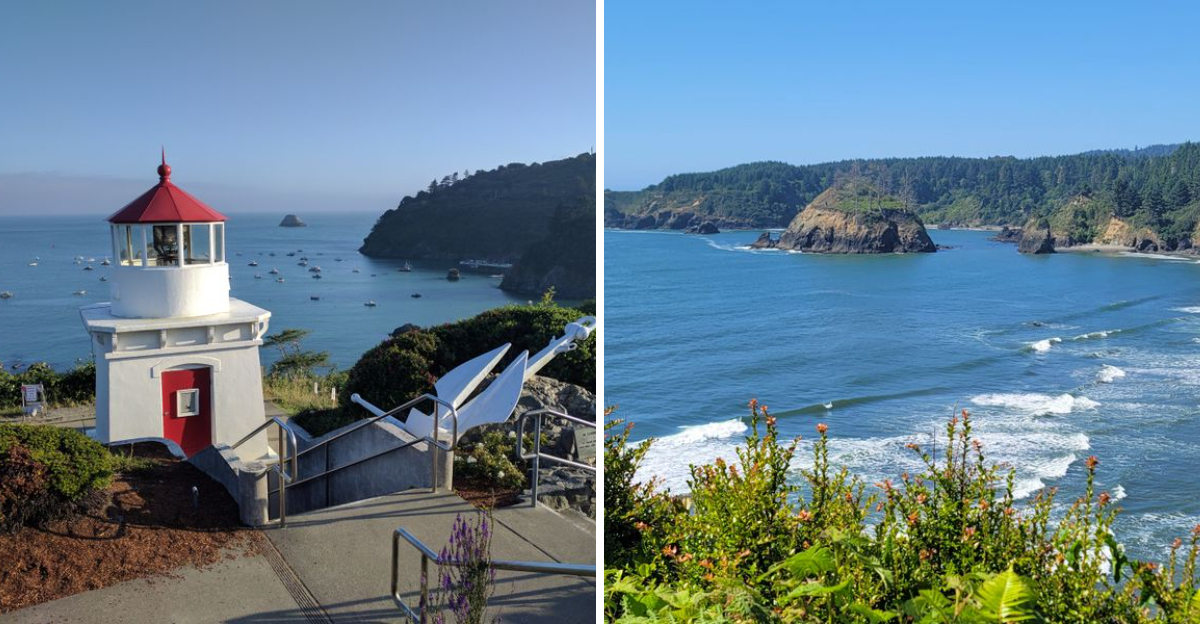
Perched above Trinidad Bay, the Memorial Lighthouse serves as a replica of the original beacon that once guided ships into this treacherous harbor.
Though smaller than many working lighthouses, its bright white structure stands out dramatically against the blue Pacific.
The lighthouse grounds provide an excellent vantage point for surveying the entire bay and watching boats navigate the harbor entrance.
Benches positioned nearby make this a popular spot for sunset viewing.
On foggy days, the lighthouse emerges and disappears from view as mist rolls through, creating an atmospheric scene worth photographing.
Local Seafood Comes Straight From The Dock
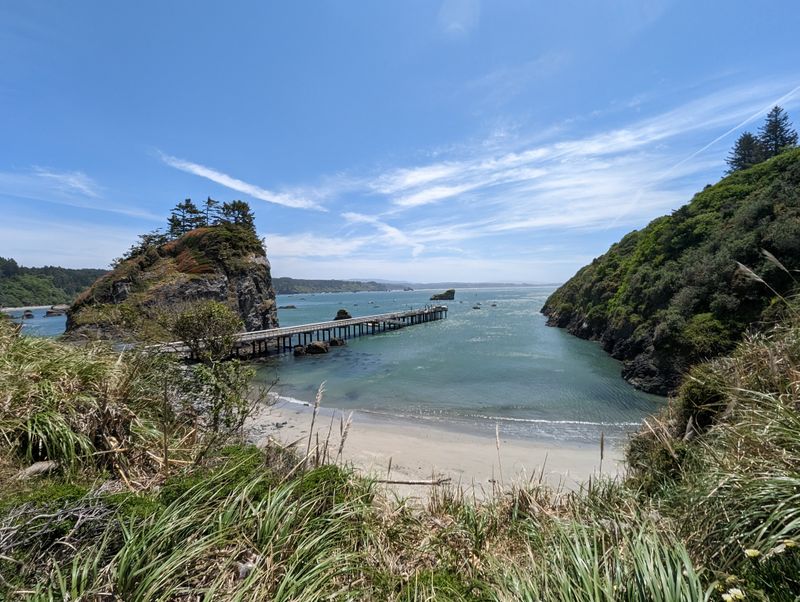
Trinidad’s working harbor means access to seafood that never sees the inside of a distribution truck.
Dungeness crab, rockfish, and salmon get caught in nearby waters and sold within hours, often directly from the boats themselves.
Several local restaurants maintain close relationships with fishermen, building daily menus around whatever comes in fresh.
The difference in quality becomes immediately apparent to anyone accustomed to supermarket seafood.
Visitors can also purchase directly from the harbor during certain seasons, taking fresh catch back to vacation rentals for home preparation that rivals any restaurant experience.
Camping Options Put You Right In Nature
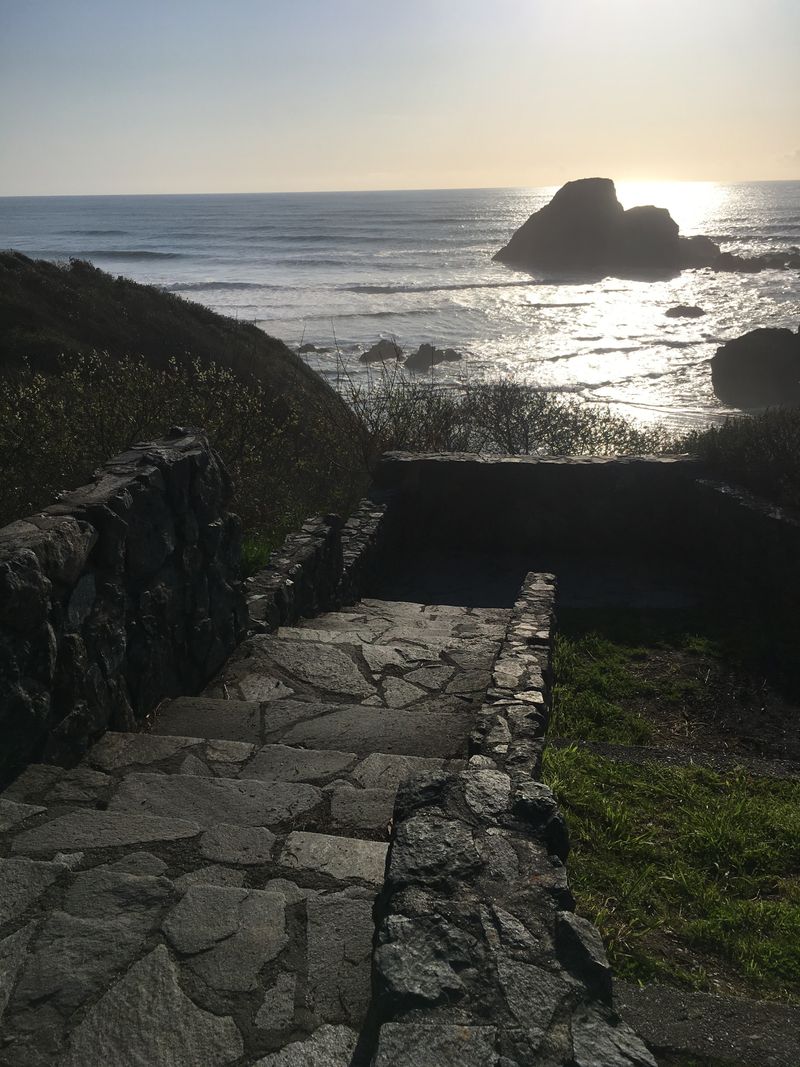
Multiple campgrounds within minutes of Trinidad offer overnight options that maximize immersion in the natural environment.
Sue-meg State Park’s campsites nestle among wind-sculpted trees with ocean sounds providing constant background music.
Private campgrounds near town offer additional amenities while maintaining proximity to beaches and trails.
Waking to fog drifting through the trees and falling asleep to crashing waves creates memories that outlast any hotel stay.
Campsites book up months in advance during summer, but spring and fall often have availability with equally beautiful weather and fewer neighbors.
The Journey To Trinidad Becomes Part Of The Experience
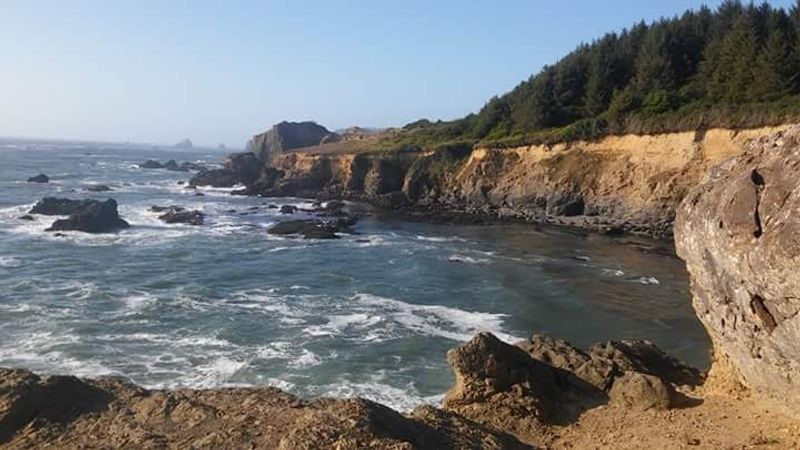
Reaching Trinidad requires commitment, as it sits roughly 280 miles north of San Francisco along Highway 101.
The drive itself transitions from wine country through increasingly dramatic landscapes as you move northward into redwood territory.
No airports or train stations serve Trinidad directly, meaning visitors arrive by car after several hours of driving.
This remoteness acts as a natural filter, keeping visitor numbers manageable while ensuring those who make the trip genuinely want to be there.
The journey builds anticipation, and arriving in Trinidad after hours of forest and coastal scenery feels like reaching a deserved destination.