
The Scenic Drive In New Mexico That Feels Like Driving Through A Painted Landscape
Some drives exist purely to get somewhere. This one in New Mexico exists to remind you that the road itself can be the entire point.
Colors shift across the landscape in ways that feel deliberate rather than accidental. The terrain seems arranged specifically to be seen from a moving window.
Red earth, sage flats, dramatic rock formations, and skies that seem wider than physics should allow all share the same unfolding view.
New Mexico has a visual identity that painters and photographers have been trying to capture for over a century.
This drive puts that identity directly in front of anyone willing to take it. The route moves through terrain that changes character without ever losing its hold on attention.
Each mile builds on the last rather than repeating it. Pulling over costs nothing and happens often once the landscape makes its case.
The light at certain hours makes stopping feel less optional than planned.
History Behind The Painted Landscape Along The Route
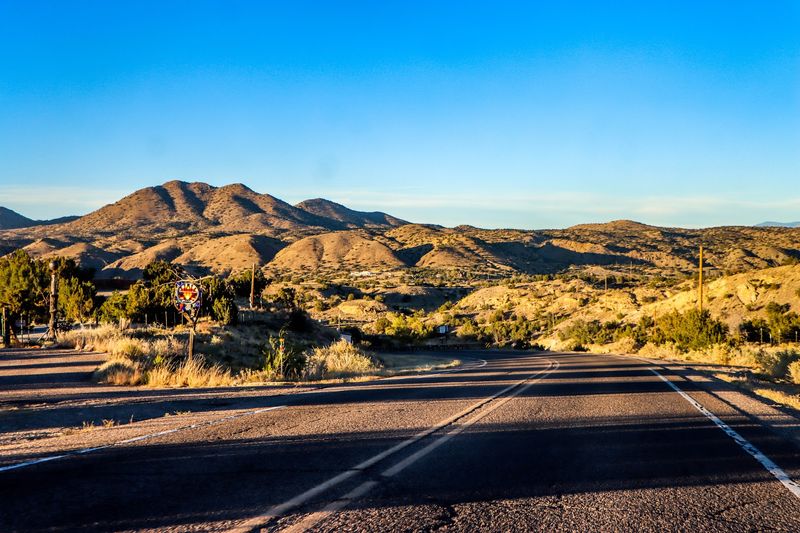
Millions of years of geological drama created the canvas you see today. The land along NM-14 was shaped by volcanic eruptions, tectonic shifts, and mineral-rich water flows.
All of that ancient chaos left behind something genuinely spectacular.
The Turquoise Trail earned its name honestly. Turquoise deposits were mined here by Indigenous peoples long before Spanish explorers arrived.
Those same minerals, including copper and iron, painted the hills in blue-green hues that still pop today.
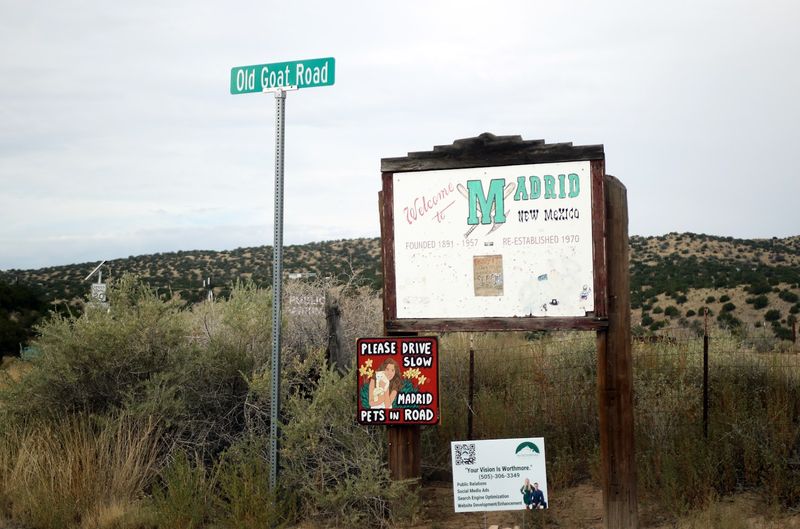
The route passes through former coal and gold mining towns like Madrid and Cerrillos. These towns boomed hard in the 1800s and then went quiet.
They did not disappear, though.
Madrid was practically a ghost town by the mid-20th century. Artists and free spirits started moving in during the 1970s.
They saw potential in the crumbling buildings and dramatic scenery.
Cerrillos has a similarly layered past, with turquoise mining dating back over a thousand years. The Ortiz and Sandia mountain foothills frame both towns with rugged, mineral-stained ridgelines.
History here is literally written in rock.
The 52- to 65-mile byway is now a National Scenic Byway. That designation protects its character and natural beauty.
Flora And Fauna Unique To The Scenic Drive Area
The high desert along NM-14 is not empty. It is absolutely packed with life.
You just have to know where to look, and sometimes slow down.
Pinon pines and juniper trees dot the hillsides in dark green clusters. They contrast beautifully against the pale golden grasses and rust-colored soil.
That combination alone looks like a painting.
Sagebrush plains stretch wide between the mountain foothills. The smell of sage after rain is one of those things that people never forget.
It is earthy, sharp, and completely New Mexico.
Mule deer are common along the roadside, especially at dawn and dusk. Red-tailed hawks circle overhead on thermal currents.
Roadrunners occasionally sprint across the asphalt like they have somewhere important to be.
Wildflowers appear in surprising bursts depending on the season. Yellow chamisa blooms in late summer and turns the hillsides gold.
Purple asters and desert marigolds add extra pops of color in the warmer months.
Coyotes are active in the area, though they tend to stay out of sight. Jackrabbits dart through the brush near Cerrillos.
The biodiversity here reflects a healthy, functioning desert ecosystem.
The terrain shifts noticeably as you drive north toward Santa Fe. Elevation increases bring slightly different plant communities.
The landscape keeps surprising you the whole way.
Photographic Tips For Capturing Colorful Terrain
Golden hour is genuinely unfair. The light turns everything amber and copper, and the shadows go long across the hills.
Plan to shoot within the first hour after sunrise or just before sunset.
The blue sky along this route is almost aggressively photogenic. A polarizing filter cuts glare and makes those blues pop even harder.
It is one of the best investments for desert photography.
Foreground interest matters a lot on this flat-to-rolling terrain. Get low and use a clump of sagebrush or a rocky outcrop in the frame.
That depth transforms a flat snapshot into something layered and dynamic.
Wide-angle lenses work brilliantly here for capturing the full sweep of the landscape. But do not ignore close-ups of mineral-stained rocks or turquoise-tinted soil.
The details are just as stunning as the panoramas.
Pull-offs along NM-14 give you safe spots to set up without blocking traffic. The stretch near the Ortiz Mountains offers particularly dramatic backdrops.
Watch for interesting cloud formations rolling in from the west.
Midday light can wash out the subtle color variations in the terrain. If you are stuck shooting at noon, look for shade and shadows to add contrast.
Even harsh light can work if you use it creatively.
Bring extra memory cards. Seriously.
You will fill them faster than you expect on this drive.
Seasonal Changes That Transform The Scenic Drive
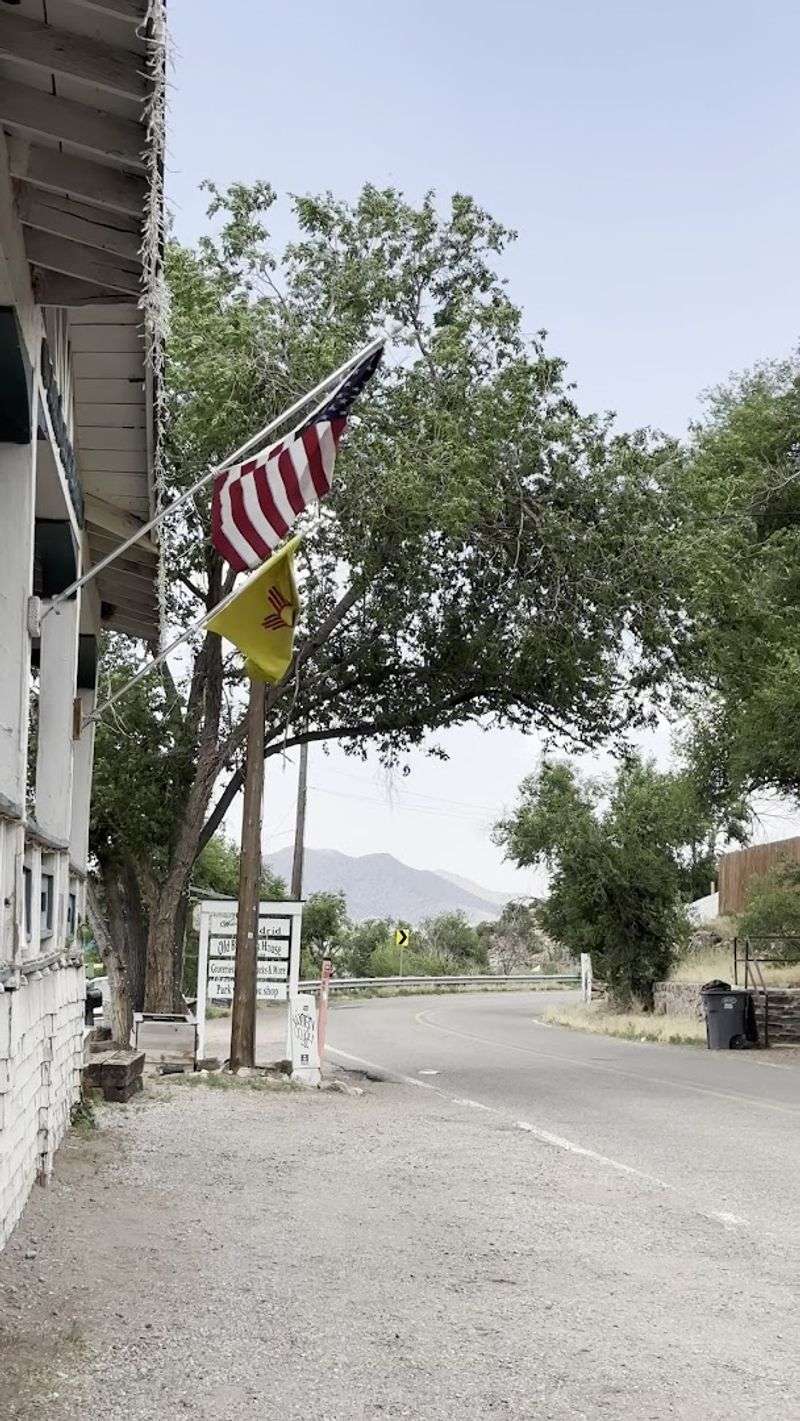
Spring arrives quietly along NM-14, but it hits hard visually. Wildflowers start pushing through the sandy soil in April.
The hills shift from winter brown to a soft, living green almost overnight.
Summer brings the famous New Mexico monsoon season. Afternoon thunderstorms roll in fast and dramatically.
The sky turns purple and gold simultaneously, which sounds impossible but happens constantly.
Those summer storms also trigger a second bloom of wildflowers. Chamisa and desert marigolds explode across the roadsides.
The air smells incredible after every rain shower passes through.
Fall is arguably the most cinematic season on the trail. The grasses turn golden, the junipers stay deep green, and the sky gets that impossibly saturated blue.
The contrast is almost too much to handle.
Some cottonwood trees along arroyos near Cerrillos turn bright yellow in October. They glow against the red rock walls like natural spotlights.
It is a short window, so timing matters.
Winter strips the landscape down to its bones. The bare hills reveal geological layers more clearly than any other season.
Snow occasionally dusts the Ortiz Mountains and creates a striking black-and-white-and-rust palette.
Road conditions in winter are generally fine on sunny days. But afternoon ice can form quickly at higher elevations.
Check the New Mexico DOT road conditions before heading out in January or February.
Local Art Inspired By The Landscape Colors
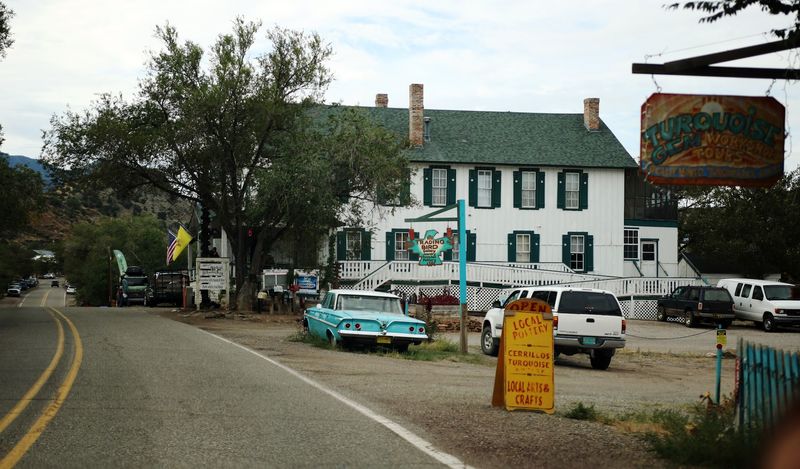
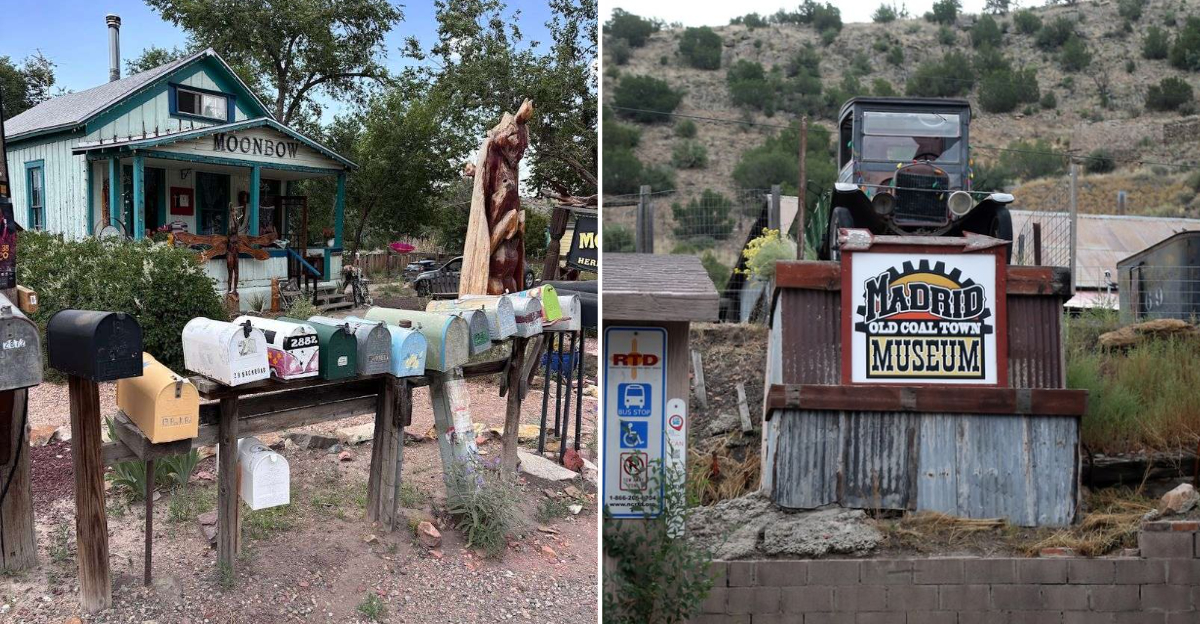
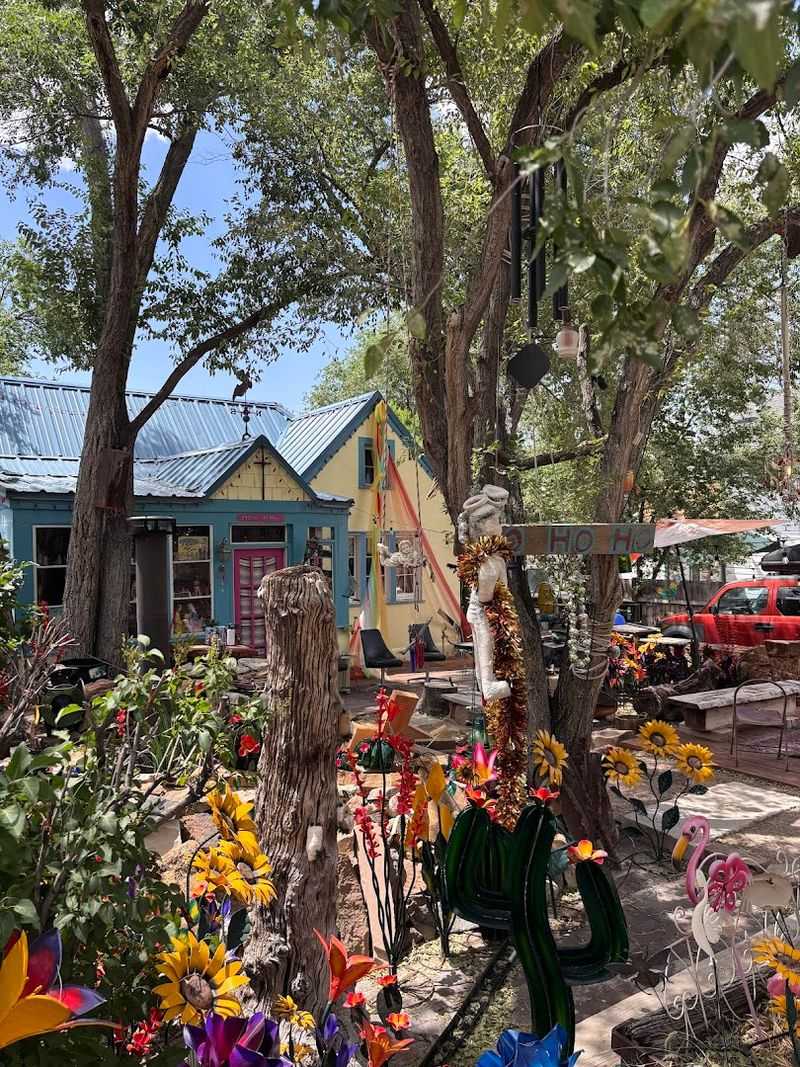
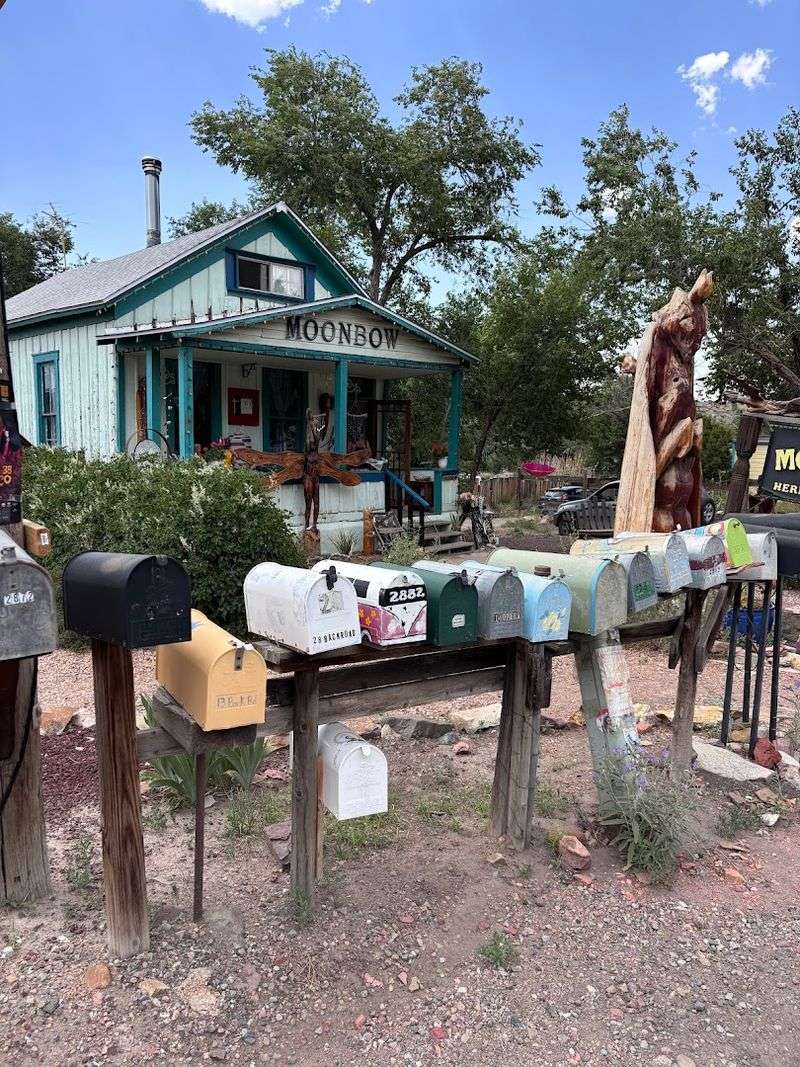
Madrid, New Mexico, is basically an open-air art gallery that also happens to have a zip code. The town lines its main street with studios, galleries, and shops.
Every building is painted in colors that reference the surrounding landscape.
Artists started settling in Madrid in the 1970s when the old coal town was nearly abandoned. They came for the cheap real estate and stayed for the light.
That legendary high desert light is warm, clear, and endlessly inspiring.
Painters here work in oils, watercolors, and acrylics that pull directly from the terrain palette. Turquoise, ochre, rust, sage green, and sky blue show up everywhere.
The landscape essentially tells artists what colors to use.
Sculptors use local stone and salvaged metal to create pieces that reference the geology. You will find work displayed outdoors, weathering naturally alongside the same rocks that inspired it.
That connection feels intentional and honest.
The annual Turquoise Trail Studio Tour opens private studios to visitors. You can watch artists work in real time against the backdrop of the very landscape they paint.
It is a rare and worthwhile experience.
Cerrillos also has working artists, though the scene there is quieter. The Casa Grande Trading Post and Museum gives context to the area’s turquoise mining heritage.
That history feeds directly into the artistic identity of both towns.
Best Viewing Points For Panoramic Painted Scenery
The stretch of NM-14 between Tijeras and Madrid offers some of the most sweeping views on the entire byway. The Sandia Mountains rise dramatically to the west.
On clear days, you can see for what feels like forever.
Just north of Madrid, the road climbs slightly and opens up toward the Ortiz Mountains. That elevation gain reveals a wide basin of pale golden terrain below.
It is the kind of view that makes you involuntarily slow down.
The area around Cerrillos has lower, rolling terrain with exposed volcanic formations. Pullouts here give you unobstructed views of the entire Galisteo Basin.
The ancient volcanic plugs and mesas add texture to every sightline.
Heading north toward Galisteo, the landscape flattens into open sagebrush plains. The Sangre de Cristo Mountains appear in the distance as a purple-blue backdrop.
That layered depth makes the scene feel almost three-dimensional.
Early morning fog occasionally settles in the low valleys near Cerrillos. Watching it burn off as the sun rises is a genuinely special experience.
The light shifts through orange, gold, and white within about thirty minutes.
Do not ignore the pullouts that face east. The Ortiz Mountains catch early morning light in a way that makes the mineral-stained rock faces glow.
Those spots are less photographed and more rewarding for it.
There are no formal overlook platforms on most of the route. Gravel shoulders and natural flat areas serve as informal viewpoints throughout.
Roadside Attractions That Enhance The Scenic Experience
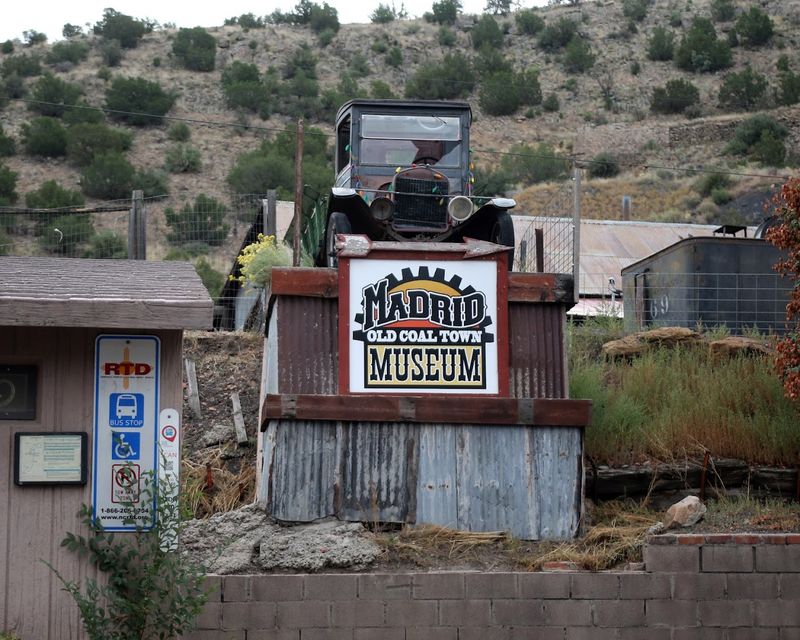
Madrid is the undisputed star of the roadside attraction lineup on NM-14. The entire town operates as a living attraction.
Its single main street packs galleries, shops, a ballpark, and a famous old-school saloon all within walking distance.
The Mine Shaft Tavern in Madrid is a local institution with a history going back decades. Live music happens regularly, and the building itself is worth seeing.
It fits perfectly into the weathered, artistic character of the town.
Cerrillos is smaller and quieter, but no less interesting. The Cerrillos Hills State Park sits just outside town and offers hiking trails through volcanic terrain.
The park also has a small turquoise mining museum worth a stop.
Casa Grande Trading Post in Cerrillos displays actual turquoise specimens and mining artifacts. It is one of the few places where you can see raw turquoise in context.
The building itself has an old-West look that photographs beautifully.
Roadside art installations pop up unexpectedly along NM-14. Local artists occasionally place sculptures or painted rocks near the highway.
They appear and disappear without announcement, which makes finding them feel like a small discovery.
The old ballpark in Madrid hosts the annual Christmas in Madrid event every December. The whole town lights up with holiday displays and live performances.
It draws visitors from across the region every year.
Fuel up in Albuquerque or Santa Fe before the drive. Gas stations along the route are limited and sometimes closed unexpectedly.
Safety And Preparation Tips For The Drive
NM-14 is a two-lane highway for most of its length. Passing opportunities are limited in several stretches.
Drive at a comfortable pace and let faster traffic pass when you can.
Cell service is inconsistent along the route, especially near Cerrillos and the rural sections. Download an offline map before you leave.
Google Maps and maps.me both work well without a signal.
Summer afternoon thunderstorms can arrive fast and reduce visibility quickly. If you see a dark storm building to the west, find a safe pullout and wait it out.
Flash flooding is possible in low-lying areas near arroyos.
Winter driving requires extra caution after snowfall. The road surface can ice over quickly at higher elevations near the Ortiz Mountains.
All-season tires are the minimum recommendation for a winter visit.
Bring more water than you think you need. The high desert air is dry, and the sun is intense even in cooler months.
A gallon per person per day is a solid baseline for any desert outing.
Wildlife crossings are unmarked along most of NM-14. Deer and other animals move across the road at dawn and dusk.
Reduce speed during those hours and stay alert.
A basic roadside emergency kit is worth keeping in your vehicle. Include a spare tire, jumper cables, and a flashlight.
The route is beautiful but remote in several stretches, and help can take time to arrive.