
The Sleepy North Carolina Small Town Perfect For A Slow Weekend
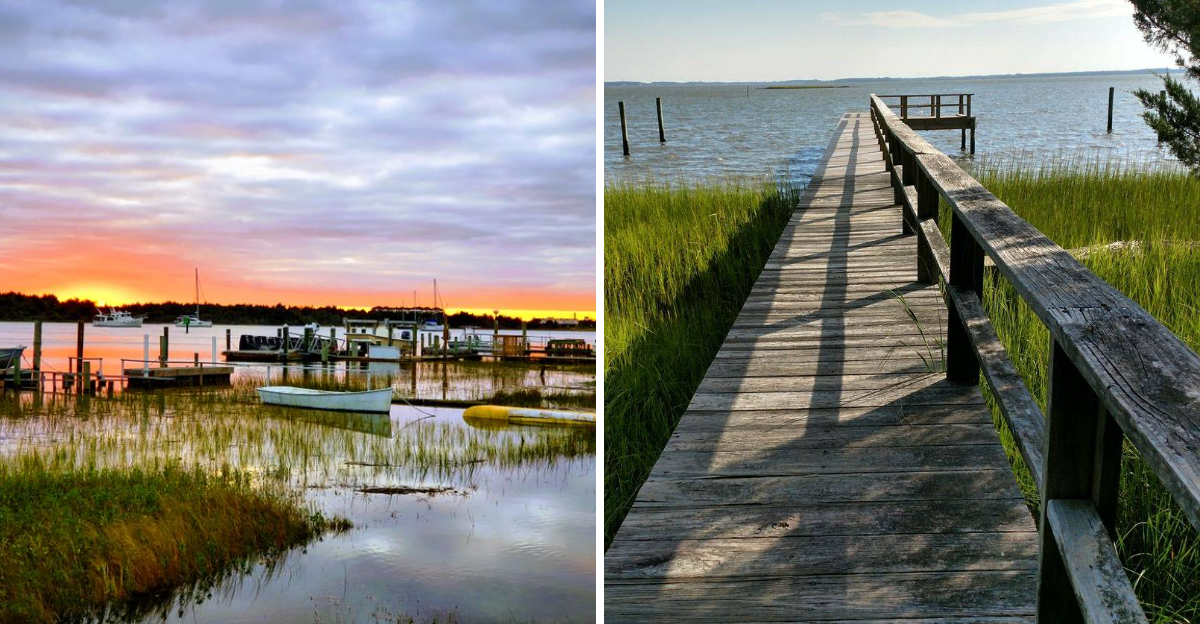
Beaufort, North Carolina sits quietly along the state’s Inner Banks, where time moves at a different speed than the rest of the world.
Founded in 1709 and incorporated in 1723, this coastal gem remains one of North Carolina’s oldest towns, yet it has never felt the need to modernize beyond its own comfortable rhythm.
With just over 4,400 residents, Beaufort offers visitors a rare chance to step away from hurried schedules and rediscover what weekends were meant to feel like.
Between waterfront strolls, wild horse sightings, and meals that stretch into the evening, this town proves that slowing down isn’t just relaxing—it’s necessary.
A 300-Year-Old Town That Never Learned To Rush
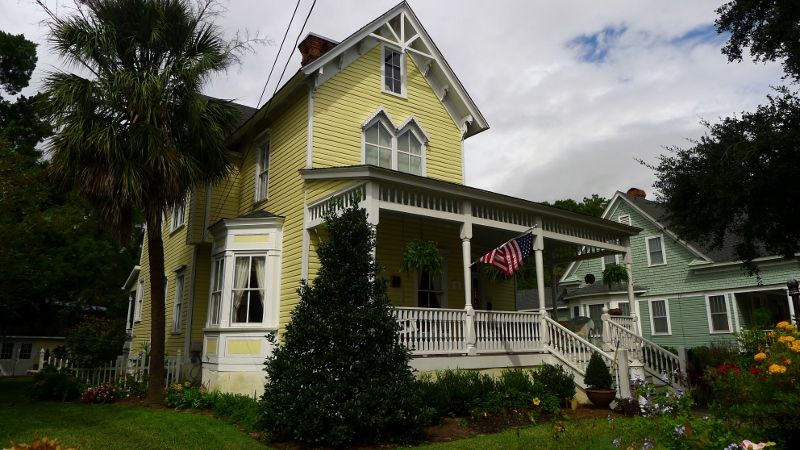
Beaufort’s age shows not in decay but in confidence.
The town was established in 1713, making it the third oldest in North Carolina, and it wears that history without fanfare or gift shops on every corner.
Walking through the historic district feels less like touring a museum and more like visiting a neighbor who has simply chosen not to redecorate.
Wooden porches sag gently under centuries of coastal humidity.
Oak trees arch over narrow lanes, their branches tangled with Spanish moss that sways in the salt breeze.
Houses painted in faded yellows and blues sit close to the sidewalk, their shutters slightly weathered, their gardens overgrown in the best possible way.
Nobody here seems in a hurry to impress anyone.
That lack of urgency is precisely what makes Beaufort so appealing.
You can spend an entire afternoon wandering without a map, and the town will reward you for it with quiet corners, unmarked cemeteries, and views that haven’t changed in generations.
The Waterfront Is The Main Attraction
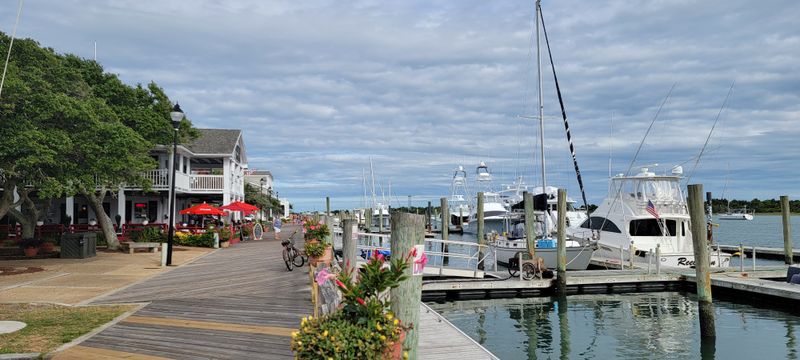
Taylor’s Creek defines Beaufort’s daily rhythm.
The waterfront boardwalk stretches along the edge of downtown, offering unobstructed views of the water, the boats, and the barrier islands beyond.
Benches line the walkway, and they’re rarely empty—locals and visitors alike seem drawn to the water’s edge at all hours.
Sailboats bob in their slips, their masts clinking softly in the wind.
Fishing boats come and go with the tides, their captains waving to people on shore as if everyone here is somehow connected.
Across the creek, wild horses occasionally appear on the dunes of Carrot Island, their silhouettes visible even from town.
There’s no admission fee, no scheduled tour, no pressure to move along.
You simply show up, sit down, and watch.
The waterfront doesn’t compete for your attention—it earns it quietly, the way good things always do.
A Wild Island Reserve Sits Just Offshore

Rachel Carson Reserve lies just across Taylor’s Creek, close enough to see but far enough to feel untouched.
The reserve consists of several small barrier islands, including Carrot Island, Bird Shoal, and Middle Marsh, all protected and kept free from development.
You can reach them by kayak, small boat, or ferry, and once you arrive, the silence is immediate.
Trails wind through maritime forest and salt marsh, where egrets stalk through shallow pools and fiddler crabs scatter across the mud.
The beaches here are wide and empty, littered with shells and driftwood but never with crowds.
It’s the kind of place where you can walk for an hour and see no one but yourself.
The reserve was named after the marine biologist and author who spent time studying these coastal ecosystems.
Her work emphasized the fragility and importance of places like this, and visiting the islands today feels like stepping into one of her chapters—quiet, observant, and deeply alive.
Wild Horses Still Roam The Nearby Banks
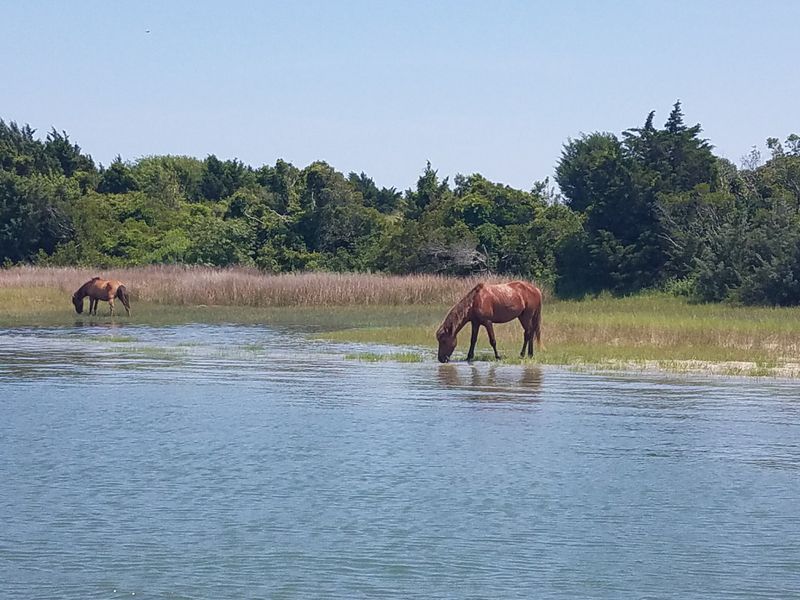
Carrot Island’s wild horses are descendants of Spanish mustangs, left behind centuries ago and now free to wander as they please.
They move in small herds across the dunes and through the marsh, grazing on cordgrass and drinking from tidal pools.
Seeing them from the Beaufort waterfront is common, but getting closer requires a boat or kayak.
These aren’t farm animals or attractions—they’re genuinely wild, unbothered by human schedules or expectations.
Some days they stay hidden in the interior of the island; other days they graze near the shoreline, close enough to photograph but always maintaining their distance.
Watching them feels like witnessing something that shouldn’t still exist in the modern world, yet here it does.
Local regulations protect the horses, and visitors are reminded to observe from a respectful distance.
That boundary only adds to the experience.
The horses belong to the island, not to us, and Beaufort respects that distinction in a way that feels increasingly rare.
History Feels Quiet Here, Not Crowded
Old Burying Ground sits just a few blocks from the waterfront, shaded by live oaks and surrounded by a low brick wall.
Established in 1731, the cemetery holds the graves of sailors, Revolutionary War soldiers, and early settlers, their headstones tilted and worn smooth by centuries of weather.
There’s no ticket booth, no guided tour unless you arrange one, and no gift shop at the exit.
Walking through the cemetery feels personal, almost intrusive, as if you’ve wandered into someone’s backyard.
The inscriptions are faint but still readable, telling stories of shipwrecks, yellow fever, and lives lived entirely within the boundaries of this small town.
One grave belongs to a young girl buried in a rum barrel; another marks the resting place of Otway Burns, a privateer and shipbuilder.
History in Beaufort doesn’t shout.
It lingers in the background, patient and unhurried, waiting for those curious enough to stop and listen.
A Free Museum That Rewards Curiosity, Not Speed

North Carolina Maritime Museum anchors the downtown district at 315 Front Street, offering free admission to anyone willing to wander its halls.
The exhibits focus on the region’s seafaring history, from fishing and boatbuilding to piracy and shipwrecks.
One entire section is dedicated to Blackbeard, whose flagship, the Queen Anne’s Revenge, was discovered off the coast nearby.
Artifacts recovered from the wreck are displayed with careful detail—cannons, medical instruments, fragments of the ship itself.
Other galleries showcase local marine life, model ships, and tools used by watermen for generations.
The museum doesn’t rush you through with flashy displays or interactive screens; it trusts you to engage at your own pace.
Children press their faces against glass cases while adults linger over handwritten ship logs and faded maps.
The staff is knowledgeable but never intrusive, offering information only when asked.
It’s the kind of museum that feels like a public service rather than a tourist trap, and Beaufort is better for it.
Meals Are Meant To Be Lingering Affairs
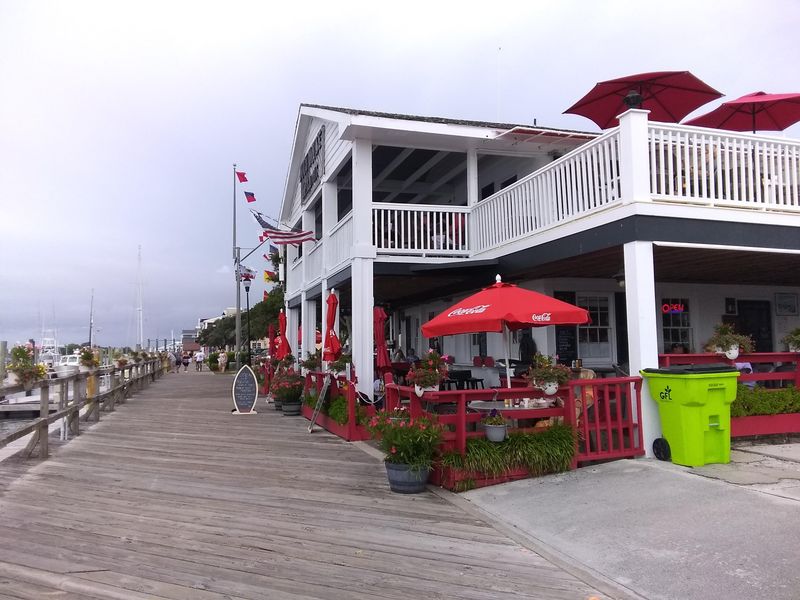
Beaufort’s dining scene operates on island time, even though it’s technically not on an island.
Restaurants here serve fresh seafood—shrimp, flounder, oysters—caught locally and prepared without unnecessary fuss.
Tables fill slowly, and no one seems bothered by the wait.
Conversations stretch long past the last bite, fueled by sweet tea and the kind of comfort that comes from not having anywhere else to be.
Front Street holds most of the town’s eateries, many with outdoor seating that overlooks the water.
Menus lean heavily on regional staples: crab cakes, clam chowder, hush puppies, and shrimp prepared a dozen different ways.
Portion sizes are generous, and the atmosphere is casual enough that no one minds if you show up in sandals and sunburned shoulders.
Service moves at a measured pace, not out of negligence but out of respect for the experience.
In Beaufort, meals aren’t just fuel—they’re rituals, and rushing through one would miss the point entirely.