
The Tennessee Spring That Feels Like A Secret World Beneath The Surface
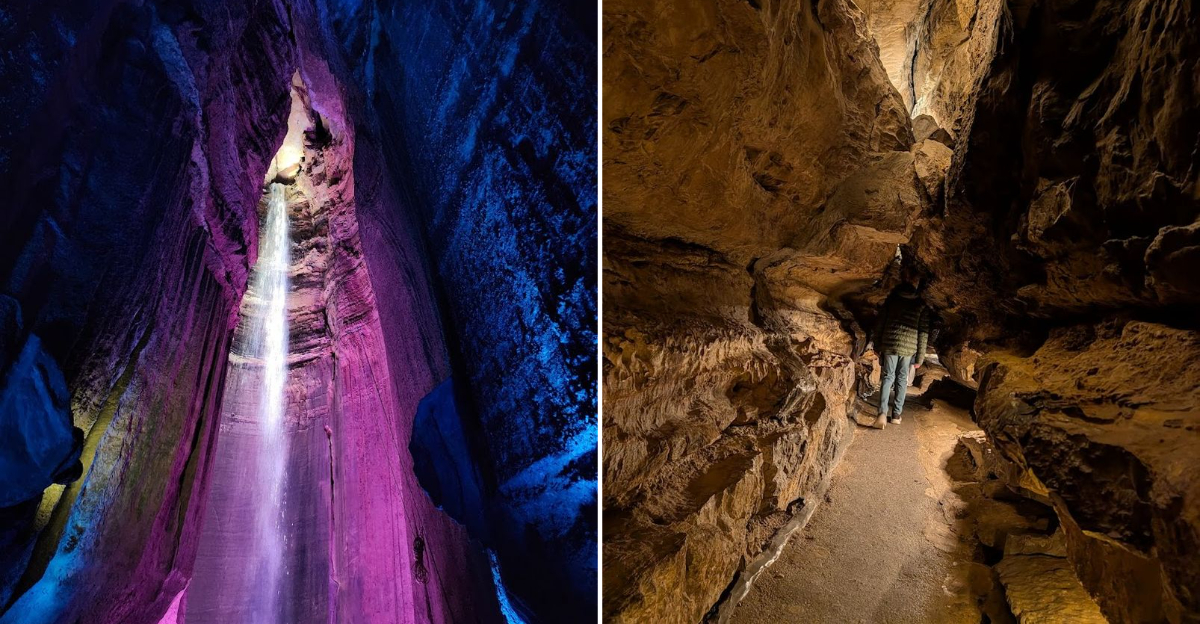
Most travel content follows the same script. Someone discovers a place, calls it a “hidden gem”, and suddenly it’s on every itinerary in the country.
This story is not that. The Tennessee spring we are talking about has a quality that photographs struggle to capture honestly.
The water does not look real. It sits at a temperature that shocks you into full alertness.
The clarity of it makes you feel like you are looking at something that belongs in a nature documentary rather than a state you thought you already understood. Tennessee surprises people.
Not in the loud, obvious way that Nashville does. It surprises them quietly, in places that require a little effort to reach and reward that effort in ways that are genuinely hard to put into words.
This is one of those places. And once you see it, you will understand why the people who know about it rarely talk too loudly.
Formation And Geological Features Of Tennessee Springs
Millions of years ago, a shallow sea covered what is now Tennessee. That ancient water left behind thick layers of limestone, and that limestone became the foundation for one of the most jaw-dropping underground spaces in the United States.
Ruby Falls sits 1,120 feet beneath Lookout Mountain. The cave formed through chemical weathering, where slightly acidic groundwater slowly dissolved cracks in the limestone over hundreds of millions of years.
That process created the winding passages and massive chambers that visitors walk through today.
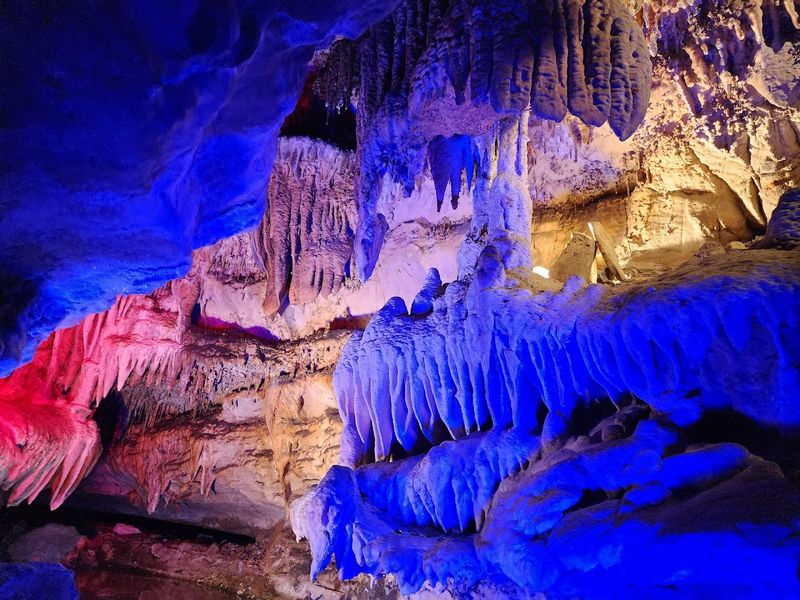
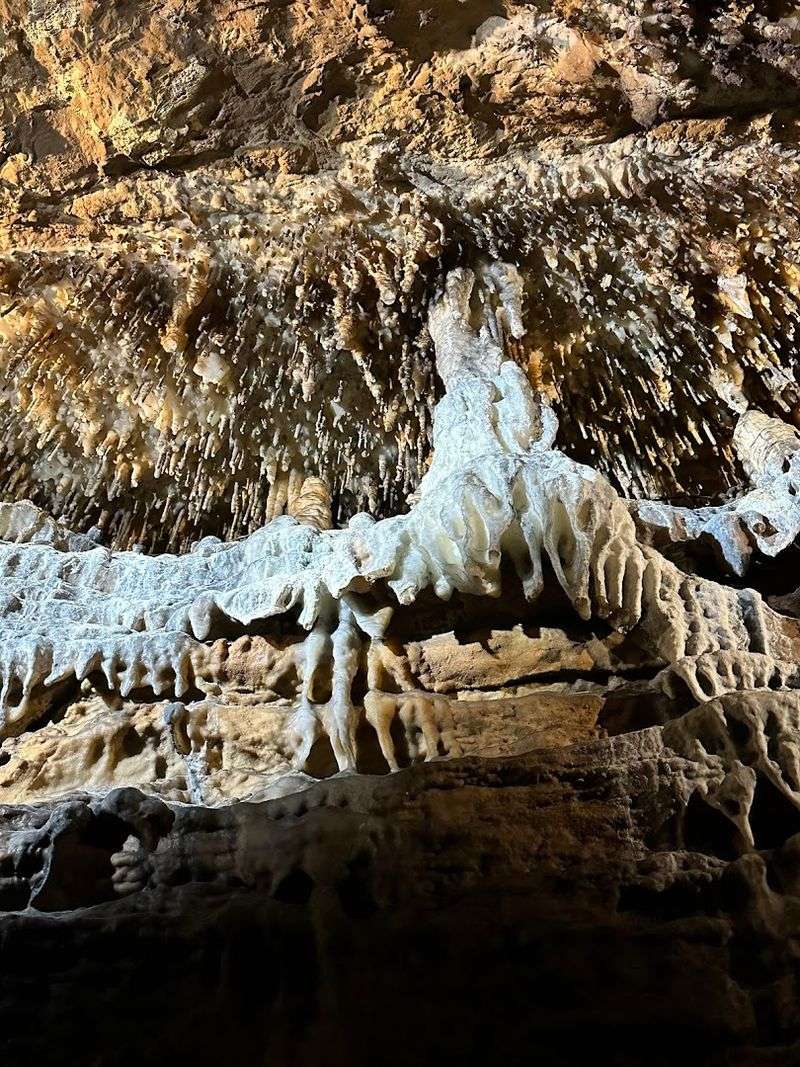
Inside the cave, you will find speleothems everywhere. Stalactites hang from the ceiling.
Stalagmites rise from the floor. Columns form where the two meet.
Drapery and flowstone coat the walls in smooth, rippling layers. Each formation took thousands of years to build, one tiny mineral deposit at a time.
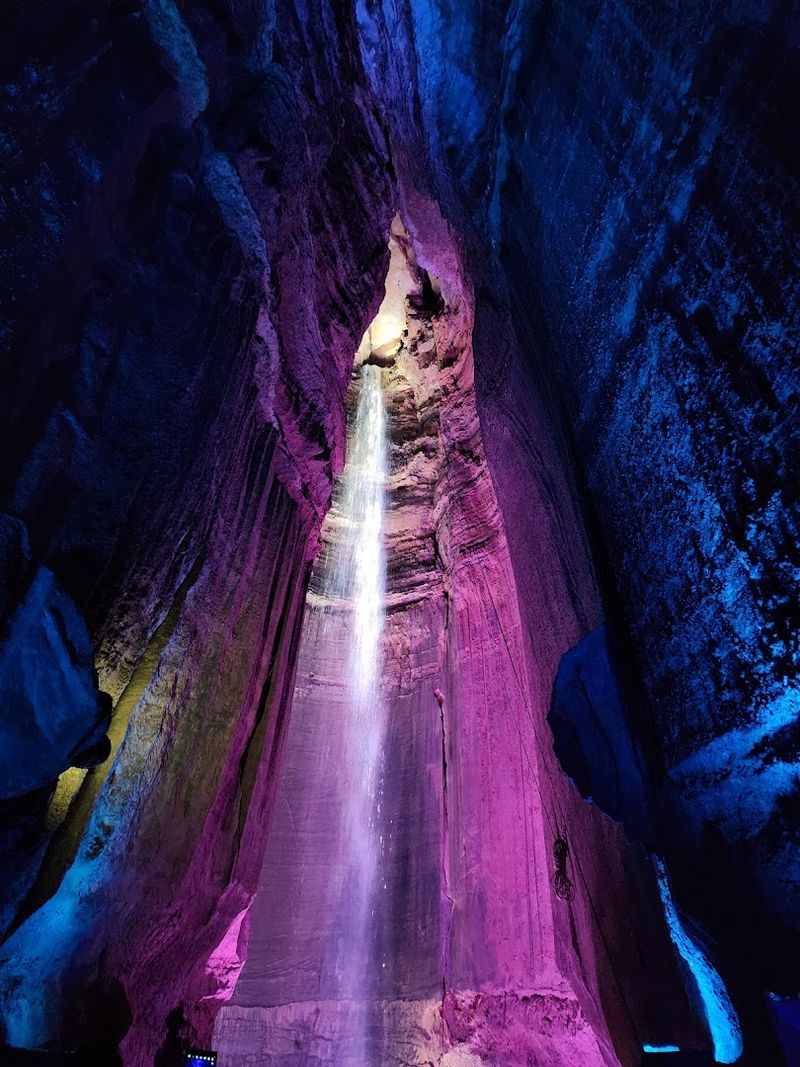
The 145-foot waterfall at the center of it all is fed by rainwater that filters through the mountain from the surface. That water collects deep underground and eventually flows toward the Tennessee River.
Pumps help maintain a steady year-round flow so every visitor gets the full experience.
You can find Ruby Falls at 1720 Scenic Hwy, Chattanooga, TN 37409. The geology here is genuinely unlike anything above ground.
Unique Flora And Fauna Found In Subterranean Waters
Life finds a way, even 1,120 feet underground. The cave environment at Ruby Falls is not exactly a jungle, but it supports a surprising range of organisms that have adapted to near-total darkness and cool, steady temperatures.
Cave-adapted creatures, called troglobites, thrive in places like this. These include specialized invertebrates, cave crickets, and microscopic organisms that rely on minerals and organic material carried in by water.
They do not need sunlight. They have evolved over thousands of generations to survive without it.
The water flowing through the cave carries nutrients from the surface. That slow trickle supports microbial communities that form the base of the underground food chain.
Tiny organisms break down organic matter and feed larger cave dwellers further up the chain.
Above the waterline, mosses and algae sometimes grow near cave entrances where faint light reaches. Deeper in, where total darkness rules, life becomes microscopic and highly specialized.
Bats are also common in cave systems across Tennessee. They roost in dark passages and play a critical role in the broader ecosystem by controlling insect populations outside the cave.
The biodiversity inside a cave like Ruby Falls is easy to overlook. But look closer, and you realize the underground world is very much alive and quietly thriving in ways that are genuinely fascinating to learn about.
The History Behind Tennessee Springs Discovery And Exploration
The story behind Ruby Falls is honestly one of the best discovery stories in American history. In 1928, a man named Leo Lambert was trying to reopen the historic Lookout Mountain Cave that had been sealed off years earlier.
He drilled an elevator shaft through the mountain to reach it.
While drilling, his team broke through into a completely unknown cave passage. Lambert crawled through that passage for hours.
After a long and exhausting journey underground, he reached a massive underground waterfall nobody had ever seen before. He named it Ruby Falls after his wife, Ruby.
That single moment of curiosity changed everything. Lambert opened the site to the public and built the infrastructure that still exists today.
Visitors descend 260 feet into the mountain via a glass-front elevator, just as Lambert envisioned when he first drilled that shaft nearly a century ago.
Since then, Ruby Falls has become one of the most visited cave attractions in the entire country. The guided tours follow a paved, mile-long round-trip trail through the cavern.
Specialty tours, including the Lantern Tour, let visitors experience the cave by lantern light, which gives a much more raw and authentic feel compared to the standard tour.
Leo Lambert did not just find a waterfall. He uncovered a world that had been waiting underground for millions of years.
How To Safely Explore Underground Spring Environments
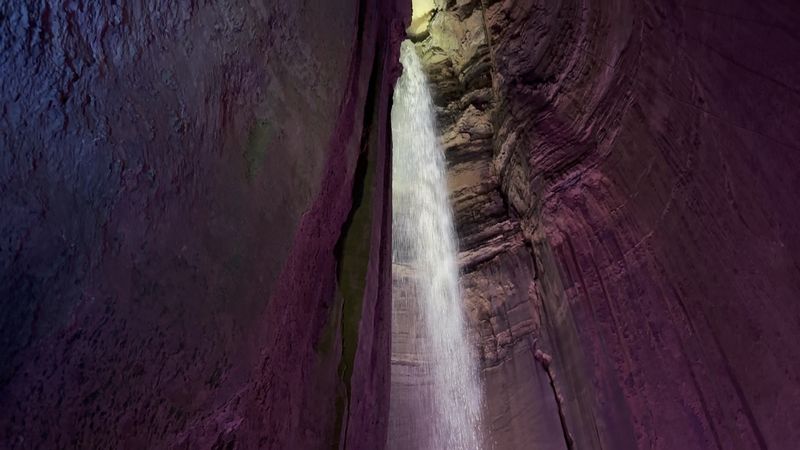
Exploring underground spaces is genuinely exciting, but it requires a little preparation. Ruby Falls makes safety straightforward because every visit is a guided tour.
You are never wandering alone in the dark, which is a huge comfort for first-timers.
Wear sturdy, closed-toe shoes with a good grip. The cave floor can be slippery in certain spots due to moisture from the waterfall and natural seepage.
Flip-flops and sandals are a bad idea down there. Comfortable walking shoes are the right call every single time.
The cave temperature stays around 60 degrees Fahrenheit year-round. That feels refreshing in summer, but surprisingly chilly if you are not prepared.
Bring a light jacket or layer up before you head down the elevator. You will thank yourself for it.
There is a restroom at the cave entrance before you board the elevator. Use it.
Once you go down, there are no restroom facilities until you return to the surface. That is a practical detail that matters more than people expect.
Book your tickets in advance online. Walk-up availability is limited, especially on weekends and holidays.
Arriving without a ticket often means a long wait or no entry at all. Timed tickets keep the tour groups moving smoothly and make the whole experience much more enjoyable for everyone involved.
The Role Of Water Quality In Maintaining Spring Ecosystems
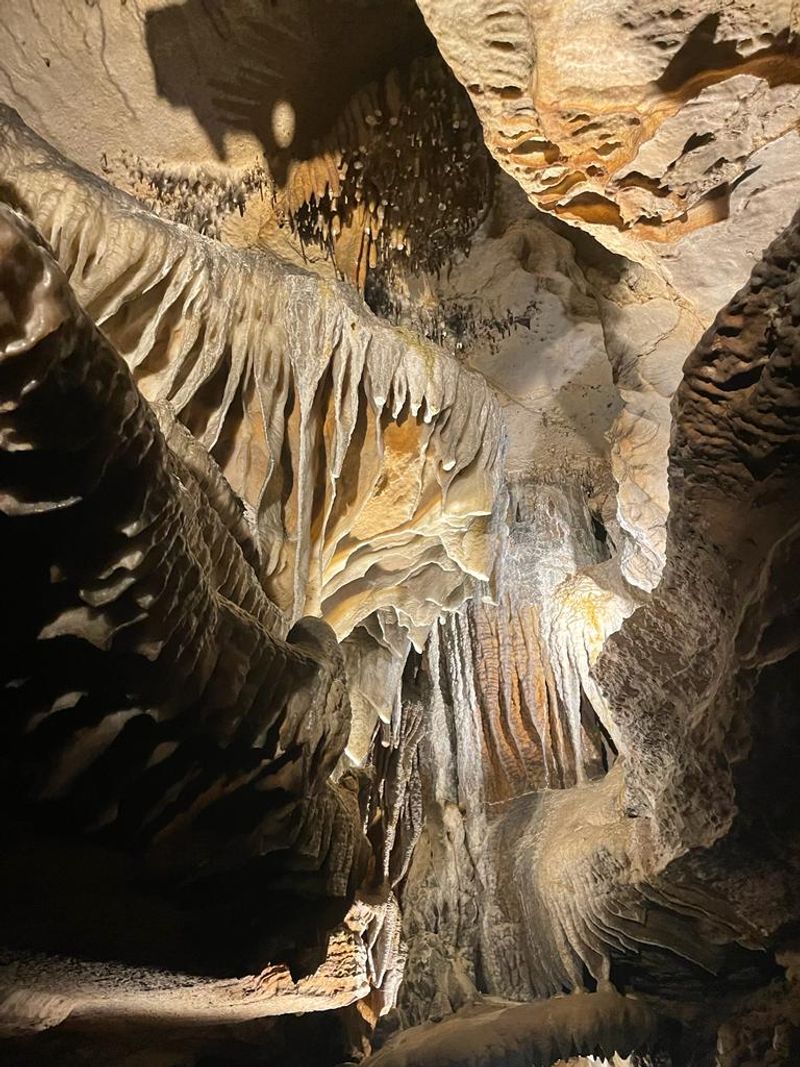
Water quality is everything when it comes to underground spring ecosystems. The water that feeds Ruby Falls filters down through layers of limestone before it ever reaches the cave.
That natural filtration process removes many impurities and gives the water a mineral-rich character that supports cave life.
Limestone acts like a slow filter. As rainwater seeps through the rock, it picks up calcium carbonate and other minerals.
Those minerals are what create the stunning cave formations you see on the walls and ceiling. The same water that builds stalactites also sustains the microscopic organisms living in the cave pool below.
Contamination from the surface is one of the biggest threats to cave water quality. Pollutants from agriculture, road runoff, and construction can travel through limestone aquifers and reach underground systems faster than most people realize.
Once contamination enters a cave system, it is extremely difficult to remove.
At Ruby Falls, water is also artificially circulated by pumps to maintain a consistent flow throughout the year. This ensures the waterfall runs steadily regardless of seasonal rainfall variations.
The combination of natural filtration and managed circulation keeps the ecosystem stable and the waterfall visually impressive.
Clean water underground is not just good for the cave. It connects directly to the broader watershed that communities across the Chattanooga region depend on every single day.
The Impact Of Seasonal Changes On Spring Water Levels
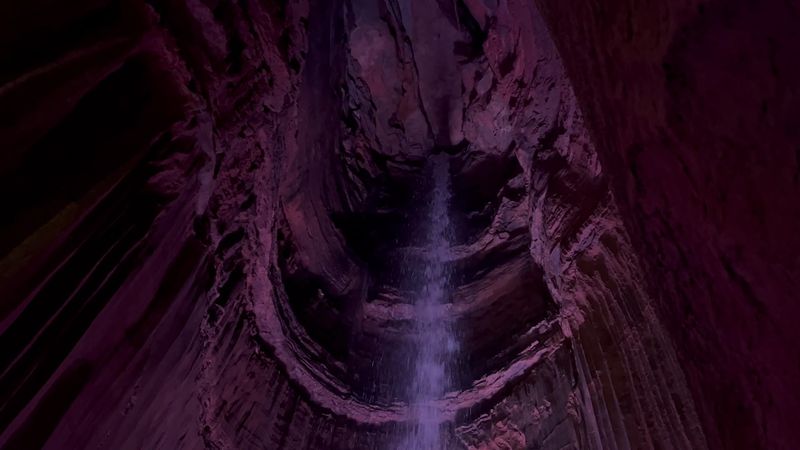
Seasons affect everything above ground, and they quietly affect what happens underground, too. The water feeding Ruby Falls comes primarily from rainwater that percolates through Lookout Mountain from the surface.
When rain is plentiful, more water filters down. When it is dry, less makes the journey.
Tennessee experiences fairly consistent rainfall throughout the year, but summer droughts and winter freezes can both affect how much water reaches the cave system.
Spring and fall tend to bring the most reliable rainfall, which means water levels in underground springs are often highest during those seasons.
At Ruby Falls specifically, pumps are used to maintain a consistent flow year-round. This means visitors always see the waterfall running at an impressive volume, even during drier months when natural flow alone might not be enough.
That managed system ensures the experience stays reliable and visually spectacular, no matter when you visit.
Temperature fluctuations above ground rarely affect the cave interior. The temperature inside Ruby Falls stays around 60 degrees Fahrenheit regardless of what season it is outside.
That stability is one of the things that makes cave environments so unique and ecologically interesting.
Visiting during off-peak seasons like January or February has its own rewards. Smaller crowds, shorter wait times, and a more personal tour experience make the quieter months genuinely worth considering for your trip to Chattanooga.
Photographing The Hidden Beauty Beneath The Surface
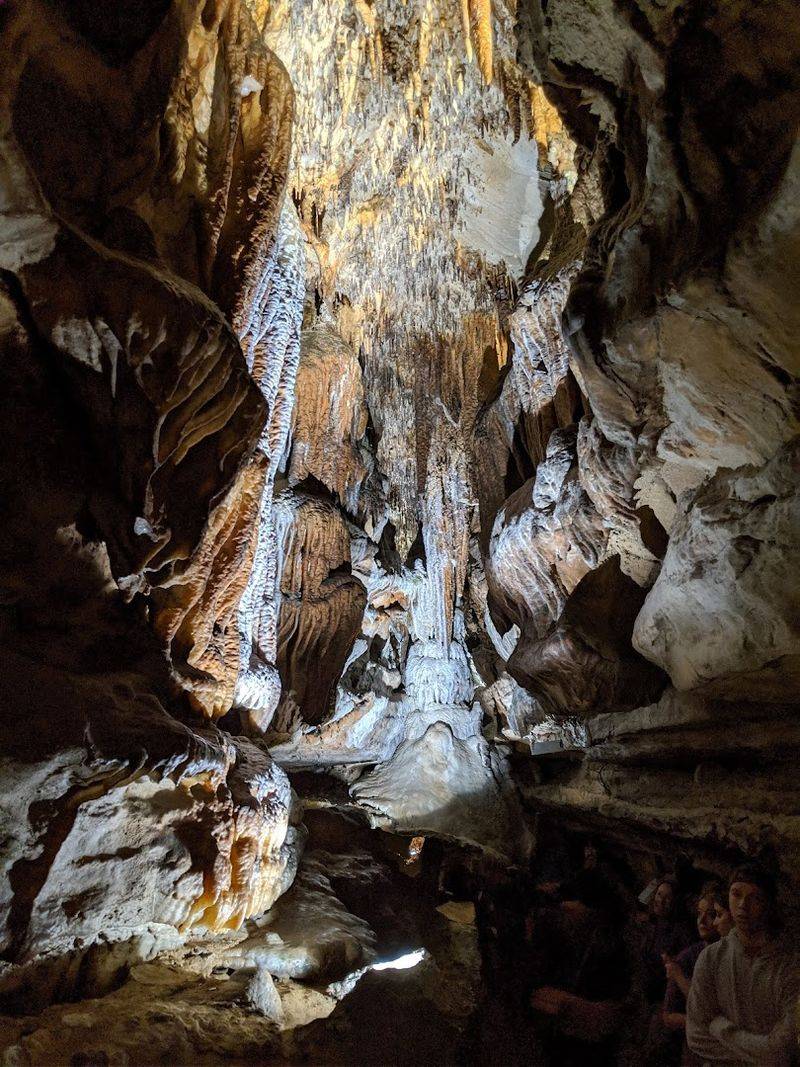
Getting great photos inside Ruby Falls takes a little strategy. The cave is lit with dramatic colored lights, especially around the waterfall itself.
Those lights create a moody, cinematic atmosphere that looks incredible in person. Capturing it on camera requires some patience and a steady hand.
Use your phone or camera in night mode or a low-light setting. The cave is dark between formations, and auto settings often struggle without enough ambient light.
Slow shutter speeds help capture the waterfall with that silky, flowing look. A small travel tripod makes a noticeable difference in shot quality.
The waterfall lighting show runs for a few minutes at a time. When the lights come on, move quickly to find your angle.
The group gathers at the viewing area, so positioning yourself near the front early gives you the clearest sightline without other visitors in the frame.
Wide-angle shots work well in the larger cave chambers. Close-up shots of individual formations, like a perfectly formed stalactite or a patch of flowstone, add variety to your photo collection.
The textures inside the cave are genuinely photogenic and easy to miss if you are focused only on the big waterfall moment.
Avoid using a flash. It washes out the dramatic lighting that makes the cave so visually compelling.
Trust the existing light and adjust your exposure settings instead for far better results.
Local Conservation Efforts To Protect Tennessee Springs
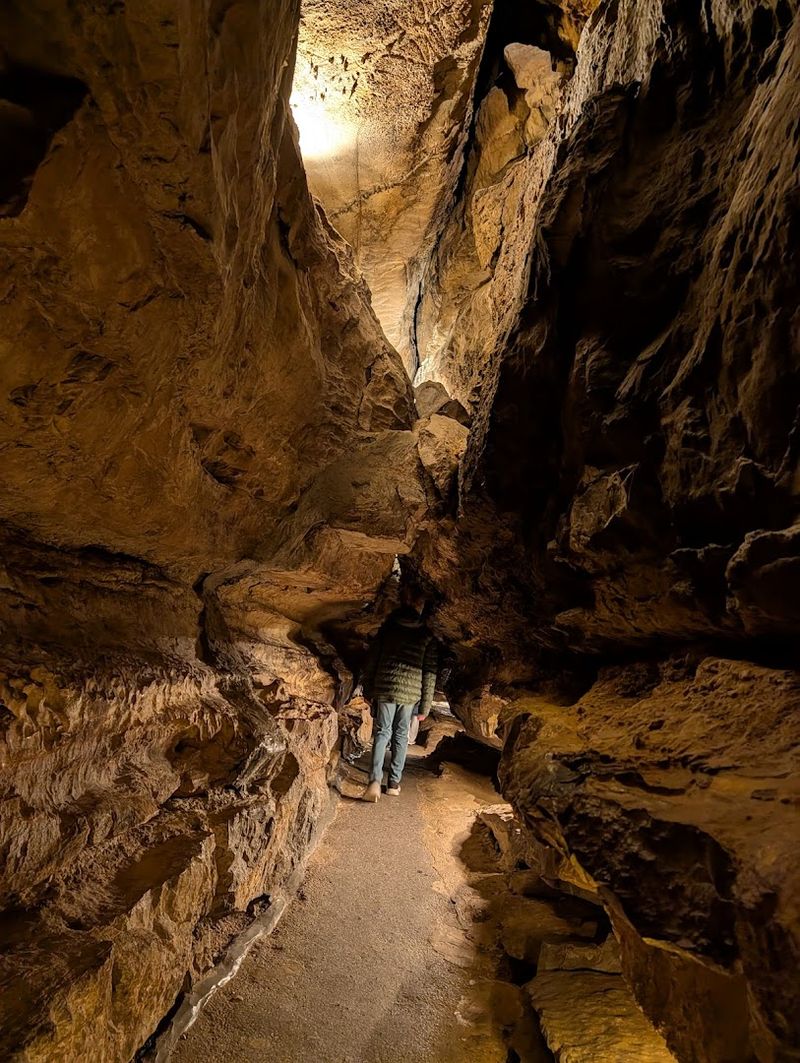
Protecting underground springs like the one feeding Ruby Falls is a serious ongoing effort in Tennessee. Cave systems are fragile.
Once a formation is broken or a water source is contaminated, recovery takes thousands of years. That reality drives conservation work across the state.
Ruby Falls operates as a managed attraction with strict visitor guidelines. The paved trail keeps guests on a defined path to prevent damage to the cave floor and walls.
Touching formations is not allowed because even the oils from human skin can disrupt mineral growth and stain delicate surfaces permanently.
Tennessee is home to one of the most cave-rich landscapes in the entire country. State and local organizations work alongside federal agencies to monitor groundwater quality and protect cave entrances.
They also study the biodiversity living in underground ecosystems. Caves are considered critical habitats for dozens of rare and endangered species.
The broader Lookout Mountain area benefits from conservation attention, too. Forests on the mountain surface help regulate how water filters into the cave below.
Protecting tree cover and limiting runoff from development directly impacts the health of underground springs and the waterfall they feed.
Visitors to Ruby Falls can support conservation simply by following the rules on tour. Staying on the path, not touching formations, and respecting the environment costs nothing.
Those small choices add up and help preserve this underground world for future generations to experience.