
The Timeless Pennsylvania Town That Feels Like A Snapshot From The Past
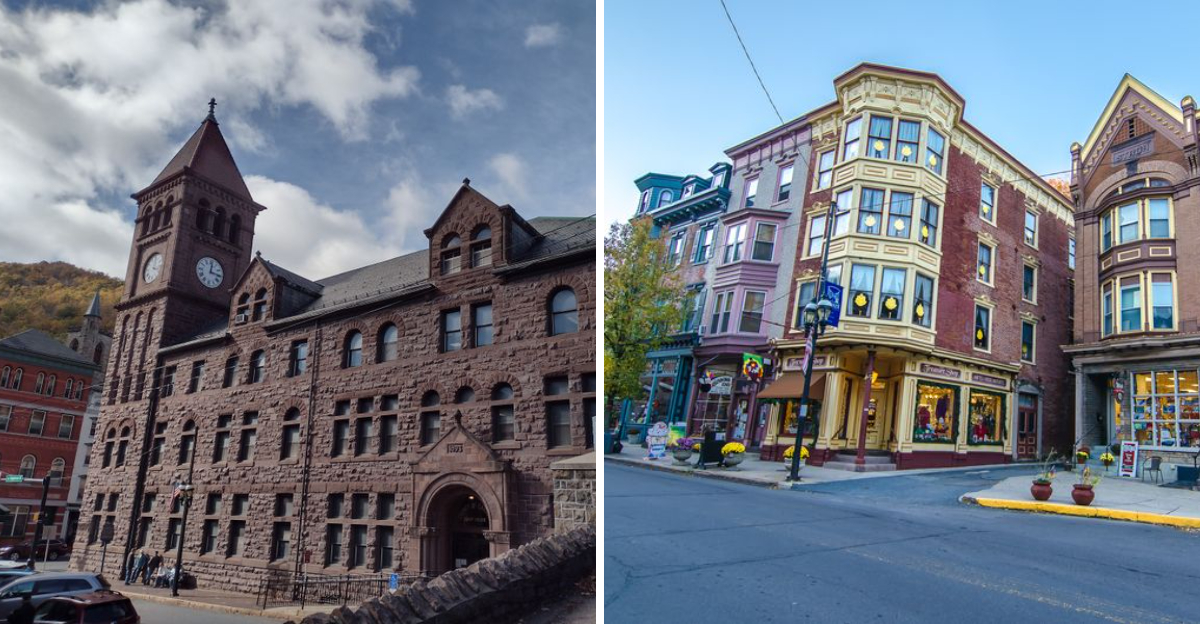
Tucked into the Pocono Mountains of eastern Pennsylvania, Jim Thorpe stands as one of the state’s most beautifully preserved 19th-century towns.
Once a bustling coal mining hub known as Mauch Chunk, this small borough retains much of its Victorian character through intact architecture, historic landmarks, and a layout that hasn’t changed in over a century.
Walking its steep streets feels like stepping back in time, where every corner reveals another piece of America’s industrial past.
A Former Coal Boomtown Preserved Almost Intact
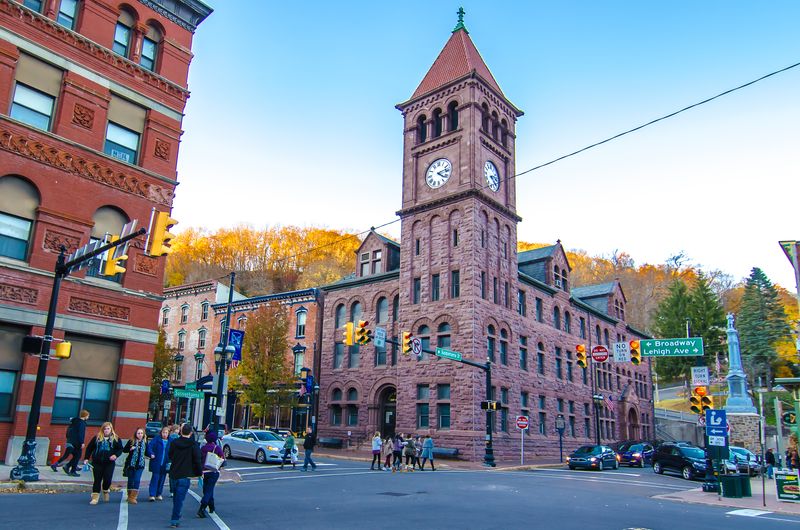
Coal made this town wealthy in the 1800s, and the money built structures meant to last.
Anthracite from the surrounding hills fueled America’s industrial growth, and the profits stayed local, funding grand homes, churches, and civic buildings that still stand today.
Unlike many mining towns that faded or were demolished, Jim Thorpe retained its original bones.
The downtown sits much as it did during the height of the coal trade.
Streets angle sharply uphill, lined with brick storefronts and stone facades that survived economic shifts and modern redevelopment pressures alike.
The Old Mauch Chunk Historic District Locks The Town In The Victorian Era
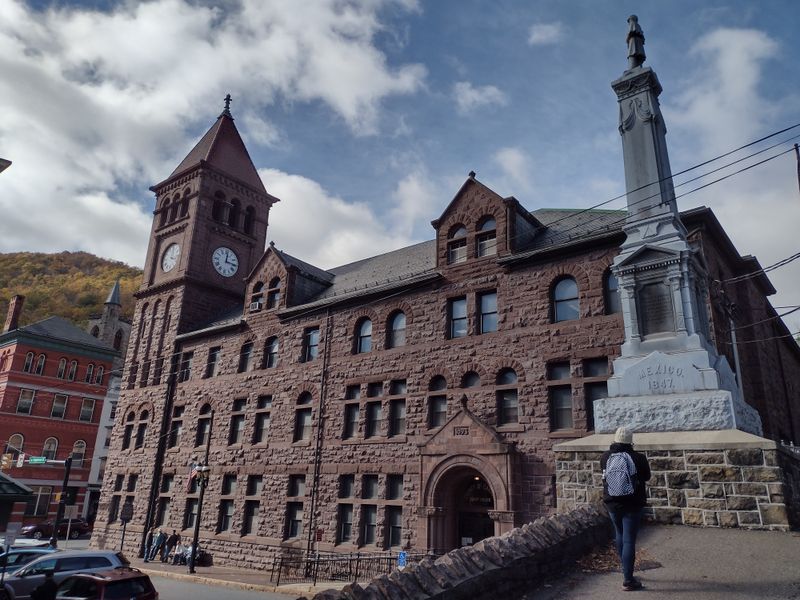
More than 200 buildings within the historic district date back to the mid-1800s, creating a cohesive architectural experience rare in modern America.
Ornate cornices, cast-iron details, and tall windows reflect the prosperity and pride of a town at its peak.
Preservation efforts began decades ago, long before historic tourism became fashionable.
Walking through this district feels less like visiting a museum and more like inhabiting a different century.
The structures weren’t recreated or restored beyond recognition—they simply endured, maintained by residents who understood their value long before outsiders took notice.
Asa Packer’s Mansion Still Overlooks The Town
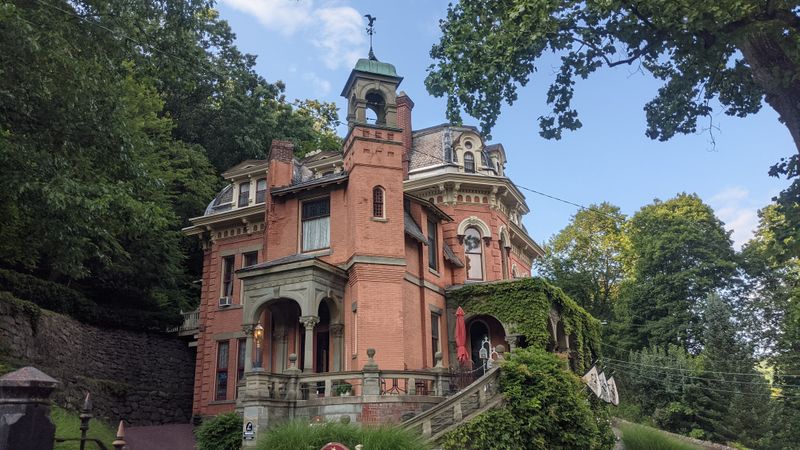
Railroad magnate Asa Packer built his family home in 1861, and it remains one of the finest examples of Italianate architecture in Pennsylvania.
The mansion sits high on a hill at Packer Hill Avenue, its rooms filled with original furnishings, family portraits, and the kind of craftsmanship that defined wealth in the Victorian age.
Servants’ quarters, kitchens, and private spaces show how a household of this scale operated.
The view from the mansion’s windows captures the entire town below, a reminder of Packer’s influence over the region.
Broadway Street Feels Like A Living Museum
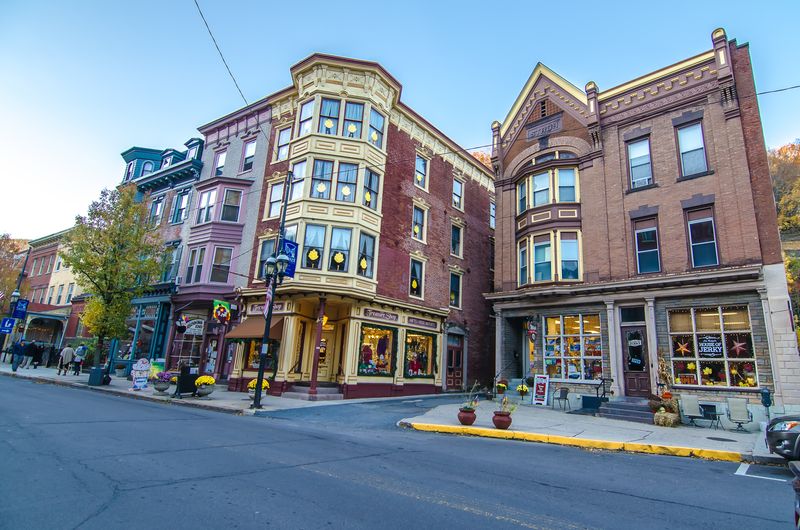
Broadway runs through the heart of town, its storefronts housing cafes, galleries, and shops that occupy spaces built more than a century ago.
The street retains its original width and layout, with sidewalks that slope and curve according to the terrain rather than modern engineering standards.
Businesses here operate in buildings with history embedded in every brick.
Some structures served as banks or hotels during the coal era, their high ceilings and thick walls now adapted to contemporary use.
The mix of old and new creates a setting where commerce continues without erasing the past.
A Scenic Railway Keeps 19th-Century Travel Alive
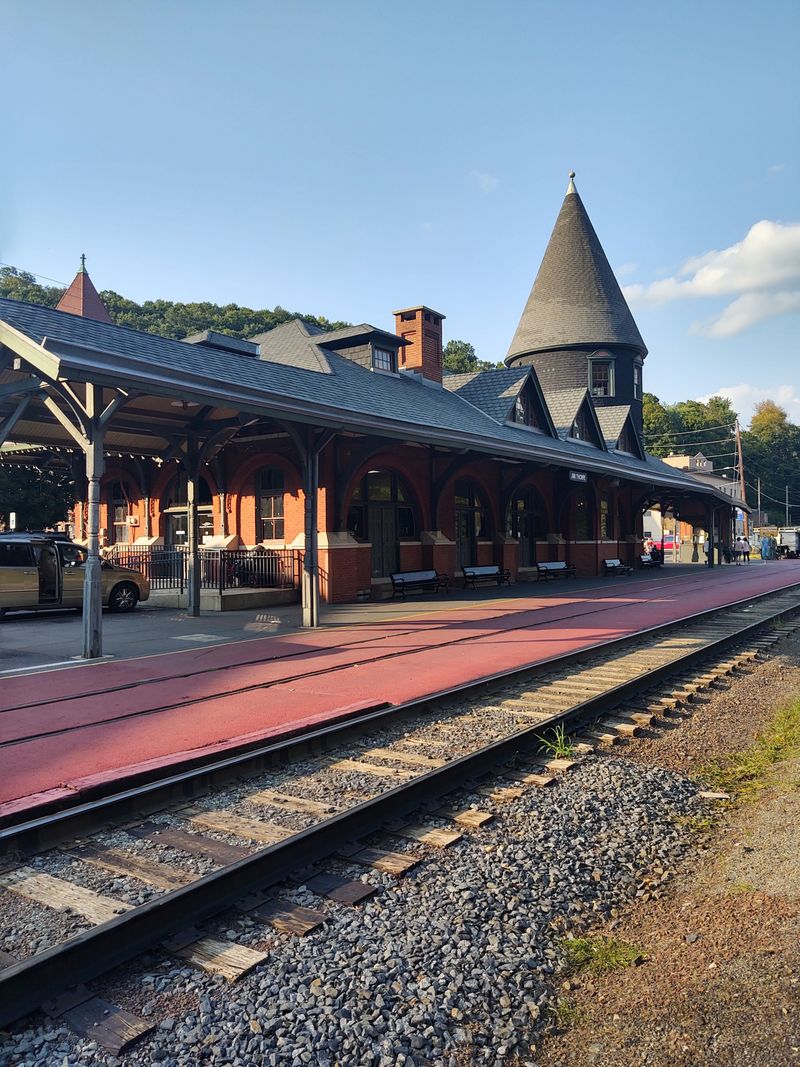
The Lehigh Gorge Scenic Railway operates from the original station, using century-old coaches pulled by diesel engines along tracks laid during the coal boom.
Passengers ride through Lehigh Gorge State Park, following the same route that once transported anthracite to distant markets.
Traveling by rail offers a perspective impossible from the road.
The gorge reveals itself slowly, its cliffs and river bends framed by train windows as they were generations ago.
The ride lasts about an hour, long enough to appreciate both the landscape and the mechanical heritage that shaped this region.
The Old Jail Tells A Darker Side Of Small-Town History
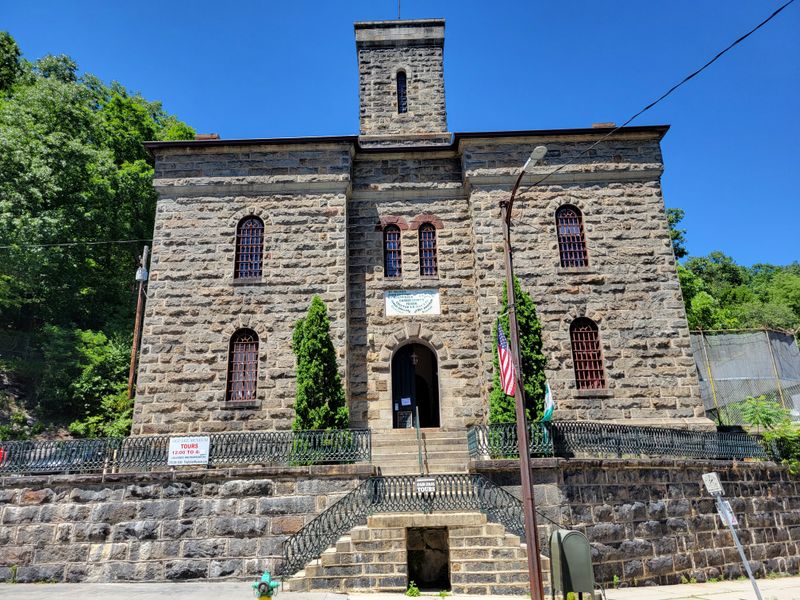
Built in 1871, the Carbon County Jail operated for more than a century before becoming a museum.
Its stone walls and iron cells remain largely unchanged, offering a stark contrast to the ornate homes and commercial buildings elsewhere in town.
The jail’s most famous story involves the Molly Maguires, Irish coal miners accused of organizing against mine owners in the 1870s.
Several were hanged here, and one allegedly left a handprint on his cell wall that remains visible today.
Whether genuine or folklore, the mark draws visitors curious about labor struggles and frontier justice in industrial America.
Music And Theater Still Fill A Historic Opera House
The Mauch Chunk Opera House opened in 1882 and continues to host performances, making it one of the oldest continuously operating theaters in Pennsylvania.
Its stage has seen vaudeville acts, silent films, and modern productions, adapting to each era without losing its original character.
The auditorium retains its vintage seating and acoustics, designed for an age before electronic amplification.
Attending a show here means experiencing entertainment as earlier generations did, in a space built specifically for communal gathering and shared culture.
The opera house stands as proof that historic buildings can remain functional without becoming relics.
A Walkable Layout Encourages Slowing Down
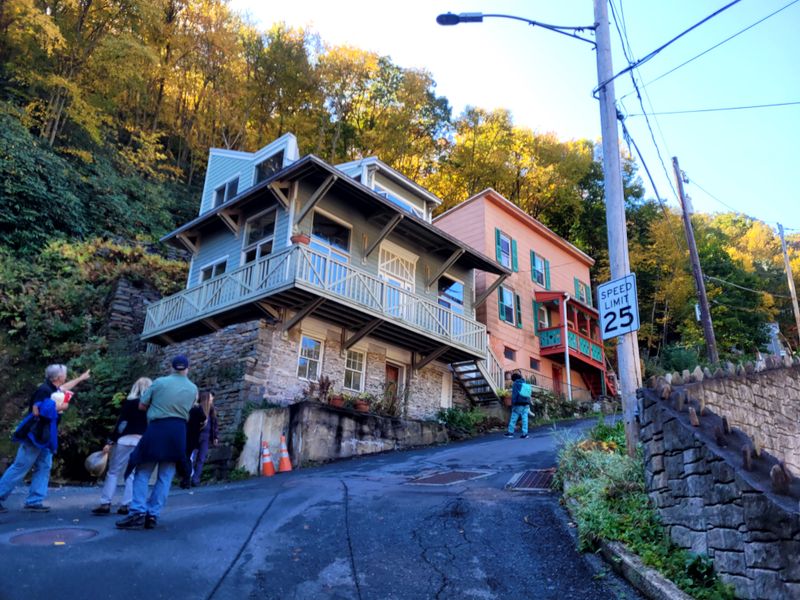
Jim Thorpe’s compact downtown sits within easy walking distance, though the terrain demands a leisurely pace.
Streets climb sharply from the river valley, rewarding uphill effort with views and discoveries tucked into side alleys and residential blocks.
The town wasn’t designed for cars, and that shows in its narrow lanes and lack of parking lots carved into the landscape.
Walking becomes the natural way to explore, forcing visitors to move at a speed that matches the town’s preserved character.
Each block reveals architectural details easily missed from a car window—cornerstones, doorways, and ironwork that tell quiet stories about craftsmanship and care.