
The Undiscovered Small Town In Georgia That Feels Like The Past Never Left
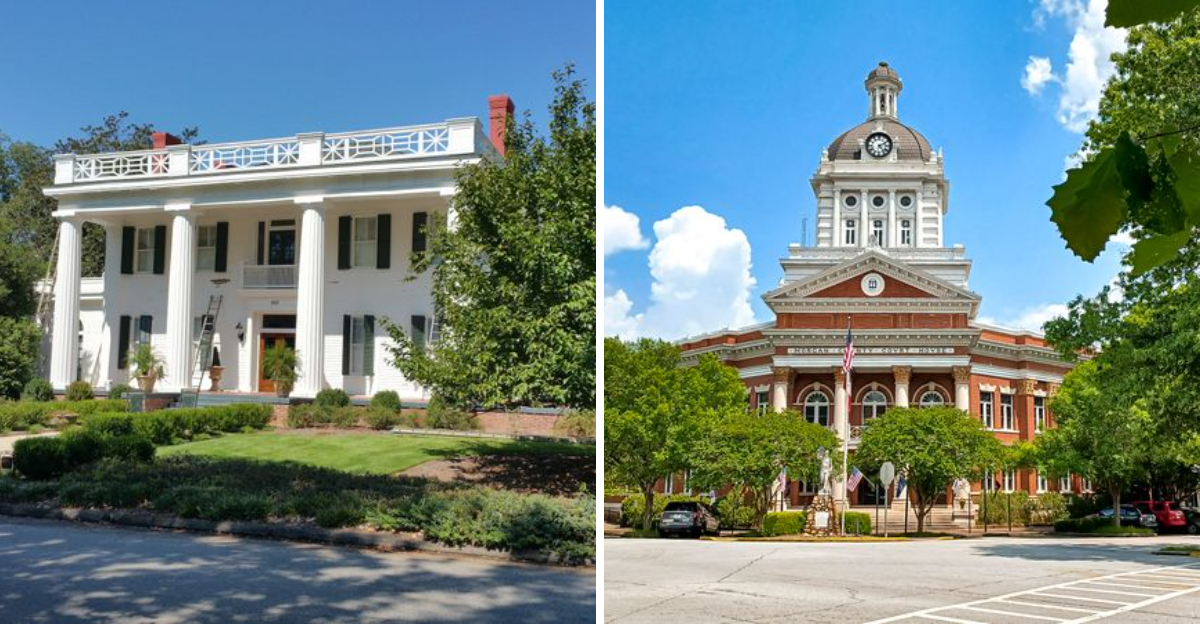
Madison sits quietly in Morgan County, a town that seems to have made peace with the calendar somewhere around 1860 and never felt the need to catch up.
The streets here are lined with homes that predate the Civil War, many of them still occupied by families who understand the value of a deep porch and a slow afternoon.
While other Georgia towns have surrendered to strip malls and traffic lights, Madison has held firm, preserving not just its buildings but the rhythm of life that once defined the American South.
One Of Georgia’s Best-Preserved Towns
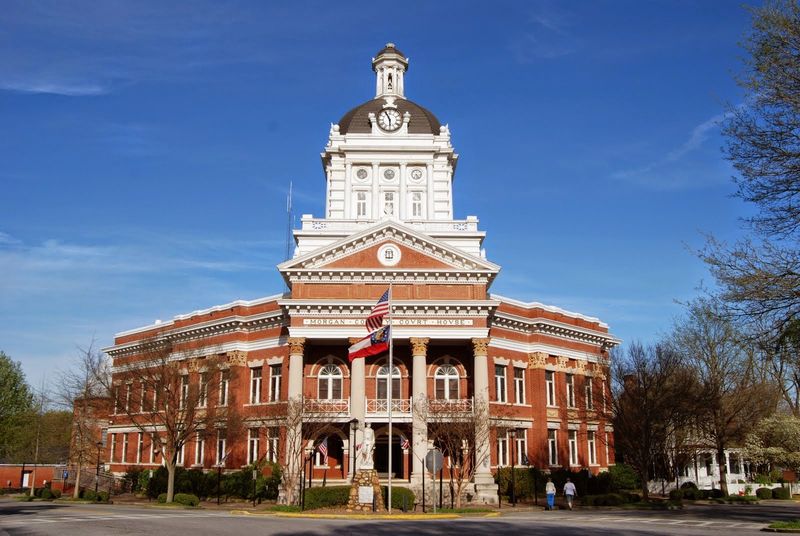
Few places in Georgia can claim the architectural integrity that Madison has maintained over the past century and a half.
The town center holds more than a hundred structures listed on the National Register of Historic Places, a concentration that speaks to both good fortune and deliberate care.
Walking through the residential blocks feels less like visiting a museum and more like stepping into a neighbor’s well-kept memory.
The houses here were built to last, constructed with heart pine and craftsmanship that modern builders rarely attempt.
Many retain their original windows, trim, and hardware, details that would have been stripped away elsewhere in the name of efficiency or style.
Located at 33.5956813, -83.467944 in Morgan County, Madison has avoided the fate of so many Southern towns that lost their character to fire, neglect, or misguided renovation.
The preservation here feels earned rather than performed.
A Historic District Frozen In Time
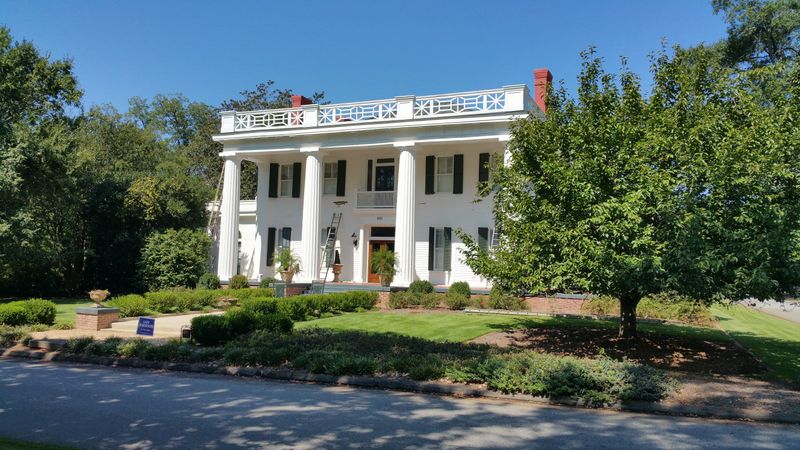
The historic district in Madison does not announce itself with signs or visitor centers.
It simply exists, block after block, as a living document of pre-war Southern architecture.
The boundaries of the district encompass most of the original town, a grid laid out in the early 1800s that has resisted the urge to sprawl or modernize beyond recognition.
Greek Revival mansions sit comfortably beside Federal-style cottages, each one maintained with a seriousness that suggests the owners understand they are temporary stewards rather than permanent proprietors.
The district feels cohesive, not because every house matches, but because they all belong to the same conversation about proportion, material, and restraint.
There are no garish additions here, no vinyl siding or aluminum awnings disrupting the visual rhythm.
The town has kept its architectural grammar intact, and the result is a streetscape that reads as clearly today as it did in 1850.
Streets Built Long Before Cars
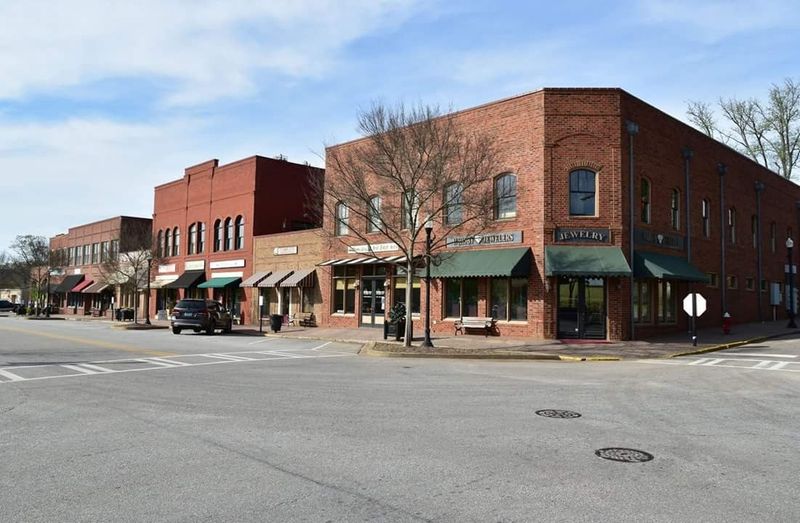
Madison’s streets were designed for horses, carriages, and the occasional pedestrian with nowhere urgent to be.
The lanes are narrow by modern standards, bordered by brick sidewalks that buckle slightly from the roots of old oaks.
There are no stoplights in the historic core, no need for them given the pace at which traffic moves.
The grid itself follows a logic that predates efficiency studies and traffic flow analysis.
Streets intersect at right angles, creating compact blocks that encourage walking rather than driving.
The canopy of trees overhead creates a tunnel effect, shading the pavement and lowering the temperature by several degrees on summer afternoons.
Driving through Madison requires patience and attention, not because the roads are poorly maintained, but because they were never meant to accommodate the speed and volume of modern vehicles.
The town has refused to widen its streets or remove its trees, a decision that keeps the scale human and the atmosphere intact.
A Town Largely Spared By War
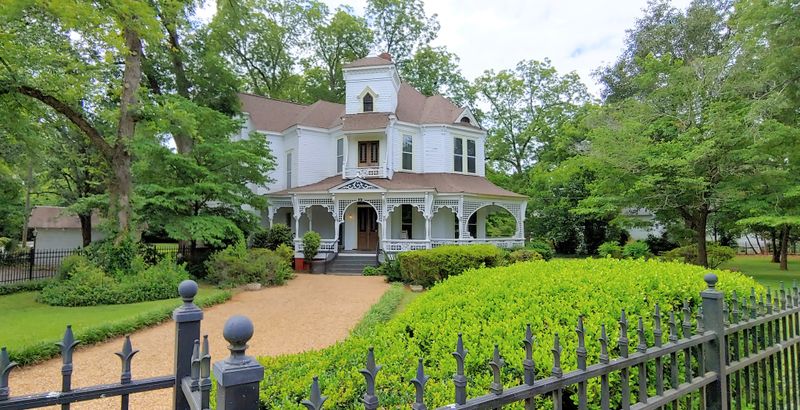
Legend holds that Madison was spared during Sherman’s March to the Sea because a former senator intervened on the town’s behalf.
Whether that story holds up under scrutiny matters less than the fact that Madison emerged from the Civil War with its buildings intact.
Many Georgia towns were burned to the ground, their architectural histories erased in a matter of hours.
Madison survived, and that survival allowed the town to preserve not just structures but an entire way of organizing space and community.
The homes that line Main Street today are the same ones that stood in 1864, a continuity that few Southern towns can claim.
The absence of wartime destruction meant there was no need for hasty reconstruction, no pressure to rebuild quickly with inferior materials or altered designs.
Madison was able to age naturally, its buildings weathering slowly rather than being replaced wholesale.
The result is a town that feels genuinely old rather than reconstructed or themed.
Walking Here Feels Like The 1800s
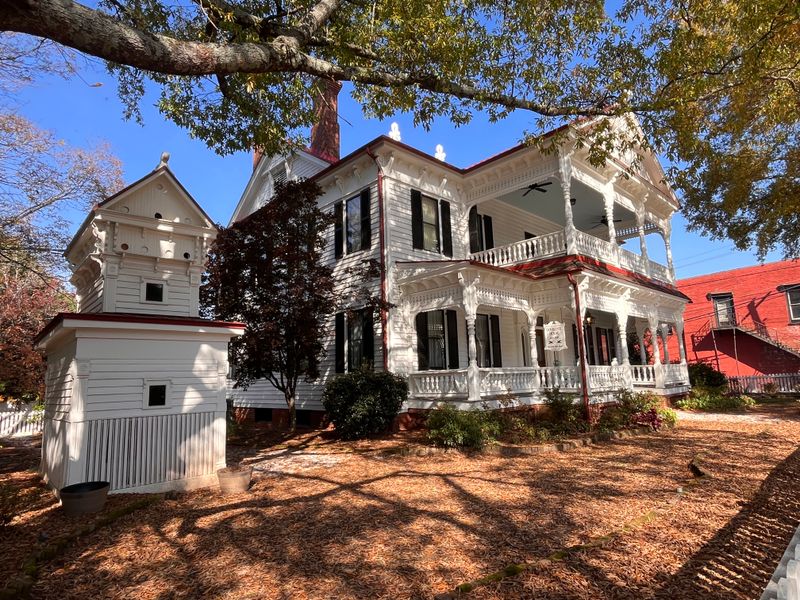
A walk through Madison requires no imagination to conjure the past.
The sensory details align too neatly with the 19th century for the illusion to break.
The sound of footsteps on brick, the creak of a porch swing, the rustle of magnolia leaves overhead—all of it contributes to a sense of displacement that feels both uncanny and comfortable.
There are no chain stores to jar the eye, no modern intrusions that remind you of the present moment.
The houses sit close to the street, their front doors visible and welcoming in a way that suburban architecture has long abandoned.
The scale of everything—the width of the sidewalks, the height of the buildings, the spacing between homes—feels calibrated for a slower, more deliberate way of moving through the world.
You can visit Madison, Georgia at 30650 and experience this firsthand.
Walking here does not feel like a reenactment or a performance. It feels like the town simply forgot to change.
Porches And Columns Define The Streets
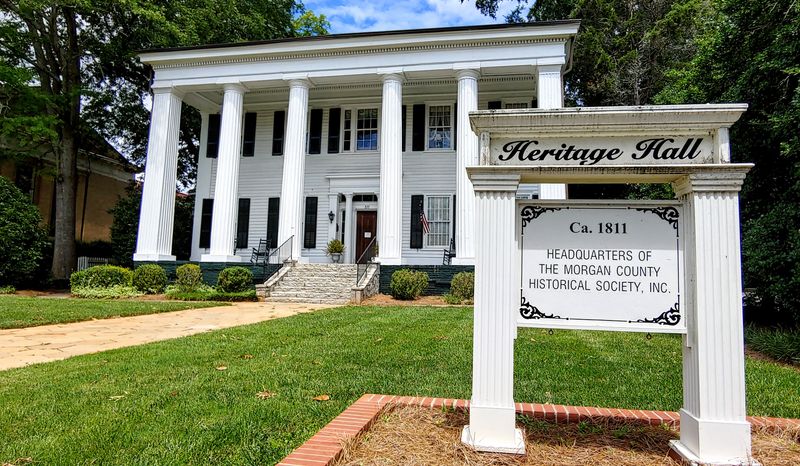
The architecture of Madison is a study in horizontals and verticals, porches stretching wide and columns rising tall.
Nearly every house of consequence features a front porch, often wrapping around the side to catch the afternoon breeze.
These are not decorative features but functional spaces, designed for sitting, talking, and watching the street.
The columns that support these porches are typically square or round, painted white or left to weather into a soft gray.
They stand in rows like sentinels, creating a rhythm that carries the eye down the block.
The repetition of these elements—porch, column, porch, column—gives the streetscape a formal quality without feeling rigid.
There is variation within the pattern, each house interpreting the classical vocabulary in its own way.
Some porches are simple and understated, others grand and ceremonial.
Together they form a visual language that speaks to a time when architecture was meant to communicate dignity, hospitality, and permanence.
Modern Growth Stops At The Edge
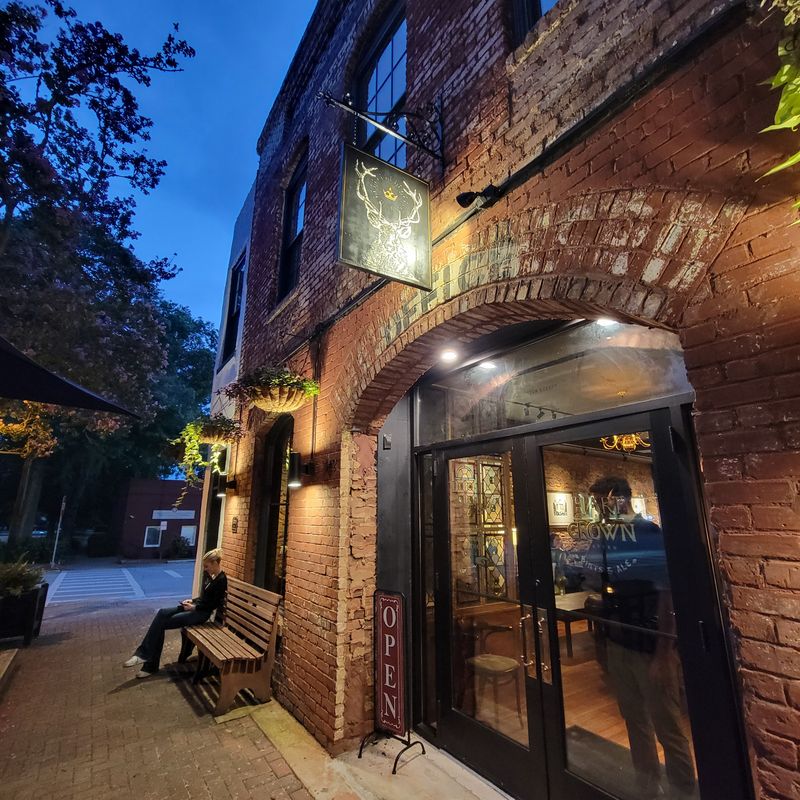
Madison has drawn a clear line between its historic core and the inevitable creep of modern development.
The old town remains intact, while newer construction—gas stations, grocery stores, fast food restaurants—has been relegated to the outskirts.
This separation is not accidental but the result of zoning decisions and community pressure that prioritize preservation over convenience.
The boundary is visible and abrupt.
One moment you are surrounded by antebellum homes and brick sidewalks, the next you are on a highway lined with the usual commercial sprawl.
This division allows Madison to function as both a living town and a preserved artifact.
Residents can access the services they need without sacrificing the character of the historic district.
Visitors can experience the past without feeling like they have wandered into a theme park.
The town has managed to accommodate growth without allowing it to dominate or dilute the original fabric.
It is a balance that requires constant vigilance and a willingness to say no.
The Downtown Square Still Matters
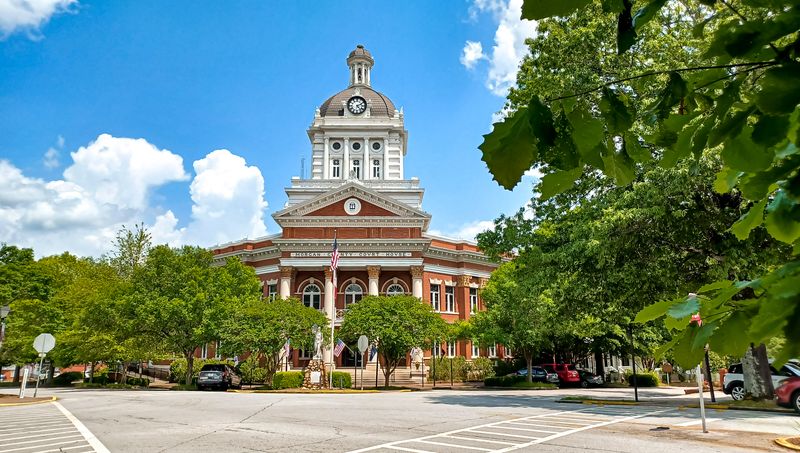
The town square in Madison remains the social and civic heart of the community, a role it has played since the early 1800s.
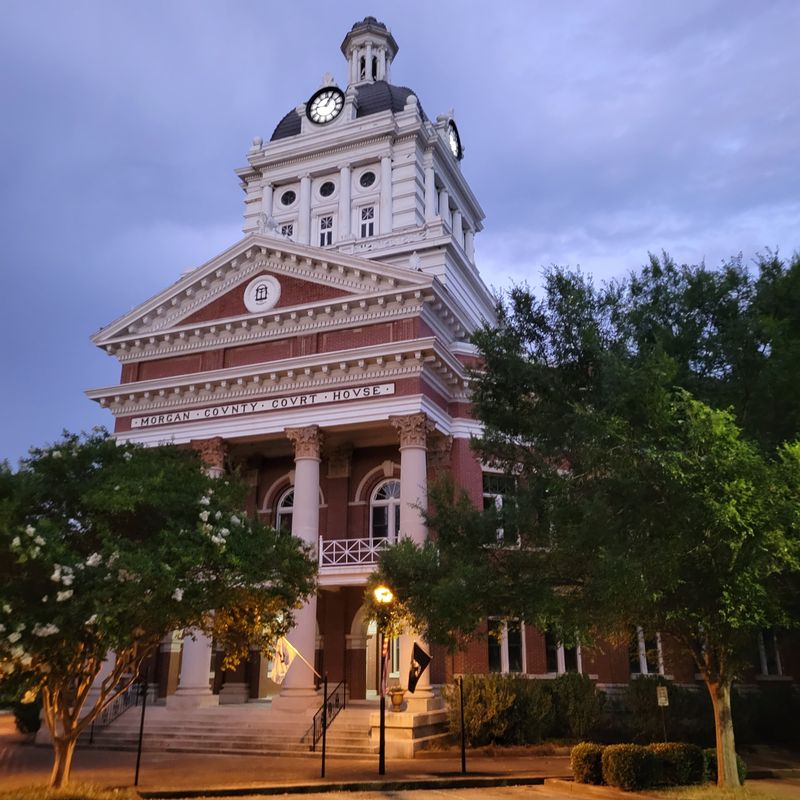
The Morgan County Courthouse sits at the center, a Greek Revival structure that commands attention without overwhelming the space around it.
Around the square are local businesses—shops, cafes, law offices—that cater to residents rather than tourists.
The square functions as it was intended, as a gathering place where people conduct business, meet friends, and participate in community events.
There are benches for sitting, shade trees for relief from the sun, and enough foot traffic to make the space feel alive.
This is not a square that has been preserved for its aesthetic value alone. It continues to serve the practical purposes for which it was designed.
The presence of the courthouse ensures a steady flow of people, and the surrounding businesses benefit from that proximity.
The square is a reminder that historic preservation works best when it supports ongoing use rather than treating the past as something to be cordoned off and admired from a distance.
Life Moves Slower By Design
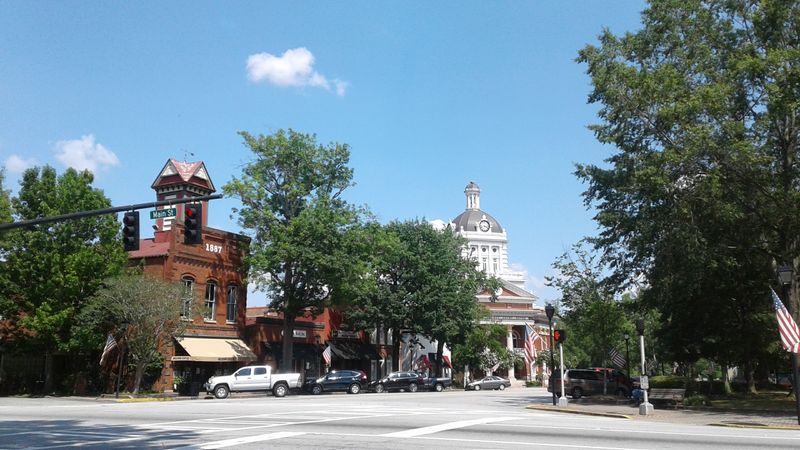
Madison does not apologize for its pace, which is deliberate, unhurried, and entirely at odds with the speed of contemporary life.
The town has resisted the pressure to accelerate, to add more lanes, more lights, more of everything that makes modern towns feel interchangeable.
The result is a place where time seems to move differently, where an afternoon can be spent on a porch without feeling wasted.
This slowness is not a product of economic stagnation or lack of ambition.
It is a choice, reinforced by the physical layout of the town and the priorities of its residents.
The narrow streets, the absence of chain stores, the preservation of historic buildings—all of these factors contribute to a rhythm that favors reflection over rush.
You can visit the town at madisonga.com to learn more.
Life in Madison is not without its challenges, but it offers something increasingly rare: the space to breathe, to notice, to exist without constant interruption.
The town has designed itself for slowness, and that design continues to shape the experience of living there.
Homes That Are Still Lived In
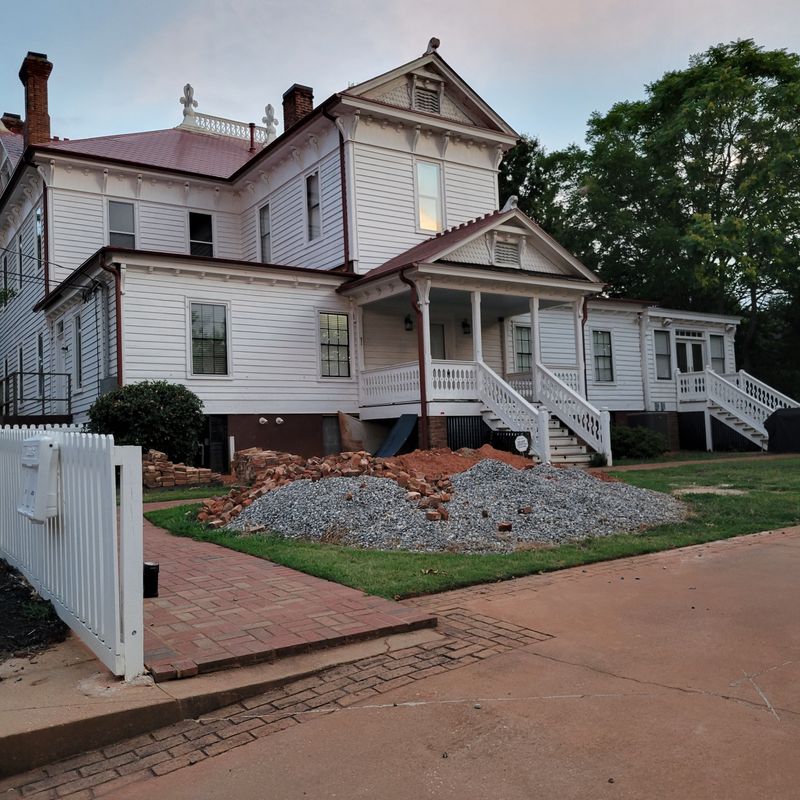
The historic homes in Madison are not museum pieces but active residences, occupied by families who navigate the peculiarities of old houses with grace and pragmatism.
These are homes with high ceilings, drafty windows, and plumbing that requires patience.
They demand maintenance, attention, and a tolerance for imperfection that modern construction does not require.
Yet they remain lived in, generation after generation, their interiors updated just enough to accommodate contemporary life without erasing the past.
You will see cars in the driveways, toys in the yards, laundry on the lines—signs of ordinary life unfolding within extraordinary architecture.
The fact that these homes are still occupied is crucial to Madison’s authenticity.
They have not been converted into bed-and-breakfasts or event venues, though some have taken on those roles.
Most remain private residences, cared for by people who understand that preservation is not about freezing a building in time but about allowing it to age gracefully while continuing to serve its original purpose.
History Without A Theme Park Feel
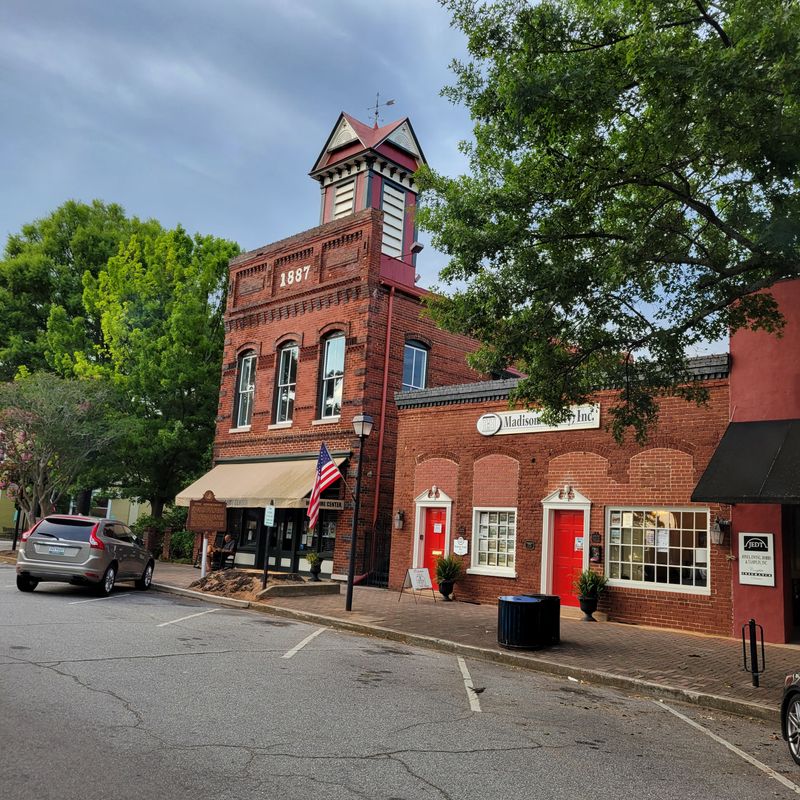
Madison has managed to preserve its history without turning itself into a caricature or a tourist trap.
There are no costumed guides, no staged reenactments, no gift shops selling mass-produced nostalgia.
The town simply exists as it has for more than a century and a half, its history embedded in the landscape rather than performed for visitors.
This restraint is rare and valuable.
Many historic towns, in an effort to attract tourism, end up diluting the very qualities that made them interesting in the first place.
Madison has avoided that trap by refusing to treat its past as a commodity.
The history here is lived rather than displayed, present in the architecture, the layout of the streets, and the rhythms of daily life.
Visitors are welcome, but the town does not cater to them at the expense of its own character.
The result is a place that feels genuine, where the past is not a marketing tool but a foundation upon which the present continues to build.
A Town That Refuses To Change
Madison’s resistance to change is not stubbornness but a form of cultural self-preservation.
The town has watched other places modernize, sprawl, and lose their identities in the process.
It has chosen a different path, one that prioritizes continuity over growth and character over convenience.
This refusal to change is not absolute—the town has electricity, plumbing, internet—but it is selective.
Madison changes only when necessary and only in ways that do not compromise the integrity of the historic core.
New construction is restricted, alterations to historic buildings are closely monitored, and commercial development is kept at bay.
The town has accepted the trade-offs that come with this approach: fewer jobs, less economic growth, a smaller population.
In return, it has retained something increasingly rare—a sense of place that is specific, coherent, and deeply rooted in history.
Madison refuses to change because it understands that some things, once lost, cannot be recovered.