
The Whimsical Sculpture Garden In New York That Turns A Simple Walk Into A Dreamy Day Trip
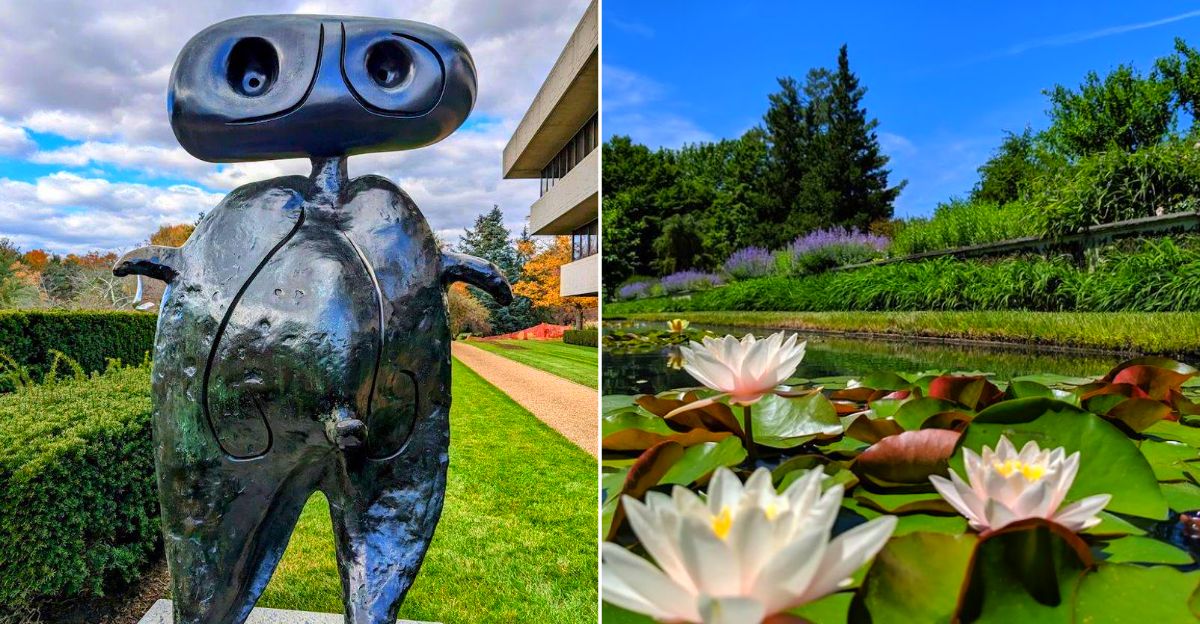
Walking through this New York sculpture garden feels like someone took a perfectly good afternoon and quietly upgraded it into something much better without asking permission.
Whimsical installations, open green space, and an atmosphere so genuinely charming it has a habit of turning even the most reluctant day trippers into converts before they have made it halfway through.
The sculptures do not just occupy the space, they animate it. Each one adds something specific to the experience of moving through the garden, and the cumulative effect is a day trip that feels richer and more memorable than the itinerary suggested it would be.
New York has cultural destinations that impress and landmarks that inform but this sculpture garden does something rarer and arguably more valuable than either of those things. It makes people happy in a completely uncomplicated way.
That sounds simple. In practice it is one of the hardest things to pull off and this place does it beautifully.
A Museum Without Walls And The Vision Behind It
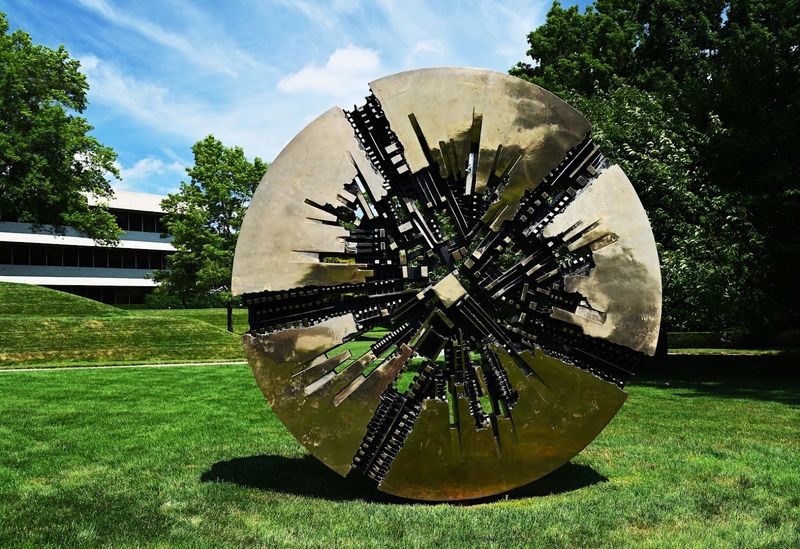
Few outdoor spaces carry the quiet ambition of a garden designed not for flowers alone but for monumental art. The Donald M.
Kendall Sculpture Gardens came to life in 1965 when PepsiCo CEO Donald M. Kendall envisioned a campus that would inspire creativity rather than simply house offices.
His goal was to build what he called a museum without walls, and the result is one of the most distinctive outdoor art destinations in the northeastern United States.
Kendall believed that art and nature could work together to shape how people think and feel about the world around them. Rather than keeping masterworks behind glass, he brought them outdoors where light, shadow, and changing seasons could transform each piece across the year.
The collection grew steadily over the decades into a gathering of roughly 45 to 50 monumental works.
Located at 700 Anderson Hill Rd in Purchase, New York, the gardens sit on the PepsiCo world headquarters campus and remain open to the public free of charge on weekends. The whole experience carries the generous spirit of its founder, a man who believed that great art belongs to everyone willing to seek it out.
The Landscape Design That Makes Every Step A Discovery
Not every garden rewards patience the way this one does. The layout of the Donald M.
Kendall Sculpture Gardens was crafted with deliberate intention, using paths that conceal and reveal artworks as visitors move through the grounds.
Landscape designer Russell Page reimagined the space with a system of intimate garden rooms, winding walks, and a celebrated Golden Path that threads through the entire property in a way that feels both structured and organic.
Page worked alongside E.D. Stone Jr. and later Francois Goffinet, each contributing a distinct layer to what visitors experience today.
The result is a landscape that shifts in mood and texture from one section to the next. Formal hedgerows give way to open lawns, ornamental grasses frame bronze figures, and manicured topiary stands watch beside abstract steel forms.
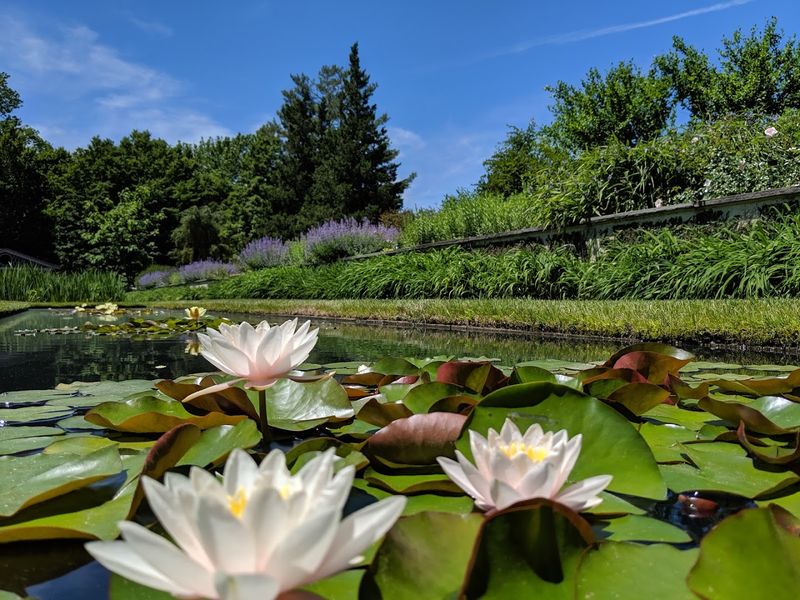
Ten themed garden rooms offer different planting styles and atmospheres, including sections featuring azaleas, ornamental grasses, and a water lily garden with three rectangular pools overlooked by a latticed teak pavilion. The design never overwhelms the art, and the art never competes with the planting.
Everything here was placed with care, and a slow walk through the grounds makes that intentionality impossible to miss.
Rodin And Moore Among The Trees
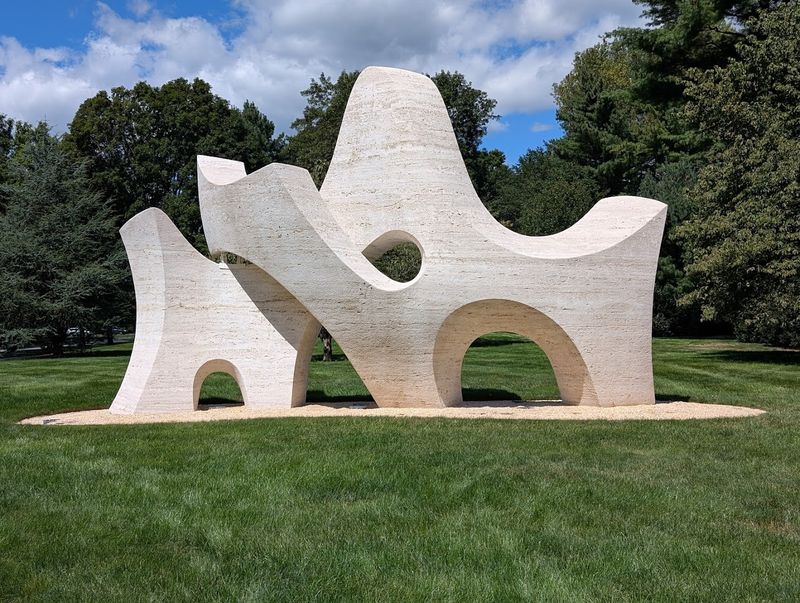
Auguste Rodin and Henry Moore are two names that appear in the syllabi of art history courses worldwide, and yet both have works standing quietly in a garden in Purchase, New York, available to anyone who shows up on a Saturday morning. That fact alone makes the Donald M.
Kendall Sculpture Gardens worth the drive from virtually anywhere in the tri-state area. Rodin’s mastery of the human form in bronze is well documented, but seeing that work outdoors rather than in a hushed gallery changes the entire experience.
Henry Moore brought a different sensibility to monumental sculpture, favoring abstracted organic shapes that reference the human body without directly depicting it.
His works tend to invite the viewer to walk around them, to find new readings from different angles, and the Kendall gardens provide exactly the kind of open space his sculptures require.
Together, Rodin and Moore represent the range of artistic thinking that Kendall sought to gather in one place. The collection was never meant to follow a single school of thought.
It was assembled to demonstrate what sculpture could be across a broad and ambitious spectrum of 20th-century artistic vision. Few free outdoor spaces in New York can make that claim with equal credibility.
Joan Miro And The Language Of Color Outdoors
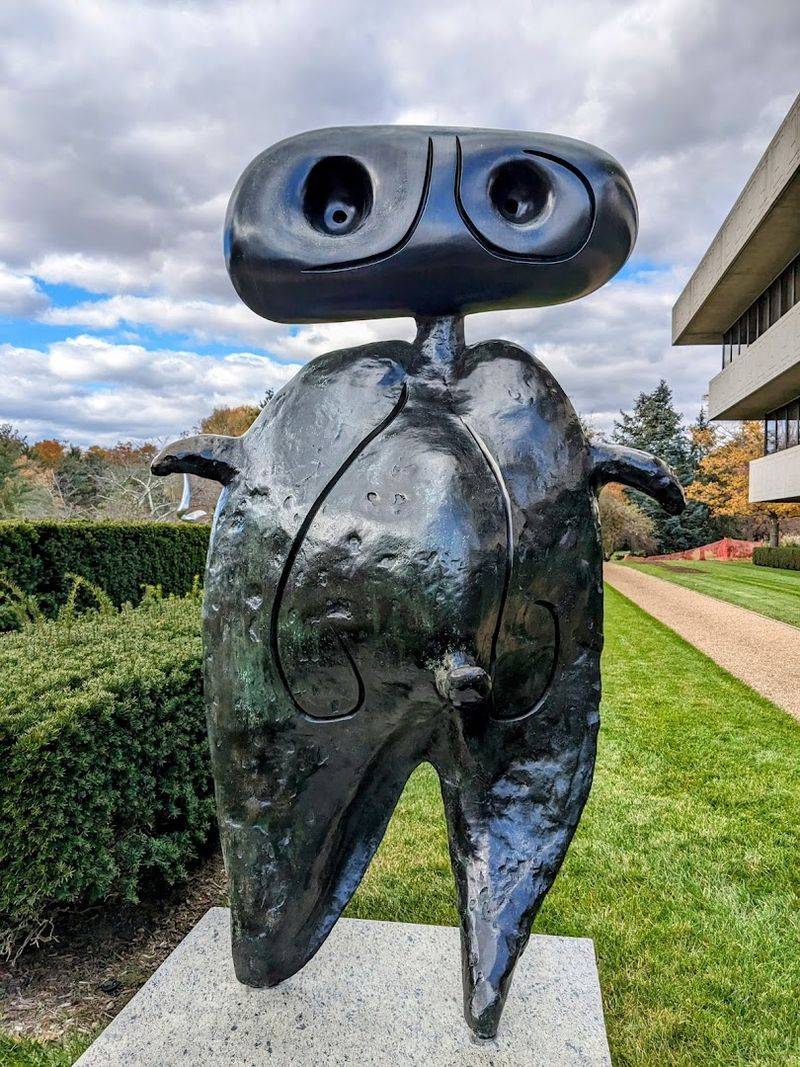
Joan Miro worked in a visual language all his own, using bold shapes, vivid colors, and a sense of dreamlike logic that feels immediately recognizable even to viewers who could not name the artist. His presence in the Donald M.
Kendall Sculpture Gardens brings a warmth and visual energy that contrasts beautifully with the more restrained bronze and steel works elsewhere on the grounds.
Miro spent much of his career blurring the line between painting and sculpture, and his three-dimensional works carry that same quality of organized spontaneity. The shapes feel invented rather than observed, as though they belong to a world that runs parallel to ours and operates by slightly different rules.
In an outdoor setting surrounded by natural greens and seasonal color, a Miro sculpture holds its own with remarkable confidence.
Visiting the Kendall gardens on a bright spring or summer day, you notice how differently each sculptor responds to natural light. Miro’s work tends to absorb and celebrate it, while other pieces in the collection cast dramatic shadows or change character as clouds shift overhead.
The variety of responses to the same outdoor environment is part of what makes a slow walk through these grounds so genuinely rewarding for anyone with an eye for how art behaves in space.
The Water Lily Garden And Its Teak Pavilion
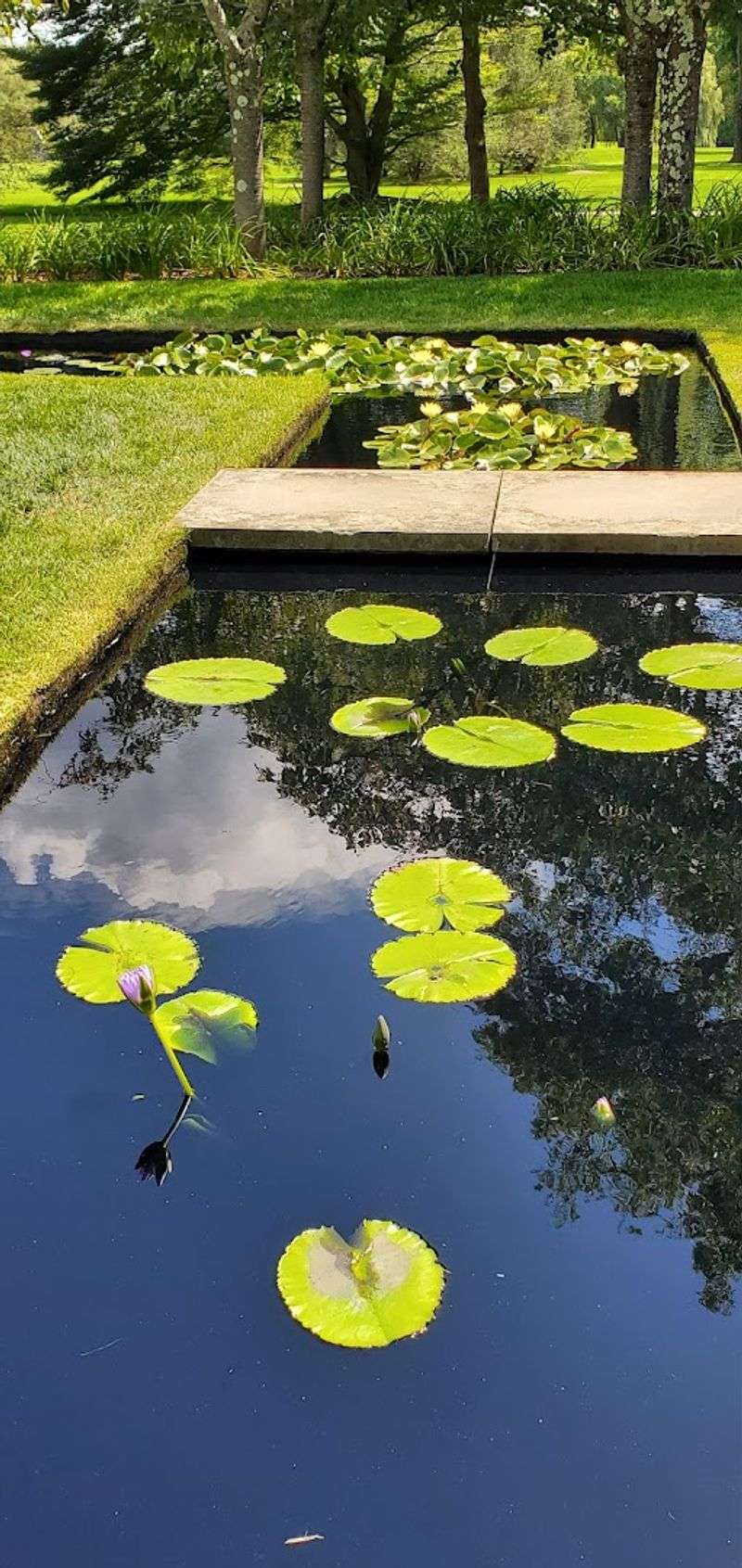
Art is not the only reason to spend an afternoon at the Donald M. Kendall Sculpture Gardens.
The water lily garden, with its three rectangular pools and latticed teak pavilion, offers a pause in the experience that feels genuinely restorative.
Russell Page incorporated this section as part of his redesign, and it stands as one of the more serene corners of a property that already has serenity in considerable supply.
The pools are formal in their geometry but soft in their effect, with lily pads spreading across the surface and the pavilion providing a shaded place to sit and take stock of how much ground you have covered.
On warm weekends, this area tends to attract visitors who are happy to simply sit rather than continue walking, and the garden is generous enough to accommodate both impulses.
Water has always played a supporting role in landscape design, offering reflection, sound, and a sense of calm that planted beds alone cannot achieve.
At Kendall, the water elements are distributed across the property in ponds and fountains, each contributing to the overall atmosphere in slightly different ways.
The lily garden is the most formal of these water features, but it earns its formality through the quality of its execution and the care with which it has been maintained over the years.
Alberto Giacometti And Jean Dubuffet In The Open Air
Alberto Giacometti’s figures are among the most recognizable in 20th-century sculpture, their elongated forms and textured surfaces carrying a philosophical weight that feels unchanged by the passage of time.
Seeing Giacometti outdoors rather than inside a white-walled gallery is a different experience altogether.
Natural light plays across the bronze surfaces in ways that artificial lighting simply cannot replicate, and the surrounding landscape gives the figures a scale and context that amplifies their emotional presence.
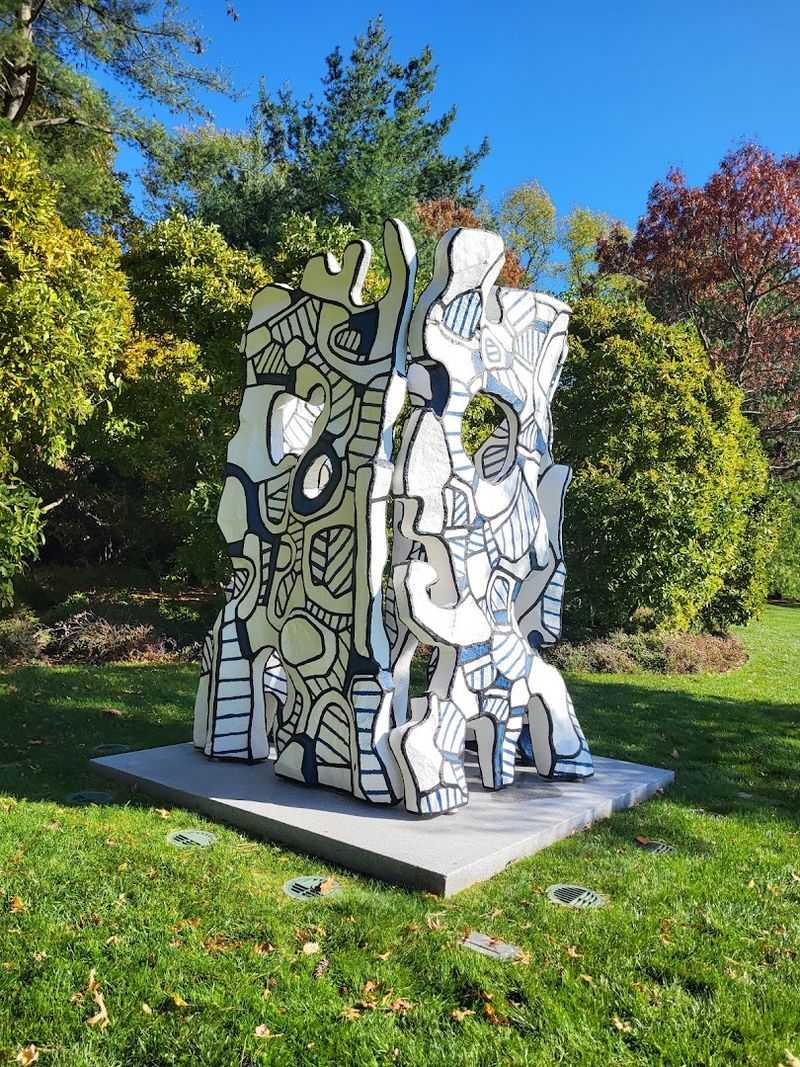
Jean Dubuffet worked from a completely different set of instincts. His art brut approach embraced raw, unconventional forms that drew from sources outside the established art world.
His outdoor works tend toward bold outlines and flattened shapes that read clearly from a distance, making them well suited to a garden setting where viewers approach from across open lawns.
Having both artists represented in the same collection says something meaningful about the curatorial philosophy behind the Kendall gardens. The goal was never to present a single narrative about what sculpture should be.
Instead, the collection holds genuine tension between competing visions, and that tension keeps the experience intellectually alive from one end of the property to the other. Visitors who arrive expecting a pleasant walk leave having encountered something considerably more substantial.
Practical Details For Your Visit To The Gardens
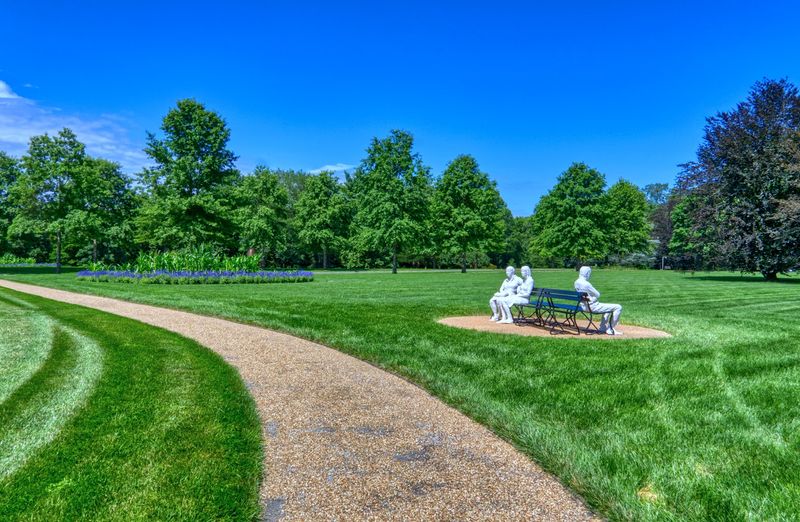
Arriving at the Donald M. Kendall Sculpture Gardens requires a brief stop at the security gate, where visitors check in and register their vehicle before proceeding to the parking area.
The process is straightforward and the staff are consistently welcoming. Free parking is available directly on site, which removes one of the more common complications of visiting public attractions in the New York metropolitan area.
The gardens are open to the public on Saturdays and Sundays from 10 a.m. to 4 p.m., generally running from late March or April through November.
Specific weekend closures may occur due to company events, so a quick check of the PepsiCo website at pepsico.com/sculpture-gardens before heading out is a sensible precaution.
The phone number on record is 914-253-3500 for anyone who prefers to call ahead.
A Visitor Center on the property provides restrooms and maps to help orient first-time guests. The paths are a mix of paved and lightly graveled surfaces, and comfortable closed-toe shoes are genuinely advisable rather than merely suggested.
An audio tour is also available for visitors who want additional context about the works. Touching the sculptures, bringing pets, sunbathing, and feeding wildlife are all prohibited, which keeps the grounds in the excellent condition that makes repeat visits worthwhile.
Every Season Offers A Different Garden Entirely
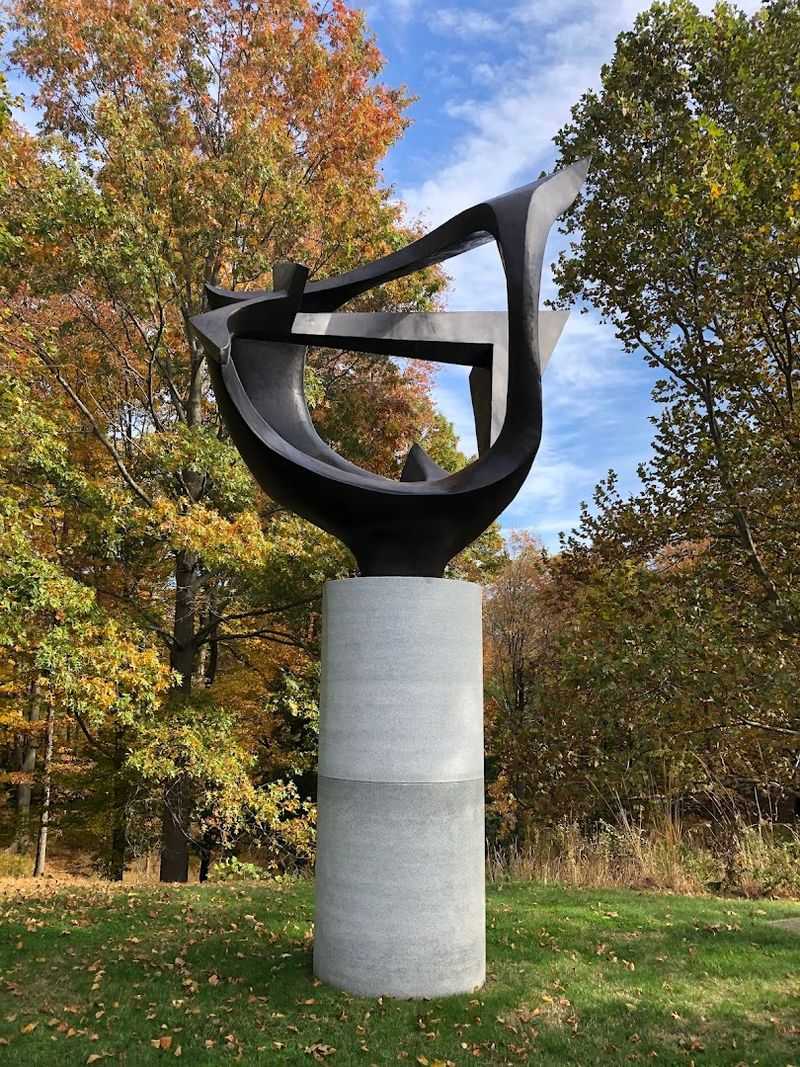
One of the more compelling arguments for returning to the Donald M. Kendall Sculpture Gardens more than once is that the property changes dramatically with the seasons.
Spring arrivals find azaleas in bloom and the water lily garden beginning to fill with color. Summer visits offer the full lushness of the landscape design, with ornamental grasses at their height and the lawns at their deepest green.
Autumn transforms the campus into something genuinely spectacular. The mature trees across the 168-acre property cycle through their full range of color, and the sculptures take on new character when surrounded by orange and gold rather than summer green.
The contrast between weathered bronze and the warm tones of fall foliage is the kind of visual combination that makes people reach for their cameras.
Even the approach to winter, as the garden prepares to close for the season in November, carries its own austere appeal. The bones of the landscape become more visible as foliage thins, and the sculptures stand with a starkness that reveals details easily missed during lusher months.
The Kendall gardens reward visitors who treat the property as a living environment rather than a static destination, and each seasonal return tends to produce at least one moment of genuine surprise.
Why This Garden Deserves A Permanent Place On Your Weekend List
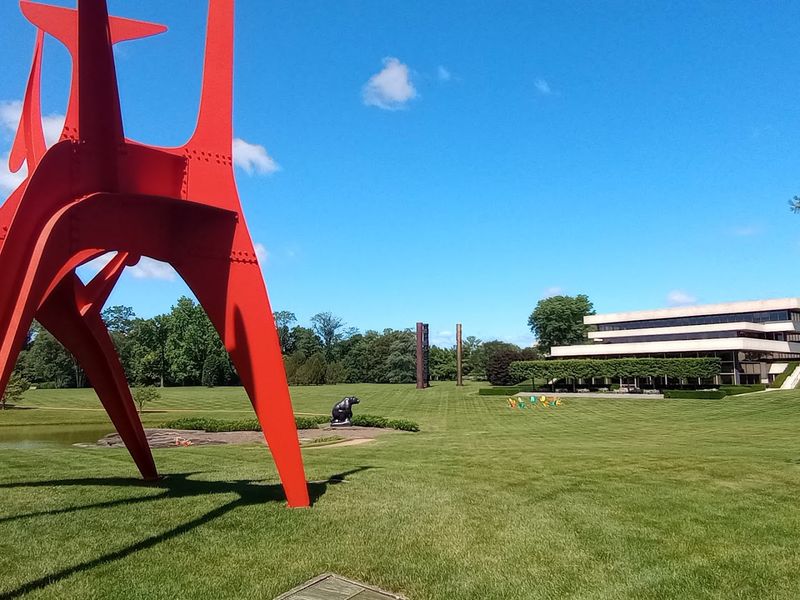
Free admission to a world-class outdoor sculpture collection is not something New York offers on every corner. The Donald M.
Kendall Sculpture Gardens represent a rare combination of artistic ambition, thoughtful landscape design, and genuine public generosity.
The collection includes works by Rodin, Moore, Calder, Miro, Giacometti, Oldenburg, Dubuffet, Louise Nevelson, and Max Ernst, a roster that would be the envy of many institutions that charge considerably for the privilege of entry.
The grounds are meticulously maintained, the paths are accessible to a wide range of visitors, and the overall atmosphere manages to feel both refined and relaxed. Families with children find plenty of open space and sculptures engaging enough to hold younger attention spans.
Those seeking a quieter, more contemplative experience will find that too, particularly on paths that lead away from the main lawn into the garden rooms and wooded sections of the property.
The gardens carry a 4.7-star rating from visitors who have taken the time to record their impressions, and the consistency of that response across years of visits says something real about the quality of the experience.
Located at 700 Anderson Hill Rd in Purchase, NY, the Kendall gardens are the kind of place that earns a permanent spot on the weekend rotation without ever needing to oversell itself.