
The World’s Largest Native American Statue In Michigan Is A Roadside Attraction Worth Seeing
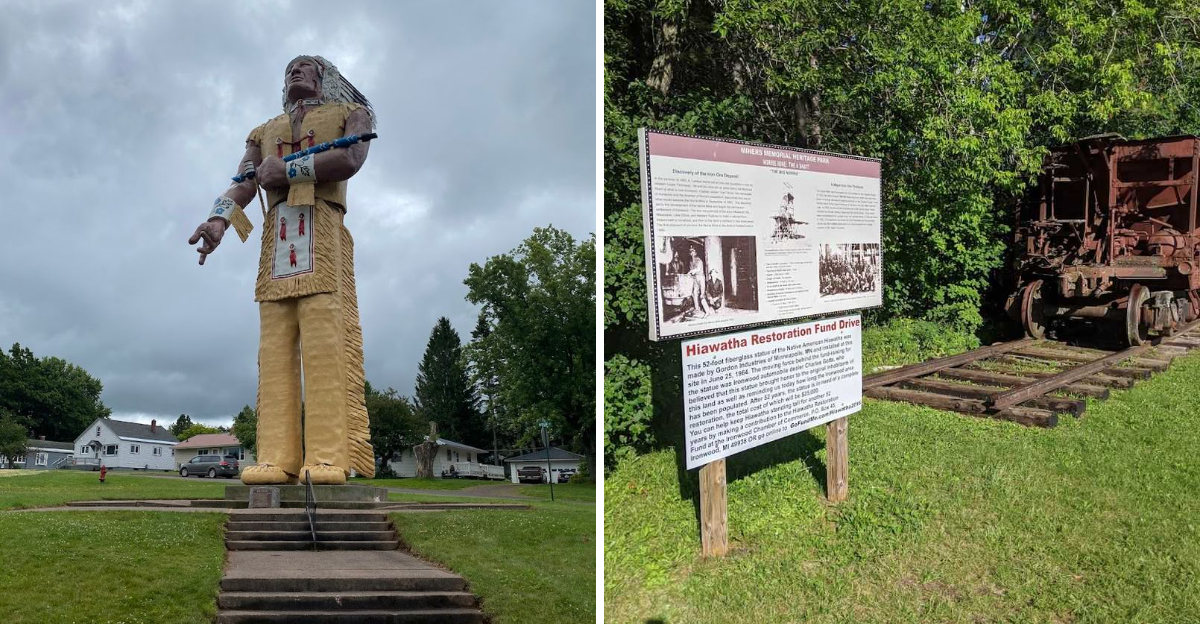
Standing tall above the treetops of Ironwood, Michigan, a colossal figure watches over the western edge of the Upper Peninsula with quiet authority. The Hiawatha statue, recognized as the world’s largest Native American statue, rises over fifty feet into the sky and has been drawing curious travelers off the highway for decades.
For anyone passing through this corner of Michigan near the Wisconsin border, it is the kind of landmark that stops you mid-sentence and makes you reach for your camera before you even park the car. Few roadside attractions carry this much presence, history, or genuine visual impact.
The Giant Statue That Greets Travellers Entering Michigan’s Upper Peninsula
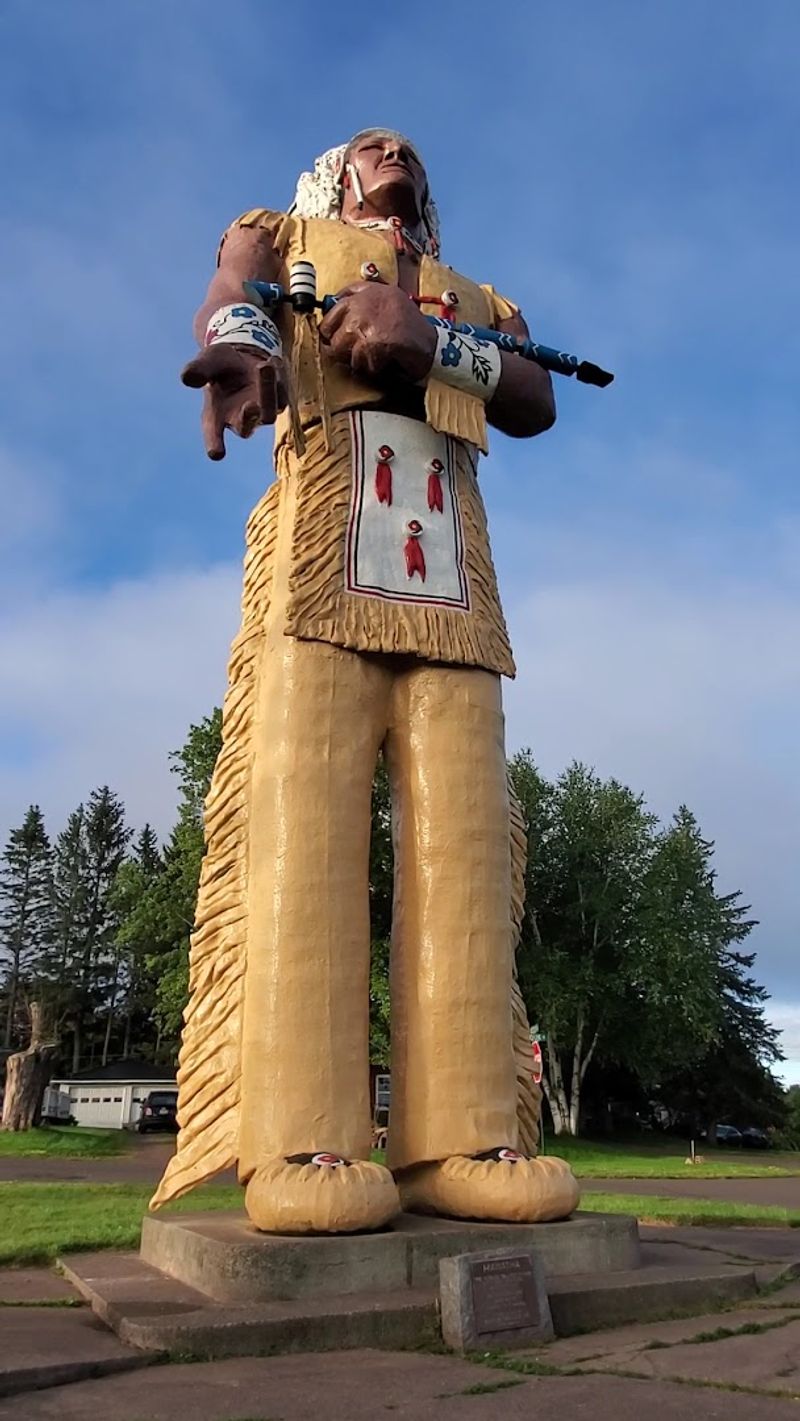
Before you see the sign for Ironwood, you may already sense something monumental is nearby. The Hiawatha statue rises above the surrounding neighborhood with a calm and undeniable authority, visible from a distance that makes even experienced road-trippers slow their vehicles instinctively.
Situated along Burma Road in Ironwood, Michigan, the figure commands attention the way few roadside structures genuinely can.
At over fifty feet tall, the statue does not rely on flashy surroundings to earn its impression. The surrounding park is modest and well-kept, with mature trees framing the base and open sky filling the background.
Visitors arriving for the first time tend to pause longer than they planned, recalibrating their sense of scale as they walk closer.
The Upper Peninsula has long been a region of understated wonders, and this statue fits that character well. It greets travellers not with fanfare or crowds but with sheer physical presence.
For anyone entering Michigan from Wisconsin, this is a landmark that earns its place on any honest map of American roadside culture.
The Story Behind The Monument Known As Hiawatha
The name Hiawatha carries significant cultural weight in American literature and Indigenous tradition. Most people familiar with the name connect it to Henry Wadsworth Longfellow’s 1855 poem, “The Song of Hiawatha,” which drew on Ojibwe oral traditions and mythological figures to tell a story of a legendary leader and mediator among the Iroquois Confederacy.
The statue in Ironwood draws from this rich cultural and literary legacy.
Ironwood chose Hiawatha as its symbolic figure partly because of the deep Indigenous heritage of the Great Lakes region. The Ojibwe people have long called this part of Michigan home, and the statue serves as a broad acknowledgment of that presence and history.
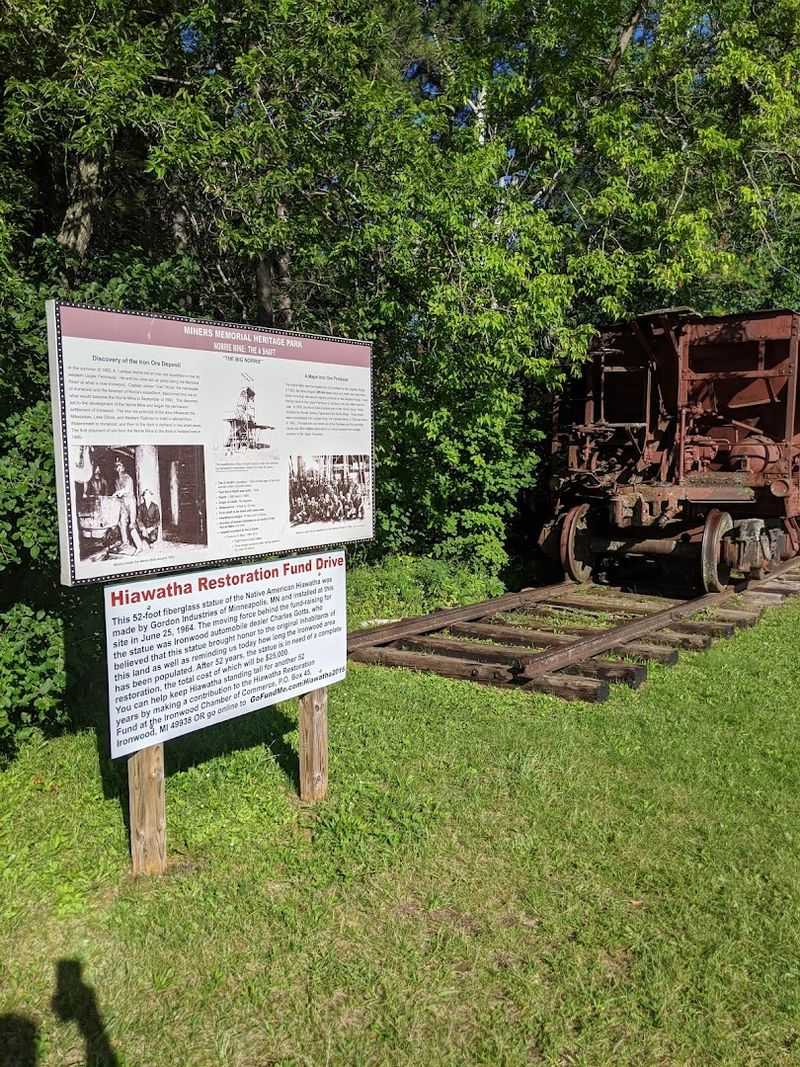
Small informational signs at the site offer visitors context about the area’s Indigenous connections and local mining heritage.
The monument also carries a civic pride that the town has held onto for generations. Locals who grew up visiting the statue as children return with their own families, passing along the story with the kind of quiet enthusiasm that keeps a landmark meaningful.
The name Hiawatha, carved into local memory, remains as sturdy as the statue itself.
The Artist Who Created The Towering Statue In The 1960s
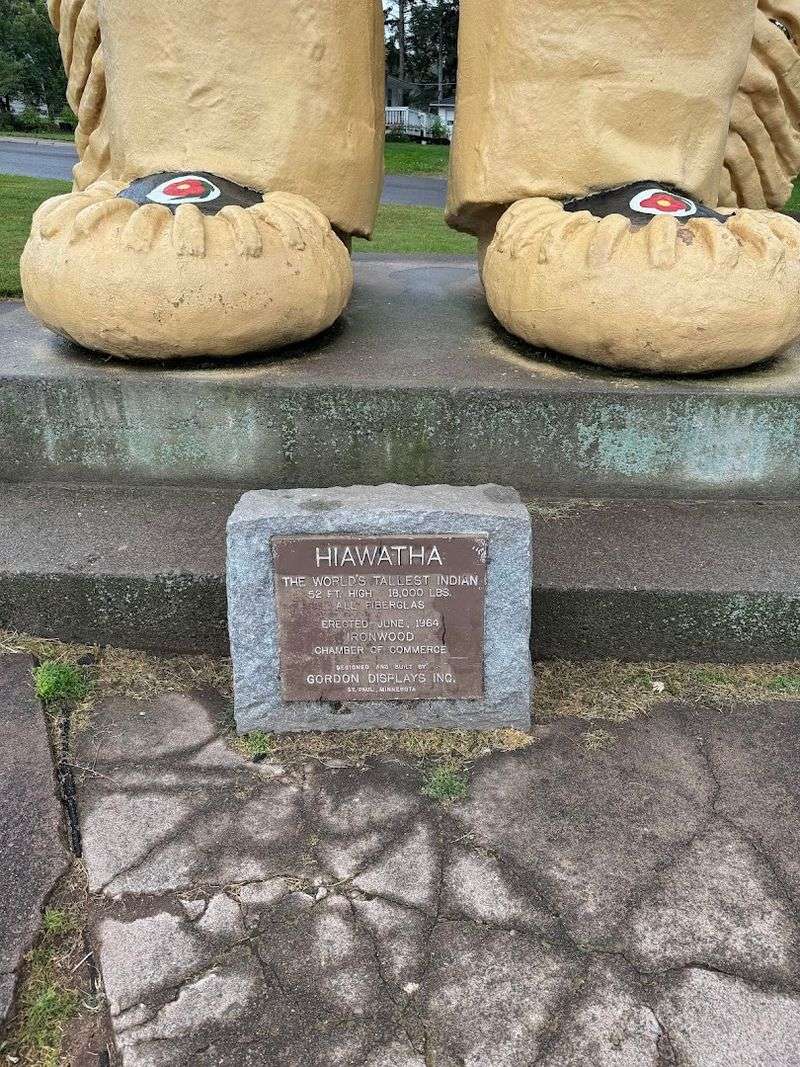
The Hiawatha statue was created in the early 1960s, a period in American culture when large roadside figures were genuinely fashionable and towns competed for travelers’ attention with bold visual statements. The statue went up in 1964, placing it squarely in that golden era of American roadside spectacle when bigger reliably meant better in the minds of local boosters and tourism planners alike.
The figure was constructed using steel and fiberglass, materials chosen for their durability and capacity to hold the kind of fine surface detail that makes the statue feel lifelike at close range. The craftsmanship involved in producing a figure of this scale required both engineering precision and artistic skill, resulting in a piece that has aged with more dignity than many of its roadside contemporaries.
Local accounts suggest the statue was commissioned to draw attention to Ironwood and celebrate the region’s cultural identity. Whatever the full story of its origin, the result is a figure that has outlasted the novelty era that produced it and earned something more durable than novelty.
It has earned genuine affection from the community that has cared for it across six decades.
A Massive Steel And Fibreglass Statue Standing Over Forty Feet Tall
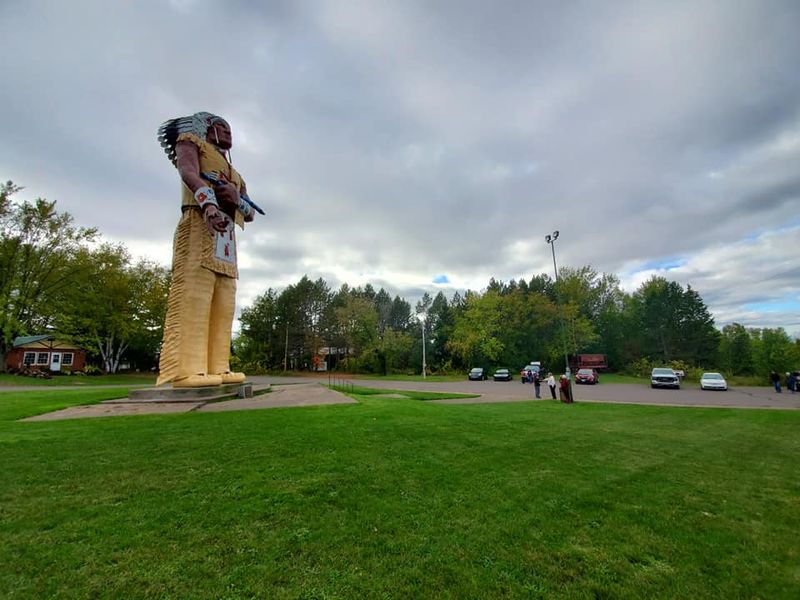
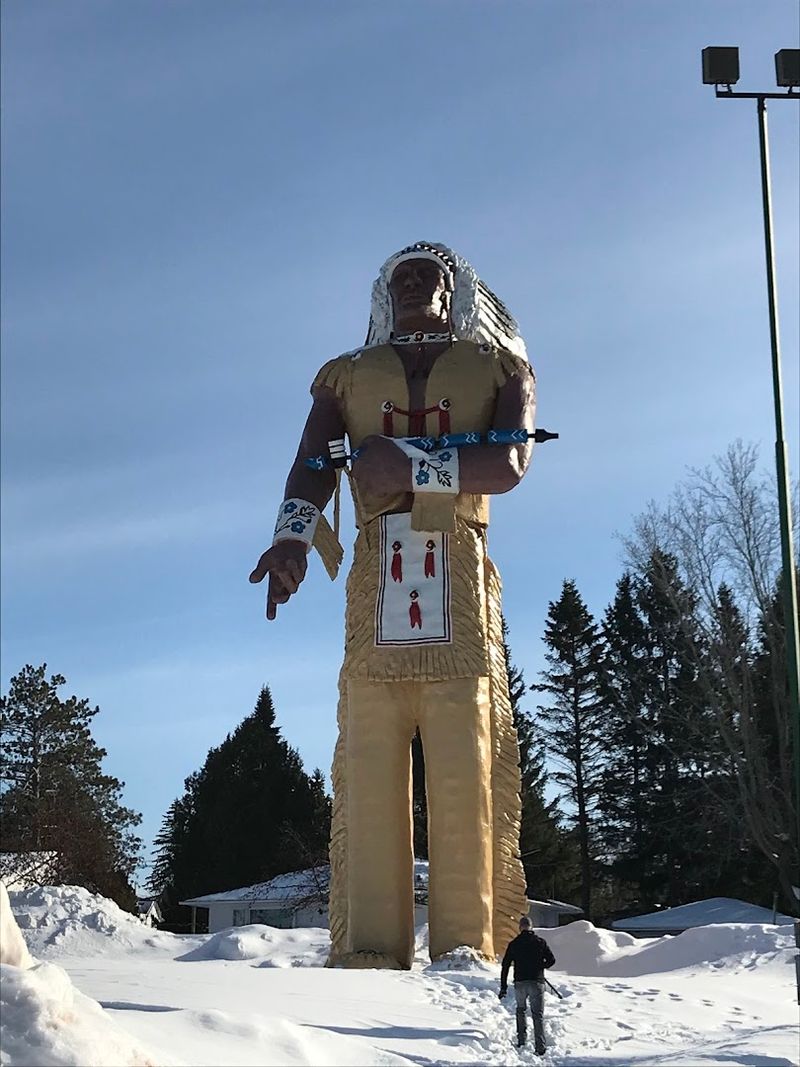
Numbers alone rarely prepare visitors for what they find here. The Hiawatha statue stands at fifty-two feet tall, and that measurement only begins to explain the experience of standing at its base and craning your neck upward.
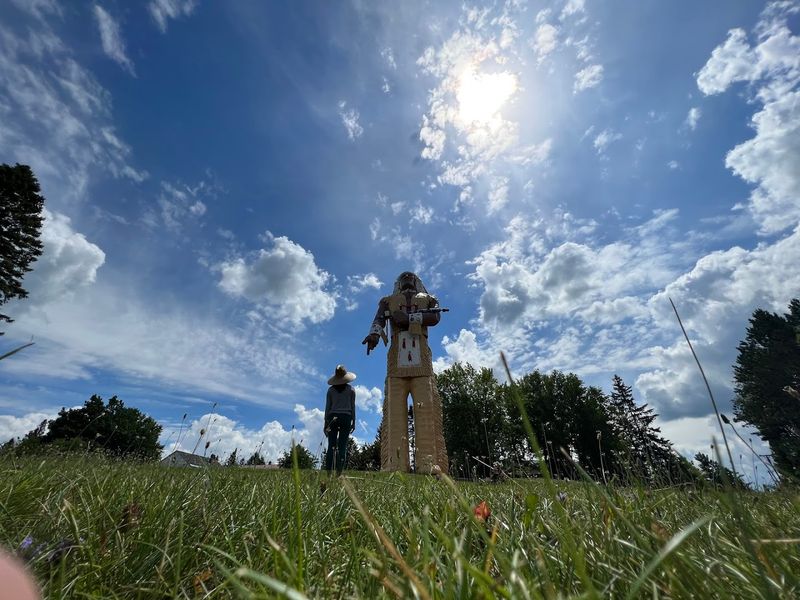
A six-foot adult standing beside it looks roughly the size of the statue’s forearm, a proportion that consistently surprises first-time visitors.
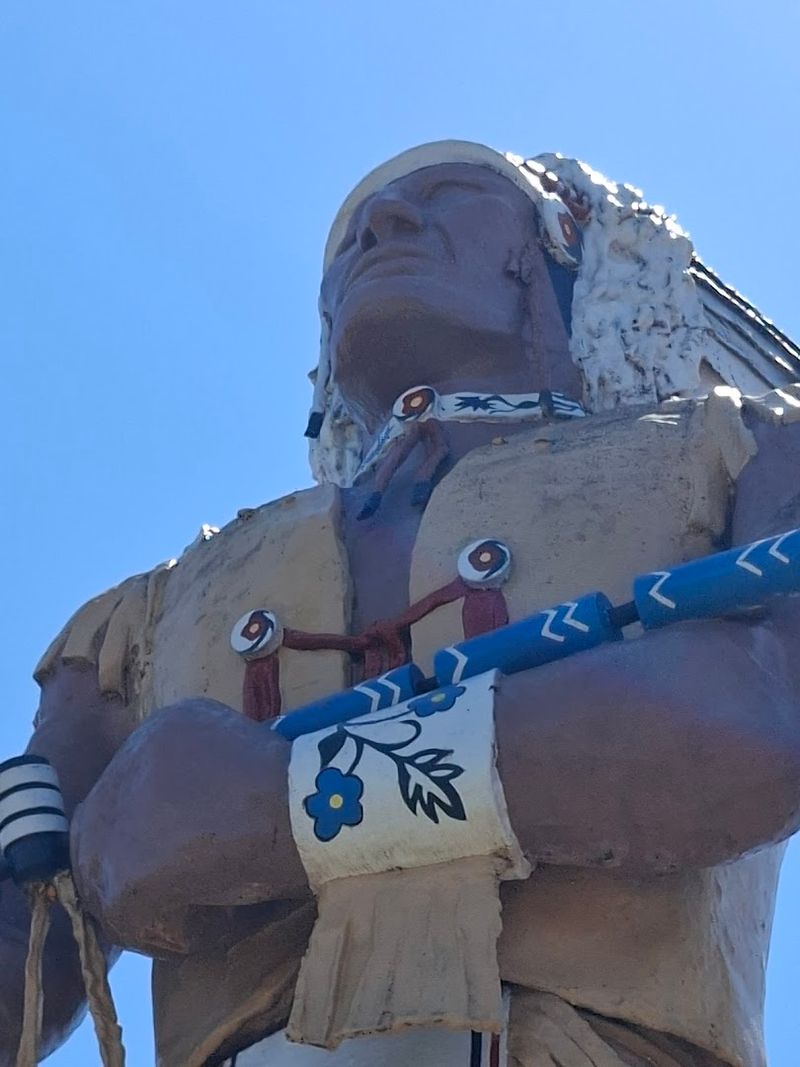
The steel and fiberglass construction gives the figure a surface texture that reads as detailed and intentional even from a distance. The headdress, facial features, and clothing elements are rendered with care that rewards close inspection.
Over the decades, the statue has received maintenance attention that has kept it in solid condition, a fact that speaks well of the community’s ongoing commitment to the landmark.
Photographing the statue presents its own enjoyable challenge. A wide-angle lens captures the whole figure but flattens the drama of its height.
Moving closer and shooting upward produces images that better communicate the genuine scale of the piece. Many visitors spend more time than expected simply circling the base, finding new angles and discovering details they missed from further away.
The statue rewards patience and a slow approach.
The Meaning And Cultural Inspiration Behind The Hiawatha Figure
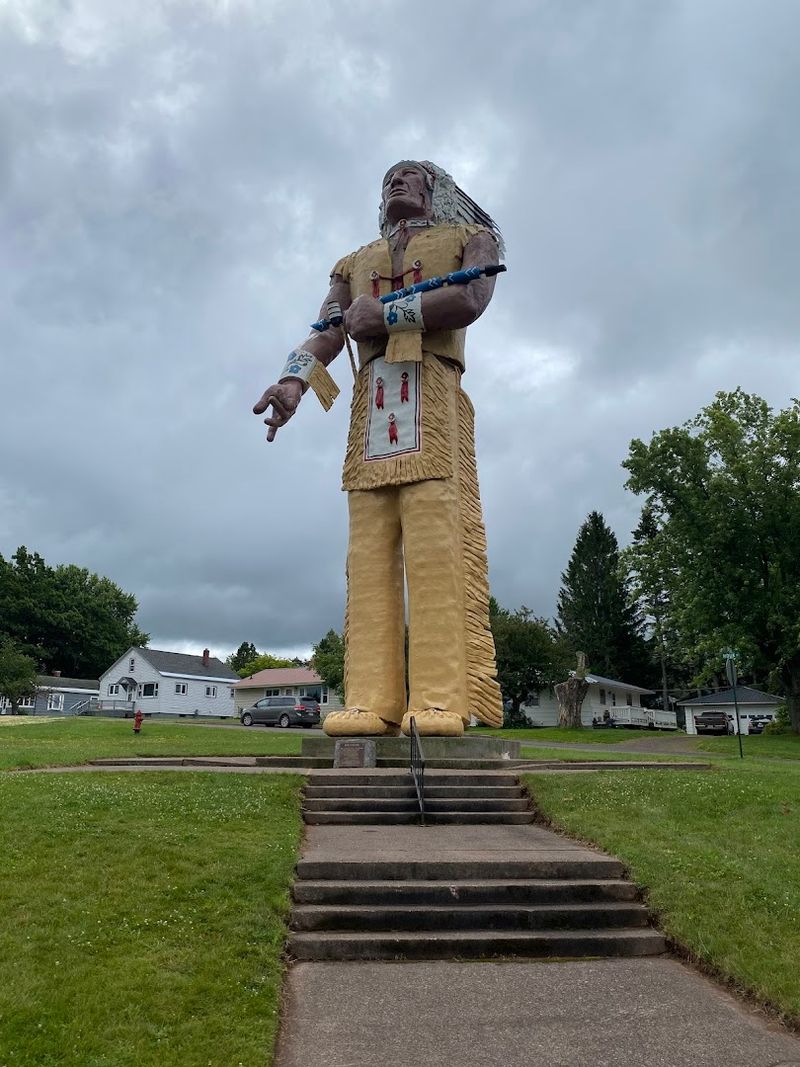
Cultural landmarks carry meaning in layers, and the Hiawatha statue in Ironwood is no different. On the surface, it is a striking piece of mid-century American roadside art.
Beneath that, it connects to a broader conversation about how Indigenous identity has been represented, celebrated, and sometimes oversimplified in American public spaces.
Hiawatha, as a figure, bridges literary mythology and genuine Indigenous cultural tradition. Longfellow’s poem drew on the oral traditions of the Ojibwe people, and the Great Lakes region that surrounds Ironwood has deep roots in that heritage.
The statue, dressed in traditional regalia and posed with dignity, presents the figure as a symbol of strength and cultural continuity rather than a caricature.
Visitors who take time to read the informational materials at the site come away with a more complete picture of what the statue represents within its regional context. Plans have been discussed to add plaques that more fully explain the history of the statue and the Indigenous communities of the area.
That kind of contextual enrichment would only deepen the value of a stop that already offers more than its roadside origins might suggest.
How The Statue Became A Symbol Of The Western Upper Peninsula
Ironwood sits at the far western edge of Michigan’s Upper Peninsula, a region shaped by iron ore mining, dense forest, and a working-class identity that runs deep. The Hiawatha statue arrived in this landscape in 1964 and gradually became something more than a tourist stop.
For the people of Ironwood and the surrounding communities, it became a point of local pride with genuine staying power.
The statue stands within Miners Park, a site that also honors the iron mining heritage of the region with historical information about the shafts and operations that once defined the local economy. The pairing of Indigenous cultural symbolism with mining history creates an unexpected but fitting combination, reflecting the layered identity of a town built on both land and labor.
Generations of Ironwood residents have grown up with Hiawatha as a fixture of their hometown, the kind of landmark you take for granted until you leave and realize visitors find it genuinely remarkable. For travelers passing through on the way to Porcupine Mountains or the Apostle Islands, the statue has become an understood waypoint.
It marks a place where the Upper Peninsula announces itself with confidence and character.
The Popular Photo Stop Near The Wisconsin-Michigan Border
Road trips along the Wisconsin-Michigan border corridor have a reliable rhythm: long stretches of highway, scattered small towns, and the occasional landmark that justifies a full stop rather than a slow roll. Hiawatha is firmly in that last category.
Travelers crossing from Wisconsin into Michigan’s Upper Peninsula frequently add the statue to their itinerary after hearing about it from someone who made the detour and could not stop talking about it.
The parking area at the site is generously sized and easy to navigate, which matters more than it sounds when you are traveling with a carload of restless passengers. A small playground sits adjacent to the statue, making the stop practical for families who need a moment to let children burn off energy before returning to the road.
The combination of spectacle and practicality is a rare and welcome pairing.
Photographing Hiawatha has become something of a social ritual for visitors. The sheer scale of the figure makes for striking images, and the surrounding park provides enough open space to capture the full statue without obstruction.
For anyone compiling a road trip photo archive of the Upper Midwest, this stop belongs near the top of the list, close to the border and impossible to forget.
Why This Roadside Attraction Continues To Fascinate Visitors Decades Later
Sixty years is a long time for any roadside attraction to hold its audience, and the Hiawatha statue has managed it without renovation into something unrecognizable or rebranding into something it was never meant to be. The secret, if there is one, is straightforward: the statue is genuinely impressive in a way that does not depend on context or explanation.
You see it and you understand immediately why someone built it here.
The site around the statue has been thoughtfully maintained and modestly enhanced over the years. Updated playground equipment, informational panels about local mining history, a small trail, and a vintage train car nearby give visitors multiple reasons to linger beyond the initial photograph.
None of these additions overwhelm the statue itself, which remains the clear centerpiece of the experience.
Roadside Americana has a complicated relationship with time. Many giant figures from the mid-century era have fallen into disrepair or been demolished entirely, making the survivors more valuable by default.
Hiawatha has been kept in good condition by a community that understands what it has. For anyone who appreciates American roadside culture, Indigenous heritage, or simply the pleasure of discovering something genuinely surprising along an open road, this statue in Ironwood delivers without reservation.