
These 9 Nevada Trails And Backroad Adventures Lead To Forgotten Mines, Mills, And Ghost Towns
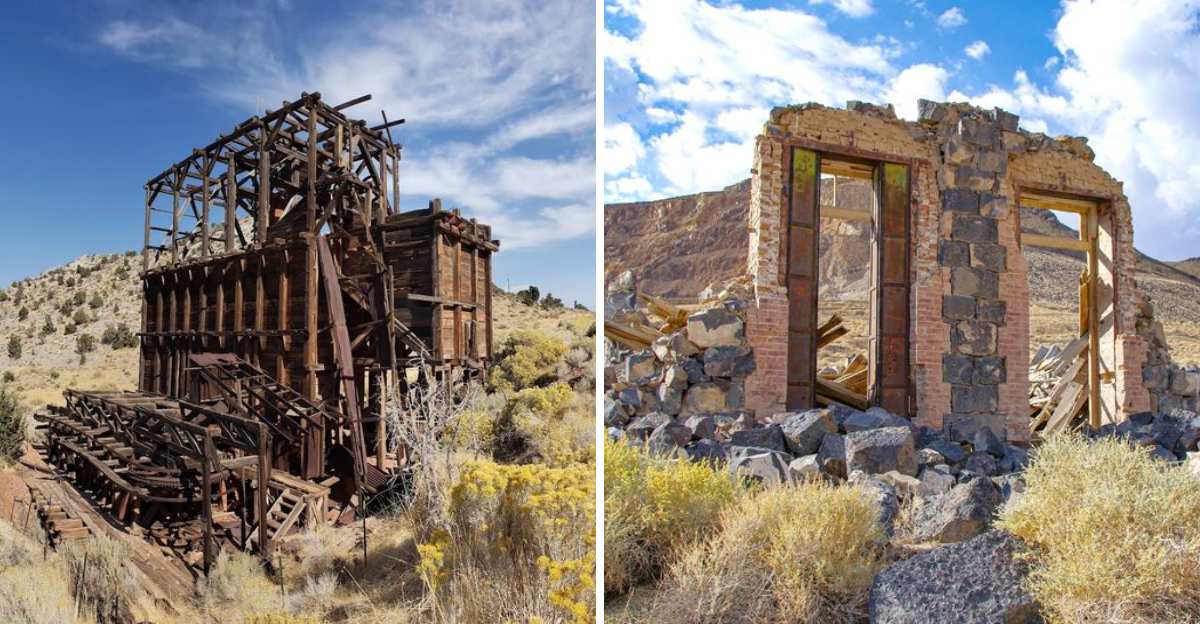
Forget everything you think you know about long, empty desert roads. Just past the last gas station, Nevada holds entire boomtowns that vanished almost overnight.
Silver fortunes rose and fell in the same breath here, leaving nothing behind but rusted headframes and cracked stone walls guarding the open range.
One crumbling courthouse still stands where an entire county once answered to it, and that is only the beginning of what is waiting down these backroads.
Nevada will not hand you this history easily.
You have to chase it down dirt roads and forgotten turnoffs, past mile after mile of silence that used to be somebody’s whole world.
Curious how many ghost towns are waiting out there? Your next great road trip might already be calling your name.
1. Tonopah Historic Mining Park
Silver changed everything here. In 1900, a single strike turned a quiet Nevada desert into one of the most talked-about mining camps in the American West.
Tonopah Historic Mining Park sits on those original claims, right where it all began.
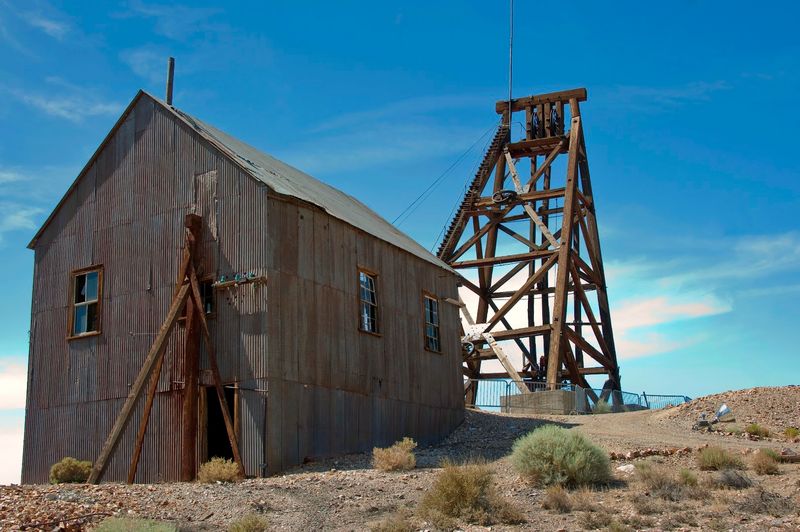
The park covers over 100 acres of preserved mining history. Rusted headframes tower above the landscape.
Historic buildings and original equipment fill the grounds, giving you a real sense of what life looked like for early 20th-century miners.
Step inside the visitor center and find displays packed with authentic tools and artifacts. A black light mineral exhibit shows off glowing rock specimens that genuinely stop people in their tracks.
Every corner of this park has something worth slowing down for.
The boldest experience here is the Burro Tunnel. This underground adventure takes you into an original discovery stope.
A steel viewing cage lets you peer down a 500-foot drop that will make your knees feel a little uncertain.
New exhibits appear regularly as restoration continues across the property. The Mizpah, Silver Top, and Desert Queen mine areas each tell their own chapter of Tonopah’s remarkable rise.
History does not get much more hands-on than this.
Plan a few hours here, minimum. The park rewards curious visitors who take their time reading the signs and exploring every corner.
Tonopah Historic Mining Park is located at 110 Burro Ave, Tonopah, NV 89049.
2. Belmont Courthouse
Not many ghost towns come with a courthouse still standing tall. Belmont’s silver strike in 1865 launched a boomtown so significant that it became the Nye County seat.
Today, the silence here is almost louder than the history.
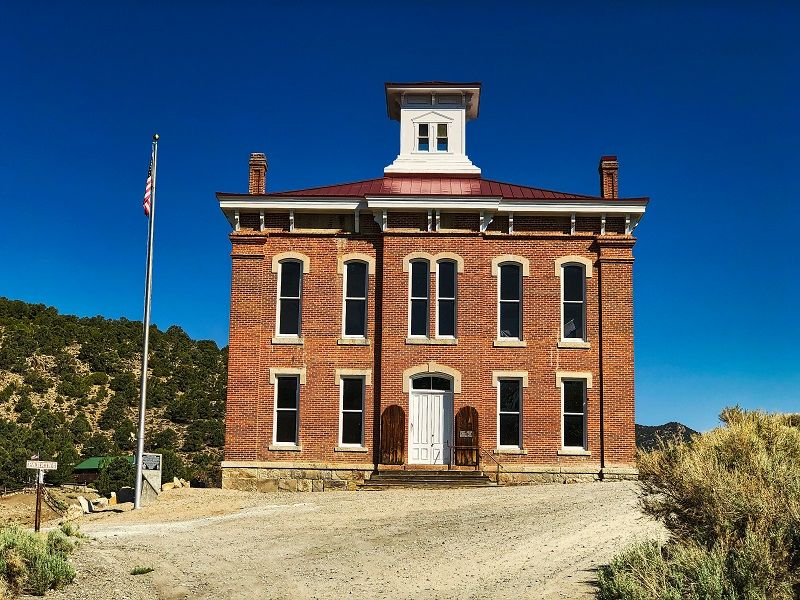
The Belmont Courthouse, built in 1876, is the crown of this remote Nevada ghost town. This two-story stone structure sits largely intact against the Toquima Range.
It is a designated Nevada state historical site, and photographers absolutely love it.
Beyond the courthouse, the remains of the Monitor-Belmont mill stretch across the hillside. A tall chimney still punches skyward.
Old milling machinery sits where workers once operated it, slowly being reclaimed by wind and time.
The surrounding hills quietly reveal the scale of Belmont’s former ambition. Old foundations, crumbling walls, and scattered debris mark where homes and businesses once stood.
Every step through this townsite feels like reading a chapter of a book nobody finished.
Belmont sits in a remote area of central Nevada, making the drive itself part of the adventure. Dirt roads lead you through wide-open rangeland before the ghost town appears on the horizon.
That approach builds the kind of anticipation that paved roads rarely deliver.
Visit in spring or fall for the most comfortable conditions. The light in the late afternoon turns the stone courthouse a warm golden color that makes every photo worth keeping.
Belmont Courthouse is located at 75 Cedar St, Manhattan, NV 89022.
3. Goldfield
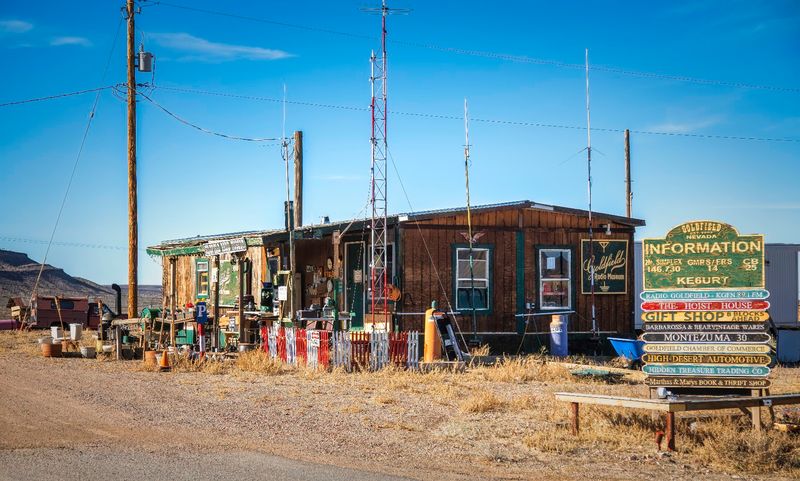
Hard to believe a town this quiet was once the largest city in Nevada. Gold discovery in 1902 sent Goldfield’s population rocketing to 30,000 by 1906.
That kind of growth left behind buildings and stories that still demand attention today.
Goldfield even hosted a world championship boxing match in 1906. The 42-round fight between Joe Gans and Goldfield even hosted a nationally famous championship match in 1906 that drew thousands of spectators to this remote desert location.
The Goldfield Hotel, built in 1908, still towers over the main street. It has not hosted overnight guests since the 1940s.
The building has appeared on multiple paranormal television programs, which adds a layer of intrigue that history books alone cannot match.
Ore production dropped sharply after 1910, and the population followed. Fewer than 300 people live here today, yet Goldfield still functions as the Esmeralda County seat.
That combination of near-ghost-town atmosphere and active civic life makes it genuinely unusual.
The International Car Forest is another reason to stop here. This outdoor art installation features half-buried vehicles rising vertically from the desert floor.
It is strange, creative, and completely unexpected in the middle of Nevada’s wide-open south.
Goldfield rewards visitors who take time to walk the streets slowly and look closely at the surviving architecture. Every building has a story.
Goldfield is located in Goldfield, NV 89013.
4. Pioche
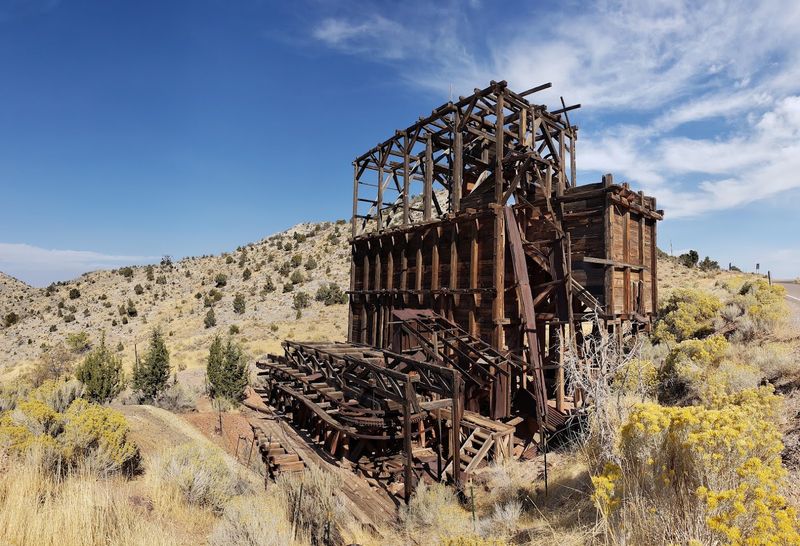
Pioche earned a reputation as one of the wildest, most lawless boomtowns in the entire American West, a place where law and order struggled to keep up with the rush of fortune seekers. Silver ore discoveries in 1863 and 1864 set the chaos in motion.
By 1871, Pioche had 10,000 residents and very few rules. Miners pulled over five million dollars in ore from the surrounding hills by 1872.
Law enforcement struggled to keep pace with the demand for order in a town moving that fast.
The Million Dollar Courthouse, built in 1872, is Pioche’s most famous landmark. The name reflects the staggering debt the county accumulated through refinancing the construction costs over decades.
It is a cautionary tale in stone and mortar.
Mining production declined steadily after 1876, and Pioche nearly emptied out by 1900. Retaining its status as county seat kept the town from disappearing entirely.
A lead-zinc mining revival in 1937 brought new life back to the streets.
Today, around 1,000 people still call Pioche home. That makes it one of Nevada’s most enduring mining communities rather than a true ghost town.
The mix of active residents and preserved historic structures gives it a rare dual identity.
Walking the main street here feels like stepping across different time periods simultaneously. History and everyday life overlap in the most interesting ways.
Pioche is located in Pioche, NV 89043.
5. Eureka
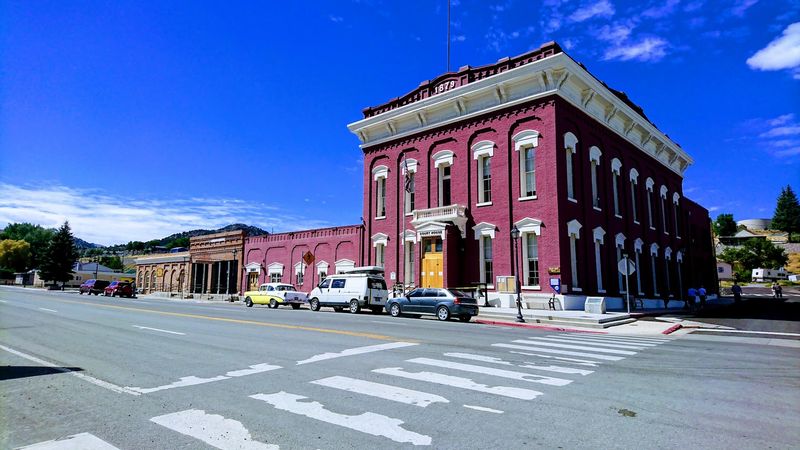
The name says it all. Eureka, meaning “I have found it” in ancient Greek, was exactly the reaction prospectors had when they hit rich silver-lead deposits here in 1864.
Central Nevada would never look the same after that discovery.
By 1878, the population had climbed to 10,000 people. Eureka became Nevada’s second richest mineral producer during the late 1800s.
The heavy smoke from its smelters earned the town the nickname “Pittsburg of the West,” a title that captured both its productivity and its gritty atmosphere.
The Eureka Opera House, built in 1880 and restored in 1993, still stands as a centerpiece of the historic downtown. The Jackson House Hotel dates to 1877.
The Eureka Sentinel Museum, housed in the original 1879 newspaper building, gives visitors a detailed look at the town’s remarkable rise.
Raine’s Market and Wildlife Museum, operating since 1887, adds another layer of local character to any visit. Few Nevada towns can claim this concentration of intact 19th-century commercial buildings still serving their communities in some form.
The last mines closed in 1970 after 101 years of production. Today, around 414 residents keep Eureka alive and its historic downtown maintained.
That quiet persistence is part of what makes a visit here feel so rewarding.
Spring and fall bring the most comfortable temperatures for exploring on foot. Eureka is located in Eureka, NV 89316, right along U.S.
Route 50.
6. Austin
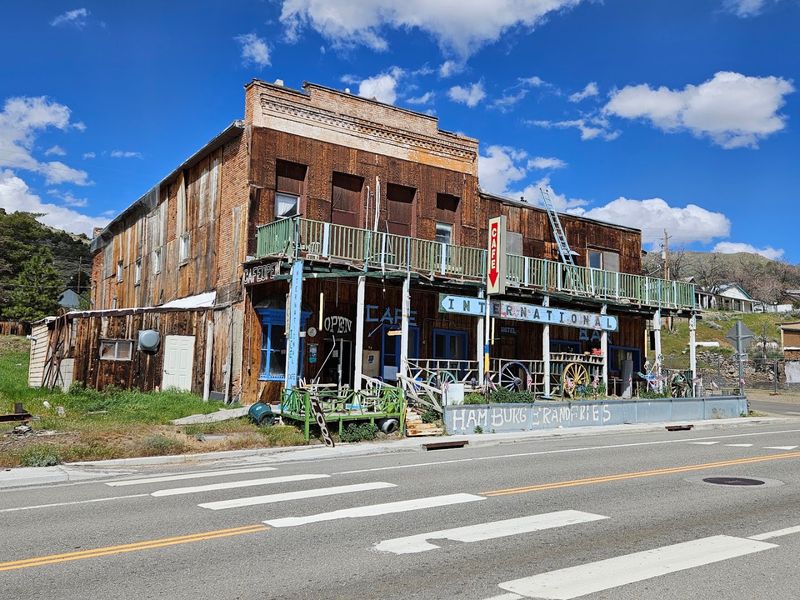
Legend claims a Pony Express horse kicked over a rock and exposed silver in 1862. Whether true or not, Austin ran with that discovery fast.
By summer 1863, the population had topped 10,000 and Lander County had a new seat of government.
Austin sits along U.S. Route 50, the stretch famously nicknamed “The Loneliest Road in America.” That solitude is part of the appeal.
Rolling into town after miles of open desert makes the surviving historic architecture feel even more impressive.
Three beautiful 19th-century churches still stand here. St. Augustine’s Catholic Church and the Methodist Church both date to 1866.
St. George’s Episcopal Church, built in 1878, remains in regular use, which is remarkable for a town this size and this remote.
Just outside town, Stokes Castle is a three-story stone tower built in 1897. It was occupied for only one month after completion.
That detail is either fascinating or deeply puzzling, depending on how you look at it.
Major silver production wrapped up by 1887, but Austin later became a center for turquoise mining, giving it a second economic chapter. The town today functions as what locals and historians call a “living ghost town.” Life continues at a slower pace, but it continues.
Austin rewards explorers who take their time on the side streets and hilltop viewpoints. The panoramic views of the surrounding valleys are worth every extra minute.
Austin is located in Austin, NV 89310.
7. Cherry Creek
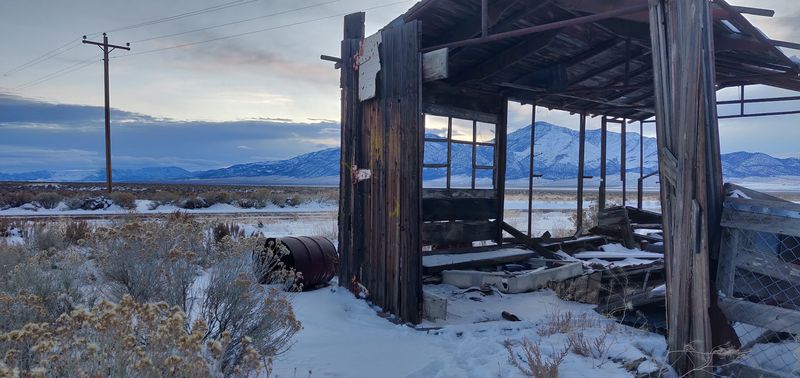
Two dozen boisterous businesses serving a single town sounds like an exaggeration. For Cherry Creek at its peak, it was just Tuesday.
Gold was first discovered here in 1872, and a later silver revival pushed the population to 7,800 residents by 1882.
At its height, Cherry Creek had a Wells Fargo bank, a luxury hotel, and all the trappings of a serious boomtown. The Cherry Creek Range provided a dramatic backdrop to a community moving faster than anyone could keep track of.
Today, roughly 20 permanent residents live here, surrounded by buildings that have stood since the boom years. The original Cherry Creek School, built in 1872, is one of the main draws.
This one-room schoolhouse now operates as a small museum filled with antiques, mining equipment, and old clothing.
Historic cemeteries on a hill south of town offer sweeping views of Steptoe Valley. The quiet up there is the kind that makes you think.
It is a reflective stop that balances well against the more active exploration of the townsite below.
Rusted, abandoned railroad cars still sit along the old tracks, slowly becoming part of the landscape. Walking that line gives you a clear picture of how connected Cherry Creek once was to the wider Nevada mining network.
Few places in the state offer this combination of intact structures, accessible history, and genuine solitude. Cherry Creek is located in Cherry Creek, NV 89301.
8. Unionville
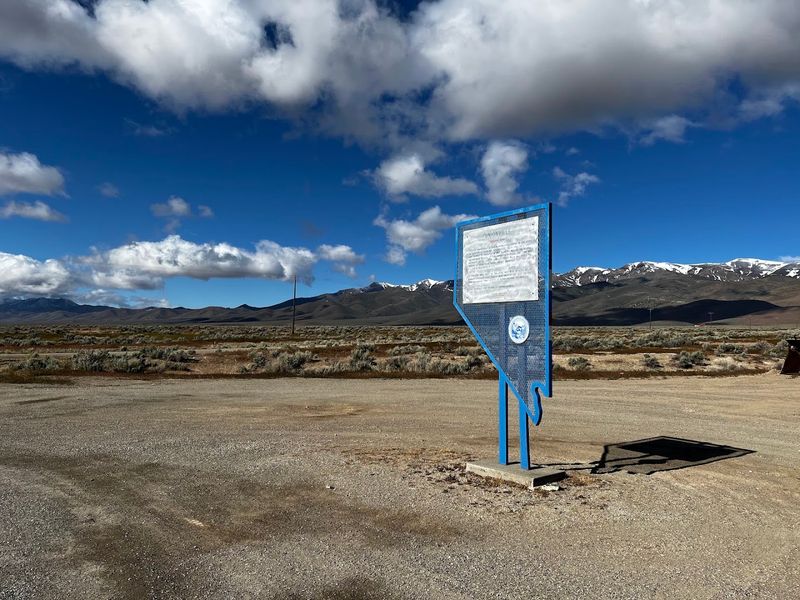
A town that started as Dixie and became Unionville tells you everything about the tension running through Nevada in 1861. Pro-Southern founders picked the original name.
Union sympathizers changed it. That small naming battle echoes a much larger national conflict playing out in real time.
This remote hamlet briefly served as the Humboldt County seat before bigger towns took over. Its moment in the spotlight was short but eventful.
Mark Twain himself came here in 1862 to try his hand at prospecting.
Twain described Unionville as a town of “eleven cabins and a liberty-pole.” He left disappointed after three weeks with no fortune to show for his effort. The story is a good reminder that not every Nevada mining adventure ended in riches.
The boom years between 1863 and 1870 pushed the population to 1,500 people. Then the transcontinental railroad bypassed the town, and a destructive fire in 1873 accelerated the decline.
The combination was too much to recover from.
Today, around 20 to 27 people still live among the ruins. Twain’s former cabin is among the abandoned structures scattered across the valley floor.
Old mills, cemeteries, and houses in various states of picturesque disrepair fill out the landscape.
Visiting Unionville feels like reading a handwritten letter from another century. The quiet here is not empty.
It is full of stories. Unionville is located in Unionville, NV 89418.
9. Candelaria
Water once cost more than any other commodity in this remote southwestern Nevada mining camp. That detail alone tells you how extreme conditions were at Candelaria.
Mexican prospectors first found silver here in 1863 or 1864, setting off one of the region’s most productive mining runs.
The Northern Belle mine produced an estimated 15 million dollars in silver on its own. That kind of output made Candelaria the most productive mining district in southwestern Nevada for a significant stretch of time.
The numbers are staggering even by modern standards.
By the early 1880s, the town held up to 3,000 residents. Water had to be hauled nine miles to supply them.
Dry milling practices caused serious respiratory problems among the miners working the district, a harsh reality that rarely makes it into the romantic versions of mining history.
A water pipeline finally reached Candelaria in 1882, bringing some relief. But a financial crisis in 1893 triggered a swift collapse.
The post office closed permanently in 1939, marking the official end of any real community presence.
Modern open-pit mining operations near the townsite limit access to some historic areas. What remains is still worth the drive.
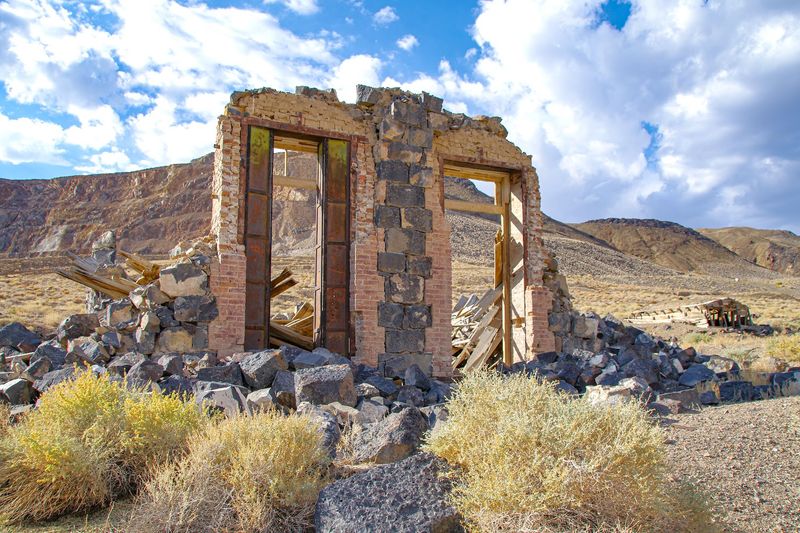
Stone foundations, crumbling walls, and a historic cemetery give the site a haunting, end-of-the-world atmosphere.
Candelaria is one of Nevada’s most honest ghost towns. No polish, no visitor center, just raw desert history.
Candelaria is accessible via Candelaria Rd, Nevada.