
These New York Waterfalls Drop Over 40 Feet And Almost Nobody Visits, Even In 2026
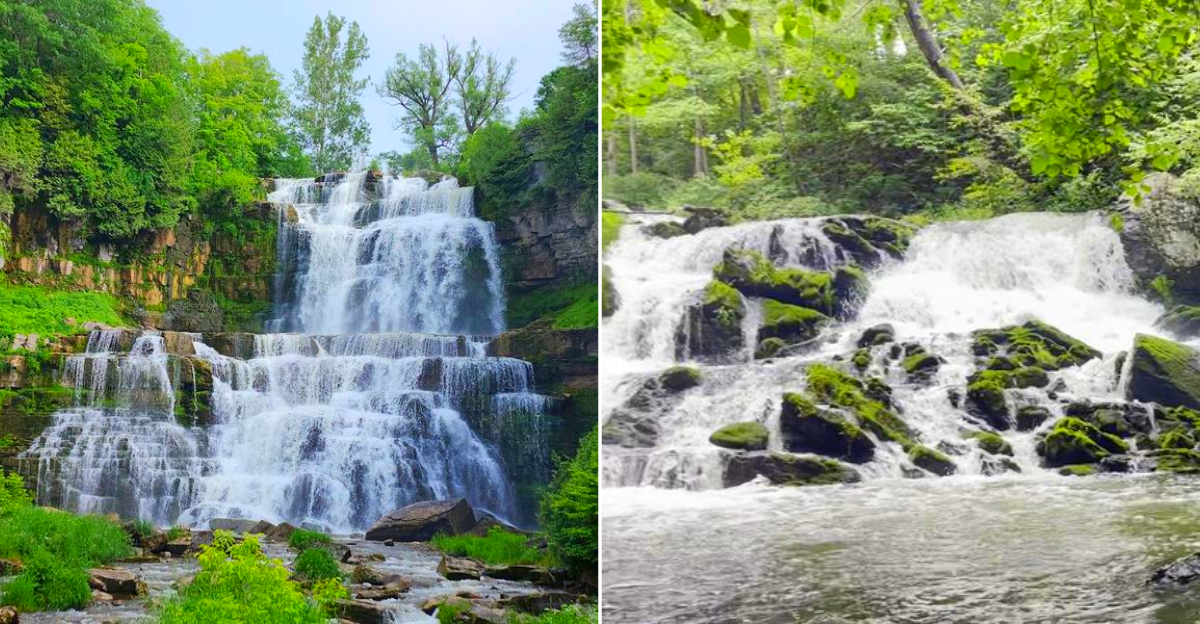
Forty feet of falling water. Roaring through a gorge, or a college campus, or an underground cave. And almost nobody visiting, even now, even in 2026, even with the entire internet theoretically available to point people in the right direction.
New York has been holding onto these waterfalls with remarkable patience. No crowds forming at the trailhead. No line for the good angle.
These are just cascades dropping over forty feet into spaces so quietly spectacular that the people who find them tend to stand there longer than they planned and leave feeling slightly protective of what they just saw.
The skyscrapers get the attention. The subway delays get the complaints. The waterfalls get left alone, which turns out to be the best possible outcome for everyone willing to do a little looking.
Consider this list the end of your excuse for not knowing they existed.
1. Chittenango Falls
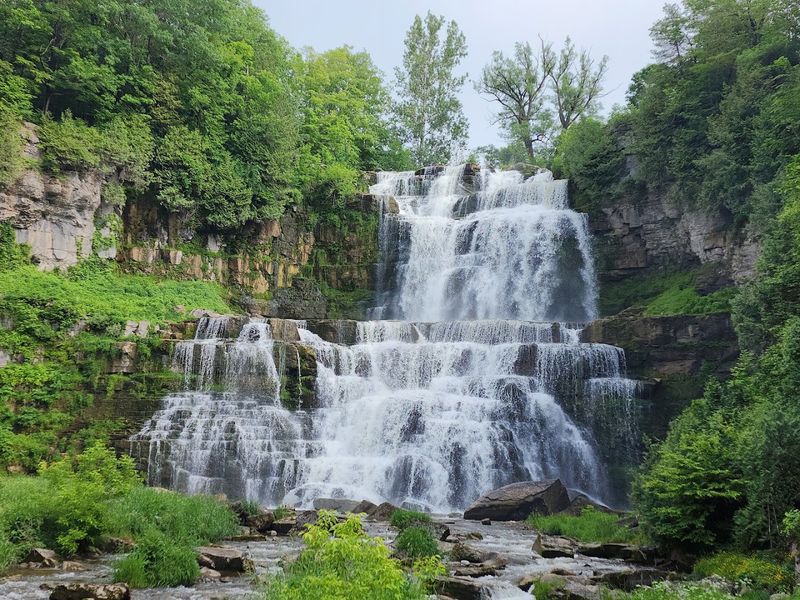
Few waterfalls in New York State have the nerve to drop 167 feet and still keep a low profile, but Chittenango Falls pulls it off with ease.
Found at Chittenango Falls State Park, 5241 Gorge Rd, Cazenovia, NY 13035, the falls pour over bedrock that is roughly 400 million years old. That is older than most things you will ever stand next to in your life.
The park draws around 45,000 visitors a year, which sounds like a lot until you realize Niagara Falls pulls in 30 million. By comparison, Chittenango is practically your backyard.
Hiking trails wind along the gorge, and the views from the overlooks are the kind that make you stop mid-sentence.
One truly wild detail makes this place extra special. The park is home to the Chittenango ovate amber snail, a tiny endangered creature found absolutely nowhere else on Earth.
Fenced sections along the Gorge Trail protect its habitat, so stick to the marked paths. Camping facilities closed in the mid-2000s, so plan a day trip instead.
Spring visits reward you with the fullest, most thunderous flow. Fall brings a golden canopy of leaves framing the cascade.
Either way, you are getting a waterfall that earns every foot of its height. The parking lot is modest, the crowds are manageable, and the waterfall itself is nothing short of spectacular.
Honestly, the hardest part about visiting Chittenango Falls is explaining to everyone back home why they have never heard of it before.
2. Roaring Brook Falls
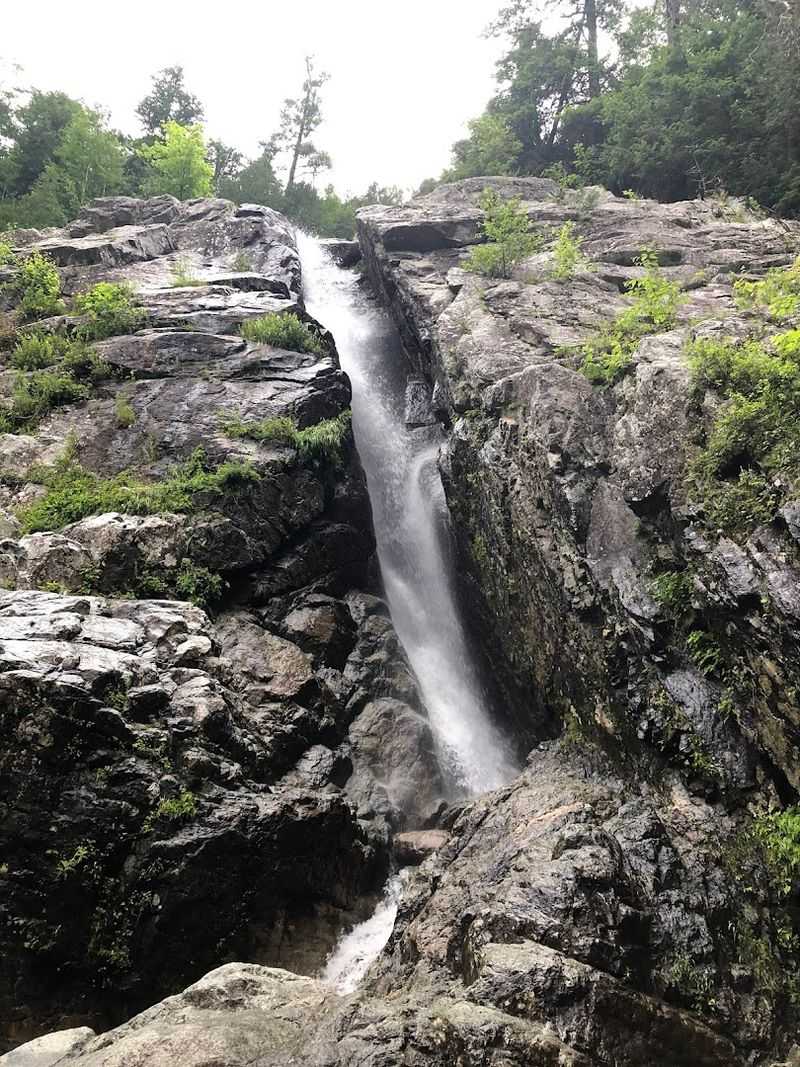
Standing at nearly 300 feet tall, Roaring Brook Falls is one of the tallest waterfalls in the entire Adirondack Park, and somehow most people have no idea it exists.
The trailhead sits along Route 73 in Keene Valley, NY 12943, and you can actually spot the upper falls from your car window as you drive by. That alone should be enough to make you pull over.
Two trail options give you control over how adventurous you want to be. A short, easy 0.3-mile path leads to the base of the falls, where the full drop towers above you and a natural pool sits at your feet.
For those who want more, a moderate 1.2-mile hike climbs to the top and rewards you with views that feel almost unfair.
Parking is limited year-round, which naturally keeps the crowd size small. Most days you will find more birds than people out here, and that is a genuine compliment.
The trail is described consistently as uncrowded, which in Adirondack terms means you might actually hear yourself think.
Giant Mountain looms behind the falls, adding serious drama to the entire scene. The waterfall runs strongest in spring and after heavy rain, when the volume turns the whole gorge into a natural sound system.
Fall foliage frames the upper cascade in shades of amber and rust, making it one of the more photogenic spots in the region. Getting here requires a bit of intention, but that is exactly the kind of effort that separates a good trip from a great one.
Roaring Brook Falls is worth every single mile.
3. Zabriskie’s Waterfall
Not every great waterfall requires a mountain or a state park.
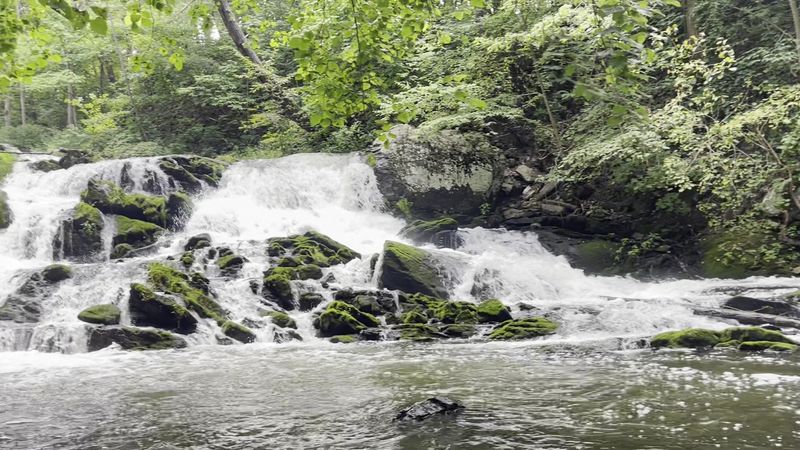
Zabriskie’s Waterfall sits quietly on the Bard College campus in Annandale-On-Hudson, NY 12504, flowing along the Sawkill Creek through a stretch of woods that most visitors to the Hudson Valley never even know exists.
It is the kind of spot that makes you feel like you discovered something the map forgot to include.
Access follows defined paths along the creek, leading to both the top and the base of the falls. The walk itself is peaceful and unhurried, the sort of trail that rewards slow walkers more than fast ones.
Students pass through occasionally, but tourist traffic is essentially nonexistent here.
The waterfall carries a distinctly literary atmosphere, which makes sense given its address. Bard College is known for arts and ideas, and the landscape around Zabriskie’s feels like it belongs in a novel.
Mossy rocks, filtered light through the tree canopy, and the steady sound of moving water make this a genuinely restorative stop.
Exact height measurements for the falls are not widely published, which only adds to its under-the-radar charm. What is clear is that the drop is substantial and the setting is extraordinary.
Few places in New York offer a waterfall experience this quiet and this close to a functioning academic campus.
If you are road-tripping through the Hudson Valley and want a detour that feels genuinely off the beaten path, Zabriskie’s Waterfall delivers something rare.
It is calm, it is beautiful, and almost nobody outside of Annandale-On-Hudson knows it is even there.
4. Plotterkill Preserve
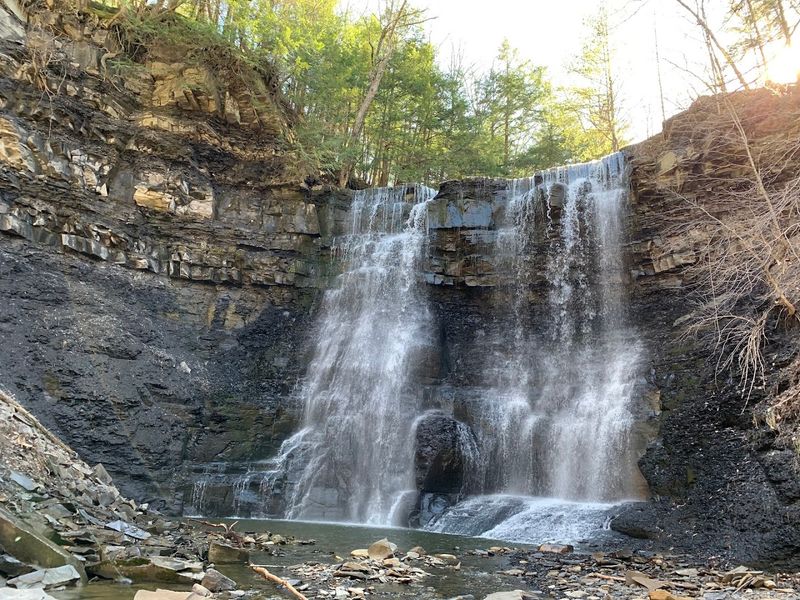
Three waterfalls in one preserve sounds like a rumor, but the Almy D. Coggeshall Plotterkill Preserve makes it a reality.
Off Mariaville Rd in Rotterdam, NY 12306, this 632-acre natural area holds the Upper Falls at 60 feet, plus the Lower Falls and Rynex Creek Falls, each dropping 40 feet. That is a lot of waterfall per square mile, and almost nobody from outside the Albany area knows about it.
The gorge was carved by meltwaters from the last ice age roughly 10,000 years ago, giving the landscape a raw, ancient energy that newer parks simply cannot fake.
Over 600 species of plants grow throughout the preserve, running through rugged hardwood and coniferous forests that shift with every season. Fall here is genuinely stunning.
Parking off Mariaville Road holds only about fifteen cars, which keeps the visitor count naturally low. You will want GPS to find the trailhead because signage is minimal and the approach is not obvious.
Think of it as a small puzzle before the big reward. The trails are rugged and require solid footwear, especially near the gorge edges.
Spring brings the fullest water flow and the most dramatic views of all three falls. Summer offers a quieter, greener experience with cool shade along the trails.
Visitors consistently note having the place entirely to themselves, which is either thrilling or slightly eerie depending on your personality. Either way, the Plotterkill Preserve earns its reputation as one of the most underappreciated natural spots near Albany.
Pack water, charge your phone for navigation, and go find those falls.
5. Barberville Falls
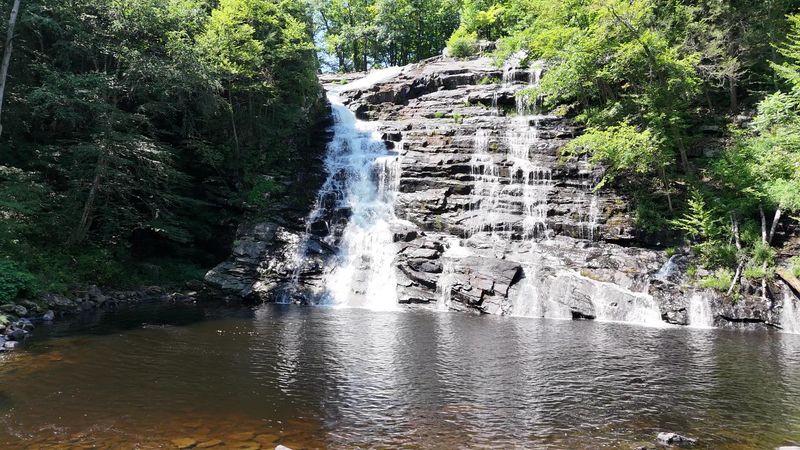
Ninety feet of free-falling water sounds like something you would drive hours to see, yet Barberville Falls sits quietly at 23 Blue Factory Rd, Averill Park, NY 12018, attracting so few visitors that its review count remains genuinely thin.
That kind of obscurity for a 90-foot waterfall is almost impressive. Rensselaer County does not brag about it, and somehow that makes it even better.
The falls drop into the Poesten creek and spread roughly 50 to 55 feet wide at their base. A hemlock-northern hardwood forest covers the 138-acre preserve, creating a canopy that keeps the air noticeably cooler near the water.
The whole scene has a slightly old-world quality that feels far removed from everyday life.
Getting down to the base requires a short but steep trail, roughly 0.1 to 0.25 miles, descending nearly 100 feet through the forest. It is not a casual stroll, but the payoff at the bottom is absolutely worth the burning quads.
Wear shoes with grip and take your time on the descent.
The Rensselaer Plateau Alliance now manages the preserve and keeps it open year-round, which was not always the case. Previously closed to the public during summer months, the site is now accessible in every season.
Winter visits offer a particularly dramatic look when ice formations build along the rock face. Visitors regularly report having the entire falls to themselves, which for a 90-foot cascade is genuinely remarkable.
If you want a waterfall that rewards curiosity and punishes indifference, Barberville Falls is exactly that kind of place. Go find it before someone else does.
6. Cohoes Falls
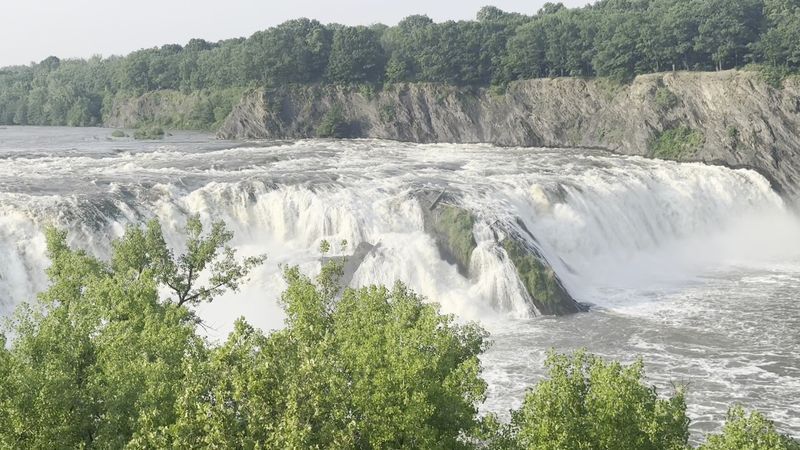
Right on the edge of an Albany suburb, Cohoes Falls roars over the Mohawk River at a height between 75 and 90 feet and stretches nearly 1,000 feet wide. By volume and width, it ranks as the second-largest waterfall in New York State after Niagara Falls.
That is a genuinely wild statistic for a waterfall most people in the state have never heard of.
Access runs through Peebles Island State Park at 1 Delaware Ave North, Cohoes, NY 12047, with additional viewing available at Falls View Park along North Mohawk Street. Both spots offer solid sightlines of the cascade without requiring much hiking.
The falls are right there, big and loud and completely underappreciated.
Seasonal changes shape the experience dramatically. Spring brings the most thunderous flow after snowmelt, turning the falls into a wall of white water that you can hear from a distance.
Summer and dry periods can reduce the flow significantly due to water diversions for power generation and canal locks, so timing matters.
The lack of a tourist industry around Cohoes Falls is almost baffling. No souvenir shops, no crowded overlooks, no three-hour lines.
Just an enormous waterfall doing its thing in a small city while most of New York looks the other way. Local residents know it well, but beyond the Albany area it remains almost completely unknown.
For anyone who has ever felt annoyed by the crowds at Niagara Falls, Cohoes offers the same category of spectacle with none of the chaos. It is big, it is bold, and it is completely free to visit anytime.
7. Secret Caverns Underground Waterfall
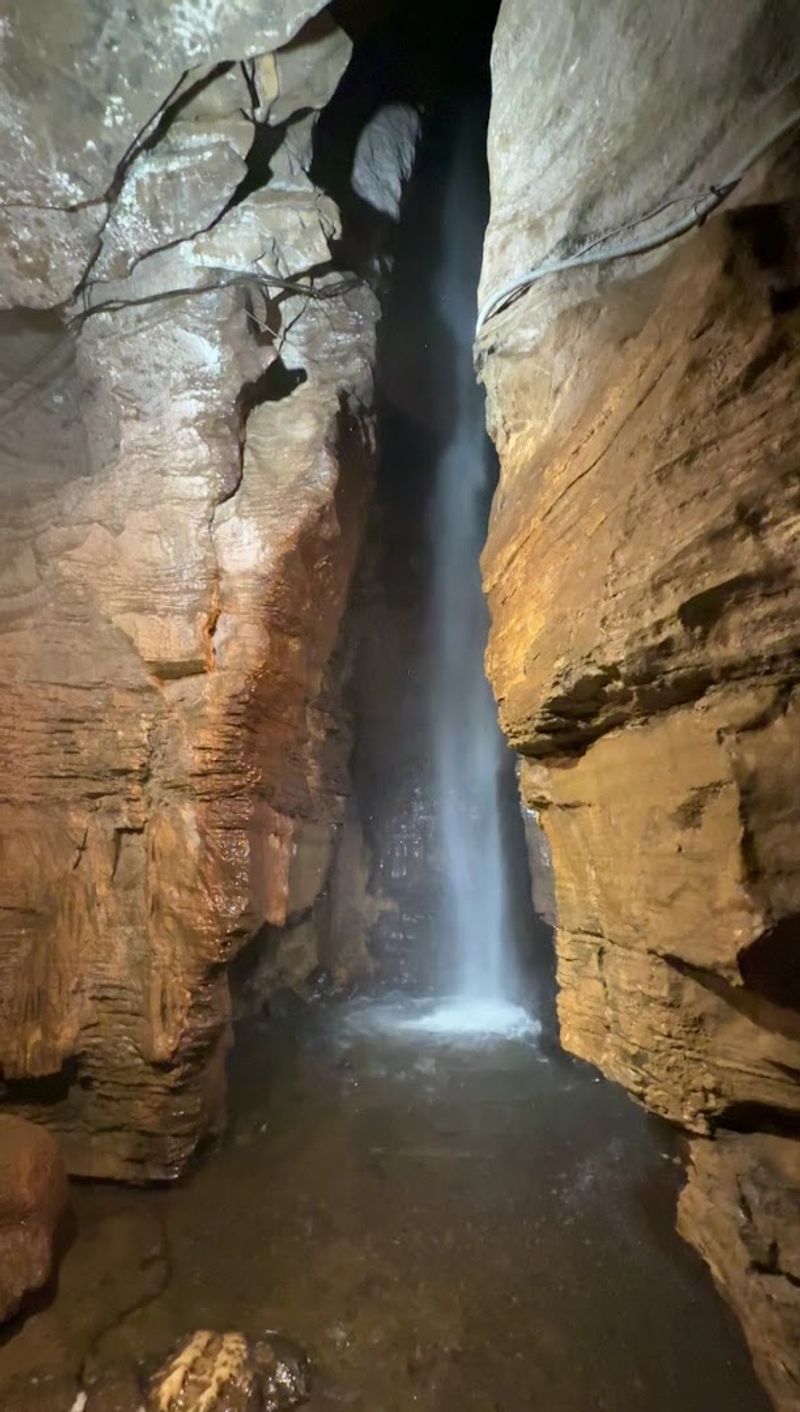
A 100-foot waterfall inside a cave is not something most people have on their bucket list, mostly because most people do not know it exists.
Secret Caverns at 671 Caverns Rd, Howes Cave, NY 12092, holds the only underground waterfall of its kind in New York State, and it is every bit as strange and spectacular as that description implies.
The place has the energy of a roadside attraction that somehow contains a genuine natural wonder.
Guided tours run about 45 to 60 minutes and take you 103 concrete steps down into the earth, a descent the caverns affectionately call the petrified escalator.
The cave maintains a steady temperature of around 50 degrees Fahrenheit year-round, so bring a light jacket regardless of what the weather looks like above ground. Sturdy shoes are a must on the wet stone paths.
Tour groups stay small and intimate, giving the experience a personal quality that larger attractions rarely manage. Visitors are generally welcome to touch formations and take pictures, which feels surprisingly generous for a place this unique.
The quirky folk art scattered throughout the caverns adds a layer of character that turns the whole tour into something genuinely memorable.
Yes, this waterfall is underground rather than outdoors, which makes it an editorial wildcard on a list like this one. But a 100-foot drop is a 100-foot drop, and the fact that it happens beneath the surface of New York only makes it more remarkable.
Secret Caverns earns its name completely. Most people drive past the signs on their way to the more famous Howe Caverns next door, which is their loss and your gain.
8. Eternal Flame Falls
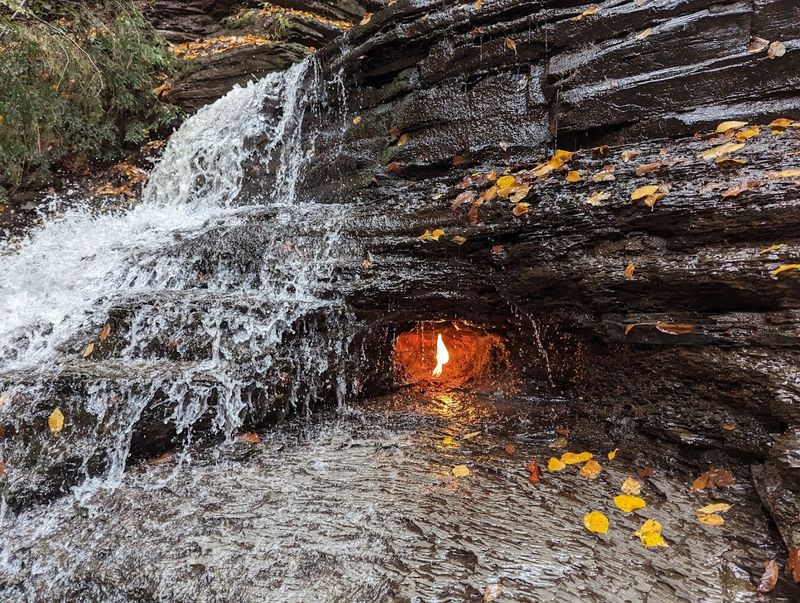
Behind a small waterfall in a shale gorge near Buffalo, a flame burns continuously without any human help. Eternal Flame Falls in Chestnut Ridge Park, 6121 Chestnut Ridge Rd, Orchard Park, NY 14127, is one of the most genuinely unusual natural features in the entire state.
A natural gas seep ignites behind the cascade, creating a flame that hikers have kept lit for decades. Yes, there is literally fire behind the water.
The falls themselves drop roughly 25 to 30 feet, which technically edges under the 40-foot threshold on this list, but the combination of waterfall and eternal flame earns it a strong honorary mention.
The hike to reach the falls runs about 1.5 miles round trip through a forested gorge. Trail conditions vary by season, and the path gets slippery in wet weather.
The flame occasionally goes out during heavy rain or high water flow, but visitors frequently relight it themselves using a lighter. That level of participation makes the experience feel oddly communal and a little bit magical.
Autumn is the most popular season here, when the surrounding forest turns and the flame glows against the orange and red canopy.
Erie County holds some genuinely remarkable natural features, and Eternal Flame Falls sits at the top of that list. Crowds stay manageable most of the year, though fall weekends can bring a noticeable uptick in visitors.
Arrive early on weekends to secure parking and get the gorge mostly to yourself. Few places in New York offer this particular combination of geology, water, and fire in one short hike.
It is weird, it is wonderful, and it is completely worth the trip.