
These Small New York Towns Still Look Exactly Like 1960s Small-Town America
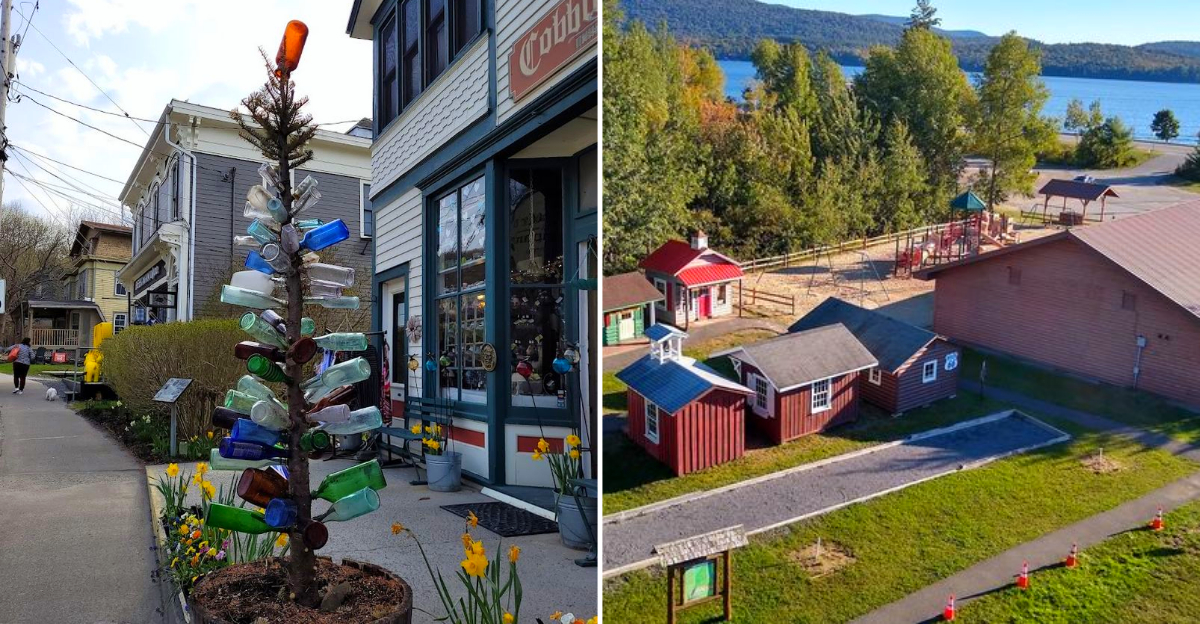
Nineteen sixty-three called and several New York towns picked up.
These towns did not set out to preserve anything. They just never stopped being what they already were and that turns out to be the most radical act of preservation available.
Walking a main street that still looks like 1960s America does something odd to a person’s internal clock in the best possible way.
New York contains entire pockets of the country that the decades simply agreed to leave alone and these small towns are the most intact examples of that agreement still holding in 2026.
Go on a weekday when the locals outnumber the visitors and the town still belongs to itself. That version of it is the real one and it is absolutely worth the drive.
1. Phoenicia (Ulster County, Catskills)
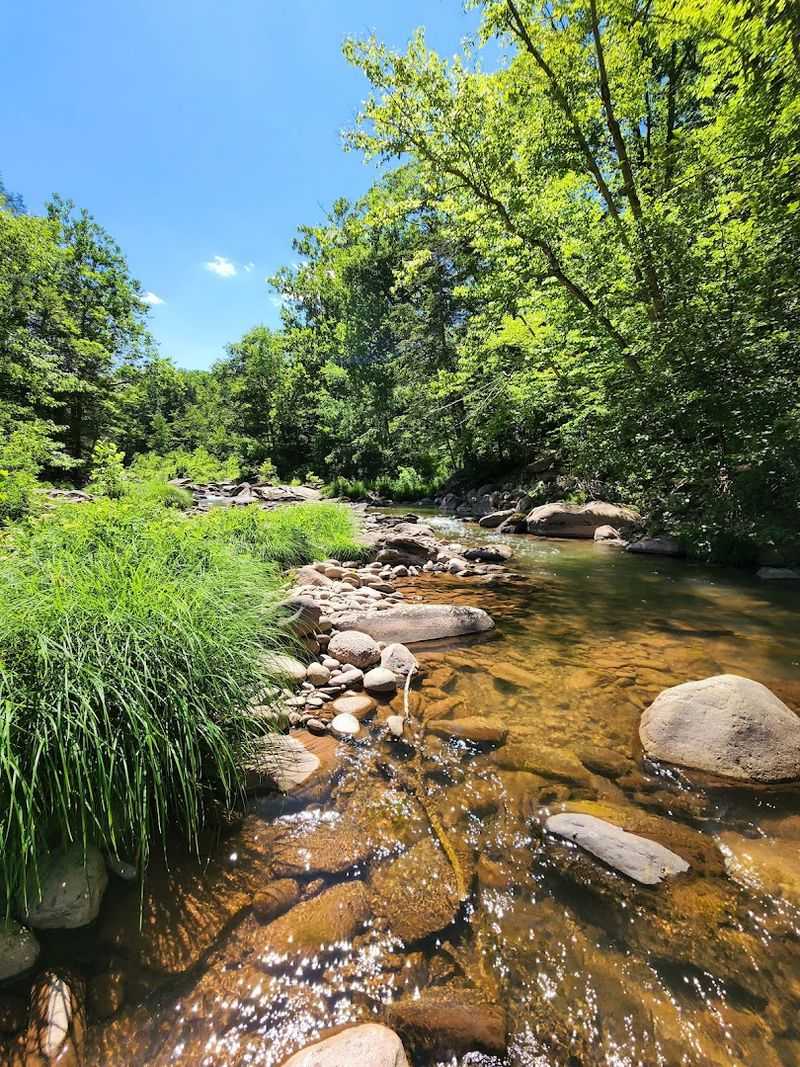
Some towns get famous and change everything. Phoenicia got famous in 1949 when Life Magazine called it one of the best vacation spots in America, nodded politely, and then went right back to doing exactly what it was already doing.
That is genuinely rare. The Phoenicia Diner has been serving eggs, trout, and hot coffee to regulars since the 1960s, and the crowd at the counter still looks like it belongs to that era.
Route 28 cuts right through town, bringing hikers down from Slide Mountain with muddy boots and big appetites. The diner fills up.
The creek runs beside the road. Nothing stays open past nine.
The whole place operates on a schedule that the rest of the world quietly abandoned decades ago, and it is better for it.
One main street. No stoplight.
The Esopus Creek running alongside it. And a train depot built in 1899 at 70 Lower High Street that now houses the Empire State Railway Museum, where vintage locomotives sit in the kind of dignified retirement that feels completely at home here.
Phoenicia is not trying to be charming. That is actually what makes it charming.
The town has a population of just over 300 people, and somehow that feels like exactly the right number for the space it occupies.
Hikers, artists, and weekenders from New York City have discovered it over the years, but Phoenicia has a remarkable talent for absorbing visitors without becoming a tourist town.
The bones of the place are too stubborn to change. If you want a proper 1960s American morning, the diner opens early and the coffee is strong.
2. Hammondsport (Steuben County, Keuka Lake)
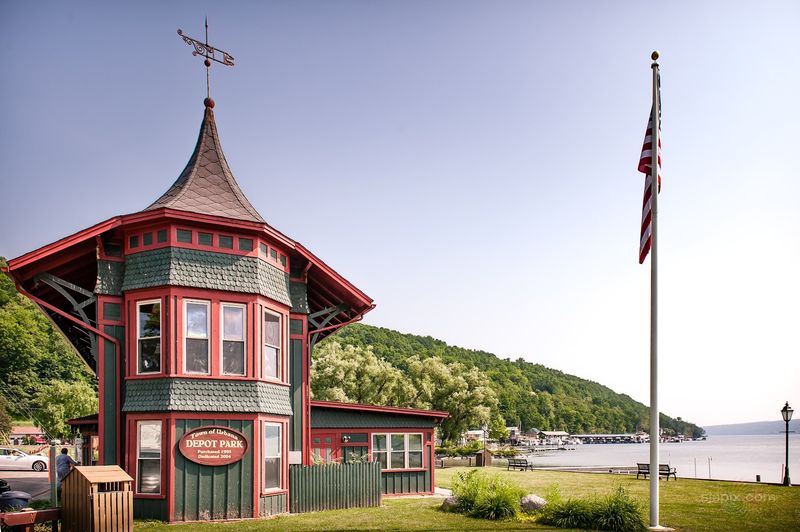
Aviation history and lake water share the same zip code in Hammondsport, and the town square has barely blinked since 1870.
Sitting at the southern tip of Keuka Lake in Steuben County, the streets follow the shoreline in a tight curve that somehow resisted every urge to widen, modernize, or add a chain restaurant.
That is not a small achievement. That is an act of civic willpower.
Glenn Curtiss was born here. If that name does not ring a bell, he was the aviation pioneer who outpaced the Wright brothers in 1908 and became one of the most important figures in early American flight.
The Glenn H. Curtiss Museum at 8419 State Route 54 preserves his original engines and prototypes inside a 60,000-square-foot hangar just outside town.
Walking through it feels like flipping through a textbook that nobody bothered to update because it was already correct.
Every September, vintage seaplanes land directly on the lake in front of the square. Actual vintage seaplanes.
On the actual lake. In front of the actual 19th-century buildings.
The Finger Lakes Boating Museum adds more than 200 handcrafted wooden boats to the picture, which at this point is almost too on-brand for a town this committed to its own history.
Keuka Lake itself is one of the Finger Lakes that glaciers carved into the shape of a tuning fork, which is either the coolest geological fact you will hear today or the second coolest depending on your morning.
For a few weeks each fall, Hammondsport looks like a postcard someone mailed in 1962 and simply forgot to deliver.
No complaints from anyone receiving it late.
3. Angelica (Allegany County, Southern Tier)
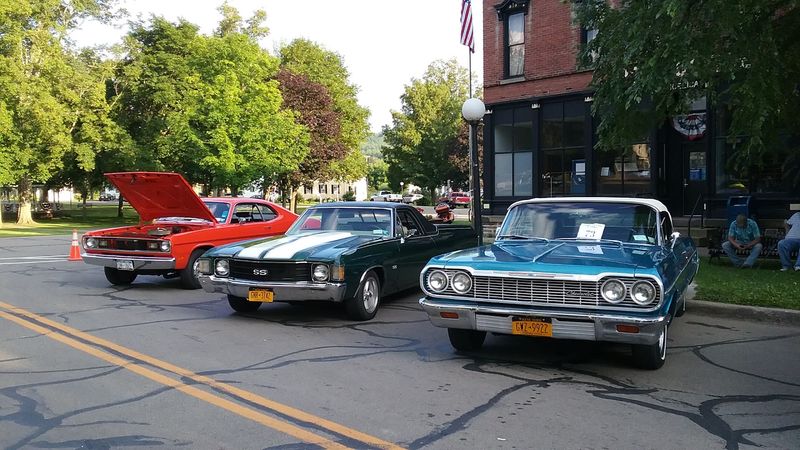
Angelica carries itself like a town that once ran the whole county and has not entirely forgotten it. It was the county seat of Allegany County, and the architecture makes sure you know that.
The centerpiece of the village is a rare octagonal green, one of the few of its kind in the entire country, with eight sides lined by Greek Revival and Gothic buildings that have been standing since before the Civil War.
An 1819 courthouse still functions as the town hall at the center of the green, which is either wonderfully efficient or a sign that nobody wanted to deal with the paperwork of moving.
A circular bandstand with detailed wood tracery on the pointed roof completes the picture, and the picture is genuinely worth the drive to Allegany County.
The county fairgrounds sit in the eastern part of the village and are still active, still drawing residents for the same annual traditions that have been running for well over a century. Antique shops line Main Street and pull collectors from across the state.
The population sits at 723 people, which is small enough that the fairgrounds feel like the biggest event of the year and probably are.
Angelica has officially dubbed itself “The Town Where History Lives,” which is either charming or redundant depending on how long you have been standing in the square.
The address for the historic town hall is 56 West Main Street, and the surrounding blocks look almost untouched by the decades that passed everywhere else.
For a town with fewer than 800 residents, Angelica punches well above its weight in sheer architectural dignity.
4. Seneca Falls (Seneca County, Finger Lakes)
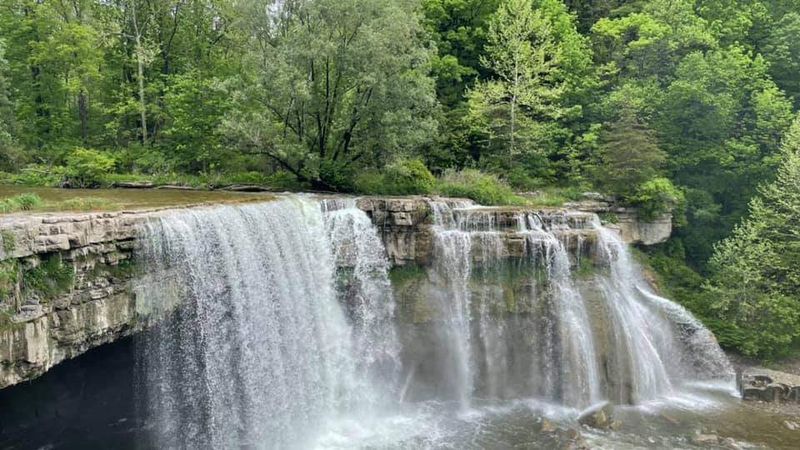
Seneca Falls calls itself the real Bedford Falls, and the case it makes is surprisingly hard to dismiss. The claim is that Frank Capra visited in 1945 while writing It’s a Wonderful Life and took the town home with him in his notes.
The steel bridge over the canal, the main street proportions, the general atmosphere of a place that knows its own worth without broadcasting it. The evidence is circumstantial.
The resemblance is not.
Every December, Seneca Falls leans fully into the Bedford Falls identity with a three-day festival that includes a parade, film screenings, the bridge lit up at night, and a George Bailey impersonator roaming the streets.
That last detail is either the most wholesome thing in New York or the most committed piece of local theater in the entire state.
Probably both. The It’s a Wonderful Life Museum at 76 Fall Street houses props and memorabilia from the film year-round for anyone who cannot wait until December.
The town also carries a second and arguably more significant piece of American history. The first Women’s Rights Convention was held here in 1848, making Seneca Falls the birthplace of the organized women’s rights movement in the United States.
The National Women’s Hall of Fame at 76 Fall Street honors that legacy with rotating exhibits that give the town a civic weight that feels genuinely mid-century American in the best possible way.
Two enormous chapters of American history in one small Finger Lakes town is a lot to hold. Seneca Falls holds both with remarkable steadiness.
The streets are quiet, the canal still runs, and the bridge still looks exactly like the one in the movie. Some coincidences are too good to be accidents.
5. Sharon Springs (Schoharie County, Mohawk Valley)
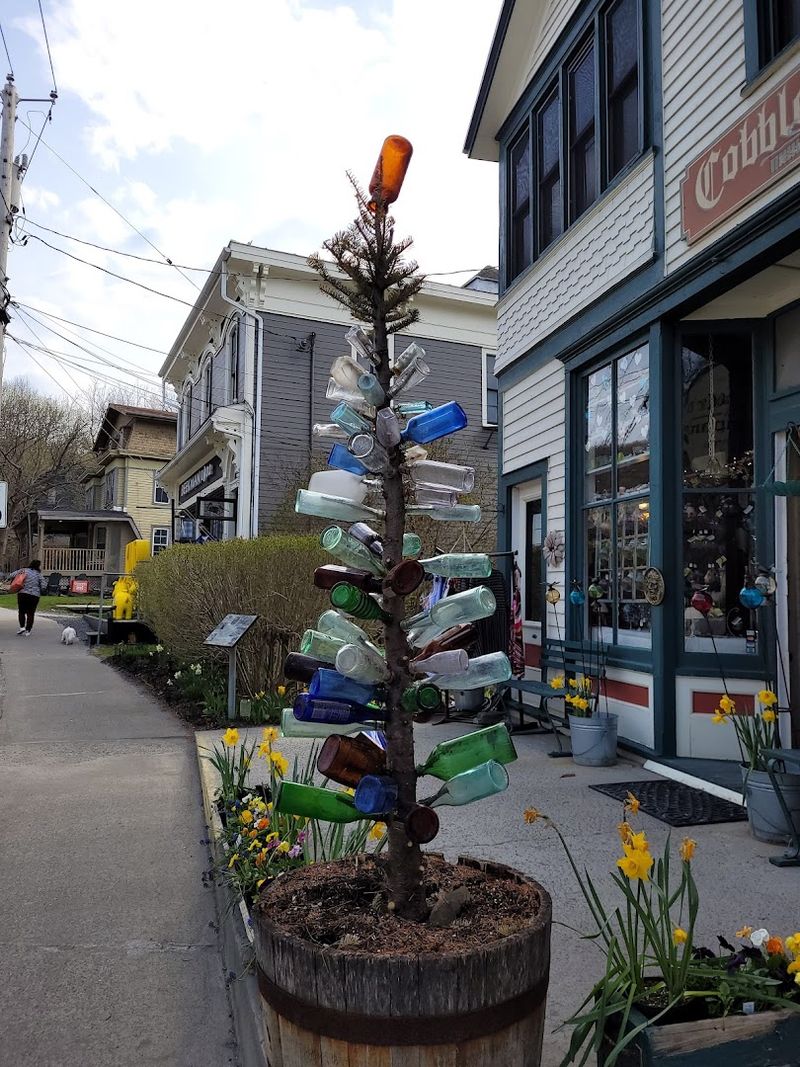
Sharon Springs became a resort town in the 1800s because of its sulfur springs, and then it stayed one in architecture and atmosphere long after the resort era wound down. That is a specific kind of stubbornness that deserves genuine respect.
Historic inns, mineral springs, and pastel storefronts line the main street in a configuration that looks genuinely unchanged by time, which in a world of constant renovation is practically a superpower.
The historic American Hotel anchors the village and has been receiving guests since the 19th century. The address is 192 Main Street, Sharon Springs, and the building looks like it arrived from a different century and simply refused to leave.
The streets are quiet. The population hovers around 500 people.
The pace has that unhurried quality that 1960s small-town America was famous for before everywhere else decided that faster was better.
A Hasidic Jewish community has also made Sharon Springs home in recent decades, adding a layer of community life that feels genuinely old-world and self-contained.
The combination of Victorian spa architecture and a tight-knit religious community gives the village a texture that is hard to find anywhere else in New York.
It is not a theme park version of the past. It is just a place that the present has not fully claimed yet.
The sulfur springs that made Sharon Springs famous are still there, which is either a selling point or a conversation starter depending on your relationship with sulfur.
For a town this size to carry this much history, this much architectural character, and this much genuine quiet all at once is the kind of thing that travel writers run out of adjectives trying to describe.
Worth the detour every single time.
6. Medina (Orleans County, Greater Niagara)
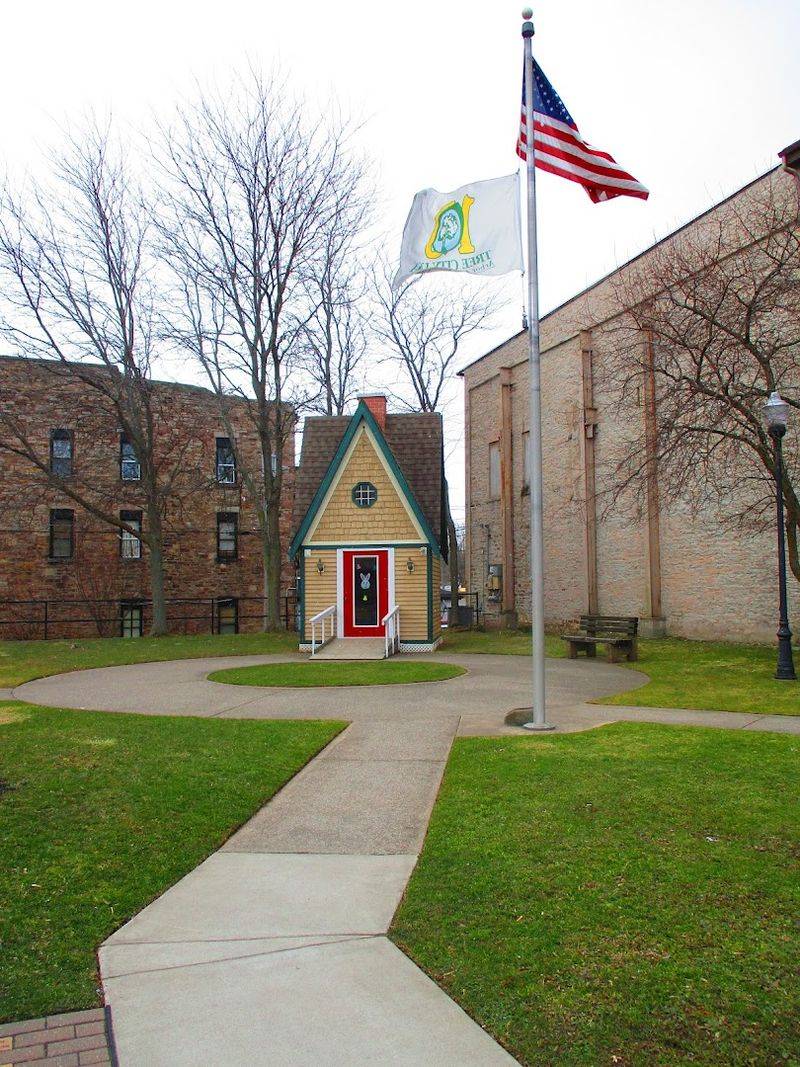
Everything in Medina is built from the same stone, and that stone went into some of the most famous structures in American history.
Medina sandstone, a red-brown material quarried from local gorges in Orleans County, was used in the construction of the New York State Capitol, the Brooklyn Bridge, and hundreds of buildings worldwide.
The town that supplied the stone for those landmarks built itself from the same material, which gives the whole place an architectural consistency that feels almost cinematic.
The Main Street Historic District, listed on the National Register of Historic Places in 1995, stretches south from the Erie Canal to the railroad tracks and is lined with Romanesque, Queen Anne, and Italianate commercial buildings constructed between 1845 and 1925.
The Erie Canal still flows right through town at 1 Culvert Road, which is the kind of detail that makes you realize Medina has been quietly excellent for a very long time without making a big deal about it.
Bent’s Opera House on Main Street, built in 1865, hosted P.T. Barnum, Frederick Douglass, and William Randolph Hearst in its time.
That is a guest list that most major cities would be proud of. A local real estate broker once described Medina as Hallmark-esque, which is almost certainly the most accurate and efficient thing anyone has ever said about it in under two words.
The sandstone is still there. The canal still flows.
The historic district is still intact. Medina is not trying to recreate the past because the past never actually left.
For a town of around 6,000 people in Greater Niagara, it holds an outsized amount of architectural and historical weight with the kind of calm confidence that only comes from genuinely having the receipts.
7. Speculator (Hamilton County, Adirondacks)
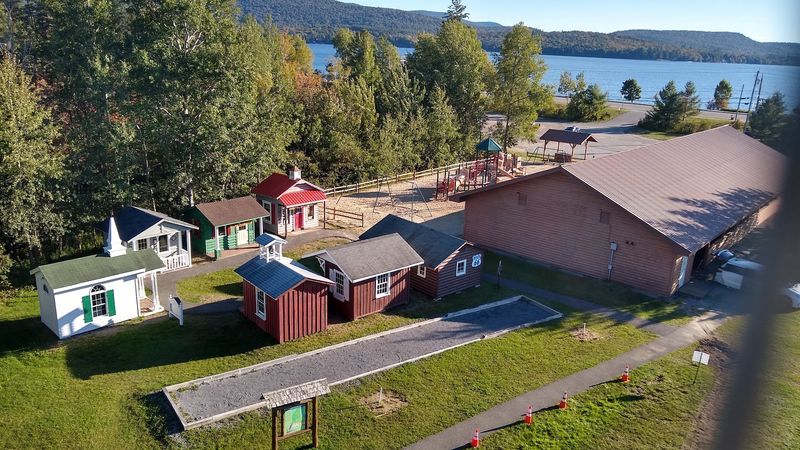
Speculator is the only incorporated village in Hamilton County, the least populated county in all of New York State, and it wears that distinction with the kind of casual ease that only very small places can pull off. Population: 406.
The entire business district is the intersection of Route 8 and Route 30, which locals call the Four Corners, and that name tells you everything you need to know about the scale of ambition here. It is refreshing in the most genuine way.
The welcome sign is old-school wooden, a holdover that nobody has gotten around to replacing, which is exactly the right metaphor for the whole place. The Speculator Diner is where you eat.
Lake Pleasant is where you swim. The Indian Lake Theater, located at 6 Pelon Road in Indian Lake just a short drive away, shows current movies and lets children under 17 in free when accompanied by an adult.
That is the kind of policy that stopped existing almost everywhere else around 1978, and its survival here feels like a small miracle worth celebrating.
Hamilton County has 1,800 lakes and ponds. Speculator has 406 people.
The math works out to an extraordinary amount of quiet per person, which is either deeply peaceful or deeply funny depending on your personality. The Adirondack Mountains surround the whole thing in a way that makes the rest of the world feel genuinely optional.
There are no chain stores. There are no traffic lights.
There is a diner, a lake, a wooden sign, and a theater that still believes in free admission for kids. Speculator is not trying to compete with anywhere.
It already won a different race entirely, the one where the prize is actually getting to slow down.