
This 18th-Century Massachusetts Farmhouse Is Packed With Antiques That’ll Make You Lose Track Of Time
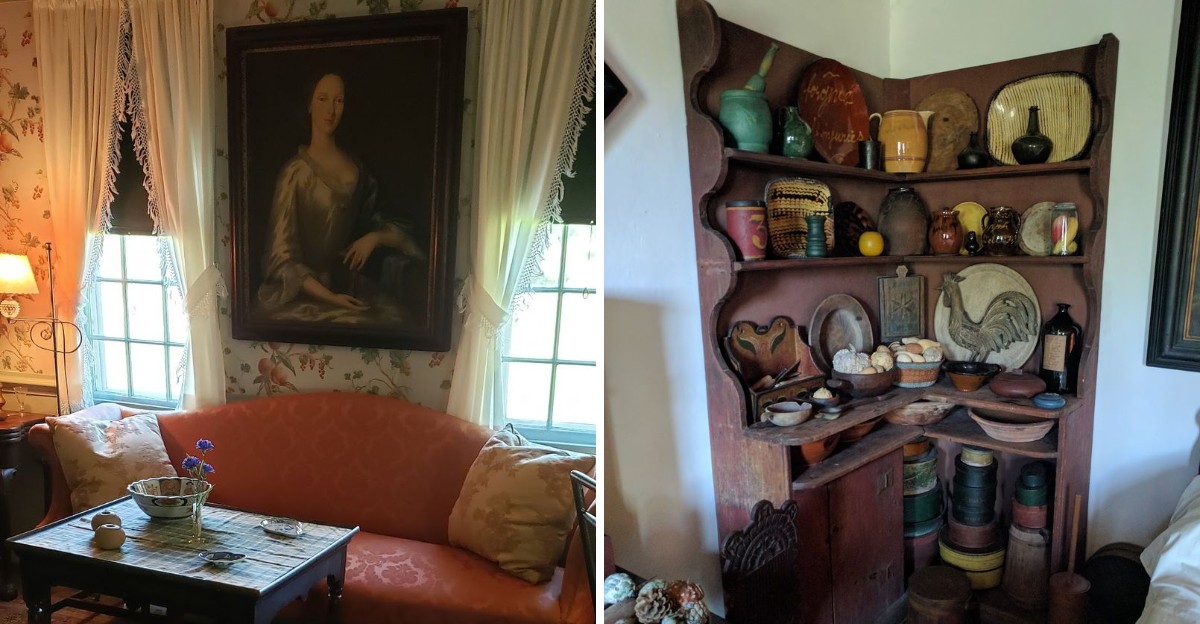
Some houses feel like they stopped the clock on purpose.
This 18th century Massachusetts farmhouse is filled with rooms where old furniture, folk art, painted chests, rugs, ceramics, and curious objects seem to compete for your attention.
Every doorway opens into something different, and the collection is dense enough to make a quick visit nearly impossible.
What makes the place so interesting is not just the age of the house. It is the sheer amount of history gathered under one roof. Pieces collected over decades still sit together in spaces that feel personal rather than staged.
You might notice a portrait first, then a carved chair, then a shelf crowded with pottery that suddenly pulls you closer. Before long, you are moving at half speed.
That is the danger here, if you can call it one. Time slips away easily when every room gives you one more reason to stop.
Four Centuries Of Farming On One Piece Of Land
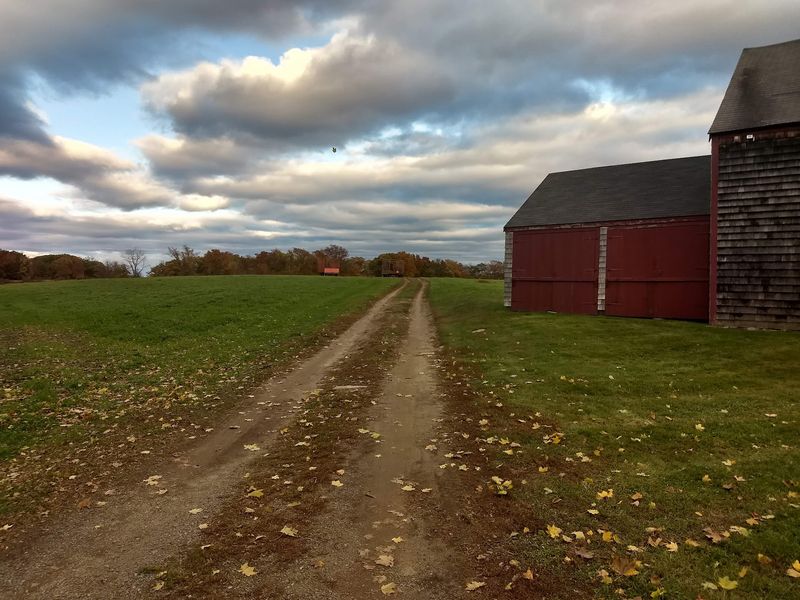
Back in 1636, John Cogswell received a 300-acre grant of land along the Essex River. Nearly four centuries later, that same ground is still being farmed.
The oldest building standing here is not the house at all. A salt hay barn from 1719 beat the farmhouse by nearly a decade.
Jonathan Cogswell Jr. raised the main house in 1728, and it has watched the marsh change color every season since.
What makes Cogswell’s Grant unusual is that continuity. Plenty of old properties get chopped up, sold off, and swallowed by neighborhoods. This one held together at 165 acres, marsh and hayfield and all.
Historic New England keeps it running as a working farm, not a frozen postcard. That decision matters more than it sounds.
The fields are mowed, the barns are used, and the land still does the job it was cleared for.
Stand near the top of the slope and the Essex River stretches east toward the Atlantic, roughly two miles off. On a clear morning the light on the marsh grass does something remarkable.
Four hundred years is a long stretch for anything to stay the same. Here, it mostly has.
The Collectors Who Turned A Summer House Into A Museum
In 1937, Bertram K. and Nina Fletcher Little bought an old farm for a collection that was already growing fast. They kept collecting for decades.
Nina became one of the most respected scholars of American folk art anywhere. She preferred the phrase “country arts” to folk art and wrote extensively on decorative painting, floor coverings, New England pottery, and other overlooked subjects.
Her books helped bring serious attention to subjects that had received little scholarly study before.
Bertram had his own weight in the field. He served as corresponding secretary and director of the Society for the Preservation of New England Antiquities from 1947 to 1970.
Their taste ran toward character over polish. They wanted pieces with strong personality, original finishes still intact, and a documented connection to New England households.
They were drawn to the objects that furnished everyday New England homes, especially pieces with character, regional history, and stories they could trace.
That philosophy is why the collection feels alive rather than stuffy. Every item was chosen by two people with sharp eyes and a very specific idea of what mattered.
Museums usually assemble collections after the fact. The Littles built theirs inside the walls where it still sits.
Folk Art Portraits That Stare Right Back
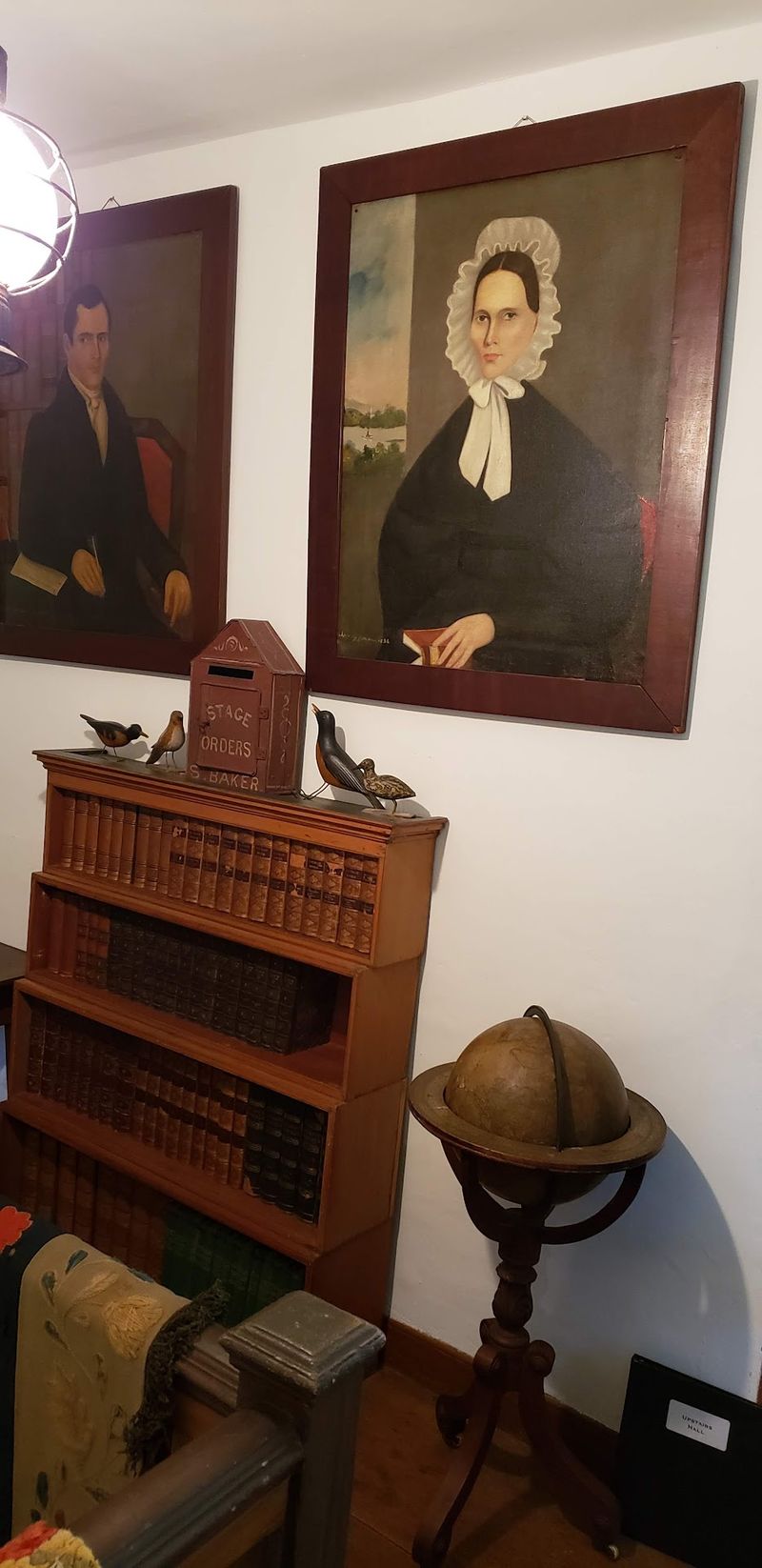
The faces are the first thing that grab you. Not royalty, not generals, just regular New Englanders painted by traveling artists who charged by the likeness.
Many of these sitters came from towns nearby. Gloucester and Ipswich residents hang on these walls, which gives the whole collection a rooted, neighborly quality.
Folk portraits follow their own rules. Proportions can be odd, hands sometimes look borrowed from a different painting, and yet the expressions land with surprising force.
Children appear frequently, often holding a favorite toy or a piece of fruit. Those small details were the family’s way of saying something true about the kid.
One specialized tour at Cogswell’s Grant is built entirely around these paintings. Called “Faces and Families,” it digs into who these people were and how their portraits traveled through generations.
Nina Little wrote about this genre with real authority, which is part of why the portraits here are so well chosen. She knew what separated a good example from a great one.
Spend ten minutes in a room full of them and something shifts. They stop being decoration and start feeling like company.
Painted Furniture In Colors You Did Not Expect
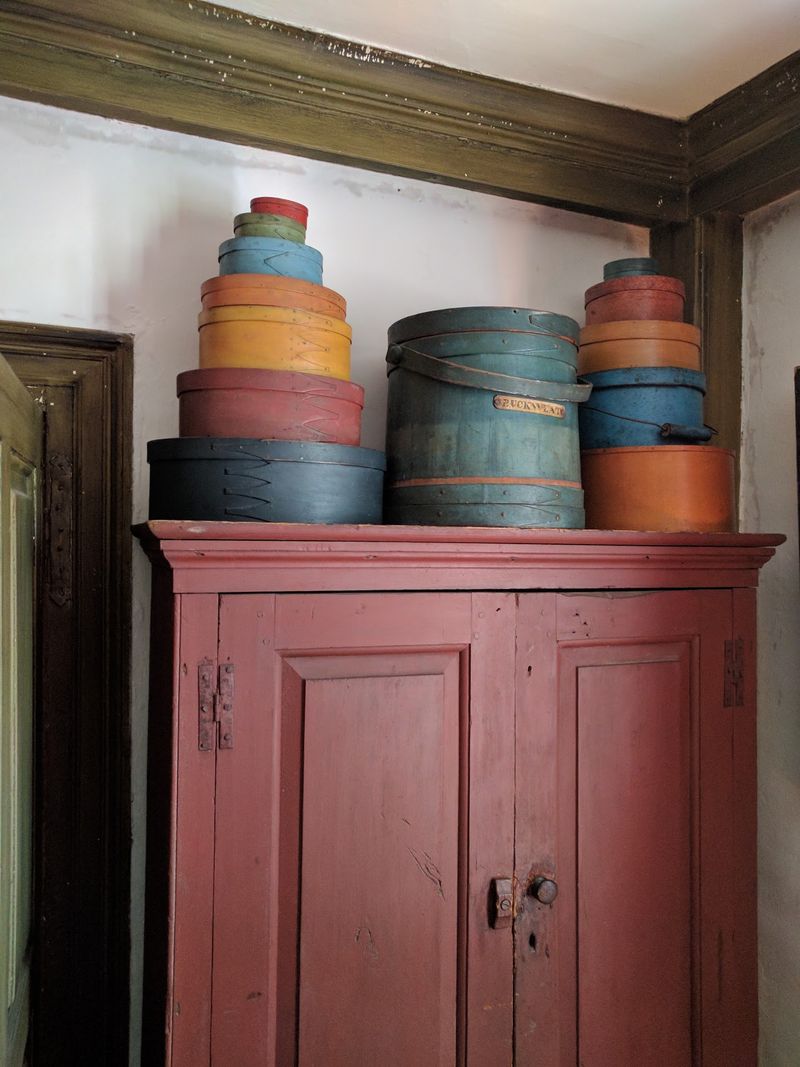
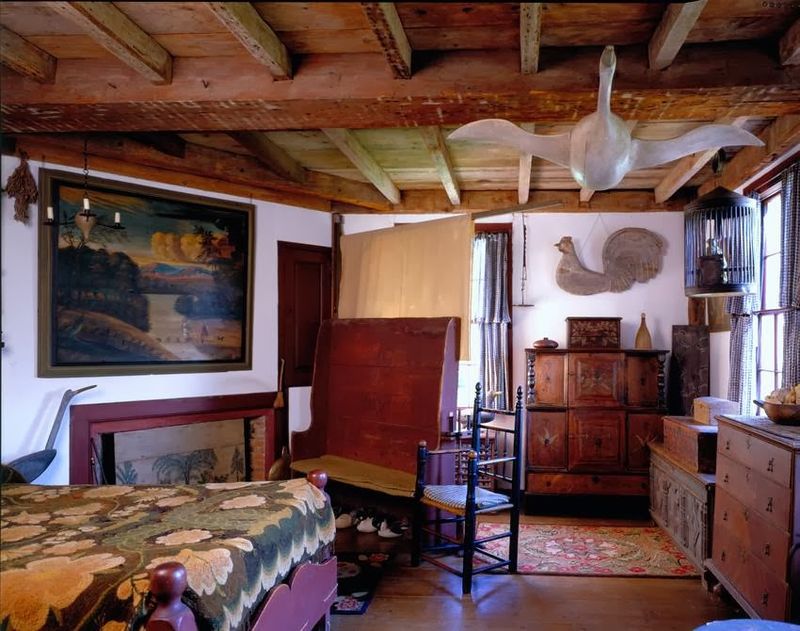
Forget the idea that colonial furniture means brown. The pieces here come in mustard, salmon, deep blue, and greens that have mellowed into something wonderful.
Country craftsmen painted softwood to imitate fancier grains, or simply because color made a plain room cheerful. Grain painting, sponge decoration, and freehand flowers all show up throughout the house.
Original surfaces were the Littles’ great passion. A stripped and refinished chest meant nothing to them.
A cupboard still wearing its first coat of paint was worth chasing across three states.
That standard was unusual in their day. For decades, collectors scrubbed old paint off without a second thought, destroying exactly what makes these pieces valuable now.
Blanket chests, cupboards, tables, and small boxes fill the rooms at Cogswell’s Grant. Each one carries little dents and worn edges from ordinary daily use.
Look at the corners and the drawer pulls. That is where you see hands at work, generation after generation.
Furniture historians consider this collection a benchmark for painted country pieces. Not bad for a farmhouse on a back road in Essex.
Redware, Shaker Boxes, And Other Everyday Treasures
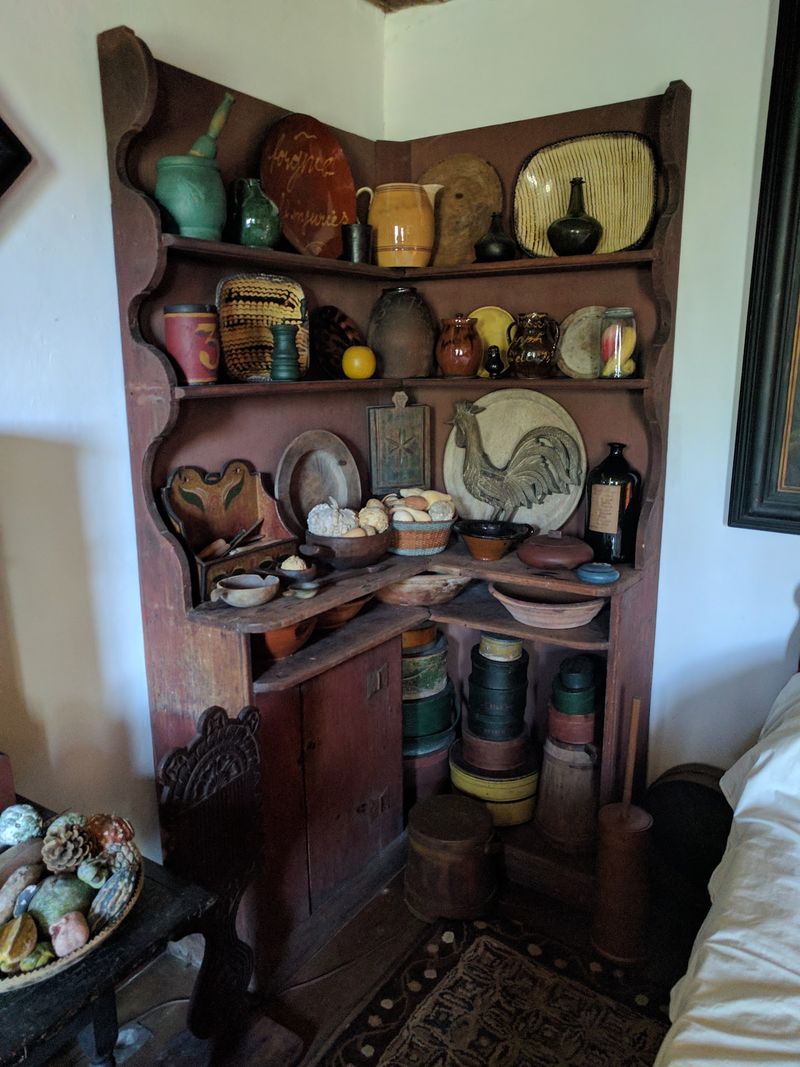
Pottery does not usually steal the show. Here it might.
Redware was the clay of the common household, fired from local earth and glazed in warm reds and browns. Pie plates, jugs, and crocks line shelves throughout the rooms.
Stacked Shaker boxes add another rhythm entirely. Those oval containers with their swallowtail joints represent a completely different design philosophy, all restraint and precision.
Scrimshaw turns up too, carved by sailors with time on their hands and a whale tooth in front of them. The engraved scenes are astonishingly fine for work done at sea.
Hooked rugs cover floors, some with animals and houses worked into the design. Textiles, wood carvings, and small utilitarian objects round out the rest.
What ties it together is purpose. Nearly everything was made to be used by someone who needed it, not admired by someone who bought it.
A tour called “Favorite Things, Hidden Treasures” pulls objects out of cupboards that regular tours never reach. Worth timing your trip around.
Ordinary things, kept long enough, become extraordinary. Cogswell’s Grant proves it room by room.
Weathervanes, Decoys, And Carvings With Real Swagger
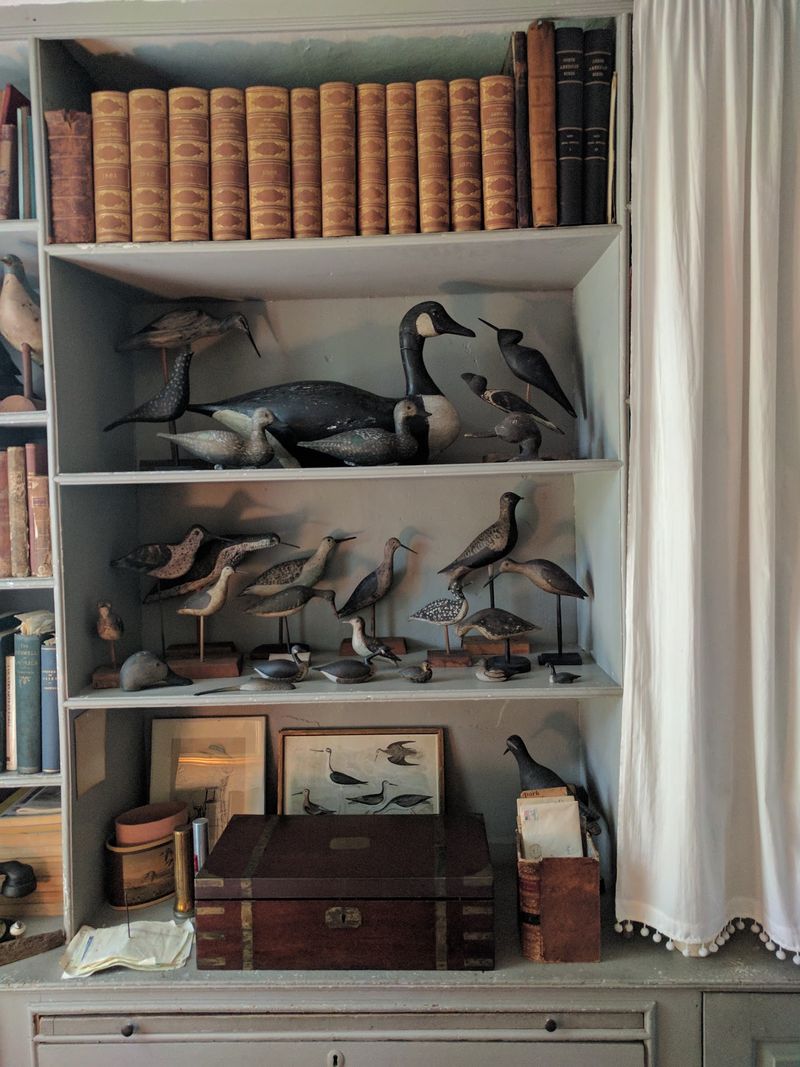
Some objects were built to be seen from a hundred yards away. Weathervanes top that list.
Roosters, horses, fish, and arrows once spun above barns across the region. Carved or hammered from copper and wood, they combine practical function with genuine sculptural nerve.
Bird decoys bring a different energy. Carvers shaped them to fool ducks, which meant getting the posture exactly right with almost no fussy detail.
The best decoys look simple until you really study them. Then you notice how much the carver understood about how a bird actually sits on water.
Wood carvings of all sorts appear throughout the house, some whimsical, some strangely formal. The Littles had a soft spot for pieces with a little attitude.
Quirk was practically a requirement for them. An object that was merely correct rarely made the cut.
Everything sits where the family placed it, not behind velvet ropes in a gallery. You see a weathervane on a mantel the way it was actually lived with.
That arrangement is the whole point. The house was never staged for anyone but the people who loved it.
A Home Arranged For Delight, Not Textbook Accuracy
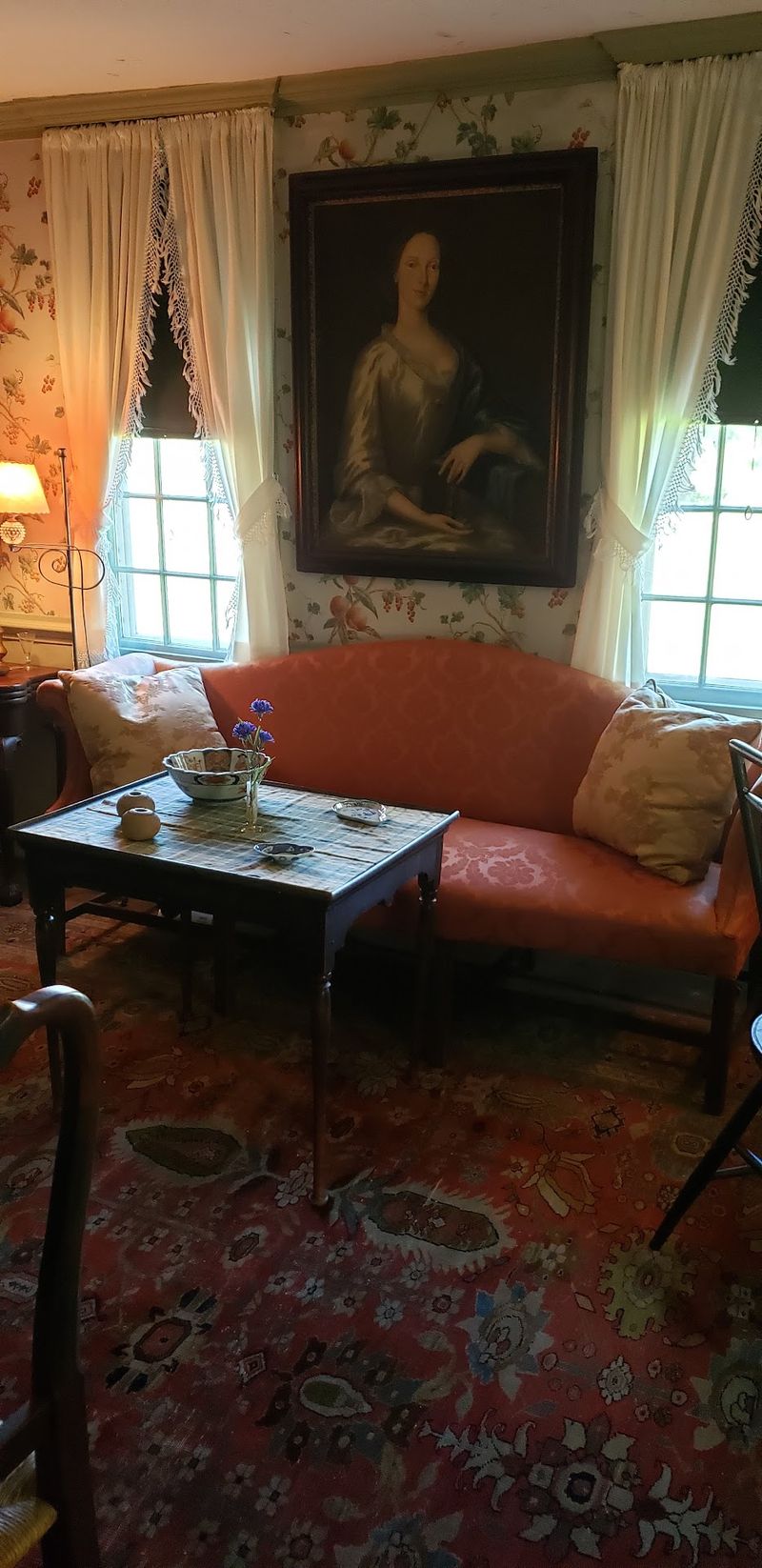
Most historic houses try to recreate a single year. This one refuses.
The Littles arranged their rooms for visual pleasure, mixing objects from different decades because the combination looked good together. Strict period accuracy was never the goal.
You will spot small oddities that reveal how recently people lived here. Bits of mid-century domestic life sit comfortably alongside pieces from the 1700s.
Historic New England opened the house to the public in 1998 and deliberately kept that arrangement intact. Undoing it would have erased the most interesting thing about the place.
The result is a house that feels inhabited rather than installed. Chairs face each other like a conversation just ended.
Guided tours walk you through room by room, explaining why certain objects ended up together. Guides know the collection deeply and the stories behind individual pieces.
Folding chairs are provided during tours, a small kindness that makes a longer visit comfortable. First-floor accessibility options exist for those with limited mobility.
Cogswell’s Grant works because two people had strong opinions and the confidence to follow them. Rules came second. The eye came first.
Plan Ahead Before Exploring The Farmhouse
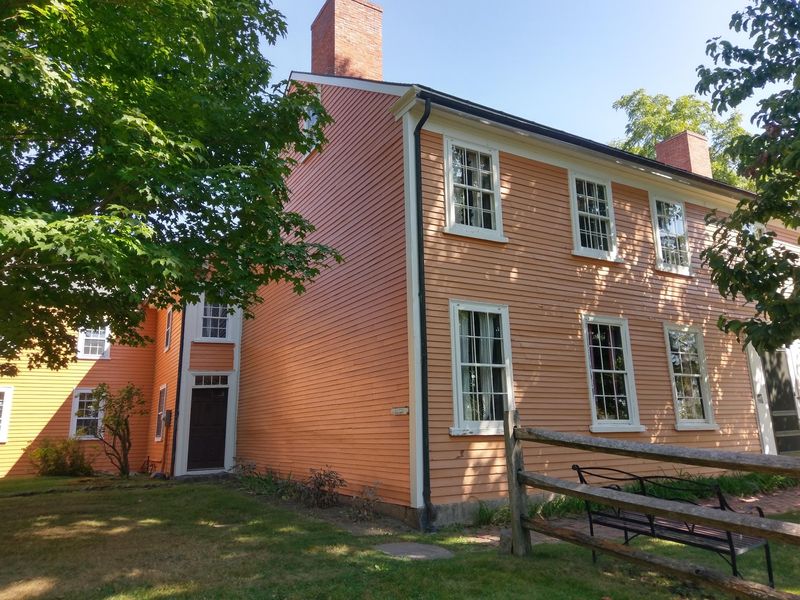
Start with the address before setting out. The farm sits at 60 Spring St, Essex, MA 01929.
House tours run Friday and Saturday from June 5 through October 10, with tours offered on the hour from 11 AM to 3 PM. Checking ahead before driving out is still a smart move.
The grounds operate on a far more generous schedule. Open year-round from dawn to dusk, they welcome walkers along the hayfields and marsh edges.
Those 165 acres shelter local and migrating wildlife, and the open views toward the Essex River are excellent in every season. Snowy months turn the rolling fields into quiet, wide-open terrain.
Beyond the standard house tour, special programs explore the farm, hayfields, barns, salt marsh, and agricultural landscape. Specialty tours can also focus on folk portraits or reveal objects normally kept inside cupboards, cabinets, and drawers.
Admission stays reasonable, and Historic New England membership covers entry across their properties if you plan to see several.
Essex itself is a small Massachusetts coastal town worth a slow afternoon. The farm makes a natural anchor for the day.