
This Abandoned New York Area Feels Like Nature Hit Rewind
Forgotten places have a way of making the imagination run wild, and this one does it almost instantly. In New York, a quiet patch of overgrown land has become the kind of place that feels pulled from an old mystery novel.
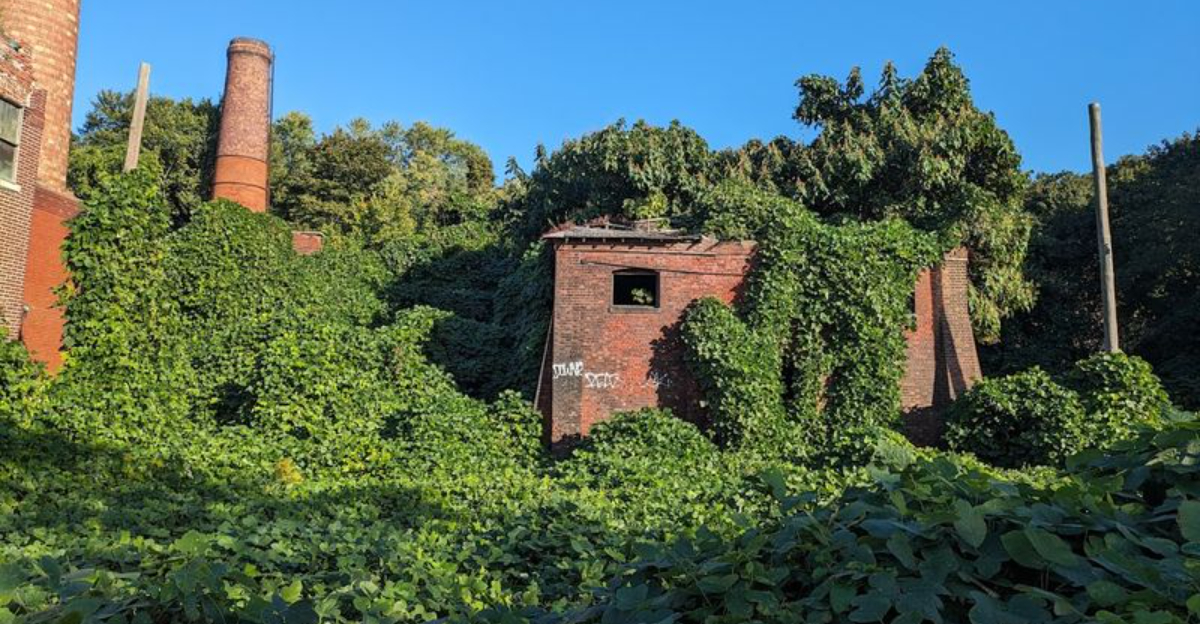
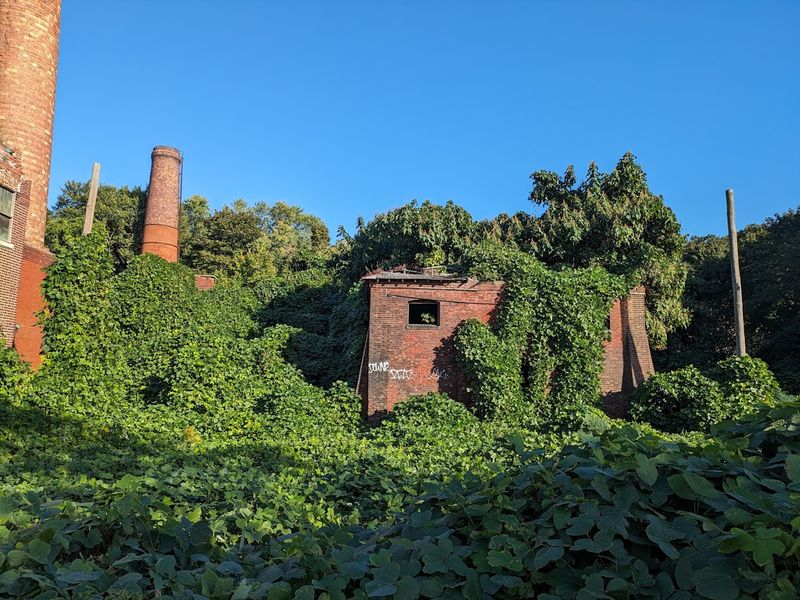
Empty buildings still stand, their walls weathered by time, their windows staring out like they remember everything. Trees push through cracked paths. Vines climb over brick. Nature is not just visiting here, it is taking over with dramatic flair.
What makes it even more fascinating is the history still attached to it. Once active and full of purpose, the place now sits closed off and weathered by time. From a distance, it has a quiet pull. Once you know the story, it is hard not to wonder about what remains.
A Small Island With A Big Story To Tell
Not many places carry as much history as North Brother Island does in just 22 acres. Located in the East River between the Bronx and Rikers Island, this compact stretch of land has a history few places can match.
Quarantine hospitals, a remarkable maritime event, and one of the most famous public health stories in American history all unfolded on this small stretch of ground.
The island was largely uninhabited until 1885, when New York City purchased it to build Riverside Hospital. The hospital was designed to house patients with serious illnesses like typhus, smallpox, yellow fever, and tuberculosis.
At the time, placing patients in a separate island facility was seen as a practical public health measure, even if it feels stark by today’s standards. Over the decades, the island served several different roles.
After World War II, it briefly housed veterans returning home before later becoming a care facility and closing permanently in 1963. Since then, the buildings have been left to slowly crumble while nature quietly moves in.
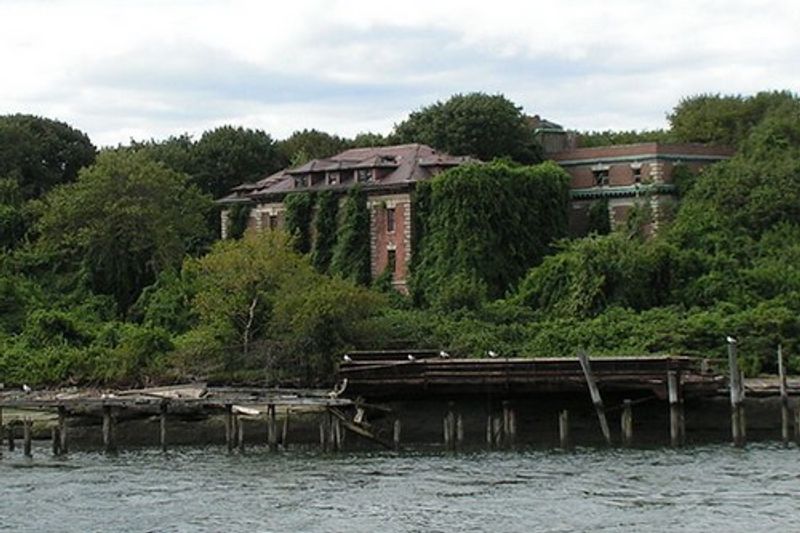
You can actually see the island from the Bronx shoreline, and the sight of overgrown ruins peeking through thick tree canopies is genuinely striking.
The address, Bronx, NY 10454, places it just off the mainland, close enough to feel real but far enough to feel completely removed from city life.
The Riverside Hospital Ruins That Spark Curiosity
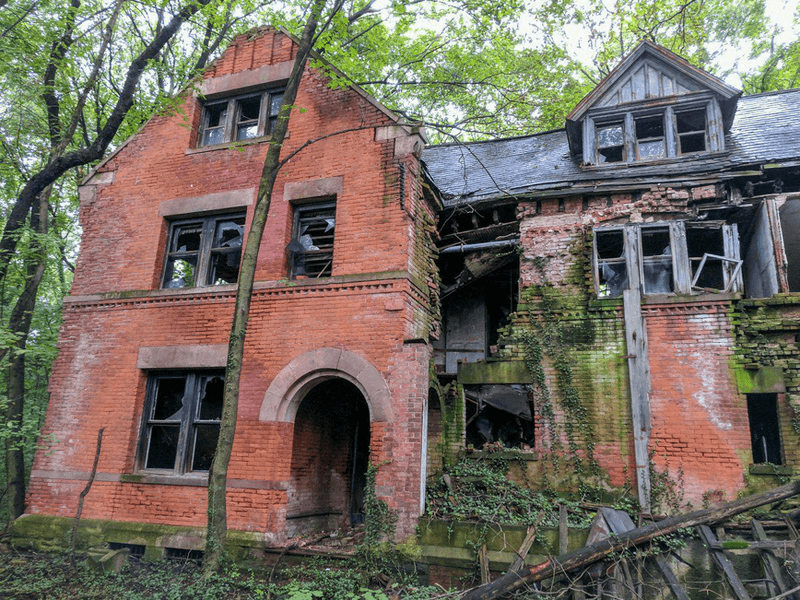
Riverside Hospital is the centerpiece of North Brother Island, and even in its ruined state, the buildings command attention. Most of the original 25 or so structures still stand, though they are heavily deteriorated and in real danger of collapse.
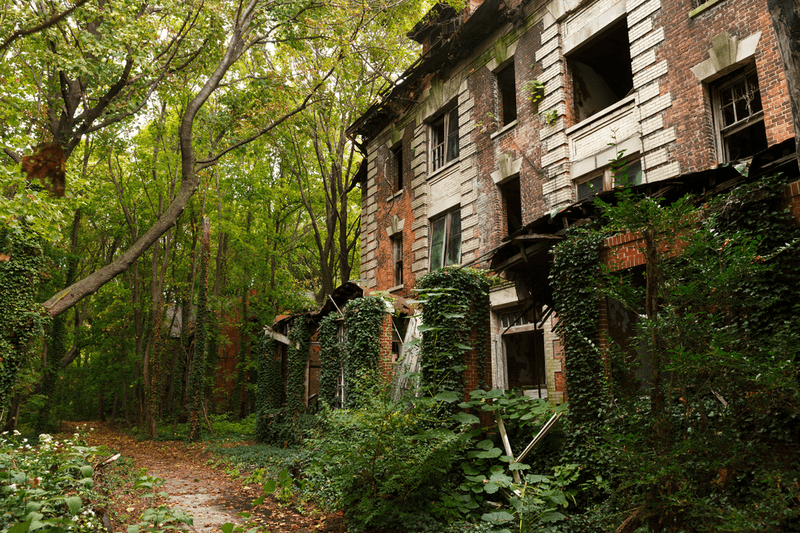
Vines climb up crumbling brick walls, tree roots push through cracked floors, and entire rooftops have caved in under the weight of decades of lack of care.
When the hospital was active, it treated patients with some of the high-concern infectious diseases of the era. Nurses, doctors, and support staff lived and worked on the island, creating a small self-contained community cut off from the mainland.
The Nurses House, Doctors Cottage, and TB Pavilion are among the structures that have survived long enough for nature to fully embrace them.
Walking past these buildings today, even from a boat on the river, gives you a real sense of how quickly the natural world moves in once humans step away. Trees grow directly through rooftops. Thick underbrush covers pathways that were once busy with staff and patients.
The hospital closed its doors for good in 1963. In the decades since, the island has transformed from a former medical facility into something that looks more like a forest with ruins hidden inside it.
The contrast between what it once was and what it looks like now is hard to fully put into words.
The Human Story Behind Typhoid Mary’s Island Years
Mary Mallon, better known as Typhoid Mary, is probably the most famous person ever associated with North Brother Island. She was an Irish-born cook living in New York who was identified as an asymptomatic carrier of typhoid fever in the early 1900s.
That means she carried and spread the disease without ever getting sick herself, which made her case both medically unusual and deeply controversial.
Health authorities first brought her to North Brother Island in 1907, where she was held for about three years. She was eventually released on the condition that she stop working as a cook. She agreed, but later returned to cooking under a different name.
When officials traced another typhoid outbreak back to her, she was sent back to the island in 1915 and remained there for the rest of her life.
Mary Mallon spent more than two decades on North Brother Island, making her story one of the island’s most unforgettable chapters.
Her story raises real questions about personal freedom, public health, and how society treats people who are sick through no fault of their own.
You can read about her in many history books and articles, and her connection to the island is a major reason people remain fascinated by it. Her story is complicated, sad, and genuinely thought-provoking.
The General Slocum Story Near The Shore
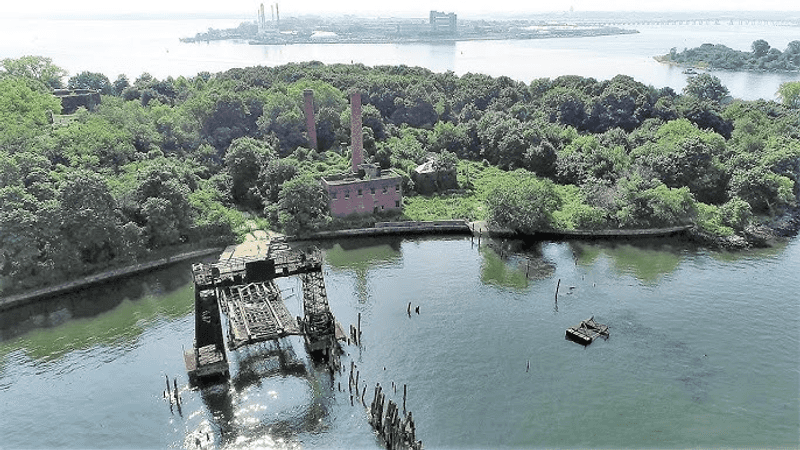
In June 1904, a serious steamship fire unfolded just off the shores of North Brother Island. The General Slocum was carrying German-American families on a church outing when trouble broke out on the East River.
North Brother Island suddenly found itself at the center of one of the most dramatic rescue efforts the city had ever seen.
Hospital staff on North Brother Island rushed toward the shore to help survivors and bring people safely from the water. Their quick response became one of the most remembered parts of the island’s history, adding another powerful chapter to a place already filled with stories.
Today, placards commemorating the General Slocum story are displayed at nearby Barretto Point Park in the Bronx, just north of the island. If you are interested in learning more about this unfortunate event, that park is a good place to start.
The connection between the General Slocum story and the island adds another meaningful layer to an already deeply historical place. North Brother Island did not just witness this event from a distance.
The people living and working there were actively involved in the rescue effort, making the island a small but meaningful part of that story.
Nature Has Taken Over In The Most Striking Way
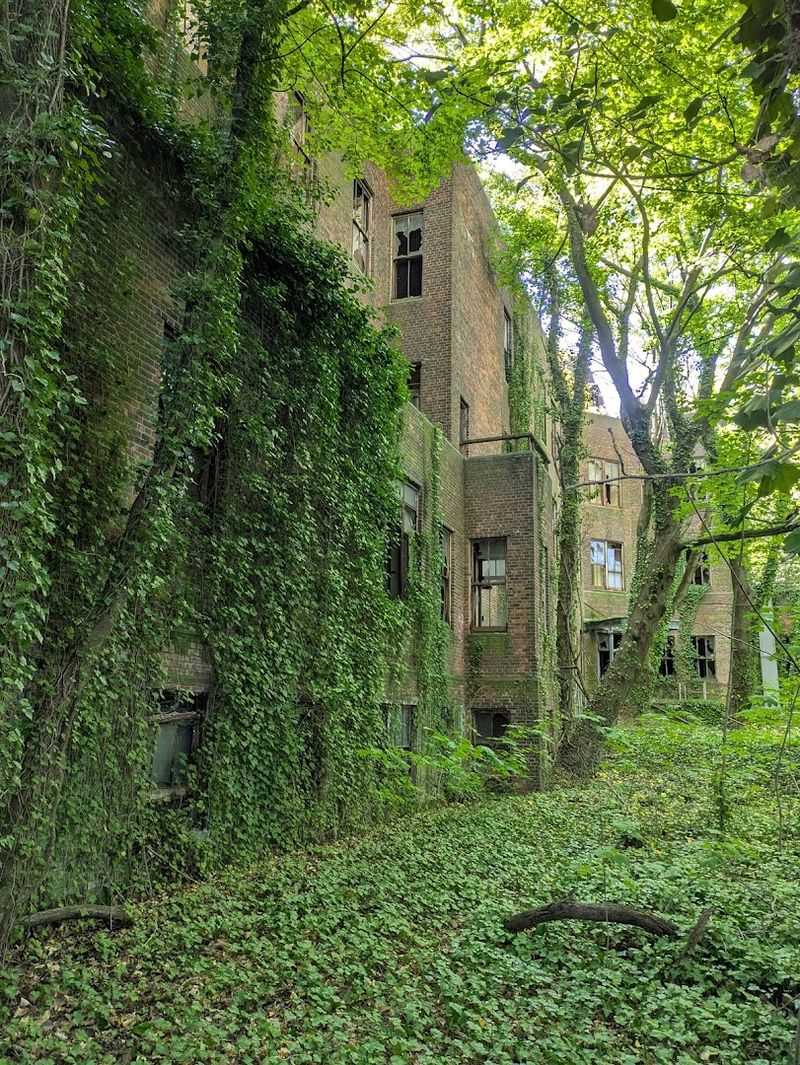
Few places in New York State show the raw power of nature reclaiming human-built spaces as clearly as North Brother Island does. Since the island was officially abandoned in 1963, nature has wasted no time reclaiming it.
Trees now grow through building rooftops, vines wrap every standing wall, and thick underbrush covers what were once paved walkways and open grounds.
The transformation is not subtle. Aerial photos of the island show a dense green canopy broken only by the occasional glimpse of a brick chimney or a partially collapsed roof. From the water, the ruins look like they are being slowly digested by the forest around them.
It is a genuinely striking visual, and it happens completely on its own without any human help. This process, where nature gradually takes back land that was once developed, is sometimes called rewilding. On North Brother Island, it has happened organically over six decades.
The result is a place that feels both eerie and beautiful at the same time. You get the sense that the island is not waiting for anyone to come back. It has already moved on.
If you are interested in nature, history, or forgotten places, the island shows what happens when a city steps back and lets the land take over.
A Protected Bird Sanctuary In The Heart Of The City
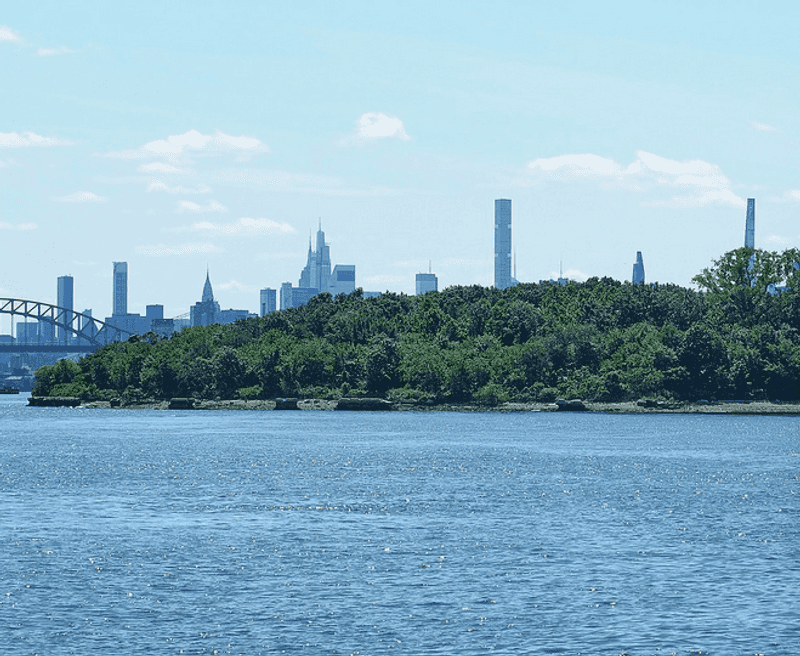
North Brother Island is now officially managed by the New York City Department of Parks and Recreation as a protected bird sanctuary. The island is home to one of the area’s largest black-crowned night heron nesting colonies, along with other shorebirds that return each season.
The island became a sanctuary after North and South Brother Islands were purchased by the federal government in 2007 with conservation support. The city then took ownership and established the protected status that remains in place today.
Because of this, the island is officially off-limits to the general public, which actually helps the bird population thrive.
During spring and summer, the island is alive with bird calls, wing beats, and the constant activity of a healthy nesting colony. If you paddle around the island in a kayak or pass by on a boat, you can hear the sounds clearly even from the water.
Dense vegetation, undisturbed habitat, and freedom from foot traffic have made North Brother Island a productive wildlife refuge. It is a rare thing in New York State: a place where the animals have full priority and the humans simply watch from a respectful distance.
Why The Island Remains Closed To The Public
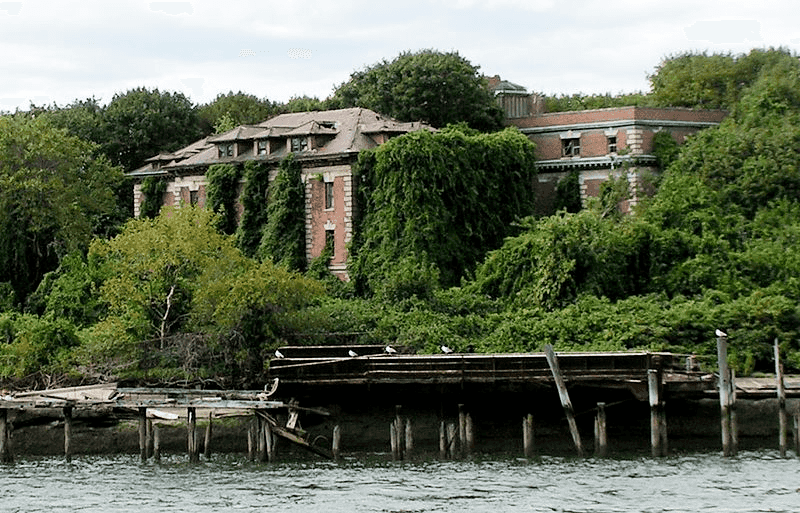
One of the most common questions people ask about North Brother Island is simple: can you visit? The answer is no, at least not without special permission. The island is restricted to the public for two main reasons.
First, the crumbling structures pose significant safety concerns. The buildings have been deteriorating for over 60 years and are genuinely dangerous to enter or even walk near.
Second, and perhaps more importantly, the island is a protected bird sanctuary. Human presence during nesting season causes real negative impact to bird colonies.
Disturbance during breeding periods can cause birds to abandon their nests, which directly impacts population numbers.
The New York City Department of Parks and Recreation takes this protection seriously, and access is tightly controlled.
Occasionally, researchers, scientists, and journalists have been granted supervised access to the island for specific purposes. There have also been limited public tours organized in the past, typically outside of the nesting season.
If you are hoping to get a closer look, paddling around the island by kayak is a popular option that many people enjoy. You can get surprisingly close to the shoreline without setting foot on the island itself.
The view from the water gives you a real sense of the scale of the ruins and the density of the vegetation. For now, North Brother Island keeps most of its stories to itself, and honestly, that feels right.
The Quiet History That Makes This Place Stand Out
North Brother Island is not a place you can visit on a whim, and that is actually part of what makes it so compelling. It sits in plain sight, visible from the Bronx waterfront, yet almost completely inaccessible.
The gap between how close it feels and how unreachable it is creates a rare sense of mystery in New York State.
The island carries layers of history that touch on public health, civil liberties, urban planning, environmental restoration, and the simple passage of time. Every crumbling building, every vine-covered wall, and every bird nesting in the ruins is part of a story that spans more than a century.
You do not need to set foot on the island to appreciate what it represents. Learning about North Brother Island gives you a different way of seeing New York City itself. The city is not just skyscrapers and busy streets.
It also has quiet, forgotten corners where history sits undisturbed and nature slowly does its work.
If you ever find yourself near the Bronx waterfront, look out across the water and take a moment to think about everything that small island has witnessed. It is a reminder that even in one of the busiest cities on earth, some places are best left alone, and that is not a bad thing at all.