
This Airplane-Shaped Landmark In Tennessee Is One Of The State’s Strangest Roadside Stops
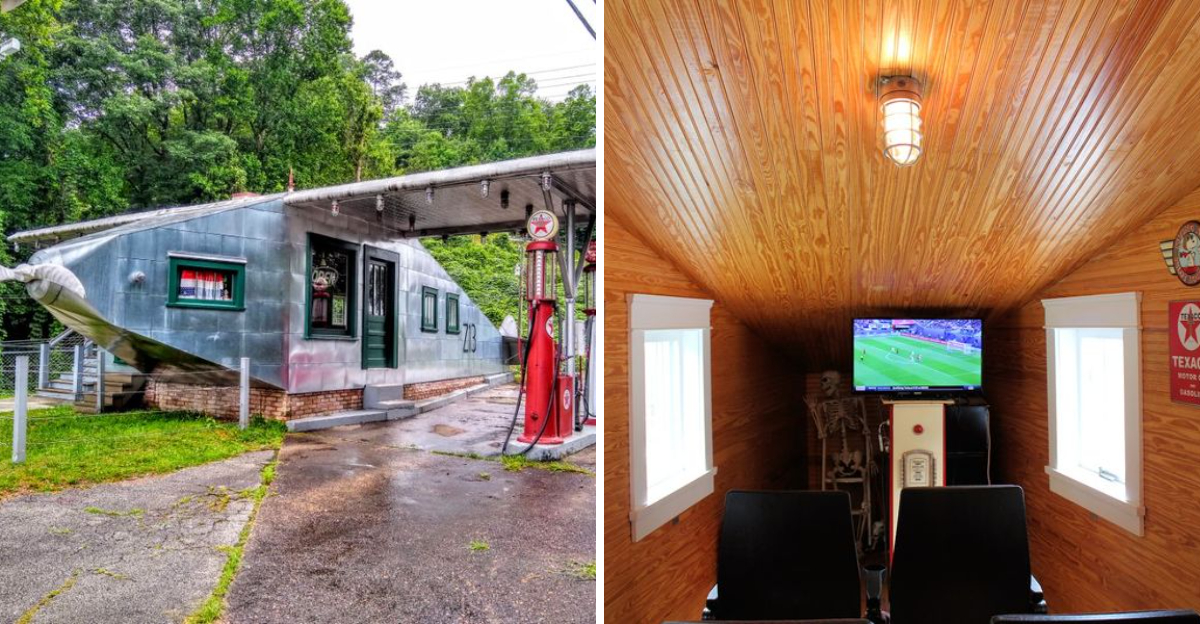
Road trips across Tennessee come with their fair share of quirky surprises, but few are as eye-catching as the Airplane Gas Station. Rising above the roadside with a real aircraft mounted high on a pedestal, this unusual landmark has been turning heads for decades.
Drivers slow down, passengers grab their phones, and just about everyone does a double take the first time they see it.
The structure started as a standard service station before the plane was added, transforming an ordinary stop into one of the state’s most talked-about photo ops. It’s nostalgic, a little strange, and undeniably memorable.
For travelers who love classic Americana and offbeat attractions, this airplane-shaped landmark delivers a roadside experience that feels refreshingly different.
The Origins Of A One-Of-A-Kind Roadside Design
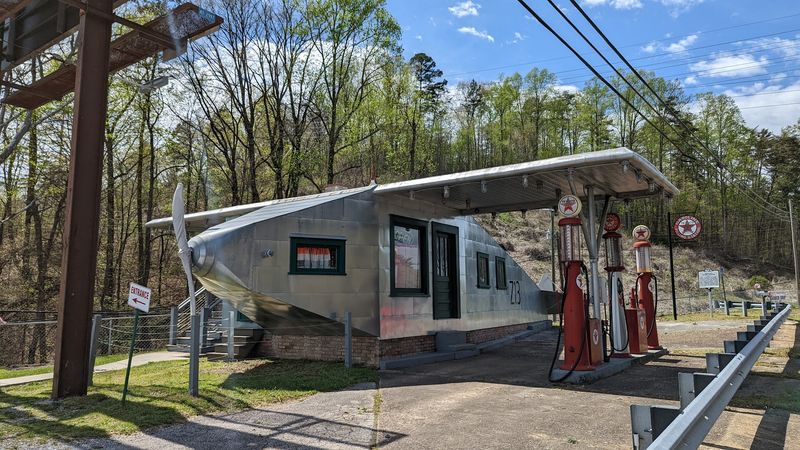
Back in 1930, brothers Elmer and Henry Nickle decided that blending in was simply not a strategy worth pursuing. They built a service station along the newly widened U.S.
Route 25 north of Knoxville, and they shaped it to look like a propeller-driven airplane. The idea was straightforward: catch the eye of every driver passing by, and make stopping feel like an event rather than an errand.
Their inspiration came directly from Charles Lindbergh’s Spirit of St. Louis, the famous monoplane that had crossed the Atlantic just a few years earlier. Lindbergh’s flight had captured the American imagination in a way that few events had, and the Nickle brothers channeled that excitement into concrete and timber.
Cars would pull under each wing to receive gasoline or minor mechanical attention.
The concept worked beautifully. The building drew attention from the moment it opened, and locals began using it as a directional reference point for navigating the area.
Decades later, longtime Knoxville residents still recalled giving directions by saying “before the airplane gas station” or “after the airplane gas station.” That kind of organic landmark status is something no marketing budget can manufacture.
What The Building Actually Looks Like Up Close
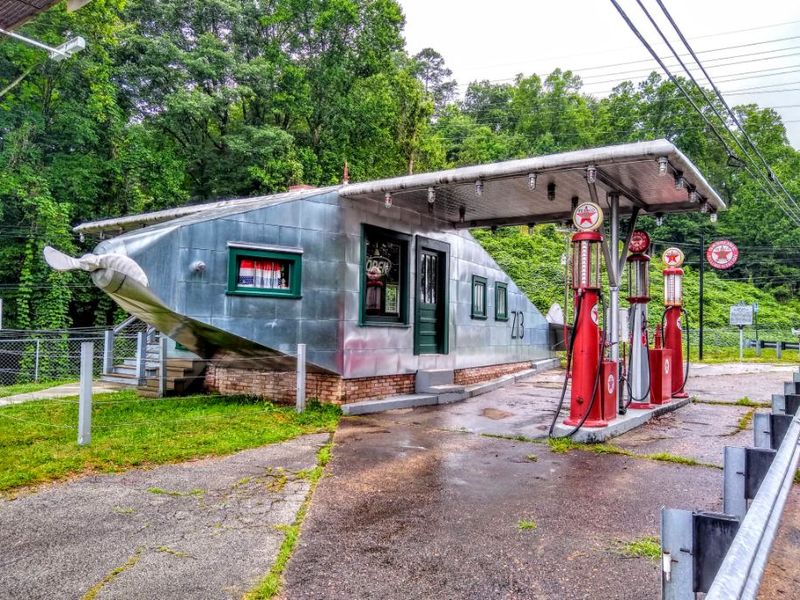
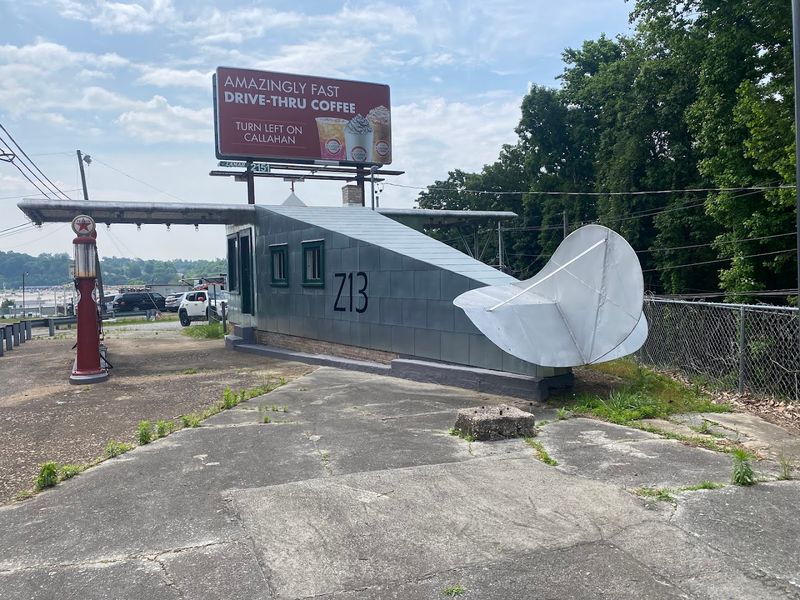
Pulling off Clinton Highway and getting your first unobstructed look at the Airplane Gas Station is a moment that earns a quiet smile. The structure genuinely resembles a vintage monoplane, with a central fuselage-style body flanked by two extended wing forms that once served as covered canopies for vehicles pulling in for fuel.
The proportions feel deliberate and confident, not cartoonish.
A spinning propeller mounted at the front of the building adds kinetic energy to the scene, turning slowly in the wind and reminding visitors that the designers were serious about the aviation theme. The restoration has preserved the building’s original character without making it feel like a theme park replica.
Every angle of the structure offers something worth photographing.
Visitors consistently note that the building looks impressive from multiple vantage points, which is a genuine compliment for a structure built along a high-speed roadway. One reviewer described it as looking “great from just about every angle,” and that assessment holds up on arrival.
The craftsmanship visible in the rooflines and wing extensions reflects a level of ambition that was extraordinary for a small roadside business operating during the early years of the Great Depression.
The Mystery Behind The Z13 Markings
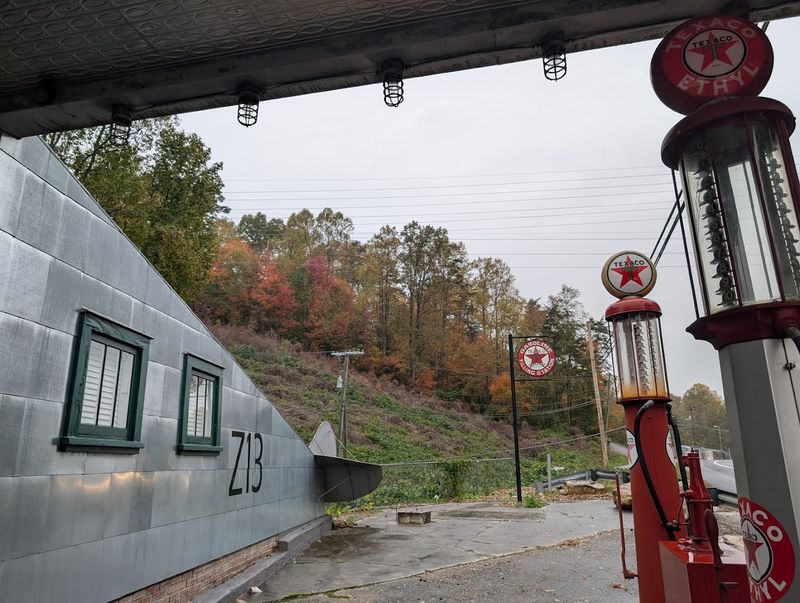
Among the details that reward a slow, attentive visit to the Airplane Gas Station, the “Z13” markings painted on the structure stand out as one of the more genuinely puzzling elements. Nobody has offered a fully satisfying explanation for what these markings represent, and that ambiguity has become part of the building’s quiet charm.
Local historians have speculated, but no definitive answer has surfaced.
Some visitors assume the markings are decorative, meant to reinforce the aviation theme with something resembling aircraft identification codes. Others believe they may reference an earlier use of the property or a specific detail from the Nickle brothers’ original design intent.
The truth remains elusive, which makes standing in front of the building and studying those letters and numbers feel like participating in a small, unresolved mystery.
Roadside landmarks with unexplained details tend to linger in memory longer than those where everything is clearly labeled and explained. The Z13 markings give the Airplane Gas Station an additional layer of personality that goes beyond its architectural novelty.
For travelers who enjoy places that ask more questions than they answer, this particular detail makes the stop feel genuinely worthwhile rather than simply photogenic.
Decades Of Changing Lives And Changing Purposes
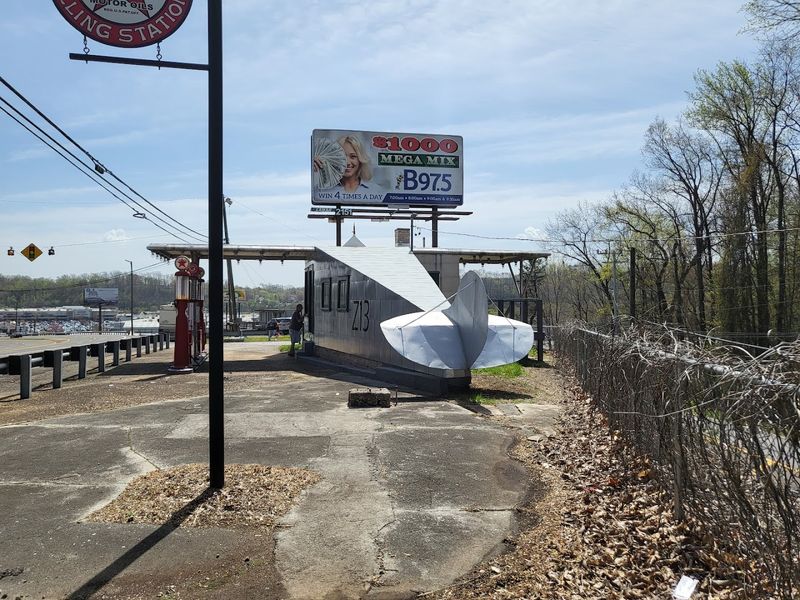
Few buildings in Tennessee have worn as many hats as the Airplane Gas Station on Clinton Highway. After closing as a service station in the 1960s, the structure cycled through a remarkable series of second lives that reflect the shifting economic rhythms of the surrounding neighborhood.
It served at various points as a liquor store, a produce stand, a bait shop, a used car office, and a barbershop.
Each of those transitions kept the building occupied and maintained to some degree, which likely contributed to its survival through periods when demolition would have been the easier choice. A structure that remains useful tends to remain standing, and the Airplane Gas Station benefited from a succession of practical-minded owners who saw value in its unusual form even when aviation nostalgia was not the primary draw.
By the early 2000s, however, the building had fallen into serious disrepair. Years of deferred maintenance and shifting tenancies had left their mark, and the structure faced genuine risk of being lost entirely.
That it survived to receive a full restoration is partly a matter of good fortune and partly a testament to the stubborn affection that East Tennessee communities tend to develop for their most distinctive local landmarks.
How Preservation Saved This Knoxville Treasure
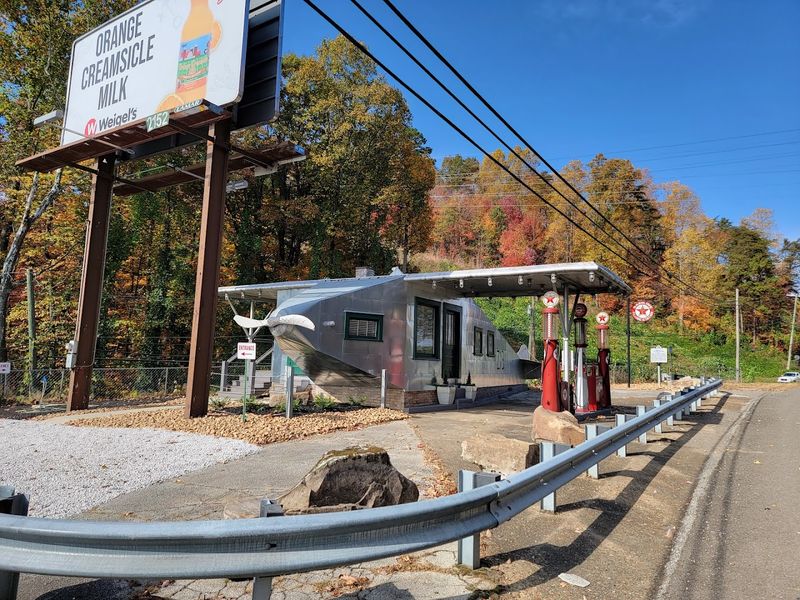
By the time a local preservation group stepped in to rescue the Airplane Gas Station, the building was in a condition that would have discouraged most organizations from attempting a rescue. Structural deterioration, weathering, and years of minimal upkeep had accumulated into a formidable restoration challenge.
The decision to proceed anyway says something meaningful about how communities choose to relate to their own history.
The restoration effort was thorough enough to earn the building a place on the National Register of Historic Places, which is not an honor awarded casually. That recognition requires documented historical significance, architectural integrity, and a demonstrated commitment to preserving the structure’s original character.
The Airplane Gas Station qualified on all counts, and its listing on the register provides a measure of protection against future demolition.
Earning that designation also brought wider attention to the site, drawing visitors from beyond Knoxville who make a point of collecting National Register properties during their travels. The preservation story itself has become part of the attraction, giving visitors a reason to feel good about stopping rather than simply satisfied by the novelty.
Seeing a community fight for something unusual and win is its own kind of reward for the traveler who pays attention.
Visiting The Site: What To Expect When You Arrive
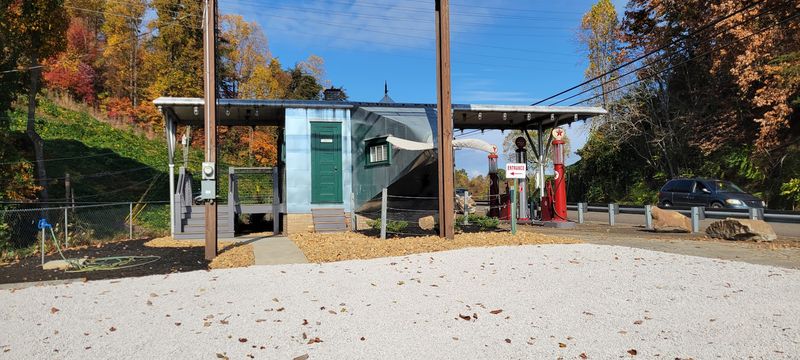
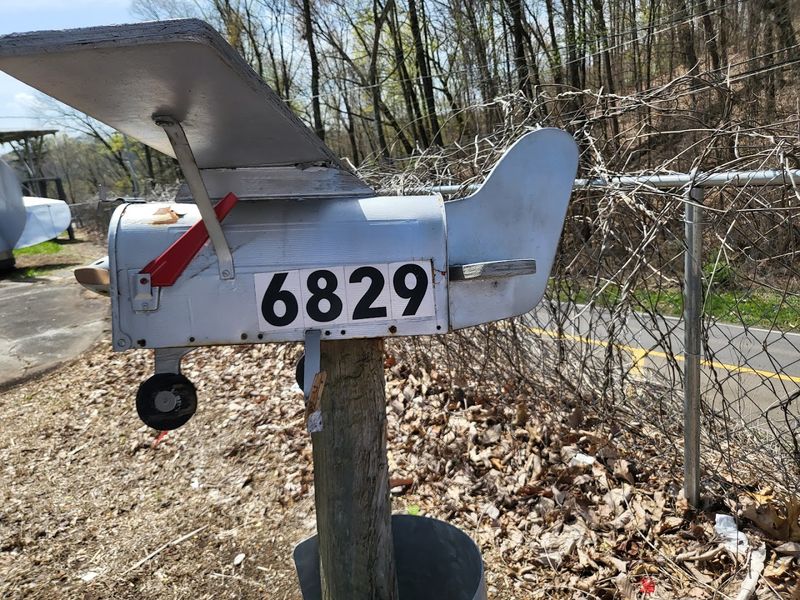
Arriving at 6829 Clinton Hwy in Knoxville is simpler than the building’s unusual reputation might suggest. There is a small but functional parking area directly adjacent to the structure, giving visitors a comfortable place to stop without blocking traffic on the busy highway.
Pulling in, stepping out, and walking the perimeter of the building takes only a few minutes, though most people linger longer once they start examining the details.
The building currently operates as a barbershop, which means a working business occupies the interior during regular hours. Visitors are welcome to observe and photograph the exterior freely, but stepping inside without an appointment or a genuine need for a haircut is not appropriate.
A few reviewers have noted that respecting the business boundary makes the experience pleasant for everyone involved.
The site earns a strong 4.7-star rating across dozens of visitor reviews, with most guests describing it as a satisfying and photogenic stop that fits naturally into a broader Knoxville itinerary. One visitor captured the spirit of the place concisely: “Just a fun stop when passing through Knoxville.
The place is well kept and definitely photogenic.” That summary is accurate and requires very little elaboration.
The Barbershop Inside The Airplane Body
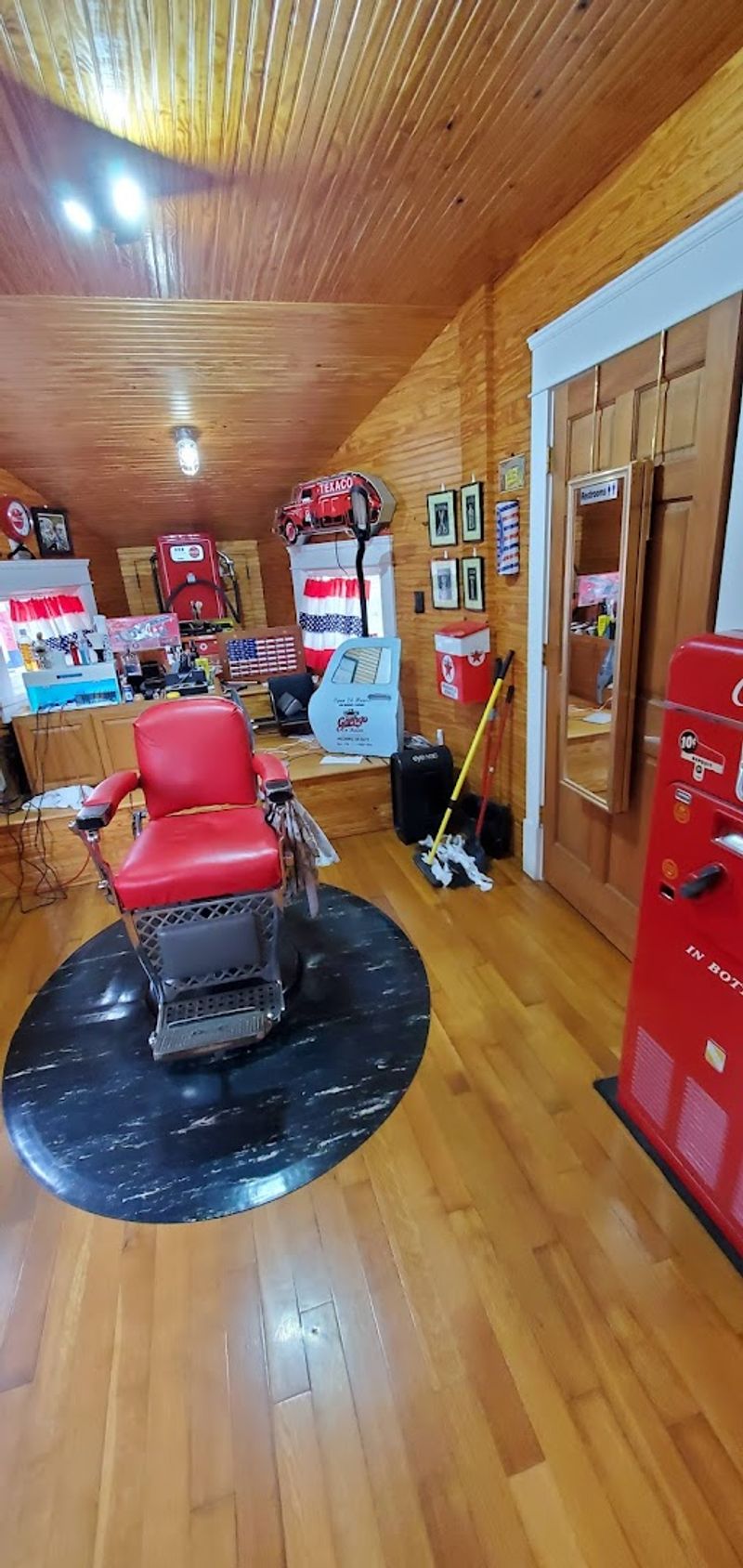
One of the more unexpected pleasures available at the Airplane Gas Station is the opportunity to sit down for an actual haircut inside an airplane-shaped building listed on the National Register of Historic Places. The barbershop operated by John has developed a small but loyal following among locals who appreciate both the quality of the cuts and the singular atmosphere of the space.
The decor inside matches the exterior’s character in ways that make the whole experience feel coherent.
Reviewers who have visited for haircuts describe John as a skilled barber with an old-fashioned sensibility that suits the setting perfectly. One customer wrote that after a couple of visits, John loosened up considerably, could remember individual cut preferences, and proved genuinely entertaining company.
Another called the haircut “very inexpensive” and the stop “well worth it” on both practical and experiential grounds.
Getting a haircut here qualifies as one of those experiences that travelers collect not because it is the most convenient option available, but because the story attached to it is worth telling afterward. Sitting in a barber’s chair inside a 1930s airplane-shaped building while traffic moves along Clinton Highway outside is the kind of detail that sticks in memory long after the haircut itself has grown out.
Staying Overnight: The Airplane Gas Station As A Rental
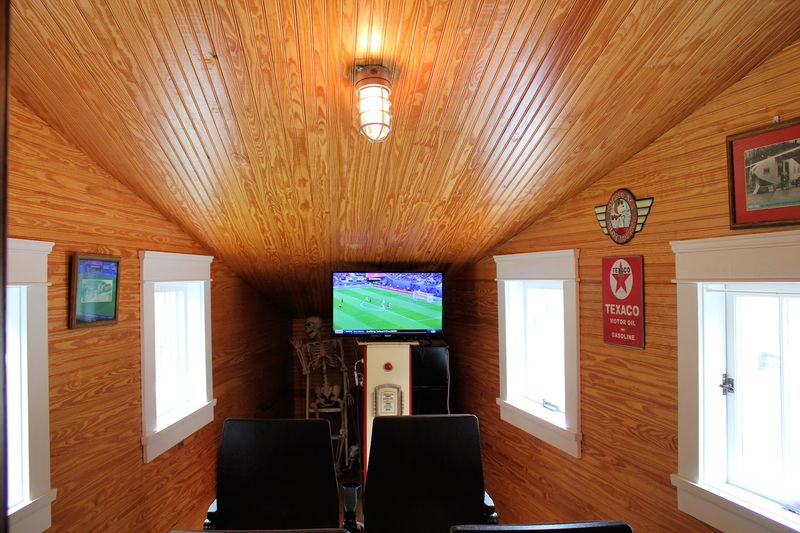
For travelers who want more than a quick roadside photograph, the Airplane Gas Station has expanded its offerings in a direction that few historic landmarks manage successfully. The property has been made available as a short-term rental through platforms including VRBO and Airbnb, giving visitors the opportunity to spend an actual night inside one of Tennessee’s most architecturally distinctive buildings.
That option transforms a brief stop into a full experience.
One reviewer who stayed at the property described it as the perfect choice for a student pilot preparing for a solo flight, noting that the aviation connection made the stay feel genuinely meaningful rather than merely quirky. The location also proved practical, with grocery stores and family connections nearby.
Combining historical atmosphere with functional convenience is not always easy to achieve, and the rental arrangement at this property manages it well.
Booking a stay here requires some advance planning, as availability is limited and the property attracts interest from travelers who specifically seek out unusual accommodation options. For those who enjoy roadside Americana deeply enough to sleep inside it, the Airplane Gas Station offers something that no conventional hotel in the Knoxville area can replicate.
The experience is inherently specific to this one building on this one stretch of highway.
The Role Of Charles Lindbergh In The Building’s Story
Charles Lindbergh completed his nonstop transatlantic flight in May 1927, and the cultural shockwave that followed reached into nearly every corner of American life. Within three years of that achievement, the Nickle brothers in Knoxville were designing a gas station modeled on Lindbergh’s Spirit of St. Louis.
That timeline reflects just how thoroughly aviation had captured the public imagination during the late 1920s and early 1930s.
Businesses across the country adopted aviation themes during this period, but most did so through signage or naming conventions rather than actual architecture. The Nickle brothers committed to the concept at a structural level, building wings that extended far enough to shelter vehicles and a fuselage body substantial enough to house a functioning service operation.
That level of commitment elevated their roadside station from novelty to genuine architectural statement.
Lindbergh himself likely never visited Clinton Highway, but his influence on the built environment of East Tennessee is permanently documented in the form of a building that has now survived nearly a century. The connection between a famous aviator’s solo flight over the Atlantic and a small gas station in Knoxville is the kind of historical thread that makes American roadside culture endlessly interesting to trace and follow.
Why This Stop Belongs On Every Tennessee Road Trip
Tennessee has no shortage of roadside attractions, but the Airplane Gas Station occupies a category that very few other stops can claim. It combines genuine architectural originality, documented historical significance, active community use, and a location convenient to Interstate 75 north of Knoxville.
That combination of qualities makes it the kind of stop that rewards travelers who plan ahead and those who simply notice it passing by at highway speed.
The site holds a 4.7-star rating across dozens of independent reviews, which is a strong signal for a destination that charges nothing for admission and requires only a few minutes of a visitor’s time. Reviewers range from dedicated roadside Americana enthusiasts to casual passersby who made a spontaneous U-turn after spotting the building from the road.
Both groups tend to leave satisfied.
Road trips through East Tennessee often focus on the Great Smoky Mountains or downtown Knoxville, and both destinations are entirely worth the attention they receive. Adding the Airplane Gas Station to that itinerary costs nothing and takes almost no additional time.
A building this specific in its design, this layered in its history, and this well-preserved in its current condition deserves a place on any serious Tennessee travel list, full stop.