
This Ancient Nevada Lake Is A Remnant Of A Prehistoric Inland Sea And It Looks Like Another Planet
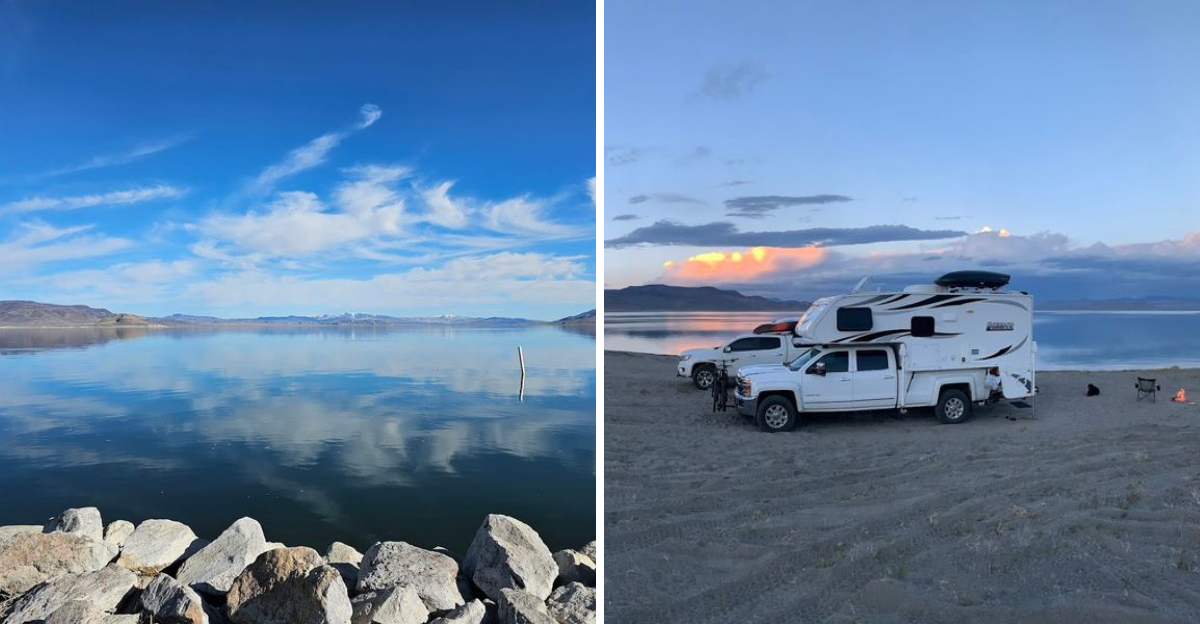
A turquoise lake in Nevada’s high desert can make you question your sense of direction. One minute the land looks dry, dusty, and sunbaked, then suddenly water appears with pale stone towers rising like props from a sci-fi movie.
This is not just pretty scenery. It is the leftover heartbeat of ancient Lake Lahontan, the Ice Age inland sea that once covered a huge stretch of the Great Basin.
Barren mountains circle the water, the shoreline feels raw and powerful, and every view seems older than language. Long before road trippers came searching for photos, the Pyramid Lake Paiute Tribe cared for this place. That history gives the landscape a weight you can feel the moment you arrive.
The Lake Is The Largest Surviving Piece Of Ancient Lake Lahontan
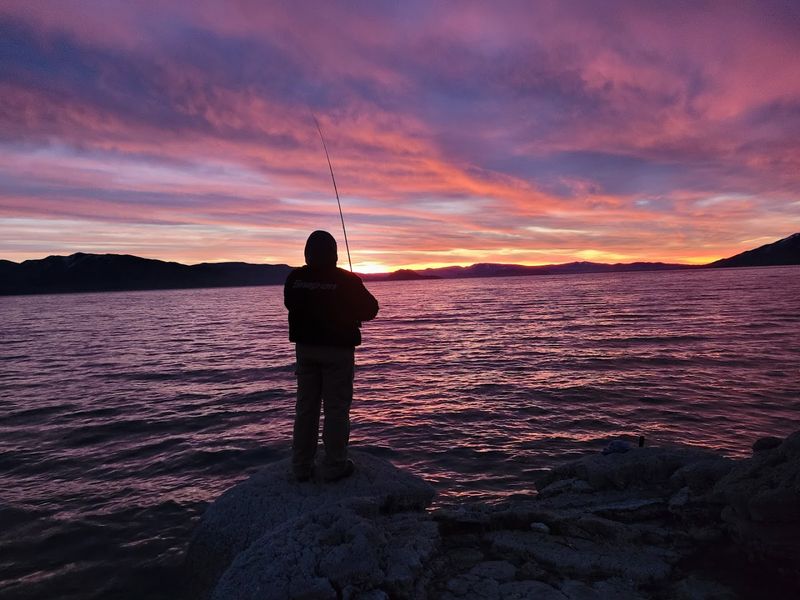
Around 15,000 years ago, much of Nevada sat beneath the cold waters of Lake Lahontan. This prehistoric inland sea stretched across nearly 8,500 square miles, fed by melting glaciers and Ice Age rainfall patterns that have long since disappeared.
Climate shifts gradually dried the basin, leaving behind only scattered remnants.
Pyramid Lake represents the largest of these survivors, holding roughly 125,000 acres of water in western Nevada. The ancient shorelines still mark the surrounding mountains like bathtub rings, visible terraces that trace elevations hundreds of feet above the current surface.
These ghostly watermarks tell a story written in geology rather than words.
Standing on the shore today, you can almost imagine the massive lake that once filled this basin. The scale becomes apparent when you realize the entire Truckee River flows into Pyramid Lake with no outlet, just as it did millennia ago.
Evaporation alone keeps the water level in check now, concentrating minerals and creating the distinctive chemistry that supports such unusual life.
Its Otherworldly Tufa Formations Were Built Underwater Thousands Of Years Ago
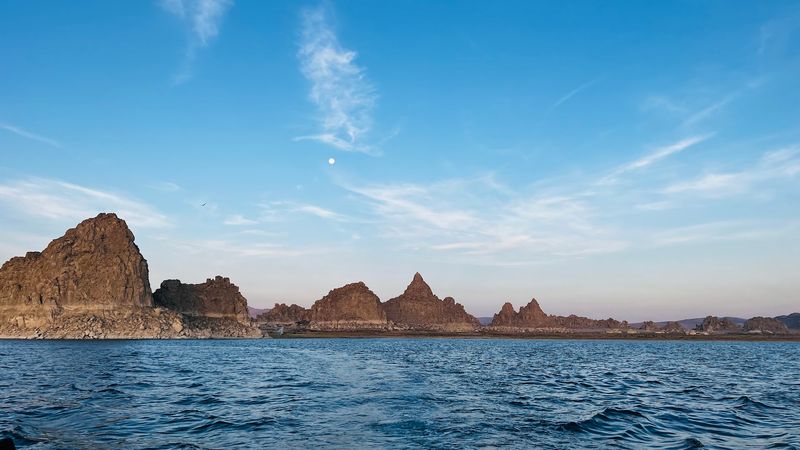
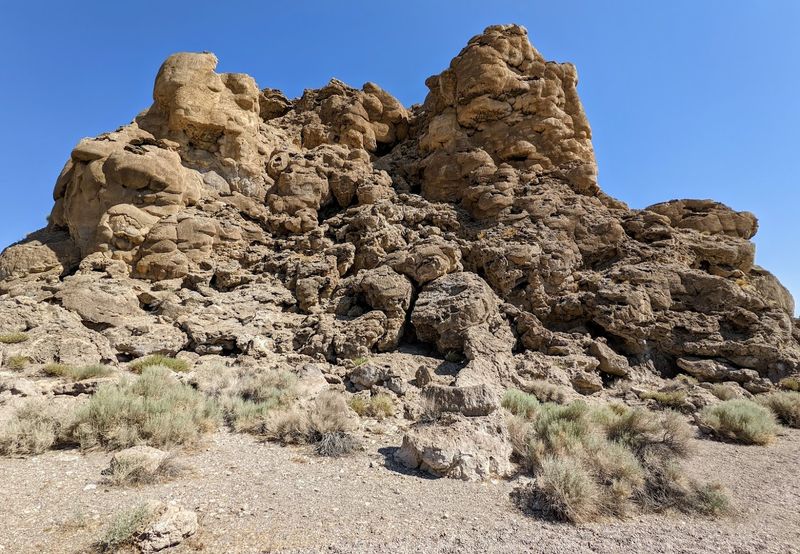
Tufa towers rise from the shallows like the ruins of some forgotten civilization. These pale formations consist of calcium carbonate that precipitated around underwater springs when the lake sat much higher.
The mineral-rich water met the alkaline lake chemistry and created stone sculptures over thousands of years, layer by patient layer.
The structures now stand exposed, monuments to geological processes most visitors have never considered. Some reach significant heights, their surfaces pocked and weathered by wind and time.
The coloring shifts from bone white to cream depending on the light, contrasting sharply against the deep blue water.
Walking among these formations feels like exploring another planet entirely. The textures invite touch, rough and porous under your fingers, evidence of the chemical reactions that built them grain by grain.
Scientists study these deposits to understand past climate conditions, reading history in the mineral record like pages in a very old book.
The Pyramid-Shaped Rock Formation Gave The Lake Its Name
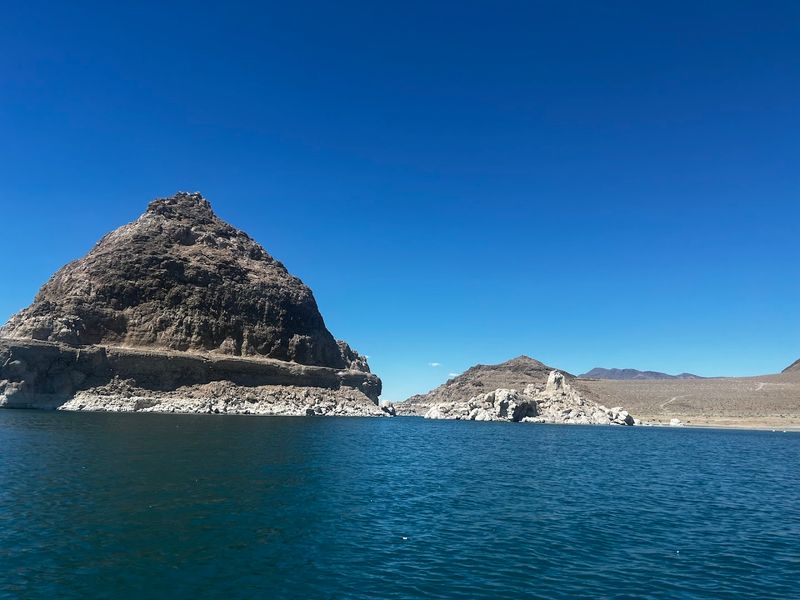
Explorer John C. Fremont arrived at this lake in January 1844 and immediately noticed the distinctive rock formation jutting from the water.
Its angular shape reminded him of the Egyptian pyramids, and he recorded the name in his expedition journals. The designation stuck, though the Paiute people had their own name for this place long before any European set eyes on it.
The pyramid itself stands as a natural sculpture, its slopes rising at angles that seem almost deliberate. Depending on the time of day and season, shadows play across its faces, emphasizing the geometric quality that caught Fremont’s attention.
From certain vantage points along the shore, the formation dominates the view.
Access to the pyramid and nearby formations has faced restrictions due to vandalism of ancient petroglyphs in the area. Some visitors with telescopic lenses can still capture decent photographs from permitted areas.
The closure serves as a reminder that respect for sacred and historic sites should never require enforcement.
The Water Changes Color With The Sky And Weather
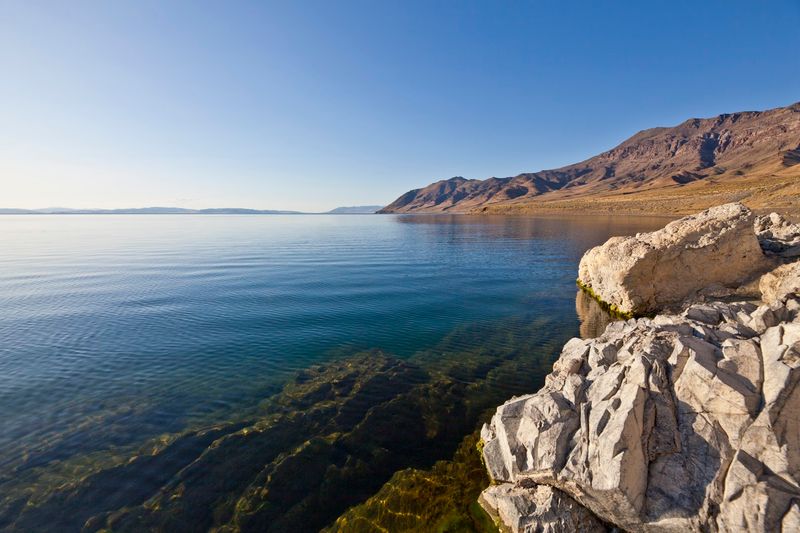
One morning the lake might appear deep sapphire, and by afternoon it shifts to jade green. The water color at Pyramid Lake responds to atmospheric conditions with remarkable sensitivity, creating a visual experience that never repeats exactly.
Minerals dissolved in the water interact with sunlight, while the sky overhead provides a constantly changing backdrop for reflection.
Storm clouds turn the surface dark and moody, almost slate gray in places. Clear days bring out the brilliant turquoise that makes photographs look artificially enhanced, though no filter touches the genuine article.
The shallow areas near shore often display different hues than the deeper sections, creating bands of color that shift as you move along the beach.
This chromatic variability adds to the otherworldly atmosphere that defines the lake. Visitors returning multiple times report seeing completely different color palettes depending on season, time of day, and weather patterns.
The effect never grows tiresome, offering fresh visual rewards to anyone willing to simply sit and observe.
The Lake Covers Roughly 125,000 Acres In Western Nevada
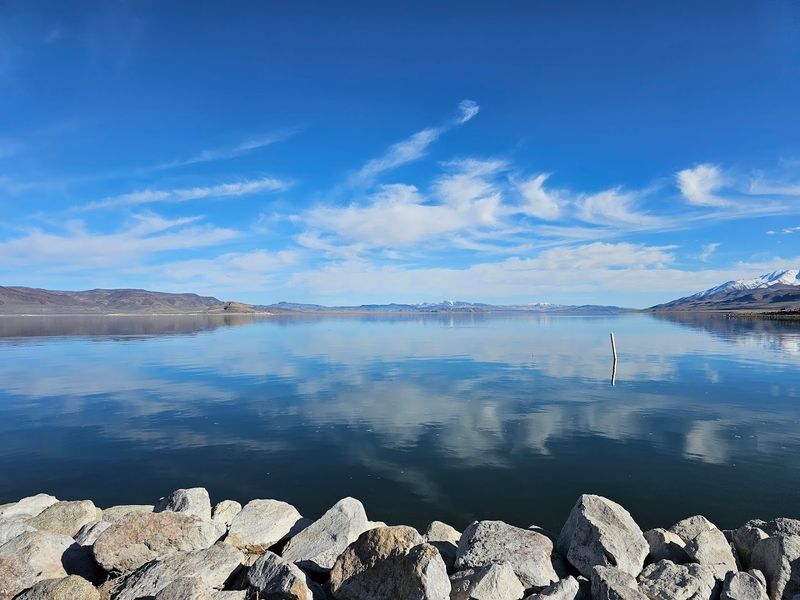
Pyramid Lake sprawls across approximately 125,000 acres of high desert terrain, making it one of the largest natural lakes in the western United States. The surface area fluctuates somewhat depending on precipitation and inflow from the Truckee River, but the scale remains impressive regardless.
At its deepest point, the bottom sits around 350 feet below the surface.
The sheer size becomes apparent when you attempt to drive around the perimeter. Roads follow portions of the shoreline, but accessing every beach and cove requires serious commitment and appropriate vehicles.
Some stretches remain genuinely remote, offering solitude that feels increasingly rare in the modern West.
This expanse creates its own weather patterns, with winds whipping across open water and building waves that demand respect from boaters. The lake commands attention through scale alone, a presence you feel before you even see it.
Desert mountains ring the entire basin, emphasizing the improbable nature of so much water existing in such an arid landscape.
The Pyramid Lake Paiute Tribe Gives The Place Its Deepest Meaning
The Pyramid Lake Paiute Tribe has maintained an unbroken connection to this landscape for thousands of years. Their relationship to the water and surrounding land extends far beyond simple residence, woven into creation stories, sustenance patterns, and spiritual practice.
The tribe manages the lake and its resources today, maintaining sovereignty over approximately 475,000 acres of reservation land.
Tribal governance shapes the visitor experience through permit requirements and access regulations. These rules exist not to discourage tourism but to protect a living cultural landscape that continues to hold profound significance.
The Paiute people have watched this lake through countless seasons, through times of plenty and periods of hardship caused by water diversions upstream.
Understanding Pyramid Lake requires acknowledging this human dimension. The place exists as more than scenery or recreation opportunity.
It represents home, heritage, and ongoing stewardship by people whose ancestors fished these waters when mammoths still walked the surrounding valleys. Respect for tribal authority here is not optional.
The Stone Mother Formation Carries A Powerful Paiute Story
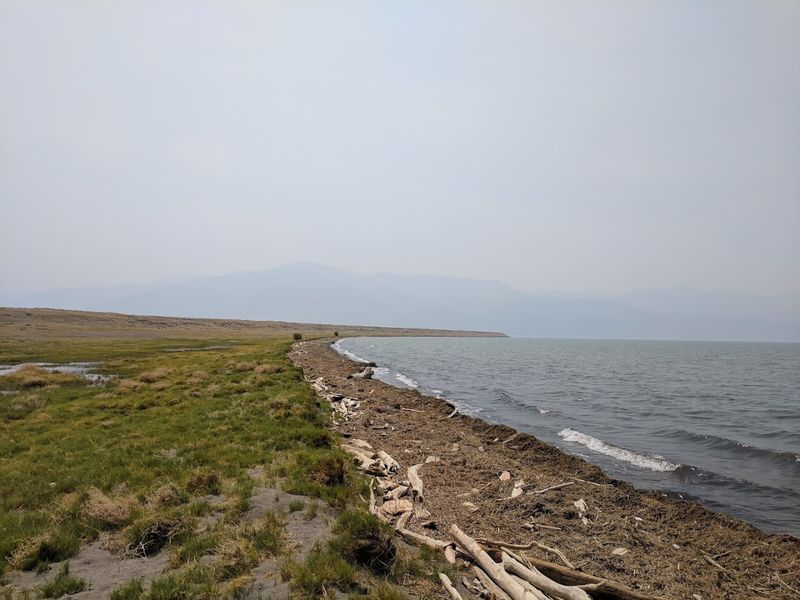
Along the eastern shore stands a rock formation the Paiute people call Stone Mother. According to tribal tradition, she weeps for her children, and her tears helped fill the lake basin.
The story carries themes of loss, transformation, and the deep connections between land, water, and family that define Paiute worldview.
The formation itself rises from the landscape with a shape that invites interpretation. Visitors who know the story often find themselves moved by the visual metaphor, seeing something beyond simple geology.
The tale has been passed down through generations, each telling reinforcing cultural memory and connection to place.
Access to Stone Mother has been temporarily restricted due to vandalism of petroglyphs in the area, a situation that underscores ongoing tensions between preservation and public access. The closure protects irreplaceable cultural resources from further damage.
Tribal authorities patrol regularly, ensuring that sacred sites receive the protection they deserve regardless of visitor disappointment at limited access.
The Pyramid Lake Paiute Tribe Museum Adds Culture And Context To The Visit
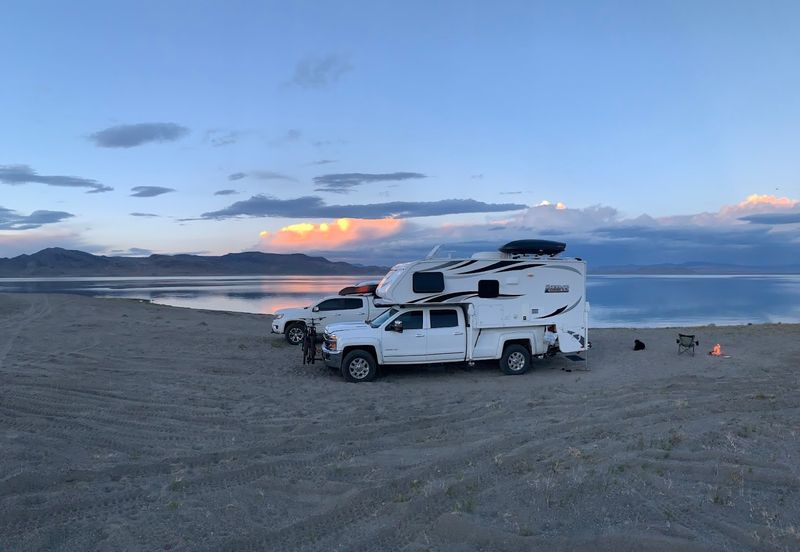
Before heading to the water, stop at the Pyramid Lake Paiute Tribe Museum to gain proper context. The facility houses exhibits covering tribal history, traditional lifeways, and the ongoing relationship between the Paiute people and their homeland.
Artifacts, photographs, and interpretive materials provide perspective that transforms a simple lake visit into something more meaningful.
The museum staff can answer questions about current conditions, permit requirements, and appropriate behavior on tribal land. They offer insight into fishing regulations, camping areas, and seasonal considerations that affect visitor experience.
This practical information comes packaged with cultural education that enriches understanding.
Collections include basketry, fishing implements, and documentation of the struggles over water rights that have shaped modern tribal life. The Truckee River diversions that feed distant cities have dramatically affected lake levels over the decades.
Learning this history adds weight to the landscape, revealing layers of meaning invisible to the uninformed eye passing through.
The Lake Is Famous For Lahontan Cutthroat Trout
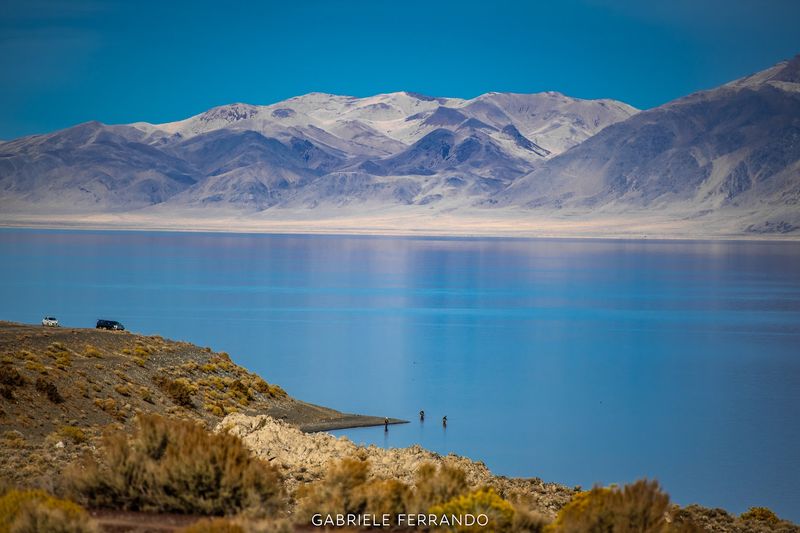
Lahontan cutthroat trout can reach extraordinary sizes in Pyramid Lake, with fish exceeding 20 pounds caught regularly by skilled anglers. These native trout represent a distinct subspecies adapted to the alkaline waters, and they once faced near extinction due to various environmental pressures.
Recovery efforts by the tribe and wildlife agencies have brought populations back from the brink.
The fishing draws enthusiasts from considerable distances, though success requires patience and proper technique. The lake can be moody, with conditions changing rapidly and fish behavior shifting with weather, season, and mysterious factors known only to the trout themselves.
Anglers sit along the shore for hours, watching lines and waiting for the distinctive pull of a large cutthroat taking the bait.
Strict regulations govern the fishery, including catch limits and gear restrictions designed to maintain sustainable populations. Permits must be purchased from the tribe, and enforcement is taken seriously.
The rules exist because the resource is finite and precious, worthy of protection for future generations.
The Ancient Cui-ui Fish Lives Only In Pyramid Lake
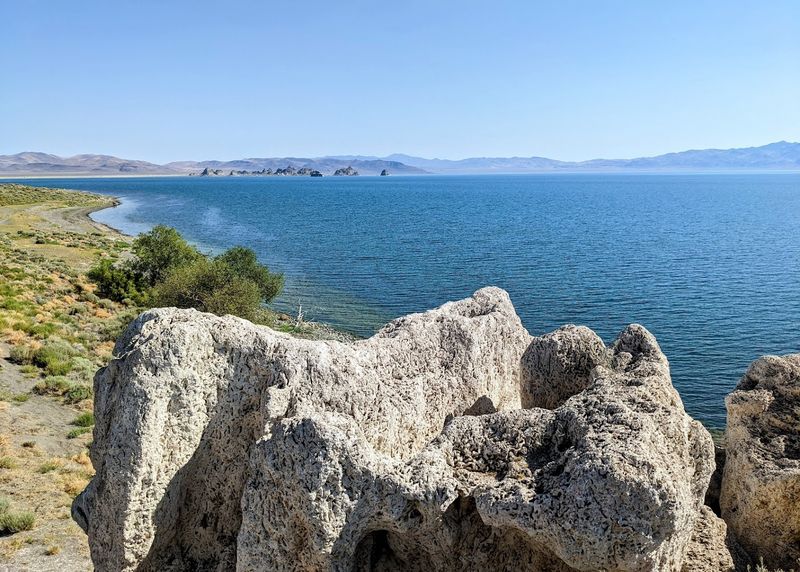
The cui-ui exists nowhere else on Earth except Pyramid Lake, an endemic sucker species that has survived since the Pleistocene epoch. These fish can live for decades, growing to substantial size while feeding on bottom materials in the alkaline water.
Their existence represents a direct link to the ancient lake environment that once covered this region.
Cui-ui populations have faced serious threats from reduced water flows and blocked spawning migrations. The fish require access to the Truckee River to reproduce, and various human alterations to the river system have created obstacles.
Tribal biologists work continuously to monitor populations and maintain conditions that support survival.
The fish holds tremendous cultural significance for the Paiute people, who have harvested cui-ui as a food source for thousands of years. Federal endangered species protections now regulate any take, reflecting the precarious status of this ancient survivor.
Seeing a cui-ui in person connects you to deep time, to an ecosystem that predates human civilization in North America.
Visitors Need To Respect Tribal Land And Recreation Rules
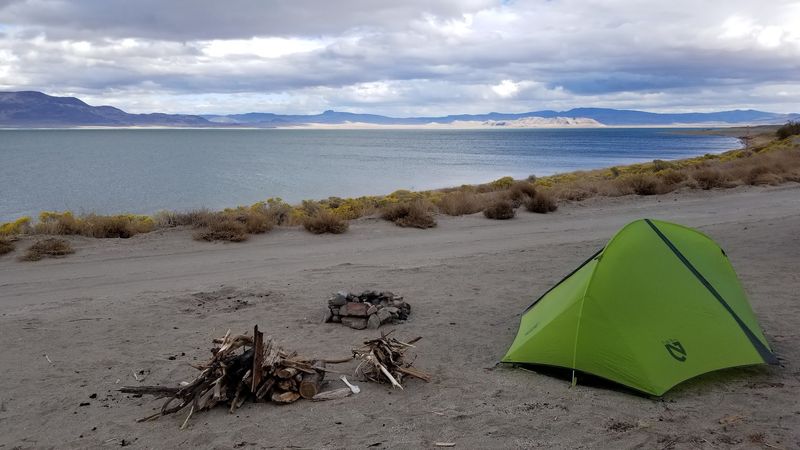
Pyramid Lake sits entirely within the Pyramid Lake Paiute Reservation, meaning tribal law governs all activities. Permits are required for fishing, camping, boating, and even day use of beaches.
These can be purchased at various locations including the ranger station in Sutcliffe, and daily allocations are sometimes limited to prevent overcrowding.
The rules may seem strict to visitors accustomed to casual public land access, but they serve important purposes. They protect fragile resources, maintain quality experiences, and assert tribal sovereignty over ancestral territory.
Tribal police patrol regularly and have full authority to enforce regulations, issue citations, and remove violators from the reservation.
Simple courtesy goes a long way here. Pack out all trash, respect closed areas, follow fishing limits, and remember you are a guest on someone else’s land.
The tribe welcomes visitors who come with proper respect and preparation. Those who ignore the rules or treat the place carelessly should expect consequences and deserve no sympathy when they receive them.