
This Ancient Tennessee Site Guards The Secrets Of A Civilization You’ve Probably Never Heard Of
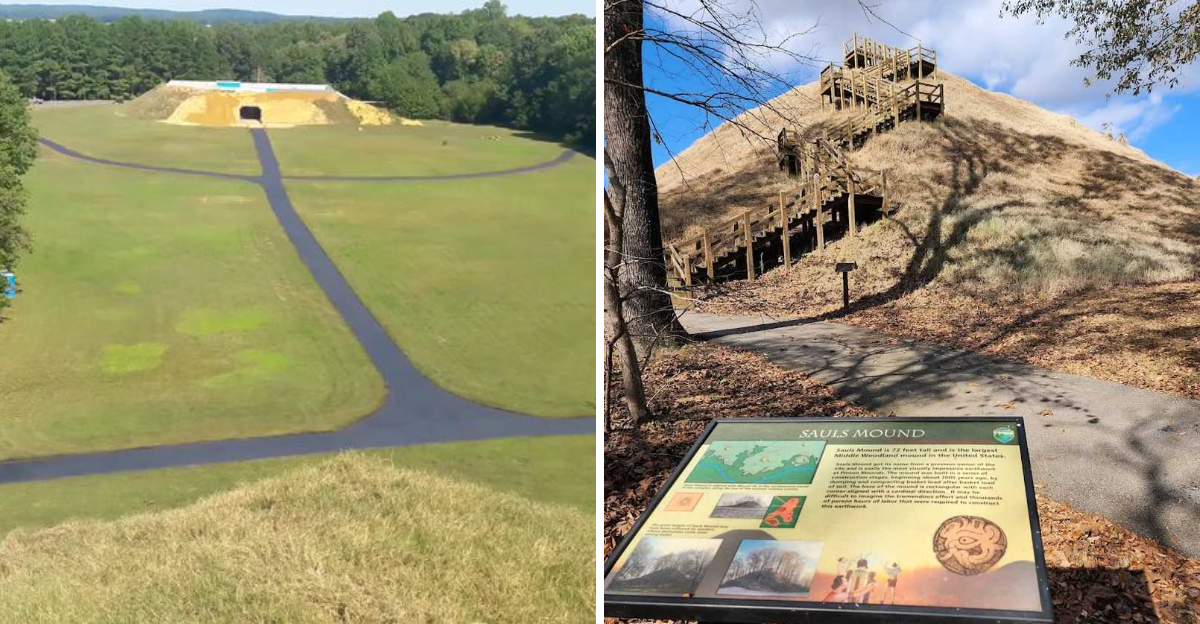
Something extraordinary sits in West Tennessee, and most people drive right past it.
Thousands of years before European settlers arrived, a powerful civilization rose here and left behind proof that cannot be ignored.
Giant earthen mounds. Ceremonial grounds.
A society so organized and so advanced it still puzzles researchers today. Every ridge, pathway, and mound hints at a world built with purpose, skill, and remarkable vision.
Who were they? That question alone should make you want to keep reading.
Tennessee holds this ancient site like a quiet secret, one that rewrites everything you thought you knew about early American life. This is not a footnote in history.
This is the main story.
The Civilization That Built In Silence
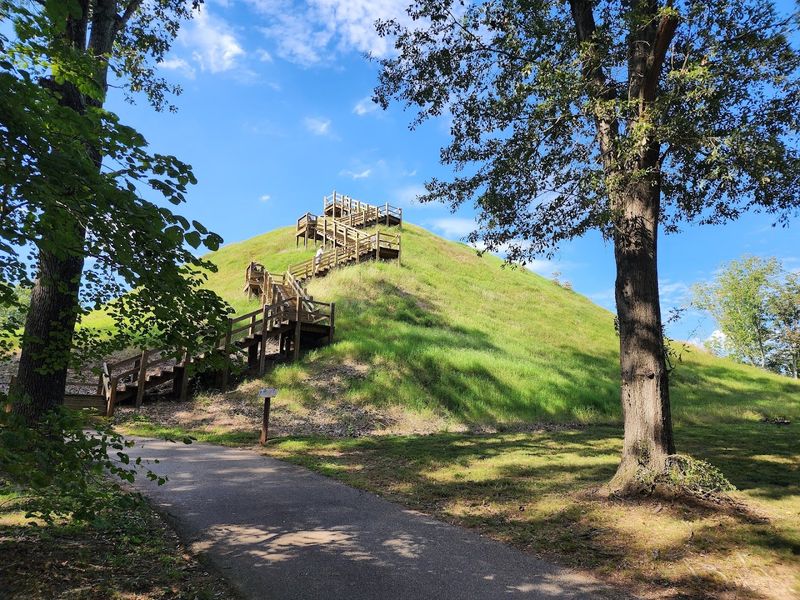
Around 2,000 years ago, a group of prehistoric people began shaping the land of what is now western Tennessee into something extraordinary. They had no written language, no metal tools, and no beasts of burden.
What they had was organization, patience, and a purpose that archaeologists are still working to fully understand.
These were the Middle Woodland people, a broad cultural tradition that flourished across eastern North America roughly between 200 BCE and 500 CE. They were not a single tribe with a single name.
They were a network of communities sharing ceremonial practices, trade goods, and a remarkable ability to move earth by hand.
Artifacts recovered at the site include copper pieces traced back to the Great Lakes region and shells from the Gulf of Mexico.
That kind of material spread tells a story of long-distance trade and cultural connection that challenges the popular image of prehistoric peoples as isolated groups.
This place preserves what these people left behind, a landscape shaped by intention and ceremony that still commands quiet respect today.
Sauls Mound Stands Taller Than You Expect
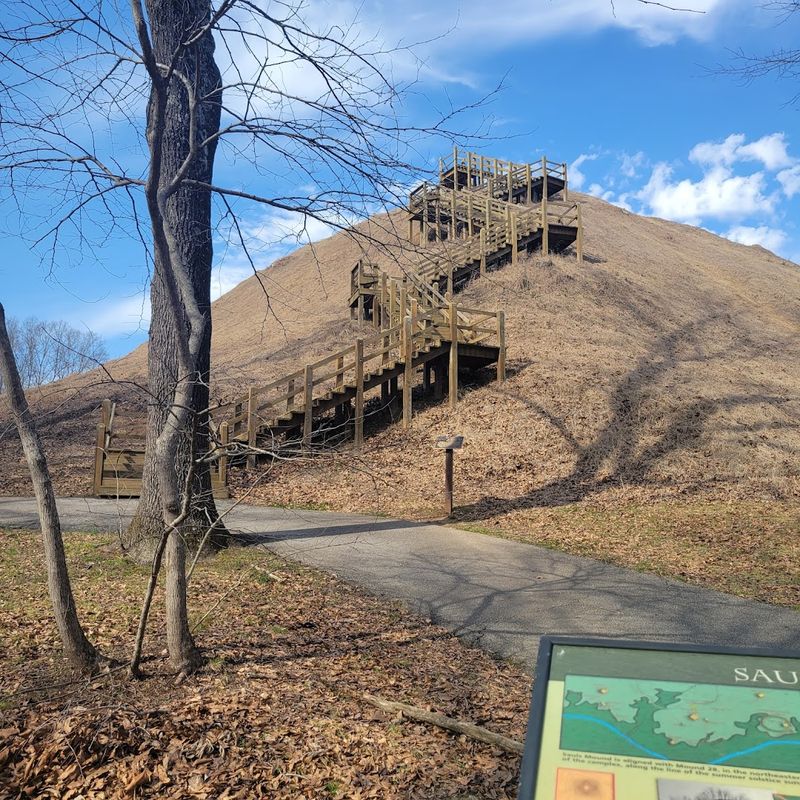
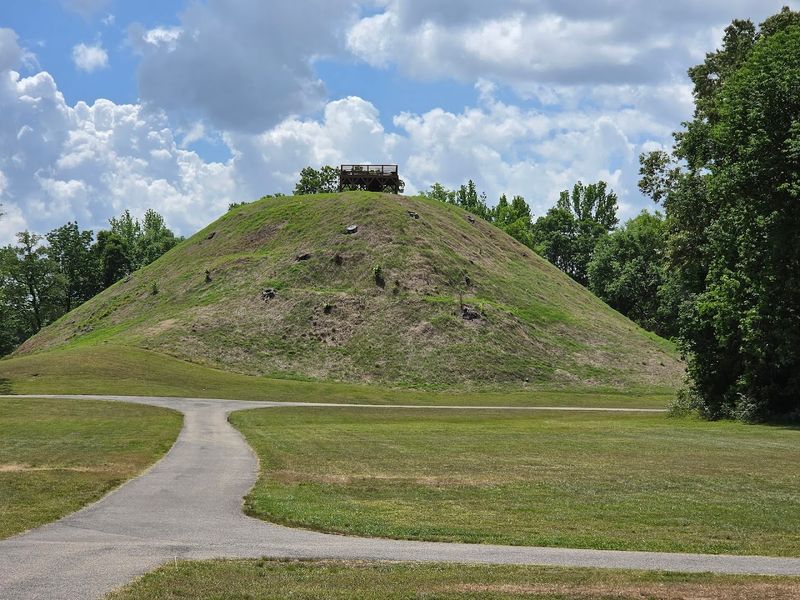
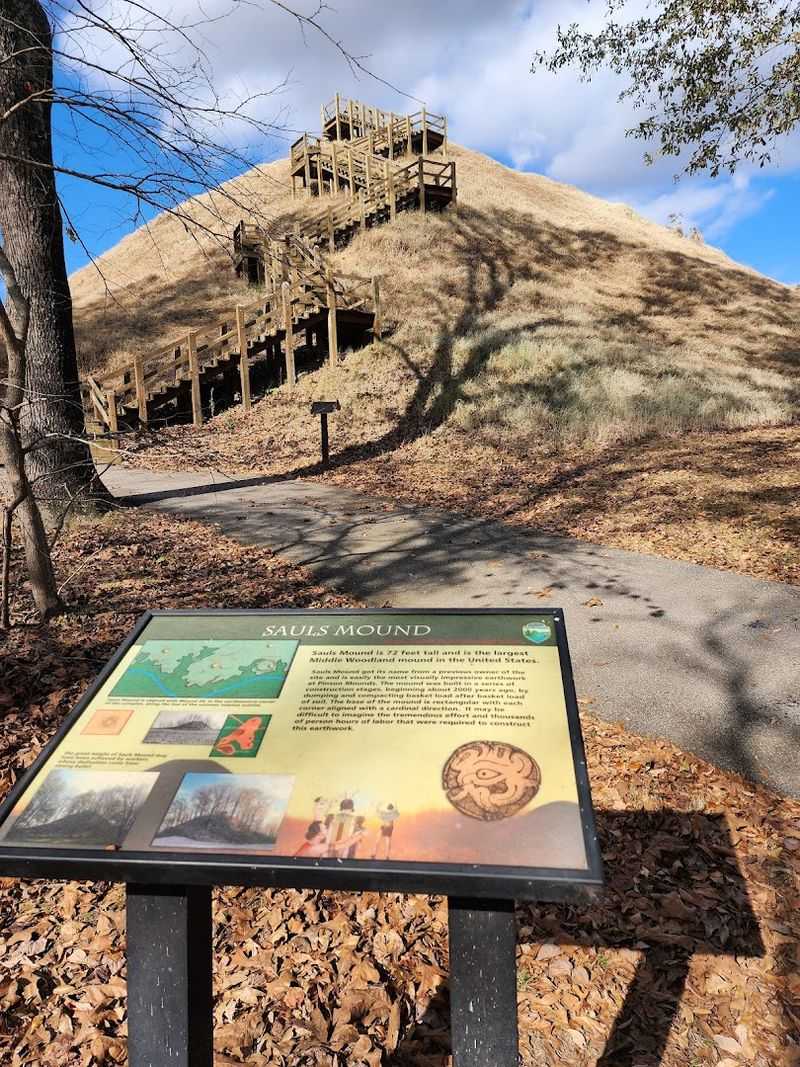
Standing at 72 feet tall, Sauls Mound is the second-highest surviving prehistoric mound in the entire United States. It is also the tallest mound ever confirmed from the Middle Woodland period.
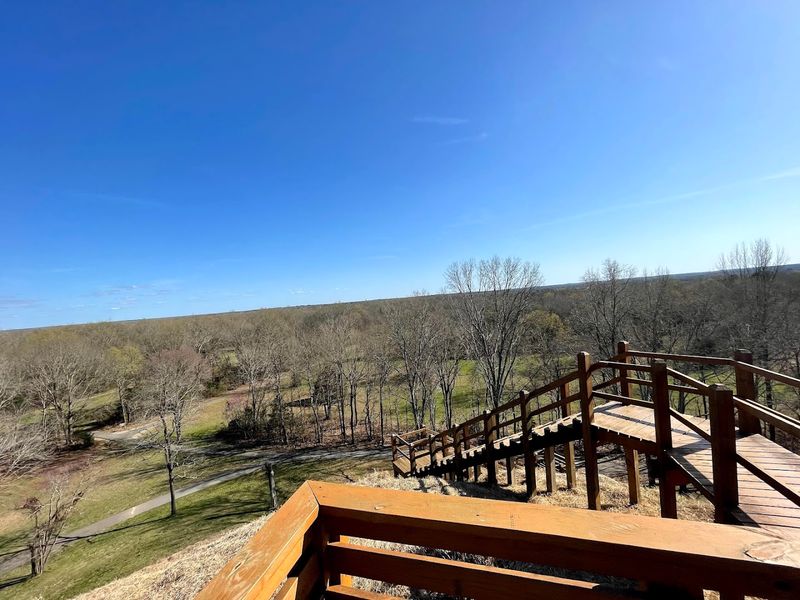
Those numbers become real the moment you stand at its base and look up at the wooden staircase climbing toward the sky.
The climb takes roughly 100 steps. About halfway up, there is a bench for anyone who needs a pause.
At the top, a viewing platform offers a wide, open view across the tree canopy that is genuinely hard to forget. Visitors often remark that the view gives them a strange sense of connection, seeing the same horizon the original builders once looked out over.
What makes the mound even more astonishing is how it was built. No machinery, no carts, no cranes.
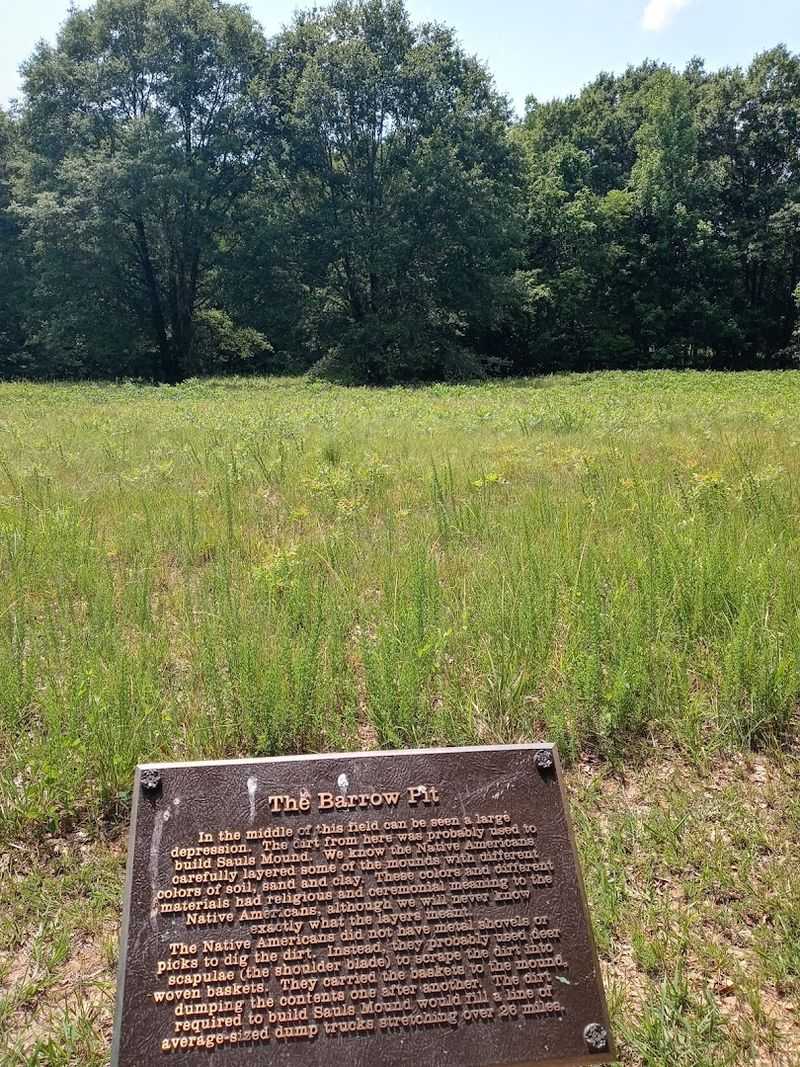
Workers carried dirt one basketful at a time, compacting each load until the structure grew to its current height. The sheer human effort involved points to a highly organized society with strong communal motivation.
Sauls Mound is not just a hill. It is the physical record of thousands of decisions made by people working toward a shared goal.
A Pilgrimage Site, Not A City
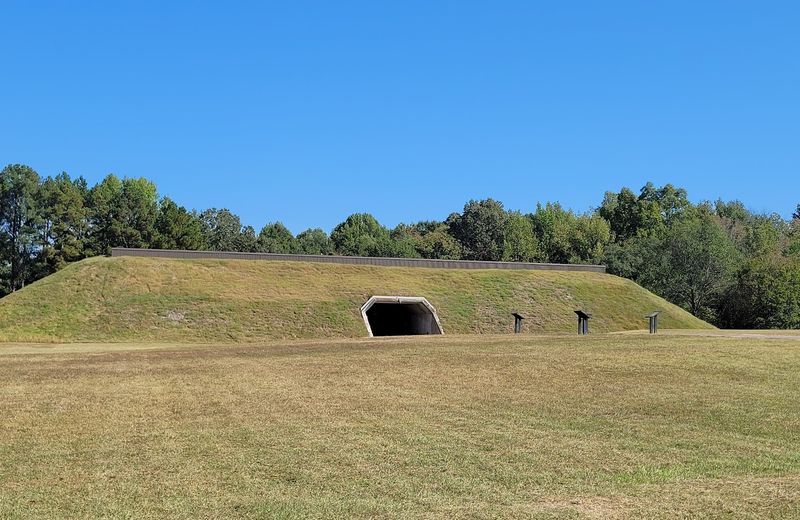
One of the most common misconceptions about ancient mound sites is that they were cities where large populations lived permanently. Pinson Mounds operated differently.
Evidence strongly suggests it functioned as a ceremonial pilgrimage center, a place people traveled to from great distances for rituals, gatherings, and observations tied to the natural calendar.
People arrived from as far as Ohio, Georgia, and Louisiana, drawn by shared religious traditions and the significance of this particular landscape. The site was not a place of everyday domestic life.
It was more like a cathedral in the wilderness, built not for shelter but for meaning.
This distinction matters because it reframes how we think about the intelligence and social complexity of these communities.
Organizing large gatherings across hundreds of miles and constructing monumental earthworks for ceremonial use require sophisticated communication and cultural cohesion.
The fact that Pinson Mounds served pilgrims rather than permanent residents makes it more impressive, not less. It was a destination chosen deliberately, returned to repeatedly, and maintained with care across several centuries.
The Mounds Speak An Astronomical Language
Some of the most intriguing research at Pinson Mounds involves the spatial relationship between the structures.
Certain mounds and earthen enclosures appear to have been laid out with deliberate astronomical alignments, potentially corresponding to events like the summer solstice.
The Eastern Citadel, a large geometric earthen enclosure within the park, is one feature that researchers have studied in relation to celestial patterns.
If these alignments were intentional, then the builders possessed a working knowledge of the solar calendar that guided both their ceremonies and their construction decisions.
One visitor left a review expressing hope that the park would host Summer Solstice events so people could experience what the ancient builders were aiming for. That instinct is understandable.
Standing at a site where the landscape was designed to respond to the movement of the sun creates a different kind of engagement with history. It stops being about artifacts in a case and starts being about a living, observational relationship with the natural world.
The park is open daily from 7 AM to 5 PM, giving visitors ample morning light to appreciate that relationship firsthand.
Burial Tombs And The People Inside Them
Several mounds at the site contain burial chambers that offer a rare and sobering look at how the Middle Woodland people honored their loved ones.
Among the most striking discoveries was a tomb containing eight young women, each adorned with copper ornaments and freshwater pearls.
Nearby, a separate tomb held four older men.
The presence of these burial goods speaks to a society with clear ceremonial values and a strong belief system. Copper and pearls were not everyday items.
They were objects of prestige and spiritual significance, sourced through long-distance trade networks and reserved for specific individuals in specific contexts.
What archaeologists cannot yet determine with certainty is the exact relationship between the two tombs or the social roles of those buried within them. The young women and older men may represent different ranks, different ceremonial functions, or different stages of a ritual sequence.
The ambiguity is not a failure of archaeology. It is an honest reflection of how much these people intentionally or unintentionally kept from the future.
Their silence is part of what makes Pinson Mound at 460 Ozier Rd one of the most genuinely mysterious archaeological sites in the American Southeast.
The Museum Brings The Layers To Life
Before walking the trails, the visitor center and museum at Pinson Mounds is worth a solid hour of your time.
The exhibits cover the cultural background of the Middle Woodland period, the construction methods behind the mounds, and the artifacts recovered from the site over decades of archaeological work.
A short documentary film screened inside the museum gives context that makes the outdoor experience significantly richer. Multiple visitors have noted that watching the film first helps everything click into place once you are out among the mounds.
The museum also features wildlife displays and natural history content related to the park’s ecology, which adds a second layer of engagement beyond the purely archaeological.
The gift shop carries an impressive range of items for its size, including handmade pottery, flint-knapped knives, and jewelry inspired by Native American craft traditions. Several reviewers have specifically called out the quality of the native crafts available there.
Admission to the park is free, which makes the museum feel like an unexpected bonus rather than an obligation. Rangers on staff are consistently praised for their knowledge and approachability, so do not be shy about asking questions before you head out on the trails.
Over 1,200 Acres Of Trails Worth Exploring
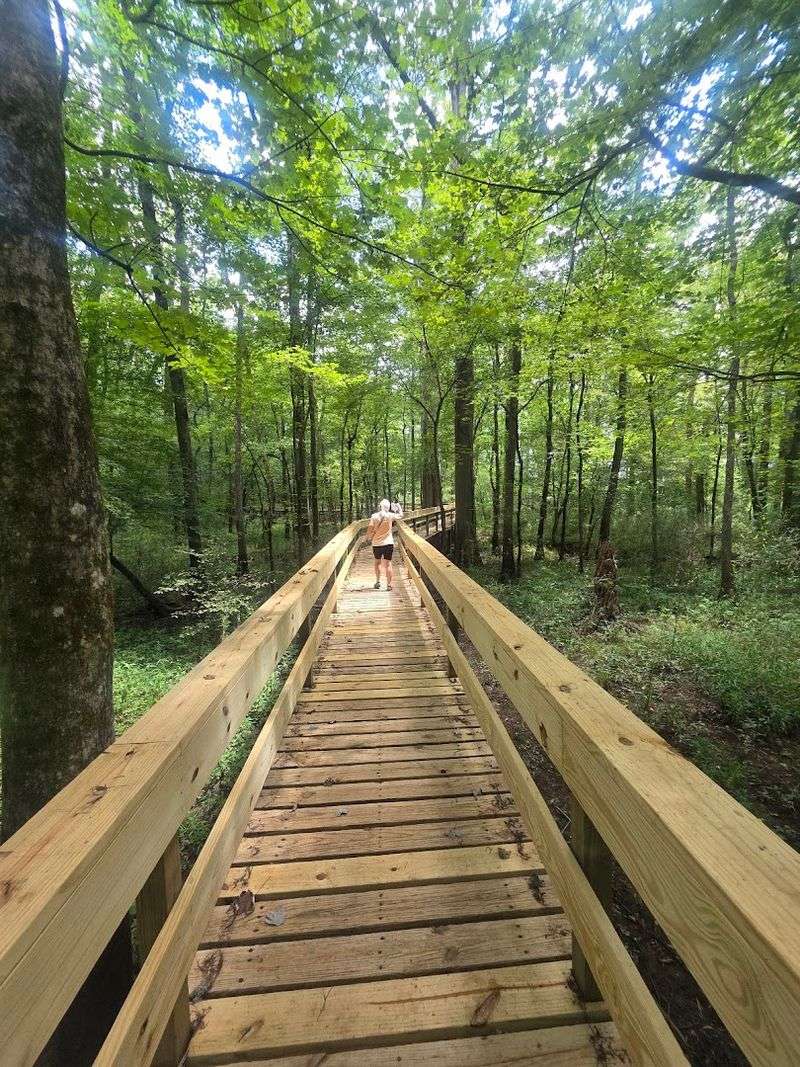
The park covers more than 1,200 acres, and the trail system threads through most of it.
Visitors can cover around five and a half miles if they walk every route, passing each of the confirmed mounds along the way.
Informational signs are posted throughout, so the hike doubles as a guided tour without requiring a reservation.
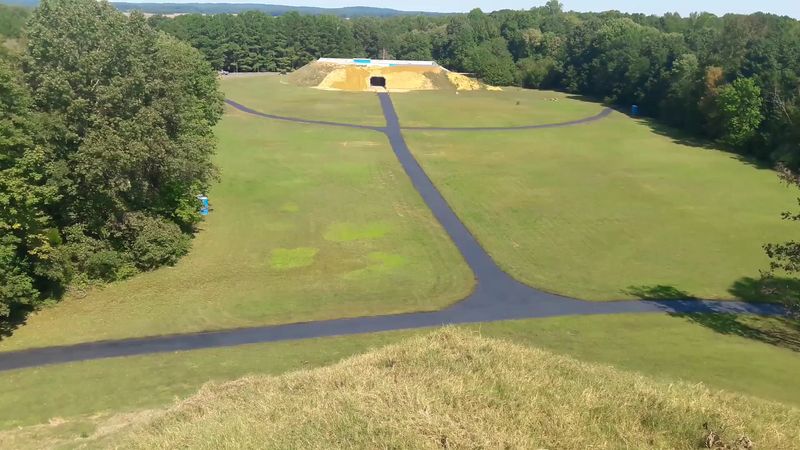
Trails range from flat, paved pathways suitable for wheelchairs and strollers to moderate woodland routes with real elevation changes.
The paved sections also accommodate bicycles, which makes the park a practical option for families with younger children or anyone who prefers wheels over boots.
The park sits along the Forked Deer River, and the river trail section has drawn particular praise for its calm atmosphere and natural beauty.
One reviewer described standing on the trail while a hawk circled overhead and the river moved quietly below, calling it a reset of the soul. That kind of experience is not manufactured.
It comes from a landscape that has been left largely undisturbed.
The combination of historical significance and natural beauty gives Pinson Mounds a dual appeal that most state parks cannot match.
Bring comfortable shoes, water, and insect repellent if you visit during warmer months.
Why This Place Remains Largely Unknown
For a site of this scale and historical importance, Pinson Mounds receives a fraction of the attention given to better-known ancient places. Part of that comes down to the nature of its builders.
The Middle Woodland people left no written records, no carved inscriptions, and no decipherable symbols explaining their intentions. Their story must be reconstructed entirely from physical evidence.
Without a dramatic narrative attached to a named ruler or a famous battle, sites like this tend to get overlooked in popular history. The Mississippian culture mound sites, which came later and are somewhat better documented, tend to attract more mainstream interest.
Pinson Mounds predates all of them and in many ways surpasses them in scale, but it lacks the storytelling hooks that drive public attention.
There is also the question of location. Situated in Madison County in western Tennessee, the park does not sit along a major tourist corridor.
Most people discover it by accident or through word of mouth. That relative obscurity has, ironically, helped preserve its atmosphere.
A visit here feels genuinely exploratory rather than performative. The site rewards curiosity over spectacle, which is exactly the kind of place that stays with you long after you have driven home.
Planning Your Visit To This Remarkable Park
Getting to Pinson Mounds State Archaeological Park is straightforward. The park sits about 10 miles south of Jackson, Tennessee.
The park is open every day of the week from 7 AM to 5 PM, which gives visitors a comfortable window for a half-day or full-day outing.
Admission is completely free, which is remarkable given the quality and scope of what the park offers. There are picnic pavilions, a playground, clean restrooms, and paved accessible pathways throughout.
The park is pet-friendly and accommodates visitors with limited mobility on most of the main routes. For questions before your visit, the park can be reached at 888-867-2757 or through the official site at tnstateparks.com/parks/pinson-mounds.
Plan to start at the visitor center, watch the documentary, pick up a free trail map, and then work your way through the mounds in order. Budget at least three hours if you want to climb Sauls Mound and walk the main trail loop.
The park earns a 4.7-star rating from over 800 visitor reviews, which reflects a consistency of experience that is hard to argue with. Few free attractions in Tennessee deliver this much substance in a single afternoon.