
This Arizona High Desert Hideaway Goes Completely Quiet At Dusk
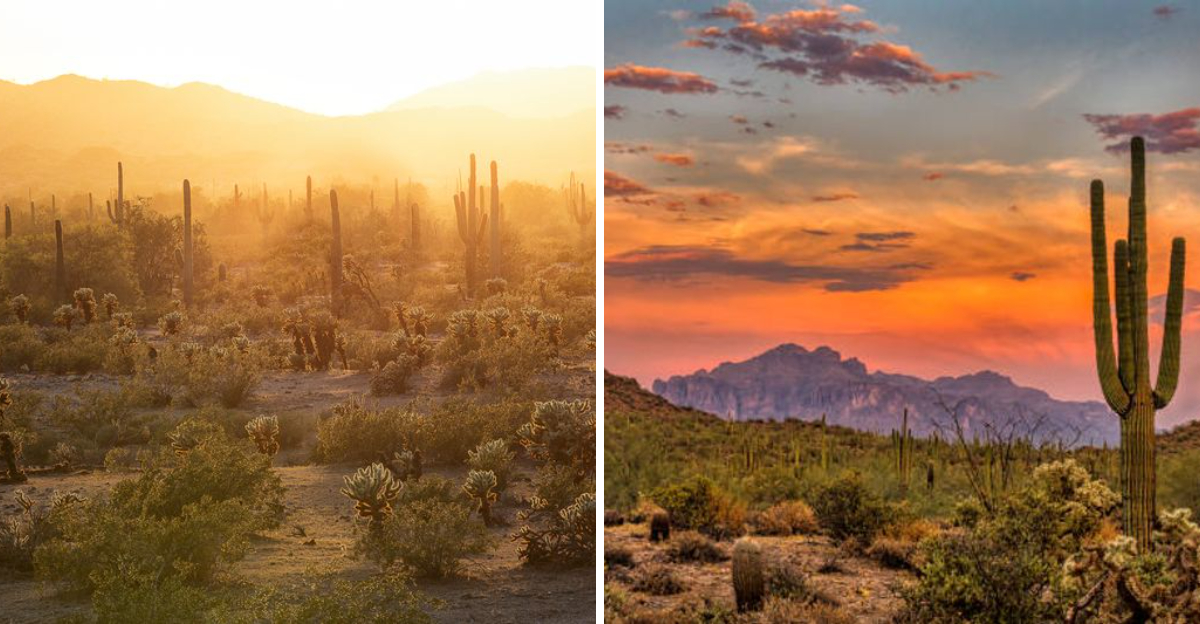
Somewhere between the sprawl of Phoenix and the empty stretches of Interstate 8, a protected sweep of desert land offers something increasingly rare in modern life.
Sonoran Desert National Monument, located in Maricopa, Arizona, covers nearly half a million acres of open terrain where saguaro cacti stand like sentinels and the horizon stretches unbroken in every direction.
At dusk, when the last light drains from the sky and the temperature begins to drop, the entire landscape settles into a profound and absolute silence that feels almost ceremonial.
A Vast Desert Hideaway
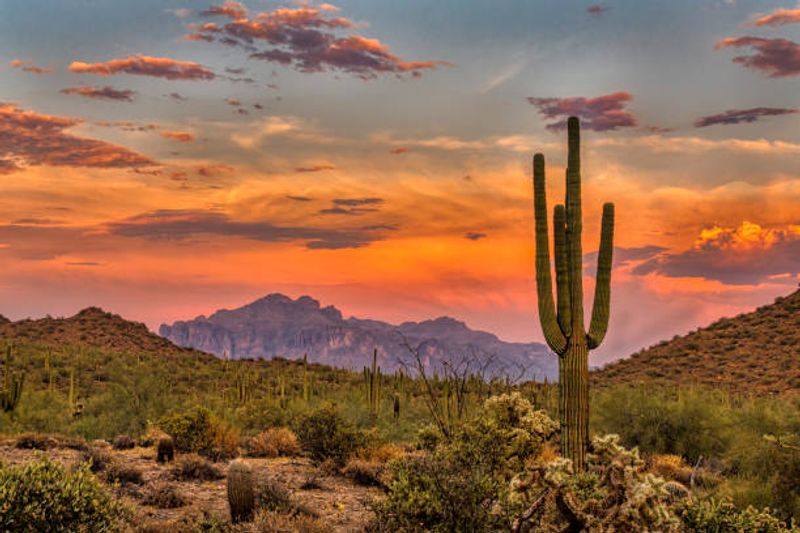
Spanning nearly 487,000 acres across the Sonoran Desert, this national monument represents one of the largest protected desert landscapes in the American Southwest.
Established in 2001, the monument stretches across remote terrain southwest of Phoenix, encompassing mountain ranges, volcanic peaks, and expansive bajadas covered in classic Sonoran vegetation.
The sheer scale of the place ensures that even on weekends, visitors can walk for hours without encountering another soul.
Three distinct mountain ranges punctuate the landscape: the Sand Tank, Maricopa, and Table Top Mountains.
Between them lie valleys thick with creosote, palo verde, ironwood, and the iconic saguaro cactus that defines this desert ecosystem.
The monument is managed by the Bureau of Land Management, which maintains minimal infrastructure to preserve the area’s wild character.
Most access points require navigating dirt roads that branch off from Highway 8 or Maricopa Road, adding to the sense of remoteness.
The lack of paved routes and visitor centers keeps crowds thin and preserves the feeling of stepping into untouched wilderness.
Isolation Close To Phoenix
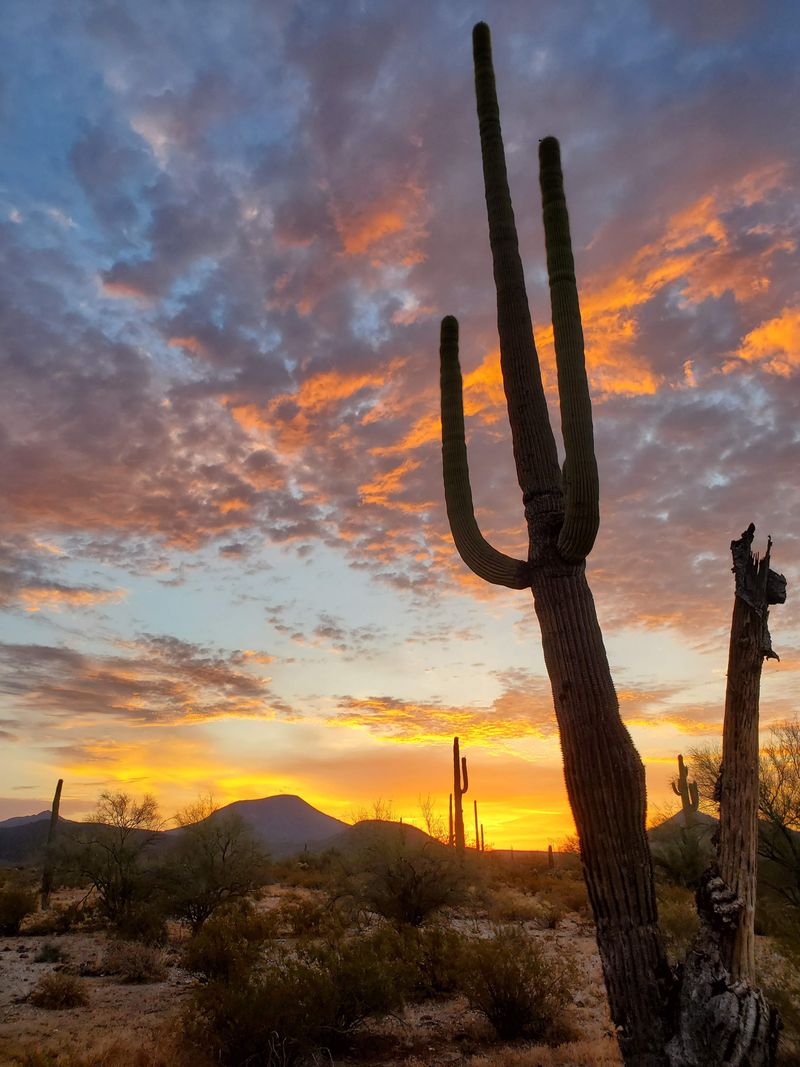
Despite sitting roughly sixty miles southwest of metropolitan Phoenix, the monument feels worlds removed from urban Arizona.
The drive along Interstate 8 passes through increasingly sparse settlements until civilization seems to evaporate entirely, replaced by uninterrupted desert and distant mountain silhouettes.
This proximity makes the monument an accessible escape for Phoenix residents seeking solitude without committing to a multi-day expedition.
The contrast between city and wilderness becomes especially pronounced at the monument’s boundaries.
Within minutes of leaving the highway and passing through a cattle gate, the sounds of traffic fade completely.
No cell service, no power lines beyond the initial access points, and no ambient noise from distant development.
The monument’s address in Maricopa, AZ 85239, places it within reach of day-trippers, yet its rugged access roads and lack of amenities discourage casual visitors.
Those willing to navigate dirt tracks and bring their own water discover a landscape that rewards self-sufficiency with genuine solitude.
Endless High Desert Views
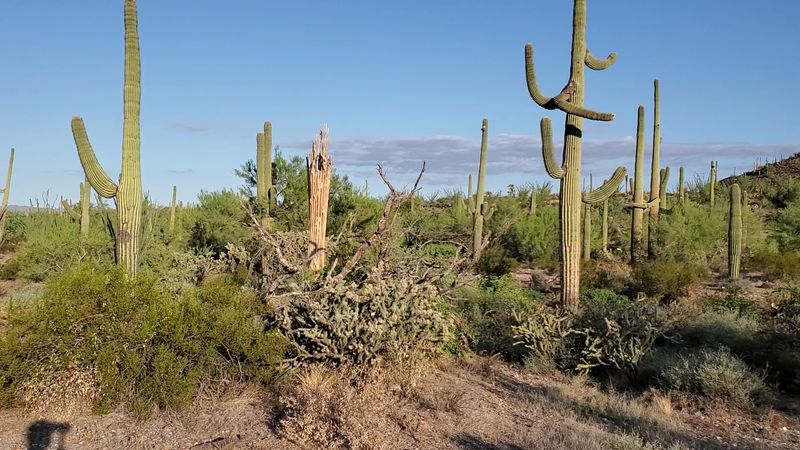
Standing anywhere within the monument boundaries offers sightlines that extend for miles in every direction, uninterrupted by buildings, billboards, or trees tall enough to block the horizon.
The high desert elevation, ranging from roughly 1,400 to 4,000 feet, provides clear air that sharpens distant features and makes depth perception tricky.
Mountains that appear close might require hours of hiking to reach.
The openness creates a particular quality of light throughout the day, but especially during the transitional hours of dawn and dusk.
Without obstructions, the entire dome of sky becomes visible, allowing weather systems, cloud formations, and atmospheric changes to unfold as dramatic, slow-motion theater.
Sunrises and sunsets paint the entire landscape rather than just a slice of it.
This visual expanse also means exposure.
There’s little shade beyond what sparse desert trees provide, and the wind moves across the flats without resistance.
Visitors quickly understand why desert dwellers value any sheltered spot.
How Light Changes At Dusk

The transformation that occurs during the thirty minutes before full darkness arrives might be the monument’s most compelling feature.
As the sun drops toward the western horizon, the quality of light shifts from harsh and direct to diffused and golden, softening the edges of every rock formation and cactus.
Shadows lengthen dramatically, creating depth and texture across previously flat-looking terrain.
Colors intensify briefly before fading.
The normally muted greens of palo verde trees and the dusty gray-green of sagebrush suddenly appear saturated.
The sky transitions through a spectrum from blue to amber to violet, with each shade reflected in the desert floor.
This brief window of enhanced color happens quickly, lasting perhaps fifteen minutes at most.
Then comes the cooling.
Desert temperatures can drop thirty degrees between afternoon and midnight, and the shift begins noticeably at dusk.
The air loses its oppressive weight, and a slight breeze often picks up as thermal dynamics reverse.
When The Desert Goes Silent

Complete silence doesn’t arrive gradually at the monument.
Instead, it seems to descend all at once, usually within minutes of the sun disappearing below the horizon.
Daytime sounds—the occasional bird call, the rustle of wind through dried vegetation, the buzz of insects—simply stop.
What replaces them isn’t just quiet but an absence of sound so profound it becomes almost physical, something you feel as much as hear.
This silence differs from the quiet of forests or mountains, where distance muffles sound but doesn’t eliminate it.
In the desert, there’s nothing to muffle.
No rushing water, no wind through dense foliage, no animal sounds beyond the occasional distant coyote.
The acoustic emptiness can be disorienting for visitors accustomed to constant background noise.
Standing in this silence at dusk, you become aware of sounds normally masked: your own breathing, the creak of your boots, even your heartbeat.
The monument offers few experiences as memorable as this transition into absolute quiet.
Wildlife After Sunset
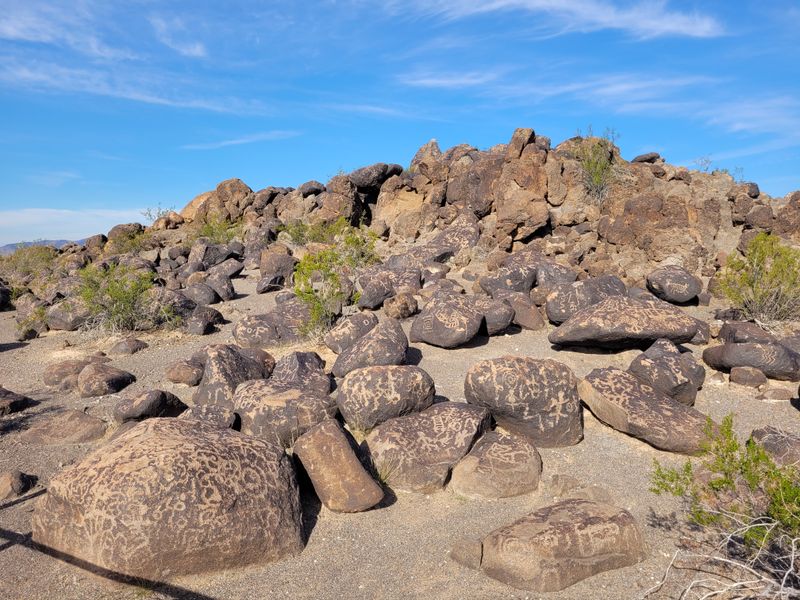
Once darkness settles completely, the monument transforms into a different ecosystem as nocturnal species emerge.
Desert tortoises retreat to burrows, but kangaroo rats, kit foxes, and various bat species begin their nightly routines.
Visitors who remain after dark and sit quietly often hear the surprisingly loud rustling of small mammals moving through dry brush, sounds that seem amplified in the stillness.
Coyotes become vocal after sunset, their yips and howls carrying for miles across the open terrain.
Great horned owls hunt from perches on saguaro arms, and nighthawks swoop through the cooling air catching insects.
The monument supports healthy populations of these nocturnal hunters, though spotting them requires patience and luck.
Reptiles that spent the day basking on warm rocks retreat as temperatures drop, though rattlesnakes occasionally remain active during summer evenings.
The monument’s diverse wildlife includes species like Gila monsters, though encounters remain rare given the vastness of the protected area and the wariness of desert creatures.
A Desert Without Crowds

Unlike Arizona’s more famous desert destinations, the Sonoran Desert National Monument sees relatively few visitors despite its size and proximity to Phoenix.
The lack of paved roads, established campgrounds, and visitor facilities naturally limits traffic to those willing to accept a more primitive experience.
This self-selection process ensures that most visitors arrive prepared and respectful of the landscape’s fragility.
Reviews frequently mention encountering no other people during entire visits, even on pleasant winter weekends when desert recreation peaks.
The monument’s multiple access points and extensive trail network spread visitors across such a large area that isolation remains easy to find.
Those seeking complete solitude can drive or hike away from the main entry points near Highway 8.
The Bureau of Land Management maintains this character intentionally, resisting calls for development that would make the monument more accessible but would inevitably bring crowds.
The result is a protected landscape that still feels genuinely wild and unclaimed.
Protected Land Preserved Quiet
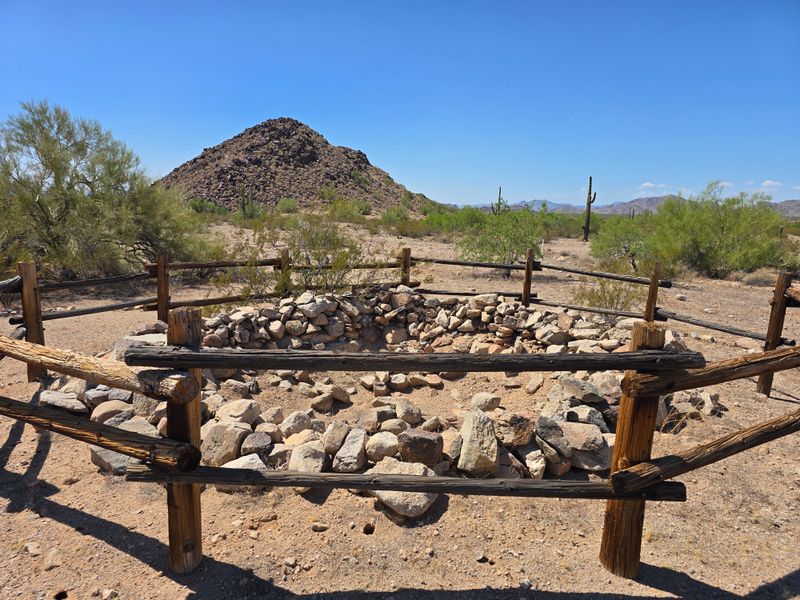
The monument’s designation in 2001 formalized protection for a landscape that had remained largely unchanged for centuries.
Unlike national parks with their emphasis on visitor services and infrastructure, national monuments managed by the Bureau of Land Management typically maintain a lighter touch, preserving natural conditions while allowing compatible recreational uses.
This management philosophy has kept the Sonoran Desert National Monument remarkably pristine.
Conservation efforts focus on protecting the monument’s extraordinary biodiversity, which includes over 400 plant species and 200 animal species.
The landscape contains significant archaeological sites as well, with evidence of human presence dating back thousands of years.
Protecting these resources means limiting development and managing visitor impact carefully.
The result is a place where natural processes continue largely uninterrupted.
The quiet at dusk isn’t manufactured or maintained through rules prohibiting noise; it exists because the landscape itself remains intact and undisturbed, allowing visitors to experience desert evenings much as they’ve occurred for millennia.