
This Beautiful Japanese Garden In Tennessee Will Make You Feel Like You’re In Another World
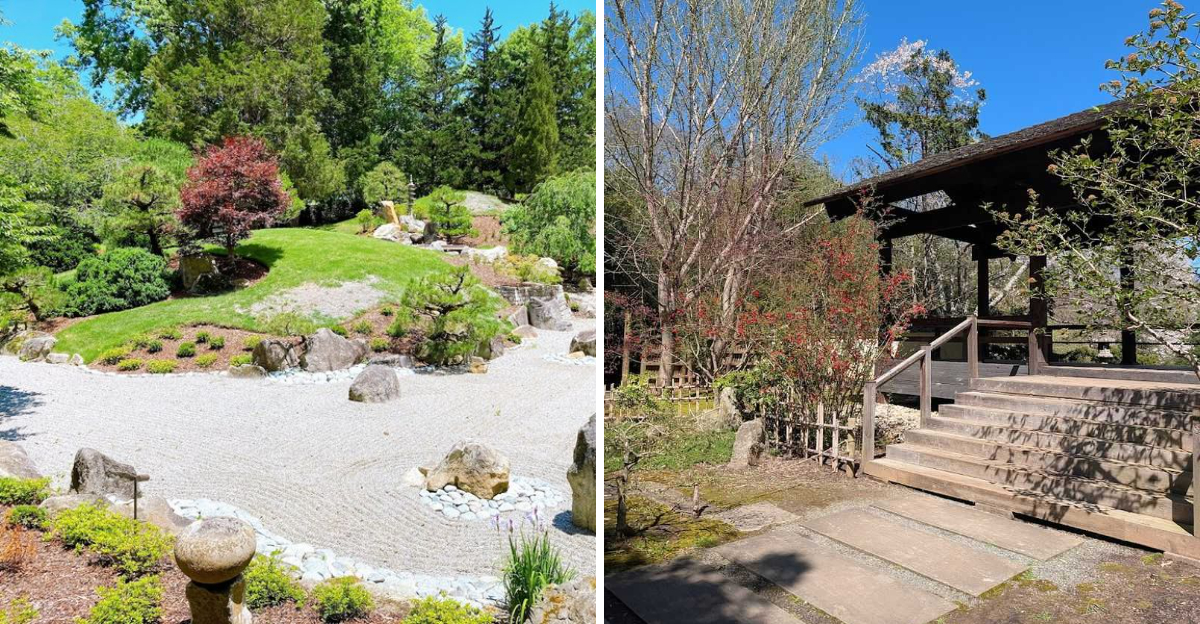
A quiet path and carefully shaped trees create a scene that feels worlds away from the busy streets of Tennessee. Stone lanterns, winding walkways, and gentle koi ponds invite visitors to slow down and take in every detail.
Each corner offers a thoughtful blend of nature and design, inspired by traditional Japanese garden style. The experience feels calm, reflective, and surprisingly immersive.
In a state known for music and mountains, this tranquil space offers something entirely different – a place where the pace softens and the scenery feels wonderfully serene.
The Story Behind The Garden And Its Inspired Design
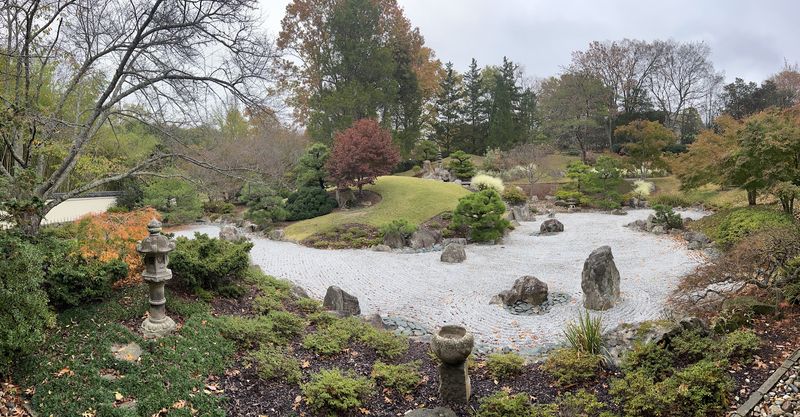
Not every garden carries a name with meaning, but this one does. The place earned this title as part of its identity as a meditative landscape rooted in Eastern garden philosophy.
The name reflects the garden’s intention: to guide visitors toward a quieter, more contemplative state of mind.
Landscape architect David Harris Engel designed the garden with a clear vision – to bridge the traditions of Japanese garden design with the natural character of the Tennessee landscape. That pairing sounds simple, but achieving it requires a careful eye and deep respect for both cultures.
Engel succeeded in a way that still feels fresh today.
Knowing the backstory of Shōmu-en adds a layer of appreciation when you walk its paths. You are not just strolling through plants – you are moving through a considered artistic statement about place, memory, and the natural world.
Walking The Path Feels Like A Meditative Journey
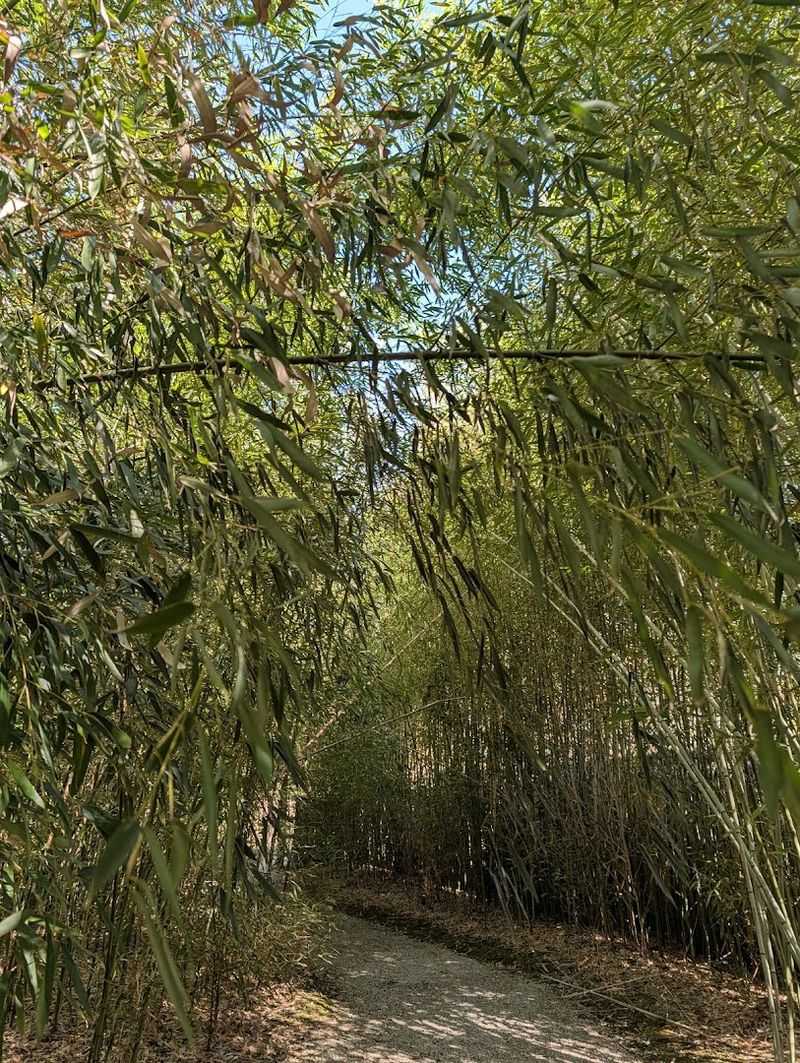
There is something about a well-designed garden path that slows your breathing before you even notice it happening. At the Blevins Japanese Garden, the walkways are arranged so that each turn reveals a new composition of plants, stone, and open space.
Nothing feels accidental. Every bend has a purpose, and that purpose is to pull your attention fully into the present moment.
The path follows the logic of traditional Japanese landscape design, which uses the principle of concealment and gradual reveal to create a sense of discovery. You do not see the entire garden at once.
Instead, it unfolds around you in stages, which makes even a short walk feel longer and more immersive than the physical distance suggests.
Visitors who arrive expecting a quick look often find themselves lingering well beyond their original plans. The rhythm of the walk encourages a kind of quiet observation that is genuinely rare in everyday life.
Bring comfortable shoes, move slowly, and resist the urge to photograph everything immediately. Sometimes the most rewarding approach is simply to walk, look, and let the garden do what it was designed to do.
The Karesansui Garden Is A Rare And Striking Feature
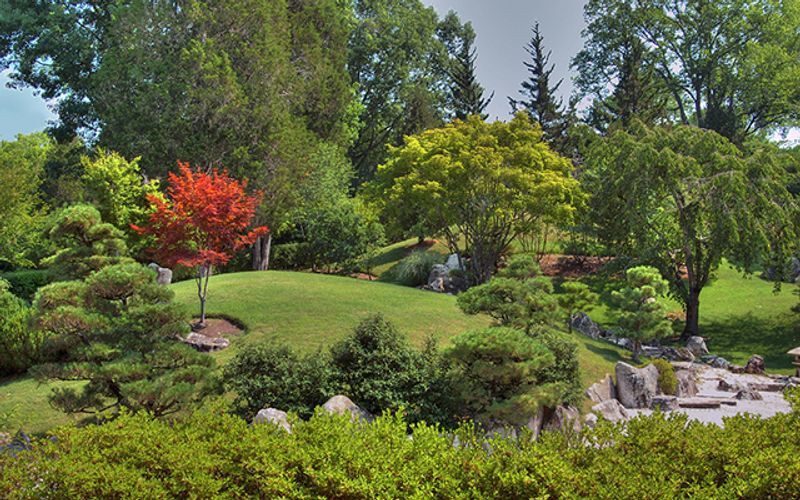
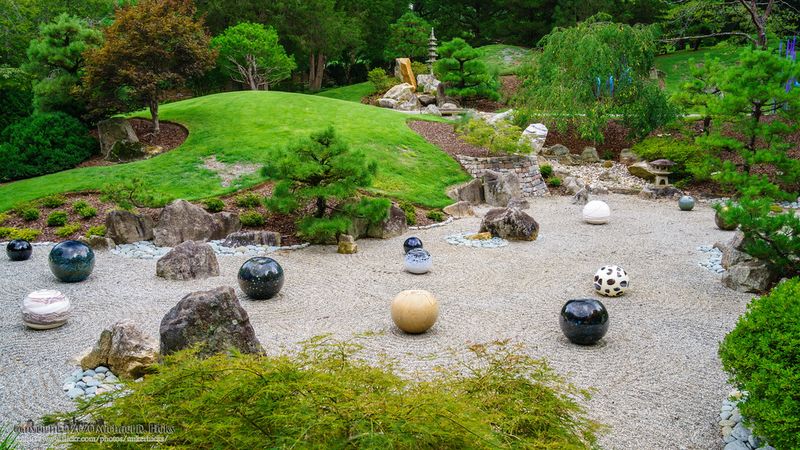
Few visitors arrive at the Blevins Japanese Garden expecting to encounter a karesansui of this scale, which makes seeing it for the first time all the more striking. A karesansui, often called a dry rock garden or Zen garden, replaces water with carefully raked sand or gravel and uses stones to represent larger natural features like mountains or islands.
The effect is meditative and visually clean.
One reviewer specifically noted that the karesansui at this garden was the largest they had ever seen, which is a meaningful observation given how uncommon these features are outside of Japan. The raked patterns in the sand are maintained with obvious care, and the garden staff tends to them regularly.
That attention to upkeep reflects a genuine commitment to the garden’s spirit rather than just its appearance.
Standing at the edge of the karesansui and studying the raked lines requires a moment of stillness that most people do not practice often enough. The patterns suggest movement without any motion actually occurring.
For anyone with an interest in Zen philosophy or Japanese aesthetics, this section of the garden alone justifies the visit to 1200 Forrest Park Dr in Nashville.
Black Pines Pruned To Look Windswept And Ancient
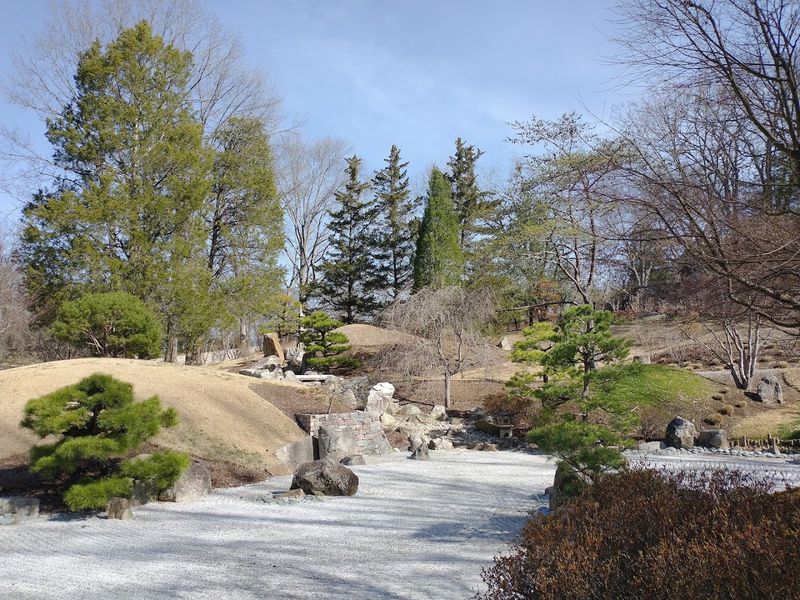
One of the most visually arresting elements of the Blevins Japanese Garden is the collection of black pines that have been pruned over time to appear windswept and aged. This pruning technique, known in Japan as niwaki, shapes trees to evoke the appearance of pines growing on rocky coastlines or exposed mountain ridges.
The result is a tree that looks like it has survived decades of harsh weather, even when standing in calm Nashville air.
The needles of the black pines create a texture that contrasts beautifully with the softer surrounding plants, particularly in late summer when the smoke bush blooms nearby. That interplay between the rigid, structured pines and the feathery lightness of the Cotinus coggygria is a deliberate design choice that rewards close attention.
It is the kind of detail that landscape architects appreciate and general visitors simply feel without fully naming.
Watching the light move through the pine branches at different times of day produces noticeably different impressions. Morning visits offer a cooler, more atmospheric quality, while afternoon light brings out the warmth of the bark and the depth of the green needles.
Either way, these trees are among the garden’s most composed and character-filled residents.
The Smoke Bush Creates A Seasonal Spectacle Unlike Anything Nearby
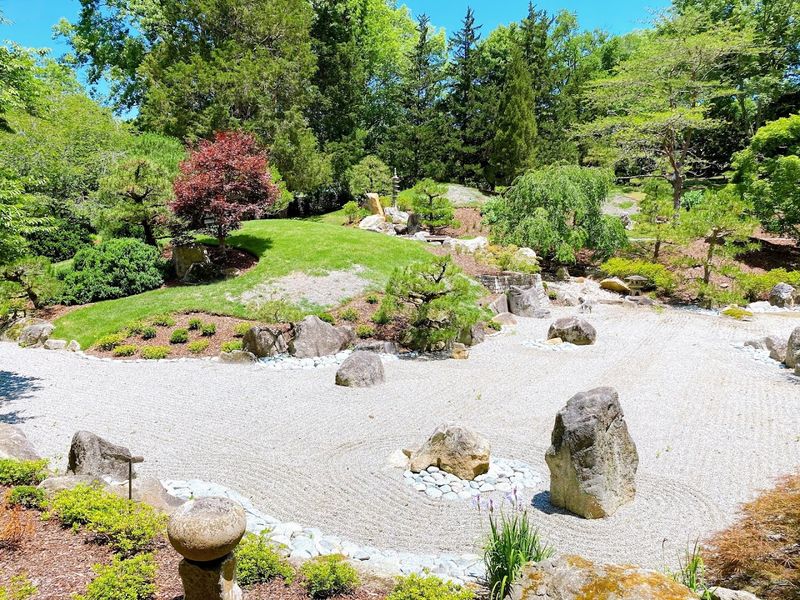
Late summer at the Blevins Japanese Garden brings a transformation that regular visitors plan their return trips around. The smoke bush, known botanically as Cotinus coggygria, erupts into clouds of feathery plumes that shift in color from soft pink to deep burgundy depending on the light and the variety.
These plumes inspired the garden’s poetic description as a pine-mist forest, a name that becomes immediately clear once you see it in person.
The smoke bush was not chosen arbitrarily. In the context of Japanese garden design, the suggestion of mist or atmospheric depth is a valued quality, and the Cotinus achieves that effect through purely botanical means.
The contrast between its soft, cloud-like flowers and the structured form of the black pines nearby creates a visual tension that feels both natural and carefully composed.
For photographers, this seasonal display offers material that is difficult to find anywhere else in Tennessee. The combination of Eastern garden structure and the particular way Nashville light falls in August and September produces images with a quality that surprises even experienced photographers.
Plan a visit between late July and early September to catch the smoke bush at its most expressive and the garden at one of its most atmospheric moments.
A Bamboo Forest That Transforms Sound And Light
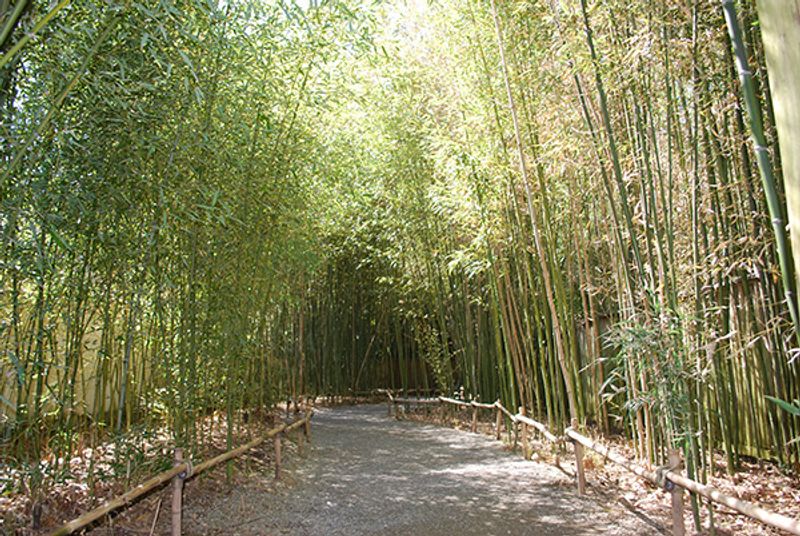
Bamboo has a particular effect on the senses that most people cannot fully anticipate until they are standing inside a grove of it. The tall stalks filter light into shifting, vertical patterns, and the rustling sound they produce in even a light breeze is distinctly different from any other plant.
At the Blevins Japanese Garden, a stand of bamboo surrounds a pagoda in a way that makes the structure feel genuinely discovered rather than placed.
Reviewers have specifically mentioned the bamboo forest as one of the garden’s most memorable features, and it is easy to understand why. The combination of a traditional pagoda and the enclosing bamboo creates a composition that photographs well but feels even better in person.
The shade inside the grove is noticeably cooler, and the acoustic quality changes in a way that makes the rest of the world feel farther away.
The pagoda itself is a thoughtful architectural addition that anchors the bamboo section of the garden with visual weight and cultural reference. It is not oversized or theatrical – it fits the scale of the surrounding plants and the overall atmosphere of the space.
Spending a few quiet minutes near the pagoda, with bamboo filtering the light around you, is one of the more genuinely transporting experiences available in Nashville.
How Eastern Garden Philosophy Shapes Every Corner Of This Space
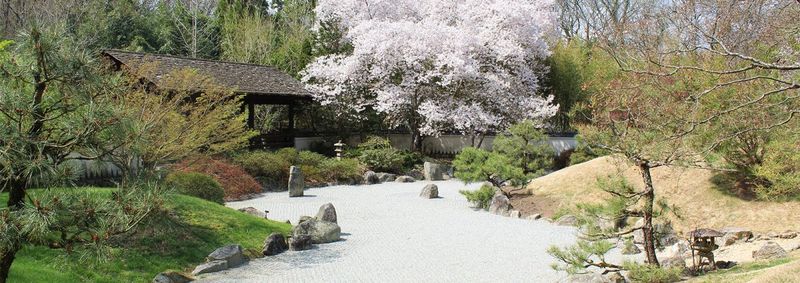
Japanese garden design is not simply about arranging plants attractively. It is a philosophical practice that draws on principles developed over centuries, including the ideas of ma (negative space), wabi-sabi (the beauty of imperfection and transience), and shakkei (borrowed scenery, where the surrounding landscape is incorporated into the garden’s composition).
The Blevins Japanese Garden applies these principles with enough fluency that the result feels coherent rather than decorative.
Designer David Harris Engel understood that translating Japanese aesthetics into a Tennessee setting required more than importing Japanese plants. It required understanding what the underlying philosophy was actually trying to communicate and then finding local equivalents that carried the same meaning.
The way the garden uses Tennessee’s native topography and existing tree canopy as part of its visual framework reflects this deeper approach.
For visitors with no background in garden design or Japanese culture, none of this needs to be consciously understood to be felt. The garden simply works.
There is a quality of ease and coherence to the space that registers immediately, even if the reasons behind it remain unnamed. That is perhaps the highest compliment one can pay to any designed landscape: that it communicates its intentions without requiring explanation.
Planning Your Visit To Cheekwood And What To Expect
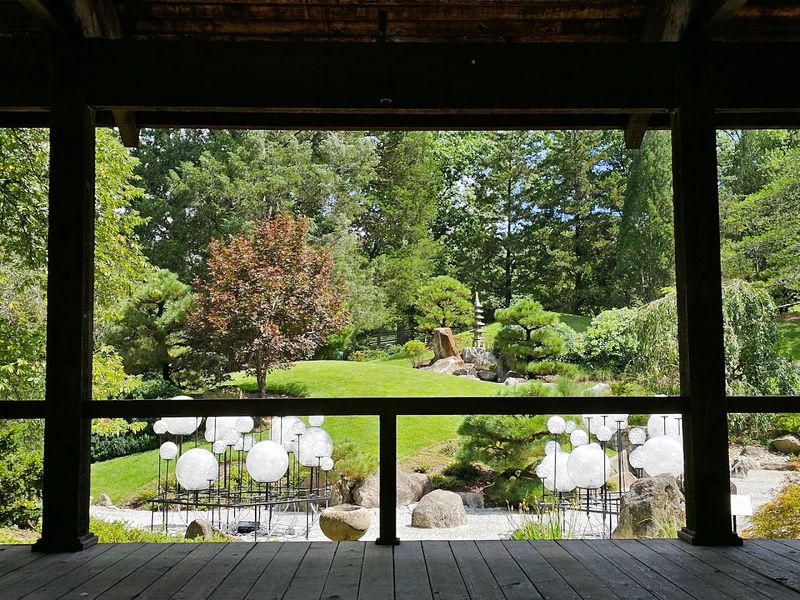
Cheekwood Estate and Gardens opens Tuesday through Sunday from 9 AM to 5 PM and is closed on Mondays. The Blevins Japanese Garden is located within the larger estate and is accessible as part of general admission to the property.
For specific ticketing inquiries, the estate can be reached at +1 615-356-8000 or through the official website at cheekwood.org.
Admission costs can add up, particularly for groups, so it is worth checking the website for seasonal pricing and any available membership options before your visit. One reviewer noted spending over fifty dollars for two people, which reflects the estate’s full pricing structure.
That said, the property covers significant ground with multiple distinct garden areas, and most visitors feel the experience justifies the cost.
Timing your visit thoughtfully makes a real difference in what you encounter. Early March visits show the garden in a quieter, more skeletal state, while spring and late summer bring the most dramatic plant activity.
The staff is consistently described as helpful and knowledgeable. Arriving at opening time on a weekday gives you the best chance of experiencing the Japanese garden in genuine quiet, without the ambient noise of larger weekend crowds.
The Seasonal Changes That Make Every Visit Feel New
A garden designed with seasonal awareness offers something genuinely different each time you return, and the Blevins Japanese Garden was built with exactly that kind of temporal intelligence. Spring arrivals are greeted by the earliest flowering shrubs and the tender green of new growth pushing through the carefully maintained beds.
The whole garden carries a freshness in April and May that feels almost startling after the spare quality of winter.
Summer deepens the greens and brings the smoke bush into its most expressive phase. The bamboo reaches its fullest density, and the shade within the grove becomes a genuine relief on warm Nashville afternoons.
Late summer is arguably the most atmospheric season, when the interplay between the black pines and the feathery Cotinus plumes is at its most visually complex.
Autumn introduces color into the leaf canopy in ways that Japanese garden design has always celebrated. The transience of fall foliage is a central theme in Japanese aesthetics, and watching it play out within this particular garden gives that familiar seasonal change a new layer of meaning.
Even early winter, when most plants have pulled back, reveals the architectural qualities of the pruned pines and the clean geometry of the karesansui with unusual clarity.
Why This Garden Deserves A Spot On Every Tennessee Travel List
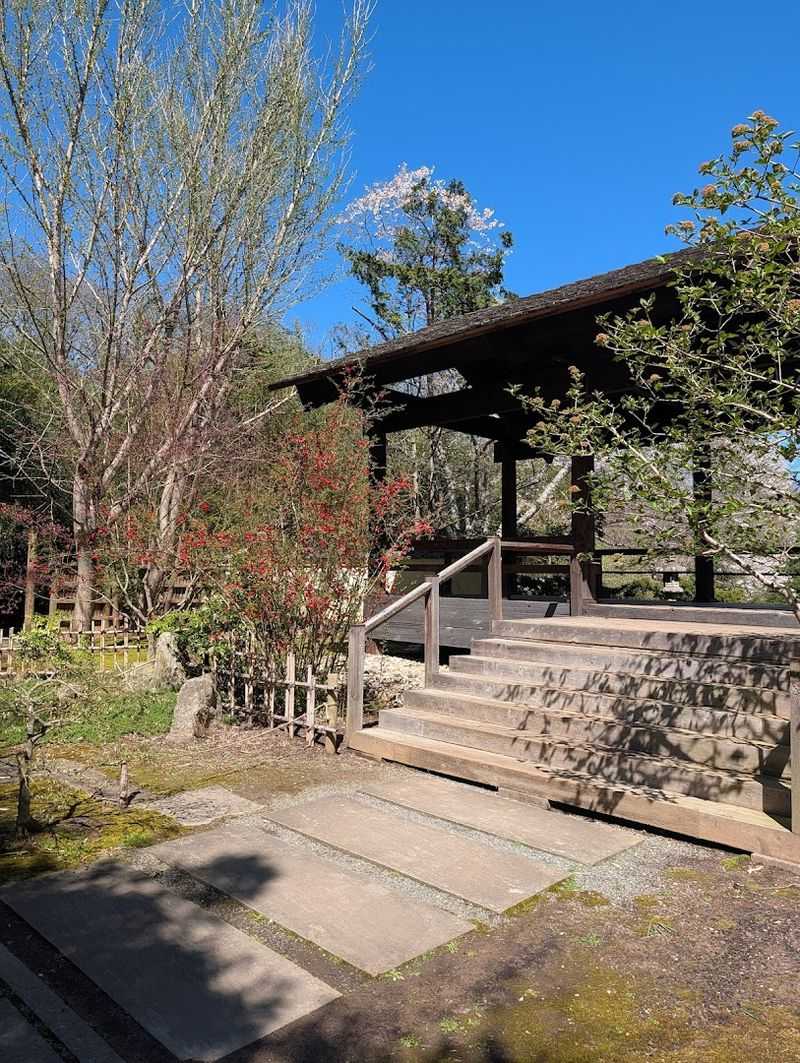
Nashville draws millions of visitors each year for its music, food, and nightlife, and most of them never learn that the city also contains one of the more thoughtfully designed Japanese gardens in the American South. That gap between what Nashville is known for and what it quietly offers is part of what makes the Blevins Japanese Garden such a satisfying discovery for anyone who stumbles across it.
The garden holds a 4.4-star rating from visitors who have taken the time to review it, and the responses range from straightforward admiration to genuine surprise at the quality of what they found. Even reviewers who tempered their enthusiasm acknowledged the peacefulness and the care that goes into the garden’s maintenance.
That consistency of atmosphere is not easy to achieve in a public garden, and it speaks well of Cheekwood’s curatorial standards.
For Tennessee residents who have not yet visited, the Blevins Japanese Garden offers an experience that requires no travel beyond the state to feel genuinely transported. For out-of-state visitors, it represents exactly the kind of unexpected cultural depth that makes a trip memorable long after the obvious attractions have faded from memory.