
This Charming Arboretum In Massachusetts Is So Pretty, It Feels Like A Claude Monet Painting
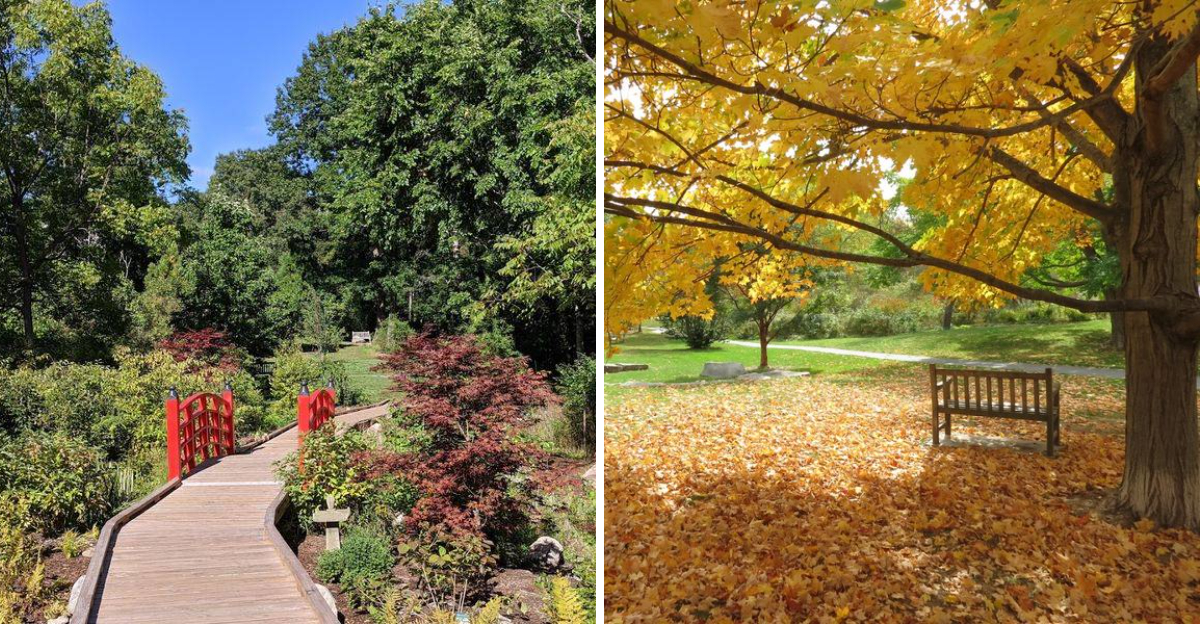
Some places look peaceful before you even reach the first path. This Massachusetts arboretum has that soft, painted quality, with leafy trails, garden views, quiet ponds, and seasonal colour that makes the whole setting feel almost unreal.
One turn might bring bright blooms, another might lead to shaded woodland or a calm spot where the water catches the light just right. It is relaxed, scenic, and easy to enjoy without needing a packed schedule.
For anyone who loves nature with a little storybook charm, this is the kind of outing that feels made for a slow, beautiful afternoon.
The Gardens That Paint Themselves Season After Season
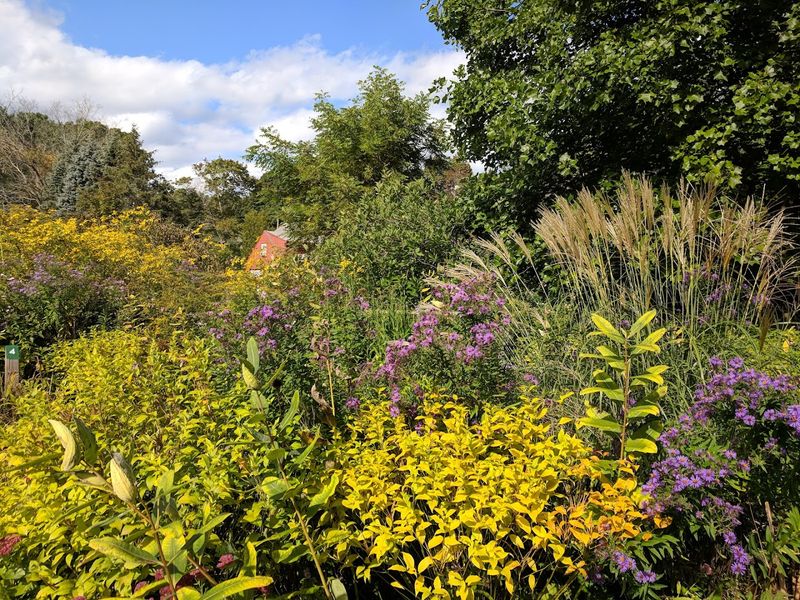
Few public gardens manage to feel both curated and genuinely alive at the same time. At this arboretum, the garden collection reads like a painter’s palette arranged with real intention.
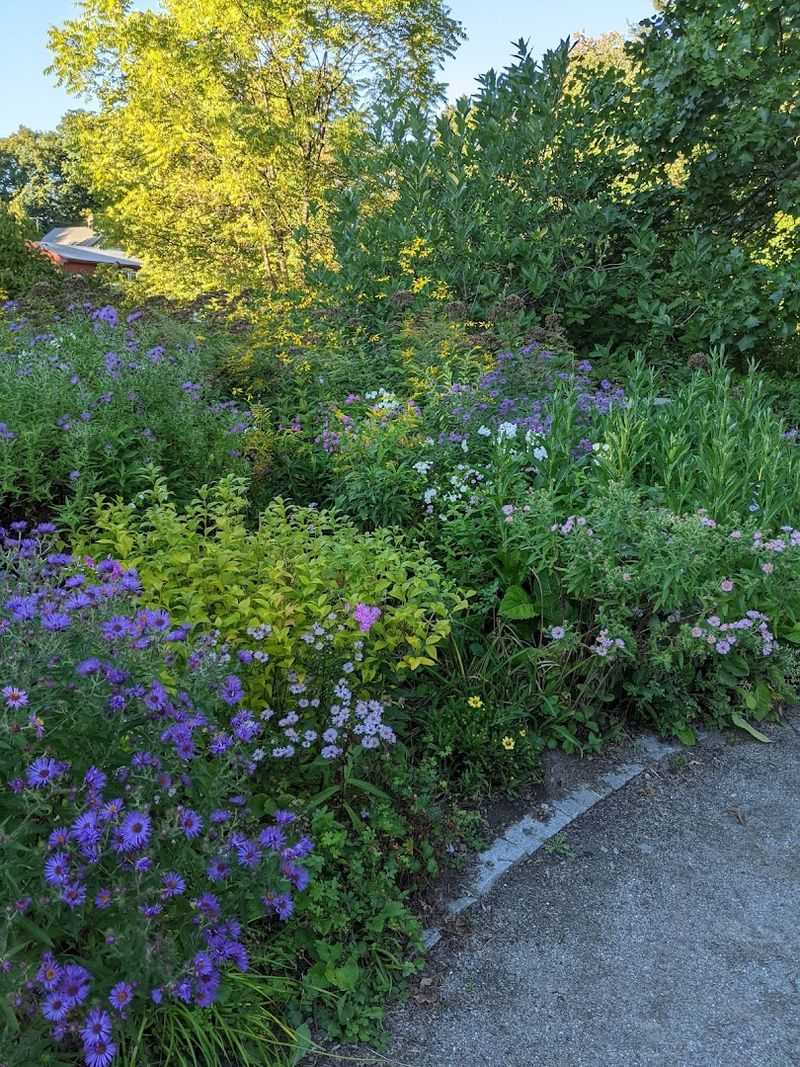
There is an Herb Garden, a Butterfly Garden, a Hosta Garden, a Daylily Garden, a Rhododendron Garden, a Lilac Fragrance Garden, and a Wildflower Collection, each one distinct in character and mood.
What makes these gardens especially rewarding is the labeling system. Nearly every plant carries a small placard identifying its name and origin, turning a casual stroll into an informal education.
Visitors with no botanical background find themselves learning names they will actually remember, because seeing a plant in person makes the information stick far better than any textbook could manage.
Spring brings the most dramatic color, with lilacs perfuming the air and rhododendrons bursting open in shades of pink and purple. Summer shifts the mood toward lush greens and the warm tones of daylilies.
Each season offers a completely different visual experience, which explains why so many visitors return multiple times throughout the year and still find something new worth noticing.
Three Trails That Each Tell A Different Story
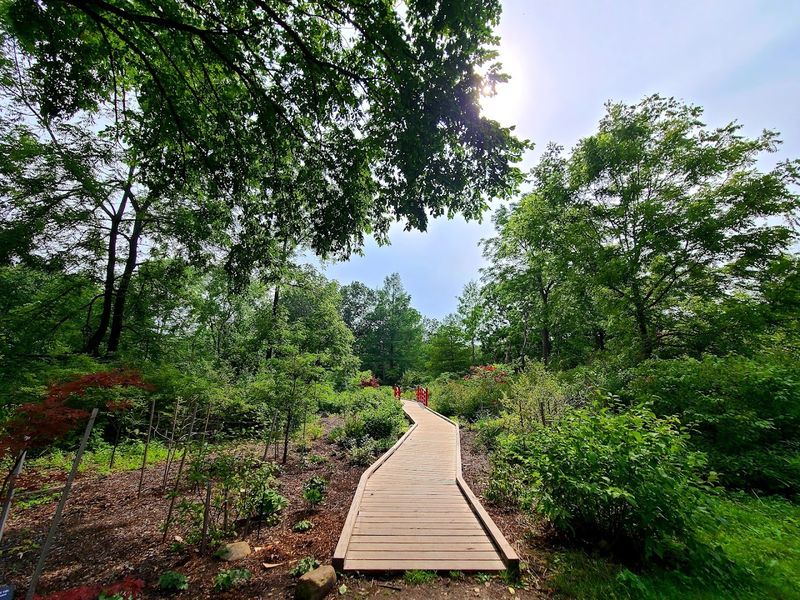
The trail system at Acton Arboretum is one of its most thoughtfully designed features. Three main loops, the Orchard Loop, the Wildflower Loop, and the Highland/Bog Loop, connect through a network of smaller paths that allow visitors to customize their experience based on time, energy, or curiosity.
Combined, the trails cover roughly 1.5 miles, making the full circuit manageable in about 45 minutes to an hour.
The Orchard Loop and much of the Wildflower Loop are paved or covered with crushed stone, making them accessible to visitors using wheelchairs or strollers. Families with young children have noted how smoothly strollers navigate the paths, and benches appear at regular intervals for anyone who wants to pause and absorb the surroundings without rushing.
The Highland/Bog Loop takes a more adventurous turn, moving through several distinct forest types and crossing terrain shaped by glacial activity thousands of years ago. Root-strewn sections and gentle slopes give this trail a wilder, more untamed feel compared to the manicured lower grounds.
The variety across all three loops means that first-time visitors and returning regulars alike always find a route that suits their mood on any given day.
Ponds And Boardwalks That Feel Like A Living Watercolor
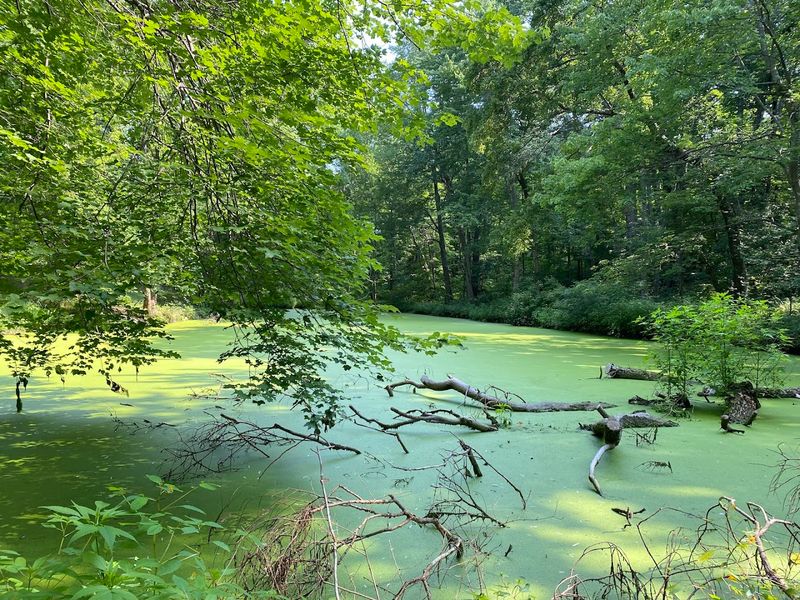
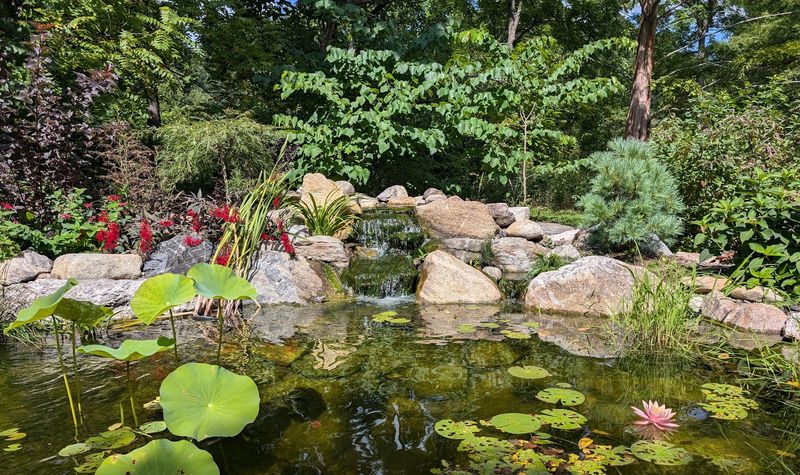
There is something almost theatrical about the ponds along the Wildflower Trail at Acton Arboretum at 2 Taylor Rd in Acton. By midsummer, both ponds wear a coat of bright green duckweed that transforms the water into something resembling a painted surface rather than a natural body of water.
Frogs perch at the edges, turtles sun themselves on half-submerged logs, and the whole scene carries a stillness that feels deliberately composed.
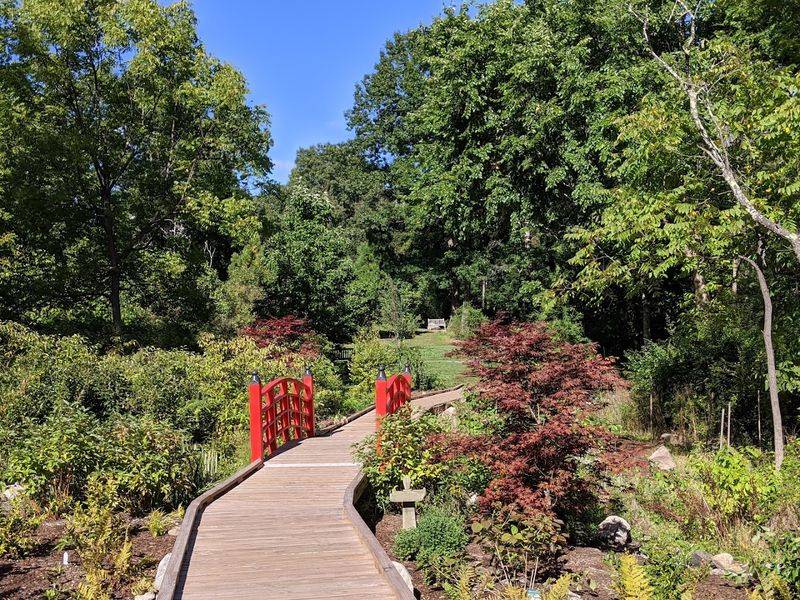
Boardwalks span the wet areas throughout this section of the arboretum, keeping visitors dry while guiding them directly through the heart of the wetland habitat. One boardwalk crosses Mary’s Brook, offering a close-up view of the slow-moving water beneath.
Standing on these wooden platforms with the duckweed below and the tree canopy above creates a sense of being completely surrounded by nature without any of the inconvenience that usually comes with wetland exploration.
Wildlife sightings here are remarkably consistent. Multiple visitors have reported spotting painted turtles, green frogs, and various duck species without any particular effort or patience required.
The accessibility of the wildlife experience is part of what makes this section so popular with families, photographers, and anyone who simply enjoys observing the natural world at an unhurried pace.
The Glacial Bog And Esker That Carry Thousands Of Years Of History
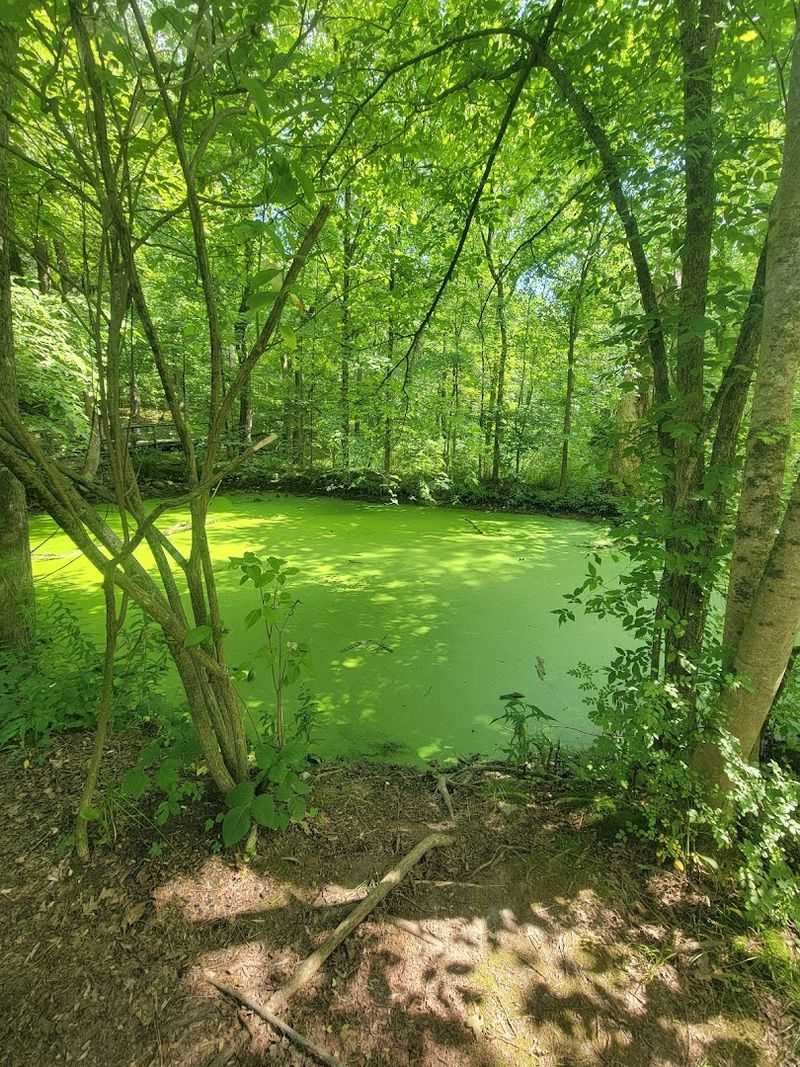
Not every town conservation area can claim geological features dating back to the last ice age, but Acton Arboretum does exactly that. The Highland/Bog Loop leads visitors to a glacial bog and a glacial esker, two landforms created by the movement and retreat of glaciers roughly 10,000 to 15,000 years ago.
The esker is essentially a ridge of sediment deposited by meltwater streams that once ran beneath the ice sheet.
The bog itself is a particularly unusual ecosystem. Bogs form in depressions where water accumulates and drainage is poor, creating acidic conditions that support specialized plants like sphagnum moss and carnivorous species.
Walking near the bog gives visitors a rare opportunity to observe a habitat type that has largely disappeared from the New England landscape due to development and drainage over the past century.
Visiting this section of the arboretum feels genuinely educational without ever feeling like a lecture. The terrain itself communicates the story through its textures, vegetation, and topography.
Interpretive materials available on the self-guided audio tour add context for those who want more detail, but even a quiet walk through the area leaves a strong impression of deep time and the remarkable persistence of natural systems.
Forest Stones: An Art Installation That Surprises You Mid-Walk
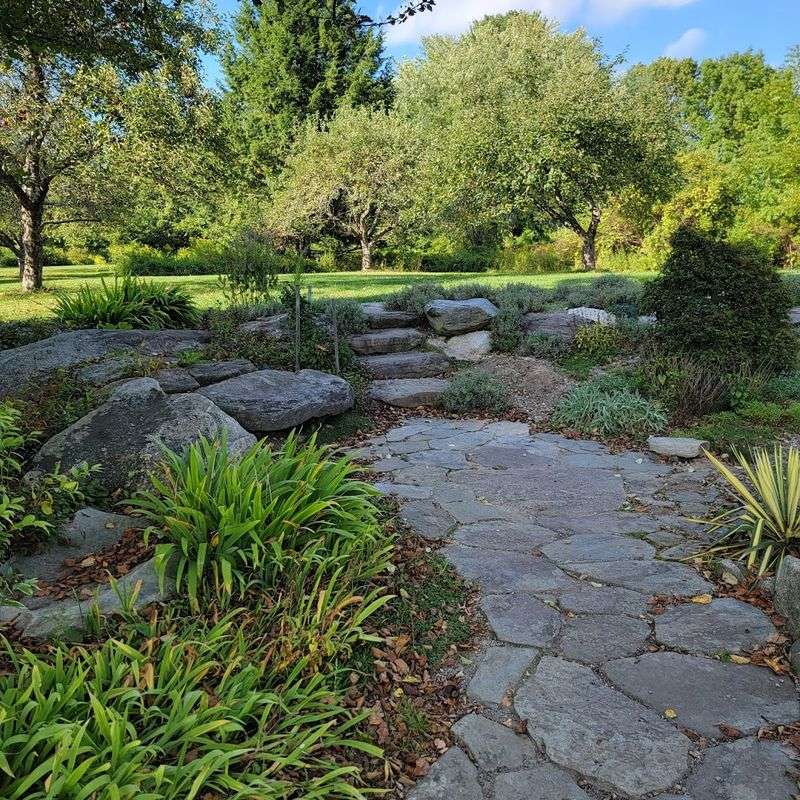
Most people visiting Acton Arboretum come for the gardens or the trails, so the art installation along the Highland/Bog Loop tends to catch visitors completely off guard. Scattered trailside through the forest are smooth stones, each inscribed with a single word.
The installation is called Forest Stones, and its quiet placement among the trees gives it an almost meditative quality that fits the arboretum’s overall atmosphere remarkably well.
The effect is subtle rather than showy. You might walk past several stones before noticing them, and once you do, the impulse to read each one becomes a small but genuine motivation to keep moving down the trail.
The words themselves are open to interpretation, inviting personal reflection without imposing any particular meaning. It is the kind of public art that respects its audience enough to leave space for individual response.
This installation adds a dimension to the arboretum experience that distinguishes it from purely botanical or recreational spaces. The combination of natural history, cultivated gardens, and site-specific art gives the place a layered character that rewards repeated visits.
Each time you return, the Forest Stones read a little differently depending on your mood, the season, and what you happen to be thinking about that day.
The Crabapple Collection And Grape Arbor Worth A Detour
Spring at Acton Arboretum has a particular moment when the crabapple collection reaches full bloom and the effect is genuinely arresting. The trees produce dense clusters of blossoms in shades ranging from deep rose to pale cream, and when the light catches them in the morning hours, the scene has an almost luminous quality that explains why so many visitors arrive with cameras during this season.
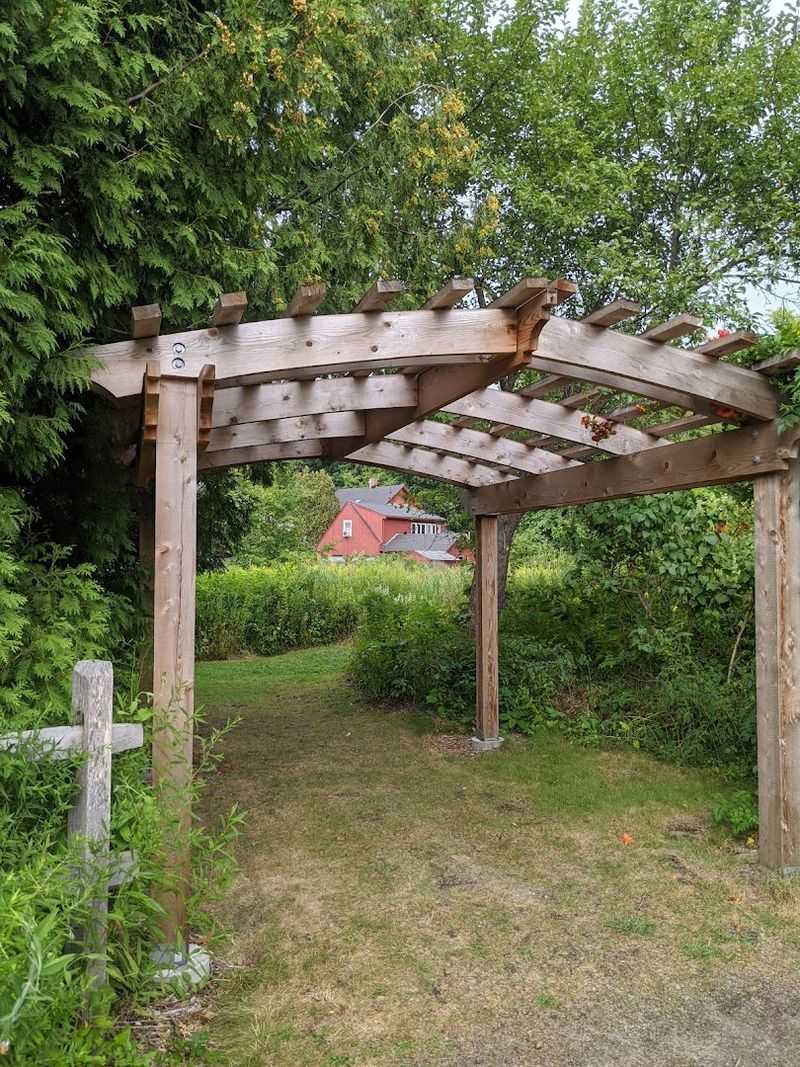
The grape arbor offers a completely different but equally pleasant experience. As the growing season progresses, the vines fill out and create a shaded corridor that feels like something from a European garden.
The structure provides both visual interest and a practical spot to pause on warm days, and in autumn the foliage turns to warm gold before the leaves drop entirely.
What connects these two features is the sense that every element of the arboretum’s design was chosen with care rather than convenience. The crabapple collection and grape arbor both serve aesthetic and educational purposes, demonstrating the range of cultivated plants that thrive in the Massachusetts climate.
For visitors interested in home gardening or landscaping, observing how these plants perform across the seasons provides genuinely useful reference points that go well beyond what any catalog image could convey.
Picnicking Here Feels Like A Civilized Afternoon Well Spent
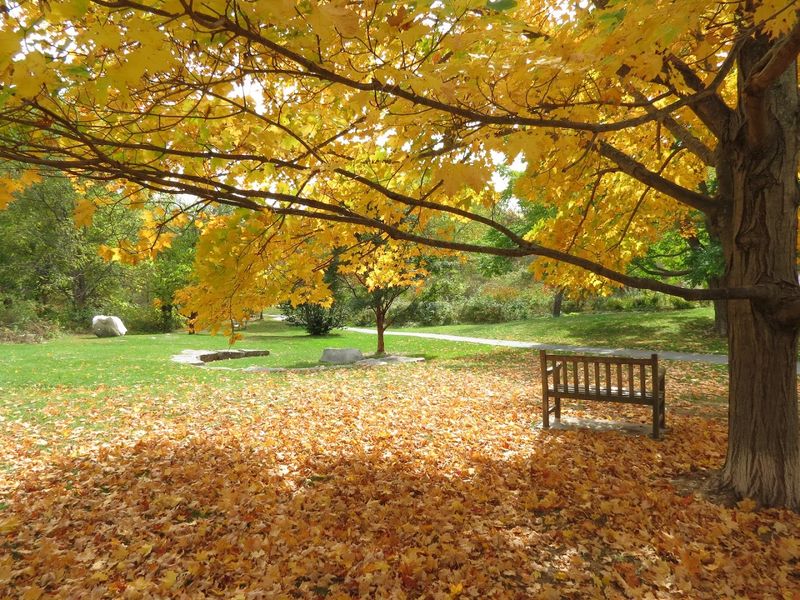
The arboretum’s reputation as a picnic destination has been building steadily among local families, and it is easy to understand why. Picnic tables are distributed throughout the grounds, with a notable concentration near the entrance and the orchard area.
Benches appear at regular intervals along every trail, offering impromptu resting spots for anyone who did not plan ahead but still wants to sit and eat something in a pleasant setting.
One visitor mentioned picking up sandwiches from Idlewilde Farm, located just down the street, and turning the visit into a full afternoon outing. That combination of nearby food options and the arboretum’s relaxed, unhurried atmosphere makes the picnic experience feel genuinely effortless rather than logistically complicated.
You do not need to bring a full setup to enjoy a meal here; even a simple lunch on a bench by the gardens qualifies as a memorable outdoor meal.
The grounds are open from 8 AM to 6 PM daily, which allows for a relaxed midday visit without the pressure of closing times bearing down on you. Shade is available throughout the property, and the overall layout means that even on moderately busy days, finding a quiet spot to settle in rarely requires much searching or patience.
Birds, Butterflies, And The Wildlife That Calls This Place Home
Wildlife observation at Acton Arboretum is not something you have to work particularly hard to achieve. The Butterfly Garden attracts Monarch butterflies along with hummingbirds, bees, and a rotating cast of pollinators throughout the warmer months.
Visitors who spend even a few minutes near the garden during peak season typically leave with at least one memorable sighting, often several.
Bird activity throughout the arboretum is consistent and varied. Multiple reviewers have noted seeing species they did not expect to encounter in a suburban setting, including hummingbirds near the flowering plants and various songbirds throughout the wooded sections.
The combination of open meadow, dense woodland, wetland, and cultivated garden creates enough habitat diversity to support a genuinely impressive bird population for a 65-acre property.
The pond areas add turtles and frogs to the wildlife roster, with painted turtles being particularly reliable warm-weather sightings. The arboretum does not advertise itself as a wildlife sanctuary, but in practice it functions as one, largely because the variety of ecosystems packed into a relatively compact space provides food, shelter, and breeding habitat for a wide range of species.
Dogs are welcome on leash, though keeping them calm near the pond edges improves everyone’s chances of spotting something interesting.
Self-Guided Audio Tours That Add Depth Without Slowing You Down
Not every visitor arrives with background knowledge in botany, geology, or landscape design, and the arboretum’s self-guided audio tours address that gap in a way that feels genuinely helpful rather than condescending. Two tours are available, one covering the Upper Grounds and one covering the Back 40 acres, and both can be accessed without any special equipment beyond a smartphone.
The tours walk visitors through points of interest including specific gardens, the ponds, the meadows, the forested highlands, and the glacial bog and esker. Each stop adds context that transforms what might otherwise be a pleasant but unremarkable walk into something considerably more meaningful.
Understanding why the bog exists where it does, or what conditions allow certain wildflowers to thrive in a particular meadow, changes the way you look at the landscape around you.
Educational signage throughout the property reinforces what the audio tours cover, so visitors who prefer reading to listening will find plenty of material to engage with at their own pace. The combination of labeled plants, interpretive placards, and audio content reflects a commitment to public education that goes well beyond what most free conservation areas provide.
For school groups, families with curious children, or independent learners of any age, this layer of information makes the arboretum visit considerably more rewarding.
A Free And Accessible Community Treasure With A 4.8-Star Rating
Admission to Acton Arboretum is completely free, which makes its 4.8-star rating across more than 720 Google reviews all the more remarkable. Paying nothing to visit a place that consistently earns near-perfect scores from a wide range of visitors, families, solo walkers, photographers, and nature enthusiasts, says something significant about the quality of care that goes into maintaining the grounds.
Parking is available on site and described by visitors as small but sufficient for most days. The arboretum is open from 8 AM to 6 PM, seven days a week, which accommodates both early morning walkers and those who prefer a late afternoon visit when the light softens and the crowds thin out.
Dogs are welcome on leash, and the rules about picking flowers or climbing trees are simple, clearly communicated, and easy to follow.
The address places the arboretum in a residential area of Acton that is straightforward to reach by car. For anyone in the Greater Boston area looking for a meaningful outdoor experience that costs nothing and delivers consistently, Acton Arboretum represents one of the more honest and uncomplicated pleasures the region has to offer.
The phone number for inquiries is +1 978-264-9631, and the website at actonarboretum.org carries current seasonal information.