
This Creepy Nevada Town Carries A Dark History That Locals Rarely Discuss Openly
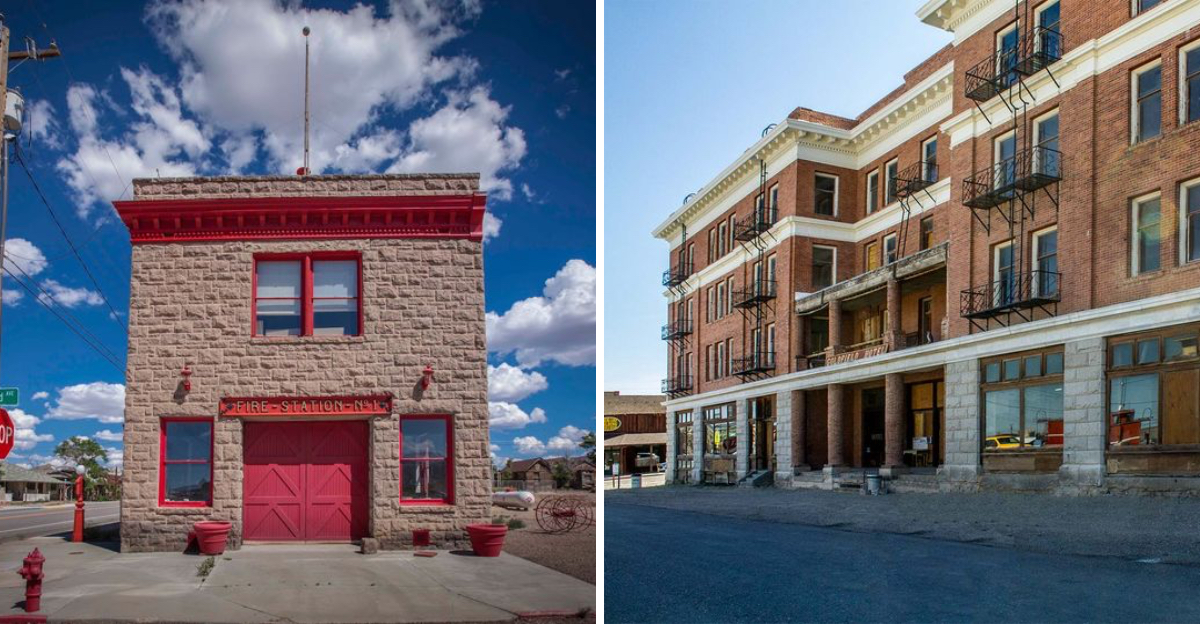
A four-story hotel sits empty, silent since World War Two ended. Something about it feels wrong before you even reach the door.
This place built one of the flashiest hotels in the whole West, then watched the fortune disappear. Locals rarely explain why out loud.
Nevada holds plenty of ghost towns, but this one argues with its past. Fire hit first, then a flood tried to finish the job.
What survived stands cracked, hollow, and strangely beautiful. Wild animals still wander the streets like they never left.
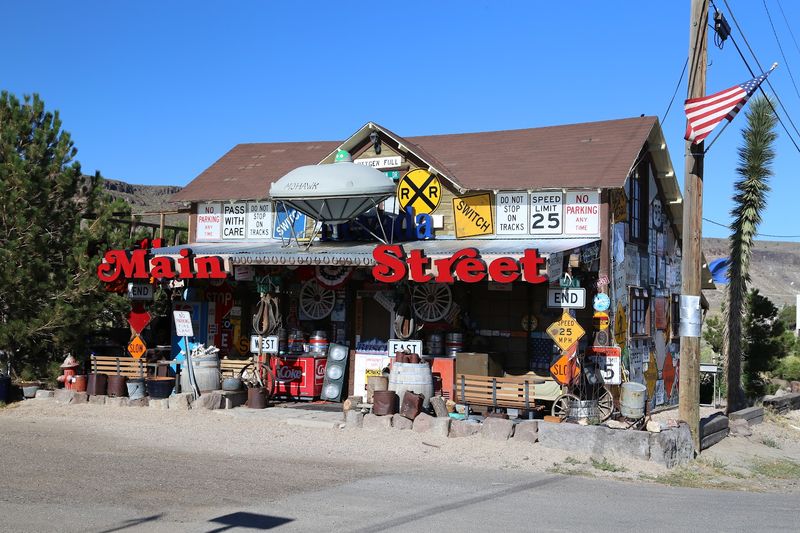
Rusted metal sculptures rise from the sand in shapes that barely make sense. Nevada keeps stacking one strange scene after another out here.
Curious what else is waiting? A slow drive through this stretch of desert is worth adding to your plans.
The Goldfield Hotel And Its Shadowy Reputation
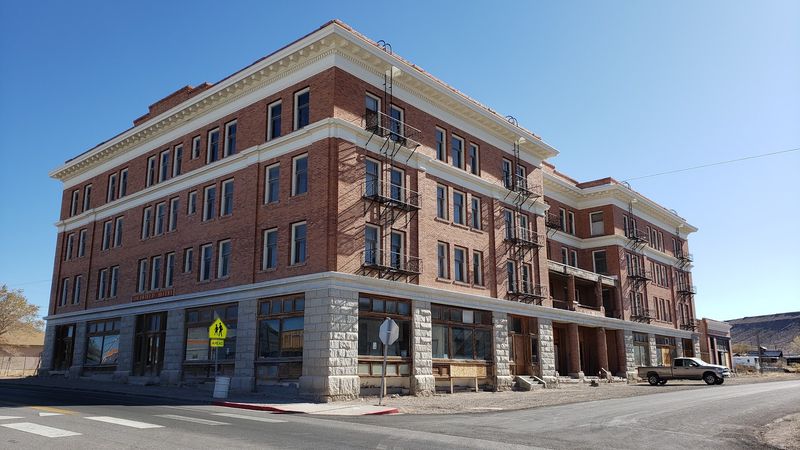
Few buildings in the American West carry as much eerie weight as the Goldfield Hotel. Completed in 1908, it was once praised as the most luxurious lodging between Denver and San Francisco.
Mahogany panels, gold-leaf ceilings, and one of the first Otis elevators west of the Mississippi made it a showpiece of ambition.
After World War II, the hotel closed to guests and never truly reopened. The silence that moved in has never really left.
Located at 307 Crook Avenue, Goldfield, Nevada 89013, the building still stands tall, drawing visitors who come specifically to feel whatever lingers inside.
Paranormal investigators have repeatedly named it one of the most haunted structures in the country. Cold spots, strange sounds, and unexplained shadows are reported with striking regularity.
The hotel does not need embellishment. Its history does all the heavy lifting, and the atmosphere it creates is unlike anything else in the Nevada desert.
Room 109 And The Legend Of Elizabeth
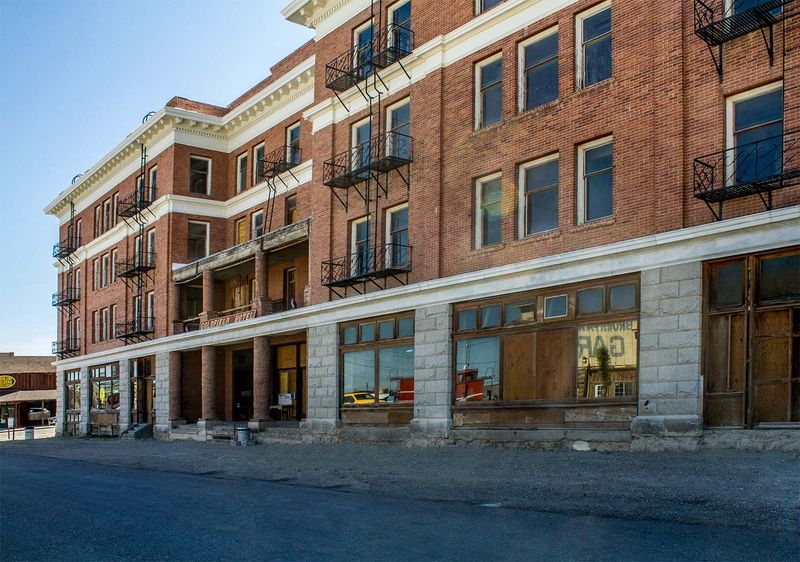
Room 109 has a reputation all its own. Local legend tells of a woman named Elizabeth, said to have been kept in this room by the hotel’s owner during a difficult chapter in her life.
The story has been passed down and embellished over the decades, and historians note the details do not quite line up with the documented history of the building. Some of the timeline associated with the tale actually points to events that happened years after the hotel changed hands.
Whatever the real history, the legend has taken on a life of its own. Visitors who step into the room often mention a noticeable chill and a strange quiet that feels different from the rest of the hotel.
Guides and paranormal investigators alike point to Room 109 as the spot everyone asks about first. Locals do not bring it up often, but once someone mentions it, the conversation tends to go on for a while.
A Boomtown Built On Gold And Big Dreams
Gold changed everything here. When prospectors struck rich deposits in 1902, Goldfield exploded from a remote desert outpost into a full-blown city practically overnight.
By 1906, estimates put the population somewhere between 20,000 and 30,000 people, briefly making it the largest city in Nevada.
Banks, hotels, and businesses lined the streets. The energy was relentless, fueled by the kind of optimism that only a gold rush can produce.
Between 1903 and 1940, the mines yielded over 86 million dollars worth of gold, a staggering figure that attracted investors and dreamers from across the country.
That momentum could not last forever. Declining ore production, combined with a series of disasters, slowly drained the population away.
What remains today is a town of just a few hundred residents, a dramatic contrast to its roaring peak. The scale of what Goldfield once was makes walking its quiet streets feel genuinely surreal, like reading the last page of a story that burned brilliantly before it went dark.
Fire, Flood, And The Forces That Reshaped Everything
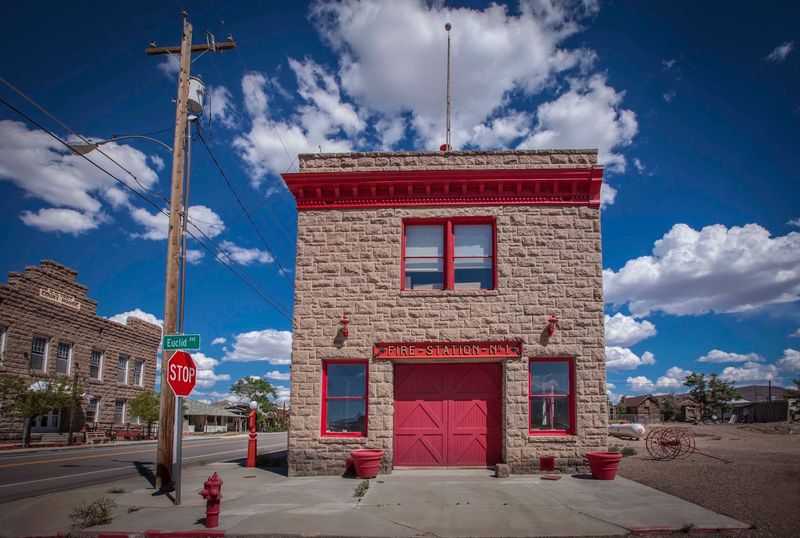
Nature and bad luck hit Goldfield hard and more than once. A serious flood in 1913 tore through town, washing away entire blocks including the notorious red-light district.
It was a violent reminder that the desert, despite its dry reputation, can turn dangerous without warning.
Ten years later, fire finished what the flood started. In 1923, a fire sparked by a moonshine still explosion burned for 13 hours straight.
It destroyed an estimated 25 to 27 blocks of homes and businesses, reshaping the town’s physical footprint in a single catastrophic event.
These back-to-back disasters accelerated a population decline that gold depletion had already set in motion. Buildings that survived now stand as unintentional monuments to endurance.
Cracked facades and hollow windows tell the story more honestly than any museum exhibit could. Goldfield did not disappear, but it was fundamentally changed, and the scars left behind by fire and flood are still visible to anyone paying close enough attention.
The International Car Forest Of The Last Church
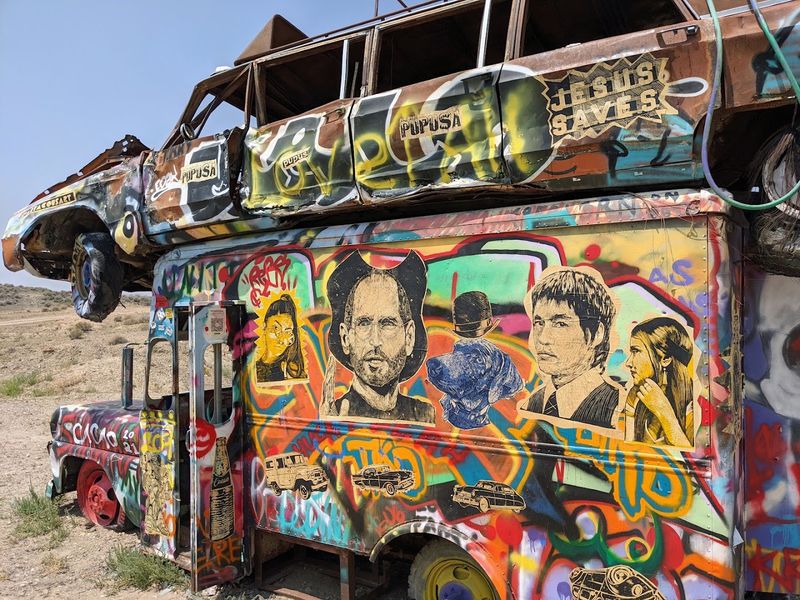
Art does not always belong in a gallery. Just outside Goldfield, dozens of vehicles including cars, buses, and trucks stand buried nose-first in the desert floor or balanced in improbable positions.
Each one is covered in graffiti, turning the scrubby landscape into something between a sculpture garden and a fever dream.
The project started with artist Mark Rippie and was later expanded by Chad Sorg, who relocated specifically to grow this metallic installation. The result is one of the most visually arresting roadside attractions in the entire state of Nevada.
Nothing quite prepares you for the first glimpse of it against an open desert sky.
What makes it work is the contrast. The surrounding terrain is raw and stripped back, and then suddenly there are painted vehicles jutting out of the earth at wild angles.
It is playful and strange and oddly moving all at once. For visitors who assumed Goldfield was only about history and hauntings, this installation delivers a welcome and memorable surprise.
Labor Wars And The Darker Side Of The Boom
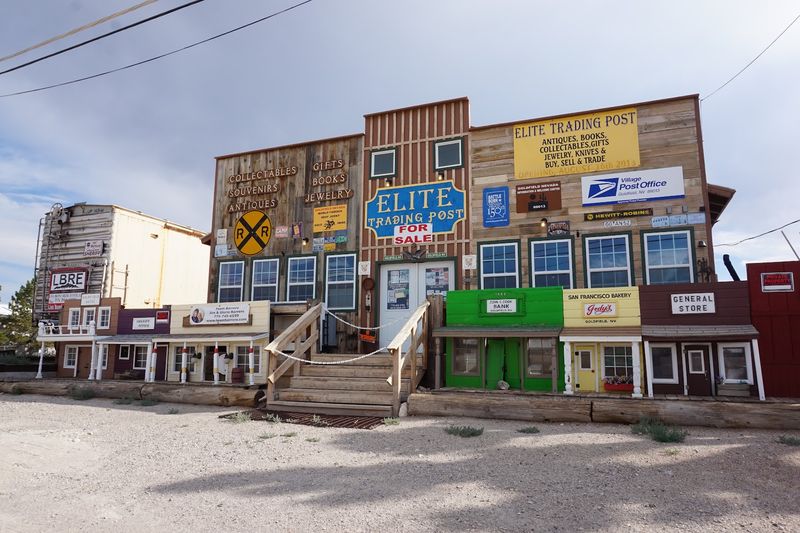
Not everything about the gold rush era was glamorous. Beneath the wealth and activity, Goldfield became a flashpoint for one of the most intense labor conflicts in early American history.
Miners organized through the Industrial Workers of the World pushed back hard against powerful mine owners who controlled nearly every aspect of their lives.
The dispute grew so volatile that President Theodore Roosevelt eventually sent federal troops to Goldfield in 1907 to restore order. That level of intervention speaks to how serious the situation had become.
It was a defining moment that rarely gets the same attention as the gold production numbers or the grand hotel.
And then there is the exclusion policy. Between 1909 and 1918, Goldfield enforced a formal ban preventing Chinese individuals from settling or even stepping off trains within town limits.
This deliberate, documented discrimination is a painful chapter that locals seldom bring up openly. Acknowledging it fully is part of understanding what Goldfield really was, not just what it wanted to be.
The Esmeralda County Courthouse And What It Holds
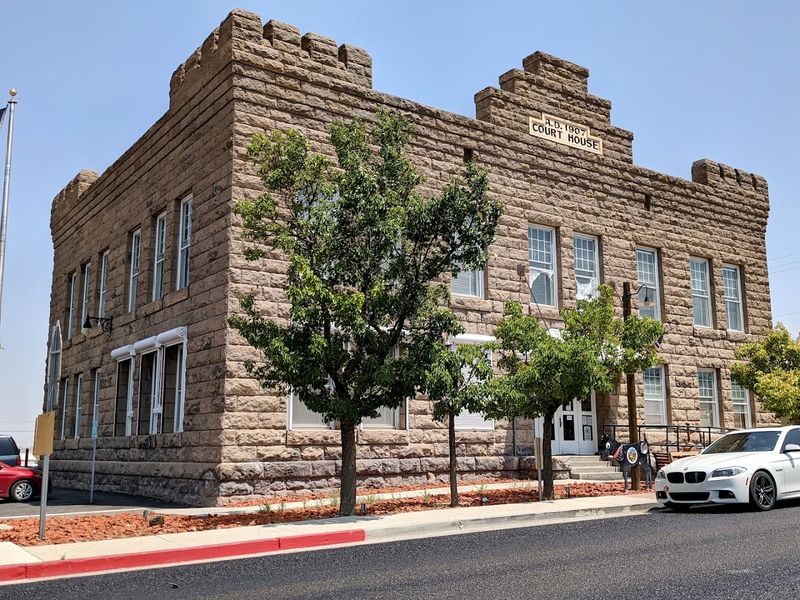
Some buildings refuse to give up. The Esmeralda County Courthouse has been in continuous operation since 1908, making it one of the most enduring structures in the region.
Built from local sandstone, it carries an almost fortress-like quality that feels entirely appropriate for a town that has survived as much as Goldfield has.
Step inside and the surprise comes quickly. Original Tiffany and Co. lamps still illuminate the interior, an unexpected touch of elegance that feels wildly out of place in this remote desert setting.
That contrast between rough-edged frontier history and refined craftsmanship is part of what makes the building so memorable.
The nearby Goldfield Historic High School adds another layer to this story. Built between 1906 and 1908, the three-story structure once educated hundreds of students during the town’s peak years.
Restoration efforts are ongoing, with the goal of preserving it for future generations. Together, these two buildings represent the ambition of a community that, even now, refuses to be reduced to a footnote in Nevada’s history.
Wild Burros, Desert Roads, And The Spirit Of Goldfield Today
Wild burros still roam the streets of Goldfield. These tough, shaggy descendants of the mining-era work animals move through town with complete confidence, completely unbothered by the occasional passing car.
Spotting one near a crumbling storefront is one of those small, perfect moments that no travel brochure could manufacture.
Getting to Goldfield means driving U.S. Route 95 through wide-open Nevada desert.
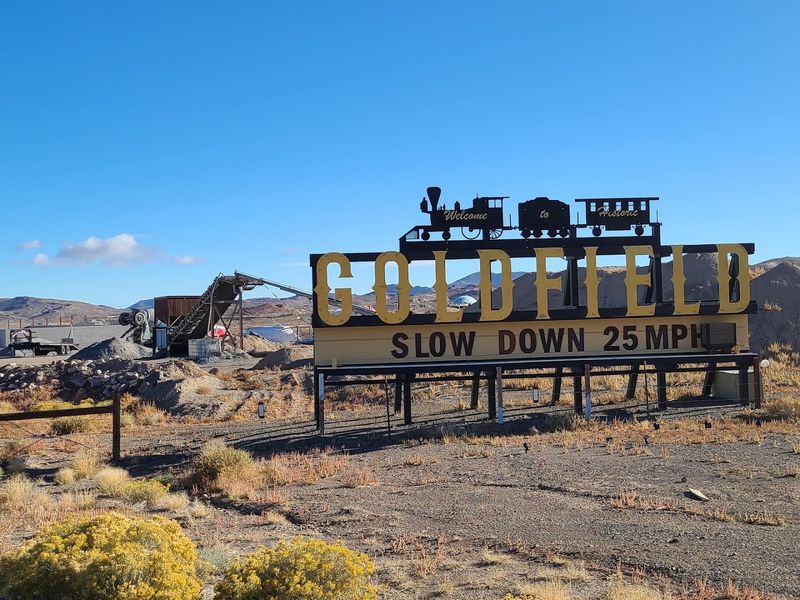
Tonopah sits about 26 miles north, and Las Vegas is roughly 180 miles south. A 25-mph speed limit runs through town, which turns out to be a gift.
Slowing down forces you to actually look at what surrounds you.
The Goldfield Days festival, held the first weekend of August each year, brings the community together with parades, mock gunfights, and old-fashioned activities. For a town of only a few hundred residents, the energy during that weekend is remarkable.
Goldfield, Nevada is not a ghost town in the dismissive sense. It is very much alive, just quieter now, and far more interesting for it.