
This Dreamy Massachusetts Waterfall Is The Kind Of Place You’ll Never Forget
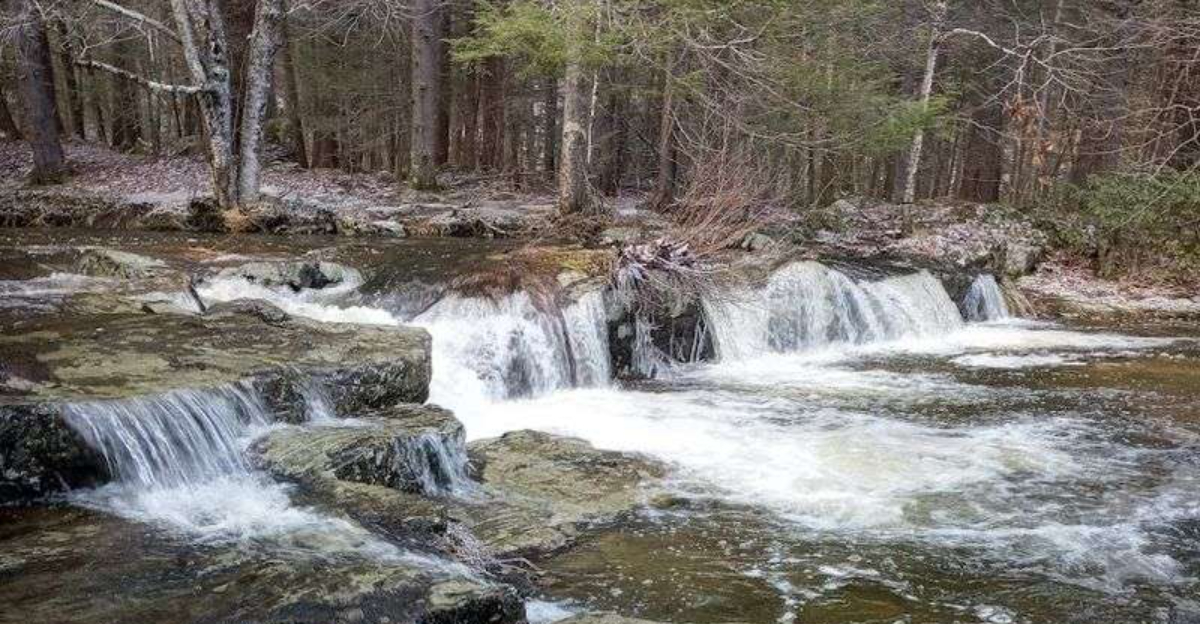
Water does not always wait for permission to be beautiful. Sometimes it just tumbles over stone and lets nature handle the rest.
Massachusetts holds one of those special spots, cascading down a rocky slope in tiers that catch the light at every turn.
Visitors often arrive expecting a quick photo and end up staying for an hour, just listening. The sound alone is worth the trip.
Depending on the season, the flow shifts dramatically, sometimes a gentle trickle and other times a rushing wall of white water.
Spring brings the most dramatic show, when melting snow feeds the current into something almost thunderous. Summer offers a calmer version, perfect for wading near the base and cooling off.
A short trail leads down toward the water, though a few brave souls venture off the beaten path for a different angle entirely. Once you see it, leaving will not come easy.
The Scale Of These Falls Is Bigger Than You Think
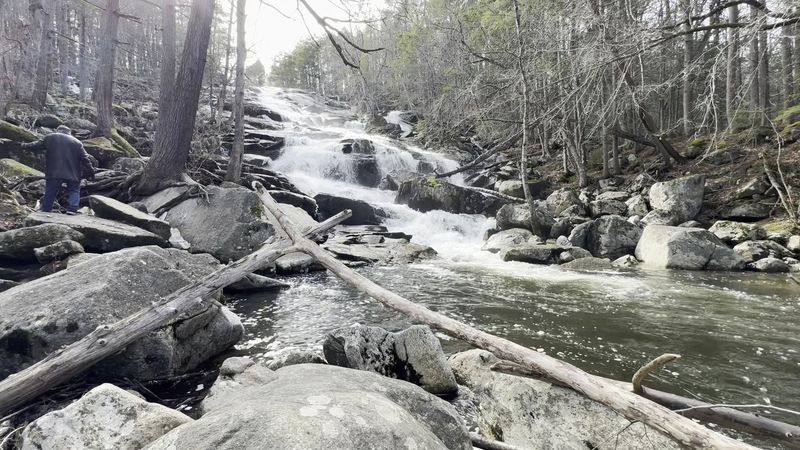
Most people arrive expecting a pleasant little stream. What they find instead is a cascade that drops more than 150 feet over a series of broad rock ledges, making these falls one of the longest and most powerful waterfall runs in all of Massachusetts.
The scale of it is genuinely surprising, even for seasoned hikers.
Glendale Brook feeds the falls with cold, clear water that picks up speed as it moves downhill, crashing over each ledge with a force you can feel in your chest when you stand close enough.
The multi-tiered structure means you are never just looking at one single drop. Each level reveals something new.
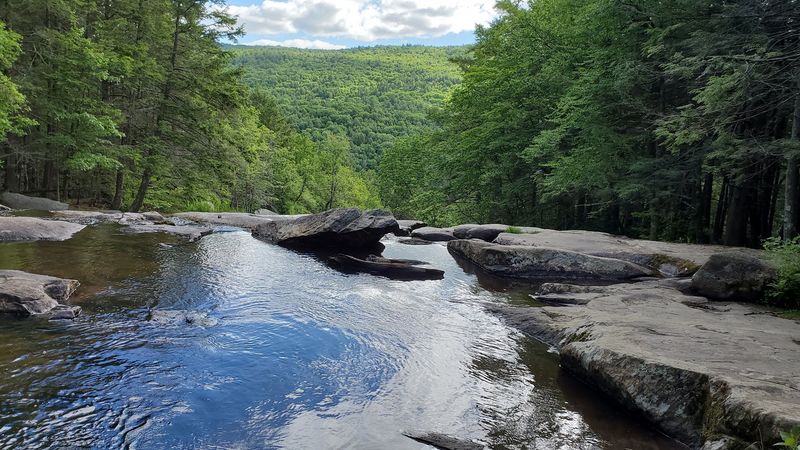
From the top of the falls, you get a sweeping view of the valley below. From the bottom, looking up at the full length of the cascade framed by forest, the experience feels almost overwhelming in the best possible way.
Arriving in spring, when snowmelt and seasonal rains push the water flow to its peak, gives you the most dramatic version of this place.
Plan for it if you can, because the falls at full strength are something that photographs simply cannot do justice.
You’ll Enjoy The Journey Just As Much As The Destination
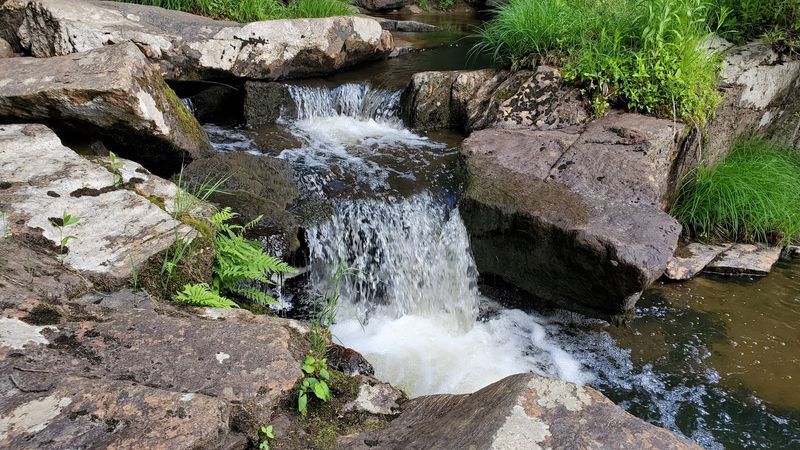
Clark Wright Road in Middlefield is not the kind of road that shows up on a typical road trip itinerary.
It winds through quiet farmland and thick forest in western Massachusetts, and the small dirt parking area at the trailhead holds only about seven to ten vehicles.
That detail alone tells you something about the character of this place.
The address is Middlefield, MA 01011, and the drive out here through the hill towns of Hampshire County is genuinely enjoyable. Rolling terrain, old stone walls, and the occasional farmhouse mark the landscape as you get closer.
It feels like the kind of drive that slows your pulse down before you even arrive.
Arriving early on weekends is a practical necessity rather than just good advice. The parking area fills quickly during peak season, and there is no overflow lot.
Weekday visits offer a noticeably quieter experience. The property is managed by The Trustees of Reservations and is open year-round from sunrise to sunset, with no admission fee.
Bringing everything you need is essential, since there are no restrooms, trash cans, or facilities of any kind at the site.
You’ll Appreciate Every Step Once You See The View
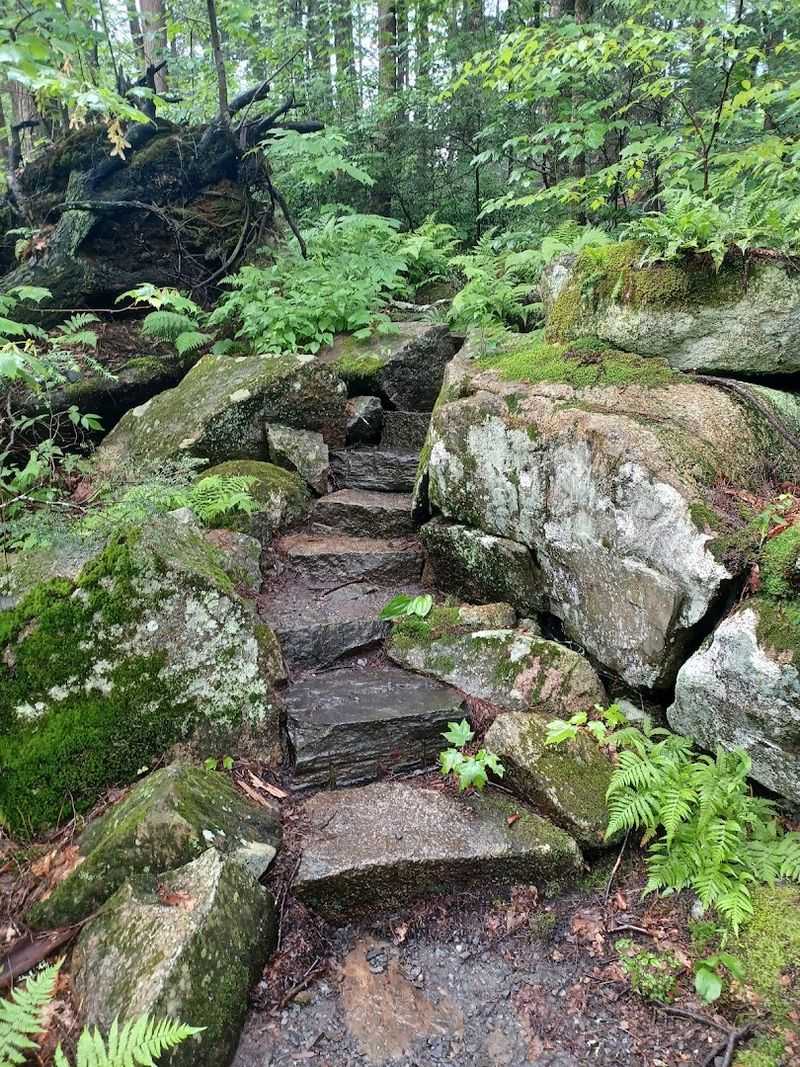
The trail from the parking area to the base of the falls covers roughly a quarter mile, but calling it a casual stroll would be misleading.
The path descends steeply in places, with uneven footing, exposed roots, and sections of stone steps that require your full attention.
Sturdy footwear is not optional here. Sandals and flip-flops will make this uncomfortable fast.
A rope handrail assists hikers along the steeper sections, which gives the descent a slightly adventurous quality that younger visitors tend to find exciting.
The whole walk down takes about five minutes at a steady pace, though most people slow down to take in the views along the way.
What makes the trail worth every careful step is the way the falls reveal themselves gradually. You hear the water before you see it, and then the forest opens up and the full cascade comes into view.
The return trip back up is more demanding on the legs, but the trail is short enough that it never becomes a real challenge for reasonably fit visitors. Dogs are welcome on leash, and the trail is well-maintained by The Trustees of Reservations throughout the year.
Spring Transforms The Falls Into Something Spectacular
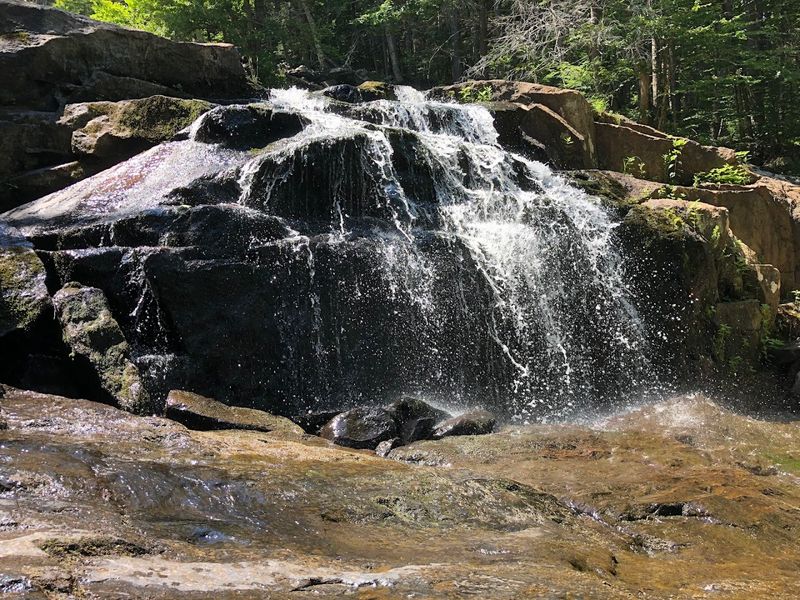
There is a reason experienced visitors consistently recommend spring as the best time to see Glendale Falls. Snowmelt from the surrounding hills combines with April and May rains to push Glendale Brook to its highest flow of the year.
The result is a waterfall that roars rather than murmurs, sending mist into the air and coating nearby rocks with a fine spray.
The forest is also doing its own transformation during this season.
New growth on birch, beech, and maple trees gives the surrounding canopy a luminous quality, and the contrast between the pale green foliage and the white rushing water makes for exceptional photography conditions.
Early morning light adds another layer of visual richness to the scene.
Visiting after a stretch of sustained rainfall, regardless of season, is another reliable way to see the falls at or near peak performance.
The volume of water changes the character of the place entirely, turning what might otherwise be a pleasant trickle into something that commands your full attention.
If your schedule allows any flexibility, timing your visit around recent rainfall will almost always improve the experience significantly. Spring remains the most consistently rewarding window of the year.
Autumn Foliage Turns This Spot Into A Painter’s Dream
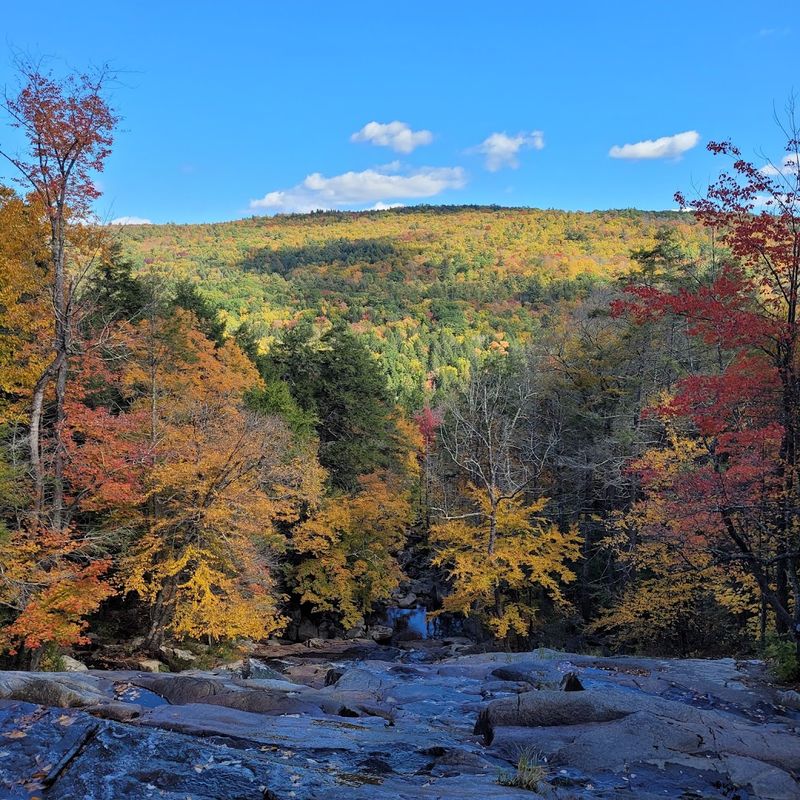
October brings a completely different energy to Glendale Falls. The hemlock stays deep green while the maple, birch, and beech trees surrounding the gorge shift into shades of amber, copper, and scarlet.
Standing at the base of the falls and looking up through that canopy is the kind of view that makes people stop talking mid-sentence.
Photographers in particular find the autumn visit hard to beat. The combination of moving water, textured rock, and saturated foliage creates compositions that practically arrange themselves.
A polarizing filter helps manage reflections off the wet stone, and shooting in the hour after sunrise gives the warmest, most flattering light on the fall colors.
Water flow in October can vary considerably depending on how much rain the region has received. Some years the brook runs full and powerful, adding drama to the visual.
Other years it runs quieter, which actually makes the falls easier to explore on foot, allowing visitors to walk across exposed rock ledges and examine the geology up close.
Either way, the autumn scenery surrounding the falls makes the visit worthwhile regardless of water volume. This is genuinely one of the finest fall foliage settings in western Massachusetts.
Winter Brings Ice Formations That Look Almost Unreal
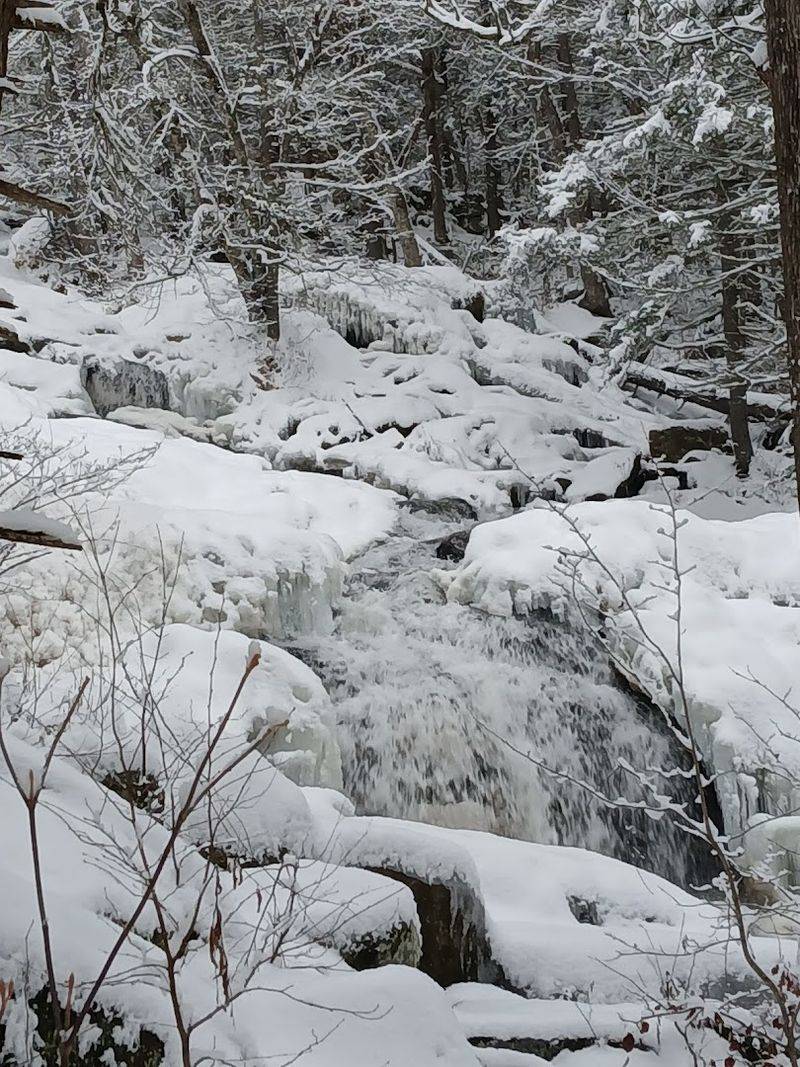
Cold temperatures transform Glendale Falls into something that looks more like a sculpture than a natural feature.
Ice builds up along the edges of each ledge, and in a sustained cold snap the spray from the falls freezes mid-air, creating formations that hang from the rock face in translucent curtains.
It is one of the more visually unusual winter sights in the region.
Visiting in winter requires extra preparation. The parking lot is not plowed, so road conditions on Clark Wright Road can be unreliable after a significant snowfall.
Traction devices for footwear are strongly recommended, as the trail becomes genuinely slippery when frozen. The short length of the hike makes the physical challenge manageable, but the footing demands respect.
The reward for making the effort is near-total solitude. Winter visits attract far fewer people, and the silence of a snow-covered forest with only the sound of water moving beneath the ice creates an atmosphere that feels removed from ordinary life.
There is something almost meditative about standing at the base of a partially frozen waterfall in January with no one else around. For those comfortable with cold-weather hiking, this season offers a side of Glendale Falls that most visitors never see.
A Piece Of History Survives Near The Water’s Edge
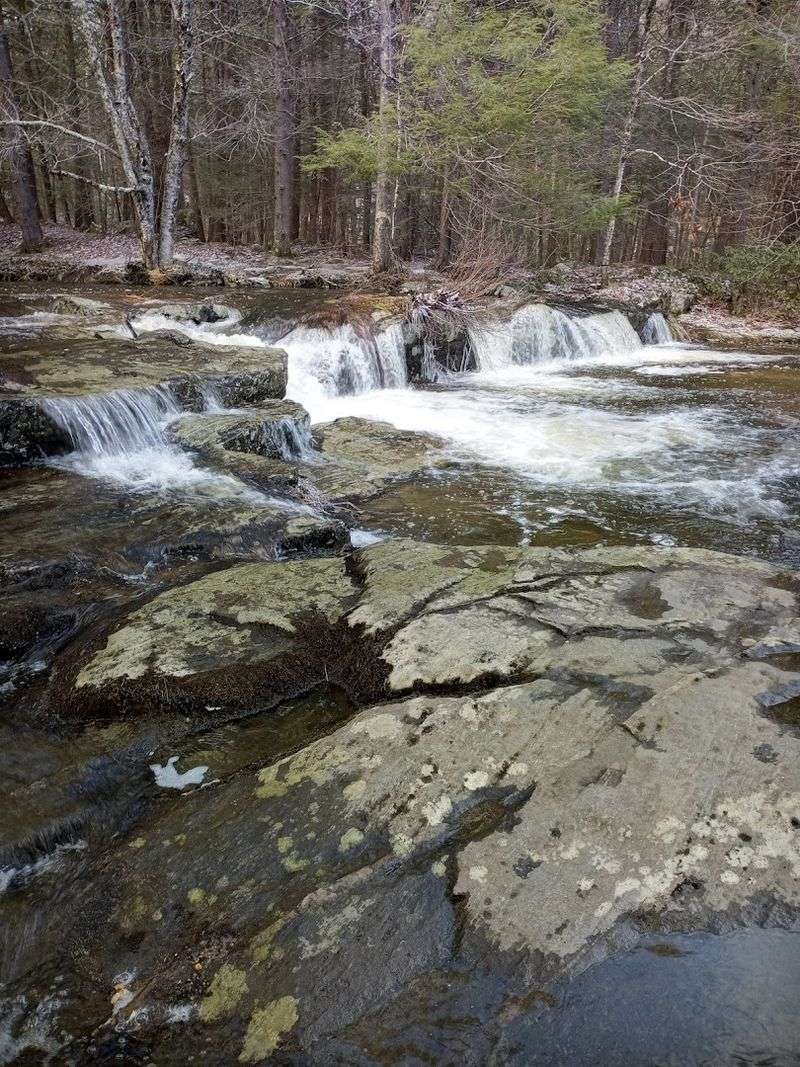
Not many waterfall visits come with a history lesson attached, but Glendale Falls offers one if you know where to look. Near the base of the falls, the stone foundation of an 18th-century grist mill still stands, partially reclaimed by moss and forest.
It is a quiet, easy-to-miss detail that adds real depth to the visit.
The mill was part of Glendale Farm, established in the early 1770s by John Rhoads, a veteran of the Revolutionary War.
The farm was successful enough in its early years that Clark Wright Road was originally constructed to serve it, which means the road you drive in on today has roots going back more than two centuries.
That kind of continuity between past and present is rare and worth pausing to consider.
The preserve itself was formally established in 1964 under The Trustees of Reservations, one of the oldest land conservation organizations in the country.
The decision to protect this land has kept it in a largely natural state for decades, which is why the forest feels so undisturbed and the falls look much as they would have in Rhoads’ time.
Taking a few minutes to find the mill foundation turns a nature visit into something with a bit more texture and meaning.
You’ll Want Your Camera Ready At Every Turn Here
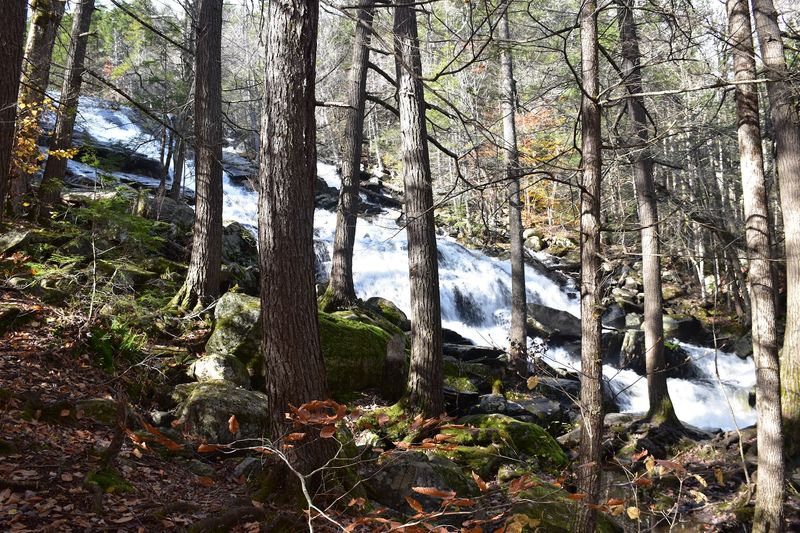
Glendale Falls has been drawing photographers for years, and the reasons are easy to understand once you see the place in person.
The multi-tiered structure of the cascade gives you multiple compositions to work with at different focal lengths.
You can shoot the full length of the falls from the base, or move in tight on a single ledge to capture texture and motion in the water.
Long exposure shots work particularly well here. A slow shutter speed smooths the water into a silky flow while keeping the surrounding rock and forest in sharp focus, creating the kind of contrast that makes waterfall photography so satisfying.
A sturdy tripod and a neutral density filter are worth bringing if you are serious about the images.
Early morning visits offer the softest, most even light, especially in summer when harsh midday sun creates strong shadows across the rock face.
Overcast days are actually ideal for waterfall photography because the diffused light eliminates glare and brings out the full range of color in the stone and vegetation.
The natural framing provided by the forest canopy above the falls gives almost every shot a built-in sense of depth and place that is difficult to replicate elsewhere in the region.
A Little Planning Makes This Visit Even Better
Preparation makes a real difference at Glendale Falls. The site has no facilities of any kind, so everything you need must come with you and leave with you.
Water, snacks, a small first aid kit, and a bag for your trash are the basics. The carry-in, carry-out policy is taken seriously here, and keeping the preserve clean is part of what makes it worth visiting.
Footwear matters more than most people expect. The trail is short but steep, and the rocks near the water are often wet and slippery.
Waterproof hiking shoes or trail boots with good grip are the right choice. Avoid anything with a flat, smooth sole, especially if you plan to explore the rocks at the base of the falls.
Arriving before 9 a.m. on weekends gives you the best chance of finding parking and experiencing the falls without crowds. Weekday visits are consistently quieter across all seasons.
If you bring a dog, keep it leashed at all times and stay on marked trails to protect the vegetation along the water’s edge. The surrounding ecosystem is fragile, and the thoughtfulness of each visitor determines what future visitors will find.
Glendale Falls in Middlefield, MA 01011 rewards people who come prepared and leave it better than they found it.