
This Easy 1-Mile Arizona Hike Leads You Straight Through An Ancient Cliff Village
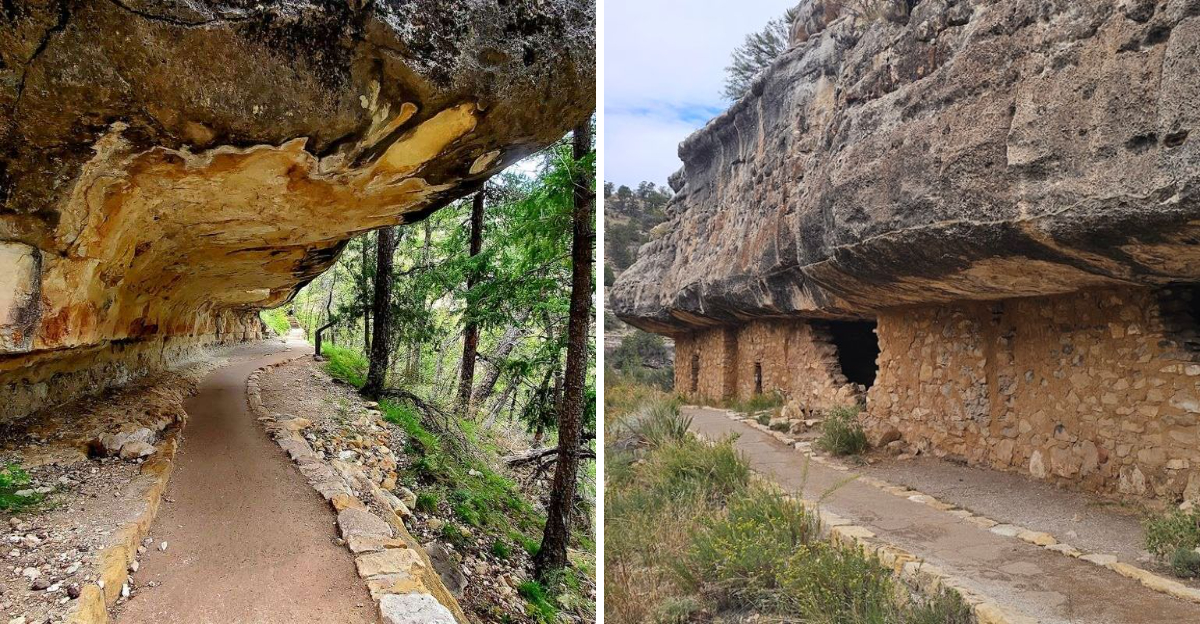
Just a short drive outside Flagstaff, an unassuming trail leads to something far more impressive than you might expect. What starts as a simple walk quickly turns into a journey through a canyon where people once built their homes directly into the cliffs nearly a thousand years ago.
Along the way, you pass a series of remarkably preserved dwellings that bring that history into sharp, up-close focus. The entire route is only about a mile, yet it delivers a depth of cultural experience that feels far bigger than the distance suggests.
It’s the kind of hike that surprises you at every turn and stays with you long after you leave.
Home To Well-Preserved Ancient Cliff Dwellings
Walking the Island Trail at Walnut Canyon National Monument feels less like hiking and more like stepping into a living history exhibit where the walls themselves are the artifacts. The cliff dwellings here are remarkably intact, their stone masonry rooms still standing after nearly 900 years of exposure to wind, rain, and canyon air.
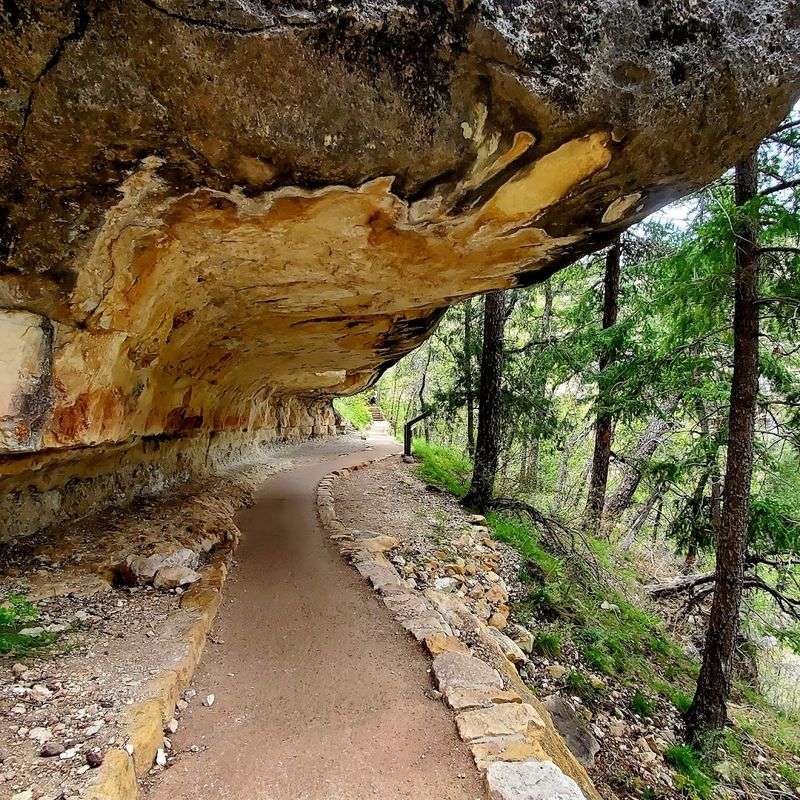
Limestone overhangs sheltered these structures so effectively that many retain their original walls and room layouts.
Visitors can peer directly into individual rooms and observe how the Sinagua people stacked and mortared stone with precision and purpose. Each dwelling tells a quiet story about domestic life, seasonal patterns, and the ingenuity of people who made a vertical landscape feel like home.
The preservation quality here exceeds what many expect from a lesser-known national monument. Walnut Canyon protects more than 80 cliff rooms along its canyon walls, making it one of Arizona’s richest archaeological sites open to the general public.
The Island Trail Offers A Short But Memorable Loop
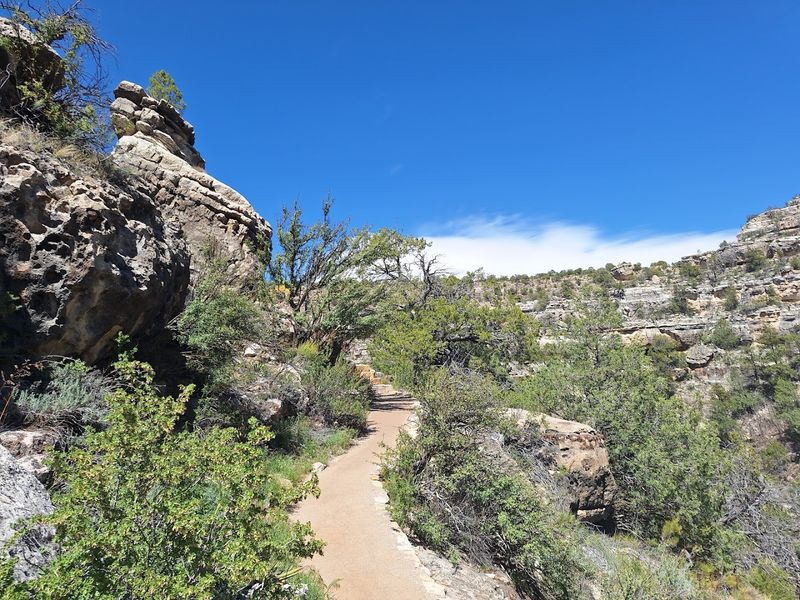
The Island Trail earns its name from the long, narrow peninsula of land it circles inside the canyon. The loop measures approximately 1 mile and descends about 185 feet from the visitor center, guiding walkers along a well-maintained path that passes directly beside ancient cliff rooms.
Stone steps and paved sections make the route manageable for most ages and fitness levels.
The trail takes roughly 45 minutes to complete at a comfortable pace, though many visitors linger longer once they realize how much there is to observe up close. Informational signs posted along the route explain construction techniques, daily life, and the archaeological significance of specific dwellings.
Returning to the visitor center requires climbing back up those same stairs, which adds a moderate physical challenge to an otherwise easy walk. At an elevation above 6,600 feet, visitors arriving from lower altitudes should pace themselves and carry water throughout the loop.
A Rare Chance To Walk Through A Real Cliffside Village
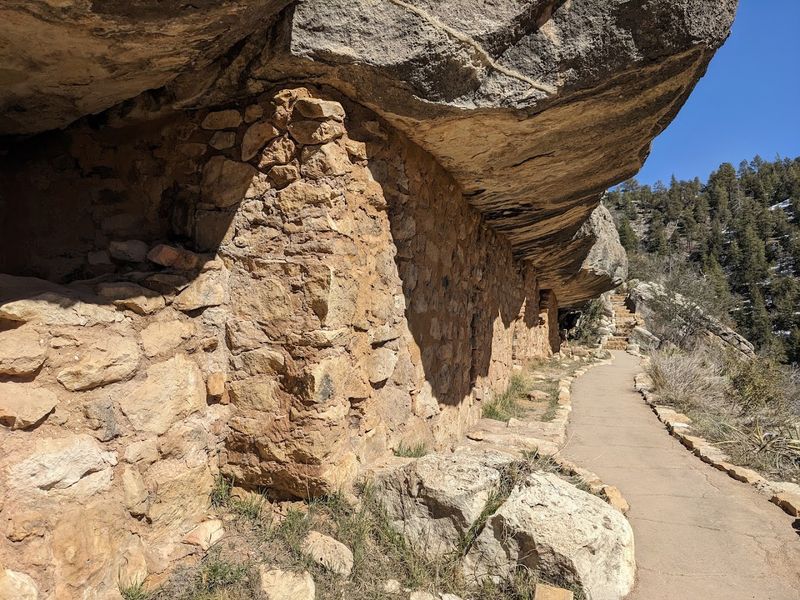
Most ancient sites in the American Southwest keep visitors at a respectful distance, separated from the ruins by fences or viewing platforms. Walnut Canyon operates differently.
The Island Trail brings you within arm’s reach of actual cliff rooms, allowing an intimate perspective that photographs simply cannot replicate.
Standing beside a doorway that a Sinagua family once used daily creates a sense of connection that larger, more crowded parks rarely offer. You can examine the texture of the mortar, observe the angles of the walls, and appreciate the deliberate choices made by builders who understood their landscape with remarkable depth.
The experience carries genuine weight without requiring theatrical interpretation. The canyon itself provides the atmosphere, and the dwellings provide the context.
For travelers who appreciate cultural history without the noise and congestion of major tourist corridors, this site delivers something genuinely valuable and surprisingly personal in every sense.
Built By The Sinagua People Between 1100 And 1250 AD
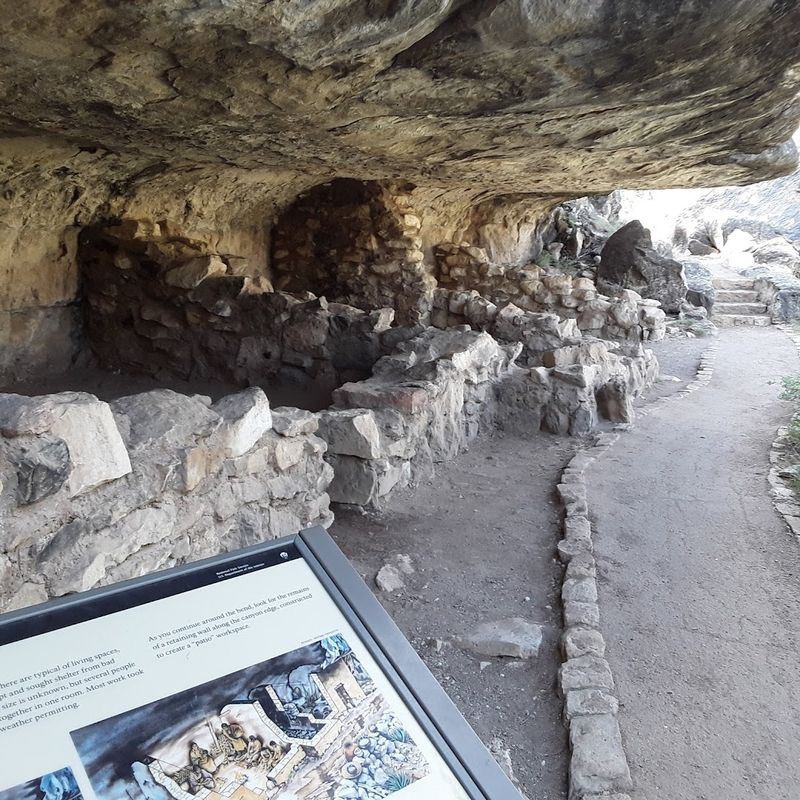
The Sinagua were a pre-Columbian farming culture who inhabited much of north-central Arizona for several centuries. Their name, derived from Spanish meaning “without water,” reflects the dry conditions they learned to navigate with considerable agricultural creativity.
At Walnut Canyon, they found a landscape that offered both shelter and resources in unusual abundance.
Construction of the cliff dwellings at this site began around 1100 AD and continued through approximately 1250 AD, after which the Sinagua gradually relocated to other areas of the region. Archaeologists believe population pressure, climate shifts, and resource availability all contributed to their eventual departure.
What they left behind at Walnut Canyon represents some of the most concentrated Sinagua architecture found anywhere. The canyon walls provided natural building material, and the limestone overhangs offered structural support that reduced the labor required to create weatherproof rooms.
Their engineering instincts were practical, efficient, and remarkably durable across nine centuries.
Natural Rock Overhangs Provided Shelter And Protection
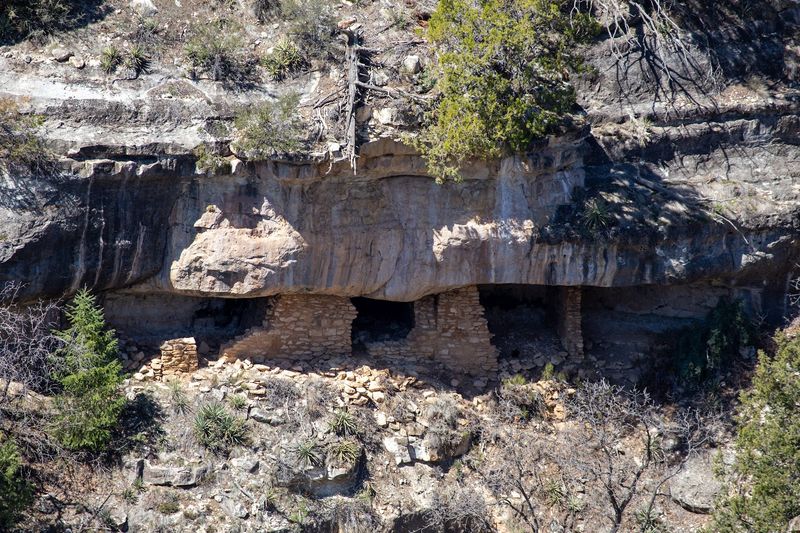
Geology played a central role in why the Sinagua chose Walnut Canyon as a place to build and live. The canyon’s limestone walls erode in a distinctive horizontal pattern, creating deep, curved recesses that function almost like ready-made rooftops.
These natural overhangs blocked rain, deflected wind, and moderated interior temperatures across seasons.
Building beneath an existing overhang meant the Sinagua could focus their construction efforts on walls and room divisions rather than overhead coverage. The results were structurally sound rooms that required far less material than freestanding buildings on open ground would have demanded.
The overhangs also provided a degree of visual camouflage, making the dwellings harder to spot from the canyon floor below. Whether that was intentional remains a subject of archaeological discussion, but the practical benefits of that positioning were considerable.
Today, those same geological features continue protecting the ruins from direct weathering, contributing directly to their exceptional state of preservation.
Scenic Canyon Views At Every Turn
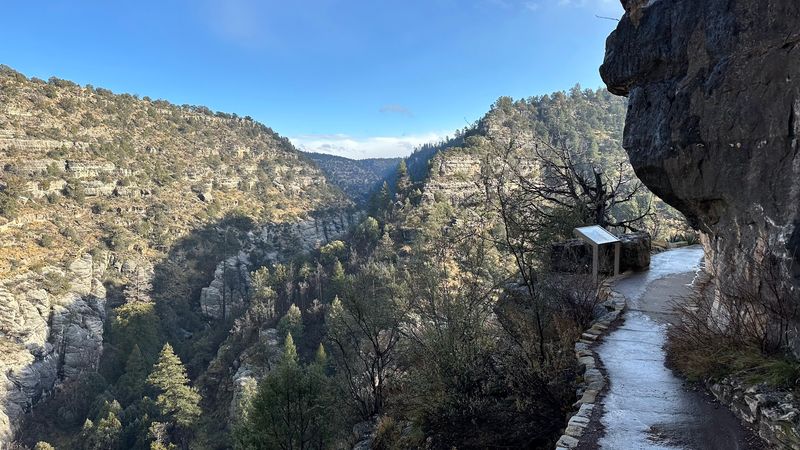
Walnut Canyon holds its own as a scenic destination entirely apart from its archaeological significance. The canyon drops sharply from the surrounding plateau, revealing layered walls of limestone and sandstone stained in warm tones of amber, rust, and cream.
Ponderosa pines and juniper trees cover the canyon’s upper reaches, while the lower slopes transition into a denser, more sheltered plant community.
From multiple points along the Island Trail, the canyon opens into broad views that stretch across the curved walls and down toward the canyon floor. The elevation and orientation of the trail create a constantly shifting visual experience as light changes throughout the day.
Morning visits tend to offer softer, more even light across the canyon walls, while afternoon sun deepens the warm tones of the rock. Either way, the scenery rewards anyone who takes a moment to stop walking and simply observe.
The canyon’s dimensions feel intimate rather than overwhelming, which gives the whole place a quietly compelling character.
Located Just Outside Flagstaff For Easy Access
Walnut Canyon National Monument sits approximately 10 miles east of downtown Flagstaff along Interstate 40, making it one of the most conveniently positioned national monuments in Arizona. The drive from Flagstaff takes roughly 15 minutes, and the monument entrance road leads directly from the highway to the visitor center without complicated navigation.
Flagstaff itself serves as a practical base for exploring multiple national monuments and natural landmarks in the region, including Sunset Crater Volcano and Wupatki National Monument to the north. Pairing a morning visit to Walnut Canyon with an afternoon at another nearby site is a reasonable and rewarding itinerary for travelers with limited time.
The monument is open daily from 9 AM to 5 PM and can be reached by phone at +1 928-526-3267, or through its official National Park Service website at nps.gov/waca. Visitors with an America the Beautiful pass enter free of charge, which makes a spontaneous stop genuinely easy to justify.
A Surprisingly Accessible Hike With Big Rewards
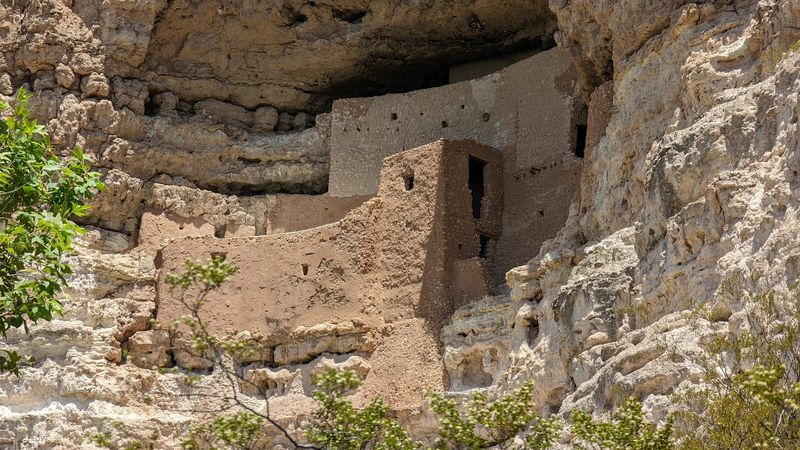
The Island Trail at Walnut Canyon challenges visitors just enough to feel like a genuine hike without requiring specialized fitness or technical gear. The paved path and carved stone steps are well-maintained, and the total distance of 1 mile keeps the commitment manageable for most people, including older adults and older children comfortable with stair climbing.
The 185-foot descent into the canyon distributes the physical effort across a gradual slope rather than a single steep drop, which keeps the experience pleasant on the way down. The return climb is where most visitors feel the elevation, particularly those unaccustomed to Arizona’s high-altitude terrain above 6,600 feet.
Bringing water is strongly advised, and sturdy footwear with decent grip handles the stone steps far more comfortably than sandals or flat-soled shoes. For visitors who prefer a flat, easier option, the Rim Trail runs along the canyon’s edge and provides excellent views without the stair descent involved in the Island Trail.
A Protected Site Managed By The National Park Service
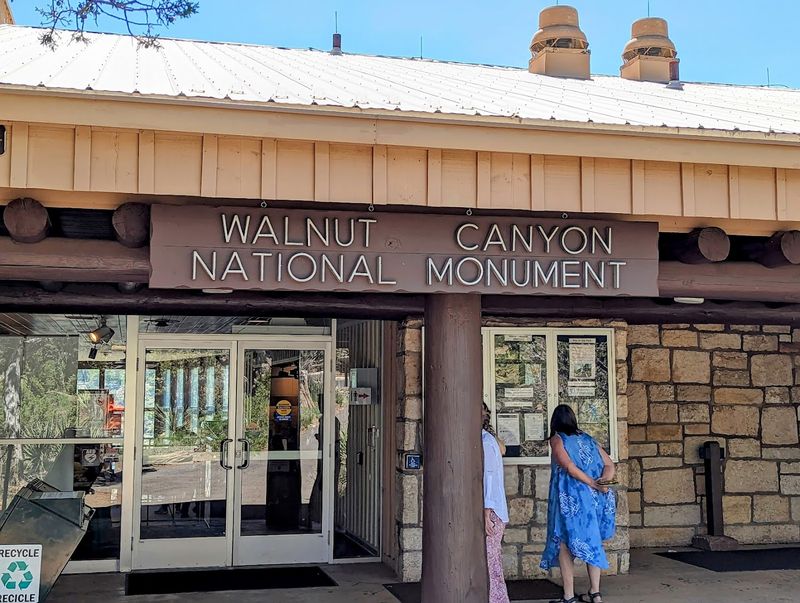
Walnut Canyon became a national monument in 1915, when President Woodrow Wilson signed the proclamation protecting its archaeological resources from looting and unauthorized excavation. Management by the National Park Service has since ensured that the site remains preserved for research and public education while remaining genuinely accessible to visitors of all backgrounds.
The visitor center at the trailhead offers a small but well-curated exhibit area where guests can learn about Sinagua culture, the canyon’s geology, and the history of the monument itself. Staff and volunteers stationed along the trails are consistently knowledgeable and willing to answer questions with patience and detail.
The NPS also maintains interpretive signage throughout both trails, providing context at key points without overwhelming visitors with information. Entry fees apply to those without a national parks pass, and the revenue supports ongoing preservation and maintenance of the site.
The monument’s small size keeps crowds manageable compared to more prominent parks in the region.
Wildlife And Native Plants Add To The Experience
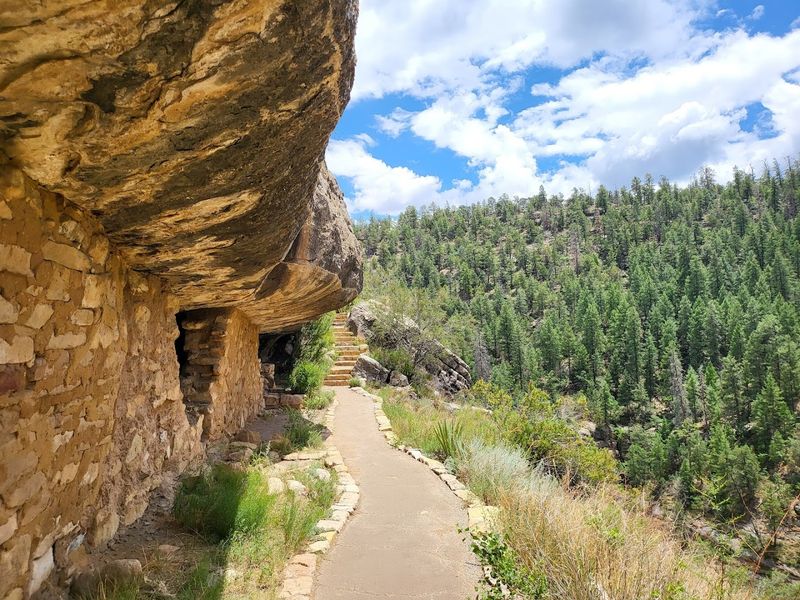
The ecological diversity of Walnut Canyon adds a layer of natural interest that complements the archaeological experience in a way that feels unplanned and refreshing. The canyon’s depth and orientation create distinct microclimates, supporting plant communities that range from high-desert scrub along the rim to lush riparian species near the canyon floor.
Ponderosa pine, Douglas fir, Gambel oak, and various species of juniper appear along the trails, providing shade and a pleasant forest atmosphere unusual for Arizona’s lower elevations. The canyon also supports a range of bird species, including Steller’s jays, white-breasted nuthatches, and various raptors that patrol the upper canyon walls.
Mule deer occasionally appear along the Rim Trail, particularly during early morning and late afternoon hours. The monument’s relatively low foot traffic compared to larger parks means wildlife encounters feel genuinely spontaneous.
Paying attention to the natural surroundings rather than rushing through the trail adds considerable depth to any visit here.
One Of The Best Places In Arizona To Experience Ancient History Outdoors
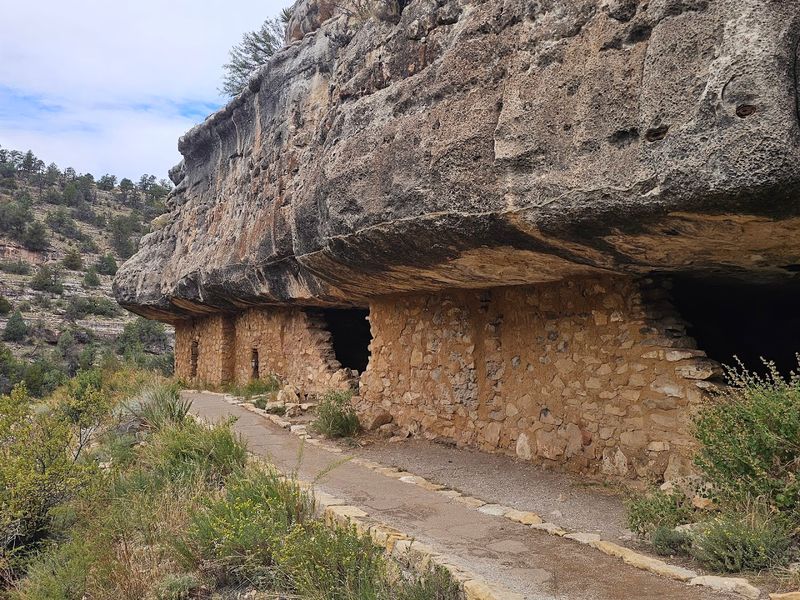
Arizona holds an extraordinary concentration of ancient sites, and Walnut Canyon stands among the most rewarding precisely because it balances accessibility with authenticity. The experience of walking past 25 cliff dwellings on a 1-mile loop, without crowds blocking the view or barriers keeping you at a frustrating distance, is something genuinely difficult to find elsewhere.
The canyon’s scale feels human rather than monumental, which makes the history feel personal rather than abstract. Visitors regularly describe the Island Trail as one of those rare experiences that delivers more than expected, particularly for those who stumble upon it without much prior research.
For anyone traveling through northern Arizona, a stop at Walnut Canyon requires minimal effort and offers maximum return in terms of cultural, scenic, and physical engagement. The monument demonstrates that extraordinary historical experiences do not always require long drives, crowded parking lots, or hours of preparation.
Sometimes, a well-placed mile of trail is more than enough.