
This Easy Trail In Vermont Is So Picturesque It Stays With You Long After
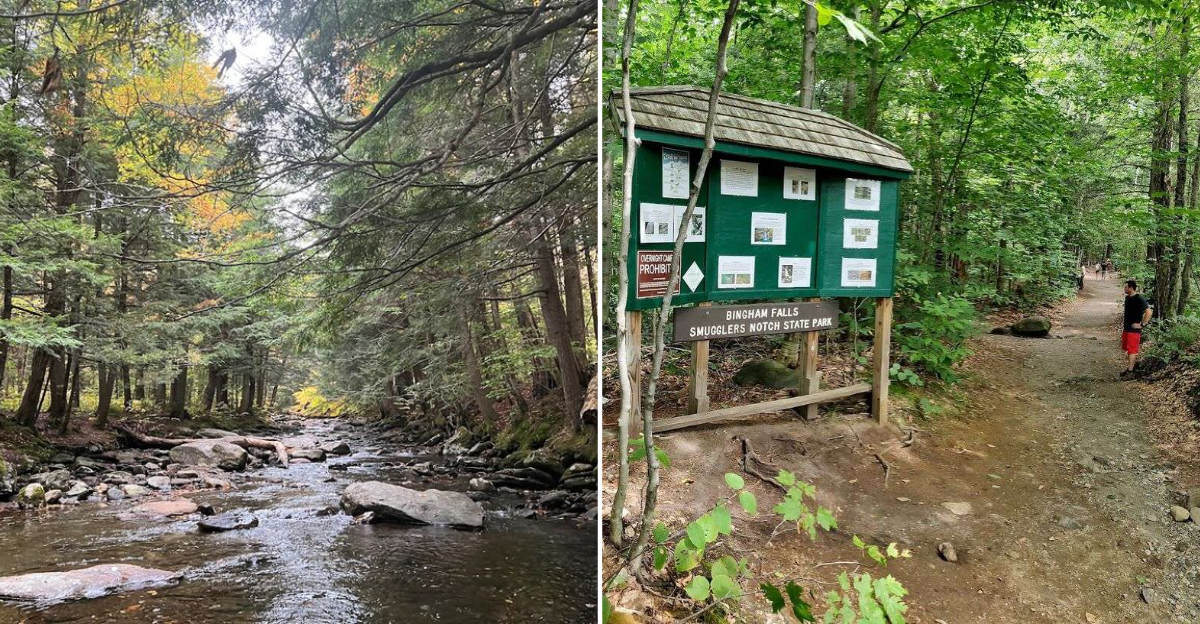
This trail is literally half a mile long, which means you have zero excuses not to go. Packed into that tiny distance is everything Vermont does best: rushing water, towering trees, and the kind of scenery that makes you stop mid-step just to stare.
No grueling climbs. No need to pack three days of supplies.
Just you, a short path, and a view that will quietly ruin every other trail for you. It is the kind of place that sounds too good to be true when someone describes it.
Then you see it for yourself and suddenly you are the person describing it to everyone you know. Your friends will roll their eyes.
They always do. Then they will go, and they will send you a photo with zero context, just to say you were right.
Vermont has no shortage of beautiful spots. But this one sticks.
Trail Terrain And Pathway Features
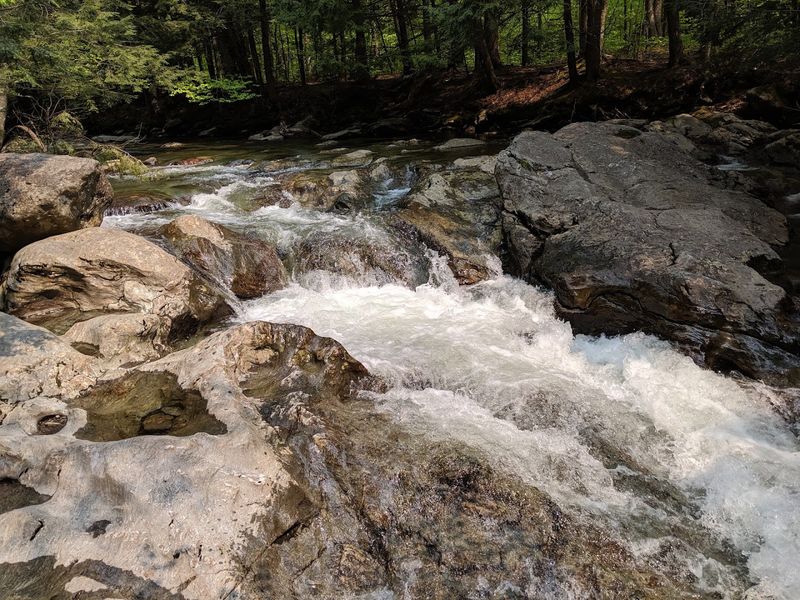
This place earns its easy-trail reputation fast. The main out-and-back route is only about 0.5 miles round trip, which means most people finish it in under an hour.
The path starts simple enough, with packed dirt and tree roots framing your way through the forest.
As you get closer to the falls, the trail shifts gears. The ground gets wetter, the rocks appear more frequently, and a natural rock staircase takes you down toward the base of the falls.
It is not a brutal descent, but it does demand your attention. Flip-flops will betray you here, so wear actual hiking shoes.
If you want a longer walk, the Mill Trail from Notchbrook Road offers a flatter 1.3-mile out-and-back option. It runs above the West Branch of the Little River and gives you elevated views that feel totally different from the main route.
Either way, the terrain keeps things interesting without being punishing.
You can find the trailhead along Mountain Road at 6524-6892 Mountain Rd, Stowe, VT 05672, roughly 6.4 miles north of the village.
Flora Diversity Along The Route
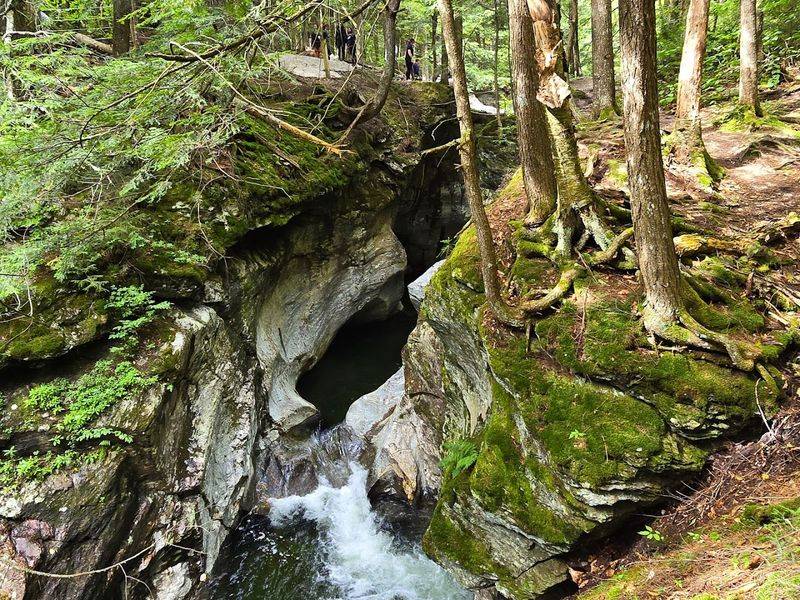
Entering Bingham Falls feels like the forest is showing off. The trail is lined with a thick mix of deciduous trees, conifers, and a carpet of ferns that covers almost every inch of the forest floor.
In summer, everything is so deeply green it almost looks unreal.
Mossy boulders sit beside the path, draped in layers of soft green growth that have built up over the years. The closer you get to the water, the more the vegetation shifts.
Moisture-loving plants crowd the edges of the gorge, thriving on the constant mist that rises from the cascades below.
Autumn is when the flora really performs. The maples, birches, and beeches surrounding the trail explode into deep reds, burnt oranges, and bright yellows.
The contrast between the vivid foliage and the teal water below creates a color combination that photographers genuinely lose their minds over.
Spring brings its own charm, with wildflowers pushing through the leaf litter and fresh growth covering every surface. No matter what month you visit, the plant life along this route gives you something new and worth pausing over.
Wildlife Encounters And Natural Habitats
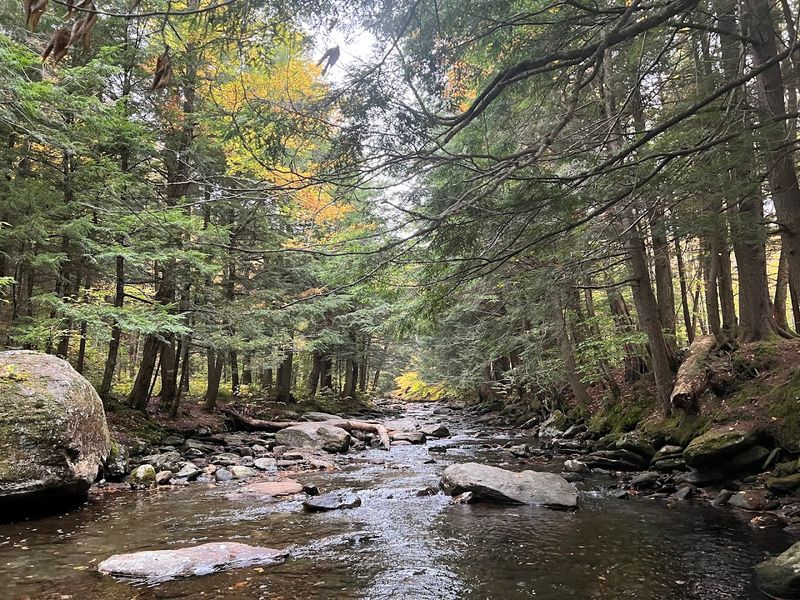
The forest around Bingham Falls is genuinely alive. White-tailed deer move quietly through the tree line, especially in the early morning hours when the trail is still mostly empty.
Spotting one standing still among the trees is the kind of moment that makes you forget to breathe for a second.
Birds are everywhere along this route. Listen for the sharp calls of woodpeckers drilling into old trees and the fluid songs of warblers moving through the canopy overhead.
The West Branch of the Little River, which feeds the falls, supports a healthy aquatic ecosystem. Small brook trout navigate the shallower sections upstream, and you can sometimes catch a glimpse of them darting through the clear water.
The gorge itself is a habitat worth studying. The shaded, moisture-rich walls support mosses, lichens, and small insects that form the base of a quiet but complex food chain.
Salamanders hide under wet rocks near the pool at the base of the falls. This place is not just a waterfall destination.
It is a working ecosystem doing its thing every single day, whether visitors show up or not.
Seasonal Changes And Scenic Views
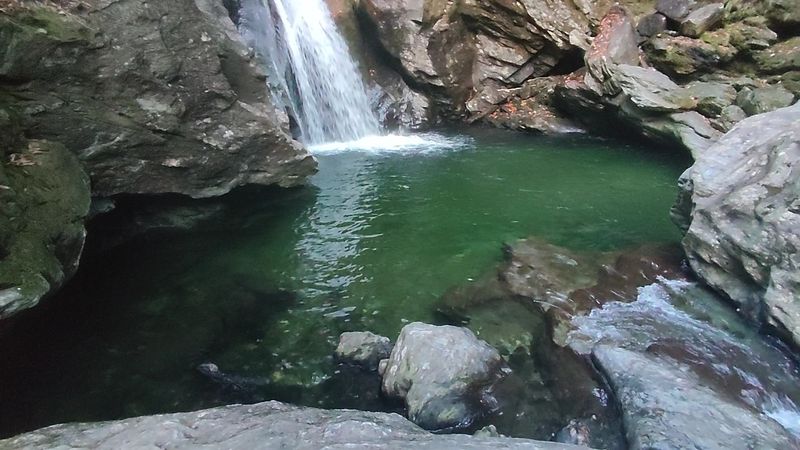
Every season at Bingham Falls has its own personality. Spring brings high water volume, and the falls roar with snowmelt rushing through the gorge.
The sound alone is worth the visit. The teal color of the water pops sharply against the pale, newly budding trees lining the canyon walls.
Summer softens the pace. The water level drops a bit, the swimming hole becomes the main attraction, and the forest canopy creates a cool, shaded walk even on the hottest Vermont days.
Families and hikers spread out along the rocks, and the whole scene has a relaxed, unhurried energy.
Fall is the showstopper season. The foliage surrounding the gorge reaches peak color usually in late September through mid-October, and the combination of teal water and fiery leaves is something that sticks with you.
Winter visits are less common but genuinely stunning. Ice formations build up along the rock walls, and the falls sometimes partially freeze, creating a silent, sculptural version of the gorge you barely recognize from warmer months.
Each season gives you a completely different experience at the same spot.
Accessibility And Family Friendliness
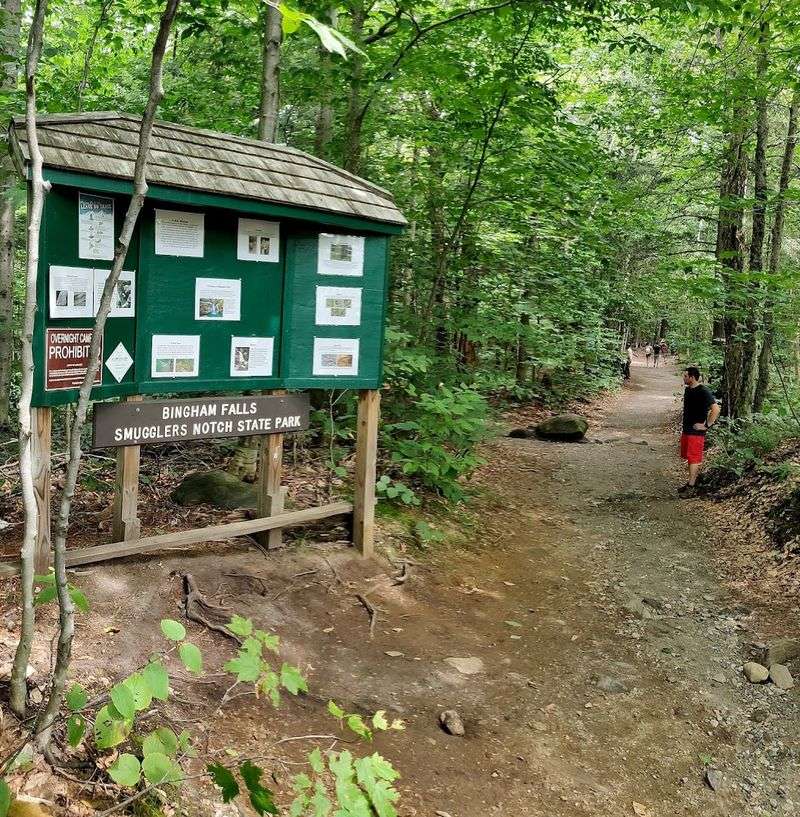
Bingham Falls is one of those rare spots that genuinely works for almost everyone. The main trail is short, relatively flat for most of its length, and does not require any special gear or fitness level to enjoy.
Families with kids visit regularly, and the payoff at the end makes the walk feel worthwhile even for younger hikers who need a little encouragement.
The steeper rock staircase section near the falls requires some careful footing, so holding hands with smaller children in that stretch is a smart move. Toddlers can manage it with help.
The trail is not paved or wheelchair accessible, but the flat early sections are manageable for most mobility levels on a dry day.
Dogs are welcome on the trail, which is a big deal for pet owners who hate leaving their hiking buddy behind. Keep them leashed near the gorge edges for obvious reasons.
The whole experience, from parking to falls and back, typically takes between 30 and 60 minutes. That makes it an ideal add-on to a larger Stowe day trip rather than a full-day commitment.
It is low-pressure, high-reward, and genuinely fun for mixed-age groups.
Nearby Picnic And Rest Areas
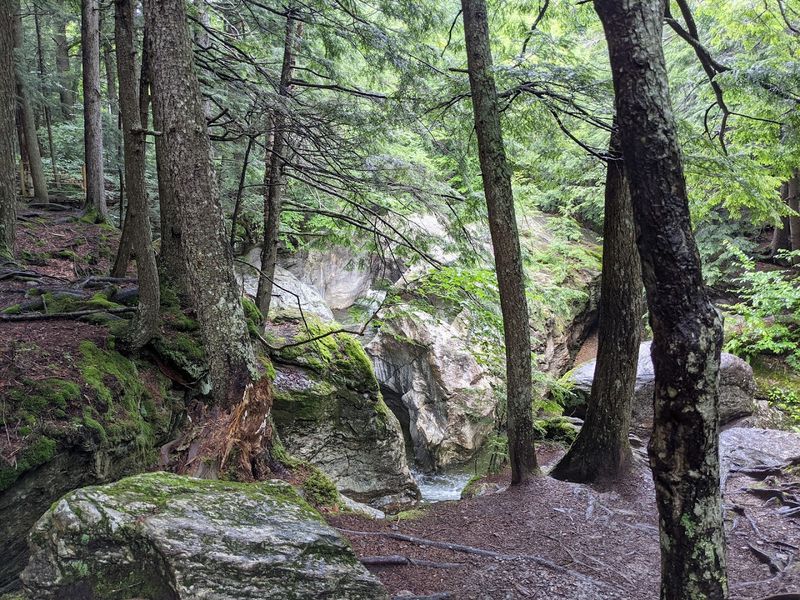
After the hike, the flat rocky areas near the base of the falls naturally become rest zones. Visitors spread out on the large boulders beside the pool, eat snacks, and watch the water move through the gorge.
It is informal but works perfectly well as a place to decompress after the trail.
There are no designated picnic tables directly at Bingham Falls, so bring a blanket or a small foldable mat if you want to sit comfortably. The rocks can be slippery near the water, so setting up a few feet back from the pool edge is the move.
Flat dry sections exist on both sides of the trail near the falls.
The broader Stowe area has plenty of formal picnic options nearby. Smugglers Notch State Park, which contains the Bingham Falls area, has open spaces along the road corridor where stopping and eating is easy.
The town of Stowe itself is only about 6 miles south and offers parks, green spaces, and riverside areas along the Little River that are perfect for a longer post-hike lunch break.
Pack your own food, and you are completely set for a full, satisfying outdoor day.
Safety Tips And Preparedness
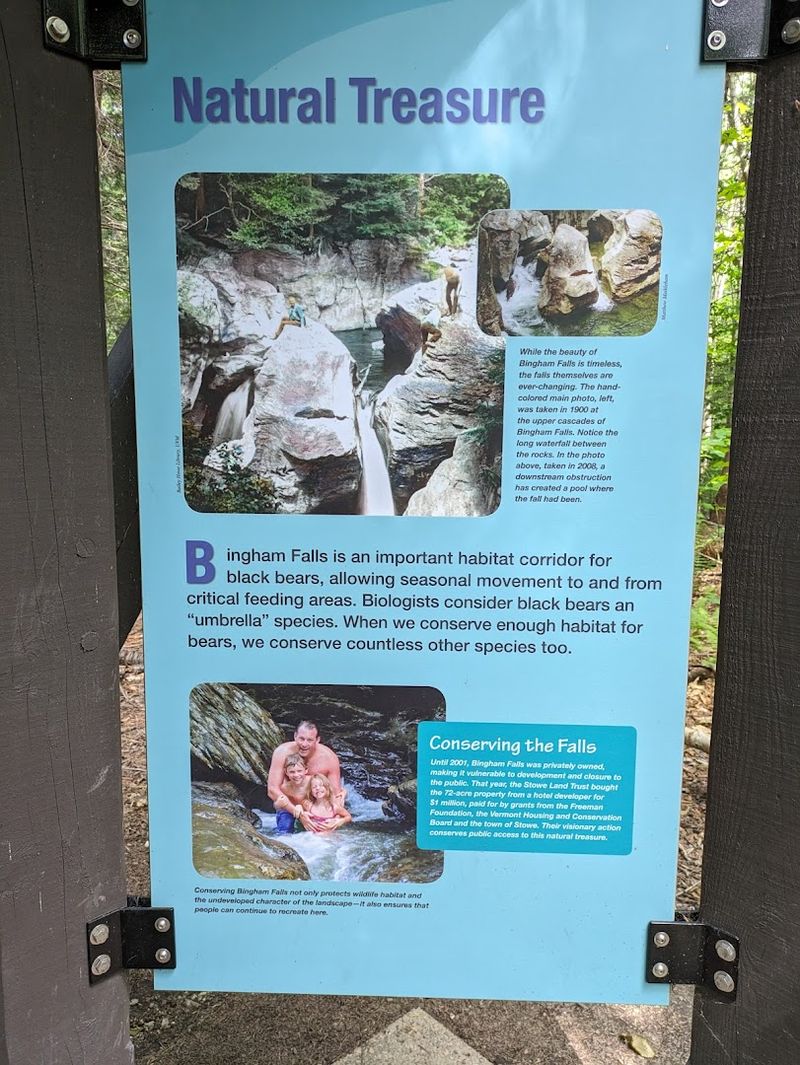
Bingham Falls is beautiful, but it demands respect. The gorge edges along the trail are serious drop hazards, and some sections are roped off for good reason.
Staying behind those ropes is not optional. A fall into the gorge is not survivable, and the edges can be deceptively unstable, especially after rain.
The swimming hole at the base of the falls is popular and refreshing, but strong currents run on the right side of the main pool. Swimming above the falls is extremely dangerous due to high-speed water vortexes that can trap even strong swimmers.
The water is also very cold year-round, which increases the risk of cold shock. Go in carefully and stay aware of conditions.
Wear hiking shoes with a grip on the soles. The natural rock staircase and wet trail sections near the water get slippery fast, and regular sneakers lose traction quickly on wet stone.
Bring water, wear layers in cooler months, and let someone know your plan if you are visiting solo. Cell service in the Smugglers Notch corridor can be spotty.
Being prepared takes five minutes and makes the whole experience safer and more enjoyable.
Photography Spots And Best Times To Visit
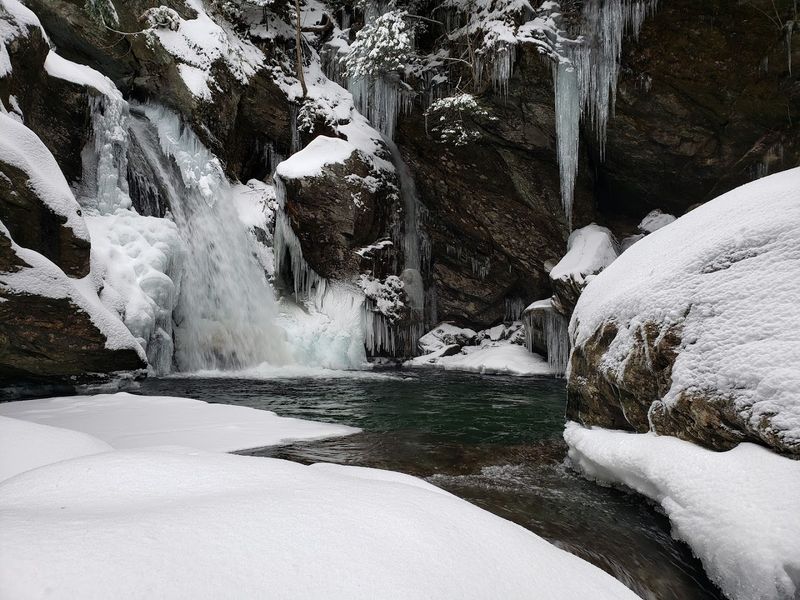
Bingham Falls is one of the most photogenic short hikes in all of Vermont, and that is not an exaggeration. The teal color of the water against the dark rock walls of the gorge creates a natural color contrast that photographs beautifully in almost any light.
You do not need a professional camera to walk away with stunning shots.
The best photography angle is from the base of the falls, looking up at the main cascade with the gorge walls framing both sides of the frame.
Morning light filters through the canopy and hits the mist rising from the pool, creating a soft, glowing effect that is hard to replicate at other times of day. Arrive early to avoid crowds in your shots.
Peak autumn, roughly late September through mid-October, gives you the most dramatic color palette. The contrast between the vivid foliage and the turquoise water below is the shot that fills Vermont travel feeds every fall.
Overcast days actually work well here, too. Flat light reduces harsh shadows inside the gorge and lets the water color pop without glare.
Visit on a weekday morning in October, and you might have the whole place nearly to yourself.