
This Enchanting State Park In New York Feels Like Stepping Into A Real-Life Painting
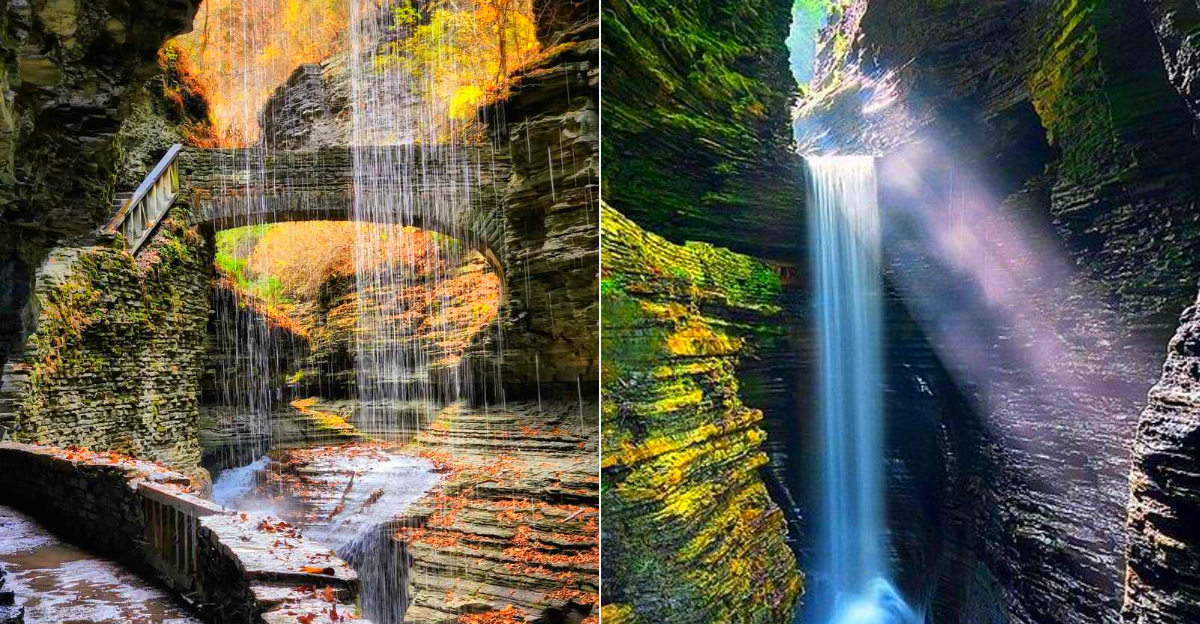
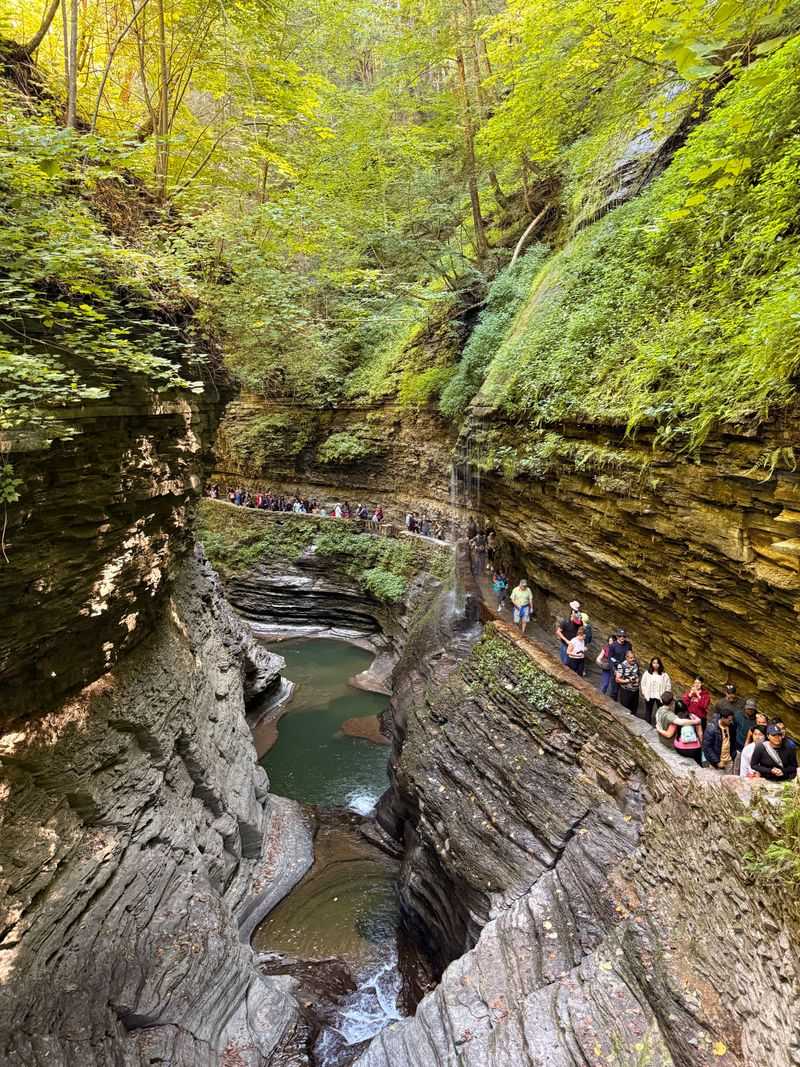
New York holds landscapes that feel carefully composed without ever feeling staged. At Watkins Glen State Park, New York visitors step into a gorge where waterfalls, stone bridges, and winding pathways create scenes that seem quietly arranged by time and water. The air carries a cool mist, footsteps echo gently along the trail, and every turn reveals another view that encourages you to pause.
The setting feels immersive and calm, offering a balance of movement and stillness that makes the walk feel quietly memorable.
Exploring the park becomes a steady, almost meditative experience. Staircases rise and fall through narrow passages, guiding visitors past cascades and layered rock formations shaped over centuries. Sunlight shifts through the gorge, changing colours and shadows throughout the day.
The trail rewards those who slow their pace and pay attention to smaller details.
Arriving At The Main Entrance
First steps at the main entrance feel orderly, with the visitor center easing you into the park’s rhythm. Staff share trail conditions and hand over a map that suddenly seems more like an invitation than a brochure. You notice the stonework, the sweep of the path, and the quiet bustle of travelers adjusting backpacks and lacing boots.
Parking across North Franklin Street keeps things practical, and the $10 fee is straightforward. Morning light tends to soften the plaza, so an early arrival grants clear photos and fewer voices echoing off the walls. The address at 1009 North Franklin Street helps when navigation apps second guess themselves, though the flow of hikers is often a better landmark.
Expect quick guidance about the detour if construction has shifted the start of the Gorge Trail. Signs are candid, and the adjustment is easy to follow, leading you along a rim segment before you descend again. There is a sense that the park wants you to find your way without hurry.
Before moving on, take a moment at the overlook just past the entrance where the gorge first narrows. The air is cooler and smells faintly mineral, like clean stone after rain. Shoes grip better once they are damp, so caution blends into confidence.
From here, the day has a clear direction.
Walking The Gorge Trail
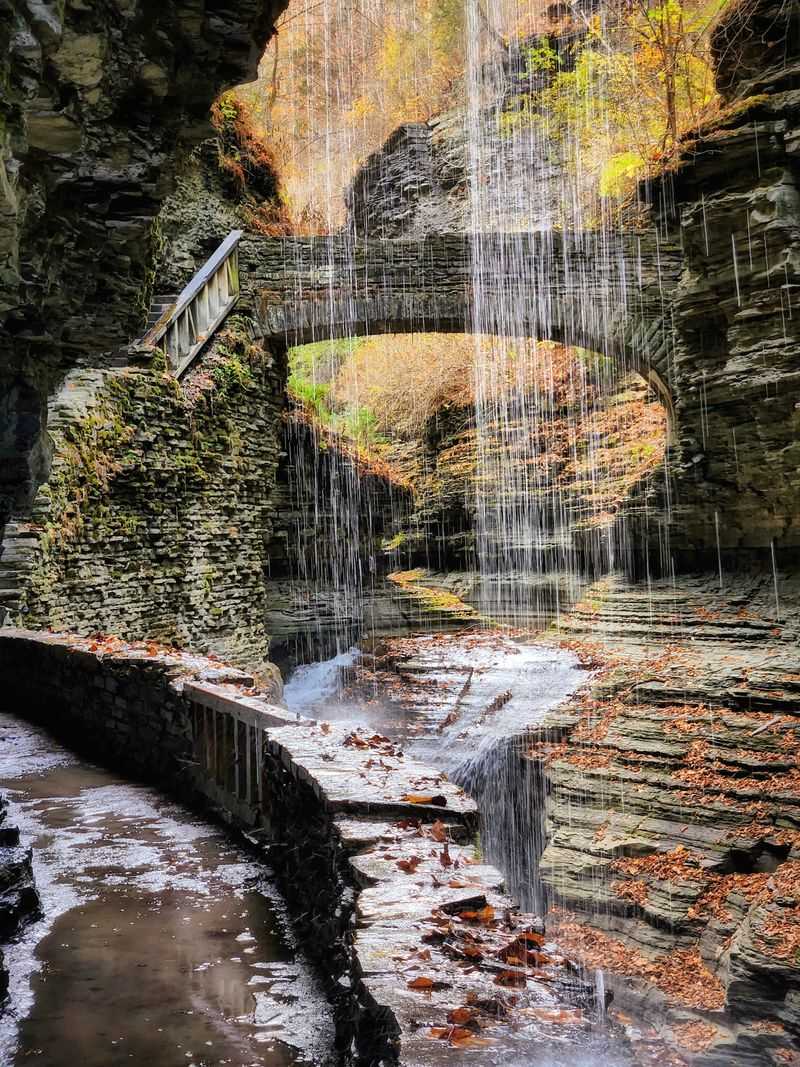
Every pace on the Gorge Trail feels deliberate, the stone guiding your feet into a measured stride. Water shifts the soundtrack from whisper to low thunder, then back again. Bridges and cut portals in the cliff present a neat theater of scenes, each framed with tidy precision.
The 1.5 mile length underplays the vertical effort, because steps gather underfoot like chapters. Stairs here have patience, allowing steady climbs that rarely shock the legs. Handrails appear where sense demands, leaving the rest to awareness and shoes that mean business.
Pauses come naturally at bends where mist thickens and the light changes. You find yourself reading the rock, tracing striations and curved ledges that hold the falls. When crowds collect, the pace slows without spoiling the mood, and the camera does not have to work hard.
In wet weather, the trail glistens in a way that clarifies detail rather than hiding it. On drier days, textures sharpen, and the pools turn transparent, revealing their pale green depths. Carry water, keep a steady rhythm, and let your curiosity set the tempo.
By the time you consider turning around, the trail has already convinced you to continue.
Meeting Rainbow Falls
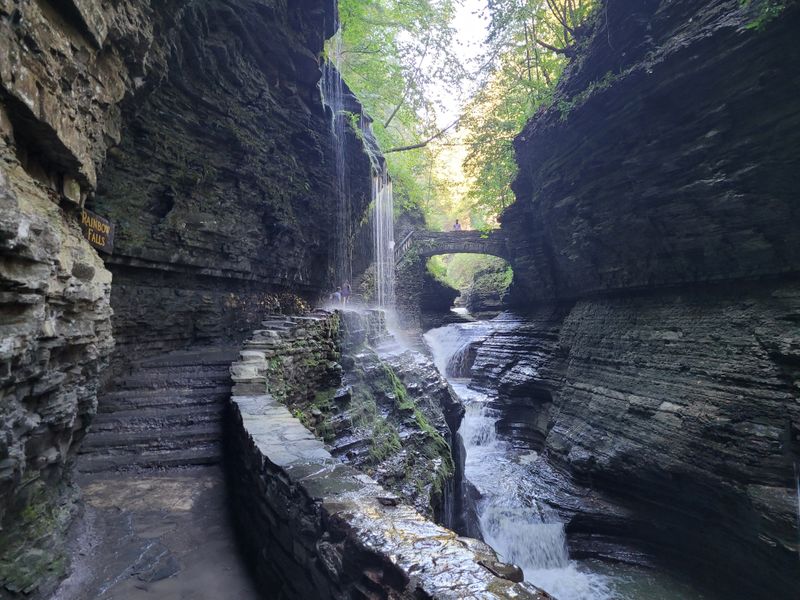
First sight of Rainbow Falls invites silence, not because it demands reverence, but because it explains itself without help. Water veils the path and the bridge like a gentle curtain, and you walk behind with careful footing. The alcove amplifies sound, turning steady drops into a graceful chorus.
Light here likes to play, slipping through mist to reveal a soft arc when the angle is right. Even without a rainbow, the curve of stone and water makes a complete thought. Crowds gather but tend to hush, as if loud voices might bend the shape of the air.
Photographs work best when you wait a minute between groups, letting the walkway clear. A slower shutter captures the flow, while a faster one catches the fine spray with crisp detail. Wipe the lens, breathe, and take two versions, because each tells a slightly different truth.
Moving on, the falls remain audible long after the scene disappears. The trail narrows and strengthens your attention, which is part of the gift. Keep your footing predictable, and let hands brush the stone only where it is dry.
Memory holds on to this spot with surprising loyalty.
Cavern Cascade And The Stone Spiral
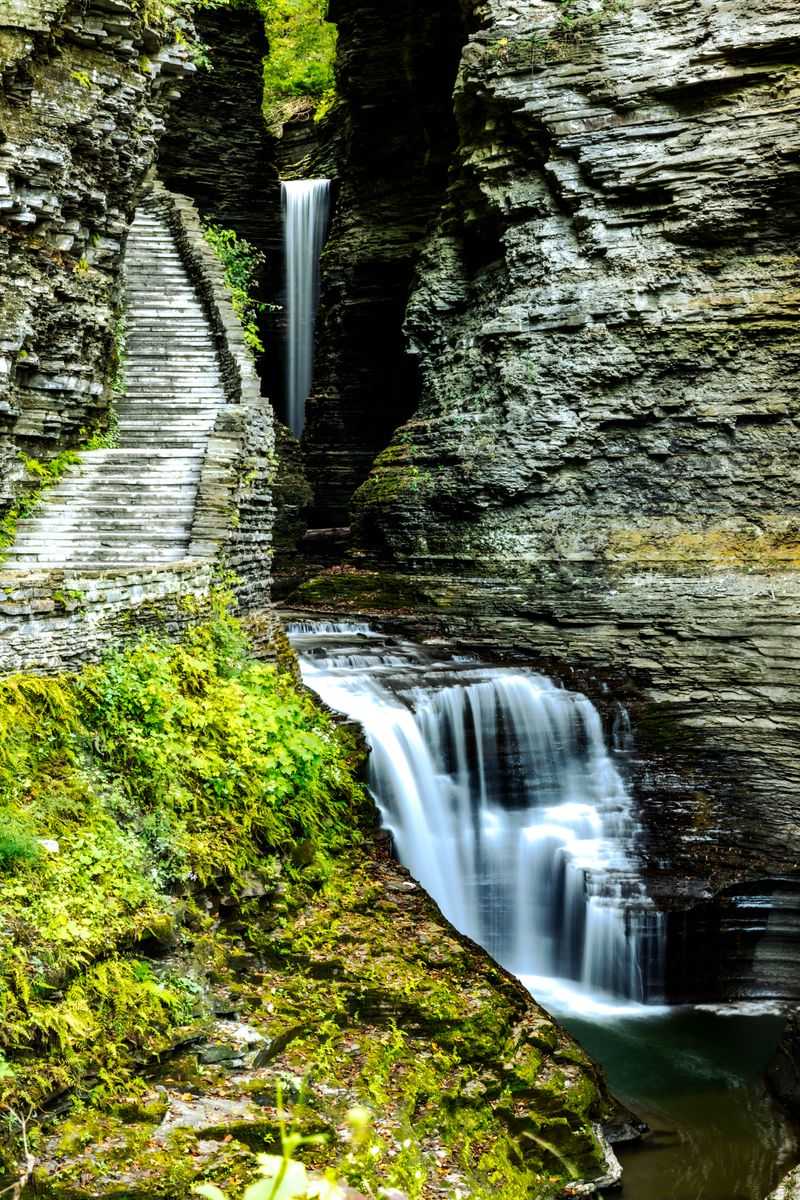
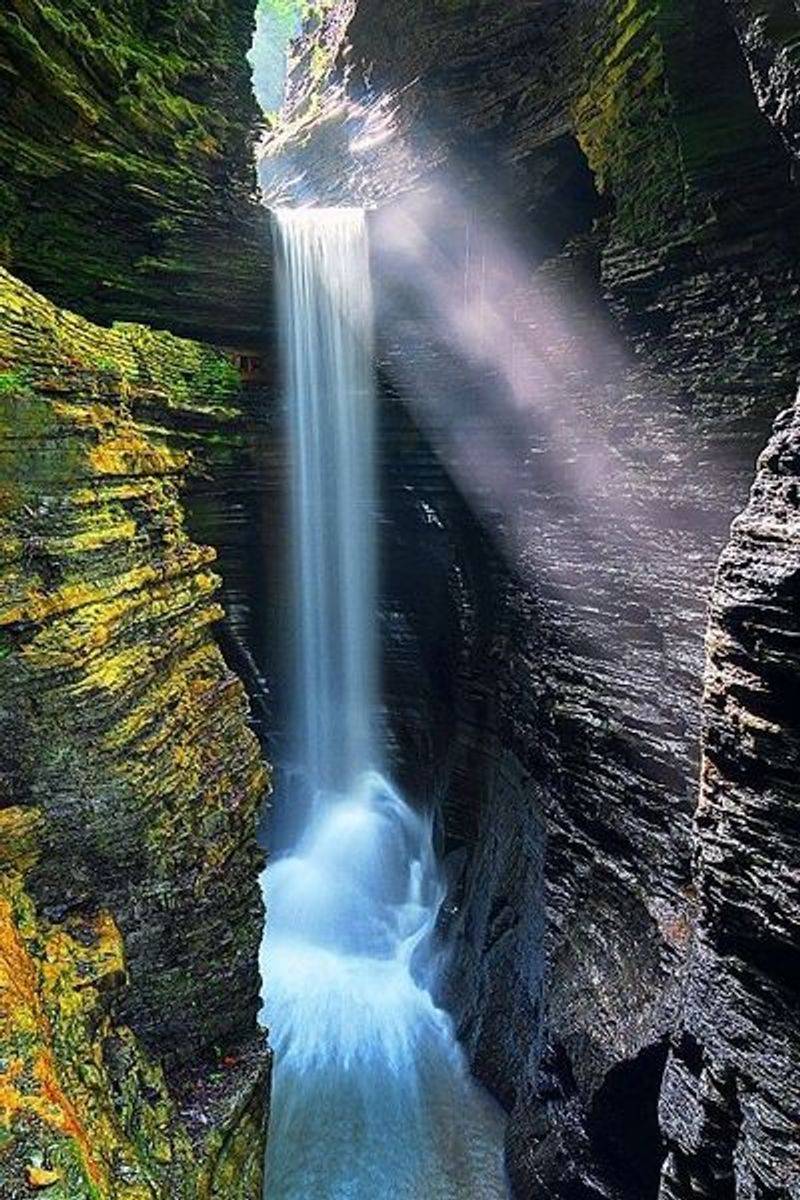
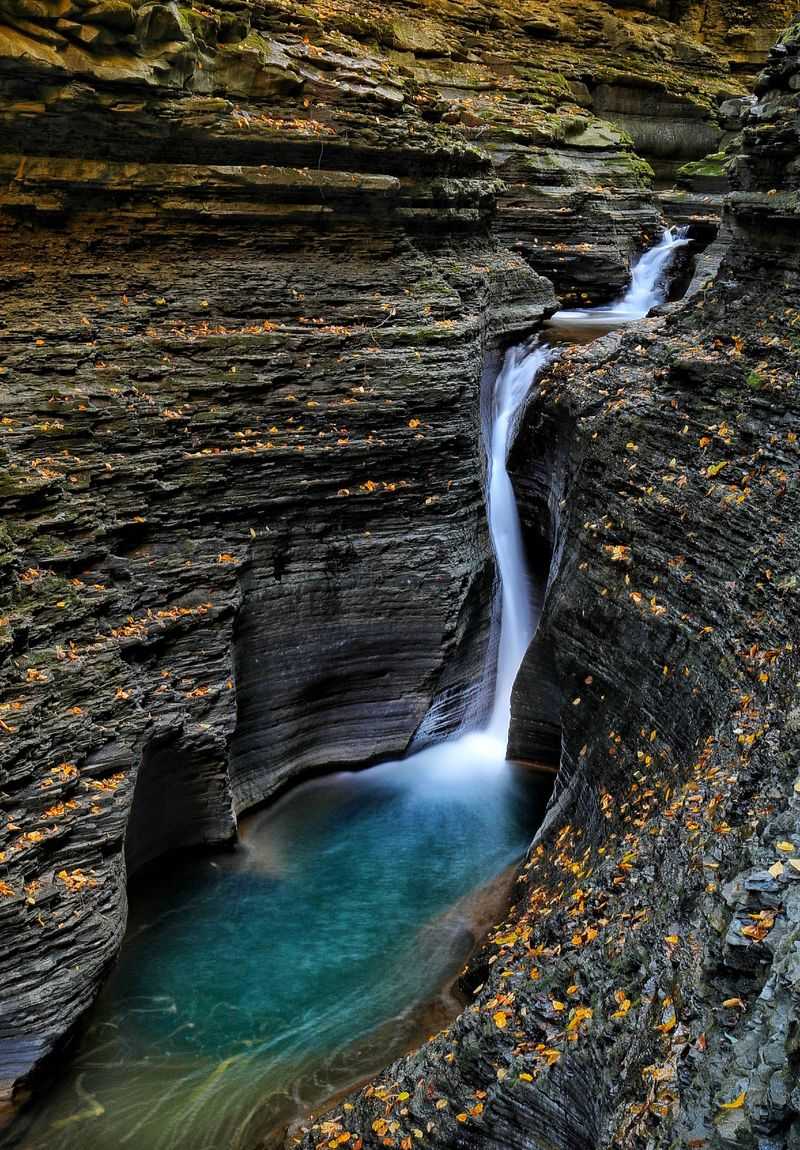
Approaching Cavern Cascade, the gorge tightens into a carefully shaped keyhole. The falls drop cleanly, and the path edges behind them in a modest arc. Sound grows, but the walkway remains sure, giving space for a short pause under the veil.
Steps climb in a gentle spiral that makes the ascent feel like turning a page. Spray gives the rock a satin sheen, and the handrail feels cool to the touch. Photos benefit from your patience, especially when the staircase empties for a breath.
Guides often mention that water made this hallway, which is easier to believe than to picture. Layers of shale read like old ledgers, each etched by seasons that did not hurry. Your stride matches that tempo, and the noise becomes a steady companion rather than a blast.
Past the cascade, the trail relaxes, and pockets of ferns brighten the edges. Water droplets wander down from crevices, softening the stone’s sharper lines. Keep steps short and balanced, as the curve can surprise the ankles.
The moment feels both intimate and assured.
Crossing Sentry Bridge
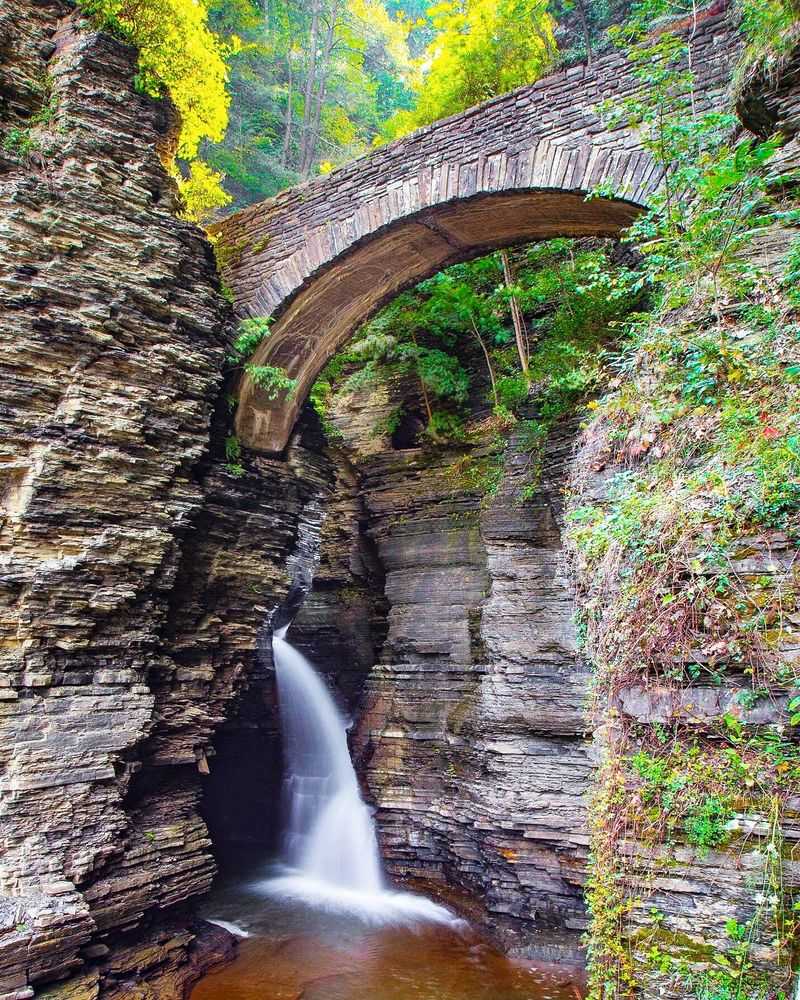
Sentry Bridge offers one of those scenes that quietly explains the logic of the gorge. The stone arch frames the water below, and the drop gives your stomach a polite reminder to focus. You pause here, not to catch breath, but to measure scale.
Depending on construction work, access may shift, yet the viewpoint remains a reliable constant. The bridge’s curve sits naturally against the cliff, like something grown rather than built. Photos from the side are less crowded and show the structure’s neat geometry.
Downstream, the water threads between shelves and dim pools that hold their own shadows. Upstream, the trail climbs with tidy confidence, preparing you for the next turn. Crowds thin and thicken in cycles, so patience is a better strategy than squeezing past.
Standing center, you hear the gorge as a single instrument, not a collection of parts. The wind drops through, and a fine mist scents the air. Shoes find their grip on the worn stone, which feels reassuring underfoot.
When you leave, you carry the proportions with you.
Climbing Jacob’s Ladder
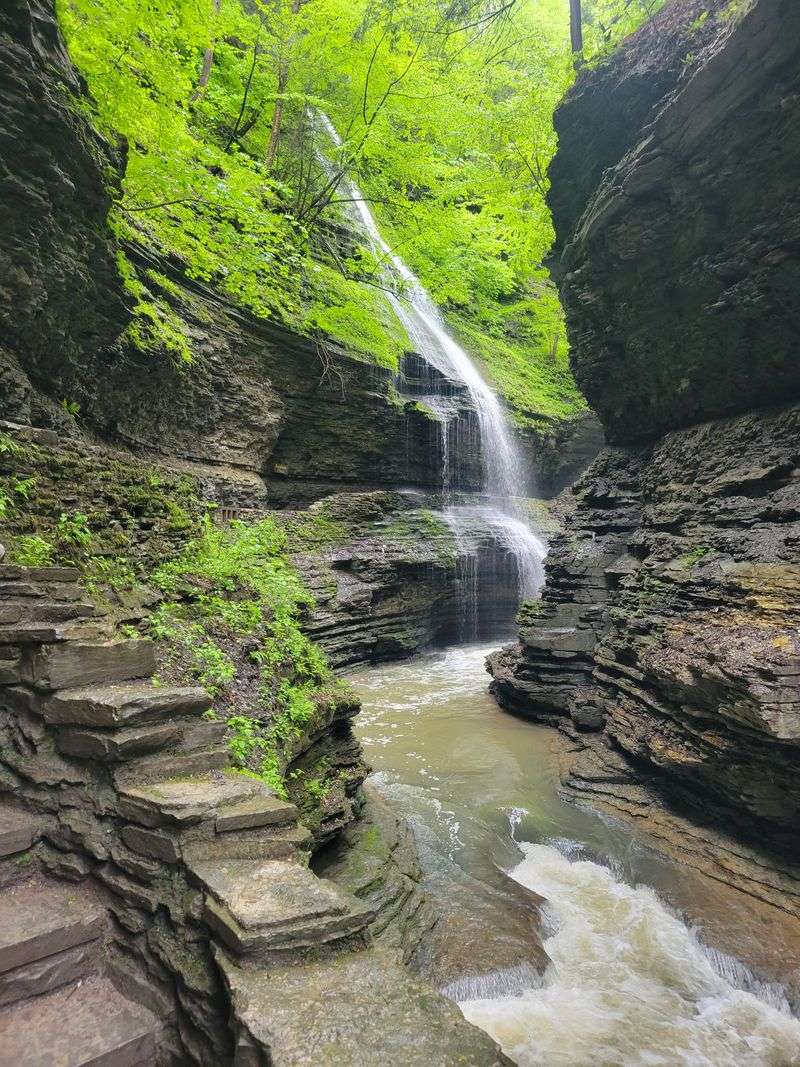
The first few steps of Jacob’s Ladder are easy to underestimate, which is part of its quiet humor. The staircase stacks upward in tidy flights, each turn revealing more of the climb. Breathing finds a steady metronome, and conversation reduces to short, good natured remarks.
Stone risers are even, and the rail keeps balance honest. Taking breaks at the landings is efficient, because the views over the gorge widen just enough to reward the pause. Your legs know the count before your head does, and that knowledge keeps the pace controlled.
At the top, the air feels lighter and the trail broadens into simple comfort. A sip of water and a look back make the effort land in a pleasant way. Photos from the upper platform show the steps as a calm procession rather than a dare.
Descending later asks for the same attention, especially if shoes are wet. Keep your gaze three steps ahead and the rhythm will return. The climb is not a badge so much as a deliberate passage.
By finishing it, the rest of the park feels more approachable.
Discovering Central Cascade
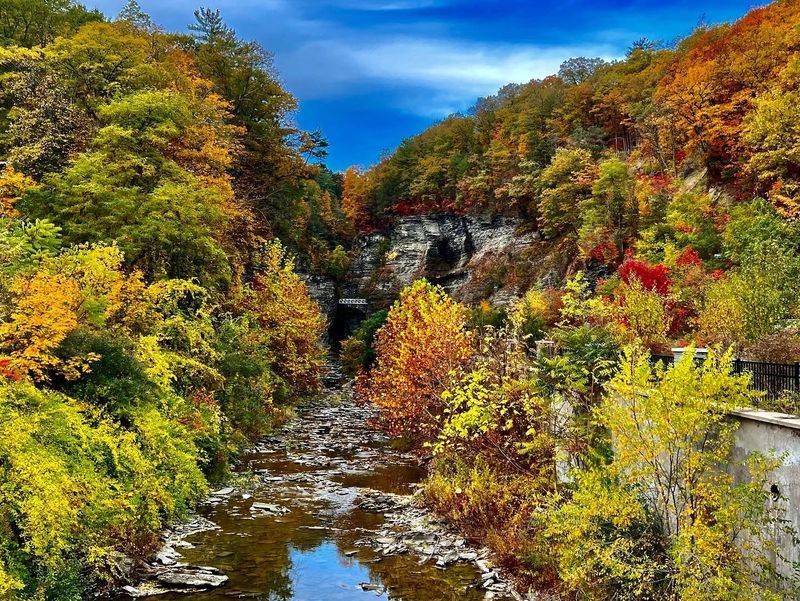
Central Cascade arrives without theatrics, pouring through a narrow seam with steady resolve. The walls rise close, and the path takes a respectful line beside the flow. You feel the cool rise from the water, and the sound firms your steps.
Angles here are clean and direct, which keeps photos clear and unfussy. A wide lens captures the height while a quick shutter preserves the texture of the splash. The walkway’s curve lends a subtle rhythm that reads well in the frame.
Movement around this point often smooths out as hikers match one another’s pace. There is no need to rush, since the scene holds steady and rewards patient looking. The rock layers show a fine logic, stacked like pages that remember rainfall and frost.
After the falls, the trail threads into gentler bends, creating a calm interlude. Drips from overhangs spark small ripples that tidy themselves quickly. With each step, your attention relaxes without losing focus.
Central Cascade becomes a reference point for the rest of the walk.
Reading The Rock And Bridges
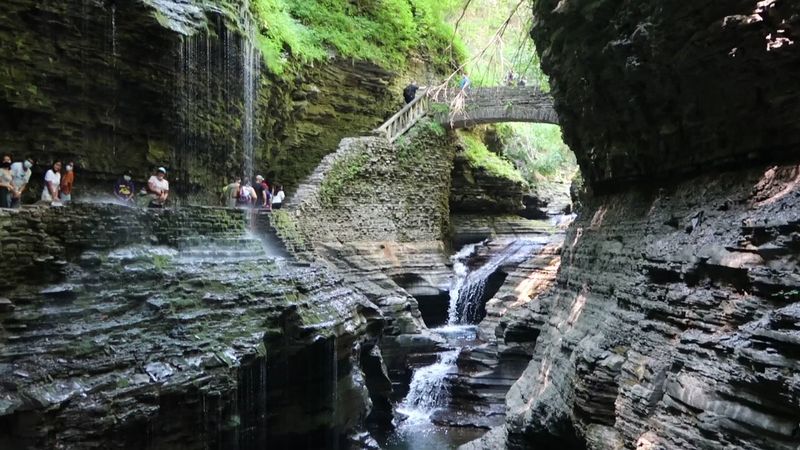
Shale layers at Watkins Glen read like careful handwriting. Each thin edge holds a history lesson in patient lines, and the bridges echo that discipline. Mortared stone complements the cliff without styling itself into a distraction.
As you move, the bridges become punctuation, marking transitions between scenes. Arches settle into place with a modest confidence that makes walking feel composed. Light from the gorge mouth skims across surfaces and clarifies their texture.
Look for small ferns nested in crevices, evidence that softness and grit coexist. Lichen maps patch the walls in pale greens and chalky grays, neat proof of steady time. Photographs here favor detail over drama, which suits the subject.
By paying attention to these quieter notes, the park’s design starts to feel inevitable. Steps fall into sequence, and the path’s logic becomes pleasantly transparent. You leave with a clearer eye for stonework elsewhere, recognizing the same calm craft.
The gorge teaches by example, and the lesson holds.
Seasonal Rhythms And Best Timing
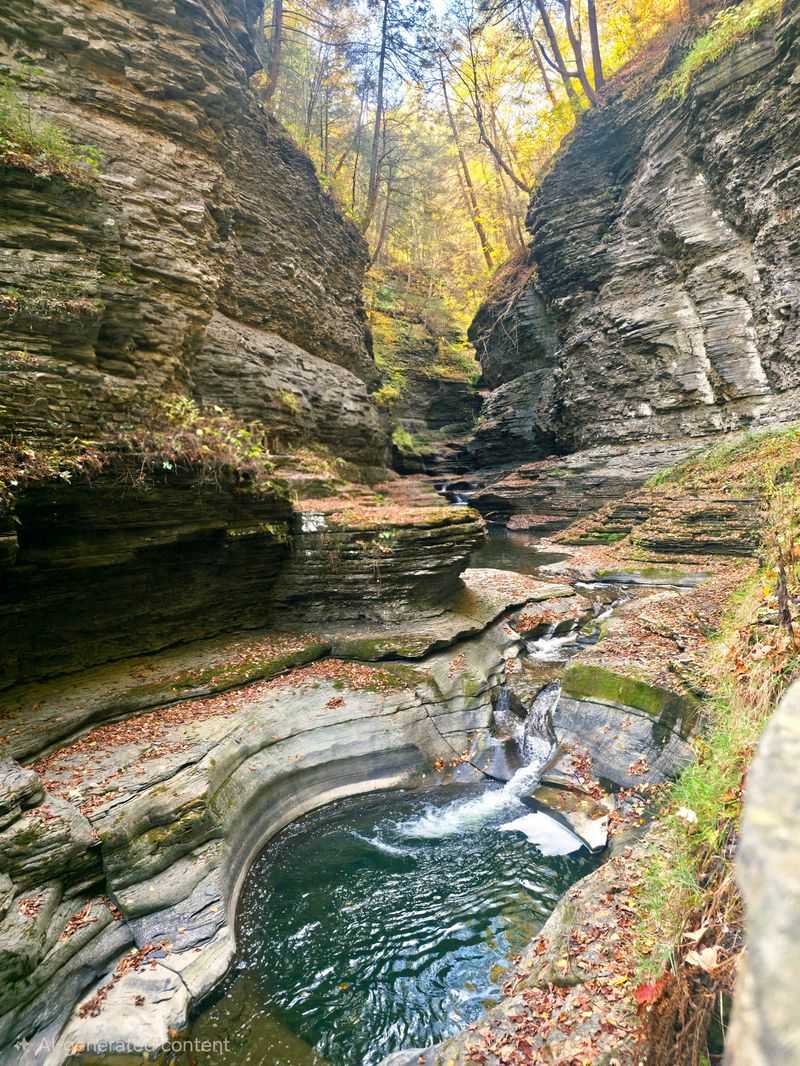
Timing shapes the personality of the gorge more than any single landmark. Spring sends strong water through the narrows, and the sound fills the space with steady energy. Summer steadies the flow and cools the air, inviting long, unhurried visits.
Autumn brings the saturated color that makes every bend look carefully arranged. Leaves collect on steps and ledges, and the photographs feel fully composed without trying. Winter closes the Gorge Trail but leaves rim views open for quiet, spare vistas.
For photos, morning light and weekday visits keep the experience measured. Crowds thin early and thicken by late morning, especially near Rainbow Falls. Even during busy hours, the park rewards patience with small, unclaimed moments.
Trail openings generally run mid May to mid October, with weather making final decisions. Checking the park website before you leave saves time and guesswork. The rhythm of the year asserts itself gently, and your visit falls neatly into place.
Each season tells the same story in its own tempo.
Rim Trails And Quiet Detours
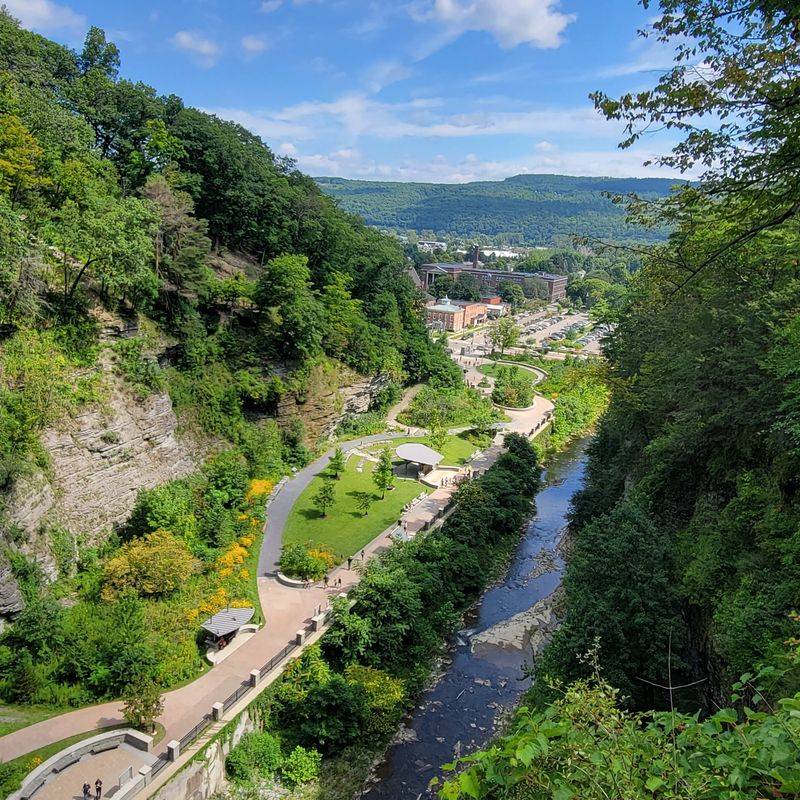
Rim trails offer a different conversation, one spoken in softer tones. The path widens, trees filter the light, and you hear the gorge rather than stand inside it. Overlooks appear like brief chapters, giving context to scenes you walked through earlier.
The North Rim in particular offers a steady return route after the Gorge Trail. Footing is simpler, and the grade treats the legs kindly after Jacob’s Ladder. Families often prefer this calm finish, which still holds solid views.
When construction adjusts the lower gorge access, these trails turn from option to asset. Detours are signed clearly and rarely feel like compromises. The sense of continuity remains, and your map starts to look more like a set of choices than a rule.
Benches show up where they should, which feels quietly considerate. Birds fill in the soundscape, and the air smells more like leaves than water. You end with a clearer picture of the gorge’s shape, having seen it from above and within.
The contrast deepens the memory.
Practical Tips For A Smooth Visit
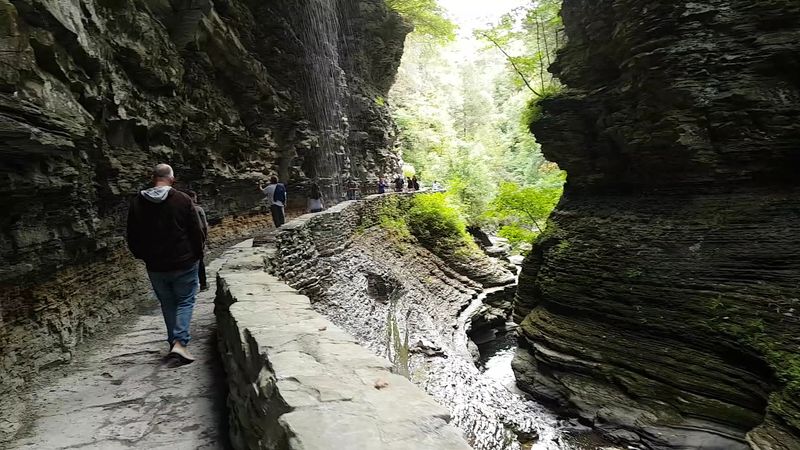
Sensible footwear matters most here, since wet stone makes balance a shared responsibility. Grippy soles, a light jacket, and a small towel for your camera keep the day orderly. Water and a snack help you think clearly on the stairs.
Parking is straightforward near the main entrance, and the fee covers other nearby state parks the same day. Going early grants easier photos and a quieter start. Weekdays reduce bottlenecks at bridges and narrow turns.
Strollers and wheelchairs meet real limits on the Gorge Trail, which has steps and tight passages. Families often try lower sections, then switch to rim paths for comfort. If a shuttle operates, it simplifies returns after long one way walks.
Weather shifts quickly in the gorge, so layers save time and second guessing. Check the official site for trail updates and seasonal closures before leaving town. Keep your expectations calm, your stride steady, and your curiosity ready.
The park responds well to that kind of preparation.
Camping, Picnics, And A Swim
Campgrounds at Watkins Glen carry the same measured character as the trails. Sites range from shaded pockets to open grass, so a careful look at the map pays off. Evenings settle into a friendly quiet that respects early bedtimes for ambitious mornings.
Picnic areas near the entrances provide clean tables and straightforward grills. Restrooms are tidy, and trash is handled efficiently, which keeps the grounds pleasant. On warm days, a swim at the historic pool takes the edge off the climb.
Booking ahead is sensible in summer and during peak fall weekends. The rhythm of the campground often mirrors the day on the trails, with early coffee and calm voices. Families fit easily here, and the walk to trailheads avoids fuss.
Simple routines make the difference: dry shoes by the fire ring, pack breakfast, and glance at the map after dusk. Nearby Seneca Lake adds a longer horizon if you want an easy drive after hiking. Returning to camp with tired legs feels like closing a well chosen book.
The park handles both energy and rest.
Art, Memory, And A Painter’s Eye
History slips into the visit when you consider the painters who stood here before. James Hope’s work, including Frowning Cliff, suggests a careful reading of shadow and restraint. The gorge rewards that outlook, offering forms that do not need embellishment.
Carrying that sensibility, you begin to frame scenes with a quieter hand. Contrast becomes the language, with wet stone holding the light in narrow bands. Even quick phone photos improve when you let the composition settle.
Memory behaves similarly, storing pieces rather than sweeping views. A bridge line, a ledge with ferns, the way mist holds to a corner of air. These details add up later, defining the day more faithfully than a single grand shot.
On the walk back toward town, the galleries and small shops along North Franklin Street nod to that same patience. The park’s address stays in your notes, not as proof, but as a gentle reminder to return. What you carry home is a sharpened eye and a steady feeling.
That is a worthy souvenir.