
This Enormous Science Museum In Tennessee Is Unlike Any Other In The World
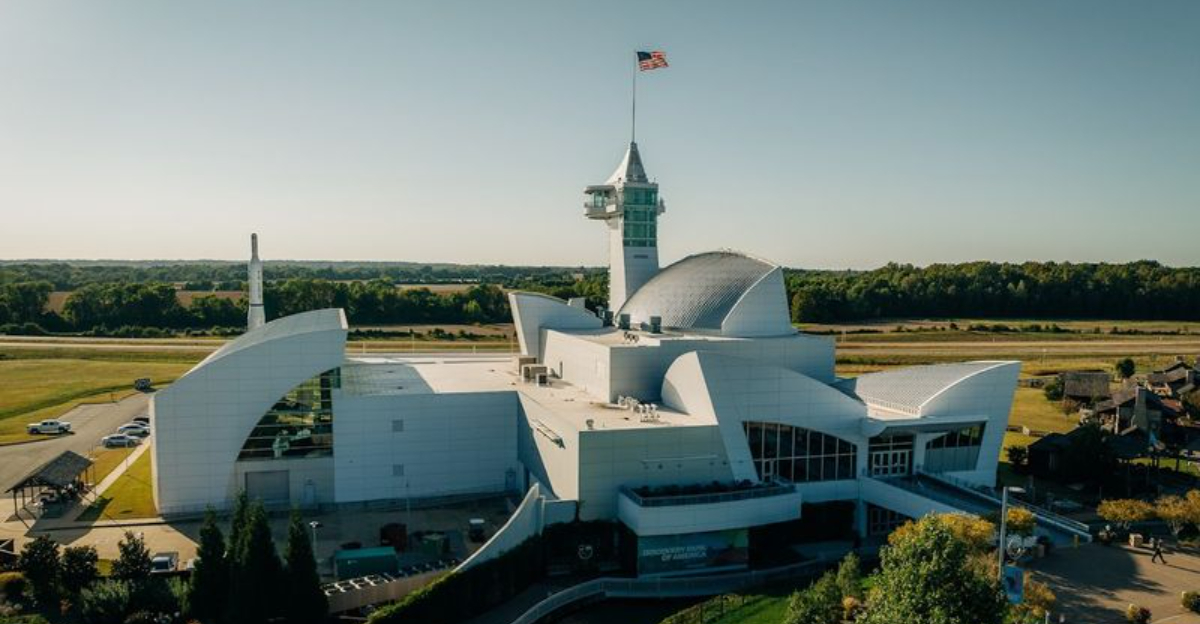
Curiosity tends to grow the moment you walk through the doors. Giant exhibits, hands-on experiments, and entire worlds of science waiting to be explored make this Tennessee attraction feel more like an adventure than a museum.
One minute you are learning about space, the next you are standing beside massive machines or diving into stories about innovation and discovery. The scale alone surprises first-time visitors.
Families wander for hours and still leave saying they did not see everything. Tennessee has many great museums, but this one operates on a completely different level, turning science into something lively, exciting, and impossible to rush through in a single visit.
A Museum That Rewrites What Museums Can Be

Most museums ask you to stand back and observe, but this one flips that idea entirely on its head. From the moment you walk through the entrance, the exhibits invite you to touch, test, push, pull, and participate in the learning process in ways that feel genuinely exciting rather than obligatory.
Spread across 100,000 square feet of interior space and set within a 50-acre heritage park, this institution is one of the most comprehensive hands-on learning environments in the American South. It opened in 2013 and was funded largely through the generosity of local philanthropists Robert and Sara Hough, who wanted to bring a world-class educational experience to northwest Tennessee.
The museum has earned a remarkable 4.8-star rating across nearly 4,000 visitor reviews. That kind of consistent praise across such a large number of visitors says something genuine about the quality and care built into every corner of this place.
Visitors routinely describe it as a full-day experience that still leaves something left to discover on a second visit.
The Scale Of It All Will Genuinely Surprise You
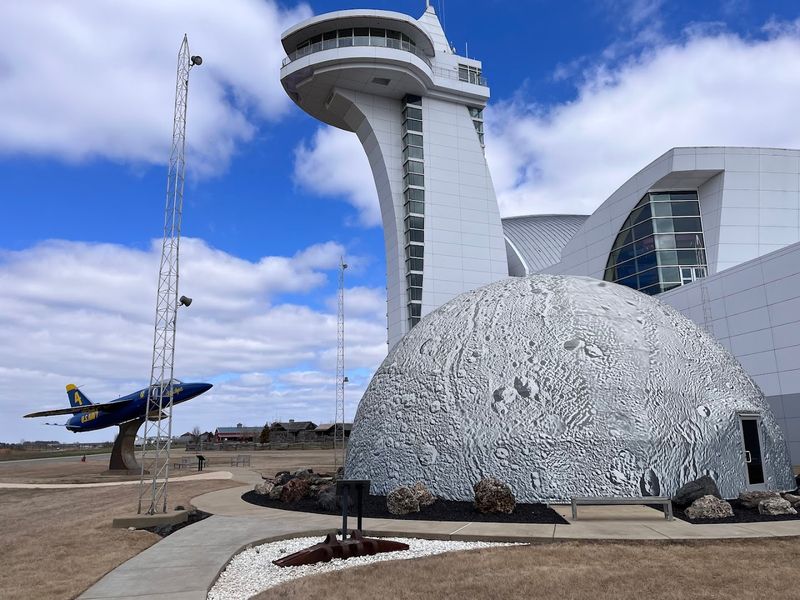
People often arrive at Discovery Park of America expecting something modest, given that it sits in a small Tennessee city with a population of just over 10,000. What they find instead is a campus so large that comfortable walking shoes are not just a suggestion but a real necessity.
The indoor exhibits alone span multiple floors with dozens of distinct galleries covering topics from earth science and space exploration to Tennessee history and Native American culture. Outside, the grounds include a replica early-1900s town, a working farm area, a freedom monument, and beautifully maintained gardens that change with the seasons.
One reviewer compared the experience to hitting 10,000 steps before the afternoon even begins, which is both accurate and somehow endearing. Families with young children can borrow complimentary strollers at no extra charge, and wheelchair accessibility is thoughtfully built into most of the outdoor paths.
The scale of this place is not just physical. It is also intellectual, spanning centuries of human history and reaching far into scientific territory that most regional museums would never attempt to cover with this level of depth and ambition.
Science Exhibits That Actually Make Learning Feel Fun
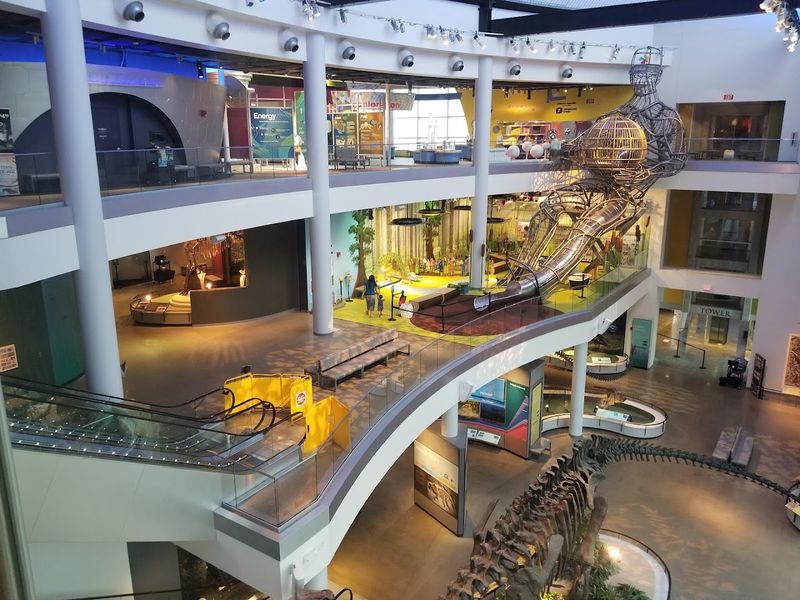
Science education has a reputation for being dry, but whoever designed the science galleries at Discovery Park of America clearly had other ideas. The exhibits are built around participation, with mechanisms, levers, screens, and experiments that respond directly to what you do with them.
Younger visitors can explore concepts in physics, biology, and engineering through displays that are scaled to their curiosity rather than their academic level. Older visitors and adults find themselves equally absorbed, often spending far longer at individual stations than they originally planned.
The design philosophy here treats every visitor as someone capable of genuine intellectual engagement, regardless of age or background.
There is an earthquake simulator on site that gives visitors a visceral sense of what seismic activity actually feels like beneath your feet. It is one of those rare museum moments that stays with you long after you have left the building.
The science wing also connects naturally to other parts of the museum, so a conversation about geology can flow seamlessly into a look at the region’s natural history without any jarring transitions or awkward thematic leaps. The whole experience feels coherent and purposefully constructed.
The Earthquake Simulator Stands Out As A True Highlight

There are exhibits you read about, and then there are exhibits that physically move you, sometimes quite literally. The earthquake simulator at Discovery Park of America belongs firmly in the second category, and it tends to generate some of the loudest reactions from visitors of every age group.
The platform recreates the sensation of a genuine seismic event, giving participants a grounded understanding of what earthquake-prone communities experience during a major tremor. For children who have only ever read about earthquakes in textbooks, this kind of embodied learning creates a memory that no worksheet could ever replicate.
Adults tend to find it equally striking, especially those who have never lived in a seismically active region.
The New Madrid Seismic Zone, one of the most significant earthquake fault systems in North America, runs not far from Union City, which gives this particular exhibit a local relevance that adds real weight to the experience. Knowing that the ground beneath Tennessee has its own seismic story makes stepping onto that simulator feel less like a theme park attraction and more like a genuine encounter with the natural forces that shape this part of the country.
It is a well-conceived and memorable piece of educational design.
Dinosaur Bones And Fossils That Span Deep Time
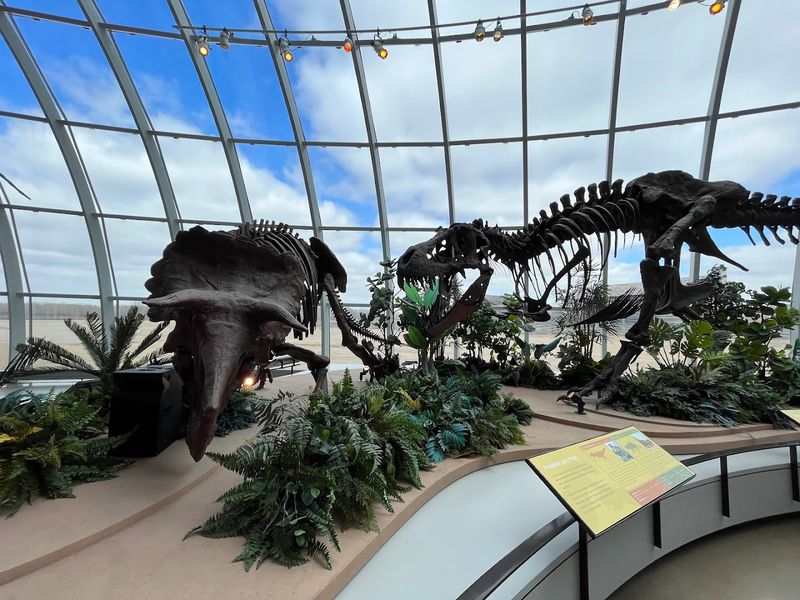
Walking past a dinosaur skeleton has a particular effect on the human imagination that no amount of digital rendering has managed to replace. The fossil exhibits at Discovery Park of America deliver that experience with a collection that spans a genuinely impressive range of prehistoric life, from ancient marine creatures to the large terrestrial predators that dominated the Mesozoic era.
The presentation is clear and well-organized, with labels and context panels that explain what visitors are looking at without overwhelming them with technical language. For younger visitors, the sheer physical scale of some of the specimens is enough to inspire awe.
For adults with a deeper interest in natural history, the collection offers enough detail to reward careful attention and unhurried observation.
One frequent visitor mentioned being struck by the variety on display, noting that the fossil collection sits alongside arrowheads, war memorabilia, and vintage cars in a way that reflects the museum’s broad curatorial ambitions. That eclecticism is part of what makes Discovery Park of America so unusual.
Rather than specializing narrowly, it builds connections across time and discipline, asking visitors to consider how natural history, human culture, and scientific discovery all belong to the same ongoing story of life on this planet.
The Heritage Village Recreates Early American Life

Stepping into the heritage village at Discovery Park of America feels like crossing a threshold into a different century. The outdoor settlement features a collection of carefully reconstructed buildings that represent life in the American South during the late 19th and early 20th centuries, from simple log cabins to more formal structures that reflect the social and economic patterns of the era.
Visitors can walk through these spaces at their own pace, reading the interpretive materials and absorbing the architectural details that give each structure its own character. The grist mill area and the train station have been particularly popular with families, who tend to linger longer here than in some of the indoor galleries.
There is something about physical space and period atmosphere that engages the imagination in ways that wall-mounted displays sometimes cannot.
One reviewer called the wooden homestead village their absolute favorite part of the entire visit, and it is easy to understand why. The combination of open air, historic buildings, and the ambient sounds of the surrounding park creates an experience that feels grounded and human rather than sterile or overly curated.
Accessibility has been considered here too, with packed surfaces on most paths allowing visitors using wheelchairs or strollers to navigate the area with reasonable ease.
Cars, Planes, And Transportation History On Full Display

Few things capture the spirit of American ingenuity quite like a well-maintained collection of vintage vehicles, and Discovery Park of America has assembled a group that draws genuine admiration from car enthusiasts and casual visitors alike. The transportation exhibits include classic automobiles and aircraft that span several decades of design and engineering history.
Each vehicle is presented with enough context to make it meaningful beyond its surface appeal. Visitors learn not just what the vehicle is, but when it was built, what it was used for, and how it fits into the broader story of American technological development.
That approach transforms what could easily become a simple display of old machines into a genuine conversation about how transportation shaped American culture and geography.
One visitor specifically praised the car and plane collection as a highlight of their trip, noting that it complemented the museum’s broader historical holdings in a way that felt cohesive rather than random. The collection is housed in a well-lit gallery space that allows visitors to walk around the vehicles and appreciate them from multiple angles.
For families with children who are already fascinated by machines and speed, this section of the museum tends to generate a level of enthusiasm that carries energy into the rest of the visit.
War Memorabilia That Honors Service And Sacrifice

History museums that include military collections face a particular challenge: how to present the material honestly without either glorifying conflict or reducing complex events to simple moral lessons. The war memorabilia section at Discovery Park of America handles this balance with evident care, presenting its collection in a way that centers human experience rather than spectacle.
The artifacts include items from multiple conflicts in American military history, displayed alongside contextual information that helps visitors understand the circumstances that surrounded them. For older visitors with personal or family connections to military service, this section of the museum often carries significant emotional weight.
For younger visitors, it provides a tangible connection to historical events they may only know through textbooks.
One visitor described spending most of a day at the museum and still barely scratching the surface, with the war memorabilia collection listed among the many highlights that made a return visit feel necessary rather than optional. The military exhibit sits naturally within the museum’s broader historical framework, connecting to the heritage village and the Native American collection in a way that gives visitors a sense of American history as a continuous and layered narrative rather than a series of isolated events.
The presentation is respectful, informative, and genuinely worth extended attention.
Why This Museum Belongs On Every Tennessee Itinerary
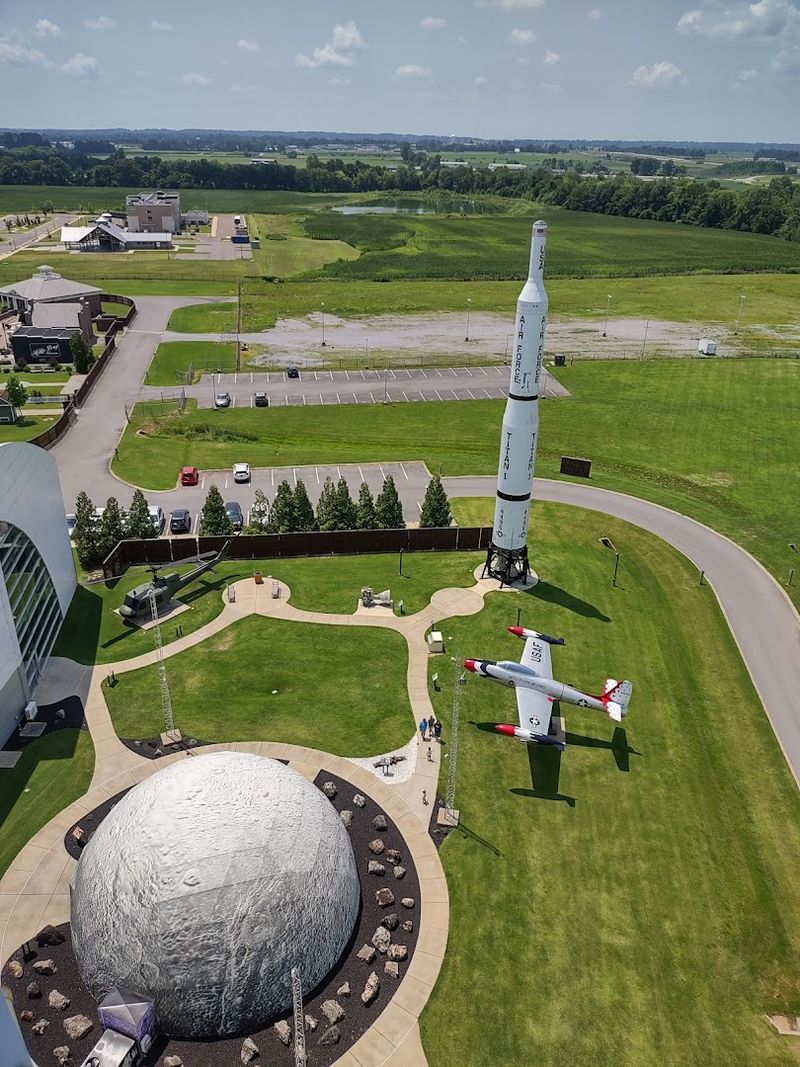
Some destinations justify themselves through spectacle alone. Discovery Park of America at 830 Everett Blvd, Union City, TN 38261 justifies itself through something more durable: the consistent ability to give every visitor, regardless of age, background, or prior knowledge, something genuinely meaningful to take away from the experience.
That is a harder standard to meet than mere impressiveness, and this museum meets it with evident conviction.
The combination of science, history, culture, outdoor space, and seasonal programming creates a destination that functions differently on every visit. A family that comes in summer for the outdoor exhibits and water table will have a different experience than one that comes in December for the holiday lights, and both will find reasons to return.
That kind of layered replayability is rare in any cultural institution.
Visitors ranging from age four to seventy-five have described leaving with genuine enthusiasm, which is perhaps the most honest endorsement any museum can receive. The reviews speak of a place that feels like a museum with fun added, which captures something true about the balance Discovery Park of America has managed to strike.
For anyone traveling through Tennessee and wondering whether the detour to Union City is worth making, the answer, based on thousands of visitor accounts, is an unambiguous yes. This is a place that earns its reputation and then exceeds it.