
This Epic Wyoming Road Trip Stops At 12 Unforgettable Viewpoints Across The West
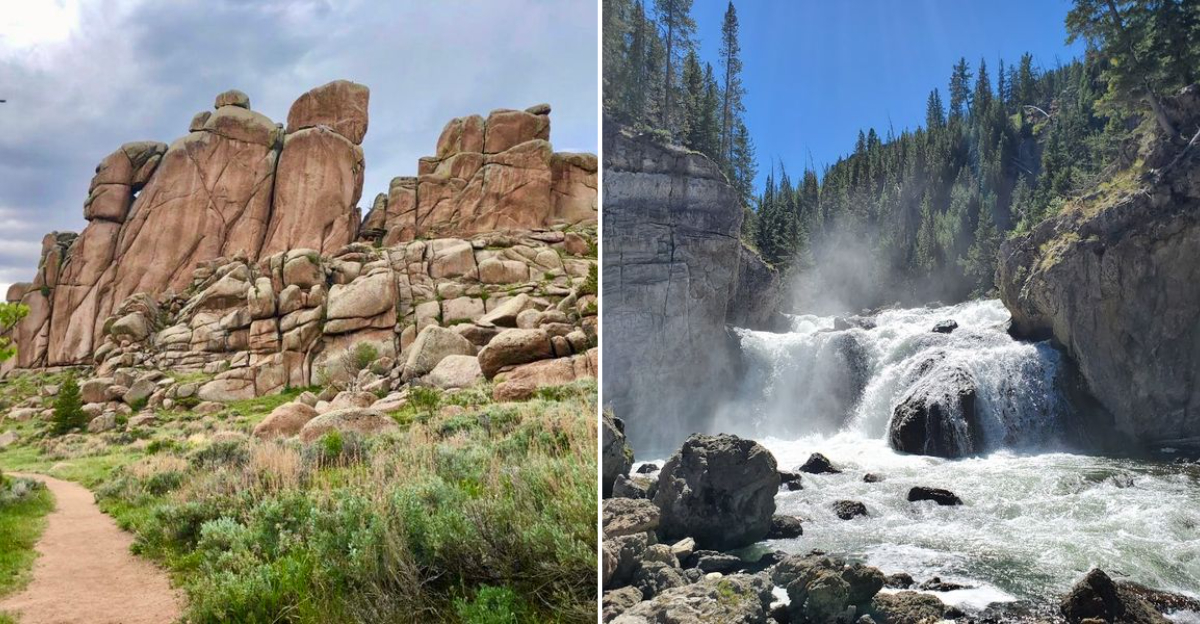
Viewpoints that refuse to repeat themselves produce a road trip that earns every mile between stops. The windshield becomes the best seat available somewhere around the second hour and never relinquishes that title.
Each stop delivers something the previous one never suggested was coming. That cumulative surprise separates this route from every other drive that promised spectacular and delivered merely scenic.
Vast plains give way to mountain backdrops without warning. Canyon formations appear next, demanding the car pulls over before the thought fully forms.
A road trip this consistently rewarding belongs to a state comfortable letting its landscape do the convincing. The viewpoints make the argument, and the miles between them make sure nobody forgets it.
1. Grand Teton National Park
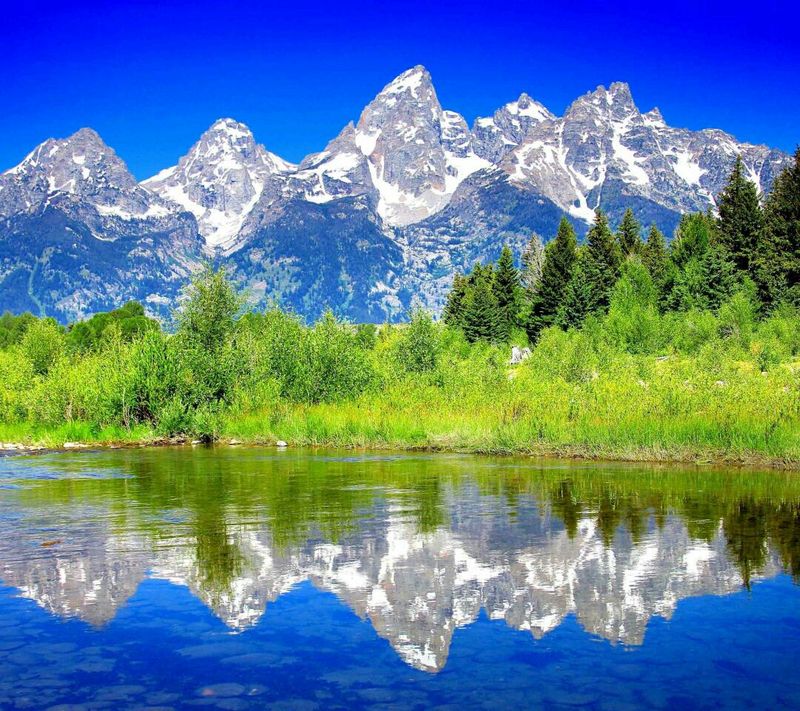
Nothing prepares you for that first view of the Tetons. The mountains shoot straight up from the valley floor, no gentle warm-up, just pure vertical drama.
It feels almost unfair how beautiful this place is.
The Teton Range climbs over 7,000 feet above Jackson Hole. That kind of height creates a skyline you will never forget.
Every angle you look from gives you something incredible to photograph.
Jenny Lake is the spot to visit early in the morning. The water reflects the peaks like a giant mirror.
Schwabacher Landing does the same thing and gets less foot traffic.
Snake River Overlook is where Ansel Adams took one of his most famous photographs. Standing there, you completely understand why he chose that exact spot.
The winding river against the Tetons is genuinely timeless.
Wildlife roams freely throughout the park. Moose, bison, bears, and eagles show up regularly.
You do not need to hike far to spot something amazing.
The park covers over 310,000 acres of preserved wilderness. Glaciers carved the valleys and lakes thousands of years ago.
That geological history makes every rock and ridge feel ancient and significant.
2. Devils Tower National Monument
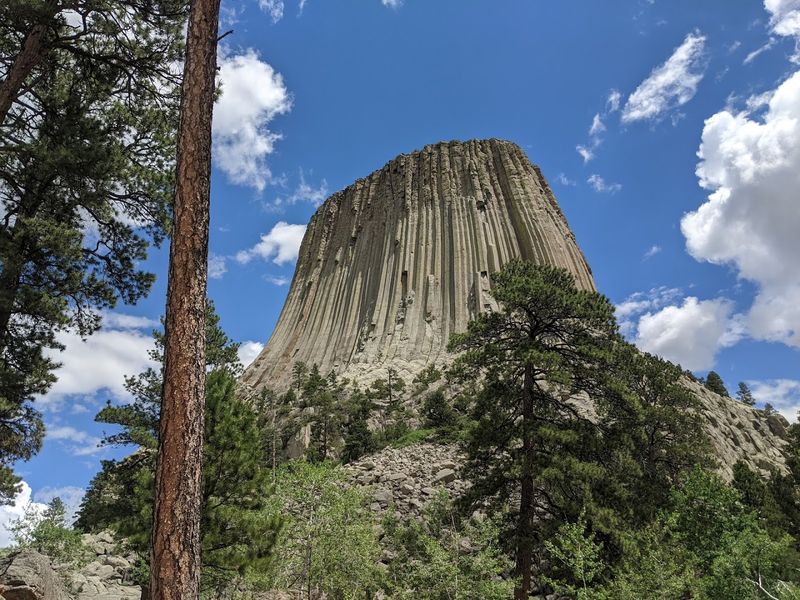
You will see it long before you reach it. Devils Tower rises 867 feet above the surrounding plains like something dropped from another world.
Honestly, it looks like a movie set because it literally was one.
Steven Spielberg used it in Close Encounters of the Third Kind. Ever since, people from everywhere have made the pilgrimage out to this remote corner of Wyoming.
The reality is even more jaw-dropping than the film.
The tower is made of igneous rock with perfectly formed hexagonal columns. Scientists believe it formed from cooling magma millions of years ago.
Those columns crack and fall over time, creating a boulder field around the base.
Hiking trails circle the entire tower. The Tower Trail is about 1.3 miles and gives you incredible views from every angle.
It is an easy walk with a huge payoff.
For Native American tribes, this site holds deep spiritual meaning. Over 20 tribes consider it sacred.
Climbing is voluntarily restricted in June out of respect for those traditions.
Prairie dogs live in colonies near the parking area. Kids absolutely love spotting them popping in and out of holes.
It adds a surprisingly fun wildlife moment to the visit.
3. Lamar Valley
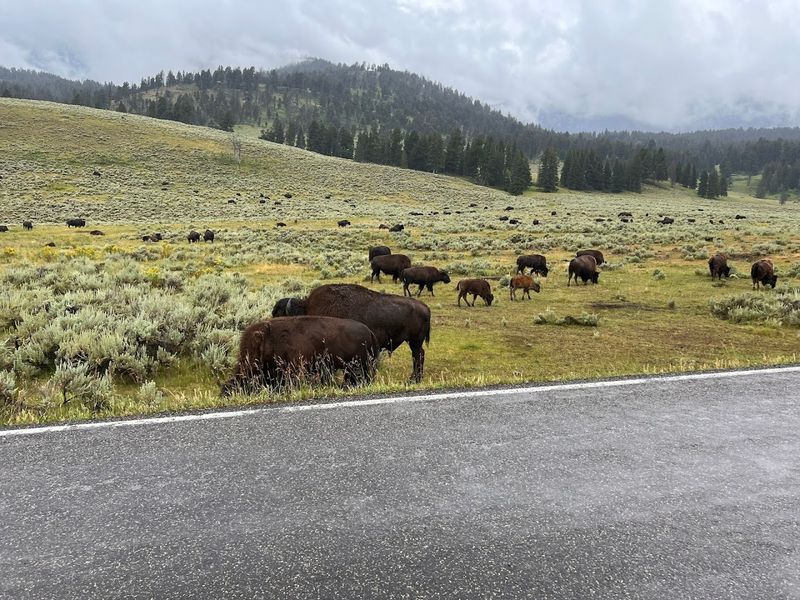
People call it America’s Serengeti, and after one morning here, you will agree. Lamar Valley stretches wide and open across Yellowstone’s northeastern corner.
The sheer number of animals moving through this place is staggering.
Bison herds cross the road as if they own it because they do. You will sit in your car waiting for a hundred of them to pass.
It is one of those moments that makes you laugh and feel humbled at the same time.
Wolves were reintroduced to Yellowstone in 1995. Lamar Valley became their stronghold almost immediately.
This is consistently one of the best places on Earth to watch wild wolves hunt.
Bring binoculars and a spotting scope if you have one. Serious wildlife watchers line the pullouts at dawn with serious equipment.
Even without gear, you will spot something remarkable.
Bears, elk, pronghorn, and eagles also pass through regularly. The ecosystem here supports one of the densest concentrations of large mammals in North America.
Every visit feels genuinely different.
The valley road runs along the Lamar River. The river bends and sparkles through the meadows beautifully.
Photographers love the combination of wildlife and landscape in one frame.
Find this spot at NE Entrance Rd, Yellowstone National Park, WY 82190.
4. Lookout Point
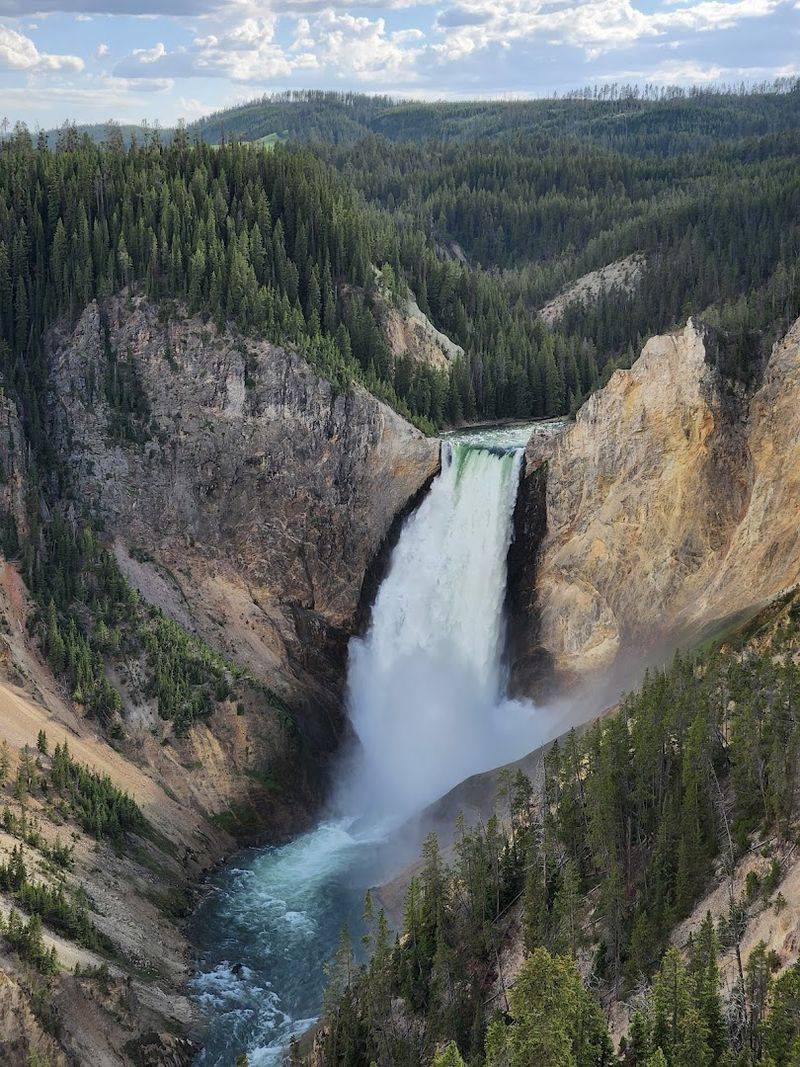
The Grand Canyon of the Yellowstone is not what most people expect. You hear Yellowstone and think geysers.
Then you walk up to this rim, and your brain completely reboots.
Lookout Point sits on the north rim directly facing the Lower Falls. The falls drop 308 feet, nearly twice the height of Niagara.
The roar of that water hitting the canyon floor is something you feel in your chest.
The canyon walls glow in oranges, reds, and yellows. Those vivid colors come from hydrothermal activity chemically altering the volcanic rock.
It looks like the canyon is on fire even at noon.
A park superintendent installed a railing at this spot back in 1880. People have been standing here in awe for well over a century.
That history makes it feel even more meaningful.
The hike down to Red Rock Point sits just below Lookout Point. From there, the falls tower above you dramatically.
It is a short but steep trail worth every step.
Morning light hits the falls and canyon walls at the best angle. Get there early to beat the crowds and catch the mist catching sunlight.
That combination makes for extraordinary photographs.
It’s located at Yellowstone National Park, WY 82190.
5. Wind River Range
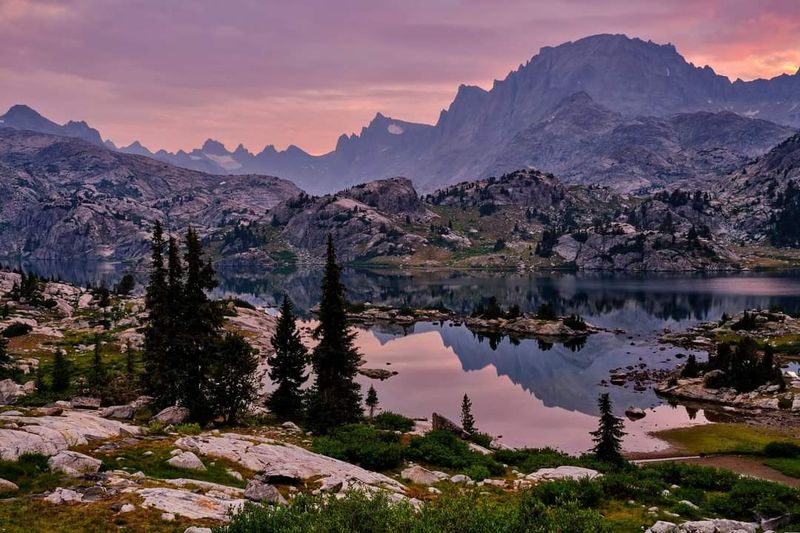
If you want Wyoming without the crowds, the Wind River Range is your answer. This is the kind of wilderness that makes you feel genuinely small.
In the best possible way.
The range holds Wyoming’s highest summit, Gannett Peak, at 13,809 feet. Dozens of glaciers still cling to these mountains.
That makes it one of the last glaciated ranges in the contiguous United States.
Hundreds of alpine lakes dot the landscape throughout the range. Most of them have no name on any map.
You stumble upon them while hiking and feel like the first person to ever see them.
Access points like Big Sandy Lodge and Elkhart Park are popular trailheads. From these, multi-day backpacking trips open up incredible backcountry terrain.
This is not a day-hike destination; plan to stay a while.
Wildlife here includes moose, black bears, mountain goats, and cutthroat trout. The fishing alone draws serious anglers from across the country.
Remote lakes offer solitude and surprisingly good catches.
Stargazing in the Wind Rivers is extraordinary. There is almost zero light pollution this far from any city.
The Milky Way stretches so clearly overhead that it looks painted on.
6. Dead Indian Summit Overlook
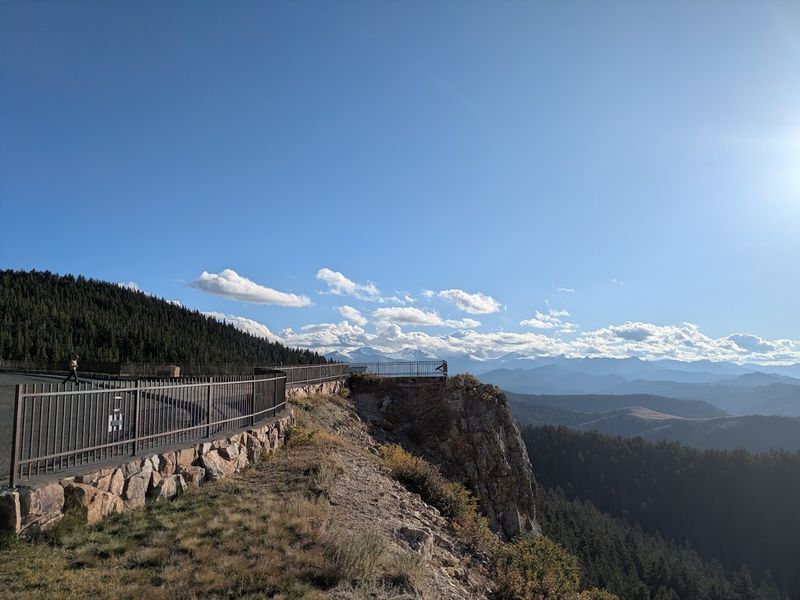
Pulling over at Dead Indian Summit feels like earning a reward. The Chief Joseph Highway winds through some of Wyoming’s most dramatic terrain.
When you reach this overlook, the view just opens up and swallows you whole.
The Absaroka Mountains dominate the horizon in every direction. Clark’s Fork Valley drops away below in a sweep of green and gold.
You can see for what feels like forever from up here.
The highway is named for Chief Joseph of the Nez Perce. In 1877, he led his people through this very terrain.
They were attempting to reach Canada and freedom during a forced relocation.
Interpretive signs at the overlook tell that story with honesty and respect. Reading them gives the landscape a completely different weight.
The beauty here carries history that deserves acknowledgment.
The road itself is one of Wyoming’s most scenic drives. Switchbacks, canyon views, and dramatic elevation changes make every mile interesting.
Even without the overlook, this highway is worth the detour.
Wildlife sightings along the route are common. Bighorn sheep sometimes appear on the rocky slopes near the summit.
Keep your eyes up and your speed down through this stretch.
Find it at Chief Joseph Hwy, Cody, WY 82414.
7. Oxbow Bend
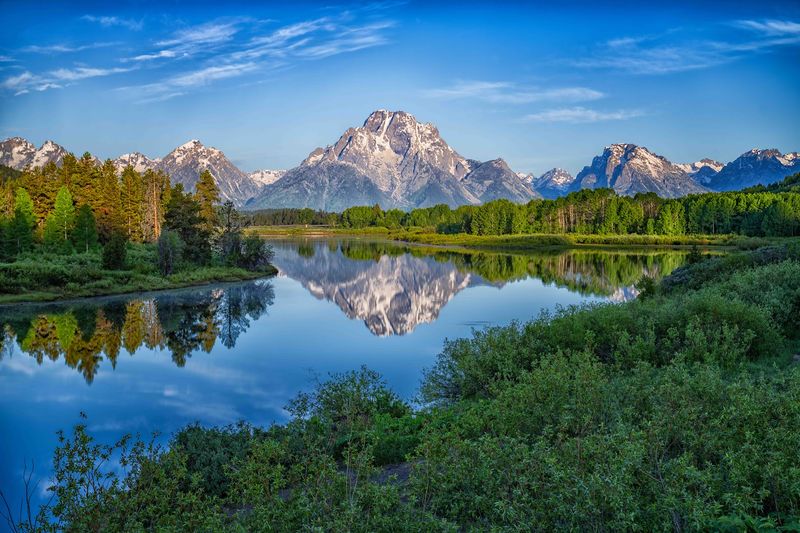
Photographers set alarms for 4 a.m. just to be at Oxbow Bend before sunrise. That tells you everything you need to know.
When the light hits and the water goes perfectly still, Mount Moran reflects like a painting.
The oxbow is a crescent-shaped curve in the Snake River. It formed as the river gradually shifted its course over thousands of years.
That slow geological patience created one of the most photographed spots in Wyoming.
Mount Moran towers at 12,605 feet directly across the water. On calm mornings, the reflection is so clear it is hard to tell where the mountain ends and the water begins.
It genuinely stops you mid-sentence.
Moose wade through the shallows here with impressive regularity. Pelicans, great blue herons, and bald eagles also frequent this stretch.
The diversity of wildlife at this one spot is remarkable.
Bring a tripod if you have one. Long exposure shots of the reflection at dawn are stunning.
Even phone cameras capture something special here in good light.
The area stays accessible year-round, though winter access requires preparation. Fall brings golden aspens that frame the view perfectly.
Every season offers a completely different version of the same incredible scene.
8. Vedauwoo Climbing Area
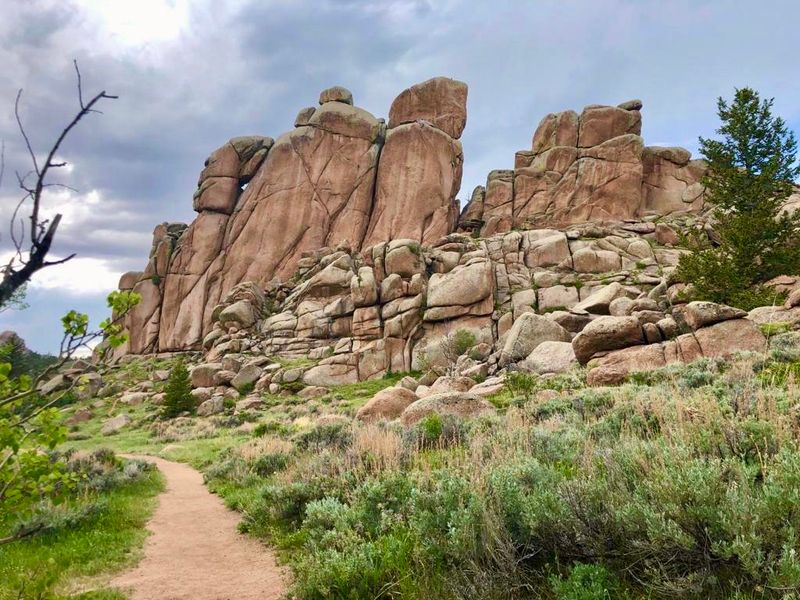
Vedauwoo looks like a giant dropped a pile of boulders and walked away. The formations are massive, rounded, and stacked in ways that seem physically impossible.
It is weird and wonderful in equal measure.
The rock here is Sherman granite, formed about 1.4 billion years ago. That makes these boulders older than most things you will ever touch.
Standing next to them gives you a strange sense of geological time.
The Arapaho word vedauwoo means earth-born. Native American tribes considered this landscape spiritually significant.
That connection to the land adds meaning beyond just the climbing and hiking.
Climbers come specifically for the wide crack routes. Vedauwoo is nationally known for its off-width and hand crack climbing.
If you have never tried crack climbing, this is a legendary place to learn.
Hikers who do not climb still find plenty to explore. The Turtle Rock Loop trail winds through the formations with great views.
Even a short walk here feels like exploring another planet.
The area sits right off Interstate 80 between Laramie and Cheyenne. It is shockingly easy to access for how remote it feels.
A quick detour here is absolutely worth the stop.
This place is located at Vedauwoo Climbing Area, Buford, WY 82052.
9. Medicine Bow Peak
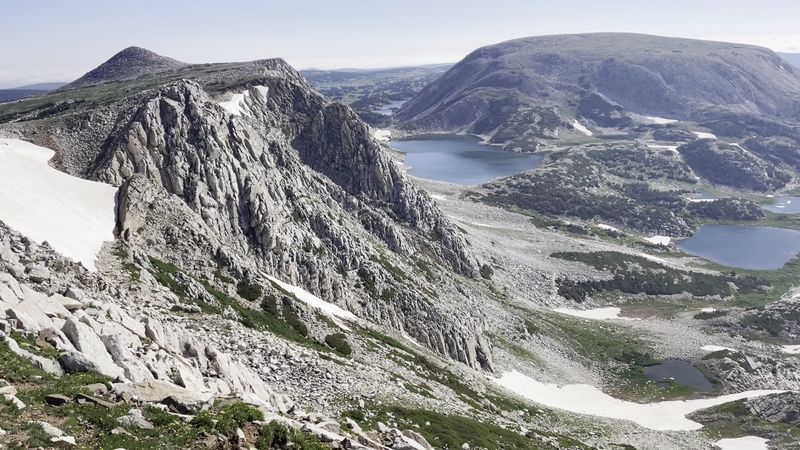
Medicine Bow Peak sits at 12,013 feet and earns every foot of that elevation. The Snowy Range around it stays white-capped well into summer.
From the summit, you can see Wyoming stretching out in every direction.
The hike to the top is challenging but not technical. Most fit hikers complete the round trip in four to five hours.
The trail passes glacial lakes that look almost cartoonishly blue against the grey rock.
Lake Marie sits near the trailhead and is worth a long pause. The water is incredibly clear and surrounded by dramatic boulder fields.
It is one of those spots where you sit down and forget to leave.
Wildflowers carpet the alpine meadows in July and August. Columbines, Indian paintbrush, and alpine forget-me-nots cover the slopes in color.
The contrast between the flowers and the rocky peaks is genuinely stunning.
Wildlife at this elevation includes pikas and yellow-bellied marmots. Pikas are tiny, round, and make a surprisingly loud chirp for their size.
Spotting one feels like finding a hidden treasure.
Wyoming Highway 130 through the Snowy Range is one of the state’s most scenic roads. The drive alone is worth making, even if you skip the hike.
But trust me, do not skip the hike.
10. Cloud Peak Wilderness
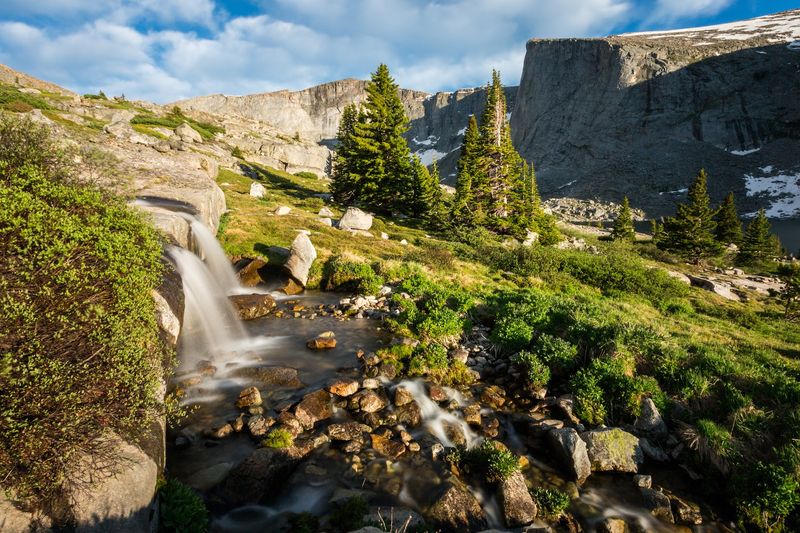
This spot feels like the Wyoming that most people never find. It is massive, remote, and completely uncompromising.
The Bighorn Mountains here look like they were designed to test your limits.
The wilderness covers 189,039 acres and was designated protected land in 1984. It includes over 100 miles of hiking trails winding through glacially carved valleys.
The terrain ranges from dense forest to exposed alpine ridgelines.
Cloud Peak itself tops out at 13,175 feet. It is the highest point in the Bighorn Mountains and a serious mountaineering objective.
Summit attempts require experience, preparation, and respect for rapid weather changes.
Hundreds of pristine lakes fill the glacier-carved basins throughout the wilderness. Many are stocked with trout and see very few anglers.
Backcountry fishing here feels like a secret that most people have not discovered.
The U-shaped valleys are textbook examples of glacial carving. Geology teachers would love this place.
The landscape tells the story of ice age forces with remarkable clarity.
Getting in requires a real commitment. Trailheads sit miles from any town, and trails climb steeply from the start.
That effort keeps the crowds away and rewards those who make the trip.
11. Firehole Canyon Road
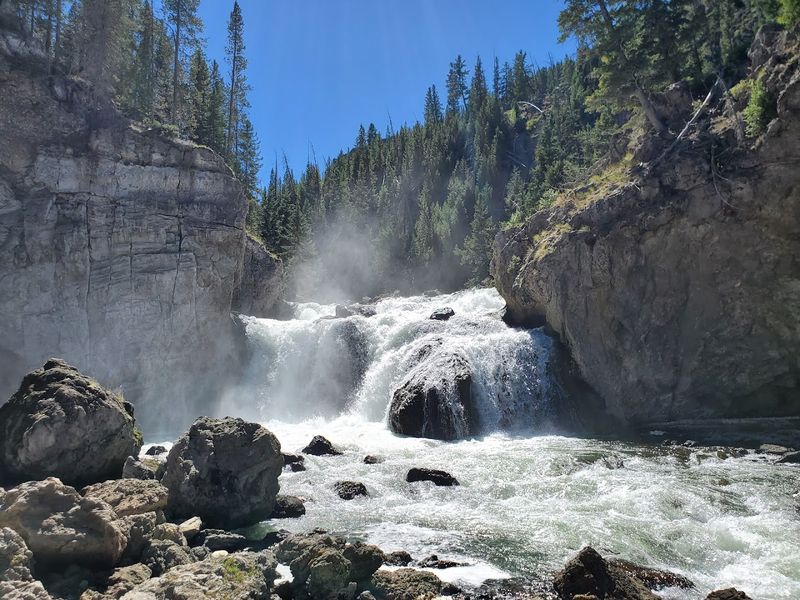
Most Yellowstone visitors drive right past the Firehole Canyon Road turnoff without blinking. That is their loss and your gain.
This two-mile stretch delivers some of the park’s most underrated scenery.
The road is one-way and runs alongside the Firehole River through a tight volcanic canyon. Steep walls of ancient lava rise sharply on both sides.
The whole corridor feels dramatic and slightly prehistoric.
Firehole Falls drops 40 feet in a clean, powerful plunge. You can pull over and walk right up to it.
The sound of that water echoing off the canyon walls is genuinely satisfying.
The canyon was carved through lava flows that are roughly 600,000 years old. That volcanic history is what makes Yellowstone geologically unique.
Every rock face here is a chapter in one of Earth’s wildest stories.
A seasonal swimming area sits along this road, open in summer. The Firehole River runs warm due to geothermal activity upstream.
Swimming in a geothermally heated river inside a national park is a surreal and fantastic experience.
The road is closed to large vehicles and RVs. That keeps it quieter than most Yellowstone stops.
Early morning visits here feel almost private, which is rare in this busy park.
Find it located at Firehole Canyon Road, Yellowstone National Park, WY 82190.
12. Bighorn Scenic Highway Pullout
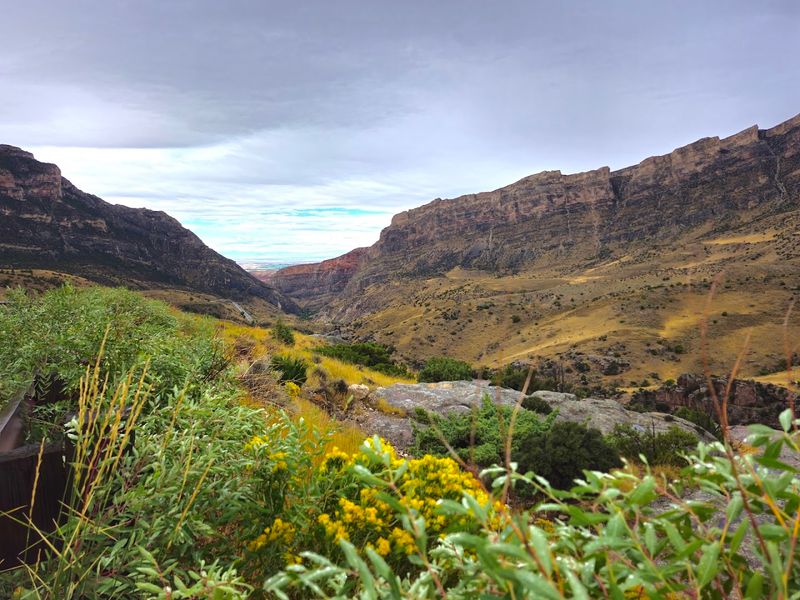
The Bighorn Scenic Highway is one of those roads that makes you pull over every five minutes. Wyoming Highway 14 climbs through the Bighorn Mountains with relentless drama.
Every corner reveals something bigger than the last.
Shell Canyon is the crown jewel of the route. The canyon walls rise hundreds of feet and display layers of rock spanning billions of years.
Geologists call it one of the most complete rock records in North America.
Shell Falls drops 120 feet through the canyon in a thundering rush. A short paved walkway takes you right to the overlook.
The mist from the falls reaches the viewing platform on windy days.
Numerous pullouts along the highway offer different perspectives. Some face east toward the plains stretching to the horizon.
Others look west toward the higher peaks still dusted with snow in June.
Bighorn sheep appear along the rocky slopes with surprising regularity. Rangers sometimes spot entire herds from the highway pullouts.
Keep your binoculars ready through this entire stretch.
The highway connects Lovell on the west side to Greybull on the east. Driving it in either direction gives a completely different experience.
Plan to take it slow; this is not a road you rush through.
Visit it at Bighorn Scenic Highway Pullout, Shell, WY 82441.