
This Four-Hour Arizona Train Ride Feels Like Gliding Through A Living Painting
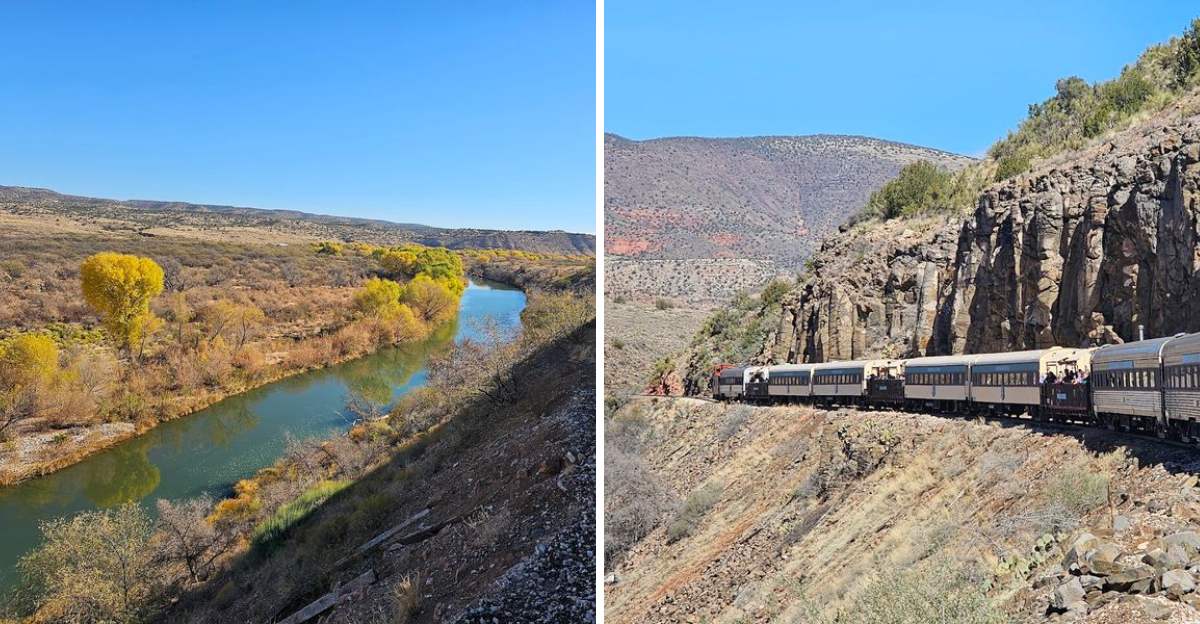
Imagine cruising through a landscape so vibrant and untouched, it feels like stepping into a living masterpiece. This four-hour train ride takes you through Arizona’s stunning red-rock canyons, where each twist and turn reveals new breathtaking views.
As you roll along at a relaxed pace, the scenery shifts with every mile, offering a front-row seat to nature’s finest artwork. It’s not just a journey; it’s a sensory experience that brings the beauty of the desert to life in the most unforgettable way.
Experience Arizona’s Red-Rock Canyons From A Vintage Train
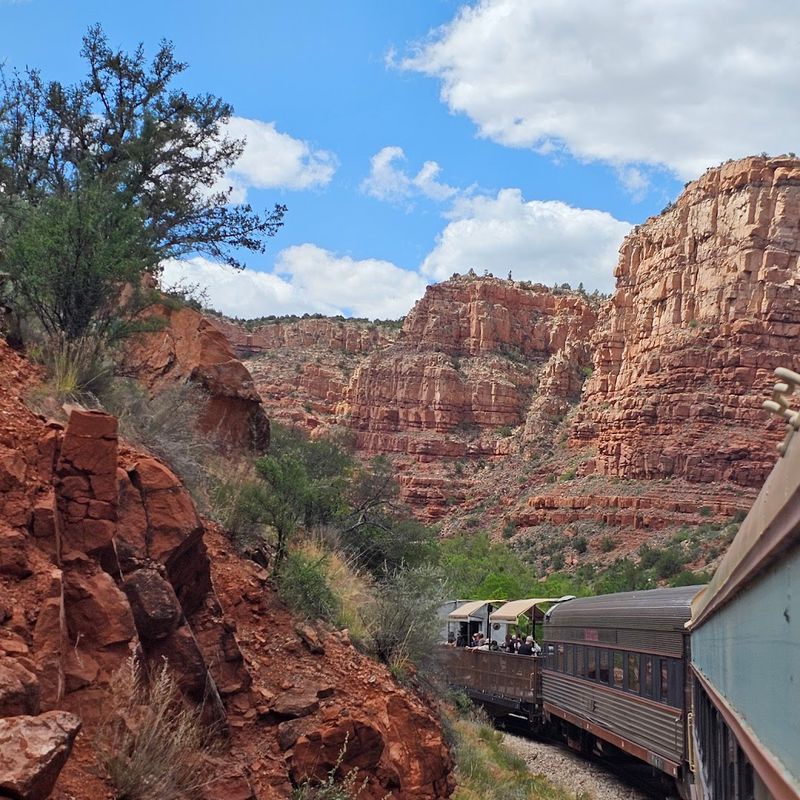
Trains have crossed this terrain since 1912, originally hauling copper ore from Jerome mines to the smelter in Clarkdale. The route was engineered to follow the natural contours of Verde Canyon, resulting in curves that hug cliff faces and bridges that span the river below.
Modern passengers ride in restored cars that balance historical character with contemporary comfort, including plush seating and climate control that the original miners never enjoyed.
The journey departs from 300 North Broadway in Clarkdale, where a small depot houses a museum detailing the railroad’s mining heritage. Boarding begins with a champagne toast and individual charcuterie boxes placed at each seat.
The train moves slowly enough that conversation remains easy, yet the changing views through oversized windows command regular attention from even the most seasoned travelers.
Open-air cars allow unobstructed photography and fresh canyon air, though most passengers alternate between indoor comfort and outdoor observation throughout the trip.
A Journey Through Verde Canyon’s Scenic Beauty
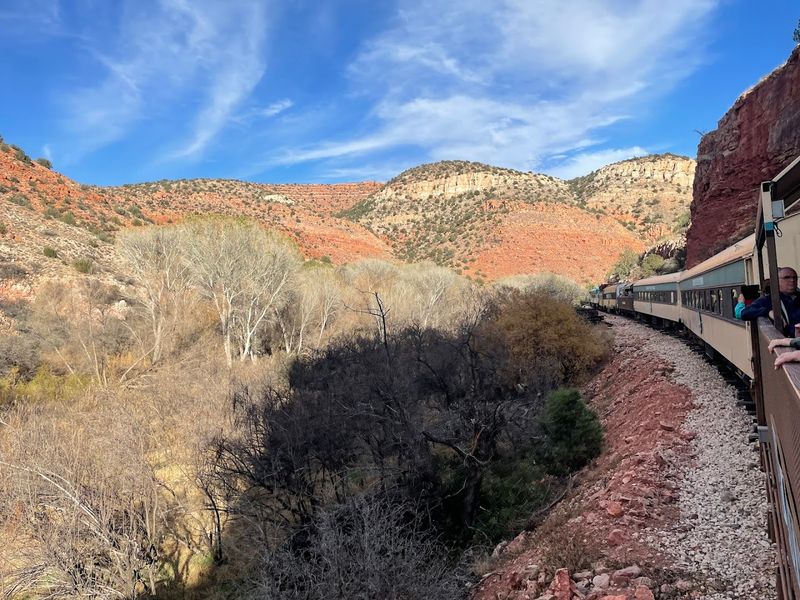
Geology tells its story in vertical layers along canyon walls, where volcanic rock meets sedimentary deposits laid down over millions of years. The Verde River maintains a ribbon of green through the corridor, supporting cottonwoods and willows that contrast sharply with the surrounding desert palette.
Seasonal changes affect the canyon’s appearance, with spring bringing wildflowers and autumn turning riverside foliage to gold.
Guides aboard each car provide narration about rock formations, pointing out features that passengers might otherwise overlook. The midpoint of the journey reaches a remote area where the train pauses briefly, allowing time to absorb the silence that prevails when the diesel engines idle.
This stretch of canyon remains roadless, preserving a sense of isolation that has become rare in Arizona.
Photography opportunities multiply as light angles shift during the four-hour excursion, creating different moods on the return journey compared to the outbound leg.
Why Verde Canyon Railroad Is Arizona’s Ultimate Scenic Escape
Accessibility sets this experience apart from other Arizona scenic attractions. Passengers remain seated comfortably while wilderness unfolds outside, eliminating the physical demands of hiking or off-road driving.
The railroad maintains its own right-of-way through canyon sections that cannot be reached by public roads, offering views unavailable to anyone not aboard the train.
Each passenger car includes its own bartender who serves craft cocktails, local wines, and non-alcoholic beverages throughout the journey. The staff demonstrates extensive knowledge about the region’s history and ecology, answering questions with genuine enthusiasm rather than scripted responses.
Seating assignments ensure that groups remain together, though the open-air cars provide opportunities to meet fellow travelers.
The depot area includes a cafe where meal vouchers can be purchased in advance, offering better value than buying food on-site. Arriving ninety minutes before departure allows time to explore the small museum and gift shop without feeling rushed before boarding begins.
Soaring Above Verde Canyon: Best Views From Your Train Car
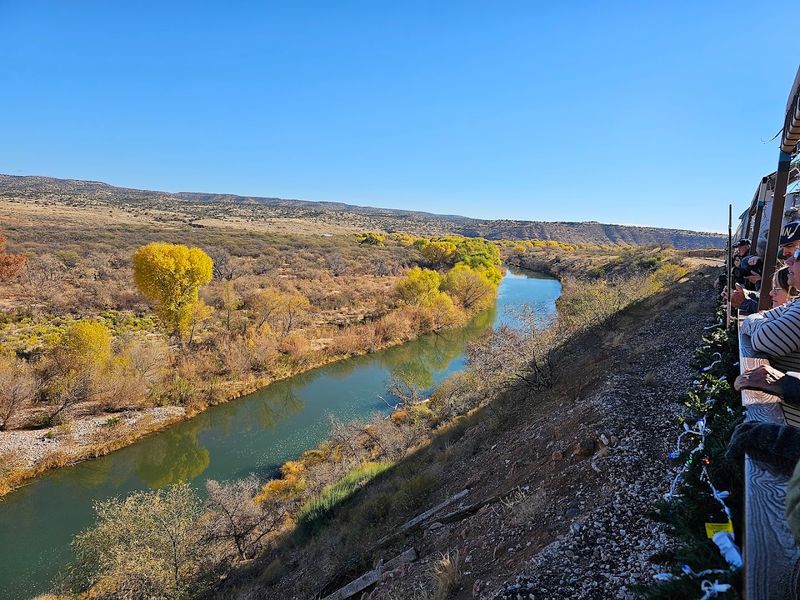
Open-air viewing cars provide the most dramatic perspectives, positioned between enclosed passenger cars so riders can move freely between sheltered and exposed areas. Metal railings line both sides of these platforms, allowing passengers to lean out safely for photographs or simply to feel the breeze.
The absence of glass or screens means nothing interferes with the direct experience of the canyon.
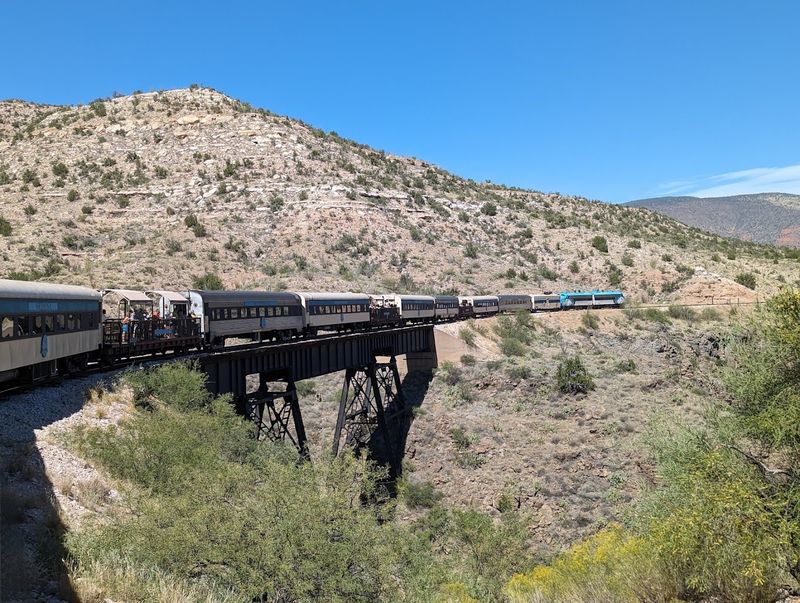
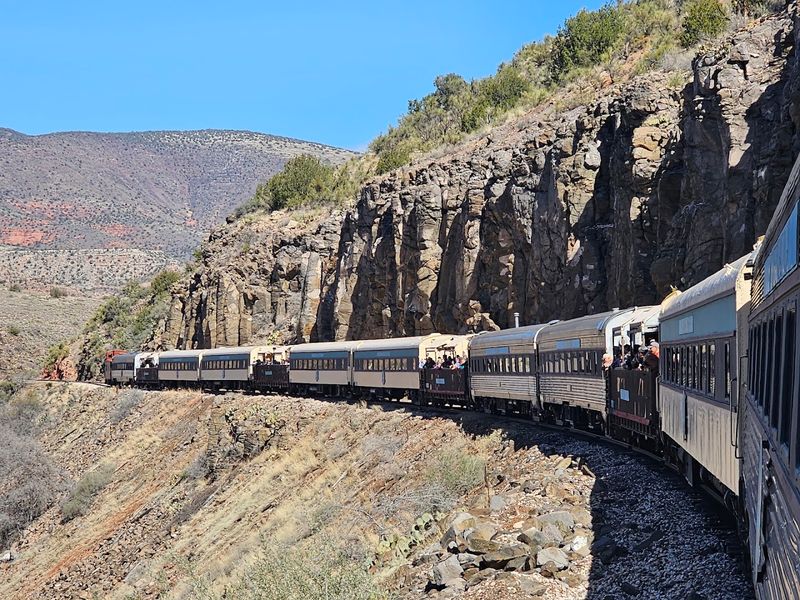
Curves in the track create opportunities to photograph the train itself snaking through the landscape, with the locomotive visible ahead during certain stretches. Guides stationed in the open-air sections point out wildlife and geological features, often spotting birds or mammals before passengers notice them.
Their practiced eyes catch movement that casual observers miss.
Temperature varies significantly between enclosed and open cars, particularly during winter months when sunshine feels pleasant outside but shade brings a chill. Layers prove practical for passengers who want to maximize time on the observation platforms without discomfort affecting their enjoyment of the scenery.
Step Back In Time: The History Of Verde Canyon Railroad
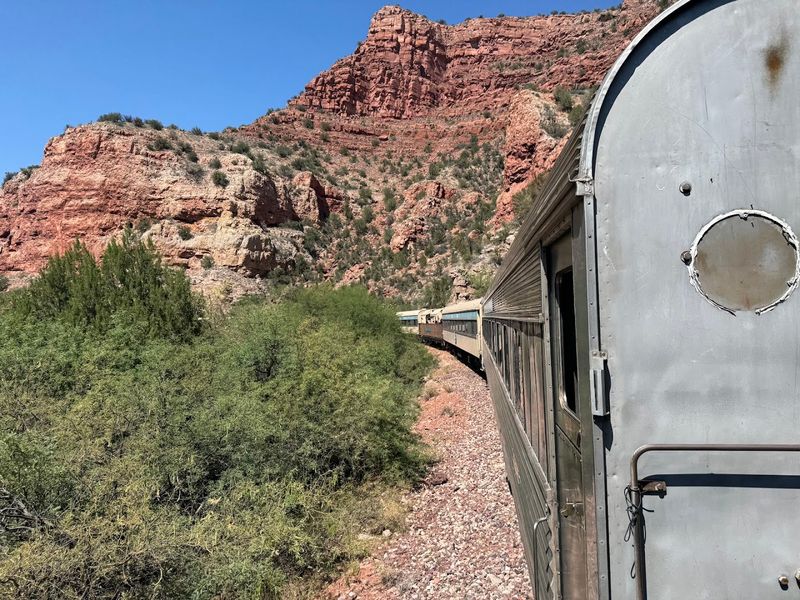
Copper mining drove the construction of this railroad, connecting the rich deposits around Jerome with processing facilities in the valley below. Engineers faced substantial challenges routing tracks through canyon terrain, requiring tunnels, trestles, and careful grading to maintain manageable grades for heavily loaded ore trains.
The line opened in 1912 and served mining operations for decades before those industries declined.
Rather than abandon the tracks, local interests recognized tourism potential in the spectacular route that had been built purely for industrial purposes. The transition from freight to passenger service preserved both the railroad infrastructure and public access to canyon areas that might otherwise have been lost.
Original structures including a tunnel and several bridges remain in daily use, maintained to modern safety standards while retaining historical character.
The depot museum displays artifacts from the mining era, including tools, photographs, and documents that illustrate how dramatically the railroad’s purpose has shifted. Federal regulations govern train operations, explaining why certain items including pocket knives cannot be carried aboard.
What To Expect On Verde Canyon’s Four-Hour Train Ride
Departure occurs promptly at the scheduled time, beginning with a champagne or sparkling cider toast as the train pulls away from the station. Staff distribute charcuterie boxes to each seat, containing cheese, crackers, fruit, and other snacks that prove more substantial than typical train refreshments.
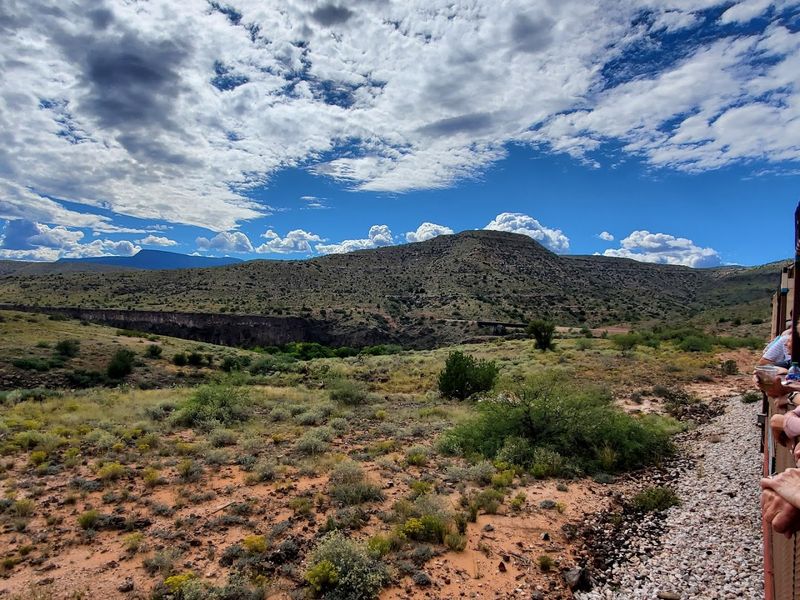
The initial portion of the journey covers relatively open terrain before the canyon walls begin to rise on both sides.
The route includes a tunnel that generates excitement among passengers, particularly children who appreciate the brief darkness and echoing sounds. At the turnaround point, the locomotive uncouples and moves to the opposite end of the train, eliminating the need for a loop or wye to reverse direction.
This process takes only minutes but fascinates rail enthusiasts who gather to watch the switching operation.
Return journey lighting differs from the outbound trip, creating new photographic opportunities and revealing details that were shadowed earlier. Total distance covers approximately forty miles round-trip, though the leisurely pace makes the journey feel unhurried rather than long.
The Thrill Of Riding Through Arizona’s Wildlife
Bald eagles nest along the Verde River, and spotting these raptors ranks among the highlights passengers mention most frequently in reviews. The birds favor tall cottonwoods near the water, where they hunt fish and waterfowl.
Winter months offer the best eagle viewing, though the birds maintain year-round presence in smaller numbers. Hawks circle overhead regularly, riding thermals that form along the heated canyon walls.
Elk occasionally appear in meadows adjacent to the tracks, particularly during early morning or late afternoon departures when these animals are most active. Javelina, deer, and other mammals inhabit the canyon but remain less predictable in their appearances.
Guides maintain ongoing commentary about wildlife sightings, alerting passengers when animals are spotted so cameras can be readied quickly.
The slow speed of the train allows quality observation time when wildlife does appear, unlike highway driving where animals vanish before passengers can react. Binoculars enhance the experience for serious birders, though most sightings occur close enough that naked-eye viewing proves satisfactory.
A Photographer’s Dream: Capturing Verde Canyon’s Landscapes
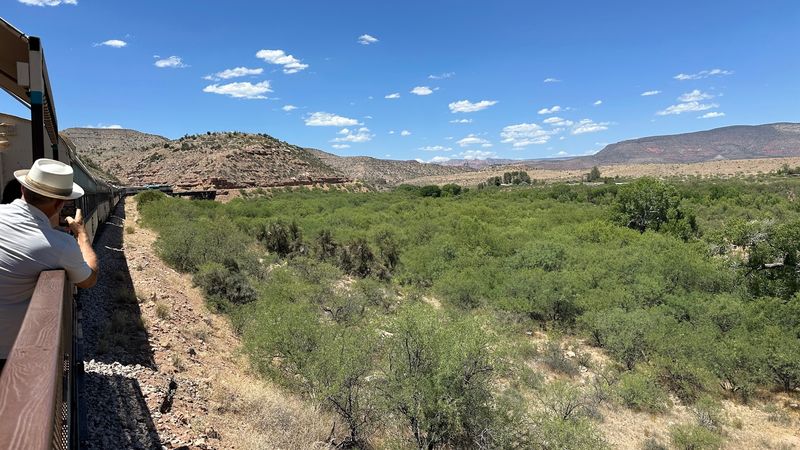
Large windows in the enclosed cars allow photography without stepping outside, though reflections can interfere with image quality. The open-air platforms eliminate this issue entirely, providing unobstructed shooting positions with stable footing despite the train’s motion.
Photographers should note that the train maintains a steady but not perfectly smooth ride, making faster shutter speeds advisable for sharp images.
Light angles change dramatically during the four-hour excursion, with the return journey often offering warmer tones than the outbound leg. Canyon walls create shadow patterns that shift as the sun moves, adding depth and texture to compositions.
The curve of the tracks means photographers can include the train itself in shots, adding context and scale to landscape images.
Staff members willingly take photos for passengers who want to appear in their own images, and they know the best locations for particular shots. Bringing extra batteries proves wise, as the temptation to shoot continuously can drain power supplies faster than anticipated.
How Verde Canyon Railroad Blends Adventure And Relaxation
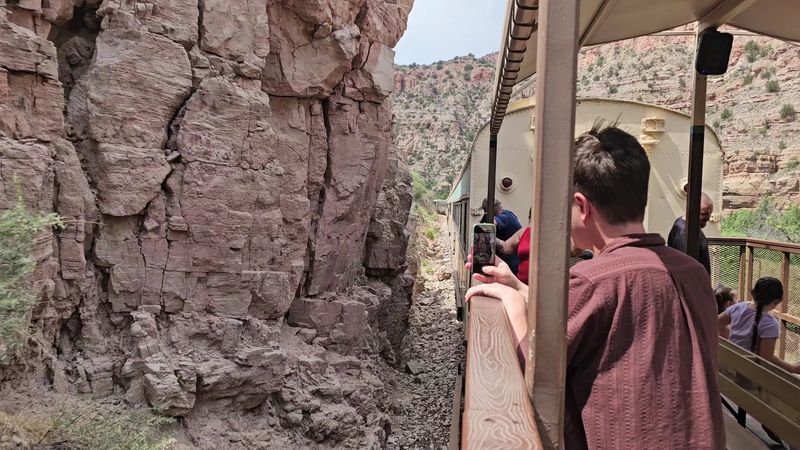
Comfort levels aboard Verde Canyon Railroad exceed what most people associate with train travel. Seating ranges from bistro tables with movable chairs to low-backed loveseats that encourage conversation and relaxation.
Climate control maintains pleasant temperatures regardless of outside conditions, though passengers can adjust their environment by moving between enclosed and open-air sections. The bar service operates continuously, with bartenders mixing cocktails, pouring wines, and preparing non-alcoholic drinks with equal attention.
Staff members maintain cleanliness throughout the journey, clearing empty glasses and refreshing amenities without becoming intrusive. Music plays at moderate volume, featuring railroad and locomotive themes that enhance rather than dominate the atmosphere.
Passengers frequently comment on how the time passes quickly despite the four-hour duration, a testament to the engaging combination of scenery, comfort, and service.
Special events including chocolate-themed rides and holiday excursions add variety to the regular schedule. These themed trips typically sell out early, making advance booking essential for anyone interested in these enhanced experiences.
Why Verde Canyon Railroad Is A Living Painting
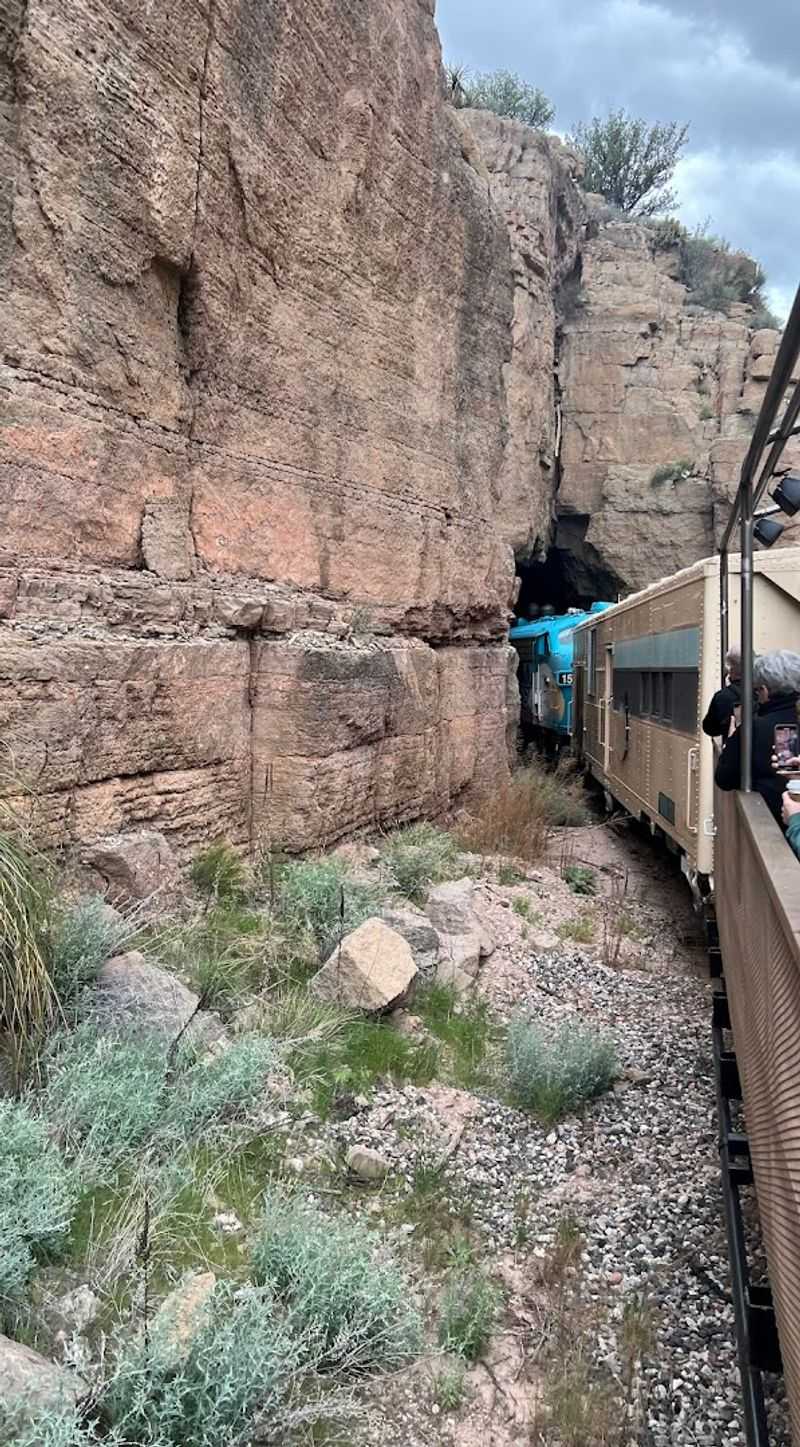
Color saturation in Verde Canyon can seem almost artificial, particularly when afternoon sun illuminates the red-rock walls while shadows deepen in the recesses. Layers of different rock types create horizontal striping in shades ranging from rust to cream to charcoal, each band representing a distinct geological period.
The Verde River adds a contrasting element of green and blue that prevents the palette from becoming monotonous.
Seasonal changes affect the visual composition, with spring wildflowers dotting the landscape in yellow and purple, while autumn transforms the cottonwoods into gold. Winter brings occasional snow to higher elevations visible in the distance, creating a backdrop that shifts with each season.
The constantly changing light throughout the four-hour journey means the same location can appear dramatically different on the outbound and return legs.
This dynamic quality explains why many passengers ride multiple times, discovering new details and different moods with each excursion. The canyon refuses to present the same face twice, rewarding repeat visitors with fresh perspectives.