
This Georgia Mine Lets You Search Rock Piles For Gems You Can Take Home After Just $15
Digging through rock piles for something worth keeping turns an ordinary afternoon into an actual adventure. This Georgia mine lets visitors search for stones and minerals they can take straight home.
Piles here get sifted through carefully, revealing finds most visitors wouldn’t expect from a simple search. Regulars know the best techniques for sifting, sharing tips with first-timers who show up unprepared.
Nothing about the search requires expensive equipment beyond patience and a willingness to dig in. Families often turn the visit into a full afternoon activity, comparing finds by the time they leave.
Photography opportunities exist throughout, especially once a particularly striking stone gets uncovered. This mine proved that sometimes the best souvenirs come from getting your hands a little dirty.
Where America’s First Gold Rush Actually Started
Most people assume gold fever began out West. Georgia begs to differ.
Back in 1828, prospectors struck gold along Dukes Creek in White County, kicking off the first major gold rush in the country. That was two decades before anyone yelled about California.
The family behind this operation has been working these hills for more than 50 years. It started in 1976 with Nacoochee Sand and Gravel, founded by Del Jackson, who kept pulling gold and gems out of the ground while doing regular mining work.
By 1981, there was so much of the good stuff turning up that Del opened the site to the public. Regular folks could finally sift through material that used to be for professionals only.
Fast forward to 2015, when Del’s son Chad Jackson opened a second, easier-to-reach location right in town. Same family, same dirt, far less driving on winding mountain roads.
What makes the history feel real is that the material is local. The gold-bearing paydirt comes from the historic Dukes Creek area, the same creek that started the whole frenzy nearly two centuries ago.
So when a speck of gold settles in the bottom of a pan, it carries actual regional history. You can find it all at Outpost Gold & Gem Mining Co., 7901 S Main St, Helen, GA 30545.
How The Bucket And Sifter Routine Works
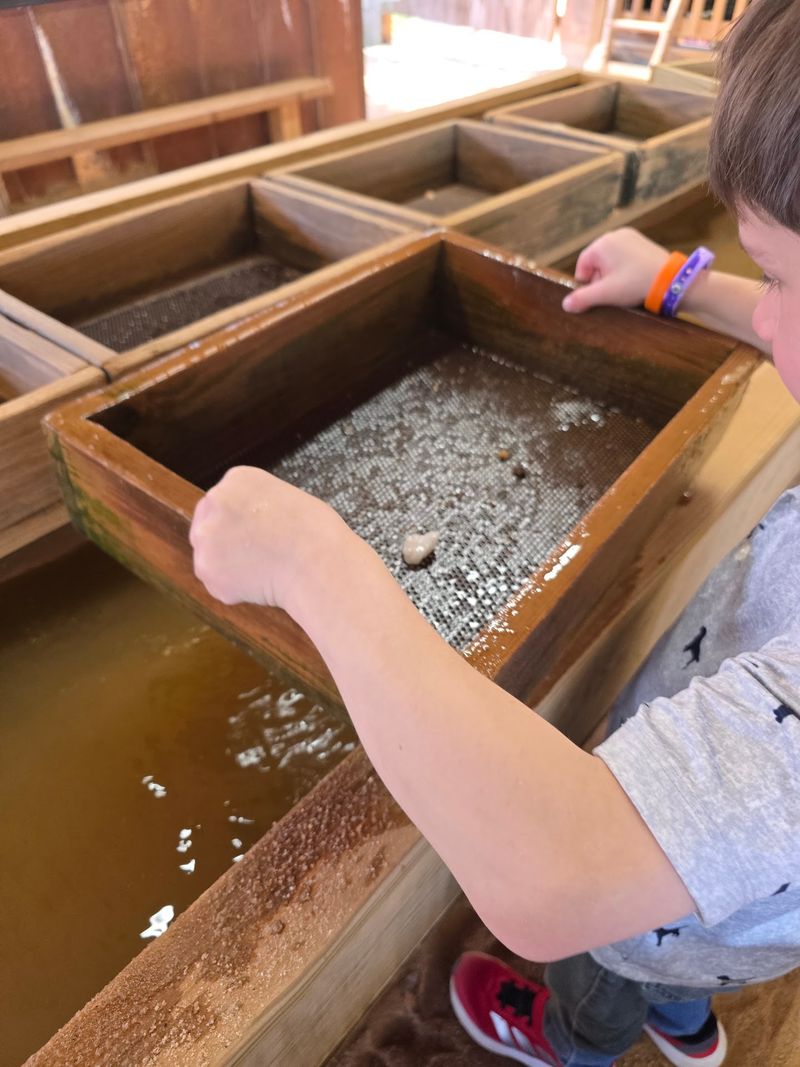
The setup is refreshingly low-tech, and that is exactly why it works. You choose a bucket of gem-ore, which is basically rough material loaded with hidden goodies.
Then you dump some into a screened sifter, lower it into the water trough, and start shaking. Dirt washes away. Color starts showing up.
There is a small moment of magic when the muddy water clears, and a purple or green edge peeks through the gravel. Kids tend to shriek. Adults get very quiet and focused.
Buckets come in different sizes and themes, so you can lean toward gems, fossils, minerals, or gold depending on what excites you. Smaller ones take less time, while the larger prospector-style buckets promise chunkier finds.
Staff walks newcomers through the technique, and they will shine a light through your stones to show which ones are translucent. That little flashlight trick turns a plain rock into a glowing ruby right in front of you.
Expect the process to take anywhere from twenty minutes to an hour or more. Nobody rushes you off the bench.
An identification card usually comes with your bucket, which helps you sort out amethyst from jasper without guessing. By the end, you have a ziplock bag full of stones and dirt under your fingernails.
Both count as souvenirs.
Over 35 Kinds Of Crystals Hiding In One Pile
Think of the buckets as a geological grab bag with better odds than a claw machine. More than 35 different crystals and minerals can turn up.
Amazonite shows up in that soft turquoise-blue that looks fake until you hold it. Amethyst arrives in deep purple chunks, and clear quartz catches light like glass.
Desert jasper brings speckled earth tones, while sodalite goes navy blue with white veins. Tree agate looks like someone painted tiny ferns inside a stone.
Azurite and malachite bring blues and greens that belong in a paint catalog. Pyrite, better known as fool’s gold, still makes everyone gasp before somebody breaks the news.
Emeralds, rubies, sapphires, tiger’s eye, and black tourmaline also make appearances depending on which bucket you pick. Not every find is museum quality, and that is part of the honest fun.
Fossils sneak into the mix too. Ancient sand dollars, shark teeth, and the curled shells nicknamed Devil’s Toe Nails all surface in the screens.
Holding a shark tooth that predates basically everything is a strange feeling for a kid used to plastic toys. It sparks a lot of questions.
The variety keeps people digging longer than planned. There is always one more scoop that might hold something better than the last.
Panning For Real Dukes Creek Gold
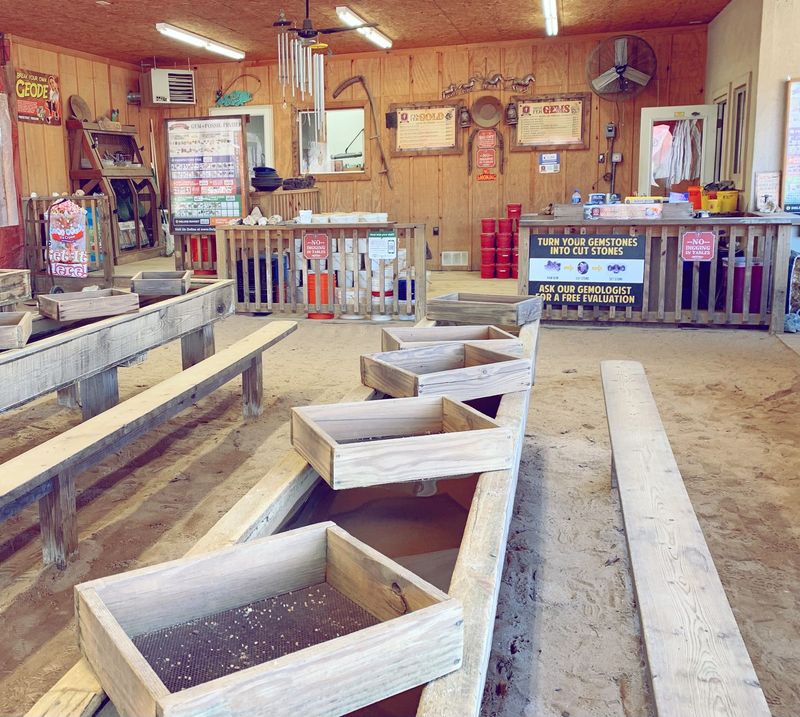
Gold panning is the humbling part of the day. It looks easy in movies and feels like arm day in real life.
The paydirt used here is Georgia Gold Rush concentrate, mined locally from the Dukes Creek area. That means the flakes you recover came out of genuinely historic ground.
Staff demonstrates the swirl-and-tilt motion first, because doing it wrong sends your gold right over the edge. Patience matters more than strength.
Gold sinks because it is heavy, so the technique is all about letting the lighter sand wash away while the good stuff hides at the bottom. Watching that first yellow speck appear is oddly thrilling.
Whatever gold you recover gets bottled up in a small vial to take home. It is tiny, it is real, and people guard it like a crown jewel.
Small children sometimes lose interest partway through, since panning takes longer than sifting gems. Older kids and adults usually get hooked instead.
The gold recovered from this region typically runs high in purity, which is part of why North Georgia gold earned its reputation. Miners in the 1800s worked these same creeks by hand for months.
Doing it for an hour gives you a small taste of that grind. And a much greater respect for anyone who did it full time.
Covered Flumes Mean Weather Never Cancels Plans
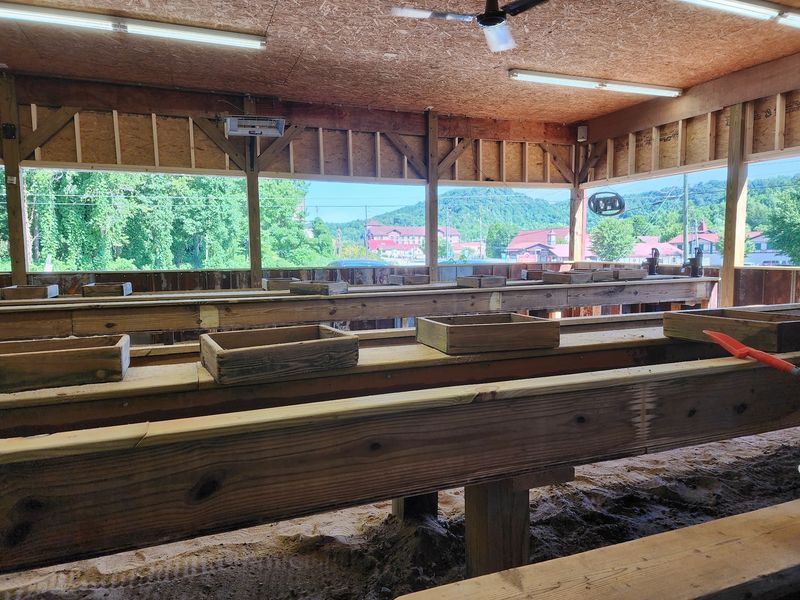
Mountain weather in North Georgia has opinions, and it changes them often. A sunny morning can turn into a surprise afternoon shower with no warning.
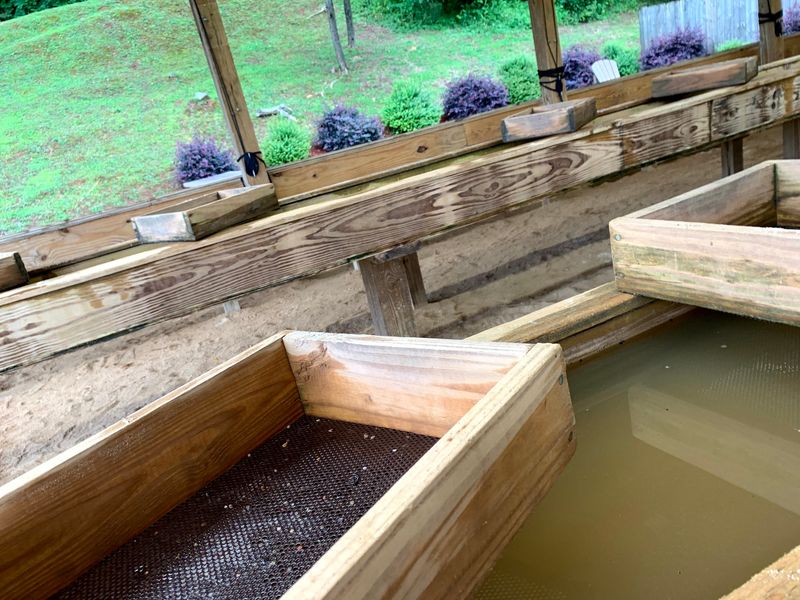
The picnic tables here sit under a roof, which quietly solves the biggest problem with outdoor attractions. Rain becomes background noise instead of a trip-ruiner.
Summer heat gets handled the same way. Shade plus cold running water is a decent combination when the humidity settles in.
Benches line the troughs so groups can sit together and compare finds without elbowing each other. Families spread out, spill a little water, and nobody minds.
Because the setup is covered, the season stretches longer than you might expect. Cool fall afternoons work fine, and even damp days stay comfortable.
Little details help too. The water keeps moving, the trays sit at a workable height, and there is enough room to move around without feeling packed in.
Doors open at 10 AM every day of the week and stay open until 6 PM, which leaves plenty of flexibility for a spontaneous stop. No reservations to juggle.
For anyone traveling with kids, that reliability is worth a lot. Plans built around weather forecasts tend to fall apart, and this one usually does not.
Turning Rough Rocks Into Custom Jewelry
Here is the part most people do not expect. That lumpy stone from your bucket can become an actual piece of jewelry.
Lapidary work happens on site, meaning gems get cut and polished right there rather than shipped off to a stranger. Staff helps you choose which stones have the shape and clarity worth the effort.
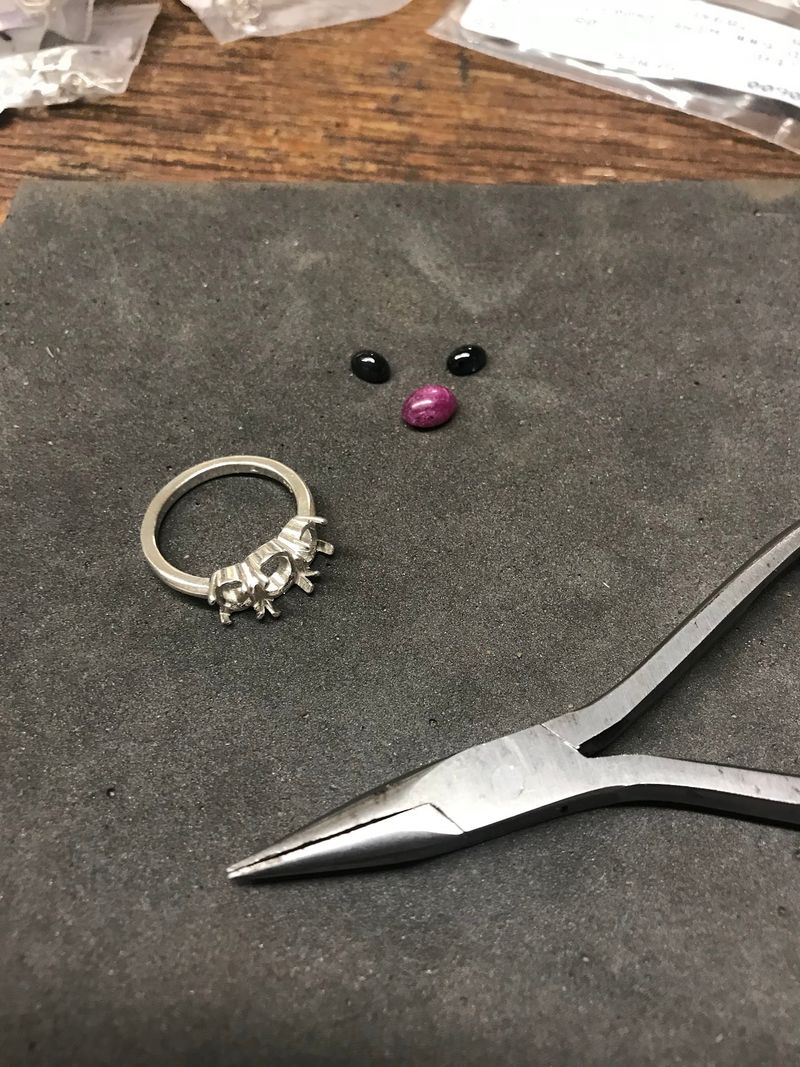
A cloudy chunk of quartz can come back as a smooth round cabochon. A dark sapphire can end up as a pendant you actually wear.
Custom jewelers can build rings, necklaces, and earrings around your find. Some visitors even bring existing pieces to have their new stones set into them.
Turnaround takes time, since real cutting and setting is not a same-day trick. Pieces often arrive weeks later by mail, which makes the reveal feel like a second surprise.
Staff is upfront about which stones will not cut well, and they say so instead of pushing extras. That honesty saves money and disappointment.
The result is a piece of jewelry with a story nobody else has. You did not buy the stone.
You washed the mud off it yourself.
Emeralds, rubies, sapphires, tiger’s eye, and amethyst are common candidates. Wedding ring repairs using found emeralds have happened here too.
The Southwestern Outpost Gift Shop Surprise
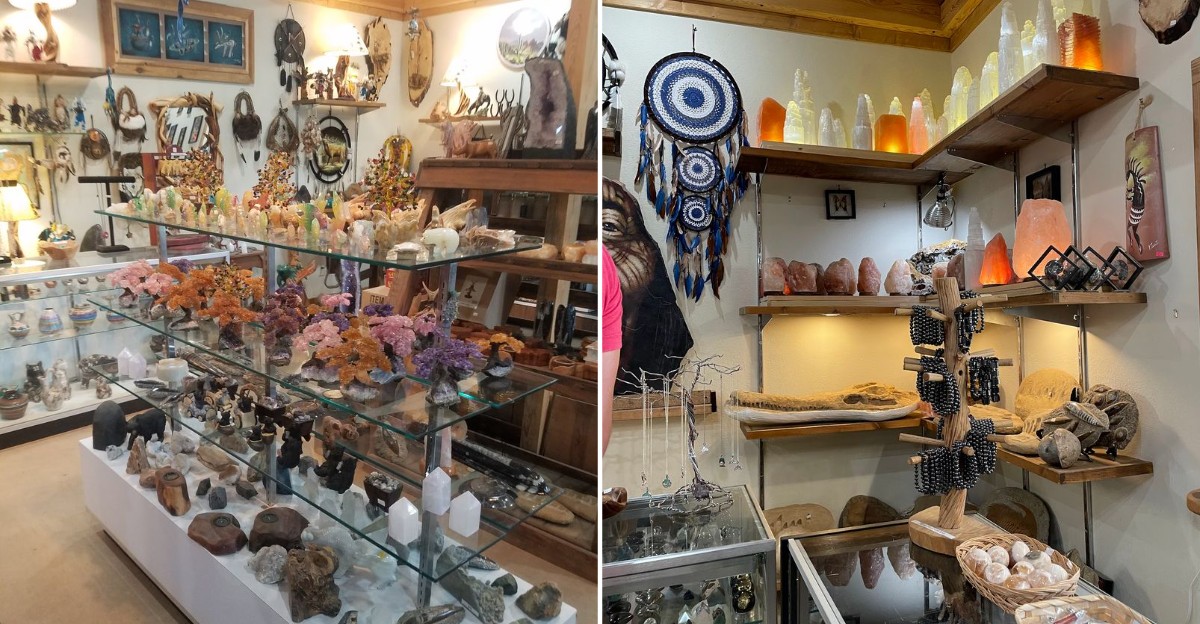
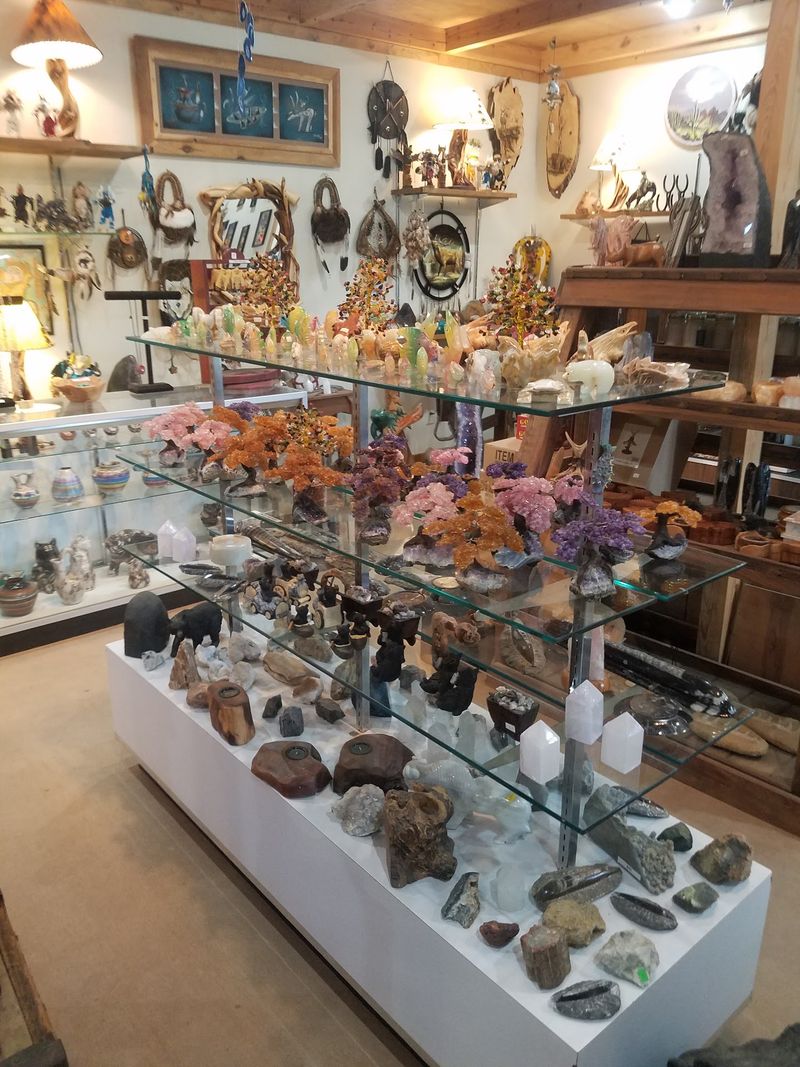
Plenty of attractions tack on a gift shop full of keychains. This one goes a different direction entirely.
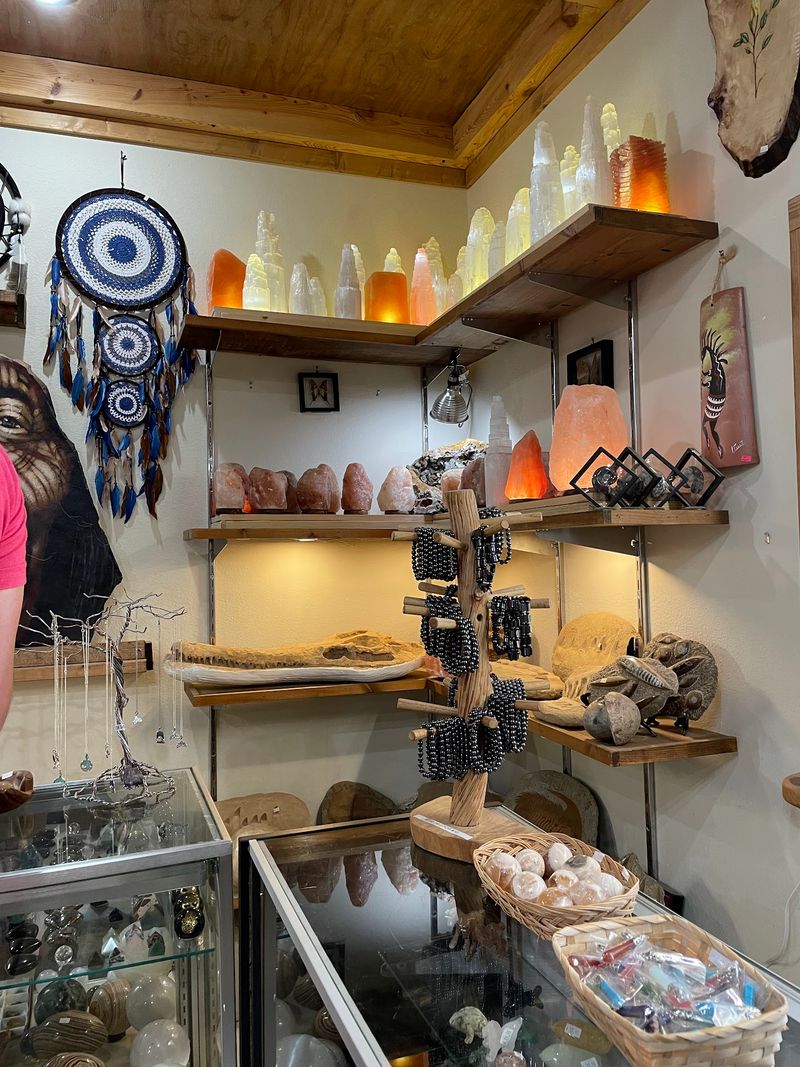
The shop, called Southwestern Outpost, carries authentic Navajo horsehair pottery with detailed patterns burned into the surface. Each piece is genuinely handmade.
Shelves also hold prehistoric fossils, large mineral specimens, and finished jewelry. Browsing feels closer to wandering a small natural history museum where everything happens to have a tag.
Geodes are part of the fun as well, and cracking one open reveals a hollow center packed with crystals. There is no way to know what is inside until it splits.
Home decor and collectible stones round out the selection. Some pieces are pocket-sized, others are big enough to need a spot on a shelf.
Staff know the backstory behind the fossils and are happy to explain what you are looking at. Those explanations often turn a quick browse into half an hour.
Kids gravitate toward the shiny display cases, and parents somehow end up buying something for themselves. It happens more often than anyone admits.
Since the shop sits right beside the mining area, it works as a natural finish to the visit. Wash off the dirt, then go look at what expert cutting can do to stones like yours.
A Family Operation Passing Down The Prospecting Bug
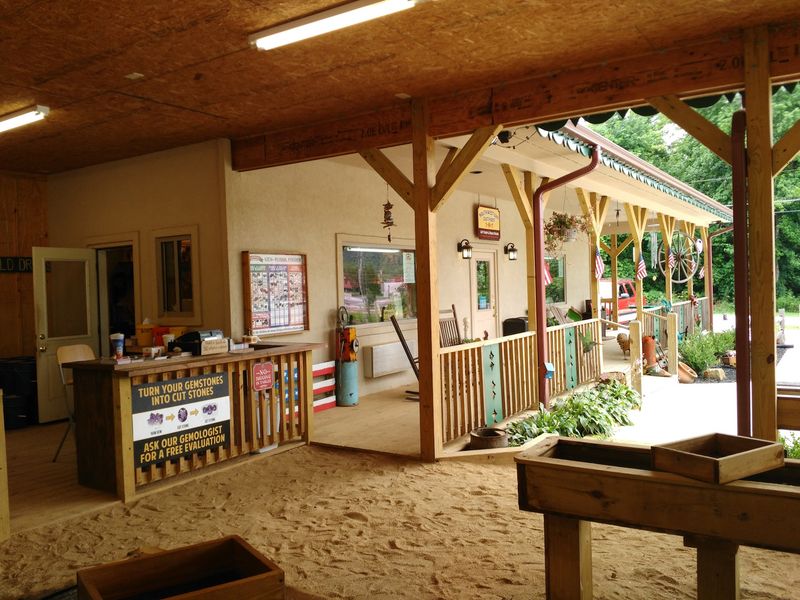
Two generations, one obsession with rocks. That is the short version of the story here.
Del Jackson started with a sand and gravel operation in 1976 and kept finding gold and gems he was not looking for. Rather than keep it quiet, he opened the site up to the public five years later.
His son Chad carried it forward and opened this location in 2015, adding lapidary work and custom jewelry to the mix. The building is newer, but the know-how goes back decades.
Staff spend real time helping visitors identify what they pulled out of the screens. They tell stories about the fossils, point out the difference between pyrite and gold, and let kids ask the same question four times.
That patience is what turns a quick roadside stop into a highlight of a trip. Plenty of families end up coming back on later visits.
The whole thing sits in the Appalachian foothills near Helen, so it pairs naturally with tubing, hiking, or a wander through town. An hour or two is usually enough.
What sticks with people is not just the gems. It is the feeling of connecting to a rush that started here almost two hundred years ago.