
This Gothic Chapel On A Tennessee Mountaintop Rings 56 Bells, And Stepping Inside Costs Nothing
Somewhere on top of the Cumberland Plateau in Tennessee, bells start ringing across the treetops in the afternoon, and the sound carries farther than you would expect. Follow it and you end up at a stone chapel with arches so tall and windows so colorful that people compare walking in to stepping into a movie set.
The best part is that nobody asks you for a dime at the door. For families and retirees hunting a Saturday drive that costs almost nothing, this one is hard to beat.
A Stone Landmark At The Heart Of The Domain
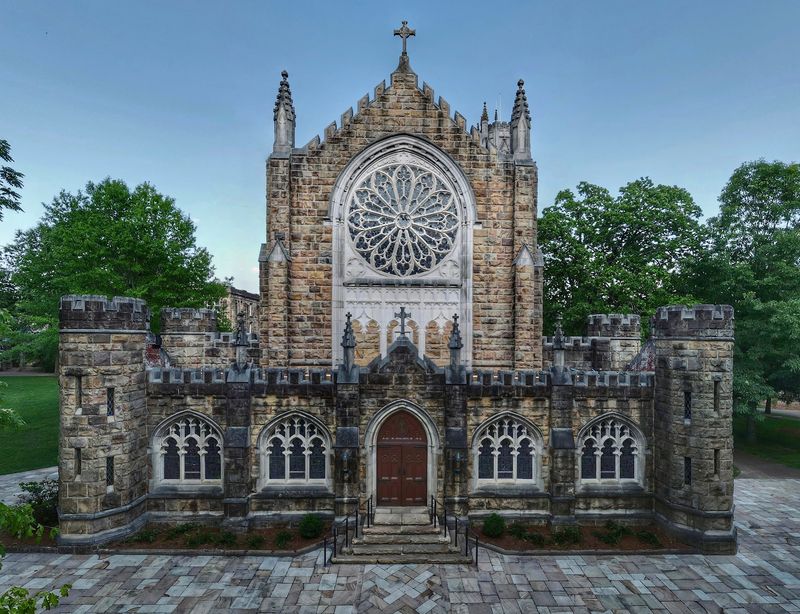
At 735 University Ave in Sewanee, Tennessee, All Saints’ Chapel anchors the campus of the University of the South, a place locals simply call The Domain. The chapel sits at roughly 35.2039 latitude on the Cumberland Plateau, high enough that the air genuinely feels cooler than it does down in the valley.
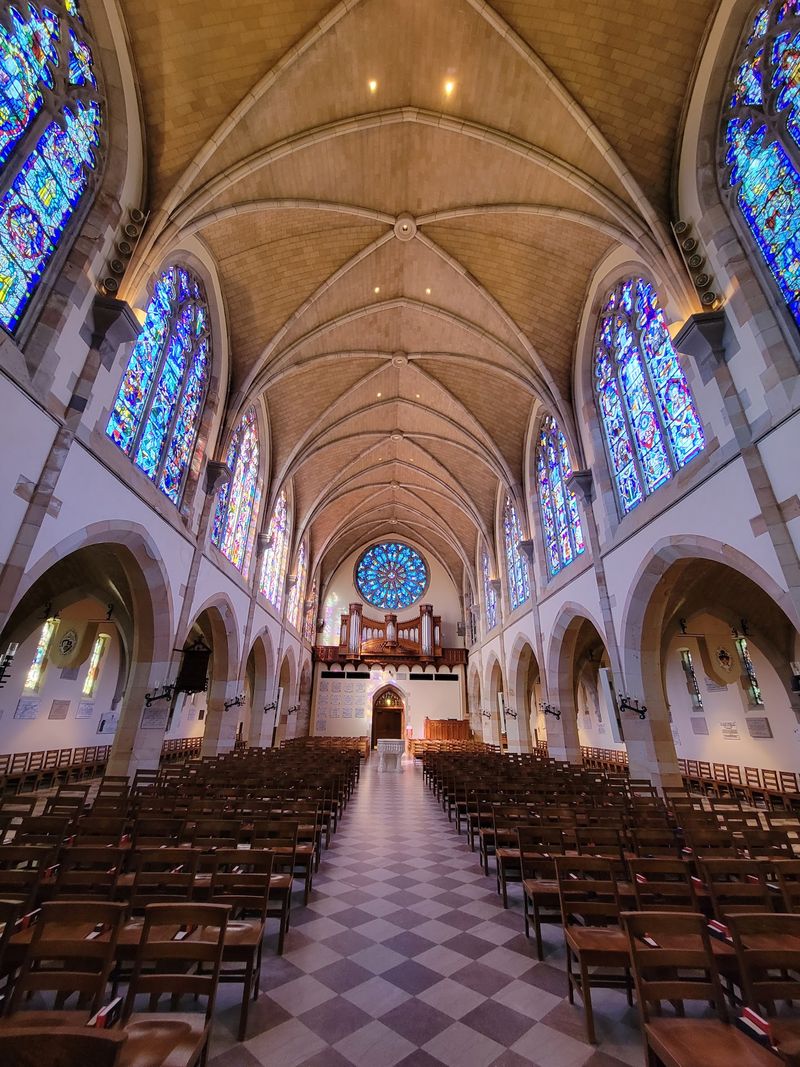
Calling it a campus church undersells the scale. The building is a full Gothic Revival chapel in gray limestone, with a bell tower, pointed arches, and stonework that visitors regularly describe as unlike anything else in this corner of the country.
Sewanee itself is a small mountain village, so the chapel doubles as the community’s landmark and gathering point. Weddings, services, graduations, and even a Fourth of July parade have all happened in its shadow.
What surprises most first-timers is how open it is. There is no ticket booth, no gift shop turnstile, no guided-tour requirement.
You park, you walk up the lawn, you pull open a heavy door, and you are inside one of Southern Middle Tennessee’s most striking buildings without spending a cent.
European Cathedrals, Translated To A Tennessee Plateau
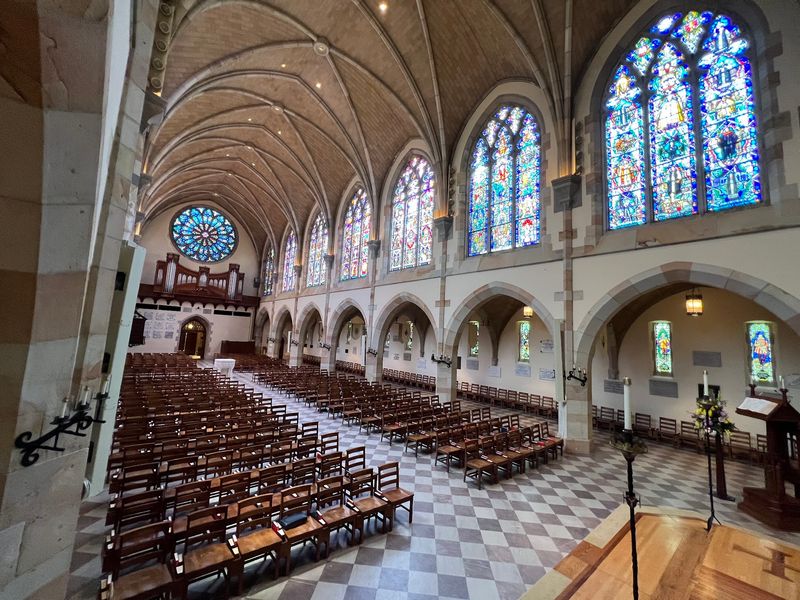
Oxford, Chartres, and Amiens are not names you expect to hear in a Tennessee travel plan, yet all three shaped what stands here. The chapel’s design draws on Saint Mary the Virgin at Oxford University along with the French cathedrals at Chartres and Amiens, and that lineage shows in the proportions the moment you look up.
Limestone walls rise into pointed arches. Carved woodwork runs along the interior.
The effect is grand in a way that feels genuinely old-world rather than decorative.
Plenty of visitors reach for the same shorthand when they try to describe it: the arches, the stone, and the long interior remind them of a wizarding school from the movies. Kids tend to say it first, and parents usually agree by the second row of pews.
Because the whole campus follows the same architectural language, the chapel does not stand alone as an oddity. Arches and towers repeat across neighboring buildings, so the walk to and from the door feels like part of the same design.
That consistency is a big reason people call this one of the prettiest campuses in America.
Fifty-Six Bells In Shapard Tower
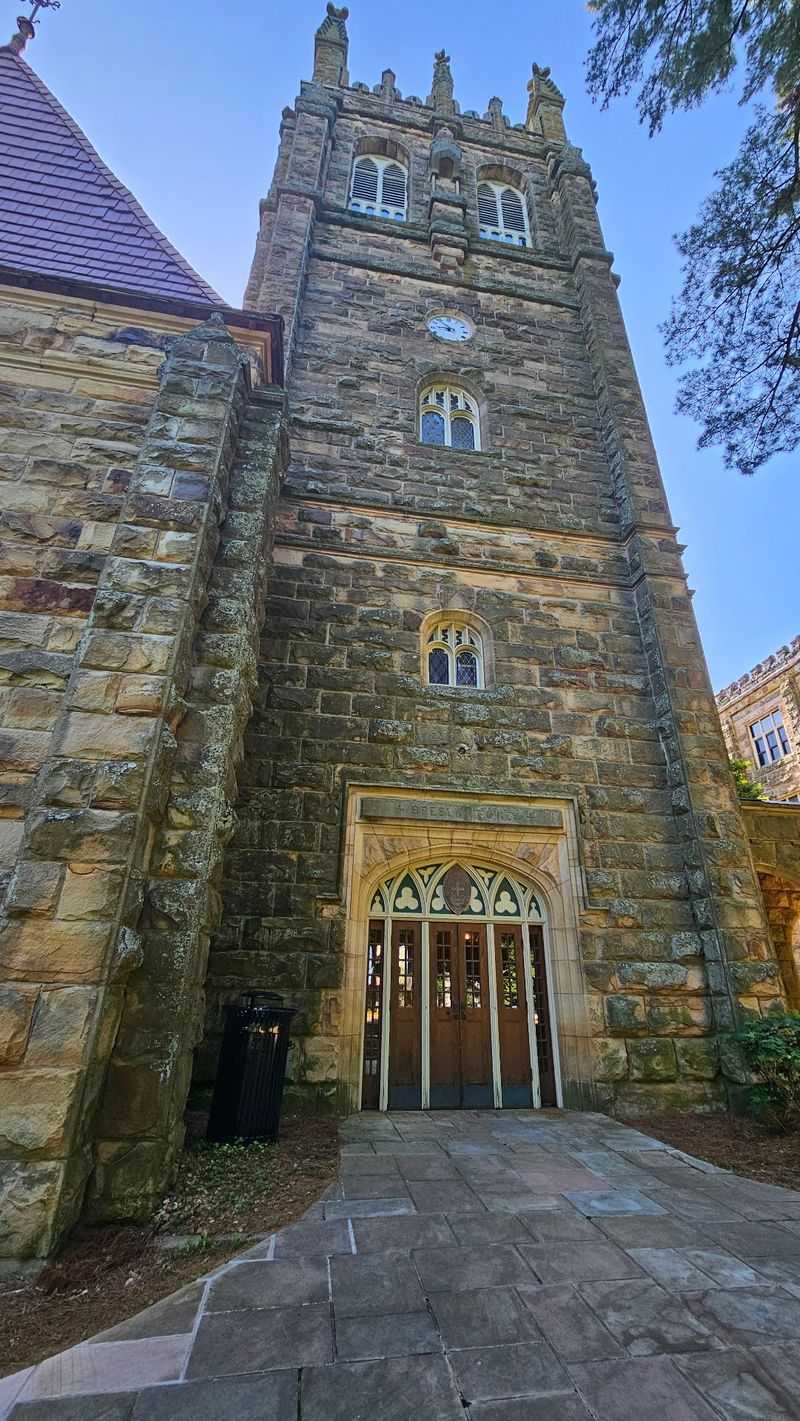
Fifty-six bells hang inside Shapard Tower, and together they make up the Leonidas Polk Memorial Carillon. Cast in France and installed in 1959, the instrument was recognized at the time as the third-largest carillon in the country counted by number of bells.
A carillon is not a recording or a chime on a timer. It is played from a keyboard of wooden levers and pedals, which means the music drifting over the mountain is coming from someone’s hands and feet in real time.
Afternoon is the sweet spot. Longtime visitors mention hearing the bells sound out over campus later in the day, and the tone carries well past the chapel lawn into the surrounding woods and village streets.
Standing outside while the carillon plays is free entertainment of the best kind, and it costs nothing but patience. Bring a blanket, sit on the grass, and let the kids run while the bells work through a piece.
Playing schedules can shift with the academic calendar, so treat a performance as a happy bonus rather than a guarantee when you plan the drive.
Stained Glass That Tells More Than Bible Stories
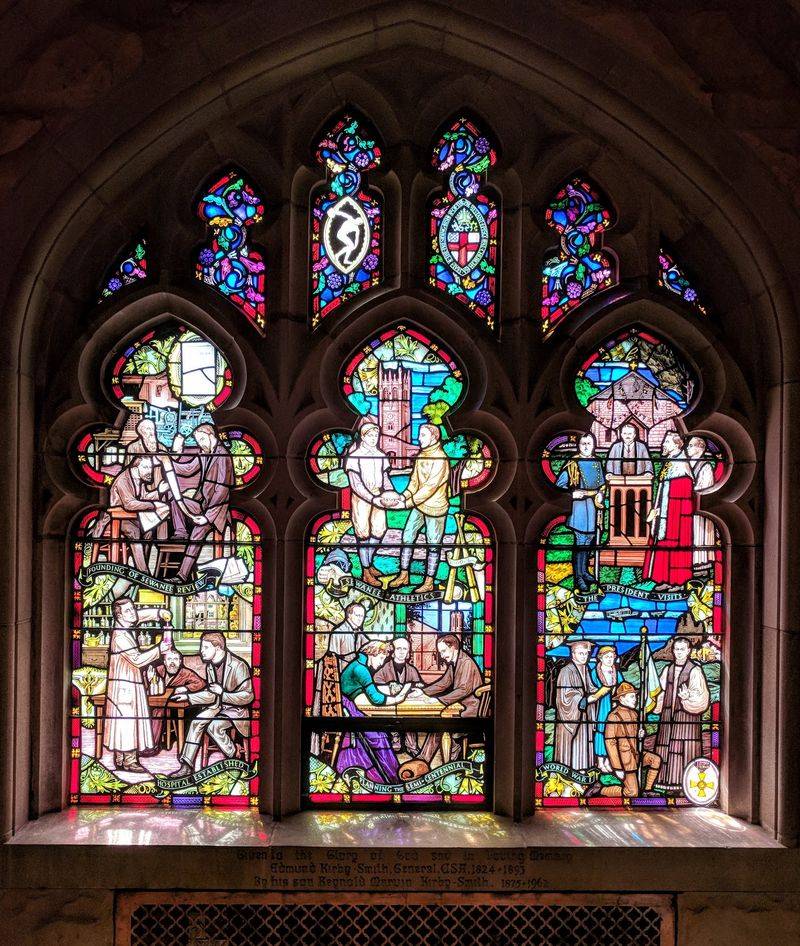
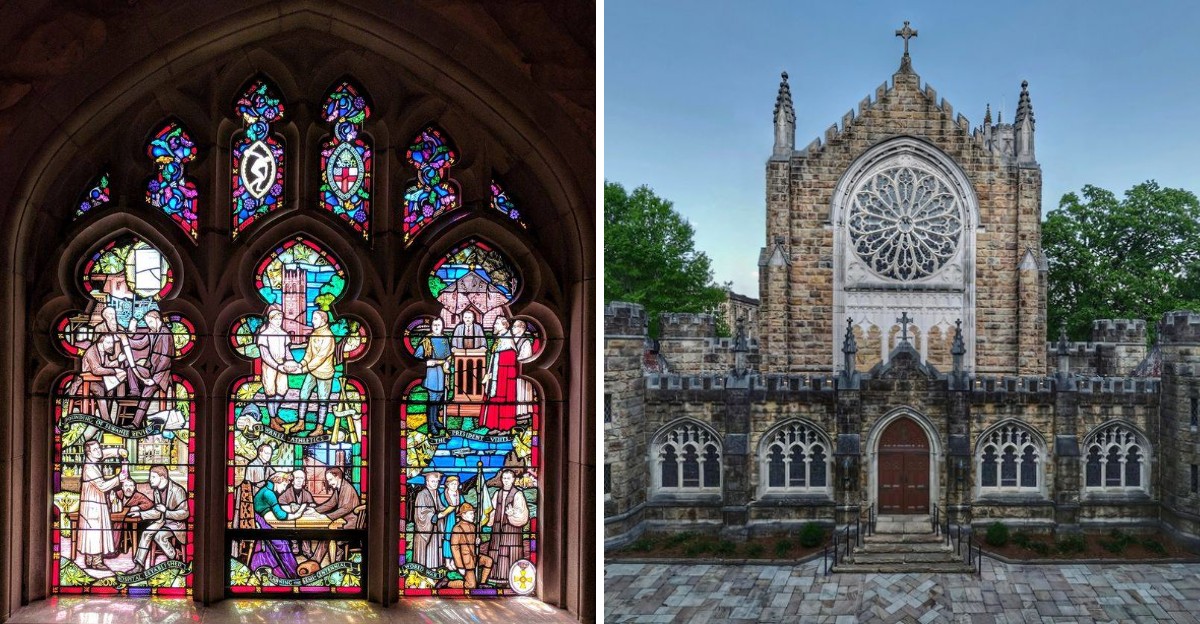
Most chapel windows stick to scripture. Here the glass goes further, with panels honoring notable figures from fields like Spanish, English, law, medicine, and biology alongside scenes from the Bible and the history of the University of the South.
It turns a quiet walk down the aisle into something closer to a museum visit. One window sequence begins with books of the Old Testament, while others document the school’s own past.
Guests often single out the front-facing window, which is said to echo the great rose window at Notre Dame in France. When sunlight hits it, color spills down onto the stone floor in patches bold enough to stop conversation.
A brochure inside explains who made the windows, which is handy if you want names and workshops rather than just pretty colors. Families with older kids can turn it into a scavenger hunt: find the doctor, find the scientist, find the scene you recognize.
Late morning to early afternoon generally gives the strongest light through the glass, though the effect changes by season and cloud cover.
Acoustics, Candlelight, And The Noon Quiet Hour
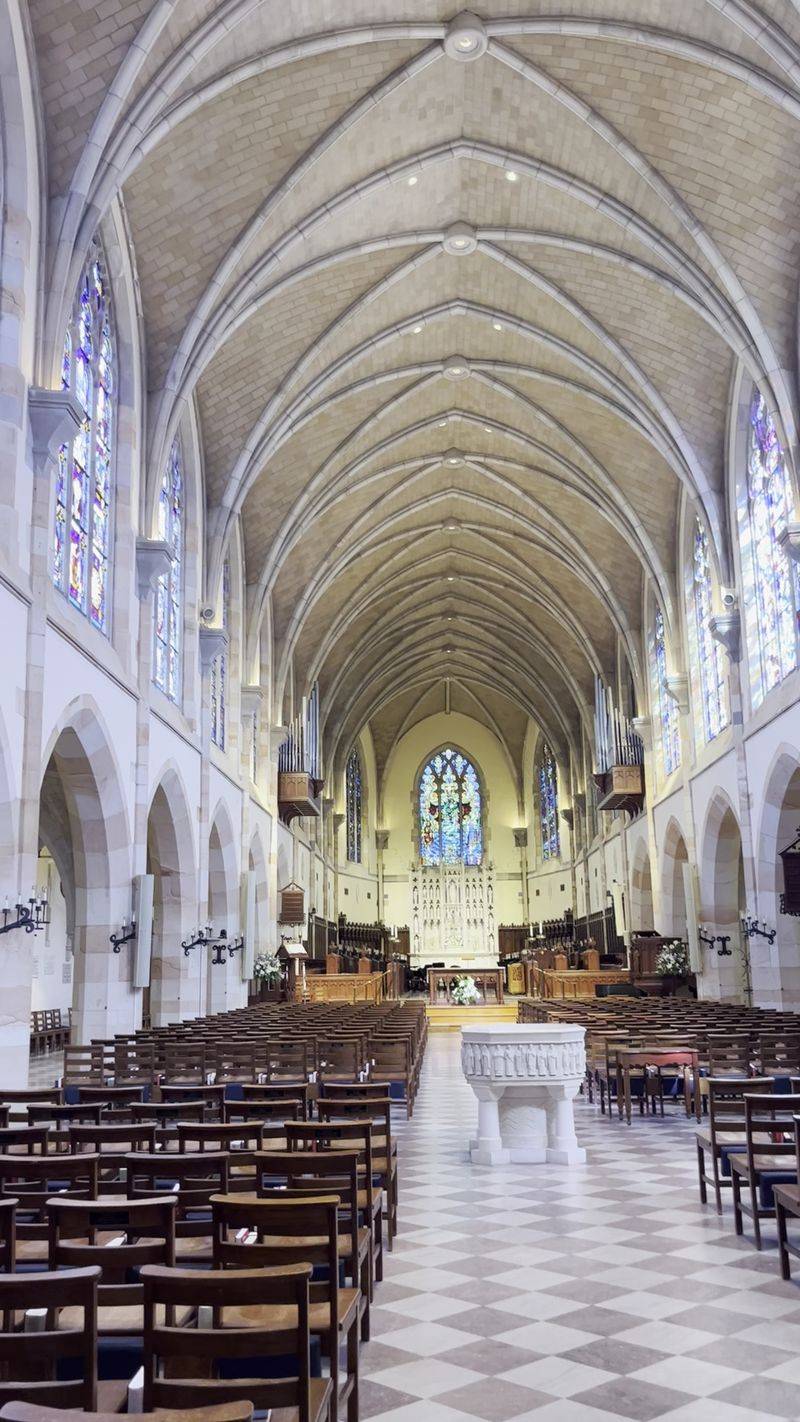
Sound behaves differently under a stone vault. Guests frequently comment on the acoustics, and more than a few have wandered in to find a student practicing piano, the notes filling the whole nave without any amplification.
Chamber groups and classical concerts occasionally use the space too. Catching one is luck rather than planning, but people who have describe the music as the part of the trip they remember longest.
Even in total silence the interior holds attention. Rows of candles, dark carved wood, and cool limestone create a hush that people say they can feel physically, the kind that slows your walking pace without you deciding to.
The chapel stays open daily for personal prayer and reflection, and a dedicated quiet hour is observed each weekday at noon. If solitude is what you are after, that window is the one to aim for.
Regular services continue as well, including a traditional Episcopal service on Sunday mornings that visitors describe as warm and welcoming. Anyone is free to attend or simply sit near the back and listen.
Trails, Overlooks, And A Lake Just Down The Road
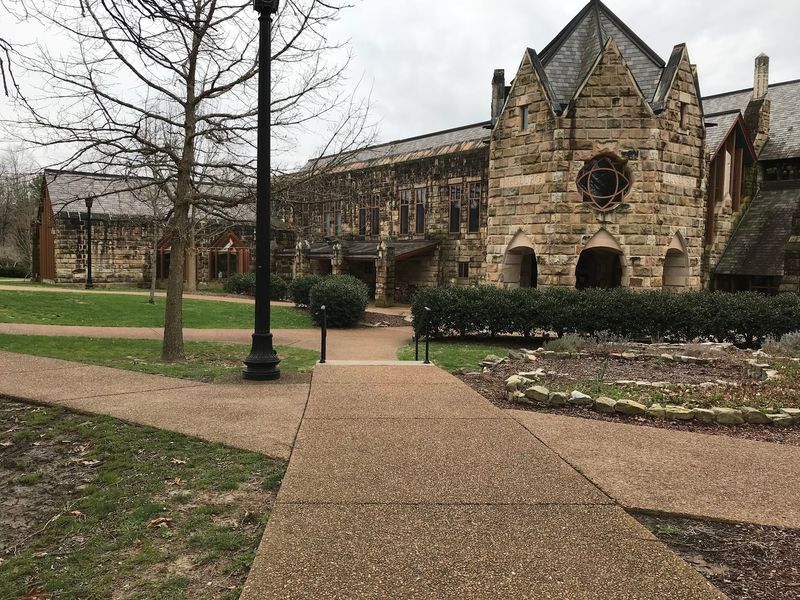
Twenty minutes inside the chapel does not fill a Saturday, which is where the surrounding Domain earns its keep. The university’s land opens onto a network of hiking and biking routes, including the paved Mountain Goat Trail that suits strollers and easier walking better than rocky footpaths do.
Two overlooks draw the most traffic: Green’s View and Morgan’s Steep. Both deliver long looks across the plateau and the valley below, and one longtime visitor pointed out the vistas toward Franklin County as a bonus on top of the chapel itself.
Fall is the standout season here. Ridge-top hardwoods turn early on the plateau, and a drive up from Chattanooga or Nashville lands you in color without fighting Smokies traffic.
Abbo’s Alley offers a tended garden to wander, quiet and shaded, while Lake Cheston gives warm-weather visitors a spot to cool off. Younger kids get Elliott Park, a straightforward playground stop when they need to burn off energy.
None of these add cost to the day, which is what makes stacking them together so easy on a budget.
Getting There, Parking, And What A Day Actually Costs
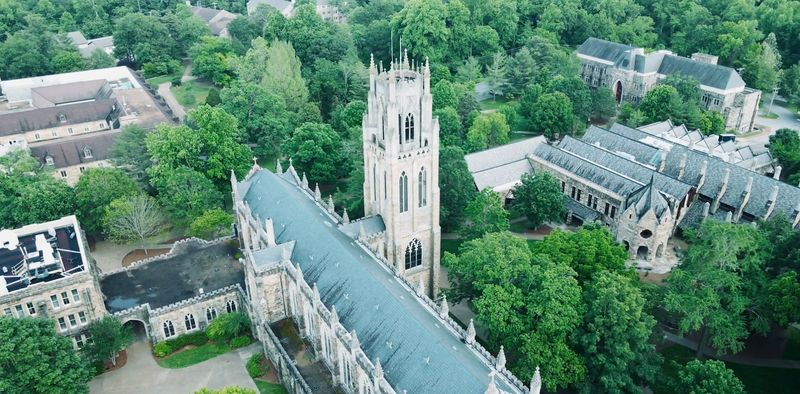
Drive time is the first question most Tennessee families ask. From Chattanooga you are looking at roughly an hour; from Nashville, closer to an hour and a half, which makes this a comfortable there-and-back day rather than an overnight.
Parking is handled on campus in designated visitor lots, often marked or lined in blue. Look for those spaces rather than improvising along the street.
Chapel hours run 8 AM to 4:30 PM every day of the week, and the phone line is 931-598-1274 if you want to confirm before leaving. Academic events, weddings, and services can affect access, so a quick check is smart on any weekend.
Admission is free. Guests have noted that plainly for years, and nothing about that has changed.
Add it up and your day runs on gas plus lunch. The village and campus offer casual options including McClurg Dining Hall, Stirling’s Coffee House, Mountain Goat Market, Blue Chair Cafe, and Shenanigans.
Feed a family of four somewhere on that list and you can realistically do the whole outing for around $40 to $50 total.
Who Will Love This Stop, And When To Come
Architecture buffs, history readers, photographers, and anyone who just wants an unhurried hour of quiet all get something here. The chapel holds a 4.9-star average across 117 Google reviews, which is about as consistent as public feedback gets for a free attraction.
Kids do surprisingly well too, mostly because the building looks like something out of a story. Pair the visit with Elliott Park or the playground energy of a trail walk and the balance works.
Saturdays can be pleasantly empty inside, with one visitor noting they had the place nearly to themselves. Weekday mornings tend to be calm as well, though campus activity varies through the academic year.
Retirees will appreciate that the highlights sit close together: park once, walk a short lawn, sit as long as you like, then choose whether to add an overlook drive.
Go in October if you can swing it, when plateau color peaks and the bells sound especially good in cool air. Check hours before you drive, bring a camera, and let the afternoon carillon decide when you leave.