
This Hidden Oklahoma Restaurant Hides Down The Alley In A Secret Basement
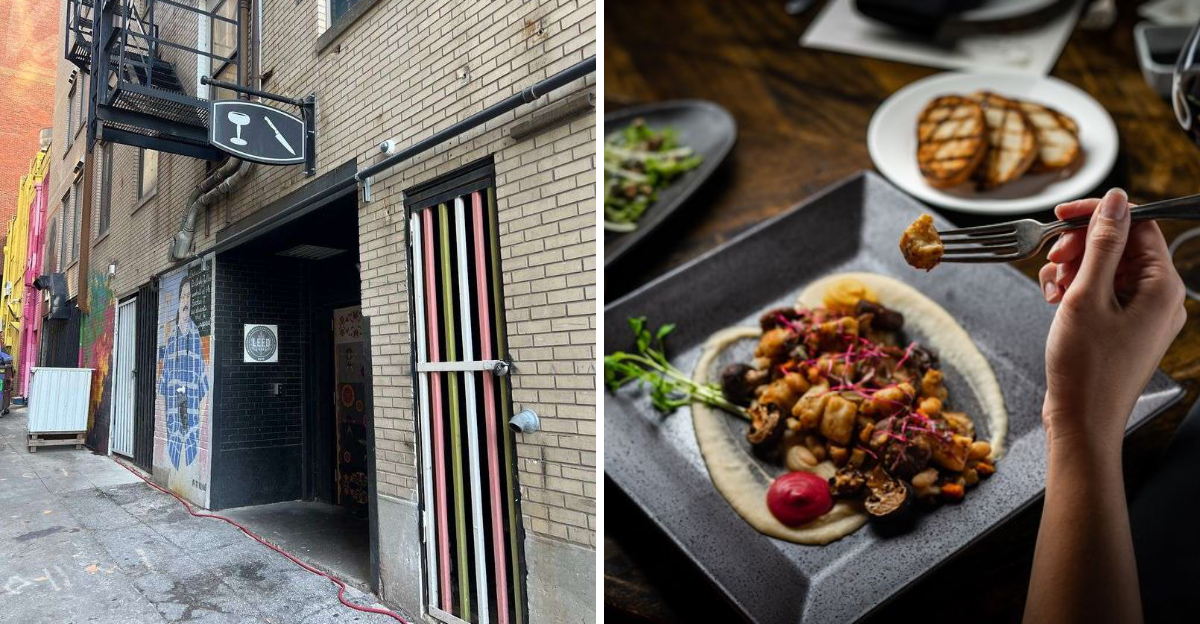
Nothing to see here, just an ordinary alley in downtown Tulsa. Or so it wants you to think.
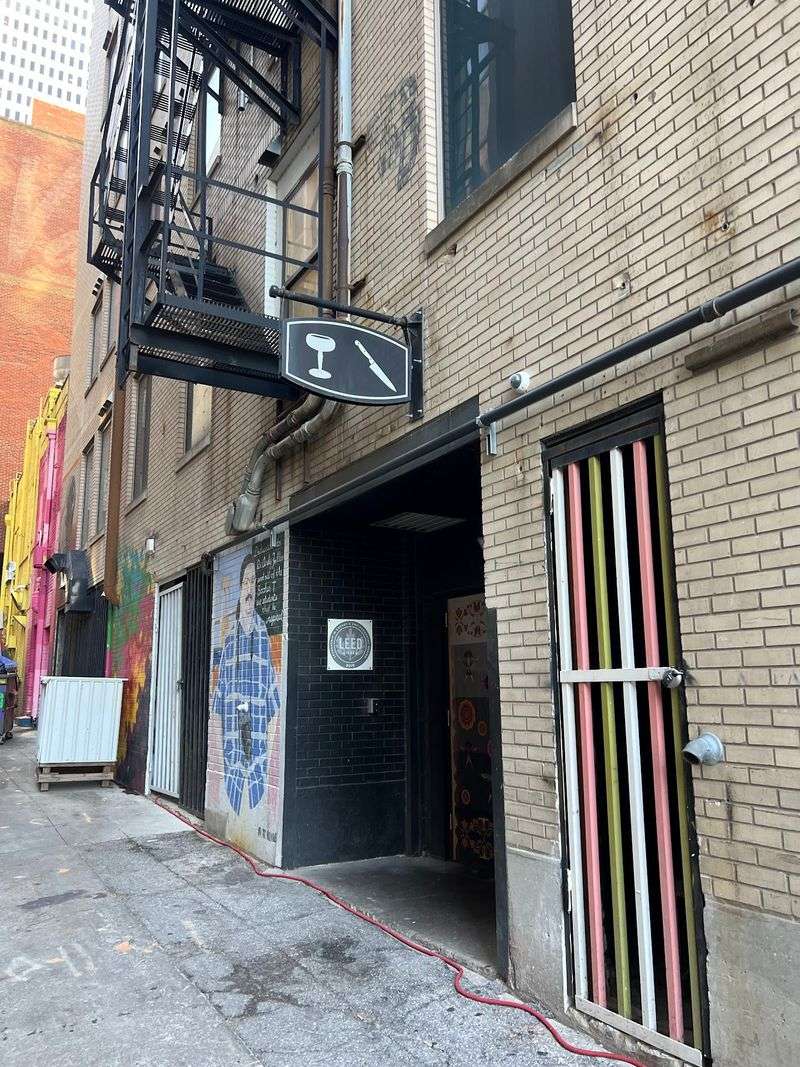
Blink and you will walk right past it completely. A small sign overhead gives away that something special exists behind that plain wall in Oklahoma.
Push through and a narrow staircase pulls you underground into a different era entirely. Warm light, soaring ceilings, and bold Art Deco flourishes turn the descent into part of the show.
French technique meets Oklahoma comfort here, with a seasonal menu that keeps loyal diners guessing and coming back for more. Every plate feels built for lingering, not rushing.
Curiosity is the only entry requirement. Once you find that door, the rest of the night takes care of itself.
Nothing To See Here, Just An Ordinary Alley
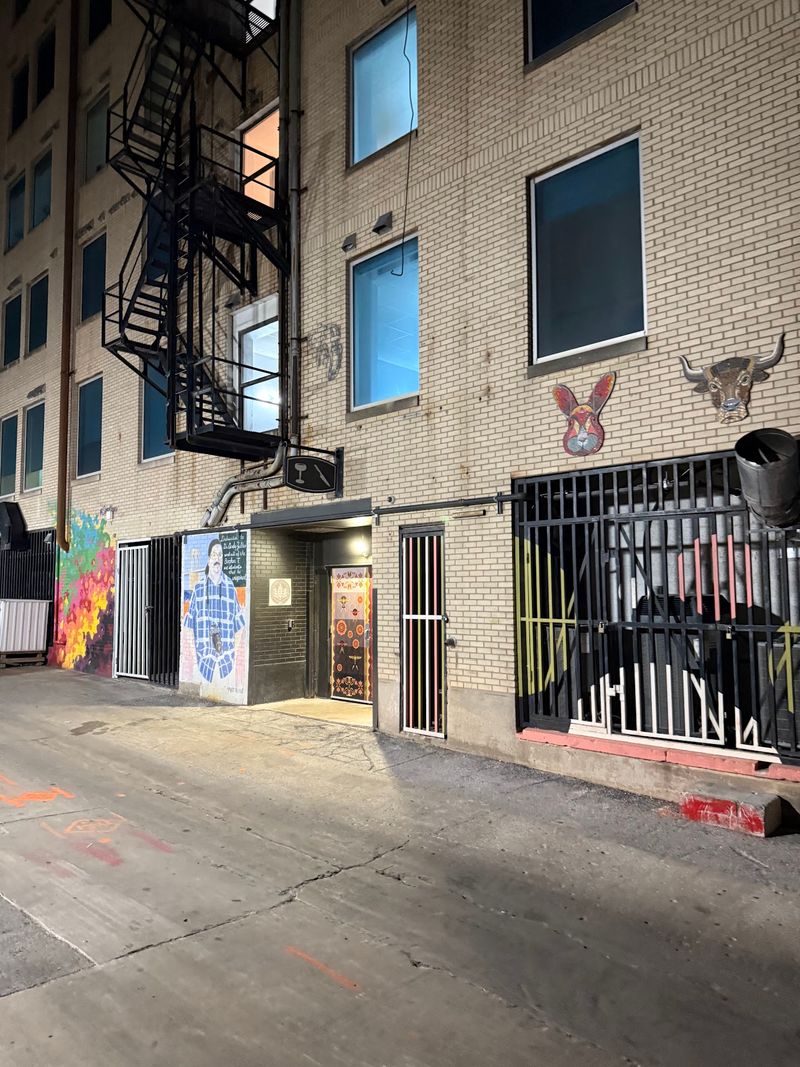
Ready for a small treasure hunt before dinner? The entrance sits off an alley in downtown Tulsa’s Deco District.
Look overhead for a modest sign marked with a knife and a goblet. That marker points down toward a door most passersby miss completely.
Plenty of first-time guests circle the block once before spotting it. Give the map a careful look before arriving, and leave a few extra minutes.
A narrow staircase drops you underground from there. The descent sets the mood long before a menu reaches the table.
Downtown parking sits mostly on the street and in nearby lots. Availability shifts by evening, so plan for a short walk in either direction.
Comfortable shoes help if the closest spot ends up a block or two away. Arriving early also removes the stress of hunting for the right door.
Guests who enjoy a bit of mystery will appreciate the setup. Boston Title & Abstract rewards attention rather than signage.
The restaurant sits at 522 S Boston Ave Ste B100, Tulsa, OK 74103.
Stepping Into A 1920s Basement Room
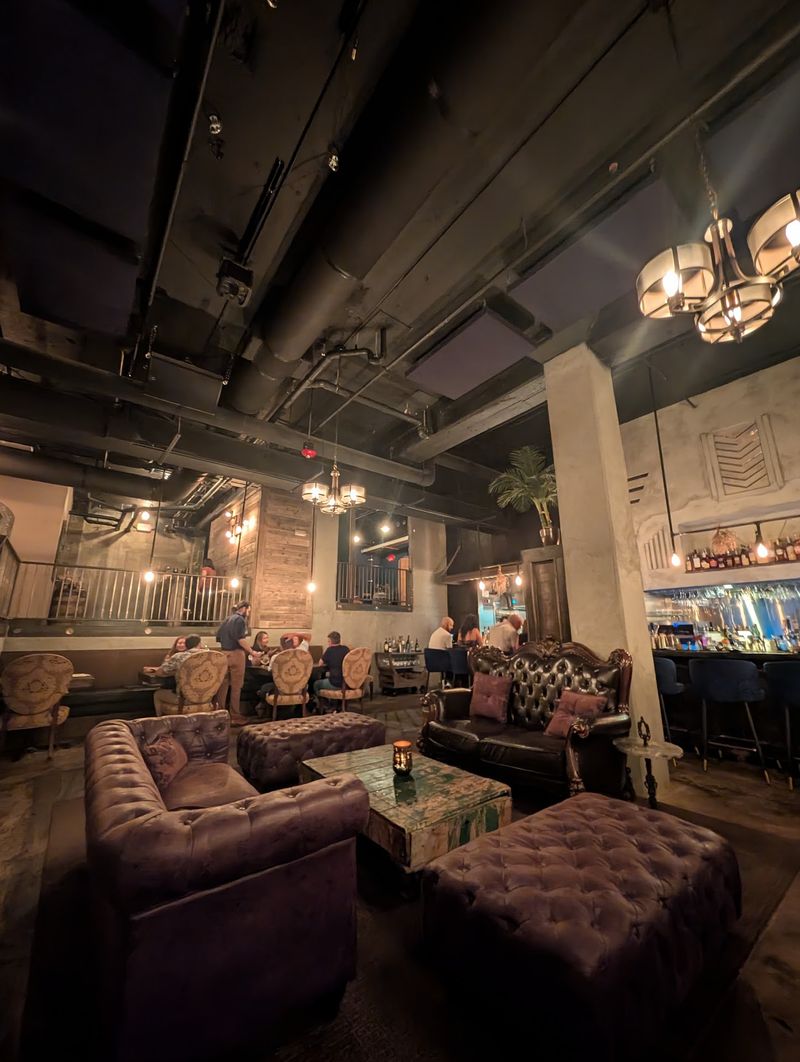
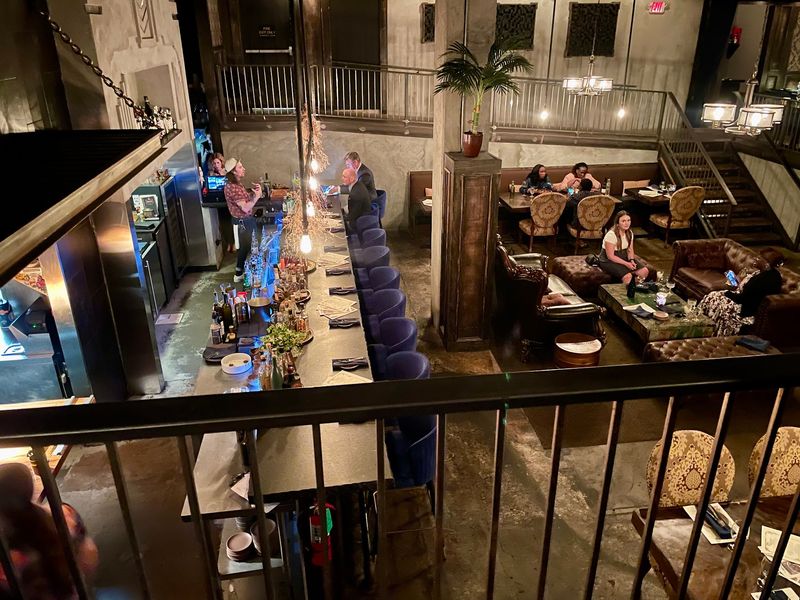
The staircase ends and the century seems to shift. Low lighting spreads a warm glow across a surprisingly tall basement space.
Ceilings reach roughly eighteen feet, which keeps the room from feeling closed in. Concrete surfaces meet gold and black tones for an industrial yet polished look.
Art Deco chevrons run along the walls. Wrought-iron balconies add another layer of visual interest overhead.
The effect leans vintage and atmospheric rather than themed costume party. Details stay consistent, so the room reads as one complete idea.
Eyes take a moment to adjust after the bright street above. Give yourself a beat at the bottom of the stairs.
Photographers should know that the lighting stays deliberately dim. Phone cameras may struggle without turning the mood into daylight.
Guests who prefer bright, airy dining rooms may want to consider that before booking. Everyone else usually settles in fast.
The design does much of the work here. Conversation feels easier when a room asks you to slow down.
Seating Choices Worth Thinking About In Advance
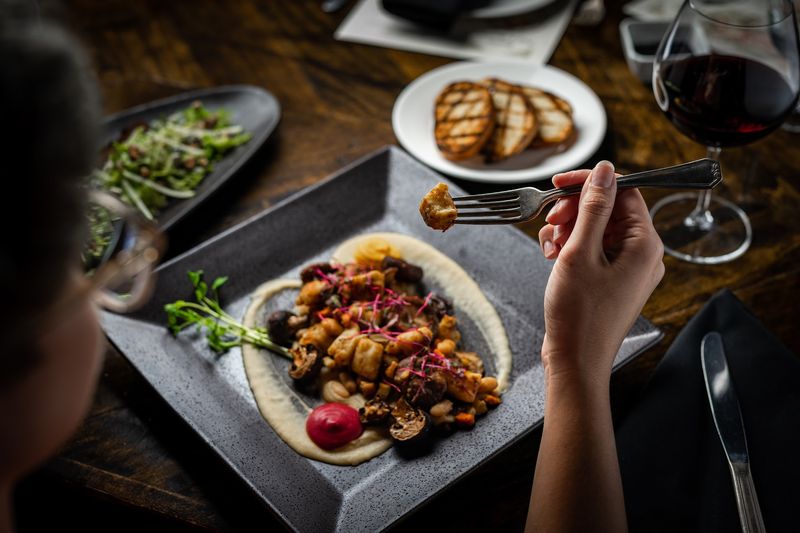
Where you sit changes the evening more than most people expect. The room holds a limited number of tables, roughly a dozen.
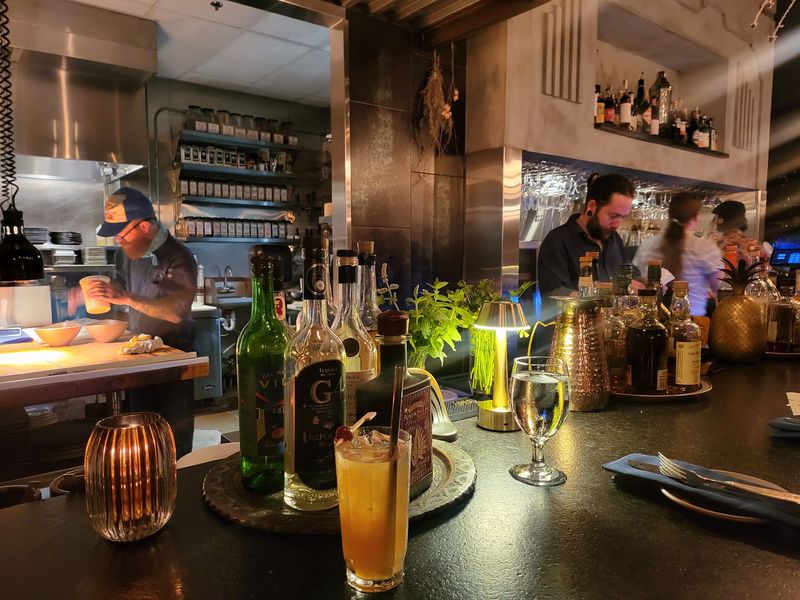
Counter seating offers a front-row view of the kitchen team at work. Chairs there are cushioned and roomy enough for a full meal.
Couches provide a softer, lounge-style option for smaller groups. Upper-level tables look down toward the bar and main floor.
Each choice creates a different rhythm. Couples often prefer the quieter corners, while curious diners gravitate toward the bar.
Mention a preference when booking, though nothing can be promised. Layouts fill quickly on busy evenings.
The small scale keeps servers close and attentive. It also means walk-in space stays unpredictable.
Anyone with mobility considerations should note the staircase entry. Asking ahead about access is the sensible move.
Plush seating helps a longer dinner stay comfortable. Nobody feels rushed out of a chair here.
Small rooms create intimacy naturally. That trade-off simply requires planning.
Service That Moves At A Calm, Steady Pace
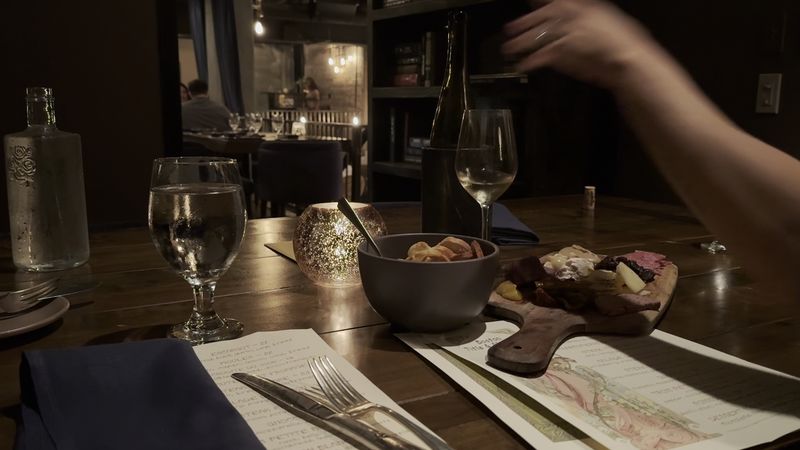
Good service can quietly carry an entire evening. Staff here greet guests warmly at the base of the stairs.
Arriving guests are often greeted warmly right at the base of the stairs. That gesture sets an unhurried tone right away.
Servers explain dishes clearly without lecturing. Questions about preparation usually get straightforward answers.
Courses arrive with space between them. The pacing suits a long dinner rather than a quick bite.
Plan for a full evening rather than a fast turnaround. Rushing through the meal misses the point of the room.
Arrive on time for your reservation. The dining room is small, and late arrivals affect the whole schedule.
Basic etiquette goes far in a space this size. Keep phone screens dimmed and voices at conversational level.
The team tends to notice details like celebrations. Mentioning an occasion when booking may help them prepare.
Attentiveness without hovering is the general rhythm. That balance keeps the table relaxed.
French Roots With Scratch-Made American Touches
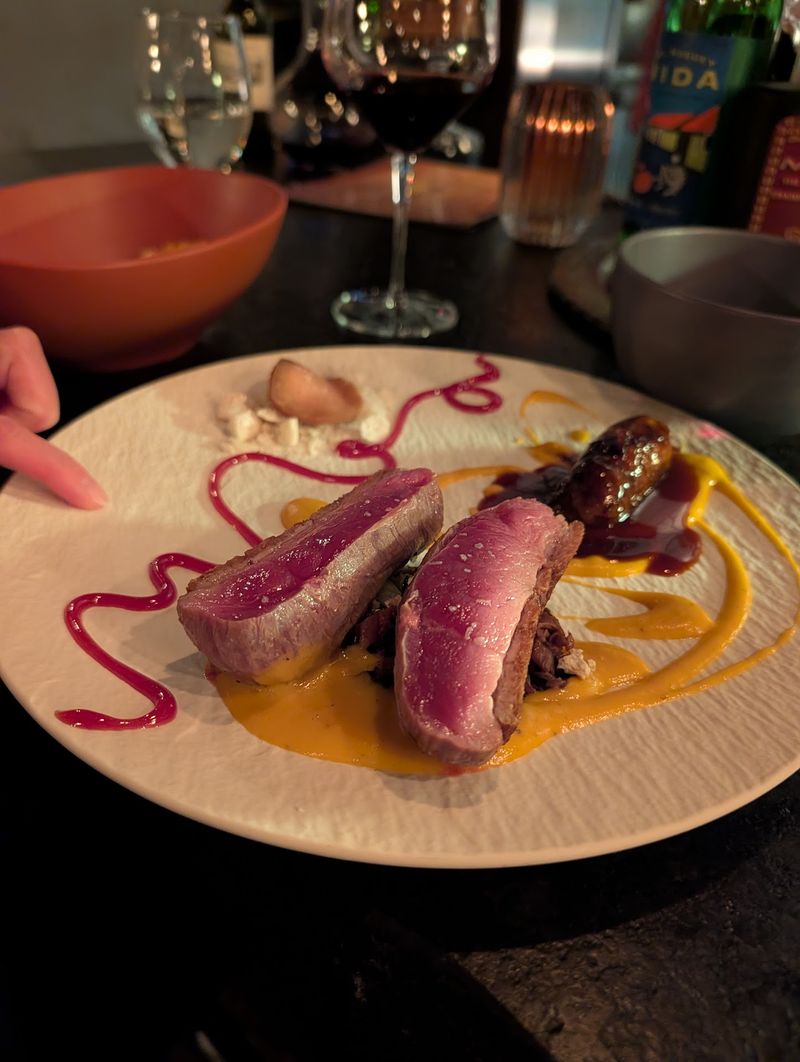
French technique anchors the kitchen here. Scratch-made American dishes round out the lineup.
Menu items shift with the seasons, so offerings change through the year. Checking current options before booking helps set expectations.
Steak frites appears often among the entrees. Gnocchi, duck, and osso buco have also featured on the menu.
Bouillabaisse shows up as a seafood option. Lamb and foie gras represent the richer end of the list.
The selection stays deliberately small. Fewer dishes usually means tighter execution in the kitchen.
Ask a server what is currently available rather than assuming. Seasonal rotation means favorites may come and go.
An open kitchen lets guests watch part of the preparation. Watching the line work adds a little theater to dinner.
Boston Title & Abstract leans fine dining, so pricing reflects that category. Treat it as a special occasion outing.
Curiosity pays off with a short menu. Trying something unfamiliar often works out well.
Starters And Shareable Plates To Consider
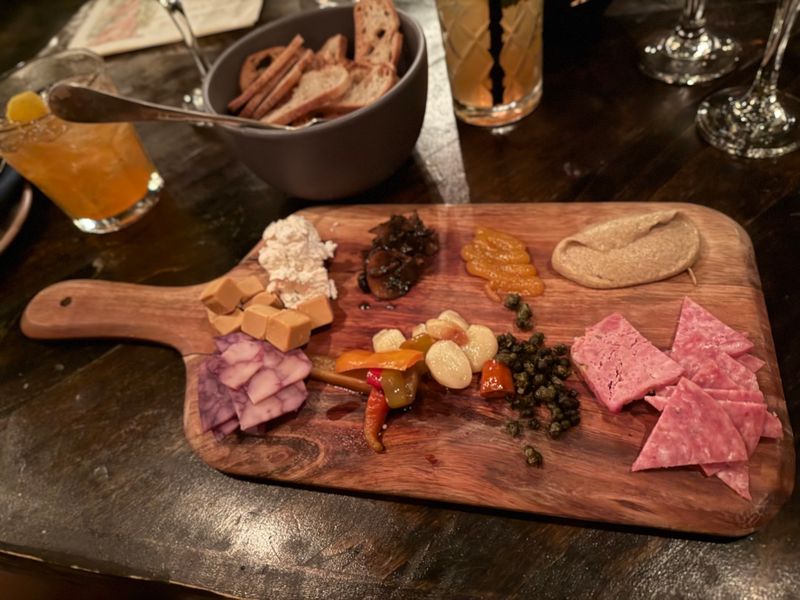
Sharing works especially well at the start of the meal. The charcuterie board comes up regularly among guests.
Steak tartare has been another frequent starter choice. Portions on some appetizers can suit two people comfortably.
Escargot also appears among the opening options. Availability may vary with seasonal menu changes.
Ordering one shared plate first slows the pace nicely. It also gives time to settle into the room.
Ask your server how large a starter runs before doubling up. Sizes differ from dish to dish.
Bread service often accompanies certain plates. A light char on the bread adds texture.
Groups may want two boards rather than one. Splitting a single plate four ways stretches it thin.
Starters here tend toward classic preparation rather than novelty. Familiar flavors show up with careful assembly.
Save room for what follows. Entrees and dessert both deserve attention.
Desserts That Close The Night Gently
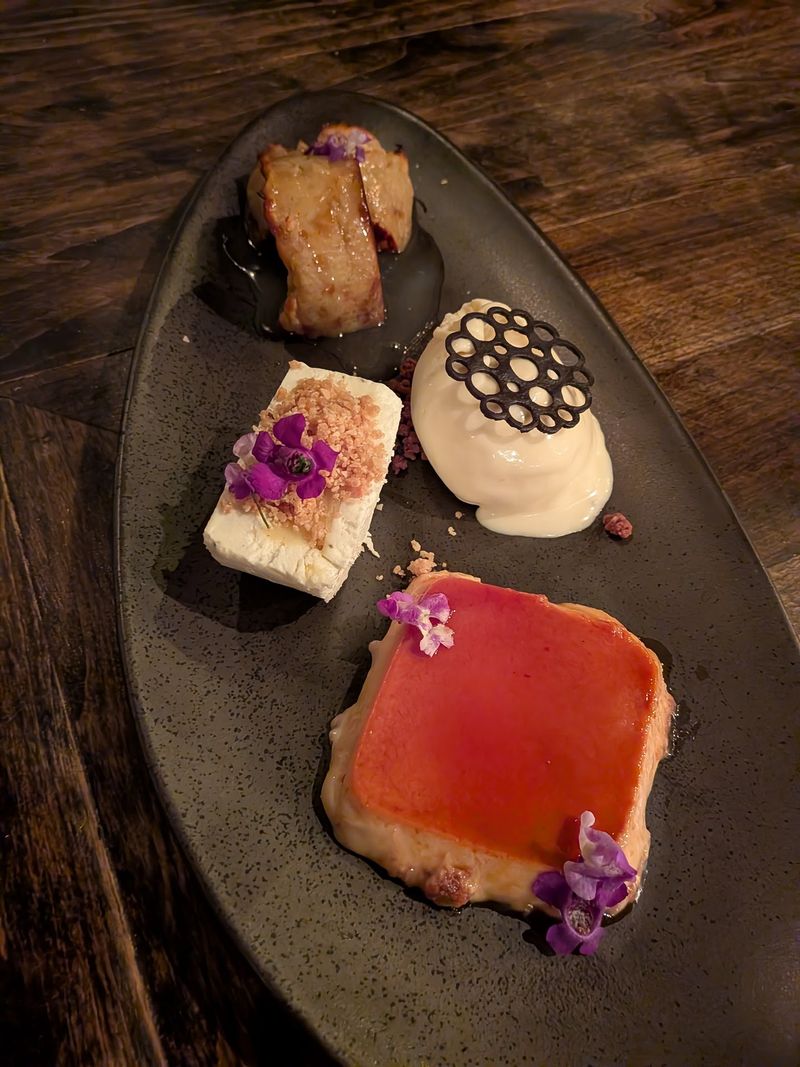
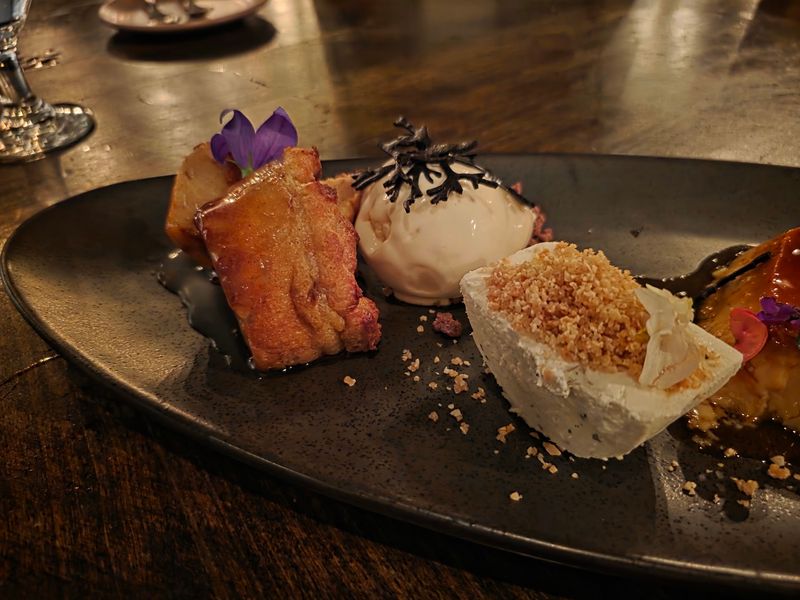
Dessert deserves a mention before anyone asks for the check. Bread pudding has been a recurring offering.
Flan and house ice cream have also appeared. Curd-based sweets show up at times as well.
Seasonal fruit flavors rotate through the year. Autumn menus have leaned toward warmer spice profiles.
Ordering a couple of desserts for the table works nicely. Sampling beats committing to one plate.
Ask what arrived most recently on the dessert list. Kitchens with rotating menus often have something new.
The pacing here stays relaxed at the end of the meal. Nobody clears plates in a hurry.
Coffee pairs well with the richer options. It also helps stretch the evening a little longer.
Sweets close out a French-leaning menu naturally. Classic preparations tend to land best.
Skipping dessert here feels like leaving early. The final course carries real weight.
Noise Levels And How Conversation Flows
Sound matters more than menus for some diners. The room carries a steady hum rather than sharp noise.
Music plays in the background without dominating. Conversation across a two-top stays easy.
Concrete surfaces can bounce sound during busier stretches. Peak times may feel livelier than early evening.
The energy still stays within comfortable limits. Shouting across the table is not part of the experience.
Guests sensitive to noise might aim for an earlier seating. Rooms usually fill as the night progresses.
Larger groups naturally add volume in a small space. Keep that in mind when booking for six or more.
Bar seating sits closest to the activity. Upper-level tables feel slightly removed from the center.
The controlled buzz supports the underground atmosphere. Silence would feel wrong in a room like this.
Balance is the real achievement here. Lively and intimate rarely share the same space.
Reservations And Smart Timing Strategies
Booking ahead is the single most useful tip. The dining room holds only about a dozen tables.
Weekend evenings fill fastest. Reserving a couple of weeks out is a reasonable approach.
Weeknight seatings may feel calmer overall. Reservations still remain advisable at any time.
The restaurant operates limited evening service and closes several days each week. Confirming current availability before driving downtown saves disappointment.
Online booking is available through the restaurant’s reservation system. Details can shift, so check current information first.
Arriving a few minutes early gives time to find the alley door. That buffer removes most of the stress.
Special occasions are worth noting during booking. Small courtesies sometimes follow.
Cancellations happen, so last-minute checks occasionally pay off. Nothing is guaranteed, though.
The address for planning purposes is 522 S Boston Ave Ste B100, Tulsa, OK 74103.
Design Details Hiding In Plain Sight
Look up once you settle in. Wrought-iron balconies frame the upper edges of the room.
Art Deco chevrons repeat along the walls. Those angular patterns tie the whole space together.
The long bar functions almost like a stage. Tables above look down onto that central activity.
That vertical layout creates an unusual dynamic for a basement. Guests observe and get observed at once.
Concrete and metal keep the palette grounded. Gold accents lift it without tipping into flash.
Lighting stays low and directed. Shadows do as much work as the fixtures.
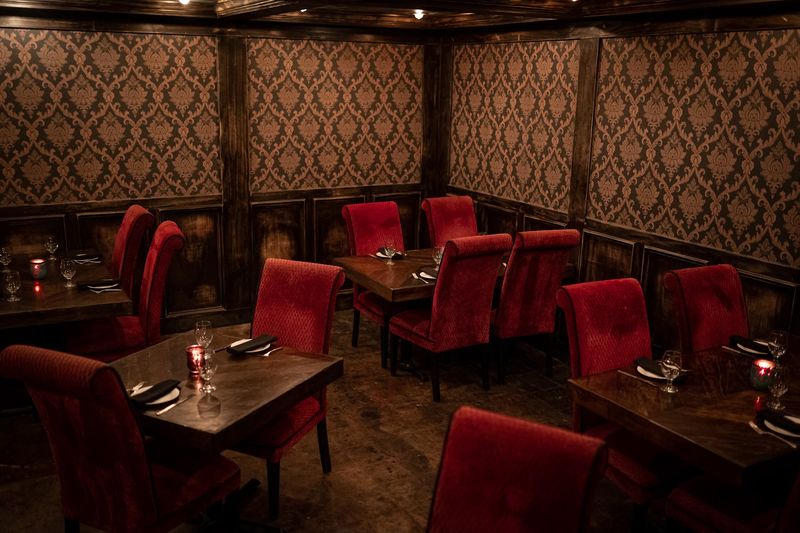
A separate smaller room exists for private-style seating. Requesting it may be possible depending on availability.
Every corner offers something to notice. Take a slow look around before the first course.
Design lovers will find plenty here. The room itself is part of the reason people come.
Why It Works For Anniversaries And Milestones
Celebrations feel different underground. The dim room and small table count create a natural sense of occasion.
Anniversaries and birthdays fit the setting well. First dates also land nicely here.
The welcome pour on arrival helps set a celebratory tone. Guests notice that gesture immediately.
Mention the occasion when reserving. Staff may accommodate small requests where possible.
Private-style seating exists in a smaller room. Availability depends on the night and booking timing.
Expect fine dining pricing for the evening. Budget accordingly and treat it as a planned splurge.
Dress leans toward smart casual and above. Nothing formal is required, though many guests dress up.
Boston Title & Abstract works better for a marked event than a routine weeknight dinner. That framing sets fair expectations.
The evening tends to stretch longer than planned. Leave the schedule open afterward.
Practical Notes Before Heading Downtown
A few logistics make the night smoother. Downtown parking varies by evening and event schedule.
Street spots and nearby lots both exist. Neither can be counted on at a specific moment.
Build in extra walking time. Sidewalks through the Deco District are pleasant enough for a short stroll.
Weather matters since the entrance sits outdoors. A coat helps during colder months while waiting to descend.
Service runs evenings only, and the restaurant closes on several days each week. Check current hours before finalizing plans.
Combining dinner with a downtown walk works well. Deco District architecture rewards a look around.
Phone reception in a basement may be spotty. Download directions before parking.
Cash is not necessary, though tipping practices stay standard. Plan for that in the total.