
This Hidden South Dakota Cavern Reveals Geological Wonders That Took 500 Million Years To Form
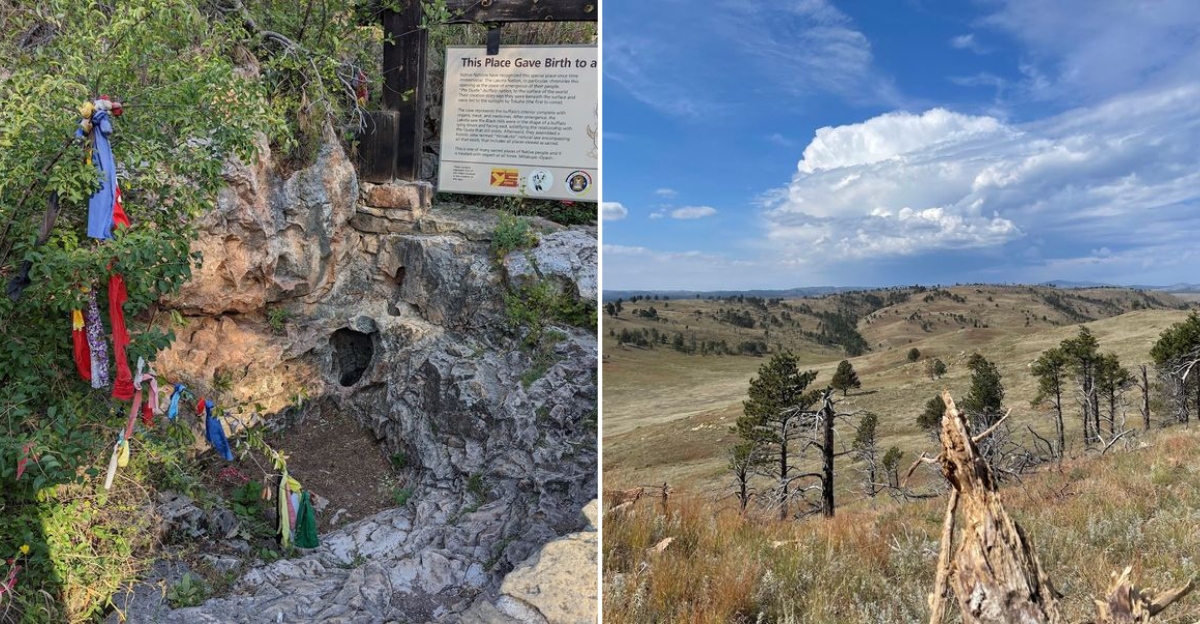
Geological patience on a scale that human timelines cannot process produced something a single afternoon barely begins to comprehend. This cavern reveals its work slowly, formation by formation.
Stalactites and flowstone arranged by forces that never consulted a deadline create an interior landscape photography consistently fails to capture. Standing inside feels different from every photograph taken of it.
Visitors who descend for the first time go quiet before the guide finishes the first sentence. The geology here does not require interpretation to make its impression.
Hidden caverns that reward discovery with genuine wonder represent an underappreciated category of natural experience. South Dakota delivered one here that has been forming its argument longer than human memory reaches.
Formation Processes Of Fossilized Minerals
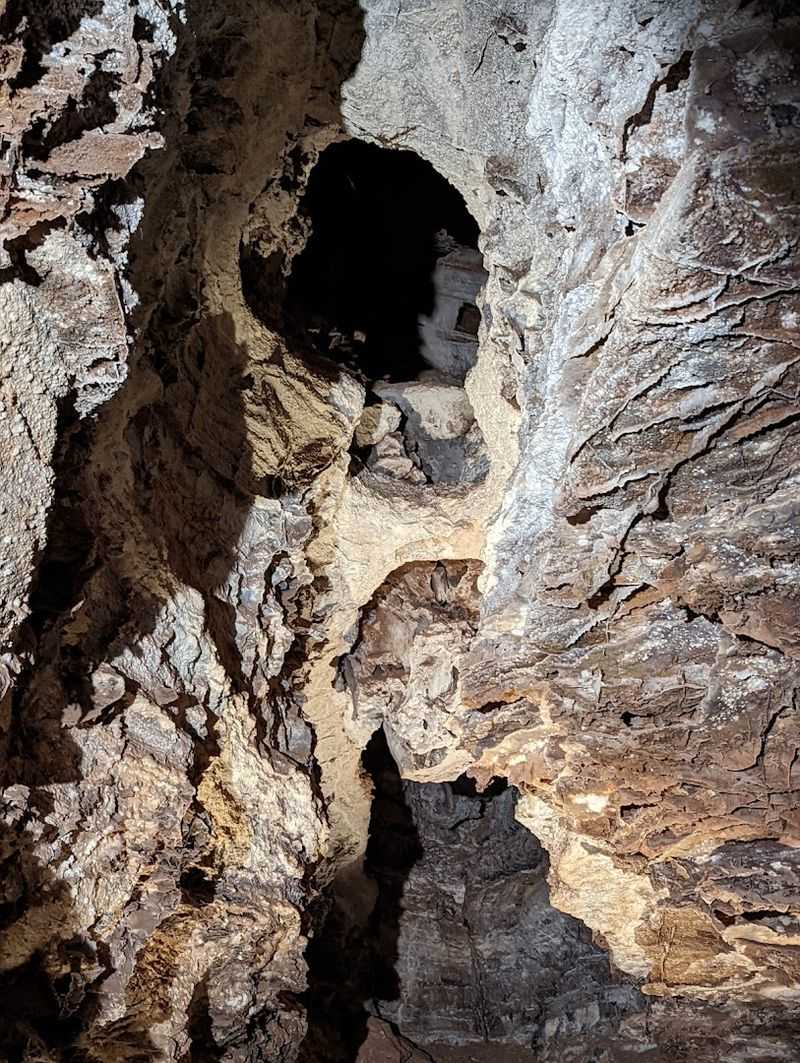
About 350 million years ago, a shallow sea covered what is now South Dakota. Marine creatures lived and passed away there, stacking up layer after layer of calcium-rich sediment.
That sediment slowly hardened into the Pahasapa Limestone, the rock that hosts Wind Cave today.
Gypsum masses formed inside the limestone next. Evaporating seawater left gypsum behind, and that mineral expanded and contracted with moisture.
Those movements cracked the limestone open from the inside, giving future passages a place to begin.
Freshwater later converted the gypsum into calcite. That conversion released acids, and those acids dissolved the surrounding limestone.
Around 320 million years ago, the very first cave passages were born from that chemical chain reaction.
Each fossilized mineral layer tells a different chapter of Earth’s story. Geologists read those layers like a library of ancient events.
Wind Cave is located along US Highway 385 in Hot Springs, South Dakota, making it accessible for curious visitors ready to witness this deep history firsthand.
Unique Rock Features And Their Origins
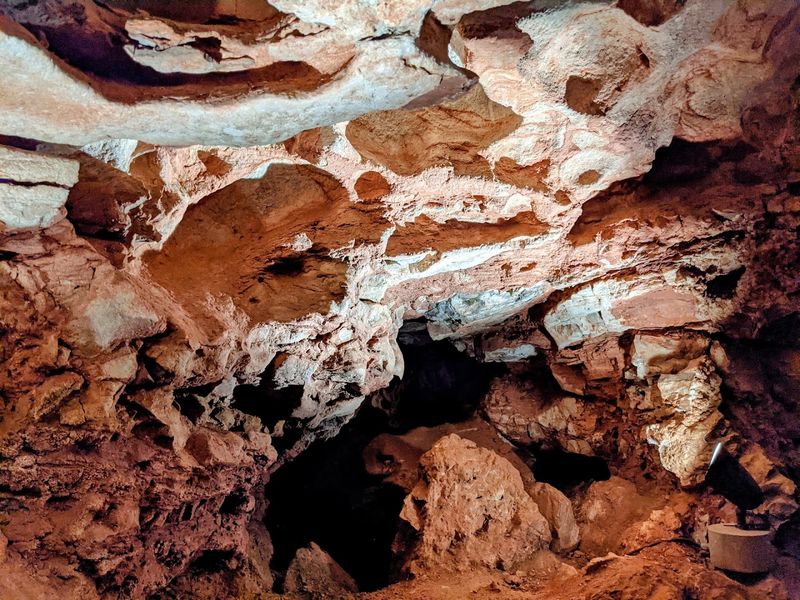
Wind Cave holds something almost no other cave on Earth can claim. About 95 percent of all known boxwork formations in the entire world exist right here.
That statistic alone makes this place extraordinary.
Boxwork looks like a honeycomb or spiderweb pressed into the ceiling. Thin blades of calcite filled ancient cracks in the limestone.
When the softer surrounding rock dissolved away, those calcite fins stayed behind, sticking out like tiny walls arranged in geometric grids.
Frostwork is another showstopper inside the cave. These are needle-like crystals made of aragonite, a close relative of calcite.
They grow outward in delicate, spiky clusters that look almost too fragile to be real rock.
Cave popcorn, also called cave coral, appears as knobby little calcite bumps coating walls and floors. Dogtooth spar crystals and helictites add even more visual variety.
Helictites twist and curve in directions that seem to defy gravity. Scientists believe they grow that way because of tiny impurities inside the crystal.
Each formation has its own origin story, and walking through the cave feels like reading a geology textbook written in three dimensions.
Role Of Water In Development
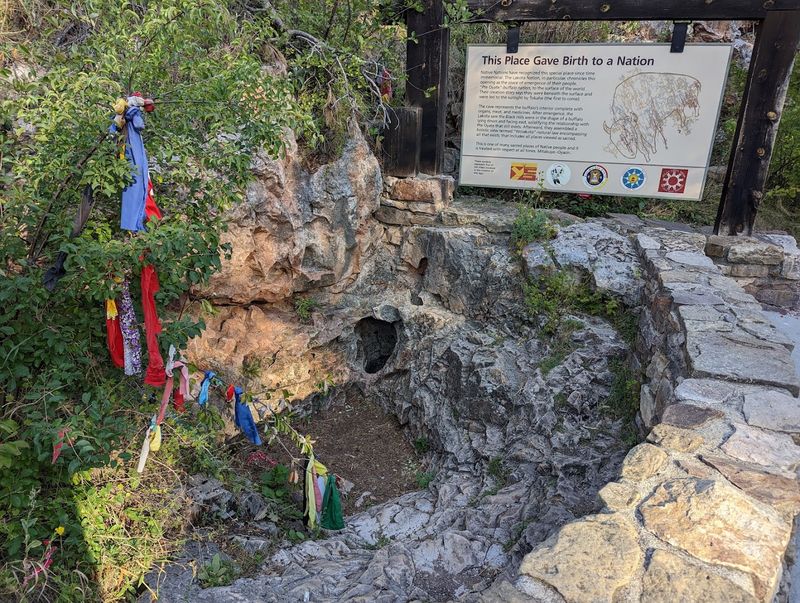
Water did not just shape Wind Cave from above. Most caves form when rainwater seeps down through cracks and dissolves rock from the top down.
Wind Cave worked differently, and that difference makes it scientifically fascinating.
Acidic water rose from deep below the surface, a process geologists call hypogenic speleogenesis. That upward-moving water dissolved the limestone from the inside out.
Over millions of years, tiny cracks widened into the massive maze of passages visitors walk through today.
Geologic studies suggest the cave started draining of water somewhere between 40 and 50 million years ago. As water levels dropped, air filled the passages.
That transition allowed secondary formations like frostwork and cave popcorn to begin growing on the now-dry walls.
Water still plays a slow, quiet role inside the cave today. Seeping moisture continues to deposit tiny calcite crystals on surfaces over centuries.
The pace is almost impossibly slow by human standards. A formation the size of your fingernail might represent thousands of years of growth.
Water shaped this cave in the past, and water is still quietly finishing the job right now, one microscopic crystal at a time.
Types Of Geological Strata Present
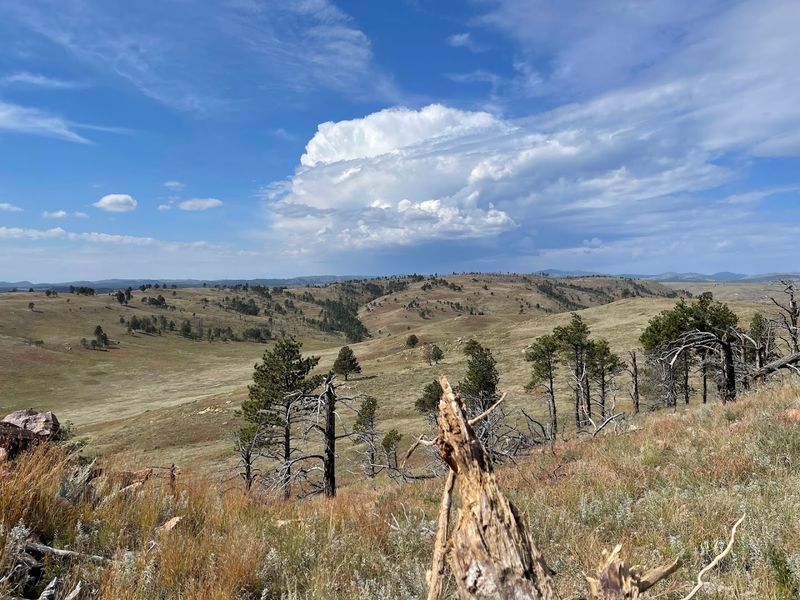
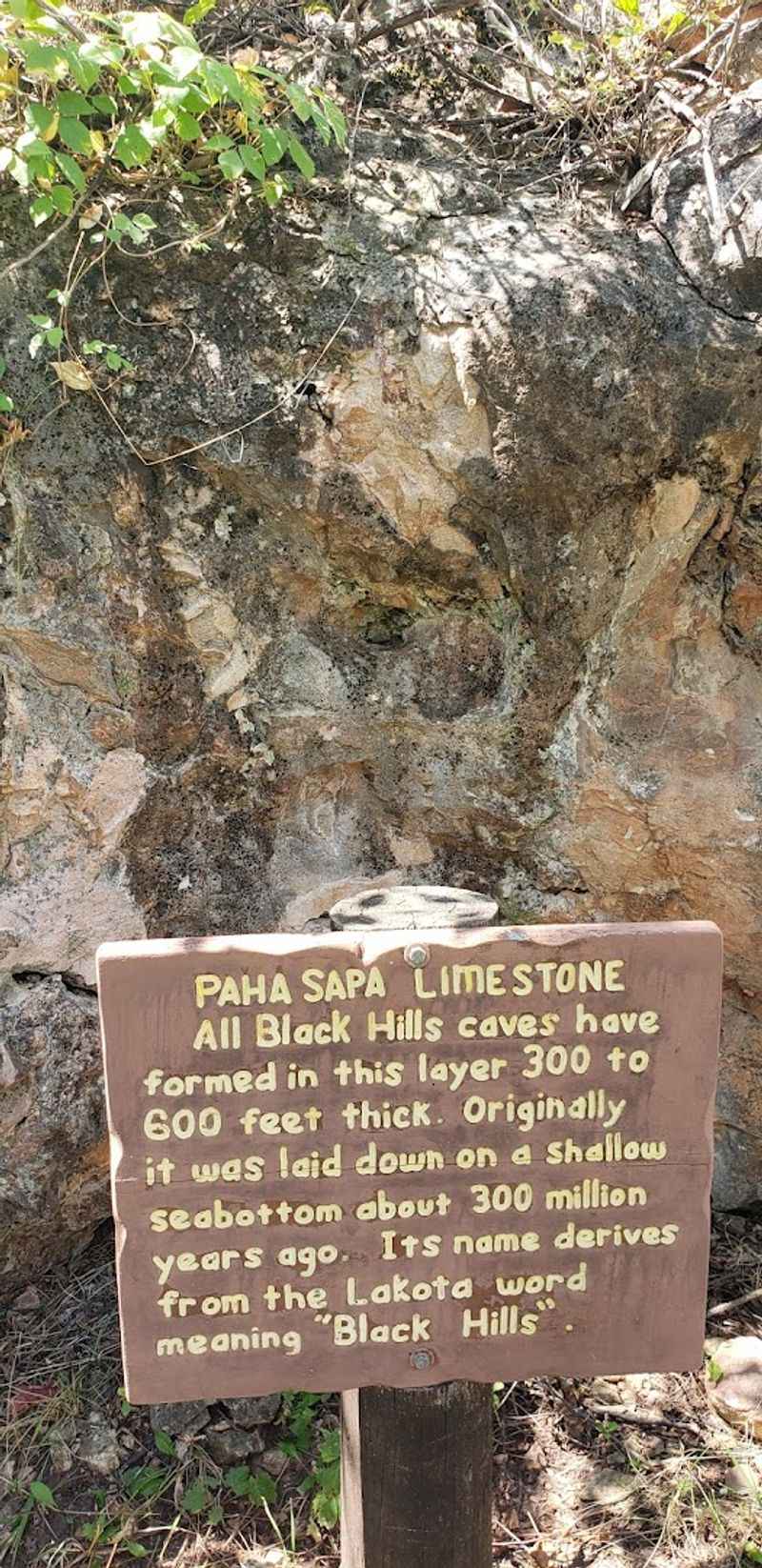
Wind Cave sits inside one of the most geologically layered landscapes in North America. The primary host rock is the Mississippian Pahasapa Limestone, formed from marine sediments more than 300 million years ago.
That limestone is the canvas on which the cave was painted.
Above the Pahasapa sits the Minnelusa Formation. This layer includes red clay, sandstone, and additional limestone deposited during a later period.
The color contrast between formations is visible in certain parts of the cave walls, almost like a painted timeline of ancient environments.
Head toward the northwest section of the park, and the geology gets even older. Metamorphic schists and igneous pegmatites appear there, dating back roughly two billion years.
Those rocks existed long before the cave, long before the limestone, and even long before the ancient sea that created the Pahasapa.
Each layer represents a completely different chapter of Earth’s development. Reading the strata at Wind Cave is like flipping backward through a textbook that covers billions of years.
Geologists visit specifically to study these transitions. For regular visitors, just knowing you are standing next to two-billion-year-old rock adds a certain weight to the experience that no photograph can fully capture.
Impact Of Natural Erosion Over Centuries
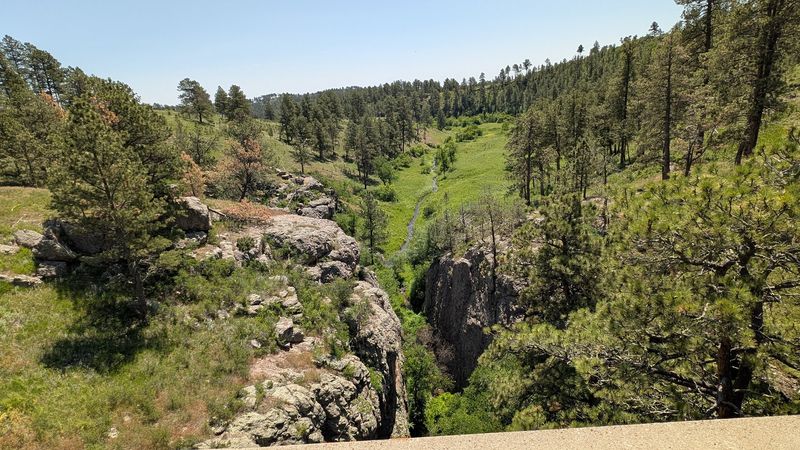
Erosion is usually thought of as something that destroys beauty. At Wind Cave, erosion actually revealed it.
The Black Hills region uplifted dramatically between 40 and 60 million years ago. That tectonic movement created countless fractures running through the limestone beneath the surface.
Surface erosion stripped away overlying sediment layers over millions of years. As those upper layers disappeared, older rock formations became exposed.
The landscape above Wind Cave today looks rugged and ancient because it genuinely is both of those things.
Inside the cave, erosion worked its own kind of magic. Softer limestone dissolved away around the harder calcite veins, filling ancient cracks.
That process is exactly how boxwork formations came to exist. Without erosion eating away at the surrounding rock, those thin calcite blades would still be buried and invisible.
Water erosion within the cave has mostly slowed down now. The cave no longer has active river-like water flowing through it.
But chemical weathering continues at a microscopic pace, quietly reshaping surfaces over centuries. Erosion built this wonder slowly, and it continues to refine it just as slowly.
Patience on a geological timescale looks completely different from patience in a human lifetime, and Wind Cave proves that beautifully.
Microclimates Within Subterranean Chambers
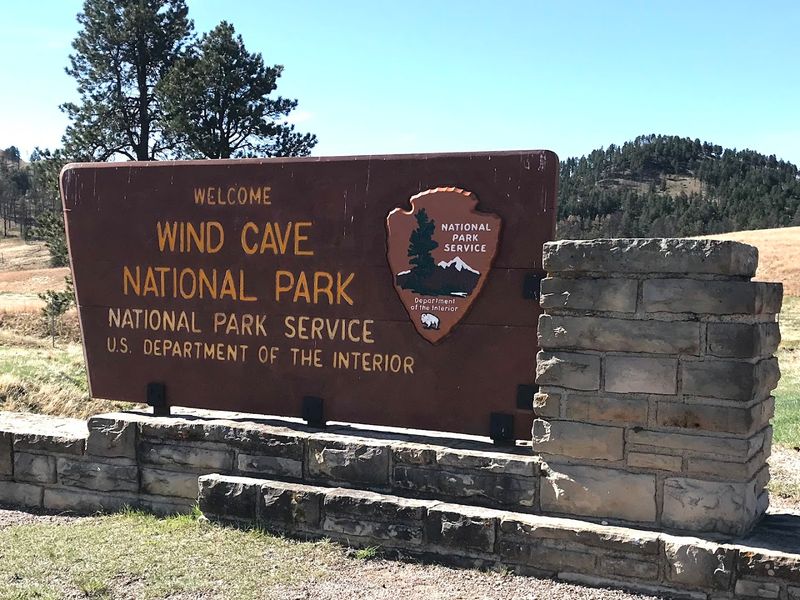
Wind Cave earned its name for a very real reason. Stand near the natural entrance on the right day, and you will feel a strong breeze blowing either in or out of the opening.
That wind is not random. It is the cave breathing.
The cave breathes because of atmospheric pressure differences between the surface and the underground air mass. When surface pressure drops, air rushes out of the cave.
When pressure rises, air flows back in. The cave acts like a giant lung responding to weather changes above ground.
The temperature inside the cave stays remarkably consistent at around 53 degrees Fahrenheit year-round. That steadiness creates its own microclimate, separate from the scorching summers or freezing winters happening above.
Bring a jacket, even in July.
Researchers have studied whether future climate changes will impact the cave’s internal microclimate. Current findings suggest the underground environment is relatively insulated from surface climate shifts.
However, electric lighting used during tours does raise the local temperature slightly. That small increase is enough to encourage algae and plant growth near light fixtures.
Park managers monitor those changes carefully to protect the cave’s natural balance. The cave microclimate is delicate, ancient, and surprisingly self-regulating.
Significance Of Speleothems In Research
Speleothems are cave formations built from mineral deposits, and Wind Cave has some of the most scientifically valuable ones anywhere on Earth. Boxwork, frostwork, and calcite rafts found here are not just visually stunning.
They are research tools that scientists use to understand deep history.
Paleontologists and geologists study these formations to date past events. The chemistry locked inside calcite layers can reveal how old a formation is and what environmental conditions existed when it grew.
That information helps researchers reconstruct ancient climates going back thousands or even millions of years.
Fluorescent minerals trapped within certain calcite formations add another research dimension. These minerals can trace organic chemistry moving from the surface soil down into the cave system.
Scientists use that information to understand how surface ecosystems connect to underground environments.
Calcite rafts, thin mineral sheets that once floated on ancient cave pools, are especially rare and informative. They preserve chemical signatures from the water they formed in.
Studying those signatures reveals details about precipitation patterns, temperature shifts, and even vegetation types from long-ago eras. Wind Cave is not just a tourist attraction.
It is an active scientific laboratory. Every formation on those walls holds data that researchers are still working to fully decode and understand.
Methods Used To Map Underground Passages
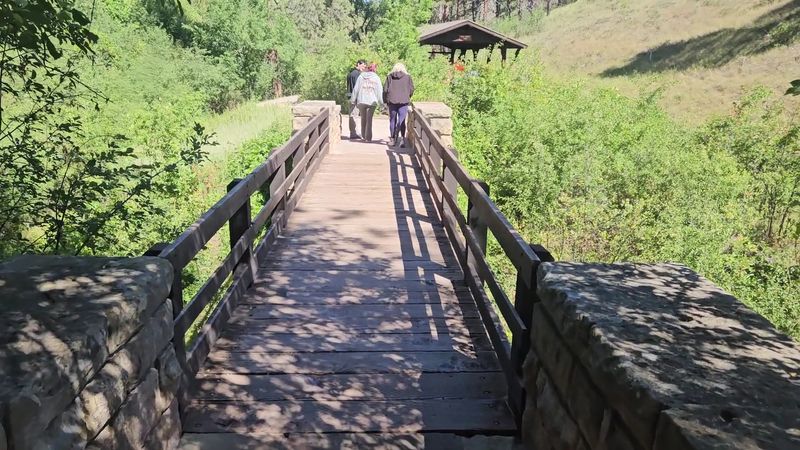
Wind Cave is one of the longest known caves in the world, with over 150 miles of surveyed passages. And here is the wild part: researchers believe most of it has not been found yet.
Airflow studies suggest the total cave volume is far larger than what explorers have mapped so far.
Cartographers map new passages regularly. They use traditional survey methods combined with modern digital tools.
Adobe Illustrator and specialized cave mapping software help turn raw survey data into detailed, accurate maps of the underground network.
Hydrology research adds another layer of understanding. Scientists use dye tracing, injecting colored dye into water sources, to track how water moves through the cave system.
Environmental tracers help determine the age of water found deep in certain passages. That data reveals how the cave connects to surface water sources above.
Geophysical techniques like ground-penetrating radar also help scientists detect voids and passages without physically entering them. These tools allow researchers to estimate the size and shape of undiscovered sections.
Every new passage found changes the map significantly. Explorers who survey Wind Cave do not just walk around with flashlights.
They carry precise instruments, record coordinates, and contribute data to a growing scientific record. The cave keeps revealing itself, one new passage at a time, and the map keeps growing.