
This Historic Florida Restaurant Has Been Serving An Iconic Cuban Sandwich For Over A Century
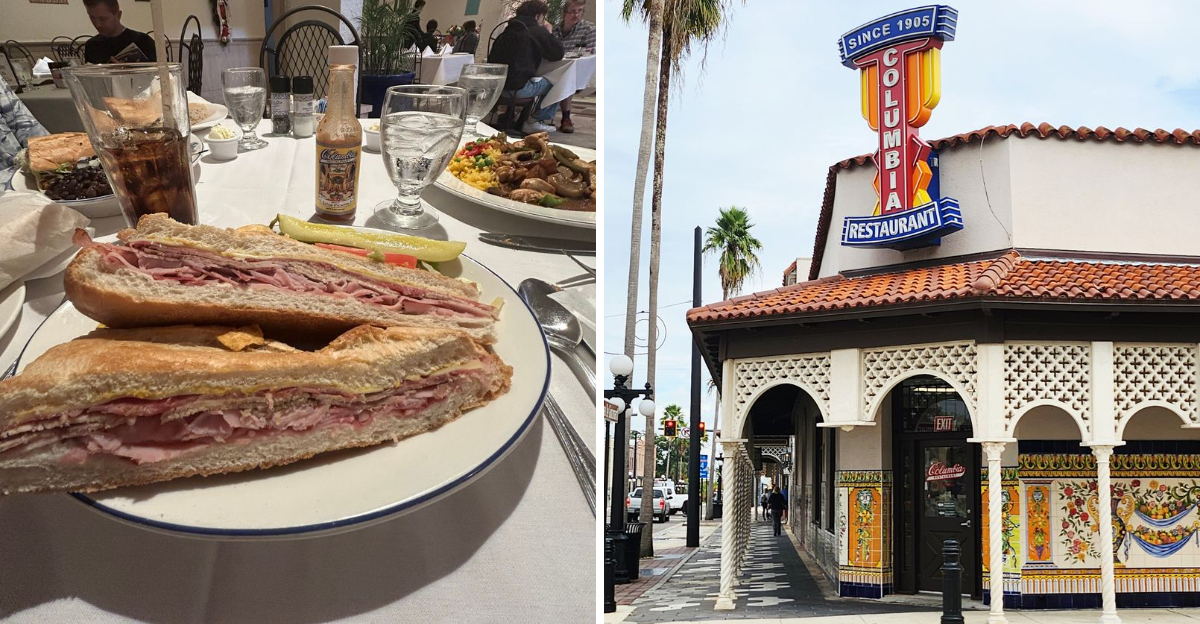
Walking into Columbia Restaurant feels like stepping through a portal into old Florida, where history hangs in the air alongside the scent of garlic and saffron. This family-owned landmark has been serving Tampa’s most iconic Cuban sandwich since 1905, making it the oldest restaurant in the entire state.
For more than a century, locals and travelers alike have gathered here to taste authentic Spanish and Cuban flavors that haven’t changed with the times.
Florida’s Oldest Restaurant Has Been Open Since 1905
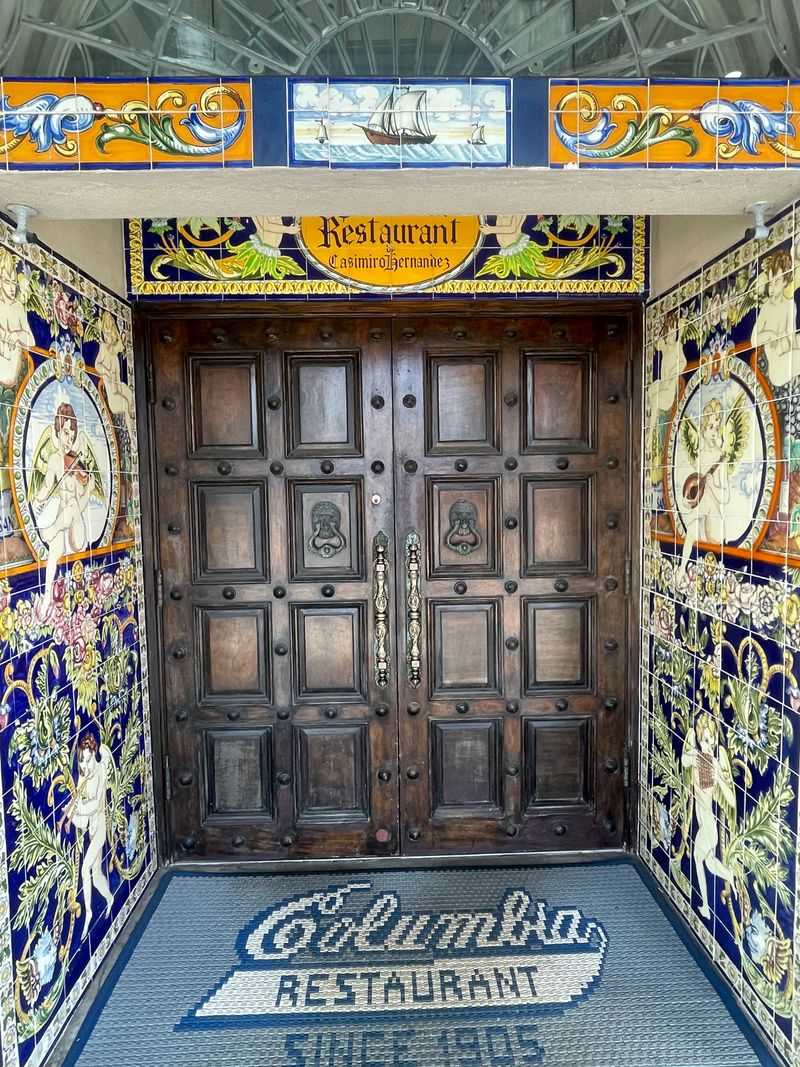
Casimiro Hernandez Sr. opened a small corner café in 1905 with just sixty chairs and dreams bigger than his modest budget. What started as a gathering spot for cigar workers in Ybor City has grown into Florida’s oldest continuously operating restaurant, still thriving after twelve decades.
The walls have witnessed everything from Prohibition-era whispers to modern celebrations, yet the commitment to quality hasn’t wavered.
Every tile, every archway, every hand-painted mural tells part of a story that began when Theodore Roosevelt was president. The restaurant expanded room by room, eventually occupying an entire city block at 2117 E 7th Ave, Tampa, FL 33605.
Walking through its fifteen dining rooms feels like touring a living museum where the exhibits happen to serve exceptional food.
Earning a 4.6-star rating from nearly 21,000 Google reviews isn’t just impressive—it’s a testament to consistency across generations. Families return year after year, introducing children and grandchildren to the same flavors their own grandparents cherished decades ago.
Columbia Started In Tampa’s Historic Ybor City
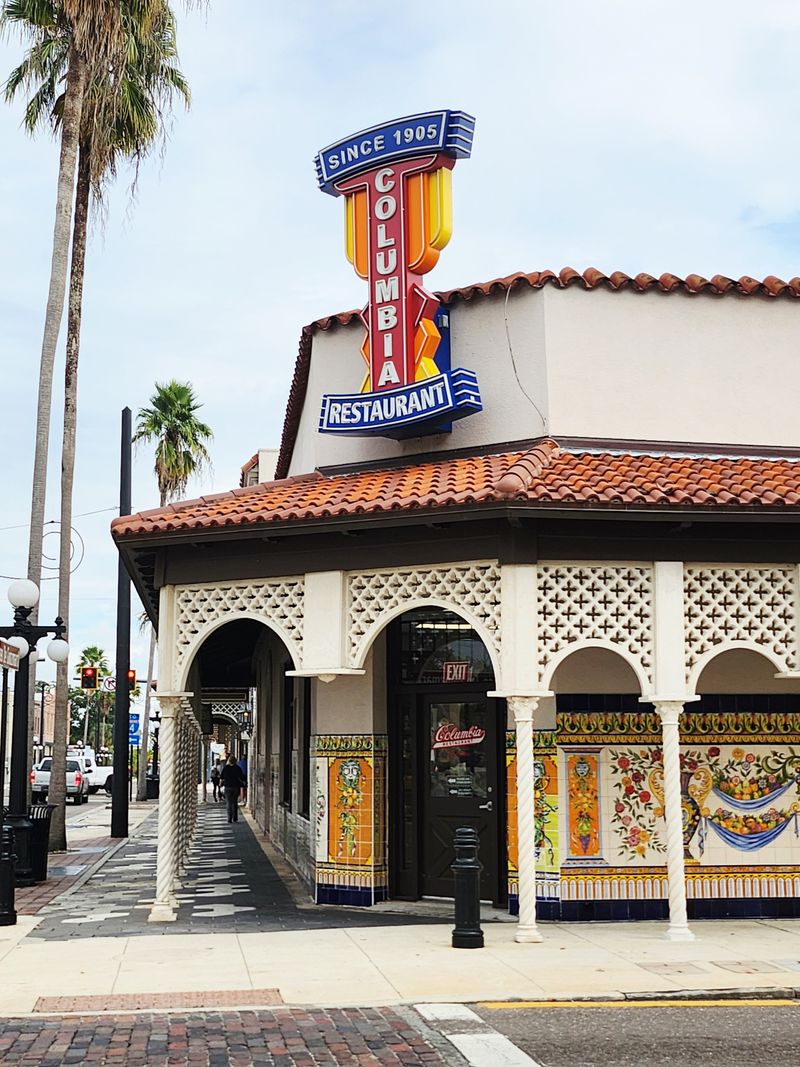
Ybor City wasn’t just any neighborhood when Columbia opened its doors—it was the cigar capital of the world, bustling with Cuban, Spanish, and Italian immigrants rolling cigars by hand. The district hummed with languages, music, and the kind of cultural fusion that makes food traditions come alive.
Columbia became the social heartbeat of this vibrant community, offering a taste of home to workers far from their native lands.
Today, the neighborhood still carries echoes of that rich heritage, with brick streets and wrought-iron balconies framing the restaurant’s iconic presence. The location at 2117 E 7th Ave sits right in the historic core, surrounded by renovated cigar factories turned lofts and museums celebrating the area’s storied past.
Choosing to dine here means experiencing more than a meal—it’s connecting with the immigrant experience that shaped Tampa’s identity. The restaurant has become inseparable from Ybor’s story, a culinary anchor that has weathered economic shifts, wars, and changing tastes while remaining utterly itself.
The Restaurant Was Founded By Cuban Immigrant Family
Casimiro Hernandez Sr. arrived in Tampa with little more than ambition and a deep understanding of the flavors that could transport people back to Havana. His small café began as a modest operation, but his vision extended far beyond serving simple meals.
He wanted to create a gathering place where the Cuban and Spanish communities could feel genuinely at home, surrounded by familiar tastes and warm hospitality.
The Hernandez family didn’t just run a business—they built a legacy rooted in authenticity and pride. Each generation added their own touches while fiercely protecting the recipes and traditions that made Columbia special from the beginning.
Understanding this immigrant foundation helps explain why the restaurant feels so genuine, why servers share stories with such passion, and why regulars treat visits like homecomings. The family’s journey from newcomers to Florida icons mirrors the American dream, achieved one perfectly pressed sandwich and one welcoming smile at a time.
Their success proves that staying true to your roots can be the smartest business strategy of all.
Its Cuban Sandwich Is As Legendary As Its History
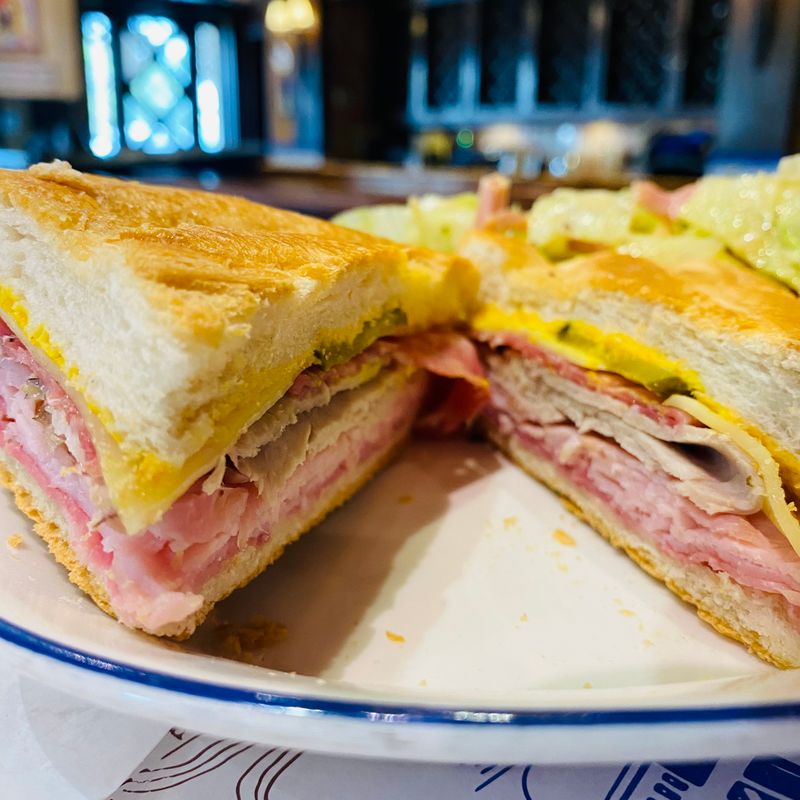
Some dishes become so intertwined with a place that they transcend mere menu items and become cultural touchstones. Columbia’s Cuban sandwich occupies exactly that space in Tampa’s culinary landscape, mentioned in 547 customer reviews as an absolute must-try experience.
The sandwich arrives hot from the press, its exterior crackling with just the right amount of crunch while the interior remains tender and layered with flavor.
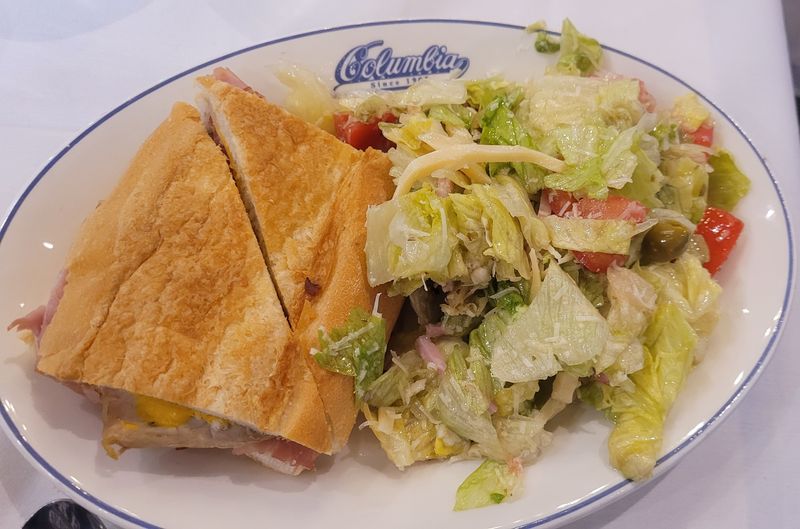
Ham, roast pork, Swiss cheese, pickles, and mustard come together on Cuban bread with a simplicity that belies the technique required to get everything perfectly balanced. Each ingredient plays its part without overwhelming the others, creating harmony that keeps people coming back decade after decade.
First-time visitors often order it based on reputation alone, then understand immediately why the legend persists. The sandwich represents everything Columbia does well—honoring tradition, refusing to cut corners, and understanding that excellence requires both quality ingredients and genuine care.
Biting into one connects you to over a century of satisfied customers who discovered the same perfect combination.
Columbia’s Pressed Cuban Is A Tampa Tradition
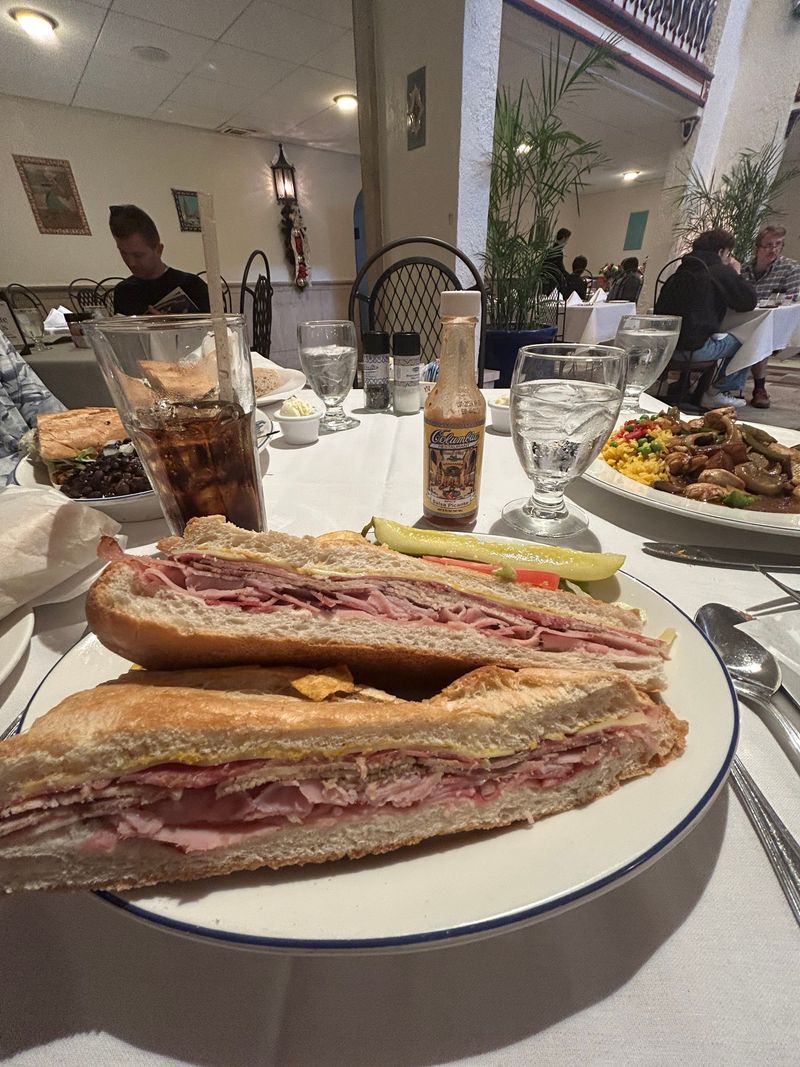
Tampa’s version of the Cuban sandwich differs slightly from Miami’s interpretation, sparking friendly debates that have lasted generations. Columbia’s rendition includes Genoa salami, a distinctly Tampa addition that reflects the Italian immigrant influence in Ybor City’s melting pot.
This regional variation isn’t just accepted—it’s defended with the kind of passion usually reserved for sports teams.
The pressing technique matters enormously, transforming separate ingredients into a unified creation where flavors meld and textures contrast perfectly. Too little pressure and you have a regular sandwich; too much and you’ve created a flattened mess.
Columbia’s kitchen staff has spent over a century perfecting this balance.
Locals bring out-of-town guests here specifically for this sandwich, treating it as an essential Tampa experience alongside cigar rolling demonstrations and the Riverwalk. The tradition extends beyond the food itself to encompass the ritual of ordering it, anticipating its arrival, and savoring each bite while surrounded by hand-painted tiles and family conversations happening in multiple languages at neighboring tables.
The Menu Still Honors Old-World Spanish And Cuban Roots
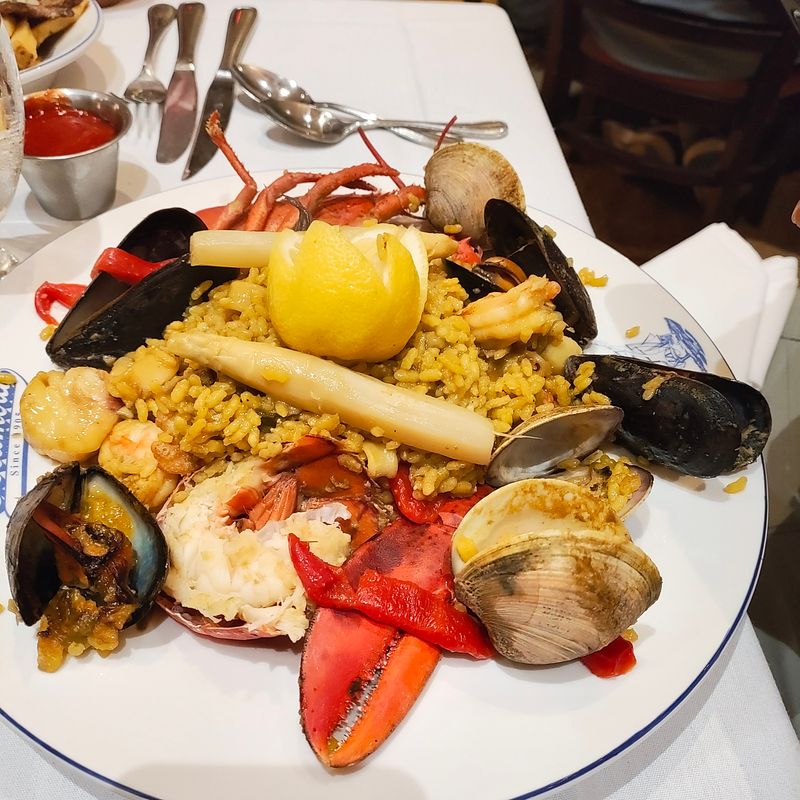
Beyond the famous sandwich, Columbia’s menu reads like a love letter to Iberian and Caribbean cooking traditions. Paella a la Valenciana arrives at tables in traditional pans, saffron-tinted rice studded with shrimp, scallops, squid, clams, mussels, and chicken that customers rave about in review after review.
The 1905 Salad gets tossed tableside with theatrical flair, its Worcestershire-spiked dressing coating crisp iceberg lettuce, ham, cheese, and olives in a performance diners photograph and applaud.
Ropa vieja, mentioned in 101 reviews, showcases tender shredded beef in tomato-based sauce that tastes like someone’s beloved abuela spent hours perfecting it. Devil crab, black bean soup, and palomilla steak represent dishes you won’t find at chain restaurants, each prepared using recipes that predate air conditioning and interstate highways.
The kitchen operates at a scale that staggers the imagination—capable of seating 1,700 guests at once across fifteen themed dining rooms. Yet somehow, dishes emerge with care and consistency that smaller operations struggle to achieve, proving that size doesn’t have to mean sacrifice.
The Original Ybor City Dining Room Feels Like A Time Capsule
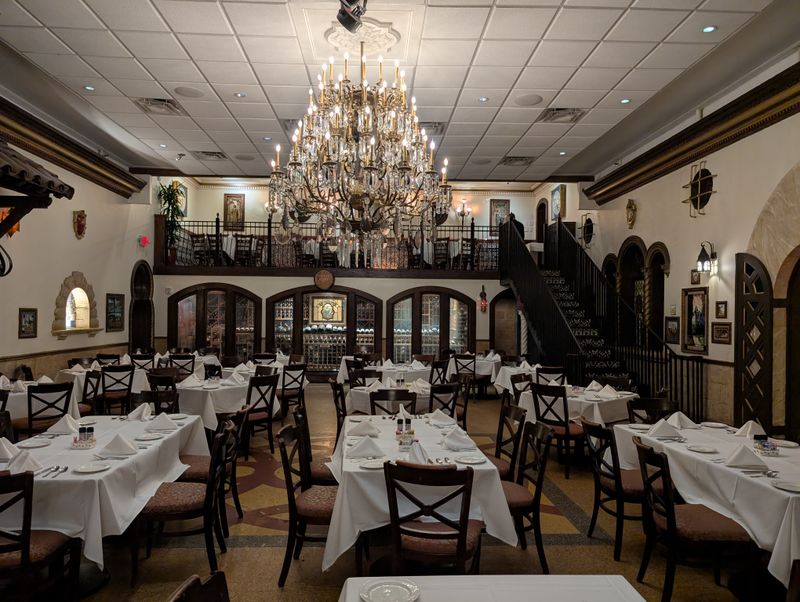
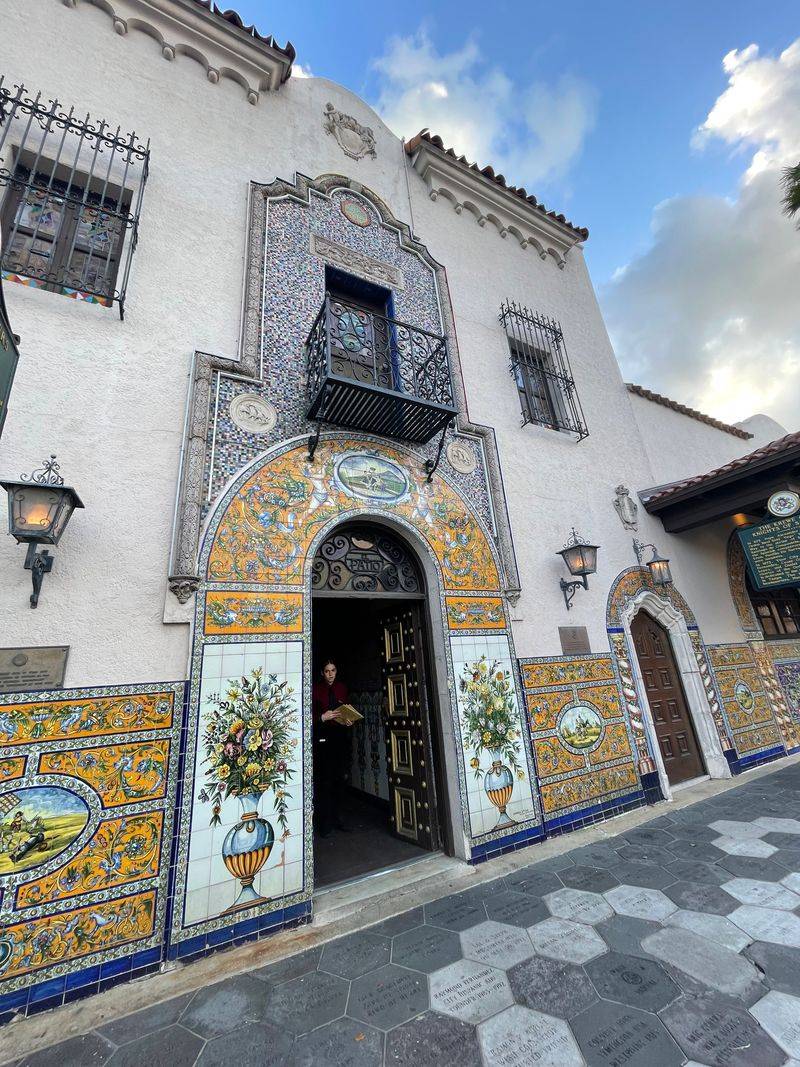
Stepping into Columbia’s original dining spaces transports you to an era when craftsmanship mattered more than efficiency and beauty required no justification. Hand-painted tiles imported from Spain cover walls and fountains, each one a small work of art depicting scenes from Spanish history and mythology.
Ornate chandeliers cast warm light across dark wood tables where generations have celebrated birthdays, anniversaries, and ordinary Tuesdays that became special simply by happening here.
Each of the fifteen dining rooms carries its own theme and personality, from intimate spaces perfect for romantic dinners to grand halls that accommodate wedding parties and corporate events. Vintage photographs line hallways, showing the restaurant’s evolution from modest café to sprawling palace of flavors that occupies an entire city block.
The décor isn’t museum-quality because someone decided to preserve it—it’s museum-quality because it was made to last, created during an era when permanence and beauty went hand in hand. Walking through these rooms offers a masterclass in Spanish colonial design, all while the scent of garlic shrimp and fresh bread reminds you this isn’t a museum at all.
Generations Of Families Have Eaten Here For Decades
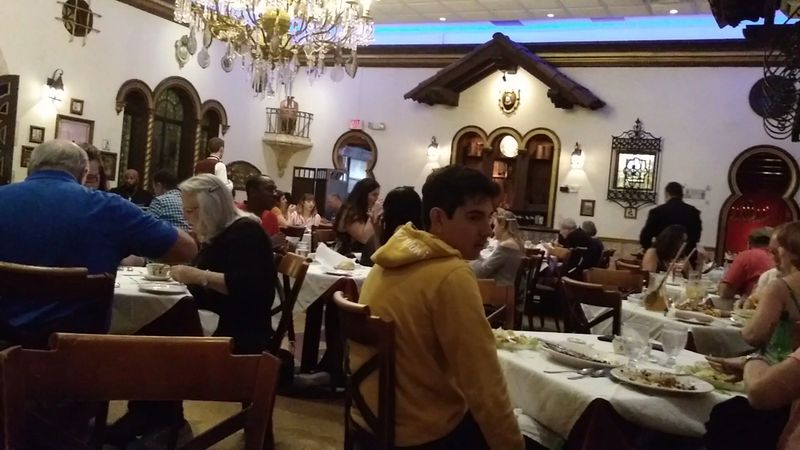
Reading through customer reviews reveals a pattern that speaks to something deeper than good food—families describe bringing their children to the same tables where they sat as kids, introducing grandchildren to dishes their own grandparents ordered decades ago. One reviewer mentioned celebrating a 60th wedding anniversary here, the kind of milestone that requires a venue with matching gravitas and history.
These aren’t just meals; they’re rituals that mark time and bind families together across generations.
Servers often work at Columbia for years, even decades, learning regular customers’ names and preferences while sharing stories about the restaurant’s history with genuine enthusiasm. Maria, mentioned specifically in reviews, gives impromptu kitchen tours that reveal the operations behind meals that satisfy hundreds of diners nightly.
This continuity creates something increasingly rare in modern dining—a sense of belonging that transcends the transactional nature of most restaurant visits. When three or four generations gather around a table here, they’re not just sharing a meal but participating in a tradition that connects them to their family’s past and Tampa’s broader cultural heritage.
Wood-Grilled Flavor Defines Their Signature Sandwich
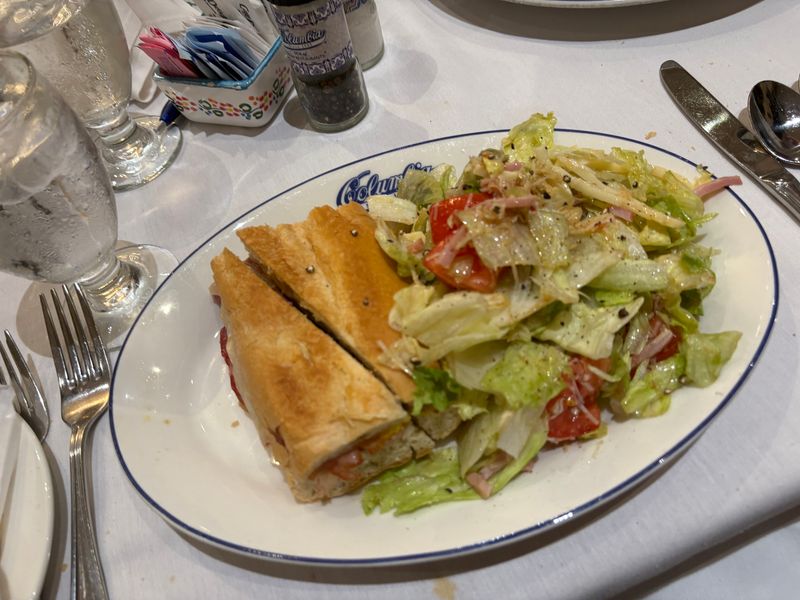
While many restaurants have abandoned traditional cooking methods in favor of efficiency, Columbia maintains techniques that require more effort but deliver superior results. The meats in their legendary Cuban sandwich benefit from wood-grilling that imparts subtle smokiness you simply cannot replicate with gas or electric heat.
This old-school approach means more work for kitchen staff and higher fuel costs, but the difference shows up in every bite.
The roast pork arrives with edges that have caramelized beautifully, while the interior remains juicy and tender, achieving a textural contrast that keeps your palate engaged. Combined with the ham, cheese, pickles, and mustard, then pressed until the bread develops that signature crackle, the result justifies every bit of extra effort.
Customers mention the wood-grilled flavors specifically in reviews, recognizing something special even if they can’t quite articulate what makes it different. That’s the magic of traditional techniques—they create depth and complexity that people taste and appreciate instinctively, even when the specifics remain mysterious.
Columbia’s refusal to modernize everything has preserved flavors that connect today’s diners to the past.
It’s Still Family-Owned And Operated Today
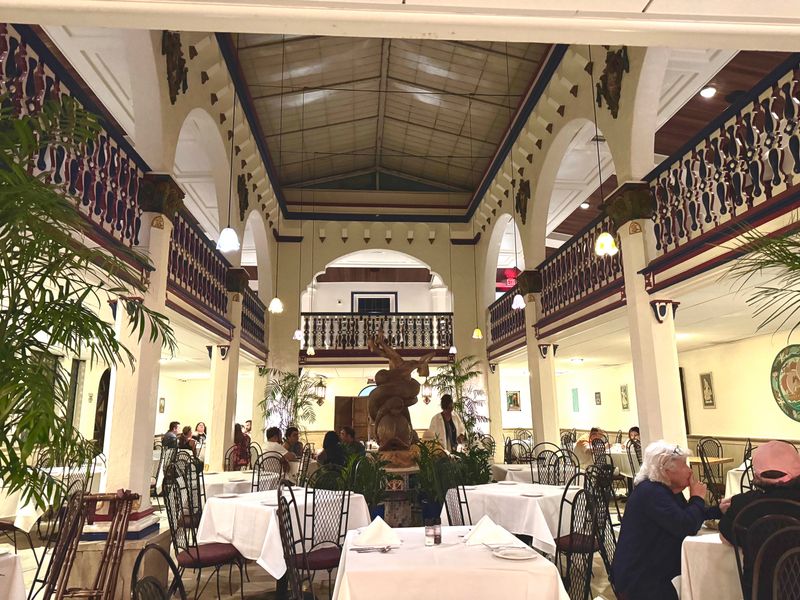
In an era when most successful restaurants either franchise or sell to corporate groups, Columbia remains firmly in the hands of the family that built it from a sixty-seat café into Florida’s largest Spanish restaurant. This independence allows them to make decisions based on quality and tradition rather than quarterly earnings reports and shareholder demands.
The difference shows in details that accountants might question but customers absolutely notice and appreciate.
Family ownership means recipes don’t get “optimized” to reduce costs, portion sizes don’t shrink to boost margins, and servers aren’t pressured to rush tables for higher turnover. The Hernandez descendants understand they’re stewarding a legacy, not just managing a business, which fundamentally changes how decisions get made.
This structure has allowed Columbia to expand thoughtfully to other Florida locations while maintaining the standards that made the original special. Reviews mention consistency across visits spanning years or even decades, the kind of reliability that only comes from ownership genuinely committed to excellence rather than simply extracting maximum profit before moving on to the next venture.
A Visit Feels Like A Step Back Into Classic Florida History
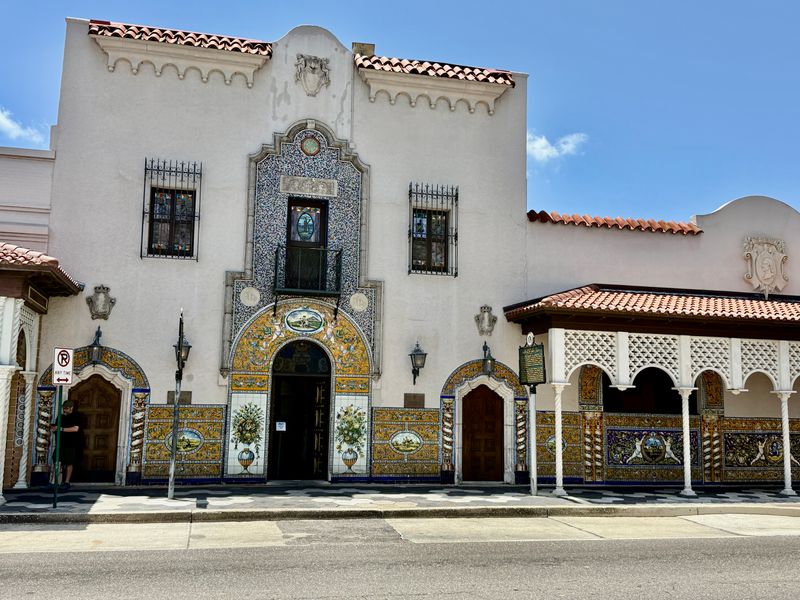
Modern Florida often gets reduced to theme parks and beaches, but Columbia offers something more nuanced—a connection to the state’s immigrant roots and the communities that built its cultural foundation. Dining here means experiencing Florida as it existed before air conditioning made mass migration possible, when Ybor City’s cigar factories drove Tampa’s economy and multiple languages floated through streets lined with social clubs and family-owned businesses.
The restaurant operates Tuesday through Thursday from 11 AM to 9 PM, Friday and Saturday until 10 PM, Sunday and Monday returning to 9 PM closings, maintaining hours that accommodate both locals and tourists exploring the historic district. Reservations are strongly recommended, especially for weekend dinners when the flamenco show draws crowds eager to experience passionate dancing alongside their paella.
Walking out after a meal, you carry more than a satisfied appetite—you’ve absorbed history through your senses, tasted the past made present through recipes that refuse to fade. Columbia isn’t trying to recreate history; it simply never stopped being itself, which makes all the difference between authentic and artificial nostalgia.
The White Chocolate Bread Pudding Deserves Its Own Pilgrimage
Mentioned repeatedly in glowing reviews, Columbia’s white chocolate bread pudding has achieved cult status among dessert enthusiasts who plan entire visits around saving room for this final course. One customer called it “the best bread pudding I have ever had in my ENTIRE life,” using capital letters to emphasize a conviction that clearly runs deep.
The dessert arrives warm, creamy, and indulgent, with white chocolate adding richness without overwhelming sweetness.
The bread itself stays moist and soft rather than dense or heavy, a technical achievement that requires precise timing and temperature control. Despite being filling enough to share, the pudding doesn’t sit heavily in your stomach, allowing you to finish your meal feeling satisfied rather than uncomfortably stuffed.
Servers recommend it with the kind of enthusiasm that suggests they’ve witnessed its effects on countless diners, watching skeptics become believers with the first spoonful. Paired with coffee or a digestif, it provides the perfect conclusion to meals that span decades of tradition and flavors that connect Tampa to Havana and Madrid through the universal language of excellent cooking done with care and pride.