
This Historic Massachusetts Basilica Looks Like A Slice Of Europe With Its Stained Glass And Grand Arches
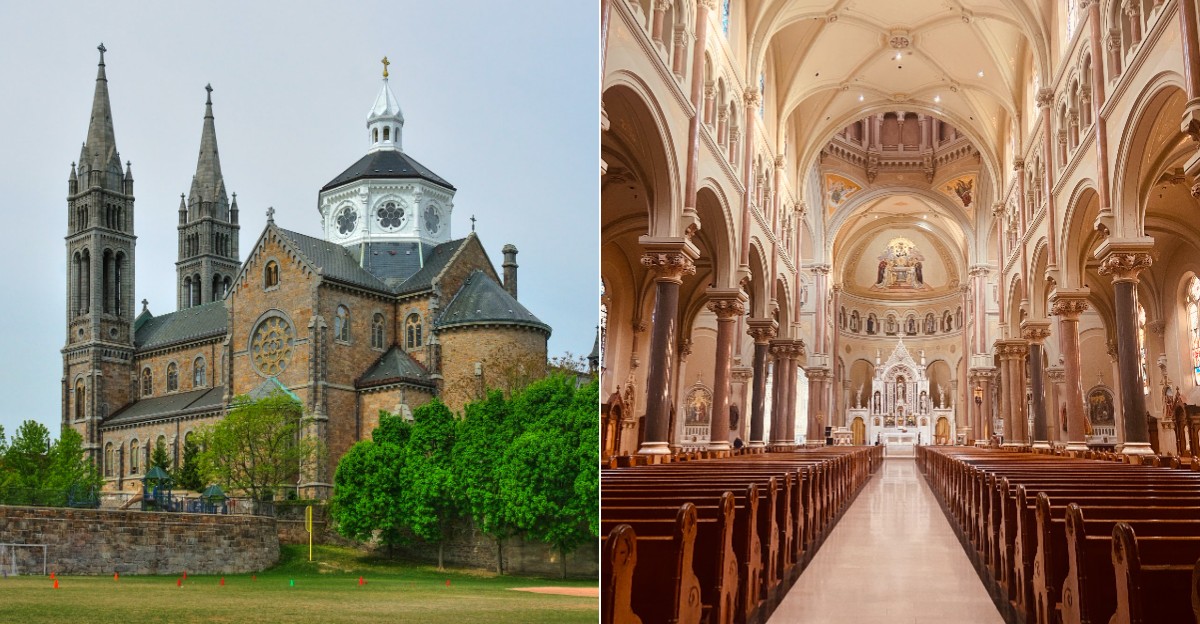
One church in Massachusetts is so famous that an entire neighborhood took its name. That’s a big flex for a building made of local stone.
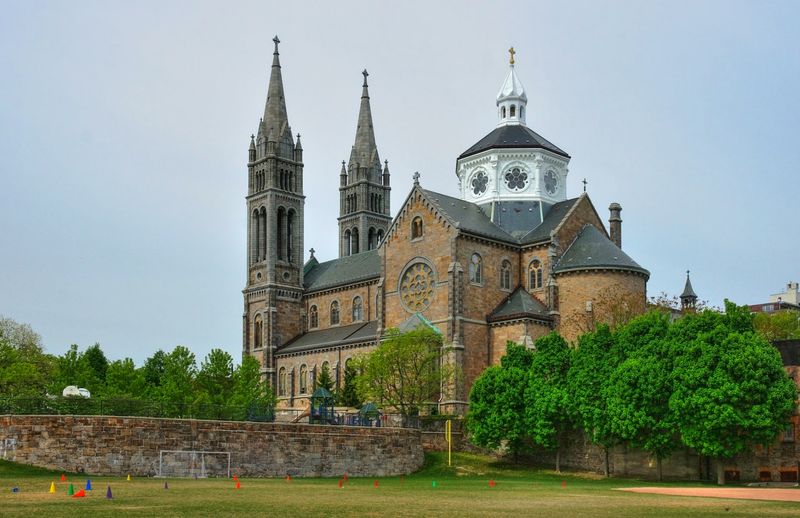
Its tallest spire rises 215 feet. The church itself stretches exactly 215 feet long, which feels like an architect’s inside joke.
Inside, more than 200 statues of angels and saints keep watch under soaring arches.
I like how the stained glass came partly from Munich, Germany. That detail alone explains why so many people say it feels like Europe.
I can’t imagine a better place to slow down in a busy city.
Then there’s the prayer tradition. A weekly Wednesday tradition of prayer and healing here dates back to 1874.
So what keeps people coming back for more than 150 years?
A Neighborhood Literally Named Itself After This Church
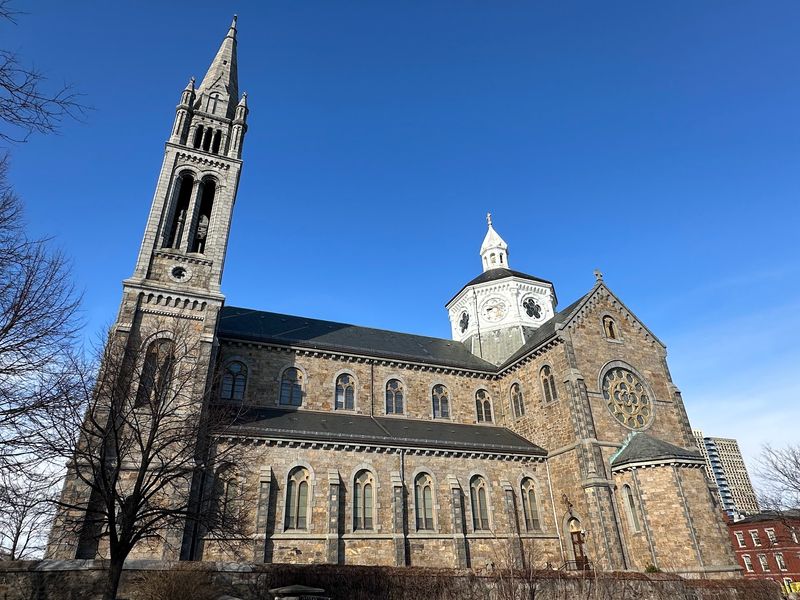
Most churches get named after a neighborhood. The Basilica and Shrine of Our Lady of Perpetual Help flipped that script completely.
Folks have long called it The Mission Church. That nickname stuck so well that the whole area became known as Mission Hill.
Talk about a building with influence.
Redemptorist priests have served this parish since its first wooden church opened in 1870. When work began on the current church, the congregation was largely German.
Groundbreaking came in 1874, and the dedication followed on April 7, 1878.
That timeline matters because it explains the European feel. The people who built this place carried Old World traditions with them.
You can sense that influence in the stone, the glass, and the scale.
Today, it remains an active Roman Catholic parish. Masses are offered in English, Spanish, and Haitian Creole.
That mix reflects how the community has grown and changed over the decades.
I believe that’s the best part of its story. The building looks frozen in time, yet the people inside keep it fresh.
It’s a living church, not a museum piece.
Those Twin Spires Hide A Clever Little Number Trick
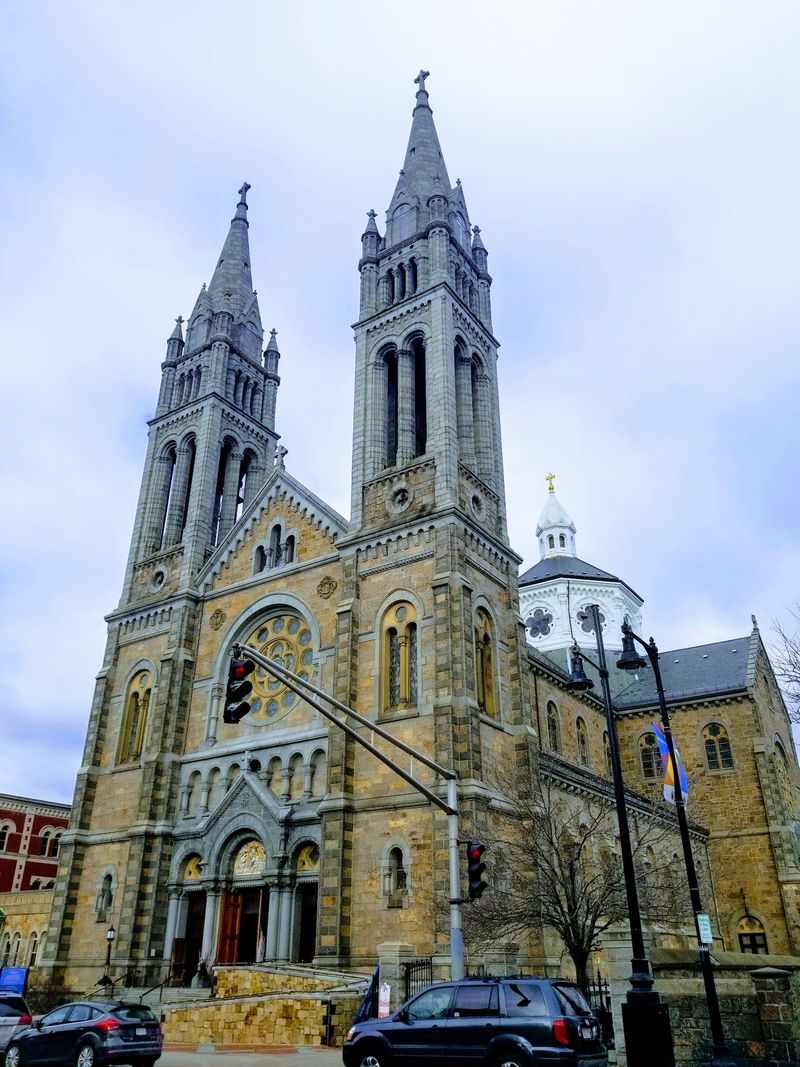
Here’s a fun one for trivia night. One of the basilica’s spires reaches 215 feet tall, and the church is also 215 feet long.
Tip it over, and it would fit perfectly. Please don’t try that, though.
Those spires weren’t part of the original 1878 design. They arrived in 1910, created by Swiss architect Franz Joseph Untersee.
He gave them a Gothic Revival style that adds height and drama.
The rest of the building leans Romanesque. That style favors rounded arches, thick walls, and a sturdy, grounded look.
The tall spires add a soaring finish on top.
The original church was designed by J. William Schickel and Isaac E.
Ditmars. So you’re really seeing the work of several talented minds across different decades.
It all blends together surprisingly well.
From the street, the spires act like a giant welcome sign. You can spot them rising over Mission Hill from a good distance.
Snap your photo from across Tremont Street to fit both towers in the frame.
Bring a wide-angle lens if you have one. Your phone might struggle to capture the full height.
You Can Thank Roxbury Puddingstone For That Rugged Look
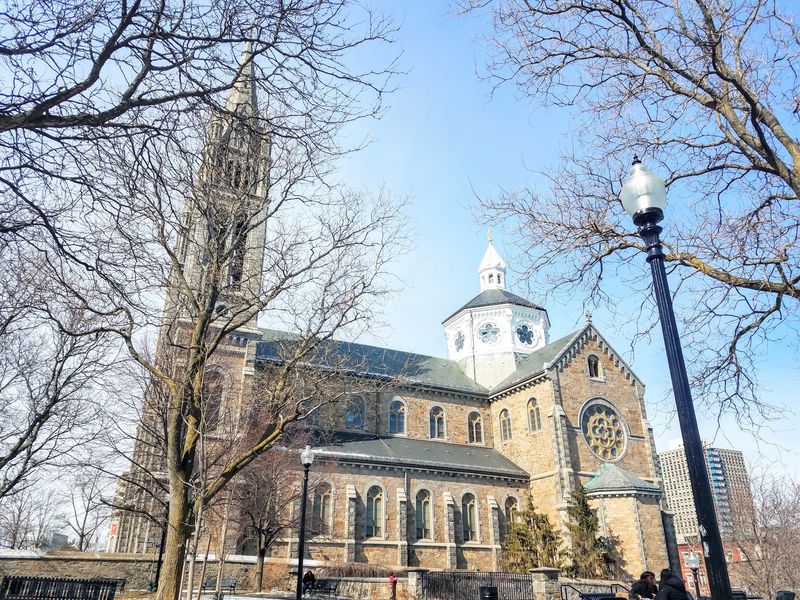
Puddingstone sounds like a dessert. It’s actually the official state rock of Massachusetts, and this basilica wears it proudly.
The builders used locally quarried Roxbury puddingstone for the walls. It’s a lumpy, pebbly rock that looks like someone stirred stones into concrete.
Up close, it has real texture and character.
Granite and sandstone trim add contrast around the edges. The lighter stone frames the darker walls nicely.
It gives the facade a layered, handsome look.
I like that the building comes from the ground it stands on. The stone wasn’t shipped across an ocean to make it look European.
Local rock did the job just fine.
Take a slow walk around the outside before heading in. Look closely at the walls, and you’ll spot pebbles of all sizes locked inside the stone.
Kids tend to find this part weirdly fascinating.
The building has official recognition too. It joined the National Register of Historic Places in 1989.
Boston named it a city landmark in 2004.
So yes, people noticed this rock pile is special. It earned its honors fair and square.
Look Up Or You’ll Miss The Best Part Of The Ceiling
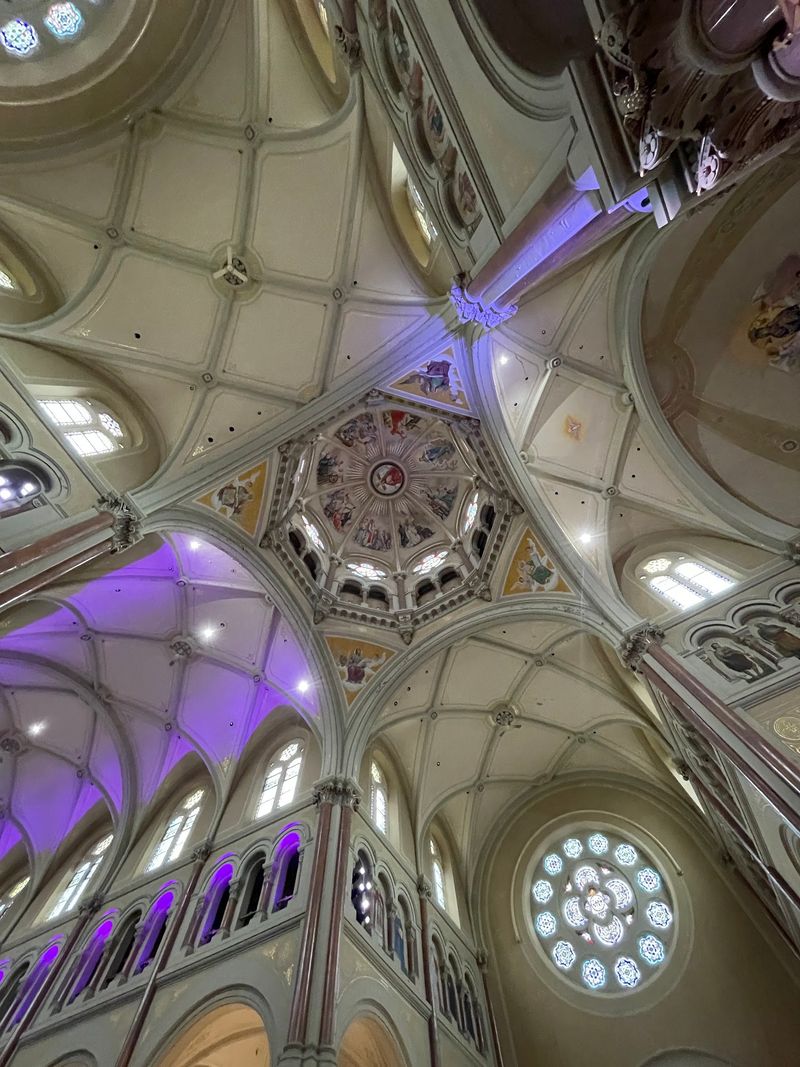
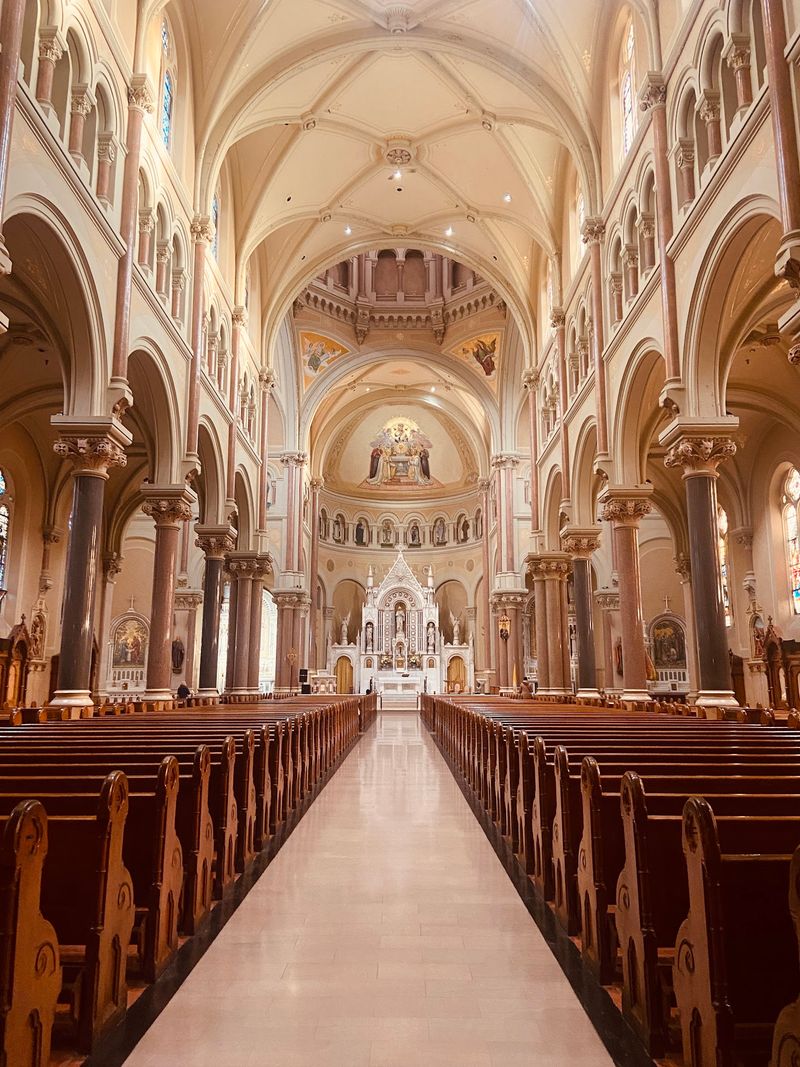
Neck stretches are recommended before entering. The interior of the Basilica of Our Lady of Perpetual Help rises high enough to make you pause.
Grand arches line the nave and guide your eyes forward. Columns support the space and give it a steady rhythm.
The whole room feels carefully balanced.
Then comes the showstopper. An octagonal lantern topped with a cupola rises more than 100 feet above the crossing.
That’s where the main aisle meets the side wings.
Light from above changes the mood of the room. The space can feel calm, bright, and a little magical at the same time.
It’s easy to forget you’re in a busy American city.
Take a seat in a pew and simply look around for a few minutes. You’ll keep noticing new details the longer you stay.
Painted ceilings and arches reward patient eyes.
Remember that this is an active place of worship. Keep voices low and check the Mass schedule before you go.
Visiting between services is the most respectful way to explore.
Quiet looking is basically the main activity here. Your neck will forgive you eventually.
Munich Glass Makes The Shrine Chapel Glow
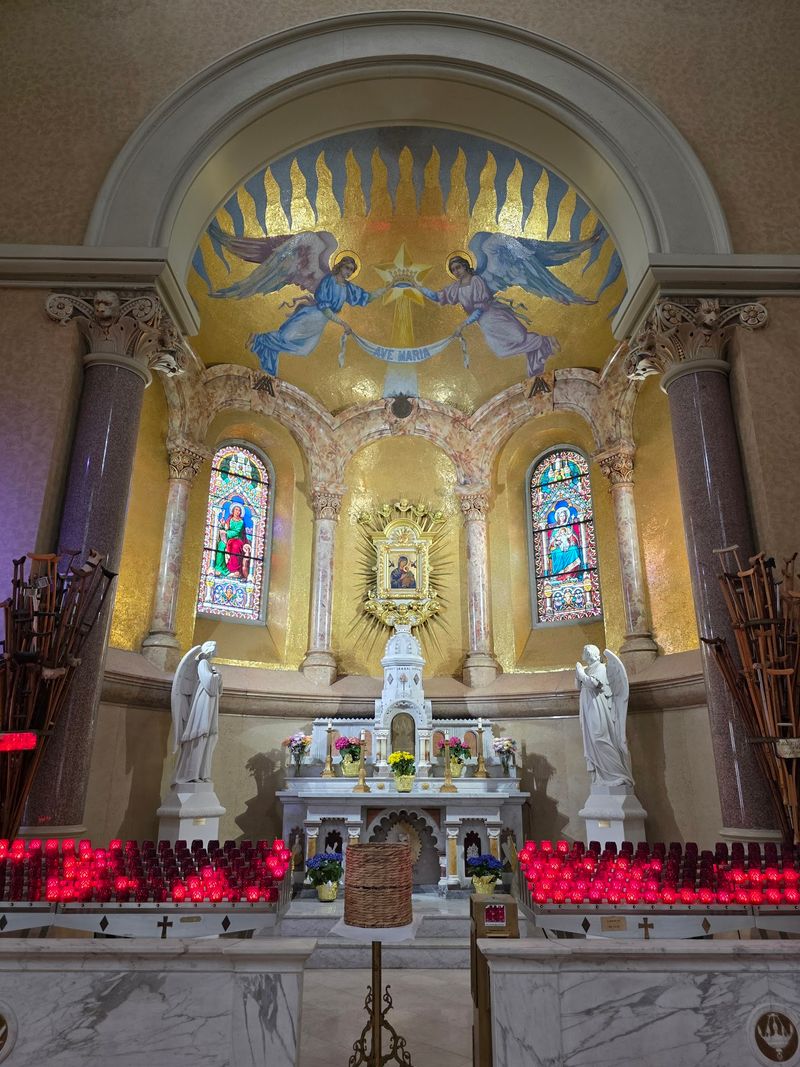
German glassmakers had a big hand in this Boston showpiece. Two famous names are behind the windows here.
The nave features stained glass by F.X. Zettler.
The shrine chapel glows with glass from Franz Mayer and Co. of Munich, Germany. Both studios were known for rich colors and detailed figures.
That’s a big reason the basilica feels like a trip overseas. Similar glass fills churches across Europe.
Here, you can see it without a passport or a long flight.
Sunny days are your friend for this part of the visit. Light pours through the windows and splashes color across the stone and pews.
Cloudy days still look lovely, just a bit softer.
Try picking one window and studying it slowly. Each panel tells part of a story through faces, clothing, and symbols.
It’s like reading a picture book made of light.
Photography lovers should silence their camera sounds and skip the flash. Natural light shows the colors best anyway.
Plus, other visitors may be praying nearby.
I believe these windows alone justify the visit. The rest of the church is a generous bonus.
More Than 200 Angels And Saints Are Waiting Inside
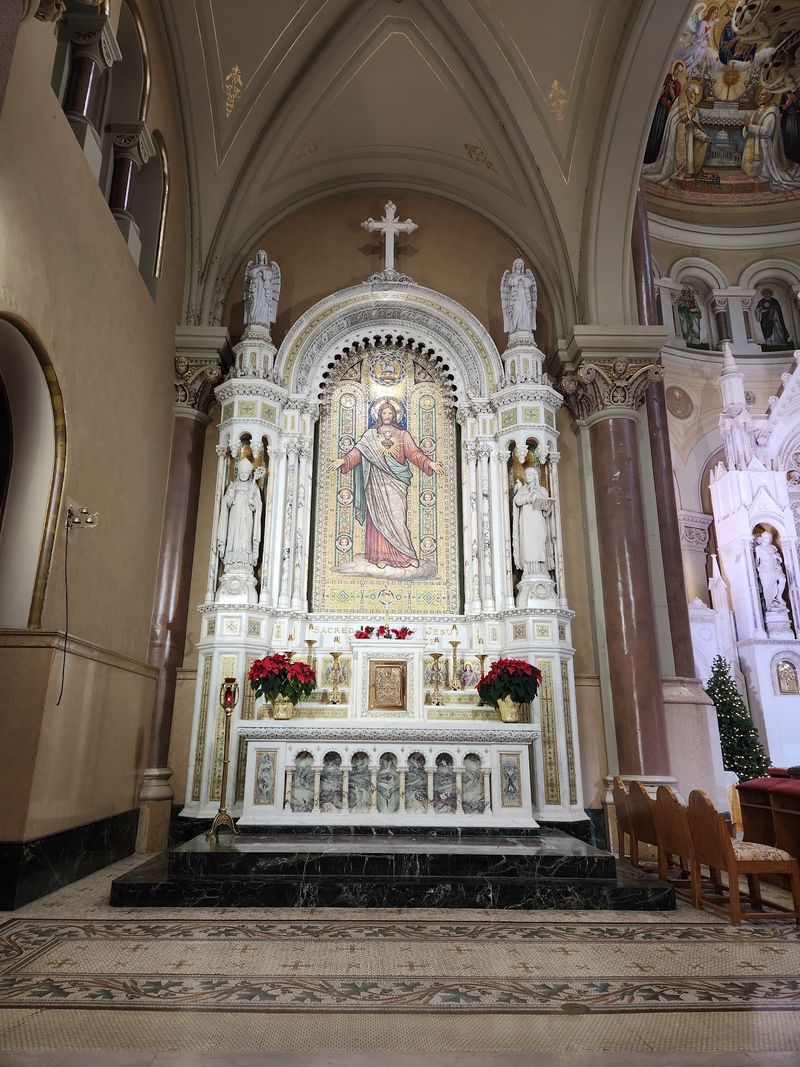
Counting statues here could take all afternoon. The basilica holds more than 200 statues of angels and saints.
That’s a crowd, but a very quiet and well-behaved one. They fill altars, walls, and corners throughout the church.
Every glance seems to reveal another figure.
The basilica also houses relics of Saint Nazarius the Martyr. They were brought from Rome in 1873.
That detail connects this Boston church directly to centuries of Roman tradition.
For families, the statues make a great scavenger hunt. Challenge kids to find an angel with wings spread wide.
Ask them to spot saints holding books, keys, or other objects.
Adults might enjoy the artistry more than the counting. Carvers paid close attention to faces, robes, and hands.
Small details add a lot of personality to each piece.
Bring a little patience and wander slowly. Rushing past would be like skimming a great novel.
The statues reward anyone willing to linger a bit.
I can’t imagine visiting just once. There are simply too many faces to meet in a single trip.
The 1897 Organ Was A Tech Pioneer In Its Day
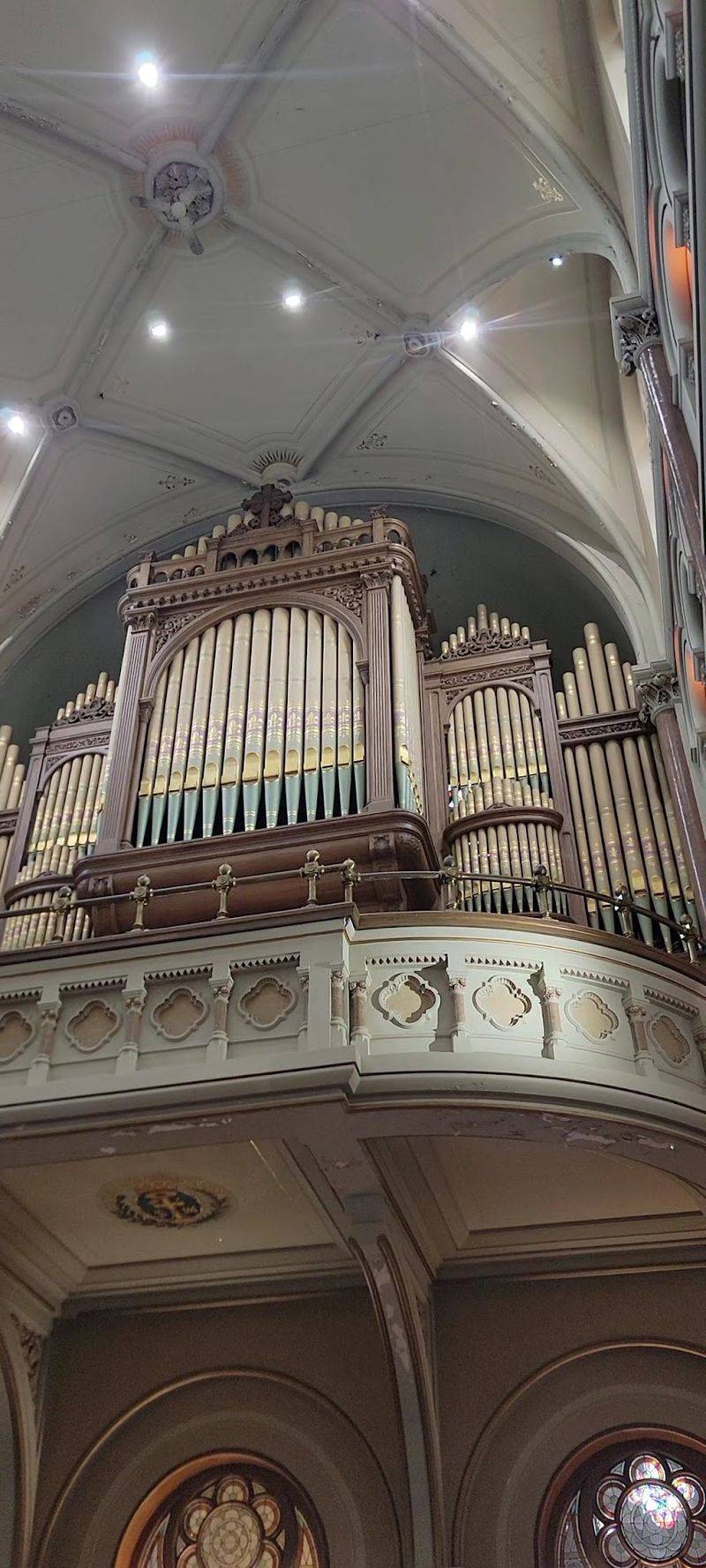
Electric action in 1897? That was cutting-edge stuff, and this basilica had it.
The church’s Hutchings organ dates to 1897. It was one of the first in the United States to successfully use electric action.
In simple terms, electricity helped connect the keys to the pipes.
The numbers are impressive. The organ has 62 stops and nearly 3,200 pipes.
Each stop changes the sound, from soft whispers to booming power.
Picture the music filling a room with a lantern over 100 feet high. Those arches and stone walls give sound plenty of room to travel.
The result can feel huge and wrap around you.
Want to hear it for yourself? Attending a Mass is a good bet for catching music in action.
Sunday services offer several options throughout the day.
Sunday Masses include 9:00 AM, 10:30 AM in Spanish, 12:30 PM, 2:00 PM in Haitian Creole, and 5:00 PM. Schedules can change, so check the parish website before you head over.
Even standing still, the organ looks grand. Its pipes are like a skyline built from metal and sound.
Wednesday Has Been Special Here Since 1874
Some traditions fade fast. This one has run every single week since 1874.
The basilica’s weekly Wednesday novena to Our Lady of Perpetual Help remains a cornerstone of parish life. It all started with a replica icon installed in the original church in 1871.
Reports of cures followed soon after.
Those reports led to a weekly blessing of the sick in 1874. Today, the church is recognized as a shrine of healing.
That reputation draws people from across Massachusetts and beyond.
Wednesday is packed with services. Masses happen at 7:00 AM and 12:10 PM.
A Spanish novena Mass follows at 5:30 PM, and a Haitian Creole novena Mass begins at 7:00 PM.
The parish also runs a Healing and Restoration Ministry. It includes a 24-hour prayer line.
That’s a meaningful resource for anyone carrying a heavy worry.
Wednesday confessions take place from 11:00 AM to 12:10 PM. Appointments are also available for other times.
I like how a single icon sparked a tradition this long-lasting. It’s proof that small beginnings can grow into something huge.
Plan Your Visit Before The Doors Close For The Day
Good news for road-trippers. You’ll find this beauty at 1545 Tremont St, Boston, MA 02120, right in the Mission Hill neighborhood.
The Basilica of Our Lady of Perpetual Help is one of fewer than 100 minor basilicas in the United States. Pope Pius XII gave it that status on September 8, 1954.
That’s a rare honor for any church.
Visiting hours generally run during the day, with shorter hours on weekends. Weekday hours often include a midday break.
Double-check the parish website before you go, since times can shift.
Weekday Masses happen at 7:00 AM and 12:10 PM. Saturday brings an 8:00 AM Mass, a noon Mass, and evening vigils in English and Spanish.
Plan around these if you mainly want to tour.
Mission Grammar School, serving kindergarten through eighth grade, is also connected to the basilica. That shows how rooted the parish remains in its community.
Give yourself at least an hour inside. Between the glass, the statues, and the arches, time moves quickly.
A slice of Europe in Massachusetts deserves an unhurried visit.