
This Las Vegas, Nevada, Aquarium Hides Sharks Beneath a Tropical Rainforest Roof
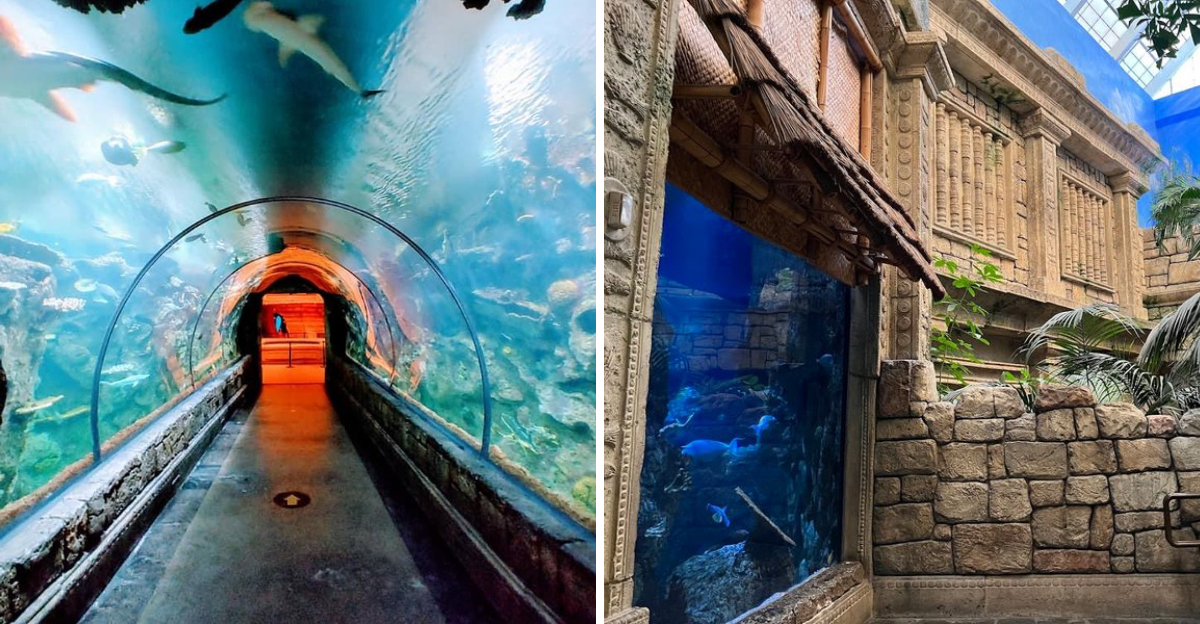
Picture a jungle roof hiding an ocean underneath it. That is the twist this Nevada spot pulls off before you even reach the water.
Warm, misty air hits first, thick with rainforest sounds. Crocodiles prowl nearby, and a Komodo dragon watches like it owns the place.
Then the jungle fades and the ocean takes over. Sharks glide through a tank so massive it swallows the room.
A curved tunnel lets sharks pass directly overhead. Stingrays wait in a shallow pool for curious hands.
Braver guests can swim beside the sharks themselves. Nevada rarely comes to mind for that kind of thrill.
There is a virtual reality theater, and a tiny endangered fish with a story bigger than its size. Worth carving out real time for this one.
A Jungle Before the Ocean Even Begins
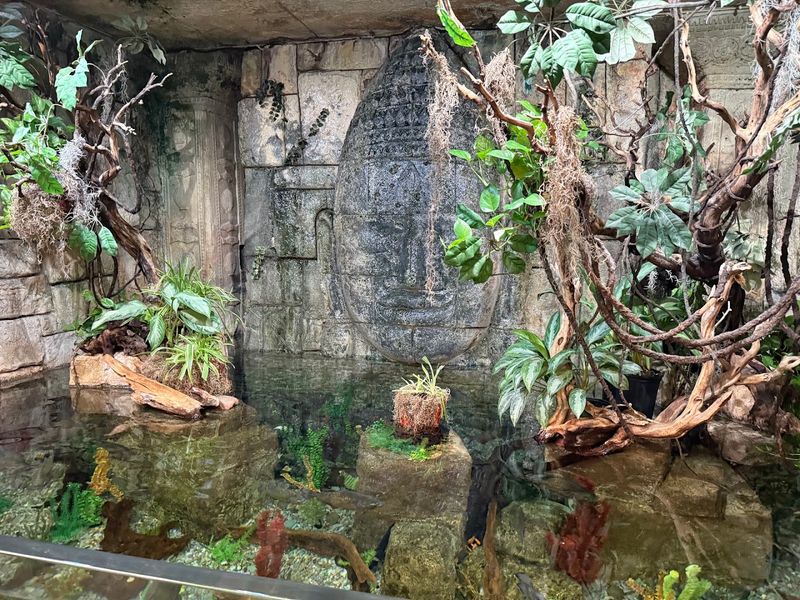
Most aquariums greet visitors with fish tanks right at the entrance. Shark Reef Aquarium takes a completely different approach.
The journey starts in a warm, humid jungle environment that feels nothing like the Nevada desert outside. Towering plants, misty air, and the sounds of a tropical ecosystem set the mood immediately.
This opening section houses some impressive land-dwelling creatures. Australian freshwater crocodiles, golden crocodiles, and Burmese pythons all call this area home.
Komodo dragons were added to the lineup in 2008, giving the exhibit a serious wow factor before a single shark appears.
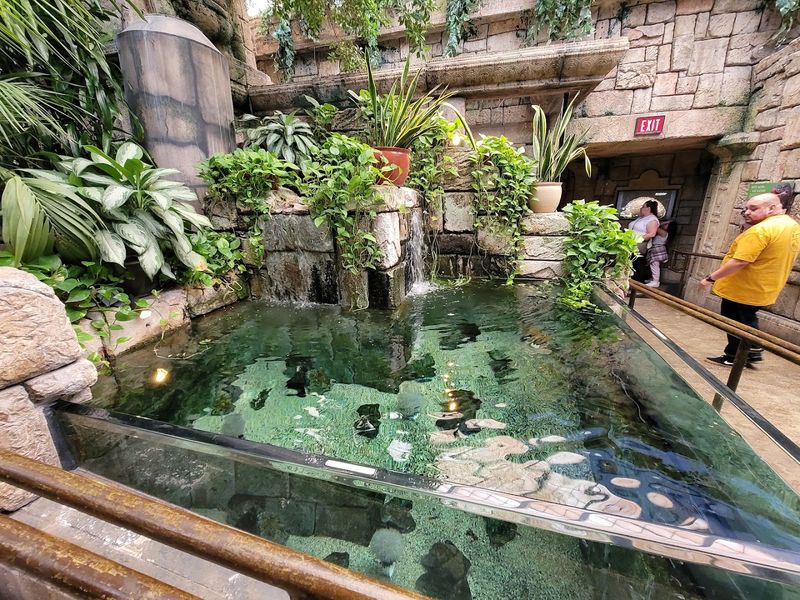
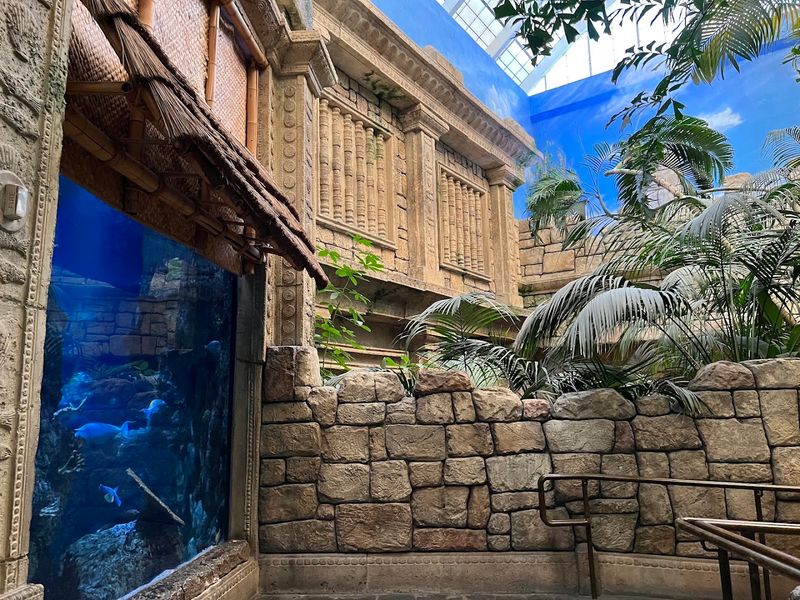
Piranhas also lurk in tanks along this stretch, their reputation alone enough to make visitors slow down and look twice. The theming is deliberate and immersive, designed to feel like the ruins of an ancient temple slowly being reclaimed by nature.
This rainforest opening is not just decorative filler. It builds anticipation and creates a narrative that carries visitors from land to sea in a way that feels cinematic and purposeful.
The Main Tank That Stops People Mid-Step
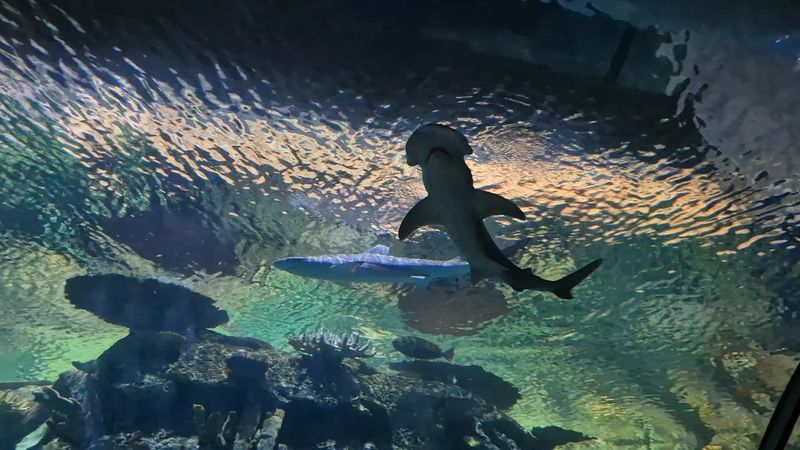
The centerpiece of Shark Reef Aquarium is nothing short of jaw-dropping. The main tank holds approximately 1.3 million gallons of water, making it one of the largest aquarium tanks in North America.
It is designed to look like a sunken shipwreck, with rusted hull details and moody lighting that adds real drama to every angle. Sharks glide past in slow, effortless loops.
Giant rays drift overhead. Endangered green sea turtles move through the water with surprising grace.
Green sawfish, a species rarely seen in captivity, also share this space. The combination of animals and theming creates an experience that feels less like a zoo exhibit and more like an underwater film set.
Visitors can view this tank from multiple vantage points, each one offering a slightly different perspective on the scale and diversity inside. The sheer size of the tank means there is always something new happening somewhere in the water.
Standing in front of it, the outside world fades away completely. That is the real magic of this room.
The place stands still at 3950 S Las Vegas Blvd, Las Vegas, NV 89119.
Walking Through Water Without Getting Wet
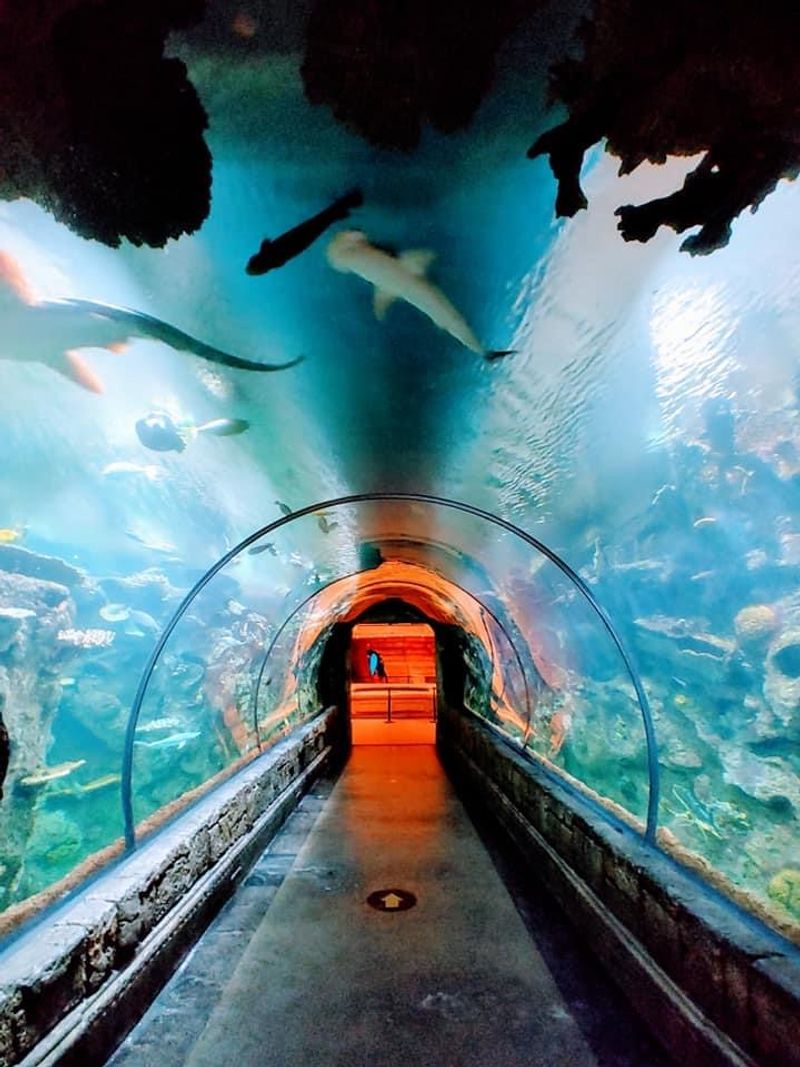
The walk-through shark tunnel is the moment most visitors talk about long after leaving. Sharks, rays, and sea turtles pass directly overhead through curved acrylic panels that feel almost invisible.
It is one thing to look at a shark through a flat pane of glass. It is a completely different experience to stand beneath one as it glides past with total calm and zero interest in the humans below.
The tunnel puts visitors inside the tank, at least visually, and the effect is startlingly convincing.
Kids and adults alike tend to stop walking entirely once they step inside. Some crouch down to watch a ray pass at eye level.
Others just tilt their heads back and stare upward at the slow parade of fins and tails.
The lighting in the tunnel is dim and blue, which adds to the underwater atmosphere. Every detail, from the texture of the ceiling panels to the ambient sound design, reinforces the feeling of being submerged.
This is the section that earns the aquarium its reputation, and it absolutely lives up to the hype.
Over 100 Sharks and Counting
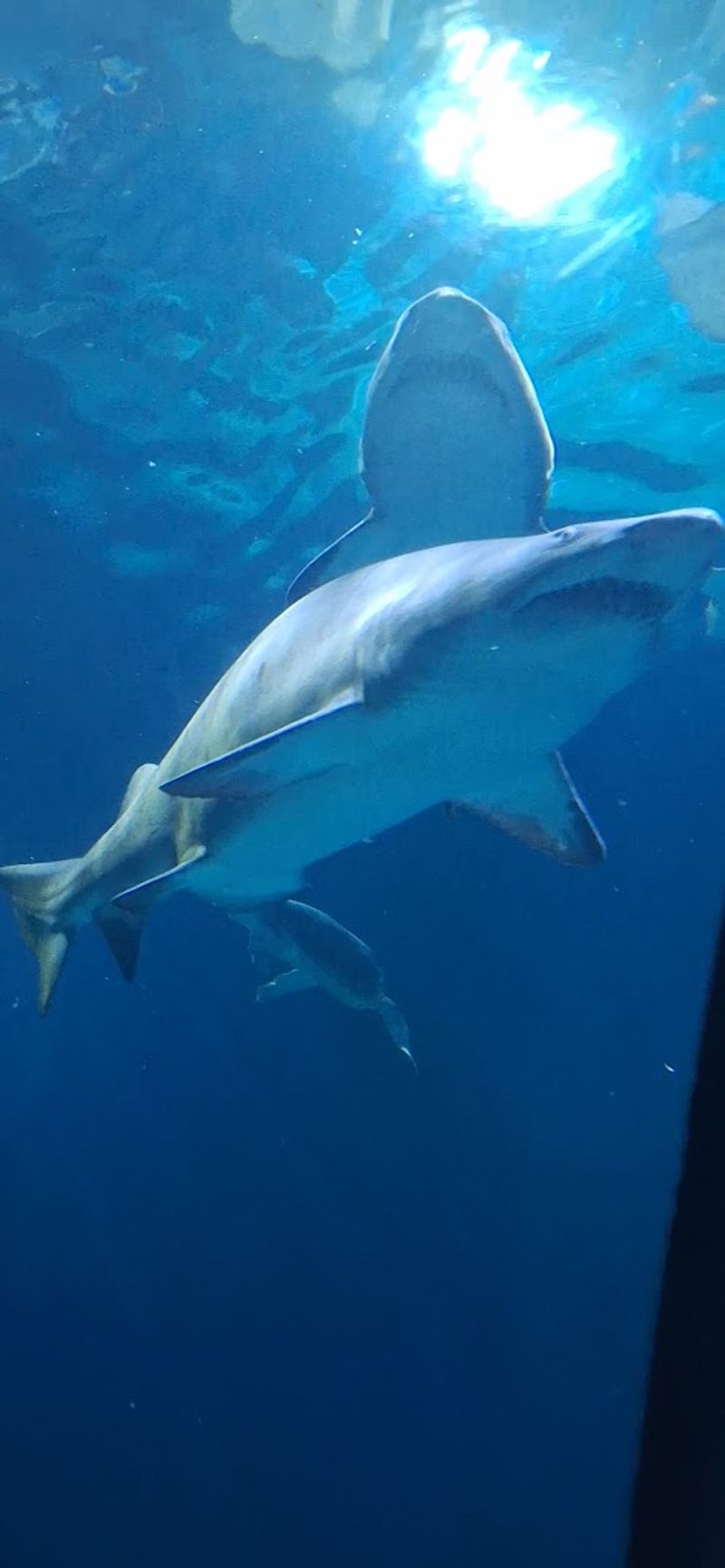
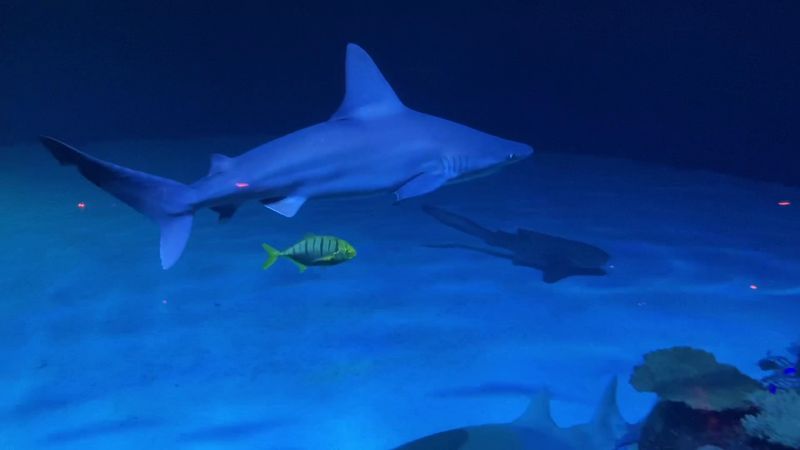
The variety of shark species at Shark Reef Aquarium is one of its strongest selling points. Over 100 individual sharks represent a wide range of species, giving visitors a rare chance to compare size, shape, and behavior up close.
Galapagos sharks, blacktip reef sharks, sand tiger sharks, nurse sharks, bonnethead sharks, sandbar sharks, zebra sharks, white-spotted bamboo sharks, Port Jackson sharks, and lemon sharks are all part of the collection. Each species has its own personality and movement pattern, which makes watching them endlessly interesting.
The aquarium keeps the sharks well-fed to maintain a peaceful balance inside the tanks. This careful management means different species can coexist without incident, which is no small feat when you are talking about apex predators sharing the same water.
In 2023, a new Rocky Coast exhibit brought cold-water species into the mix. Horn sharks, swell sharks, leopard sharks, and pyjama sharks joined the collection, adding even more depth to an already impressive lineup.
For anyone with even a passing interest in sharks, this place is a legitimate destination in its own right.
Touch a Stingray and Mean It
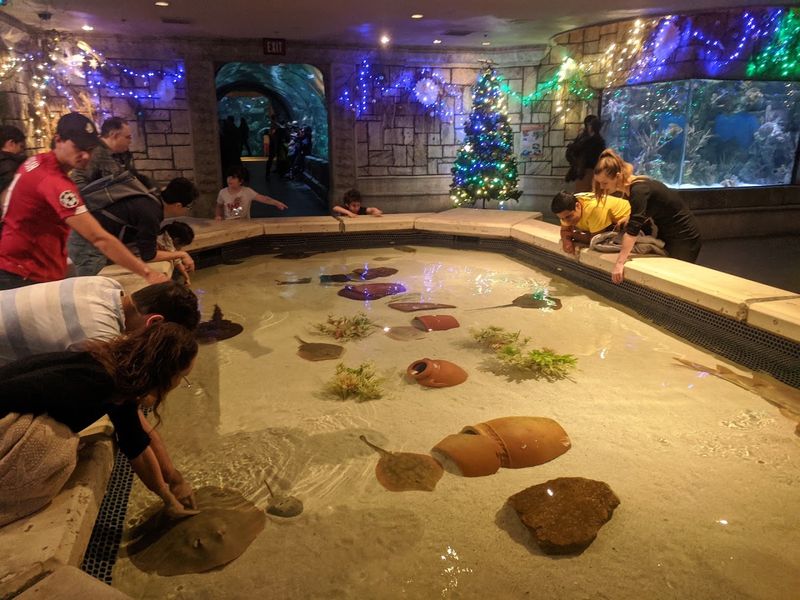
Not every exhibit at Shark Reef Aquarium is behind glass. The interactive touch pool gives visitors a hands-on encounter with real marine life, and it is one of the most popular stops on the tour.
Stingrays and horseshoe crabs are the main residents of this shallow pool, and both are surprisingly approachable. The rays tend to glide close to the surface, making it easy to reach in and feel their smooth, flat bodies.
Horseshoe crabs, ancient-looking creatures that have barely changed in millions of years, are equally fascinating to handle.
Staff members are stationed nearby to guide visitors and answer questions. They share information about each animal’s biology and behavior, turning what could be a simple petting zoo moment into something genuinely educational.
Feeding programs are also available for guests who want to take the experience further. Participants can feed stingrays, horseshoe crabs, and even green sea turtles through separately ticketed programs.
For younger visitors especially, this is often the moment that turns a fun outing into a memory that sticks around for years.
Virtual Reality Takes the Experience Somewhere Else Entirely
In 2020, Shark Reef Aquarium added a 36-seat virtual reality theater that gives visitors a completely different kind of underwater experience. It is included with general admission, which makes it feel like a bonus rather than an add-on.
The films put viewers in the water alongside humpback whales, tiger sharks, and other marine giants. The immersive format creates a sense of scale that even the largest tank cannot fully replicate.
Seeing a humpback whale from a few virtual feet away has a different kind of impact than watching one on a television screen.
A pre-show area introduces the animals before the main experience begins, adding educational context to what visitors are about to see. The whole sequence runs for a short enough time to stay engaging without overstaying its welcome.
Reviews from visitors frequently single out the VR theater as a highlight, especially for families. It adds a modern, tech-forward dimension to an attraction that already has plenty going for it.
For anyone who skips it, the staff near the exit corridor has been known to wave people back in before they miss out.
Swimming With Sharks Is an Actual Option Here
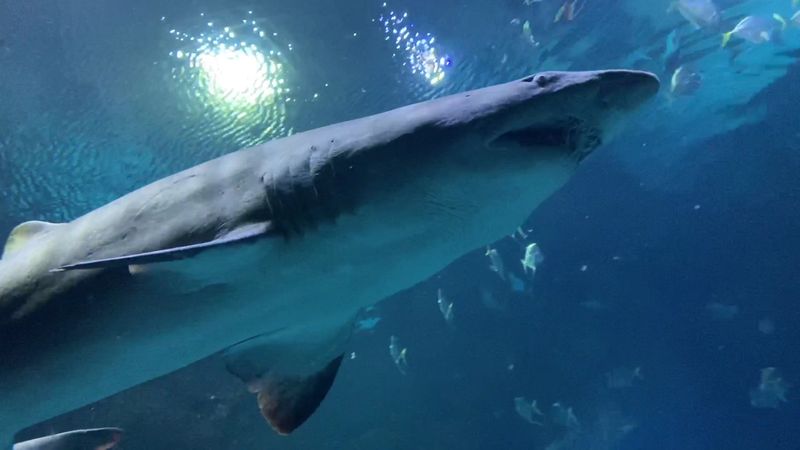
For visitors who want more than a view through glass, Shark Reef Aquarium offers a program that puts guests directly into the main exhibit alongside the sharks. This is not a metaphor or a marketing phrase.
People actually enter the water.
The Dive with Sharks program has been running since 2009 and remains one of the more unusual experiences available on the Las Vegas Strip. Participants use a buddy phone system for underwater communication, allowing them to hear narration and interpretation while surrounded by live sharks.
The experience is designed for safety and managed by trained staff who guide participants throughout. Guests do need proof of scuba certification to take part, which keeps the experience safe while still open to any certified diver visiting Nevada.
Seeing a Galapagos shark from inside the tank rather than outside it is a perspective that very few people ever get. The program is bookable separately and tends to fill up, so advance planning is worthwhile.
It is the kind of activity that people describe for years afterward, usually starting with the phrase, “You are not going to believe what I did in Las Vegas.”
The Devils Hole Pupfish Is Tiny, Rare, and Remarkable
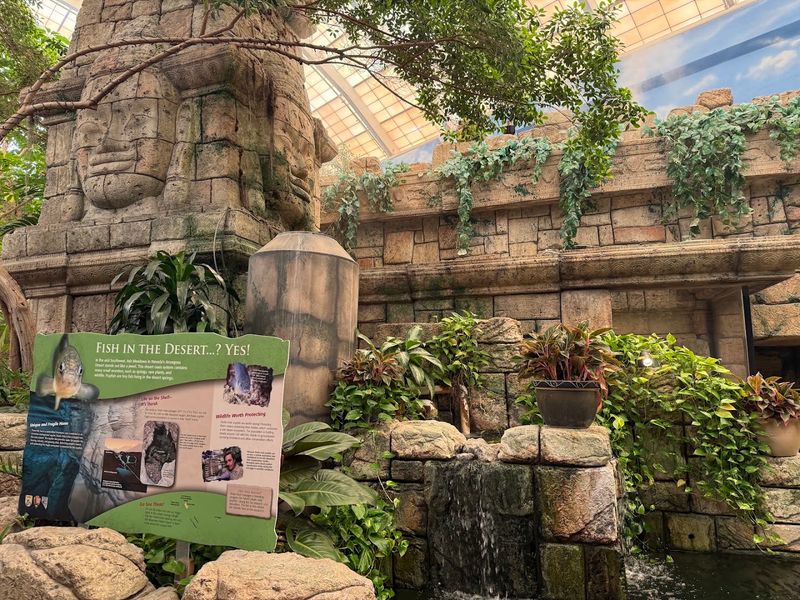
Right near the entrance to Shark Reef Aquarium, a small exhibit stops visitors in their tracks for a very different reason than shark size. The Devils Hole pupfish is one of the rarest fish on the planet, and this aquarium is one of the only places in the world where it can be seen.
This tiny fish exists naturally in just one location on Earth, a geothermal pool in Nevada. The species faces serious conservation pressure, and the aquarium participates actively in a breeding program to help stabilize the population.
A sister site hosts over 200 additional individuals as part of this effort.
The exhibit is modest in size but enormous in significance. Informational panels explain the fish’s precarious situation and the work being done to protect it, giving visitors a clear picture of why conservation programs at accredited facilities matter.
Shark Reef Aquarium earned its AZA accreditation in 2003, becoming the first and only such facility in Nevada. The pupfish exhibit is one of the clearest expressions of what that accreditation actually means in practice.
It is the kind of exhibit that makes the whole visit feel like it has a real purpose beyond entertainment.
Conservation Is Baked Into the Blueprint
Shark Reef Aquarium does not treat conservation as an afterthought. It is woven into the fabric of how the facility operates, from the animals it houses to the programs it runs for the public.
The aquarium participates in an Adopt-a-Cove program that helps clean Lake Mead, a body of water that millions of people in Nevada and beyond depend on. It also distributes an “In Good Taste” guide that promotes sustainable seafood choices, developed in collaboration with the Monterey Bay Aquarium Foundation.
Behind the scenes, the facility uses LED lighting, recycles exhibit water, and maintains operations designed to reduce environmental impact. These are not just talking points.
They reflect a genuine operational commitment to reducing the aquarium’s footprint.
The facility has also contributed to shark husbandry research and rescued green sea turtles, adding real-world conservation outcomes to its educational mission. Interactive touchscreens installed in 2012 help visitors connect with this information in an engaging way.
For travelers who care about where their tourism dollars go, this is an attraction that actively gives back to the ecosystems it celebrates.
Why This Strip Attraction Earns Its Place on Any Vegas Itinerary
Las Vegas, Nevada, is not the first city that comes to mind when people think of world-class aquariums. That assumption tends to evaporate about five minutes into a visit to Shark Reef Aquarium.
The combination of a themed environment, genuine conservation work, rare species, interactive experiences, and sheer scale makes it stand out even among dedicated aquarium destinations. It spans approximately 105,000 square feet and holds around 1.6 million gallons of water across all its exhibits.
Families find it easy to navigate and paced well enough to keep children engaged from the jungle entrance to the VR theater exit. Solo visitors and couples appreciate the atmosphere, which manages to feel both dramatic and relaxed at the same time.
The aquarium sits inside the Mandalay Bay resort, making it accessible without requiring a separate trip across the city. Tickets can be purchased in advance online, which is worth doing during busy periods.
In a city built on spectacle, Shark Reef Aquarium offers something that the lights and stage shows cannot. It is a reminder that the natural world is the most impressive show of all, and Nevada happens to be hosting a very good one.