
This Little-Known Tennessee Shrine Feels Worlds Away In A Quiet Mountain Clearing
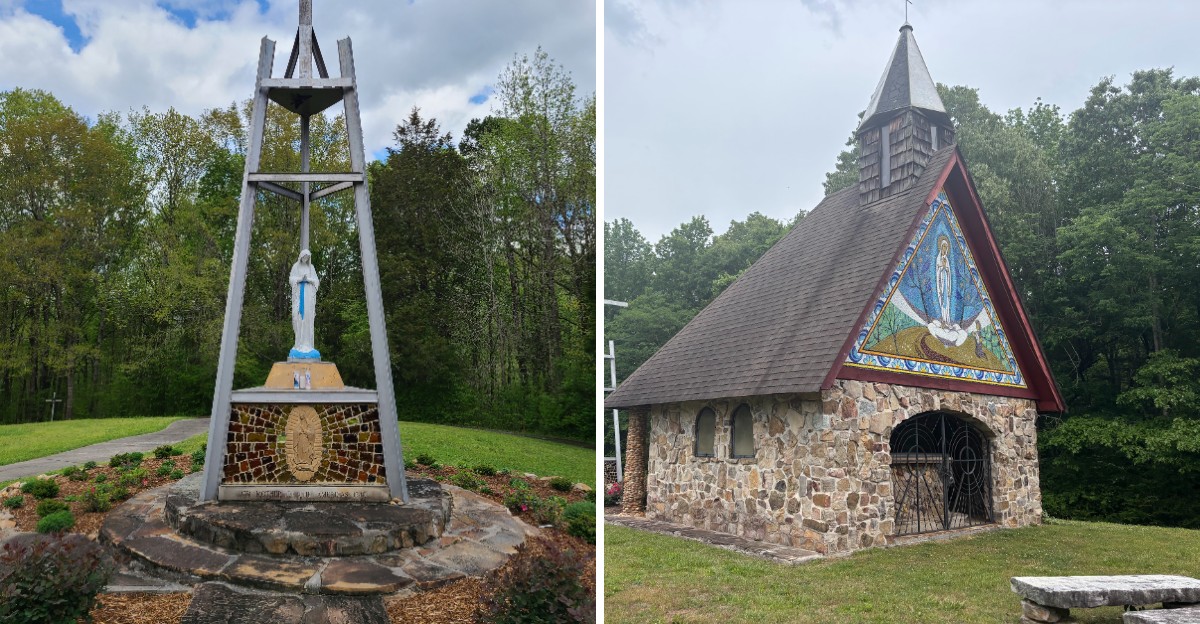
You can drive through the Tennessee mountains for miles and still miss places that feel completely removed from everyday life. This quiet shrine is one of them.
A small clearing surrounded by trees creates a peaceful setting where the noise seems to drop away almost immediately. Visitors come to pray, reflect, light a candle, or simply spend a few minutes sitting in silence.
There are no crowds pushing you along and no big attractions competing for attention. That simplicity is exactly what makes the experience feel so different.
Tennessee is filled with mountain overlooks and scenic roadside stops, but this spot offers something much more personal. The chapel, outdoor religious features, and wooded surroundings give the property a calm rhythm that encourages people to slow down.
It may be little-known, but once you find it, you understand why visitors remember the feeling long after they leave.
A Belgian Story That Crossed The Ocean
Big stories sometimes start with small people. In 1933, a girl named Mariette Beco lived in the tiny village of Banneux, Belgium. She reported seeing the Virgin Mary, who called herself the Virgin of the Poor.
Those visions changed Banneux forever. The village became a place of prayer for people from many countries. Its message of hope traveled far beyond the Belgian countryside.
Fast forward a few decades, and that same message landed in the hills of Tennessee. The Shrine of the Virgin of the Poor was built as a tribute to the Banneux story.
It is known as the first American shrine made to honor those apparitions.
Here is the lovely twist. The title Virgin of the Poor is not only about money. It includes people who feel poor in health, in spirit, or in hope.
That wide welcome shapes the whole mood of the place. You do not need to be Catholic to feel at ease here. Anyone looking for a calm moment fits right in.
A little homework makes the trip richer. Read a short history of Banneux before you go. Once you know the tale, the chapel and its artwork start telling that story right back to you.
A Generous Gift Of Riverside Land
Few gifts come measured in hundreds of acres. A man named Lewis Duncan willed about 600 acres of farmland to the Catholic Church.
The land looked out over the Tennessee River in Marion County.
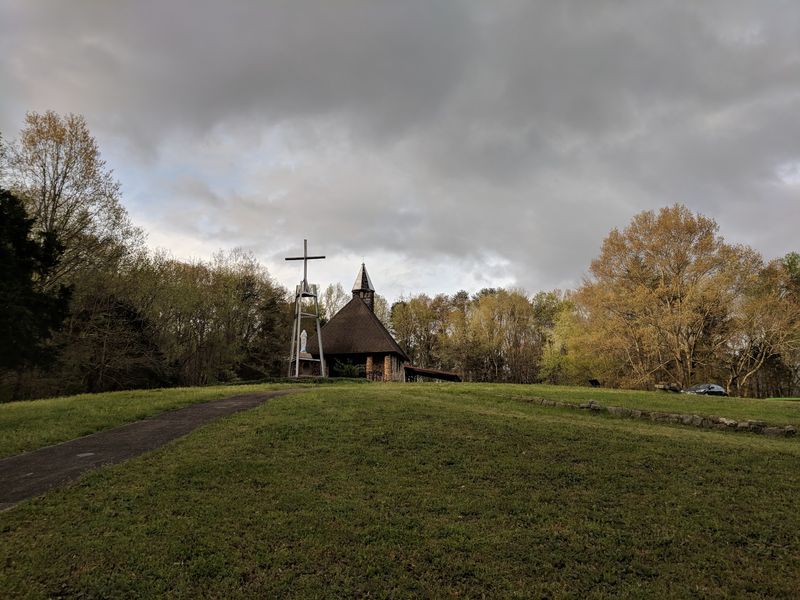
That kind of setting practically asks for something special. Rolling fields, wooded ridges, and river views made a natural stage for a place of prayer. The idea for a shrine soon began to grow.
Think about how rare that is today. Most sacred sites sit in busy towns, squeezed between shops and parking lots. This one got room to breathe from the very beginning.
The land still shapes the experience. Open space around the chapel gives you a feeling of distance from everyday noise. Trees frame the grounds and offer welcome shade on warm days.
A fun fact for curious minds: people have noted that this corner of the Appalachian foothills resembles the Banneux area of Belgium. Hills, woods, and quiet farmland connect the two places in more ways than one.
When you arrive, take a slow look around before heading to the chapel. Notice the lay of the land and the peaceful stretch of green. It all began with one man deciding his farm could serve a bigger purpose.
Monks, Stones, And A Second Chance
Not every building gets it right on the first try. The original chapel here was made of wood, and it was lost. Rather than give up, the builders tried again with something sturdier.
Benedictine monks led the effort. Father Basil Mattingly, OSB, guided the work with steady dedication. Monks from Saint Meinrad and local church members pitched in to help.
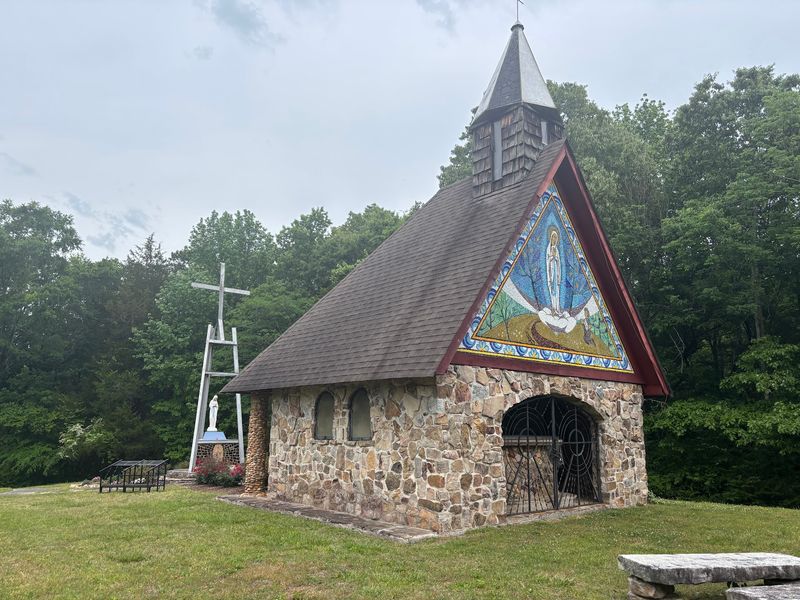
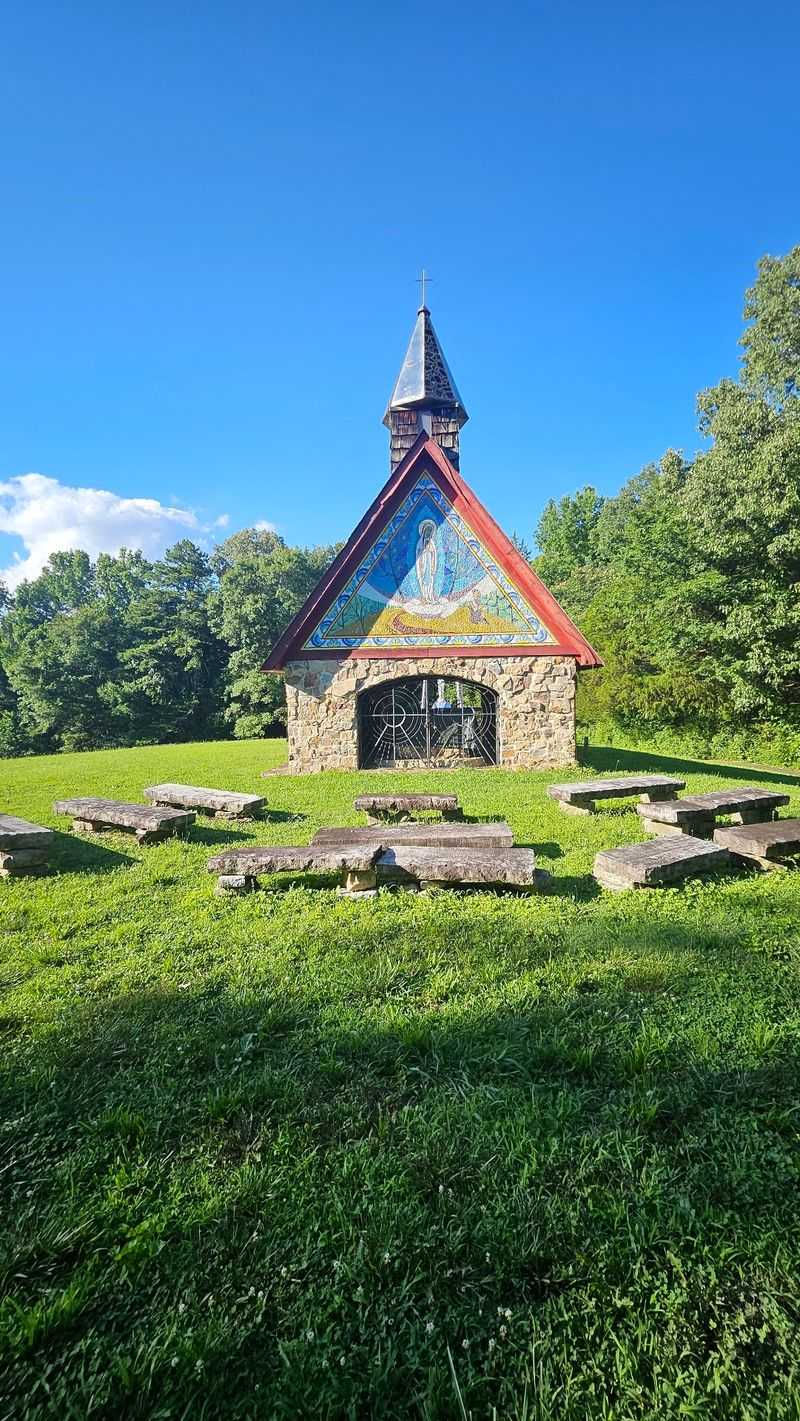
The new chapel rose from stone, and it shows. Its walls are made from smooth river stones set in mortar. The result looks earthy, simple, and built to last for generations.
There is something charming about stones that came from nature. They give the chapel a humble look that blends with the fields and trees. Nothing about it feels flashy or out of place.
Picture the teamwork behind those walls. Stone by stone, people who cared about this place hauled, lifted, and set each piece. That shared labor is part of what makes the building feel so grounded.
Take a moment to run your eyes along the walls. Each stone has its own shape and color, like a quiet puzzle.
It is a great detail to point out to kids, who often love spotting the biggest or oddest rock in the bunch.
Mosaics And Colored Light Worth Studying
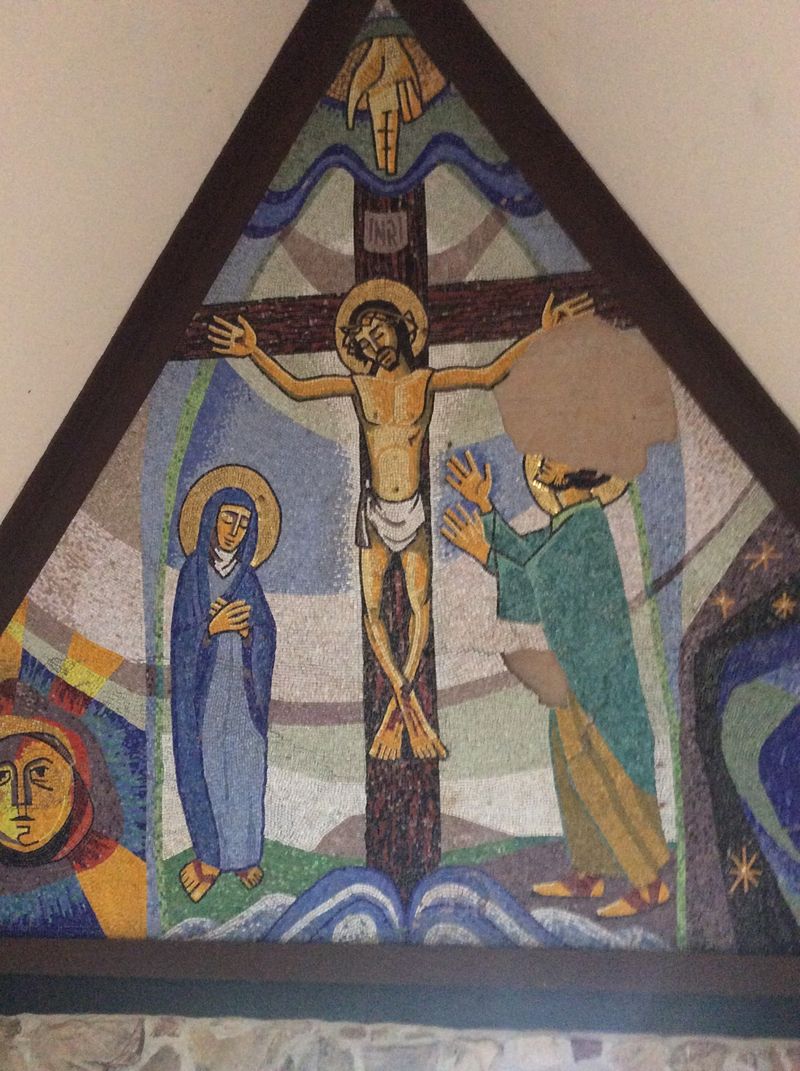
Art has a sneaky way of teaching history without a single textbook. Look up at the front steeple of the chapel. A mosaic shows the Virgin Mary appearing to young Mariette Beco.
That image sums up the whole Banneux story in one glance. It is colorful, clear, and easy to understand, even for younger travelers.
Snap a photo, since it makes a lovely memory of the trip.
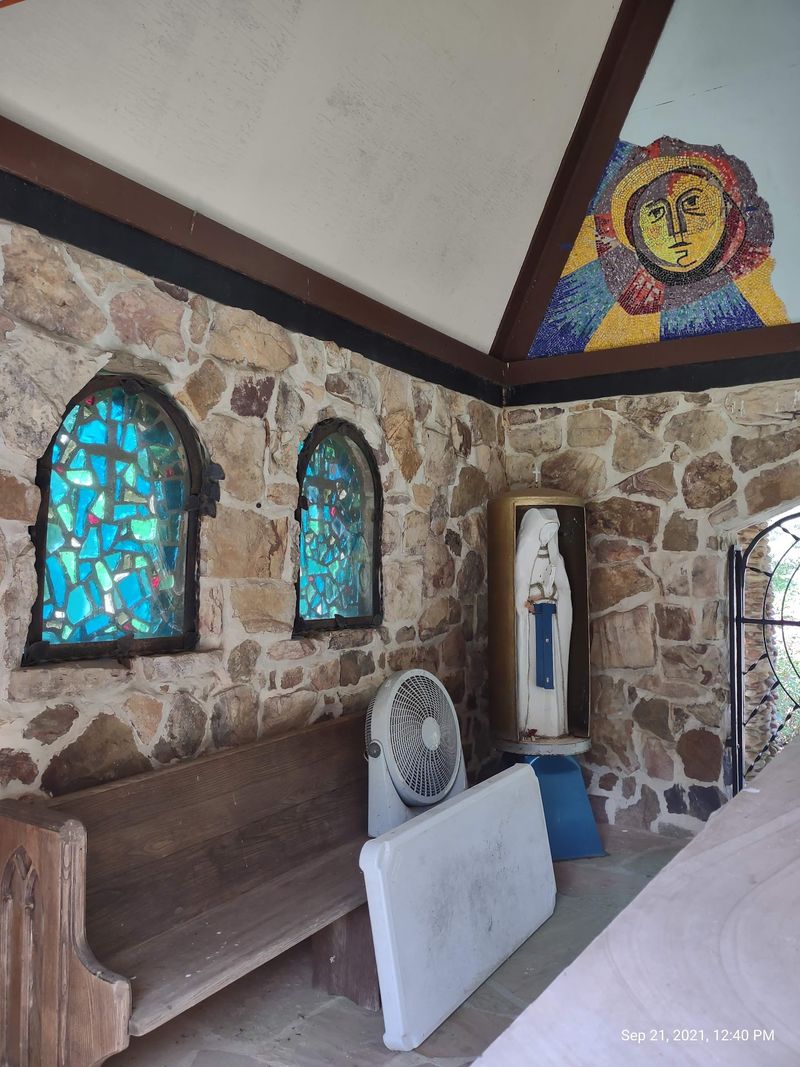
More artwork waits inside. Another mosaic shows Christ entrusting His Mother to Saint John. It is a tender scene that adds depth to the chapel’s message.
Stained glass windows bring their own magic. When sunlight streams through, soft colors spill across the interior. The mood can shift through the day as the light moves.
The pews deserve a mention too. They are carved from solid slabs of polished stone. They are not your typical wooden benches, and they fit the natural style of the building.
A practical tip is worth knowing. The main building with the altar may be locked at times, so plan to enjoy the outside art first.
The steeple mosaic alone makes the drive feel worthwhile, and the grounds offer plenty more to see.
A Statue With A Passport
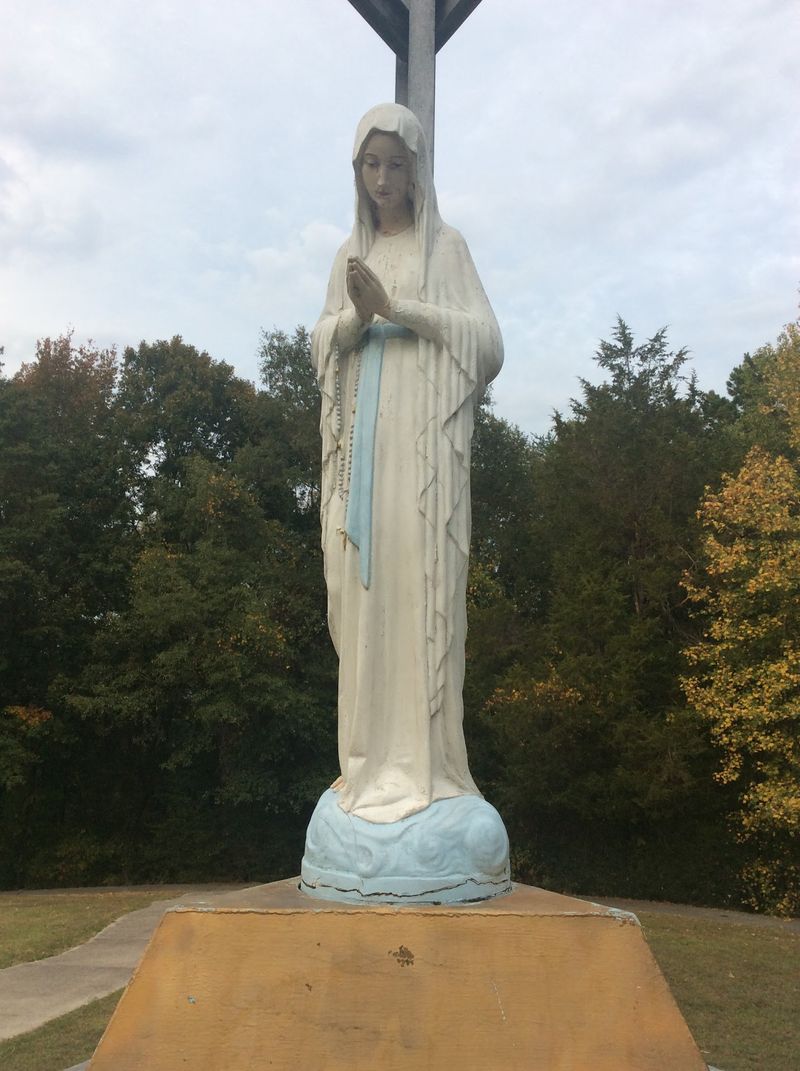
Most statues stay put, but this one crossed an ocean. The shrine’s statue of Our Lady of the Poor was acquired in Banneux, Belgium.
A dedicated church member helped bring it to its Tennessee home. Its arrival was a big occasion. In 1993, the statue received a special blessing.
Father Wim Geelan, rector of the original Banneux shrine, came to give it himself. He did not arrive empty-handed either. Father Geelan brought water from the spring at Banneux for the dedication.
That spring is a key part of the Belgian shrine’s story.
Those two gestures tied the places together in a very real way. One stands in Europe, the other in the American South. Yet the statue and the water form a bridge between them.
Today the statue serves as the centerpiece of a peaceful outdoor garden. It is often the first thing people pause to admire. Flowers, grass, and trees make a calm backdrop.
Spend a few quiet minutes here before exploring the rest of the grounds. It is a lovely spot for a short prayer or simple reflection.
Even without words, the setting invites you to slow your pace and simply breathe.
Walking Paths Made For Reflection
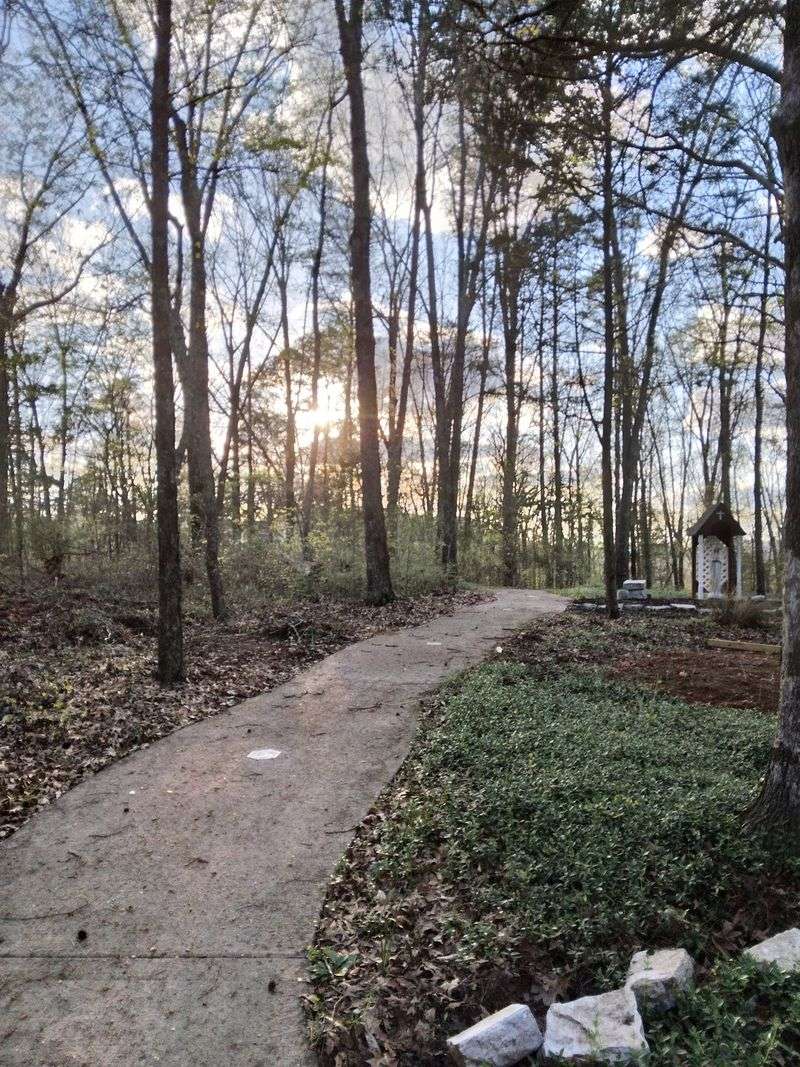
Good thinking often happens on foot. The shrine grounds offer outdoor paths designed for prayer and quiet thought. They turn a simple stroll into something more meaningful.
In the 1990s, the Stations of the Cross were added. These markers form a meditative path through the field beside the chapel.
Each station invites a short pause along the way.
There is also a walk-around rosary. It lets people pray the rosary while moving at their own pace. For many, walking helps the mind settle faster than sitting still.
Comfort matters here, so plan ahead. Wear good walking shoes, since the grounds include grass and gentle slopes.
Parts of the area are wooded and shaded, which helps on sunny afternoons.
Summer brings its own guests with wings. Fields in Tennessee can be buggy in warm months, especially August.
Pack some insect repellent and you will enjoy the walk far more.
Families will find these paths easy to share. Kids can count the stations or look for birds along the tree line.
Adults can use the time to unplug and think. Either way, the paths offer a calm rhythm that feels miles from phones and traffic.
Finding Your Way Down Burns Island Road
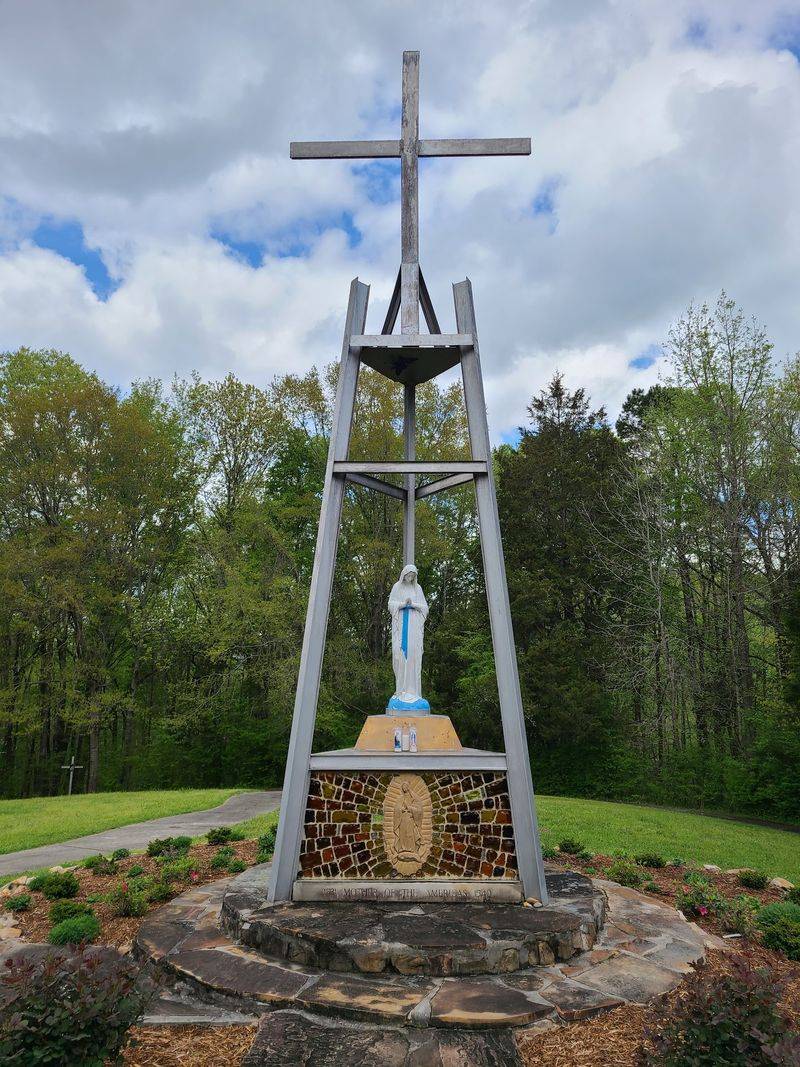
The journey here is half the fun, as long as you enjoy curvy roads. The shrine sits on Burns Island Rd, New Hope, TN 37380. It is a rural spot in the Appalachian foothills of southeast Tennessee.
Expect a long, narrow road on the final stretch. Take it slow and enjoy the scenery. Green hills and quiet farmland make the drive feel like a warm-up for the calm ahead.
The area is secluded, but not cut off. The nearest Catholic parish, Our Lady of Lourdes, is not far away. That makes the shrine easy to pair with a broader day of exploring.
Once you arrive, a small parking lot is ready for you. Covered picnic tables sit under a tin roof. They make a handy stop for a packed lunch or a snack after walking.
Plan to bring what you need. This is a simple country site, so carry water, snacks, and any supplies. A little preparation keeps the trip smooth and relaxed.
Sunday Devotions And Quiet Daily Hours
Timing can turn a nice stop into a memorable one. The Shrine of the Virgin of the Poor is open daily from sunrise to sunset. That gives you plenty of daylight to wander.
Regular Masses are not scheduled here. Instead, Marian devotions take place on Sunday afternoons from May through October. They are held at 2 p.m. and include praying the rosary together.
Joining one of these gatherings adds a special layer to the day. Voices rising together in an open clearing feel very different from a crowded church. Even newcomers can simply sit and listen.
Watch for a thoughtful touch on the altar. Notebooks are sometimes left there so people can write their prayers and hopes. Reading a few pages, or adding your own, can feel surprisingly moving.
The grounds also include a small cemetery and a columbarium. Treat these areas with quiet respect. They are part of what makes the site feel like holy ground to so many.
For more than four decades, this Tennessee sanctuary has offered a peaceful pause to anyone who needs it. Whether you come for prayer, history, or fresh air, it rewards an unhurried pace.
Leave the rush behind and let the clearing do its quiet work.