
This Mardi Gras Town In Alabama Keeps The Real MoonPie Tradition Alive
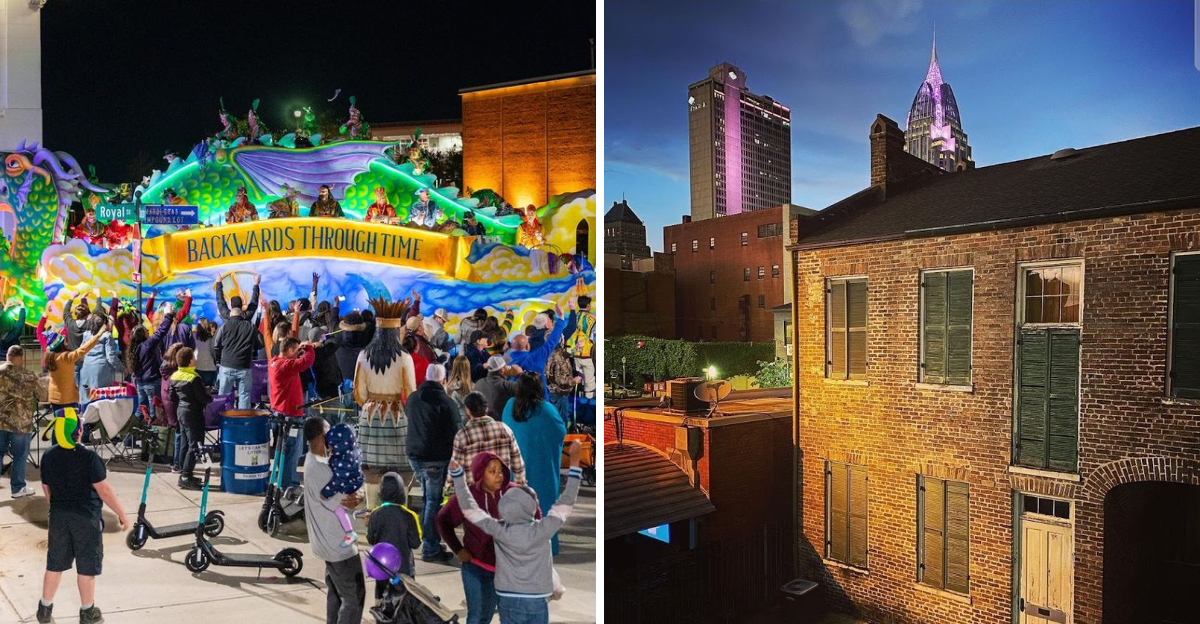
Marshmallow treats rain down on this crowd like edible confetti every parade season. Grown adults dive for them harder than kids chasing beads.
What kind of place lets you catch dessert instead of trinkets? Alabama claims the very first Carnival celebration in the country, decades before any rival city could say the same.
That history did not stay in dusty archives. It turned into a tradition of tossing snacks through the air.
A safety mishap decades ago retired one classic parade throw. Something softer and sweeter took over almost overnight.
This Alabama tradition still rains down by the millions each season, with plenty more waiting to be found. Next time you’re planning a Mardi Gras trip, keep this sweet curveball in mind.
America’s Original Mardi Gras City

Mobile, Alabama, did not borrow the Mardi Gras tradition. It invented it, at least on American soil.
French settlers launched the first Carnival celebration here in 1703, making this Gulf Coast city the true birthplace of the festivities.
That date matters. It places Mobile’s celebration decades ahead of any rival city’s claim.
The roots run deep, shaped by French Catholic customs tied to Ash Wednesday and the Lenten season that followed.
Mystic societies, secretive and theatrical, form the backbone of the celebration. These organizations plan elaborate parades, masquerade balls, and royal courts each season.
Their traditions have been carefully preserved across generations.
The Carnival season officially opens in November with private gatherings, then builds toward the public spectacle of parades and king cake parties starting on Twelfth Night, January 6. Fat Tuesday serves as the grand finale.
Mobile’s Carnival is not a copy of anything else. It is the original, and the city carries that distinction with unmistakable pride.
How MoonPies Became Parade Royalty
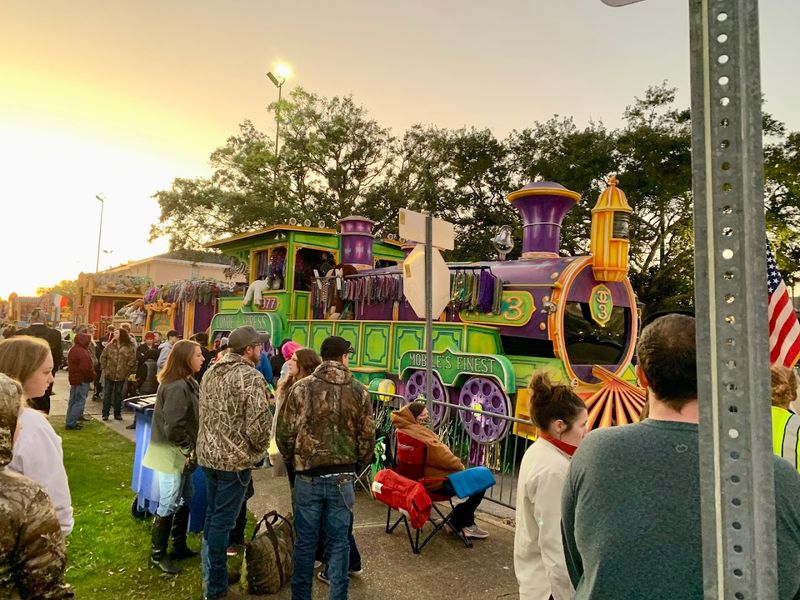
The shift from lunchbox treat to parade throw happened gradually, somewhere around the mid-20th century. Reports suggest MoonPies began flying from Mobile floats in the 1950s or early 1960s, though pinpointing the exact moment is tricky.
Earlier throws included French bonbons, taffy, and serpentine. Then came Cracker Jack boxes, which quickly proved problematic.
City officials banned them after the rigid corners started injuring spectators in the crowds.
That ban created an opening. MoonPies stepped in as the ideal replacement.
They were soft and harmless upon impact. Their disc shape made them aerodynamic enough to sail cleanly from a moving float into waiting hands.
They were also inexpensive, which mattered a great deal to mystic societies purchasing throws in bulk. The combination of safety, affordability, and crowd appeal made MoonPies an obvious winner.
What began as a practical solution quickly evolved into a beloved ritual. Mobile, Alabama, had found its signature throw, and the crowds have never stopped reaching for more.
The Humble Origin of the MoonPie
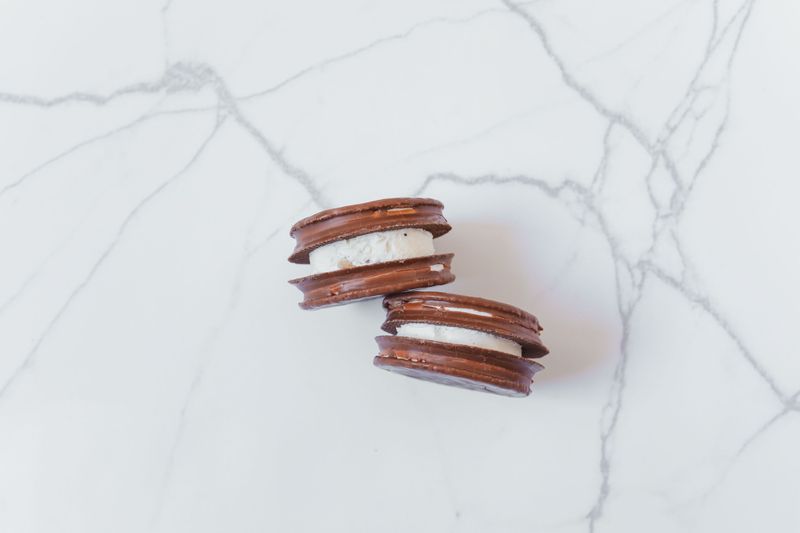
The MoonPie did not start as a party favor. It started as a lunch box staple for coal miners in Chattanooga, Tennessee, where the Chattanooga Bakery created it in 1917.
A traveling salesman reportedly asked workers what kind of snack they wanted. One miner framed the moon with his hands and said something roughly that big.
The result was two graham cracker rounds hugging a marshmallow center, all coated in flavored chocolate.
It was filling, affordable, and easy to carry. Across the South, it became a working-class icon.
Paired with an RC Cola, it earned the nickname the working man’s lunch.
Flavors expanded over the decades to include vanilla, banana, and beyond. The snack grew into a regional comfort food with genuine sentimental weight.
Nobody imagined it would eventually become the star of a Carnival parade tradition in Mobile, Alabama, but that is exactly what happened, and the pairing turned out to be surprisingly perfect.
Four Million Sweet Reasons To Show Up
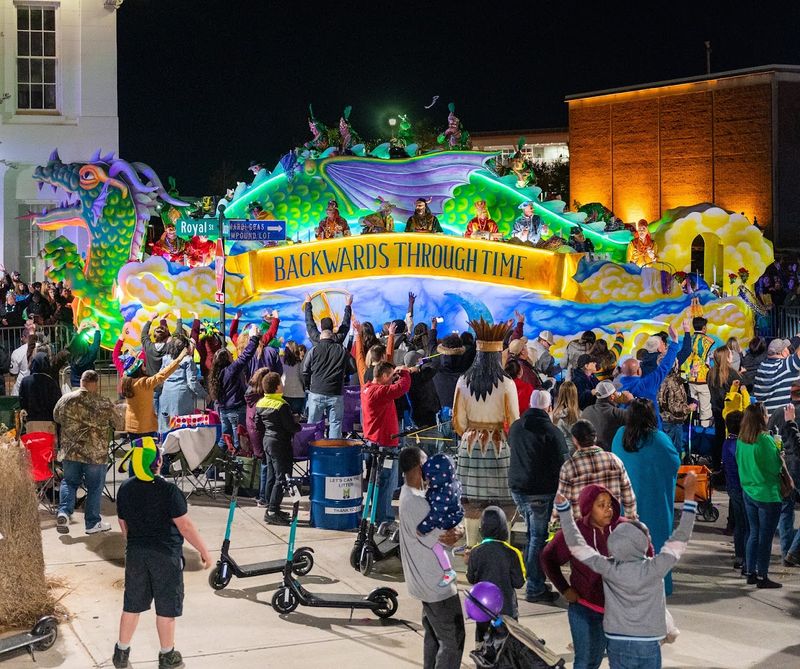
The numbers behind Mobile’s MoonPie obsession are genuinely staggering. Over the course of a single Carnival season, more than four million MoonPies are thrown from parade floats throughout the city.
That figure is not a rough estimate. It reflects the sheer scale of Mobile’s commitment to this sweet tradition.
A single float rider might hurl hundreds of MoonPies during one route alone. Multiply that across dozens of parades and numerous riders per float, and the math adds up fast.
Spectators of all ages line the streets with bags and outstretched arms. Children scramble with particular enthusiasm.
Even seasoned parade veterans feel a rush when a MoonPie arcs perfectly into their hands.
Unlike other throws that sometimes end up trampled underfoot, MoonPies rarely linger on the pavement. They get scooped up and eaten almost immediately.
This edible throw creates a sensory experience that plastic beads simply cannot match. Mobile, Alabama, turns a snack into a shared moment, and the crowd always shows up hungry for it.
The World’s Biggest MoonPie Fan Base
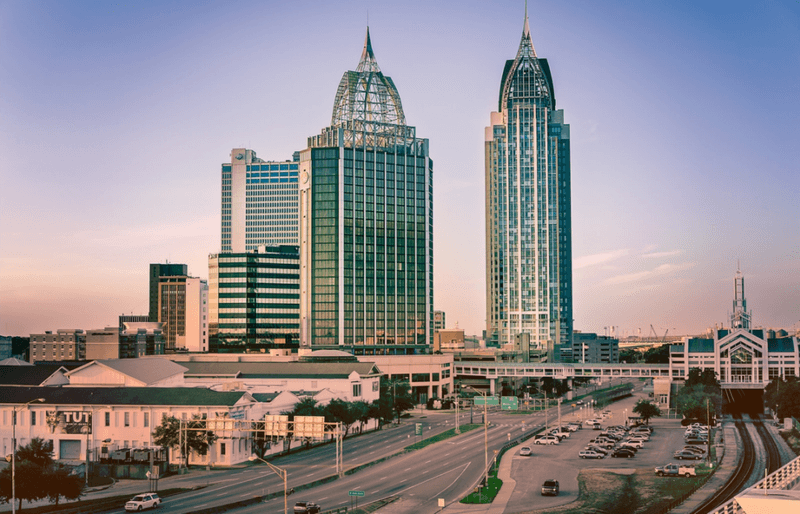
That is not civic boasting, it is a claim locals back up with genuine appetite, and it speaks to a deep, ongoing relationship between this Alabama city and its favorite snack.
The Chattanooga Bakery has taken notice. Because of Mobile’s intense and loyal appetite, the city often serves as a testing ground for new flavors.
Limited-edition varieties like coconut or salted caramel sometimes appear here before anywhere else.
Locals get to taste the latest creations while the rest of the country waits. That kind of insider access has only deepened the affection Mobile residents feel for the brand.
It is a mutual relationship built on trust and a whole lot of marshmallow.
Beyond the parades, MoonPies appear in local shops, restaurants, and kitchen cupboards year-round. The snack is woven into daily life here in a way that goes far beyond seasonal novelty.
In Mobile, Alabama, MoonPie loyalty is practically a personality trait.
A New Year’s Eve Drop Unlike Any Other

Most cities drop a ball on New Year’s Eve. Mobile, Alabama, drops a MoonPie, and it is every bit as spectacular as it sounds.
This tradition launched in 2008 and has grown into one of the Gulf Coast’s most anticipated annual events.
A massive electronic MoonPie replica, weighing around 600 pounds and standing roughly 12 feet tall, descends slowly from the 34-story RSA Trustmark Building in downtown Mobile. Tens of thousands of people gather below to watch the countdown.
As midnight approaches, the giant MoonPie makes its descent. The crowd cheers, confetti flies, and the new year begins with something distinctly Mobile.
It is quirky, joyful, and completely on-brand for a city that takes its MoonPie identity seriously.
The celebration does not stop there. A massive, real edible MoonPie is sliced and shared with the crowd, turning the moment into a communal feast.
This New Year’s Eve tradition captures everything Mobile does best: history, humor, and a generous helping of something sweet.
The Luck of the First Catch

Superstitions have a funny way of becoming beloved traditions. In Mobile, one particular belief has attached itself firmly to the MoonPie.
The rule is simple: if you catch a MoonPie in mid-air, you must eat it on the spot.
That first airborne catch is said to bring good luck for the year ahead. Nobody knows exactly when this custom started, but it has been passed down through families and embraced by visitors who learn about it moments before a parade begins.
The practice adds a spontaneous, playful energy to the experience. Catching a MoonPie is already exciting.
Knowing there is a ritual attached makes it feel meaningful, even if the meaning is entirely self-invented and delightfully silly.
Children take this rule very seriously. Adults often play along with equal enthusiasm.
It is the kind of small, communal tradition that turns a street event into something personal. Mobile, Alabama, understands that the best celebrations are built on exactly these kinds of lighthearted, shared moments that everyone can participate in.
The Mobile Carnival Museum
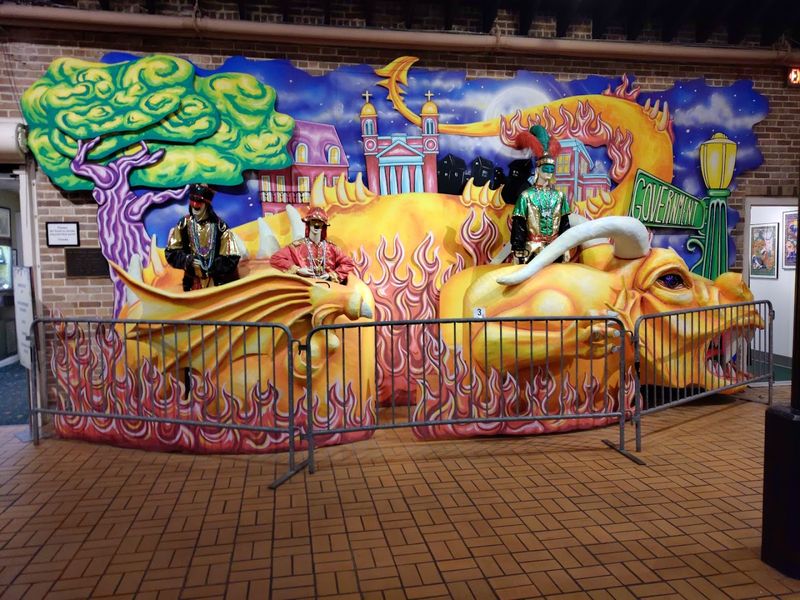
History this rich deserves a proper home. The Mobile Carnival Museum, housed inside a beautifully restored historic mansion, offers exactly that.
It opened in 2005 and has since become an essential stop for anyone curious about the roots of American Mardi Gras.
Fourteen gallery rooms guide visitors through centuries of Carnival tradition in Mobile, Alabama. Elaborate royal robes, glittering crowns, and ornate scepters worn by past kings and queens fill the displays.
The craftsmanship on some pieces is extraordinary.
One of the most popular features is a replica parade float that guests can actually board. Standing on the float gives a rider’s-eye view of what it feels like to hurl MoonPies into a cheering crowd.
Videos of past parades and balls bring the static exhibits to life.
The museum is located at 355 Government Street in downtown Mobile. It tells the story of mystic societies, royal courts, and evolving traditions with clarity and genuine affection.
For first-time visitors and returning locals alike, it reframes the entire Carnival experience in a meaningful way.
A Parade Schedule Built For Everyone
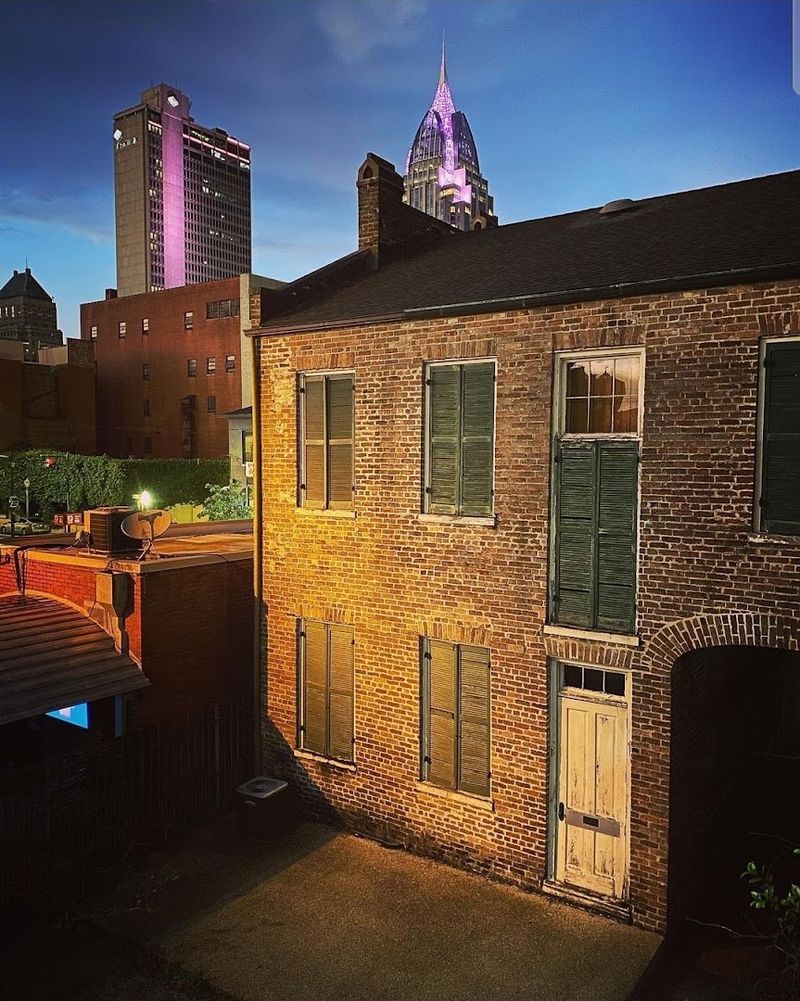
Planning a trip to Mobile during Carnival season means having options, and plenty of them. The parade season stretches across more than two and a half weeks, with events filling the calendar from morning to night.
More than 40 parades roll through Mobile County each season. Some mystic societies parade during daylight hours, while others light up the night with illuminated floats and dramatic presentations.
Both experiences offer something distinct and memorable.
Joe Cain Day, held on the Sunday before Fat Tuesday, stands out as a particularly spirited event. Known as the people’s parade, it encourages wide community participation and carries a playful, irreverent energy that feels different from the more formal society parades.
The city prides itself on being America’s Family Mardi Gras, an approach that keeps the atmosphere welcoming and inclusive. Multiple parade routes ensure varied viewing experiences across different neighborhoods.
Visitors often find that one parade is never enough. Mobile, Alabama, keeps the schedule packed precisely because the enthusiasm never seems to run out.
Beyond Parades, The Spirit Stays Sweet
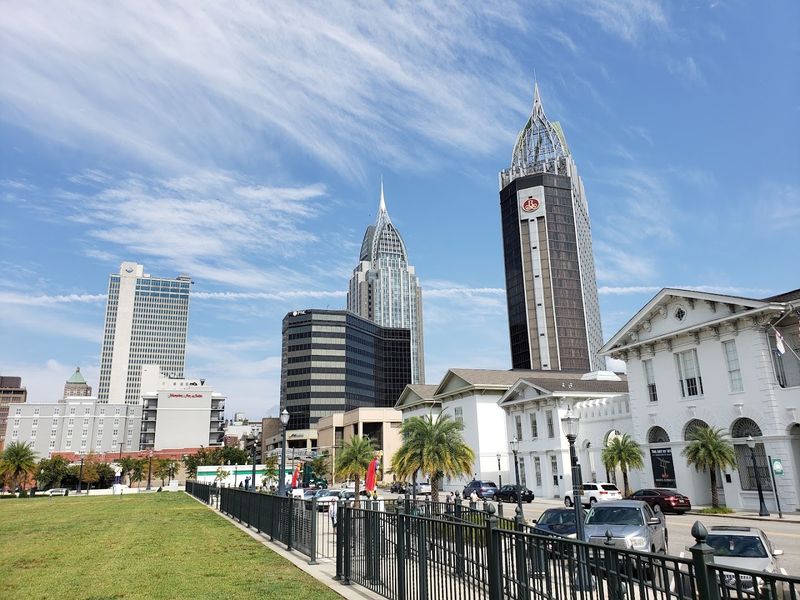
When the last float rolls away and the beads settle into sidewalk cracks, Mobile’s love for the MoonPie does not disappear. It simply shifts indoors.
Local establishments occasionally offer house-made versions of the classic treat, elevated with chef-crafted fillings and hand-dipped coatings.
These gourmet interpretations respect the original while adding creative flair. Unique cookie bases, flavored marshmallow centers, and specialty chocolate coatings transform a familiar snack into something worth seeking out.
The spirit of the MoonPie, comforting and communal, translates beautifully into an artisan format.
Beyond food, the MoonPie represents something larger for Mobile residents. It connects generations.
Grandparents who caught them from floats decades ago now watch grandchildren do the same. That continuity is rare and genuinely moving.
Mobile, Alabama, has built something special around a simple snack. The city’s Mardi Gras tradition, anchored by history and sweetened by MoonPies, offers a celebration that feels both deeply rooted and endlessly joyful.
Visitors leave with full hands, happy memories, and a craving that only one specific treat can satisfy.