
This Massachusetts Attraction Is One Of The State’s Best-Kept Secrets
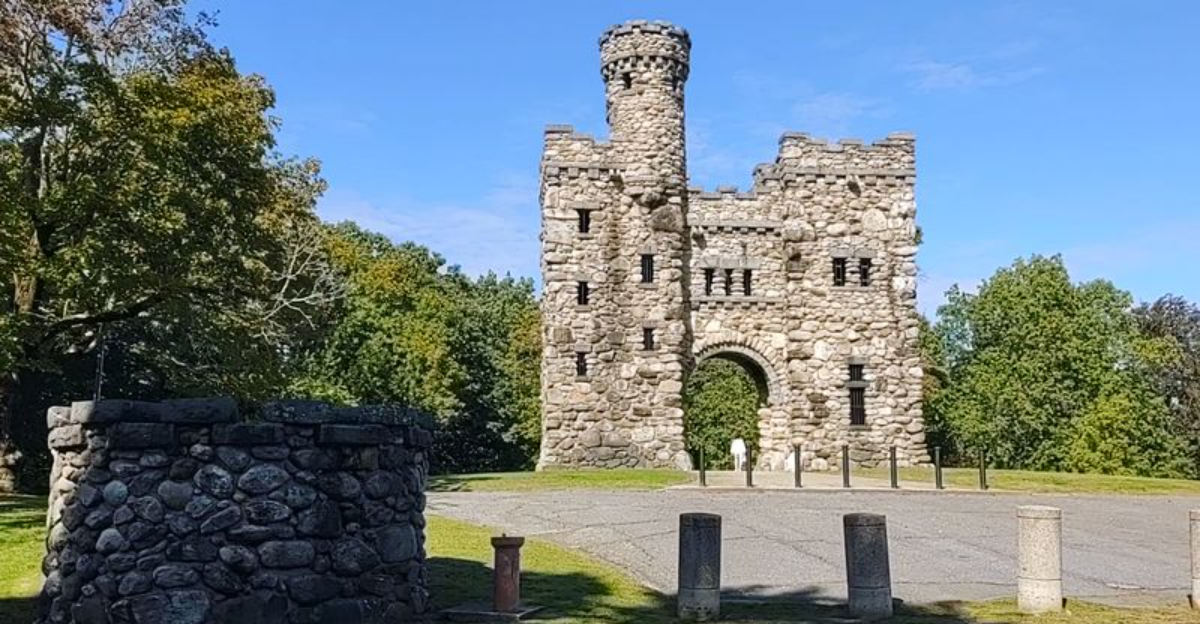
Massachusetts is full of well-known landmarks, but this one stands on a wooded hill in Worcester and most people drive right past it without a second thought. It looks like it was lifted straight out of medieval Europe.
Stone walls, a soaring arch, views of the city stretching out below.
Built in 1900 as a tribute to a politician, it has spent the last century being one of the most dramatic spots in Central Massachusetts that almost nobody talks about.
Locals who know it tend to keep it that way. No crowds, no ticket lines, no tour buses.
Just a short walk through the trees and suddenly you are standing in front of something that makes you stop and stare. Worcester has held onto this one for over a hundred years and it shows no signs of giving it up.
The Story Behind Who Built This Attraction And Why
Not every monument has a story this personal.
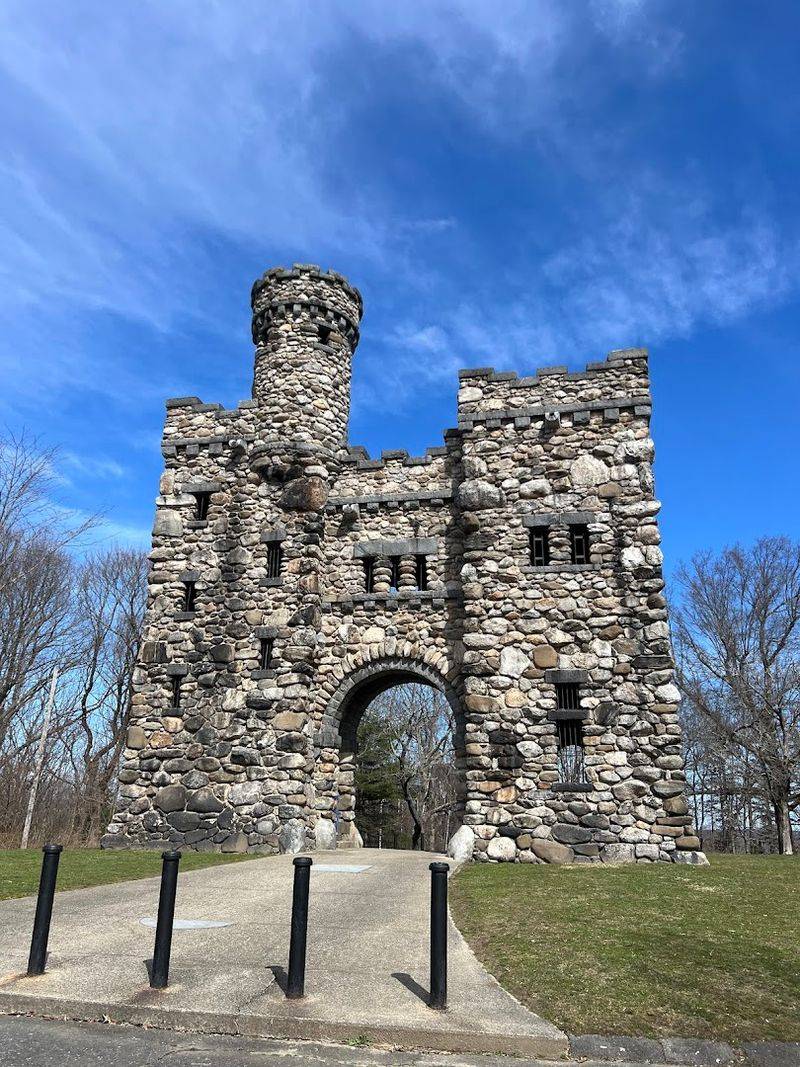
This tower was commissioned in 1900 by Stephen Salisbury III, a prominent Worcester philanthropist, as a tribute to George Bancroft, a man his father had known since childhood.
That kind of loyalty across generations says something meaningful about the bond being honored. George Bancroft was no ordinary figure.
Born in Worcester, he became one of America’s most celebrated historians, a diplomat, a statesman, and the founder of the United States Naval Academy at Annapolis.
He also served as Secretary of the Navy.
His contributions to American civic and military life were substantial, and Salisbury felt strongly that Worcester deserved a permanent tribute to its native son.
The result was a miniature castle built from boulders, cobblestones, and rock-faced granite, designed by Worcester architects Earle and Fisher. The original construction cost was approximately $15,000, which translates to well over half a million dollars today.
What makes the tower remarkable is not just its architecture, but the quiet personal devotion behind its creation. It stands as proof that some of the most meaningful landmarks are born from friendship rather than politics or civic obligation.
A Closer Look At The Architecture That Sets It Apart
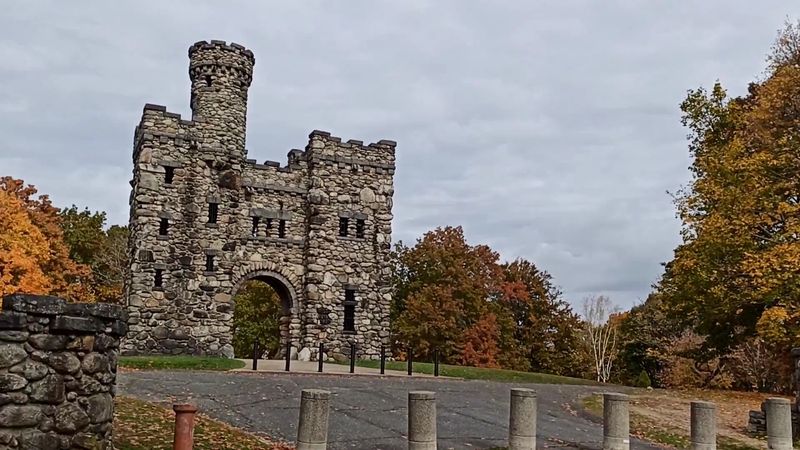
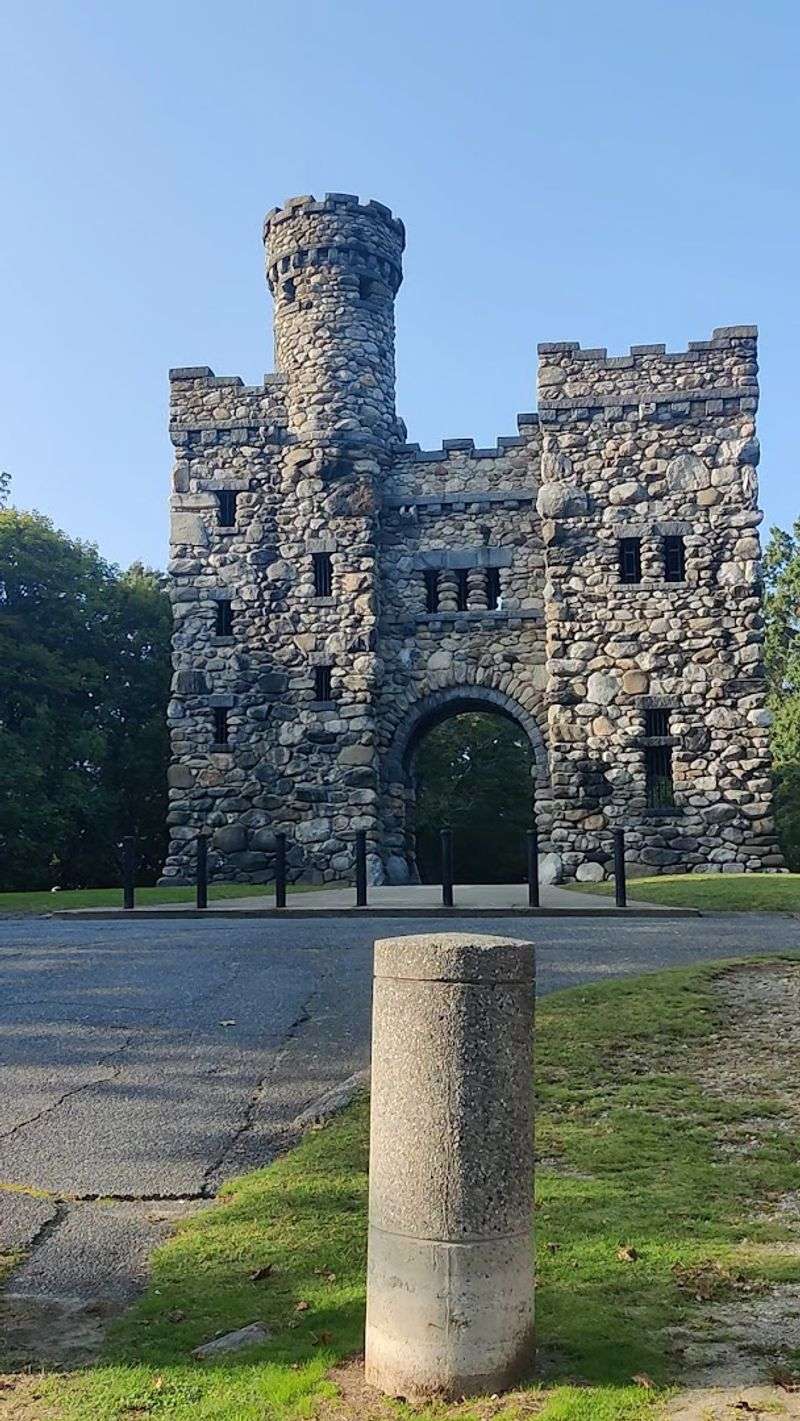
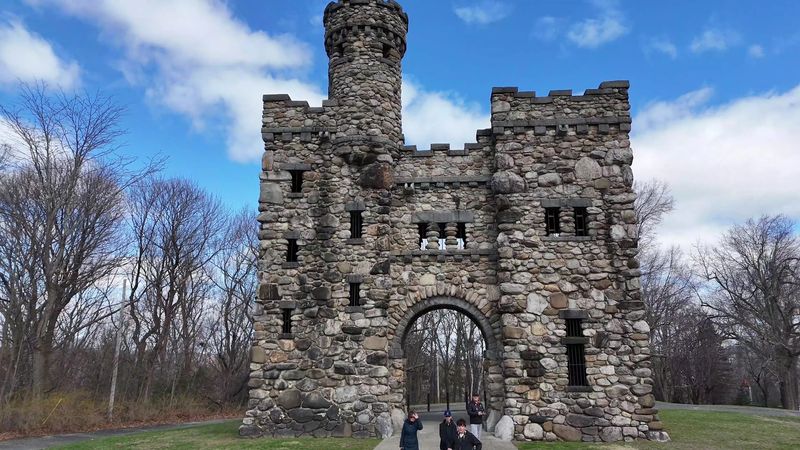
At first glance, Bancroft Tower looks like it was lifted from a European countryside and placed on a Massachusetts hilltop. The asymmetrical Romanesque design gives it a weight and personality that most American monuments simply do not carry.
One reviewer even compared it to the Roman arch in Trier, Germany, which is not a small compliment.
The structure features two distinct tower types: a crenelated square section and a taller circular tower positioned off-center. That asymmetry is intentional.
It creates visual tension that keeps your eye moving across the facade rather than settling into a predictable form. The arched gate at the base adds a sense of passage, as if the tower is inviting you into something.
Every material used in construction was chosen for permanence.
Boulders, cobblestones, and rock-faced granite give the walls a rough, honest texture that softens beautifully in afternoon light.
Architects Earle and Fisher clearly understood how stone behaves in New England weather. More than 120 years later, the structure holds its ground with quiet authority.
For anyone with an interest in architectural history, the tower rewards a slow, deliberate walk around its full perimeter.
Panoramic Views From Prospect Hill Worth Every Step
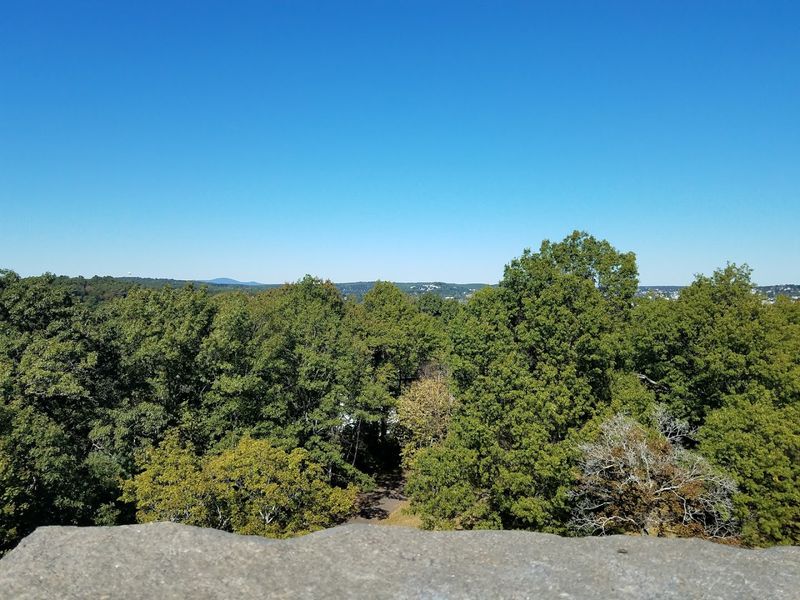
Standing at the base of Bancroft Tower and looking outward, you quickly understand why this location was chosen. Prospect Hill earns its name.
The elevation gives visitors a clean, sweeping view of Worcester that stretches across rooftops, treetops, and open sky in a way that feels genuinely earned after the uphill drive or walk.
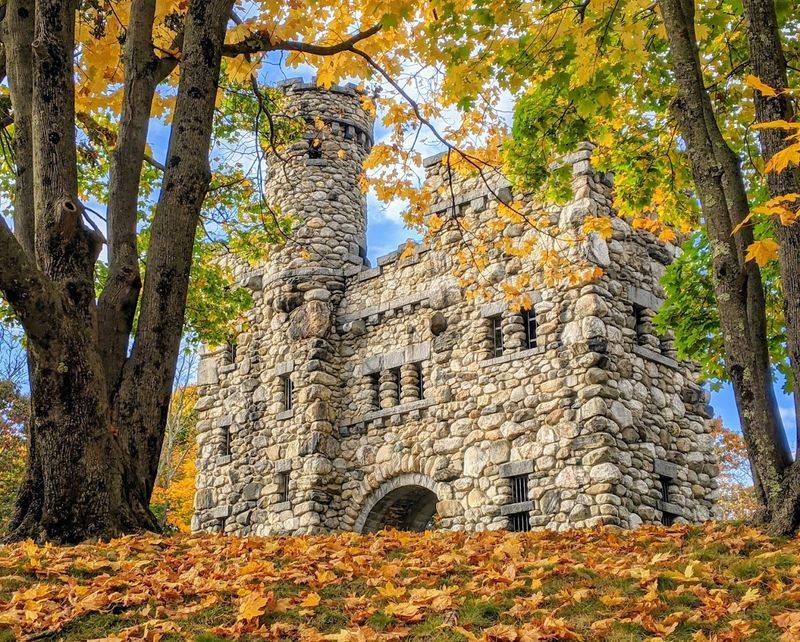
The surrounding Salisbury Park frames the experience with mature trees that shift dramatically with the seasons. In autumn, the foliage turns the hillside into something almost theatrical, though the word to use is probably just honest.
Orange, amber, and deep red spread out beneath the tower walls like a slow, deliberate painting that takes weeks to complete.
Even in winter, the bare branches reveal sight lines that leafy months conceal. Several visitors have mentioned returning in different seasons specifically because the view changes character each time.
One visitor described going at night to photograph stars above the tower, which suggests the location holds appeal well beyond the usual tourist checklist.
The park is open from 6 AM to 10 PM daily, so there is plenty of time to arrive at golden hour and stay until the city lights begin to appear across the horizon.
George Bancroft: The Worcester Native Who Shaped American History
Few people outside academic circles realize that one of America’s most consequential 19th-century figures grew up in Worcester. George Bancroft was born there in 1800, exactly a century before the tower bearing his name was completed.
That symmetry feels almost deliberate, though history rarely arranges itself so neatly.
Bancroft’s career spanned disciplines that rarely overlap. He wrote a ten-volume history of the United States that became a defining work of American letters.
He served as Secretary of the Navy under President James K. Polk, and during that tenure he established the United States Naval Academy at Annapolis in 1845.
He later served as U.S. Minister to Great Britain and to the German Empire.
His connection to Worcester was never just biographical.
Stephen Salisbury III chose to memorialize him precisely because Bancroft represented what a Worcester upbringing could produce: intellectual ambition, civic responsibility, and a long view of history.
The tower at Bancroft Tower Rd, Worcester, MA 01602 is not simply a decorative structure. It is a statement about what a city believes is worth remembering.
For visitors who take a moment to read the history, the stones carry considerably more weight.
What Visitors Can Actually Expect When They Arrive
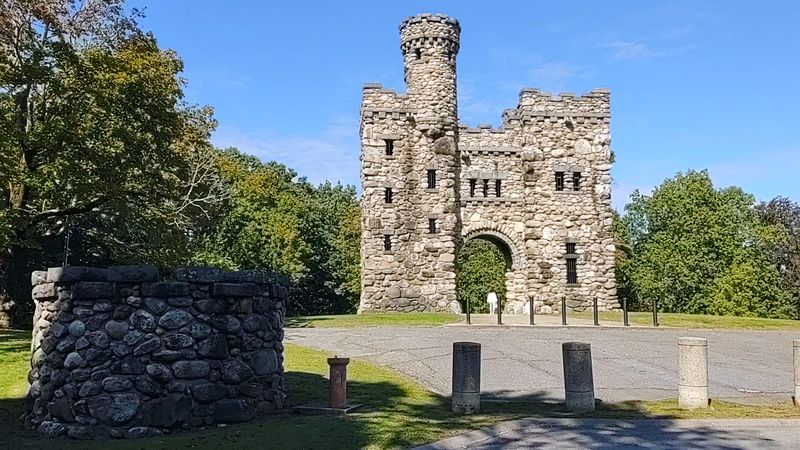
Managing expectations before a visit saves a lot of disappointment. Bancroft Tower is not a museum with guided exhibits or a staffed attraction with interpretive signage at every turn.
It is an outdoor landmark on a hill, and its value lies in the atmosphere, the architecture, and the views rather than any curated indoor experience.
The interior has been closed to the public since the 1980s due to safety concerns and past misuse. Visitors can walk the full perimeter, peer through the arched gate, and explore the surrounding park.
The small parking area near the tower fits roughly ten cars, and the access road has a noticeable incline. Traffic from the highway into the city can add a few frustrating minutes to the drive, so arriving outside of peak hours helps.
The park is open daily from 6 AM to 10 PM, and the grounds are well maintained. There are no bathrooms on site, which is worth knowing before you go.
The experience runs about 15 to 30 minutes for most visitors, though those who explore the nearby trails or simply sit and take in the view tend to stay considerably longer. Bring a camera.
The light here is genuinely cooperative.
The East West Trail And Hiking Around Salisbury Park
For anyone who prefers their history with a side of physical activity, Salisbury Park delivers.
The park contains a segment of Worcester’s 14-mile East West Trail, a multi-use path that connects various green spaces across the city.
It is the kind of trail that rewards walkers, joggers, and casual hikers equally, with terrain that changes enough to stay interesting without becoming demanding.
Visitors who have explored the trail report a satisfying combination of woodland cover and occasional open views. The trail is not extensively maintained in every section, so sturdy footwear is a reasonable choice.
Dogs on leash are welcome, and several visitors have mentioned bringing their pets along for the walk around the tower and into the surrounding woods.
The area draws a consistent mix of locals: joggers doing a regular loop, photographers chasing seasonal light, and families looking for a quiet afternoon outdoors. What makes the East West Trail connection particularly appealing is that it extends the visit well beyond the tower itself.
A quick stop can become a two-hour outing without much planning at all.
For those who want to explore more of Worcester’s green infrastructure, the trail offers a straightforward and rewarding way to do it on foot.
Photography Opportunities That Make The Trip Worth It
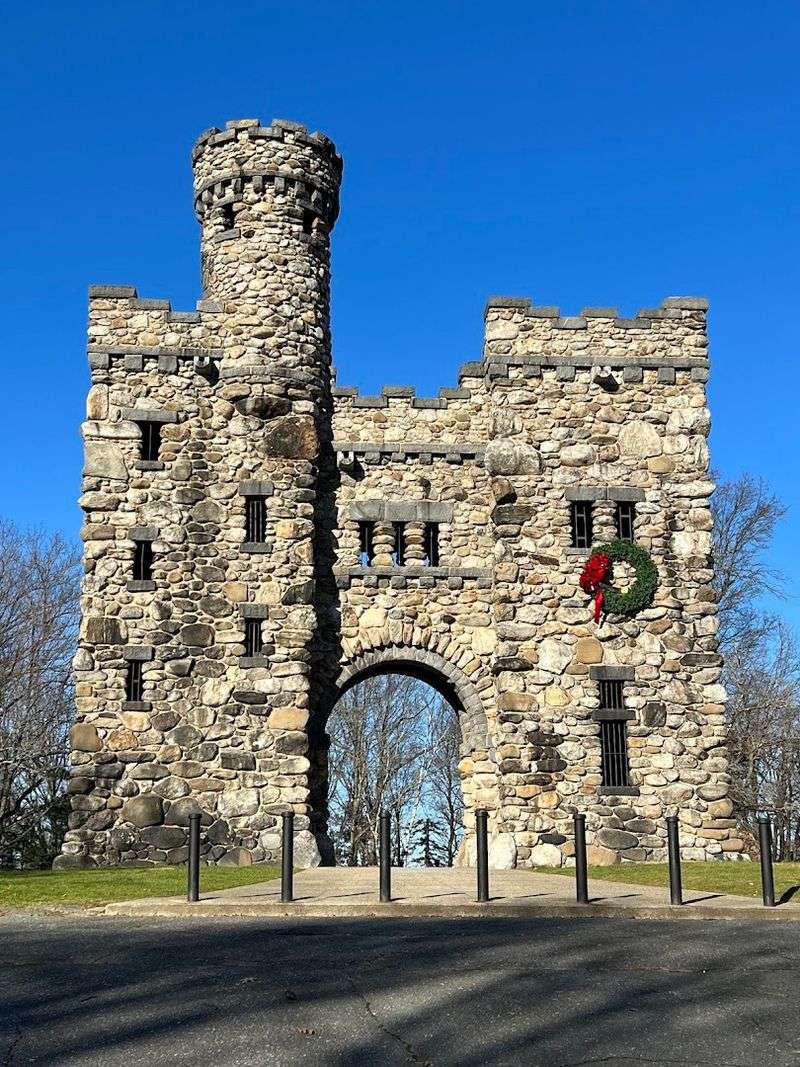
Several visitors have described Bancroft Tower as one of the better portrait locations in central Massachusetts, and after seeing photographs taken there, it is easy to understand why. The stone facade provides a textured, timeless backdrop that flatters almost any subject.
The arched gate creates a natural frame that portrait photographers tend to use repeatedly because it simply works.
The tower photographs differently depending on the time of day and season. Morning light catches the rough stone texture in a way that emphasizes depth.
Late afternoon turns the granite warm and golden. In October, the surrounding foliage adds color that makes wide-angle shots feel almost too easy.
One visitor mentioned returning after a snowy winter visit specifically to see the tower without snow, which suggests the location earns repeat trips across seasons.
Night photography is also viable here.
At least one visitor has mentioned capturing stars above the tower after dark, which requires a tripod and some patience but produces results that few Massachusetts locations can match.
The park remains open until 10 PM daily, providing a reasonable window for evening shoots.
For photographers of any skill level, Bancroft Tower offers compositional variety that is rare for a free, publicly accessible location.
Occasional Public Tours And How To Plan Around Them
The interior of Bancroft Tower includes spiral staircases and fireplace chambers that most visitors never get to see. Since the 1980s, the inside has been off-limits to the general public, a decision made after safety concerns and reports of illicit activity in the area.
For a structure with this much architectural character inside, that closure is genuinely unfortunate.
There is, however, a window of access. Park Spirit of Worcester, the organization that manages the site, periodically opens the tower for public tours.
These typically occur on select Sundays in October, timed to coincide with peak foliage season. Availability is limited, and the dates vary from year to year, so checking the organization’s website at parkspirit.org before planning a visit is strongly recommended.
Those who have managed to climb the interior stairs describe the views from the top as considerably more impressive than the already solid views from ground level. The tower can be reached by phone at +1 508-799-1190 for current information on tour availability.
Planning a visit around one of these open days transforms the experience from a pleasant outdoor stop into something genuinely memorable. It is one of those rare occasions where showing up at the right time makes all the difference.
Why Bancroft Tower Belongs On Your Massachusetts Itinerary
Massachusetts has no shortage of historic sites, but most of them come with crowds, admission fees, and the faint pressure of a curated experience.
Bancroft Tower offers something different: a landmark with genuine historical depth, striking architecture, and a setting that rewards visitors who simply show up and look around.
The tower holds a 4.6-star rating across hundreds of reviews, which is a reliable signal that the experience consistently delivers. It costs nothing to visit, the park is open six days a week from early morning to 10 PM, and the surrounding area provides enough variety to fill an afternoon.
The National Register of Historic Places listed the tower on March 5, 1980, confirming its architectural and historical significance beyond local sentiment.
What makes the tower worth adding to your itinerary is the rarity of the combination it offers: free access, real history, photogenic architecture, trail access, and city views.
Worcester is not a city that aggressively markets its attractions, which means places like this remain genuinely unhurried.
That quality, in an era of over-visited landmarks, is worth more than most people realize until they are standing on Prospect Hill looking out.