
This Massachusetts Market Has Been Feeding Locals Since 1826 And World Cup Visitors Are About To Discover It
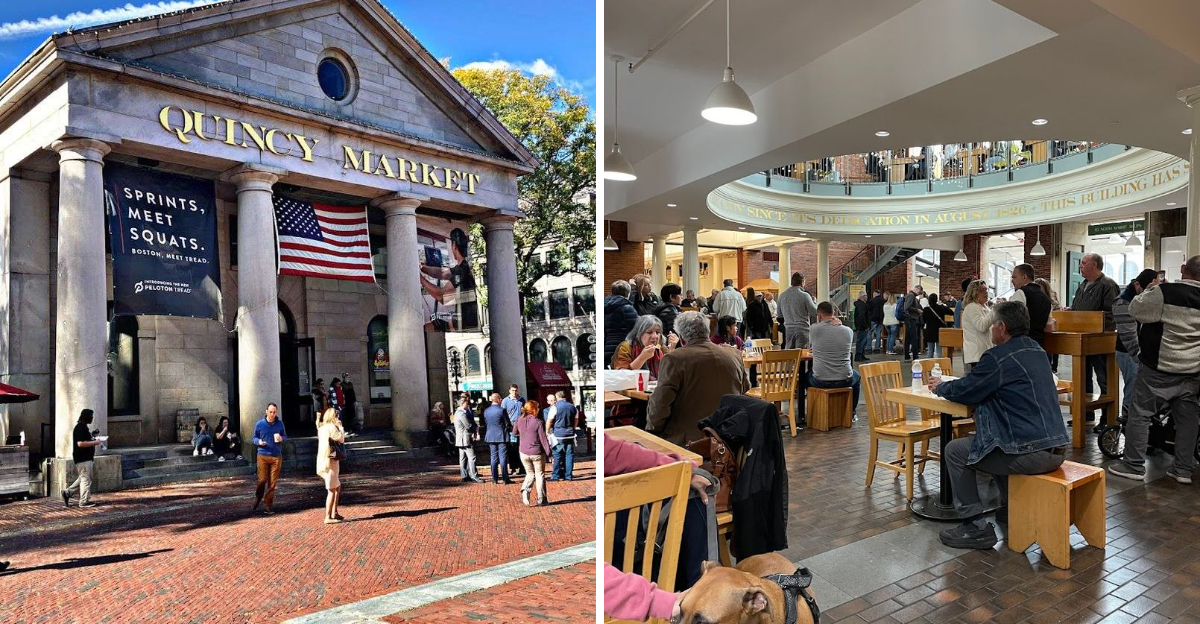
Some places earn their reputation over years. This one earned it over two centuries.
Since 1826, this Massachusetts market has been one of Boston’s most beloved food destinations, and it shows no signs of slowing down. This summer it gets a new audience entirely.
World Cup visitors arriving in Boston are going to discover over a hundred vendors serving lobster rolls, chowder, fresh pastries, and some of the best people-watching in the city. It is loud, lively, and completely worth the visit.
Locals have known about this place their whole lives. Now the rest of the world is about to catch up.
Nearly 200 Years Of History Packed Into One Greek Revival Building
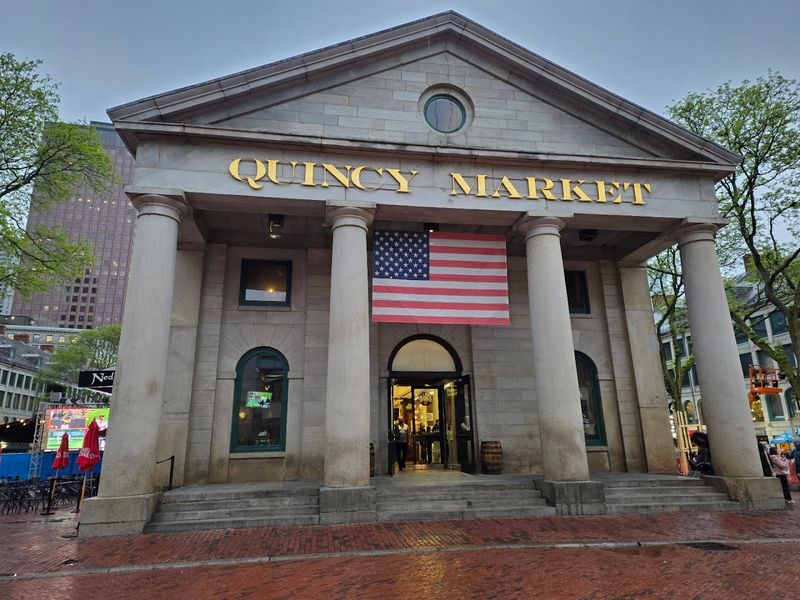
When a building has been standing since 1826, every stone seems to carry a story. This market was designed by architect Alexander Parris in the Greek Revival style, and its grand granite columns still make a striking impression today.
Mayor Josiah Quincy pushed for its construction to ease the overcrowding at nearby Faneuil Hall, and the building officially opened on August 26, 1826. Back then, 128 food stalls filled the ground floor, selling fish, meat, fruit, and bread to a growing city.
It served as a key distribution point for goods across New England for decades.
By the mid-20th century, the building had fallen into disrepair, but a major revitalization brought it back. It reopened in stages between 1976 and 1978 as part of the Faneuil Hall Marketplace, with the central building celebrating its 15th anniversary on August 26, 1976.
Today it is a National Historic Landmark, and its copper-domed rotunda and long central hall remain largely faithful to Parris’s original vision.
Once You See What Is Inside You Will Understand Why People Keep Coming Back
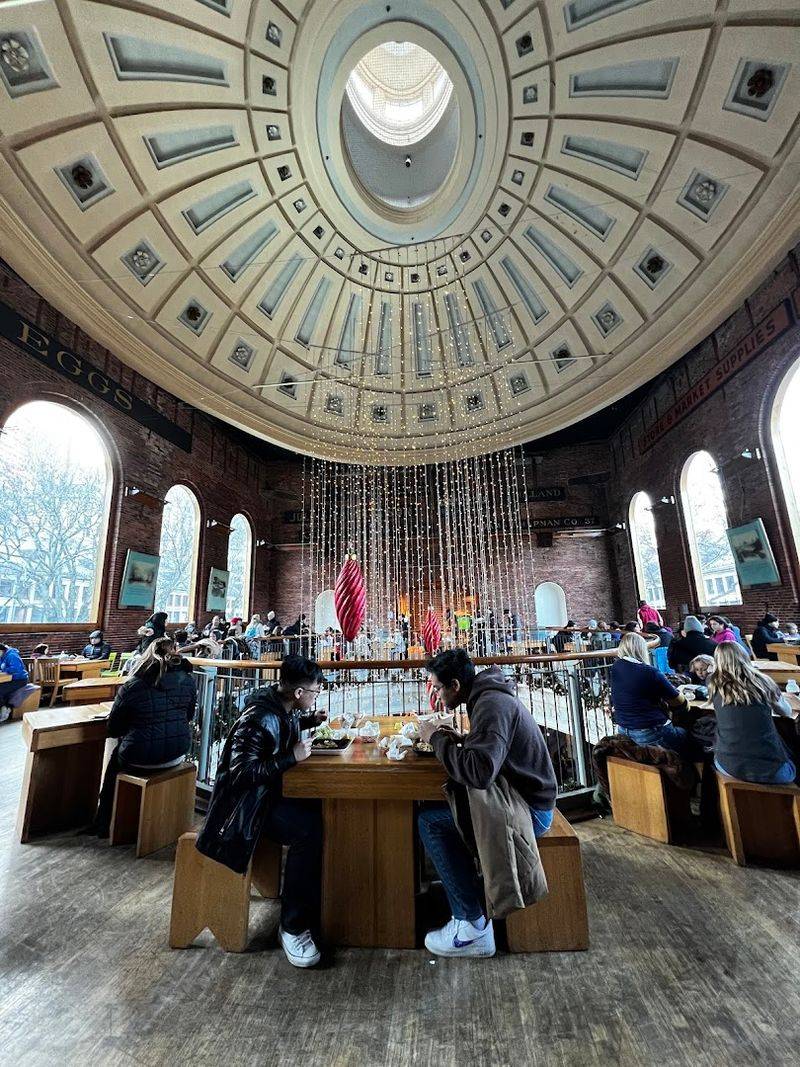
Seeing the central hall of Quincy Market could easily take twice as long as planned, because every stall pulls attention in a different direction. The space holds more than 30 food vendors, all lined along a long corridor beneath the famous copper dome.
The hum of conversation, the clatter of trays, and the layered aromas of seafood, baked goods, and spices create an atmosphere that feels genuinely alive.
Seating inside tends to fill up quickly, especially around midday on weekends. The rotunda at the center offers communal high counters and stools, which gives the space a casual, shared-table energy that makes it easy to settle in next to strangers.
Arriving earlier in the day could mean more available seats and a slightly calmer pace.
The variety here is real and broad. Visitors can find classic New England seafood, fresh-made pasta, poke bowls, sushi, corn dogs, pizza, sandwiches, and a wide range of desserts all under one roof.
Portions tend to be generous, and many vendors offer free samples, which makes browsing feel like its own kind of meal. The market is open Monday through Saturday from 10 AM to 9 PM and Sunday from 12 to 6 PM.
New England Classics Like Clam Chowder And Lobster Rolls
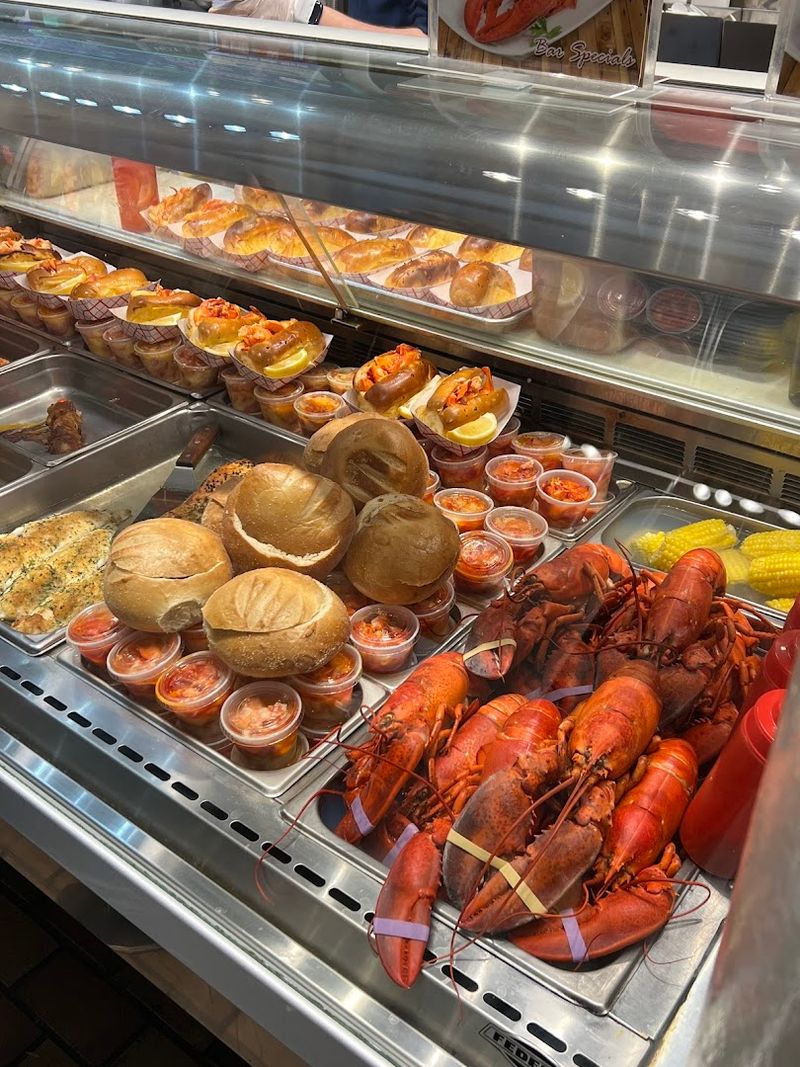
Few food experiences feel more distinctly Boston than sitting down with a bread bowl of clam chowder and a lobster roll.
Quincy Market has long been one of the most reliable places in the city to find both, and the options available inside the hall reflect just how central seafood is to the local food identity.
Boston Chowda Co. is one of the well-known vendors inside the market, and they have been known to offer samples of their chowder, which gives visitors a chance to taste before committing.
The chowder is typically served thick, warm, and creamy, with a bread bowl option that has become something of a signature presentation. Lobster rolls, meanwhile, tend to come generously filled and are available in both warm buttered and cold mayo-dressed styles.
Raw oysters and jumbo shrimp also appear on menus throughout the hall, rounding out a seafood lineup that feels appropriate for a city with such deep maritime roots. Prices for seafood items may run higher than a typical fast-casual meal, which is worth keeping in mind.
Still, the quality and setting together make these dishes a reasonable splurge for anyone visiting Boston for the first time or the fifteenth.
International Flavors That Reflect A Changing City
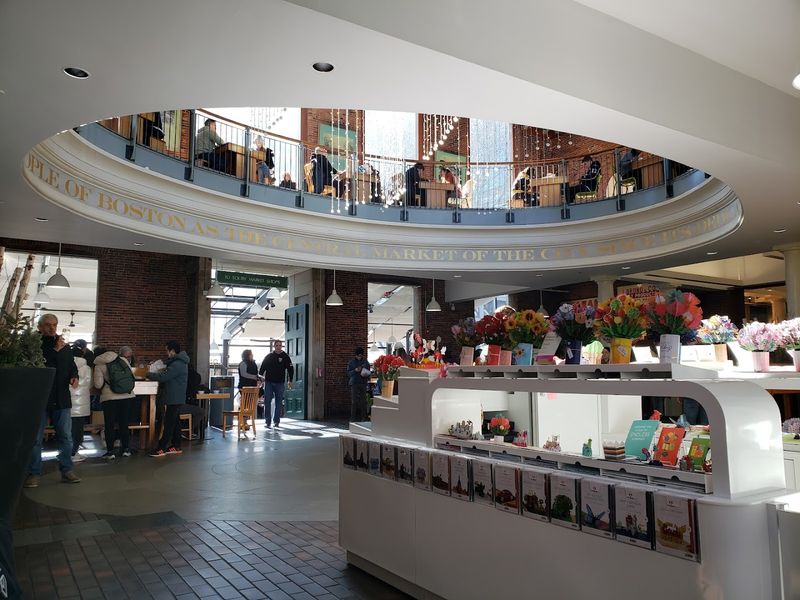
Quincy Market has never been a one-note destination, and the current vendor mix reflects how much Boston’s food culture has expanded.
Alongside the New England staples, the food hall offers a range of international options that keep the menu interesting for repeat visitors and curious newcomers alike.
Falafel wraps, sushi, poke bowls, Chinese dishes, and fresh pasta made to order all share space with the chowder and lobster counters.
The variety means that groups with different tastes or dietary preferences can all find something satisfying without needing to compromise. It also makes the market a practical stop for travelers who may be craving something familiar from another part of the world.
The dessert selection adds another layer of global influence, with gelato, pastries, and baked goods available near the entrance and throughout the hall. One visitor noted that a lemon gelato and a falafel wrap made for an unexpectedly memorable combination.
Bakeries near the entrance tend to draw attention early, with the smell of fresh pastries reaching the doorway before visitors even step inside. This mix of flavors is part of what makes the market feel current and relevant, even as the building itself remains anchored in the 19th century.
Street Performers And Outdoor Plaza Energy
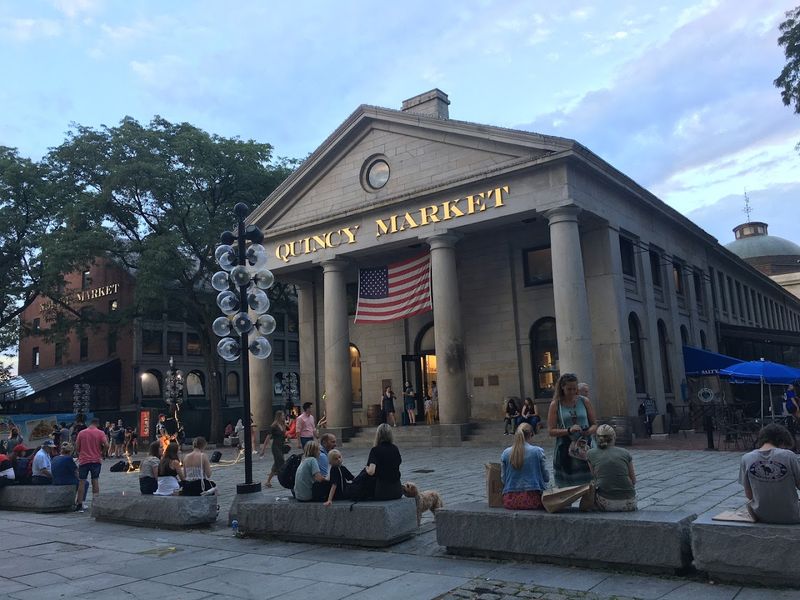
The experience at Quincy Market does not begin or end at the front door. The outdoor plaza surrounding the building is its own kind of stage, with street performers regularly drawing crowds throughout the day.
Acrobats, bucket drummers, musicians, and other performers set up in the open space and create a lively, festival-like atmosphere that adds real character to the visit.
During warmer months, taking food outside and finding a spot on the plaza benches is a popular choice. The space opens up considerably outside, which is helpful given that indoor seating can be limited during peak hours.
Eating outside also means catching whatever performance happens to be running, which turns a quick lunch into something more memorable.
The plaza connects naturally to the surrounding Faneuil Hall Marketplace, which includes the North and South Market buildings. These adjacent spaces house a mix of retail stores, boutique vendors, and pushcart sellers offering handcrafted and locally made goods.
The whole area is walkable and easy to explore at a relaxed pace.
For visitors arriving during the FIFA World Cup 2026, this outdoor energy could be especially appealing, with the nearby FIFA Fan Festival at City Hall Plaza adding to the already animated street atmosphere across the neighborhood.
How Quincy Market Connects To The Freedom Trail
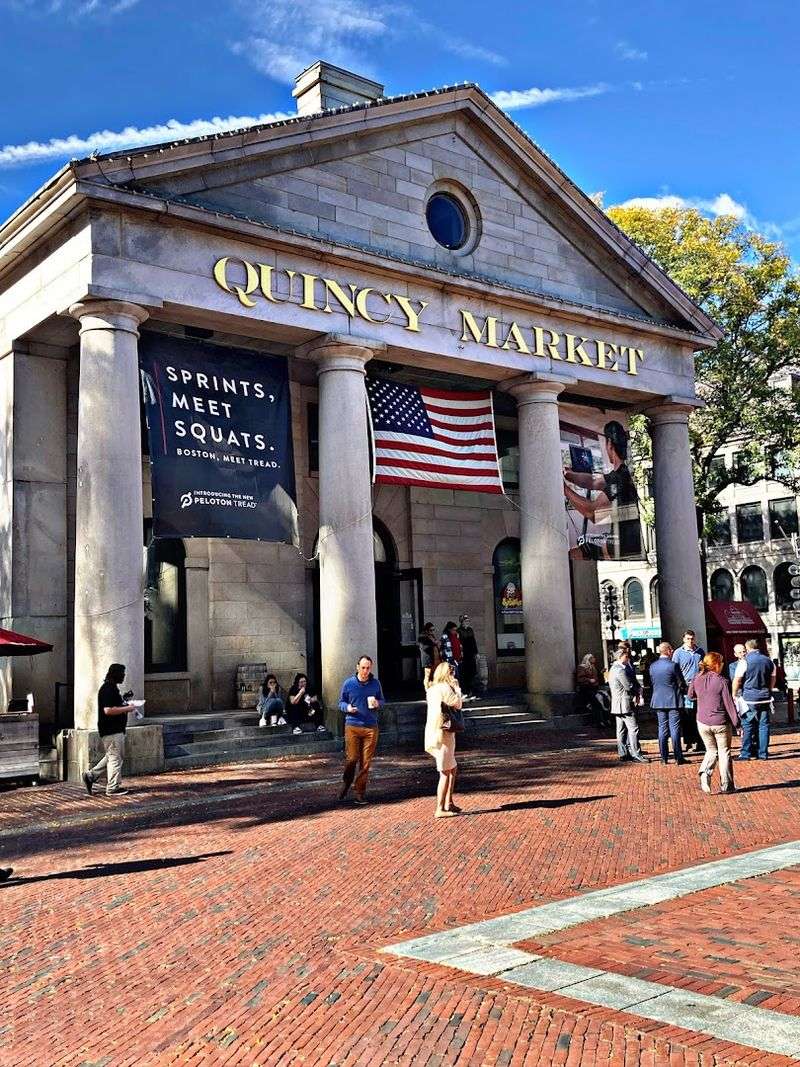
Geography plays a quiet but important role in why Quincy Market stays so consistently busy. The building sits directly along the Freedom Trail, Boston’s famous 2.5-mile walking route that connects 16 historically significant sites across the city.
For anyone following the red-brick path through downtown, the market appears almost naturally as a midpoint resting spot.
Faneuil Hall, which sits just steps away, is itself one of the Freedom Trail stops, and the two buildings share a history that stretches back to Boston’s earliest years as a city.
Visitors walking the trail often arrive at the market hungry and ready for a break, which makes it a practical and well-positioned stop rather than a detour.
The surrounding neighborhood adds to the appeal. Christopher Columbus Park and the waterfront are a short walk away, offering a quieter contrast to the market’s indoor energy.
Looking back toward the market from the park, the blend of historic architecture and modern activity becomes more visible and easier to appreciate. Bronze tributes to Boston sports legends, including Larry Bird and Red Auerbach, are located nearby and serve as popular photo spots.
The whole area feels walkable, layered, and genuinely connected to the city’s broader story.
Here Is What You Should Know Before You Show Up On A Busy Day
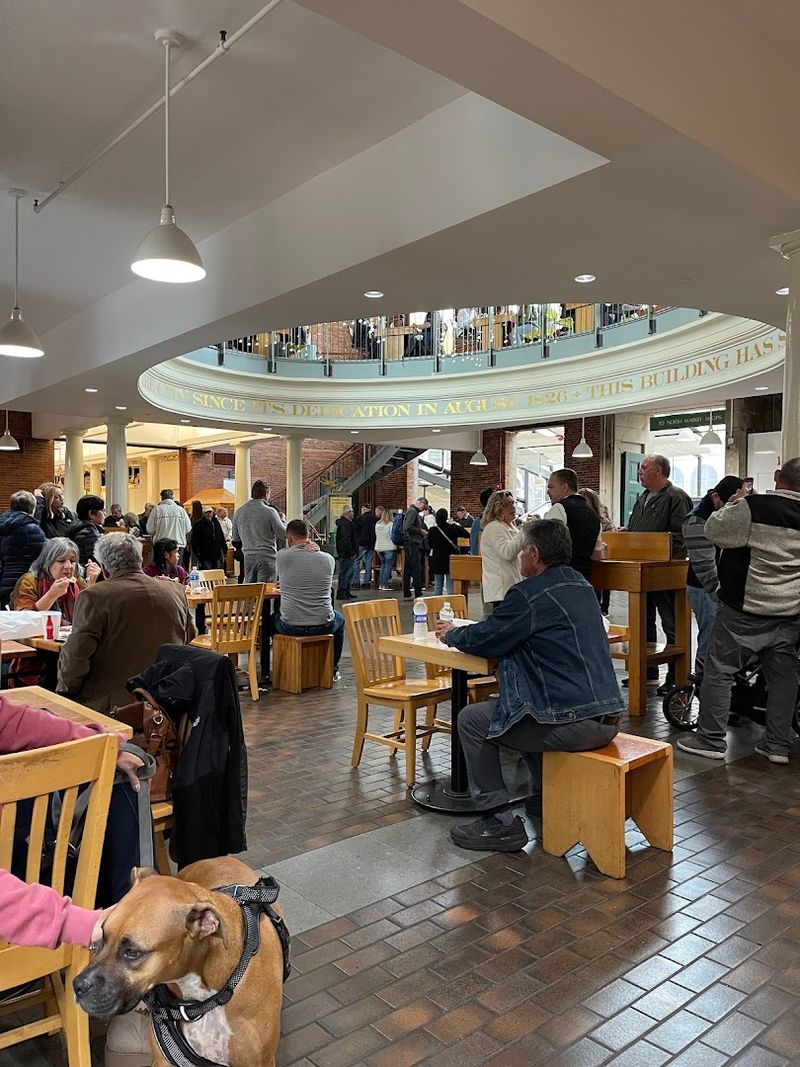
Timing a visit to Quincy Market can make a noticeable difference in the overall experience. The market tends to get busiest during lunch hours, particularly on weekends, and during the summer tourist season when foot traffic across downtown Boston increases significantly.
Seating inside the hall fills up quickly during these windows, and lines at popular vendors can stretch into the main corridor.
Arriving closer to opening time at 10 AM on weekdays could mean shorter waits and more available counter space. A winter visit offers a noticeably different pace, with more open seating, fewer crowds, and vendors who may be more relaxed and conversational.
Some visitors have found that vendors offer more generous free samples during quieter periods, which makes the slower seasons feel like a different experience entirely.
The FIFA World Cup 2026 is expected to bring a significant surge of international visitors to Boston between June 13 and July 9, 2026.
Seven matches are scheduled at Gillette Stadium during that period, and the nearby FIFA Fan Festival at City Hall Plaza will run throughout the tournament.
Quincy Market is likely to see heavier-than-usual crowds during those weeks, so planning visits for early morning or later in the evening could help avoid the busiest periods.
Accessibility, Facilities, And Practical Visitor Information
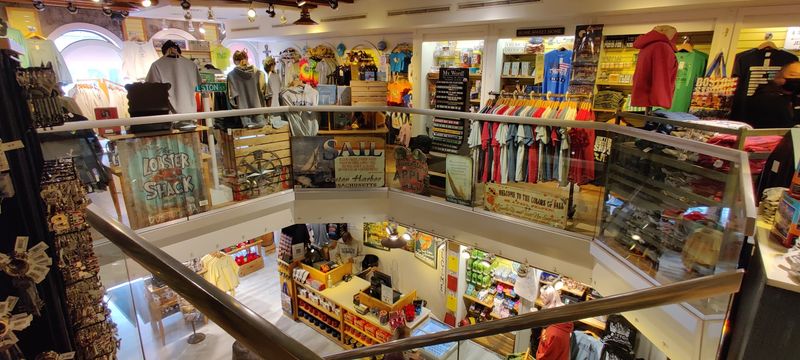
Practical details matter when planning a visit to a busy public market, and Quincy Market holds up well on most fronts. The building at 206 S Market St, Boston, Massachusetts is fully wheelchair accessible, with ground-level entry points and open floor space throughout the main hall.
Payment options include credit cards and mobile payments, which keeps the ordering process straightforward at most vendors.
Public restrooms are located on the lower level beneath the main hall. First-time visitors have noted that the entrance to the restrooms can be slightly hard to find, so looking for signage near the center of the building is helpful.
The facilities are generally described as clean and well-maintained, which is notable given the volume of daily visitors the market receives.
The market can be reached by phone at +1 617-523-1300, and additional information is available at the official website quincy-market.com.
Parking nearby tends to be the most challenging part of a visit, with several paid garages in the area but limited spots during peak times.
Public transit is a practical alternative, as the market sits within walking distance of several MBTA stops. Operating hours are Monday through Saturday 10 AM to 9 PM and Sunday 12 to 6 PM, though hours could vary on holidays.
Why World Cup Visitors In 2026 Will Want To Stop Here
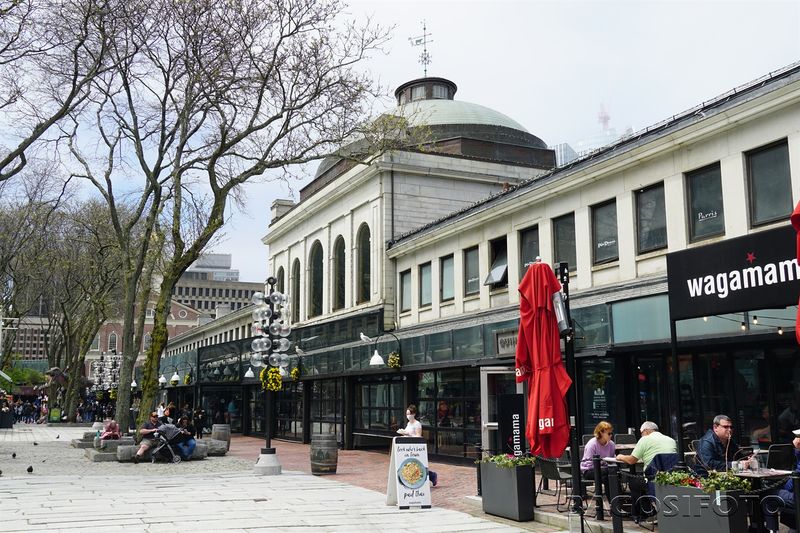
Boston is set to host seven FIFA World Cup 2026 matches at Gillette Stadium between June 13 and July 9, 2026, covering five Group Stage matches, a Round of 32, and a Quarter-final.
The city is preparing for an influx of international visitors unlike anything seen in recent years, and central, walkable destinations are expected to feel that energy most directly.
Quincy Market sits in a prime position to benefit from this moment. The FIFA Fan Festival Boston, a free tournament-long event at City Hall Plaza, is just a short walk from the market.
That festival is set to feature match screenings, live entertainment, and food options, and it could naturally funnel curious visitors toward the surrounding neighborhood throughout the day.
For international guests who may be unfamiliar with New England food culture, the market offers an accessible and low-pressure introduction.
The range of cuisines means there is something recognizable for visitors from almost any country, while the classic Boston dishes give everyone a reason to try something new.
The historic building, the outdoor plaza performances, and the general energy of the Faneuil Hall Marketplace area create an experience that feels distinctly local rather than generic. It is the kind of place that tends to leave a strong first impression on first-time visitors to Boston.