
This Massachusetts Piano Factory Tour Takes You Behind The Scenes Of A Rare American Craft
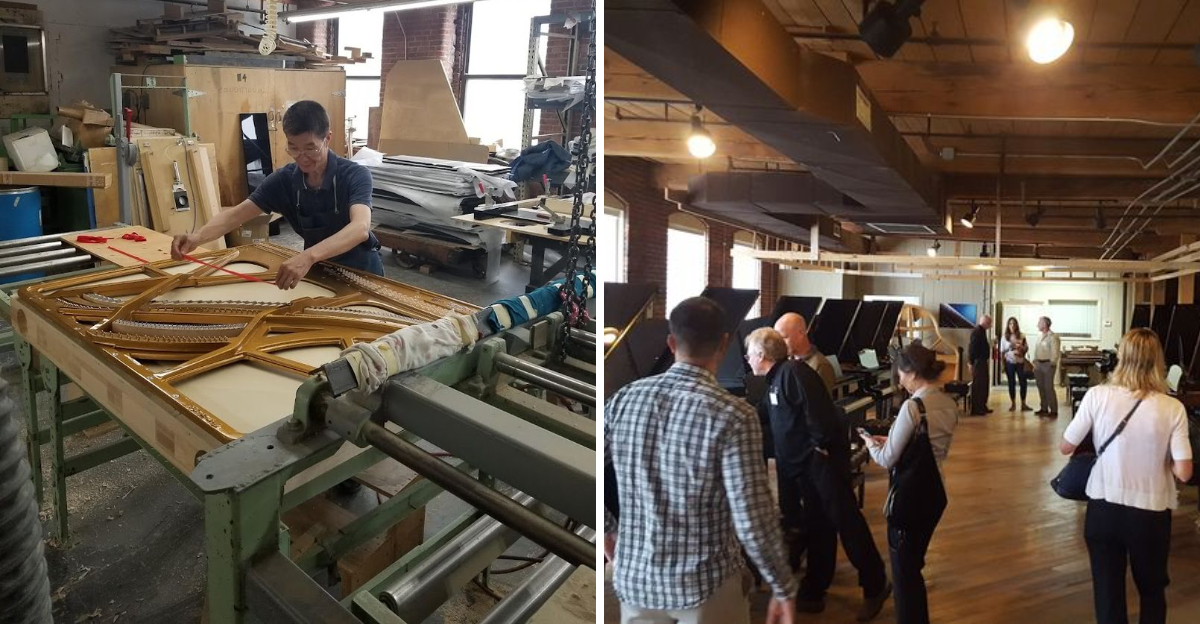
Have you ever wondered what it takes to build a piano by hand? Massachusetts holds one of the last places in America still doing it the old way, and walking through feels like traveling backward through time.
Wood shavings cover the floors. Century-old machines hum next to workers who learned their craft from someone else’s steady hands.
Nothing about this process moves fast, and that is exactly the point.
Every piano starts as raw lumber before it becomes something capable of moving an audience to tears. Visitors watch soundboards get shaped, strings get strung, and cases get sanded until they shine.
Guides explain each step with real pride, not rehearsed scripts. You will hear stories about famous musicians who once played these very instruments.
Few American industries survived long enough to still operate like this. Fewer still let strangers walk right through the middle of it.
This tour turns raw wood into music right in front of you, and it stays with you long after you leave.
This Legacy Was Built By American Hands
Founded in 1854 in Boston, Mason and Hamlin carries one of the longest continuous legacies in American instrument manufacturing. That founding year is not just a number printed on a brochure.
It represents a commitment that has outlasted wars, economic collapses, and the slow disappearance of domestic manufacturing across nearly every other industry.
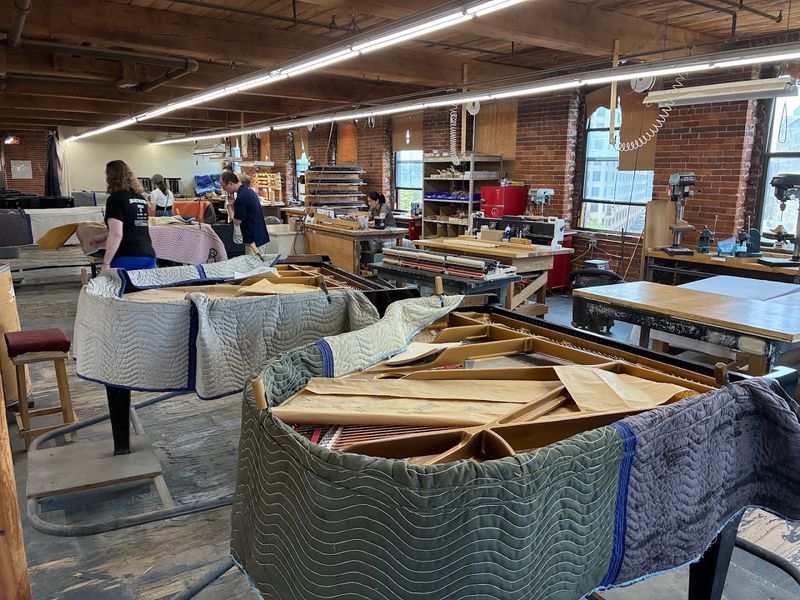
The factory floor tells this story without needing a single word. Hand tools rest beside century-old jigs.
Craftsmen work with techniques passed down through generations, and the atmosphere carries the quiet confidence of people who know exactly what they are doing.
Franz Liszt reportedly preferred Mason and Hamlin during his American tours, a detail that speaks to the instrument’s standing in the classical world long before the brand became a collector’s conversation piece. The legacy here is not preserved behind glass.
It is active, evolving, and producing instruments that compete with the finest pianos made anywhere on earth today.
The Six-Story Journey Of Sound Creation
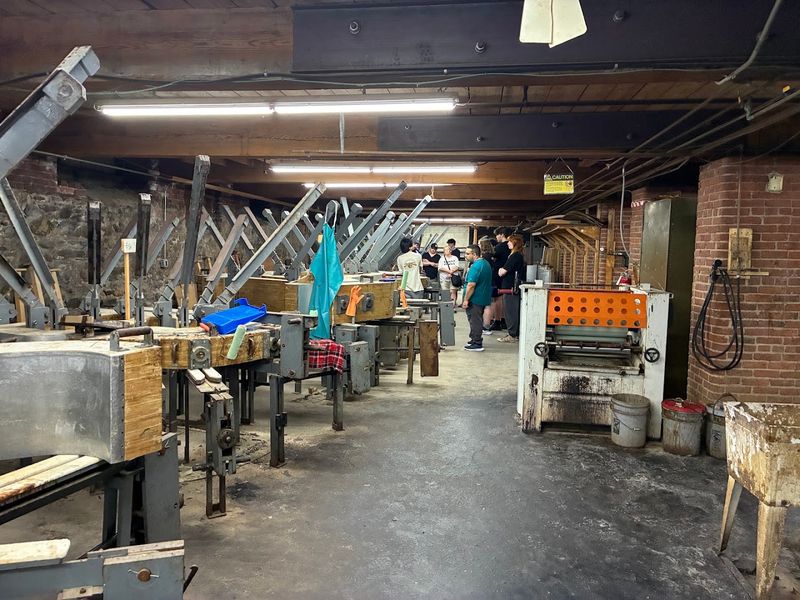
The factory building itself is part of the experience. Six floors of manufacturing activity unfold in a logical sequence, with each level dedicated to a specific stage of piano construction.
Walking from floor to floor feels less like a tour and more like watching a slow, methodical argument being made in wood, steel, and felt.
Raw materials arrive at the base of the building and begin a gradual transformation as they move upward. Rock maple, selected for its density and acoustic properties, is shaped into rims and frames.
Metal plates are cast and fitted. String lengths are calculated with precision that would satisfy an engineer and an artist equally.
By the time a piano reaches the upper floors, it has passed through dozens of skilled hands, each contributing a specific expertise. The building’s layout reinforces the idea that piano making is not a single skill but a collection of disciplines working in concert.
Seeing the process laid out across six floors gives a sense of scale that no catalog or video can replicate. The journey of sound creation begins with a plank of wood and ends with music.
Hand-Building With Enduring Techniques
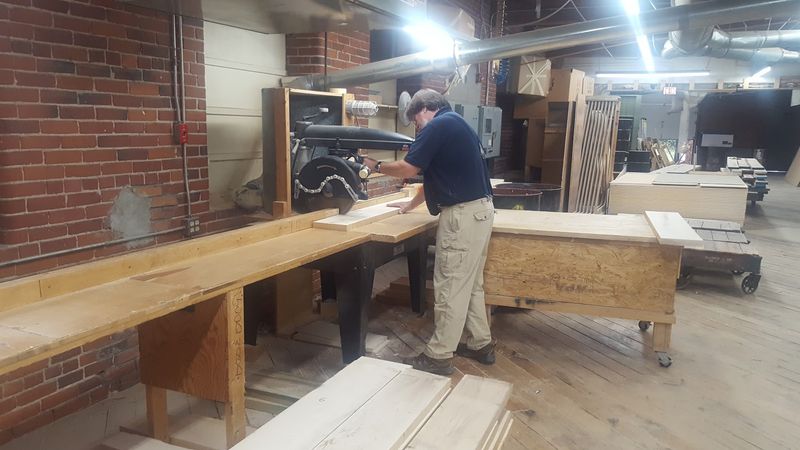
There is something immediately arresting about watching a craftsman bend a piano rim by hand. The wood, typically rock maple laminate, is heated and coaxed into a curved shape using clamps and forms that have been in use for decades.
No machine performs this step. Human judgment guides every inch of the process.
Mason and Hamlin has retained hand-building techniques that most manufacturers abandoned long ago in favor of automation.
The reason is straightforward: automation produces consistency, but it cannot replicate the sensitivity of an experienced hand responding to the grain and resistance of a particular piece of wood.
Each piano rim behaves slightly differently, and the craftsman adjusts accordingly.
The tension rim construction, one of the company’s signature engineering contributions, reinforces the piano’s structural integrity without relying on the plate for support.
This approach allows the soundboard to vibrate more freely, producing a tone that many pianists describe as unusually open and responsive.
Watching these techniques performed in real time, with real materials and real consequences, is the kind of thing that reframes how a person thinks about the objects they encounter every day.
Innovations That Define The American Sound
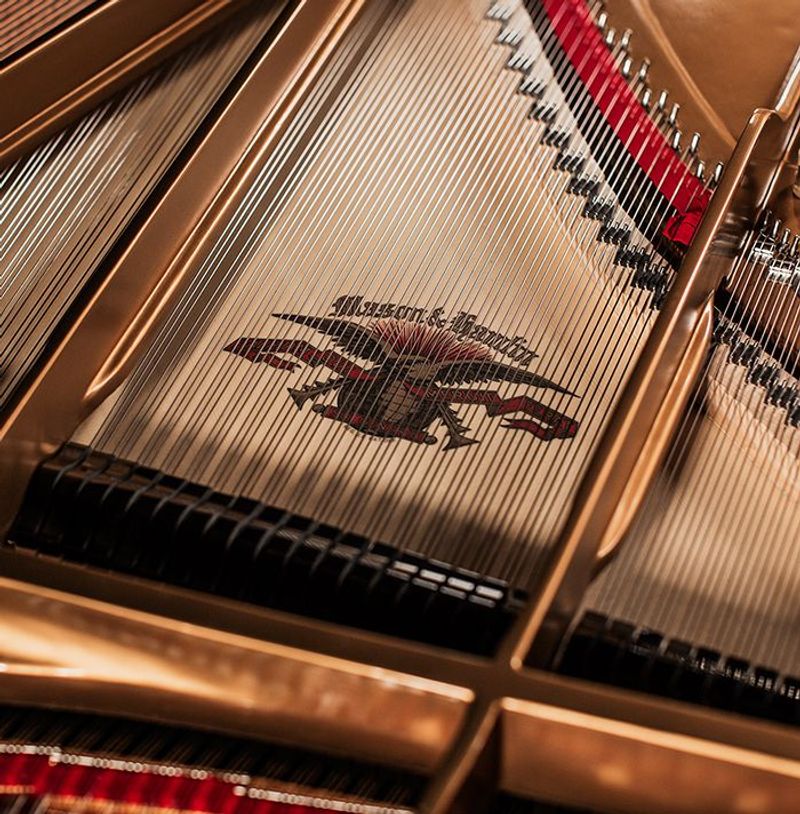
American piano making has always had a distinct character, and Mason and Hamlin played a central role in defining it.
The company introduced the tension resonator in the late 19th century, a device that encircles the piano’s inner rim and maintains structural stability across decades of use and changing humidity.
It was an engineering solution born from observation and problem-solving, not imitation.
The result is an instrument that holds its tuning with unusual consistency and resists the warping that affects lesser-built pianos over time.
Piano technicians often cite Mason and Hamlin construction as exceptionally durable, and the term overbuilt has been used as a compliment rather than a criticism.
The instruments are made to last not just years but generations.
Modern production at the Haverhill factory blends these historical innovations with contemporary CNC machining for precision cuts that hand tools alone cannot achieve. The combination is deliberate.
Technology handles repeatability. Human skill handles everything that requires feel.
The result is a sound that carries the clarity of modern acoustical science alongside the warmth that comes from wood shaped by someone who genuinely cares about the outcome.
From Raw Materials To Resonant Masterpiece
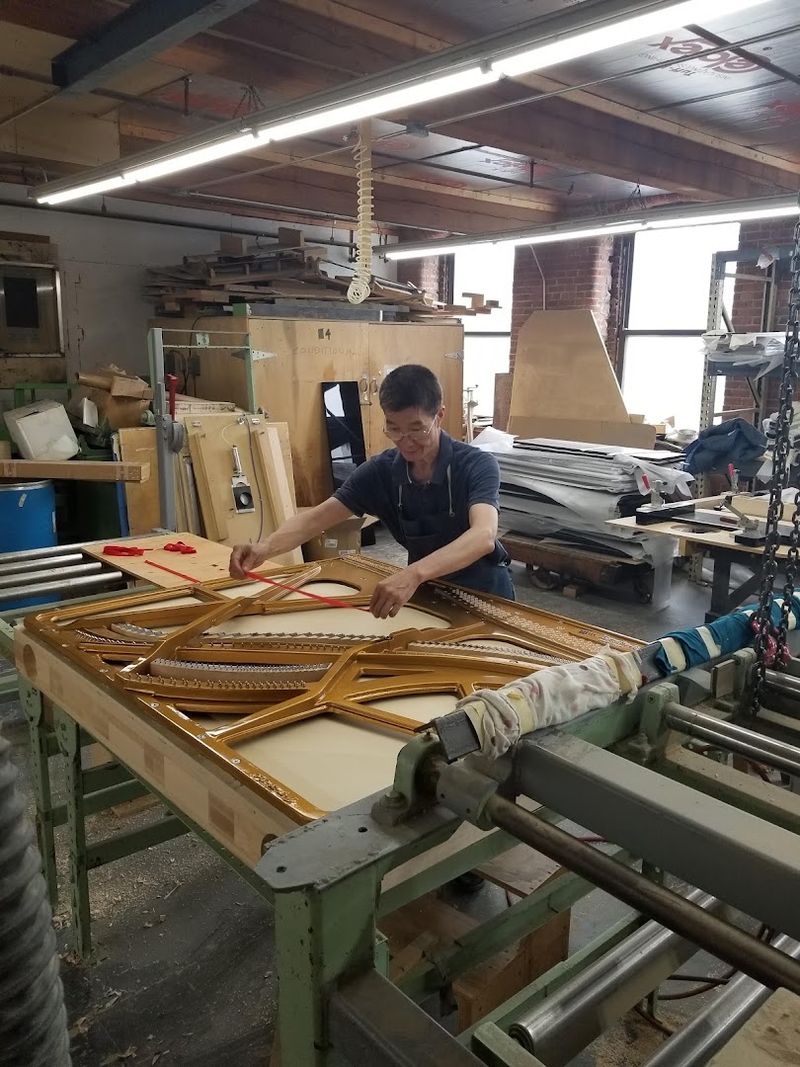
A piano starts as a pile of lumber. That fact is easy to forget when you are sitting in a concert hall listening to a Rachmaninoff concerto, but the factory tour at Mason and Hamlin makes it impossible to ignore.
Rock maple arrives at the facility and undergoes a careful acclimation process before any cutting begins. Wood that has not properly adjusted to its environment will shift and warp after construction, undermining everything that follows.
Once the wood is ready, it moves through a series of stations where it is cut, shaped, bent, and assembled with a patience that feels almost countercultural in the current manufacturing climate.
Soundboards are crafted from spruce, selected for grain consistency and tonal quality. Bridges are fitted by hand. Pin blocks are drilled and inspected before strings are ever attached.
The transformation from raw material to resonant instrument takes months. Each piano at the Haverhill facility represents hundreds of hours of accumulated labor, knowledge, and care.
Seeing the beginning and the end of that process within a single building, on a single afternoon, gives a person a new vocabulary for thinking about what quality actually means when applied to something made by hand.
The Meticulous Art Of Piano Construction
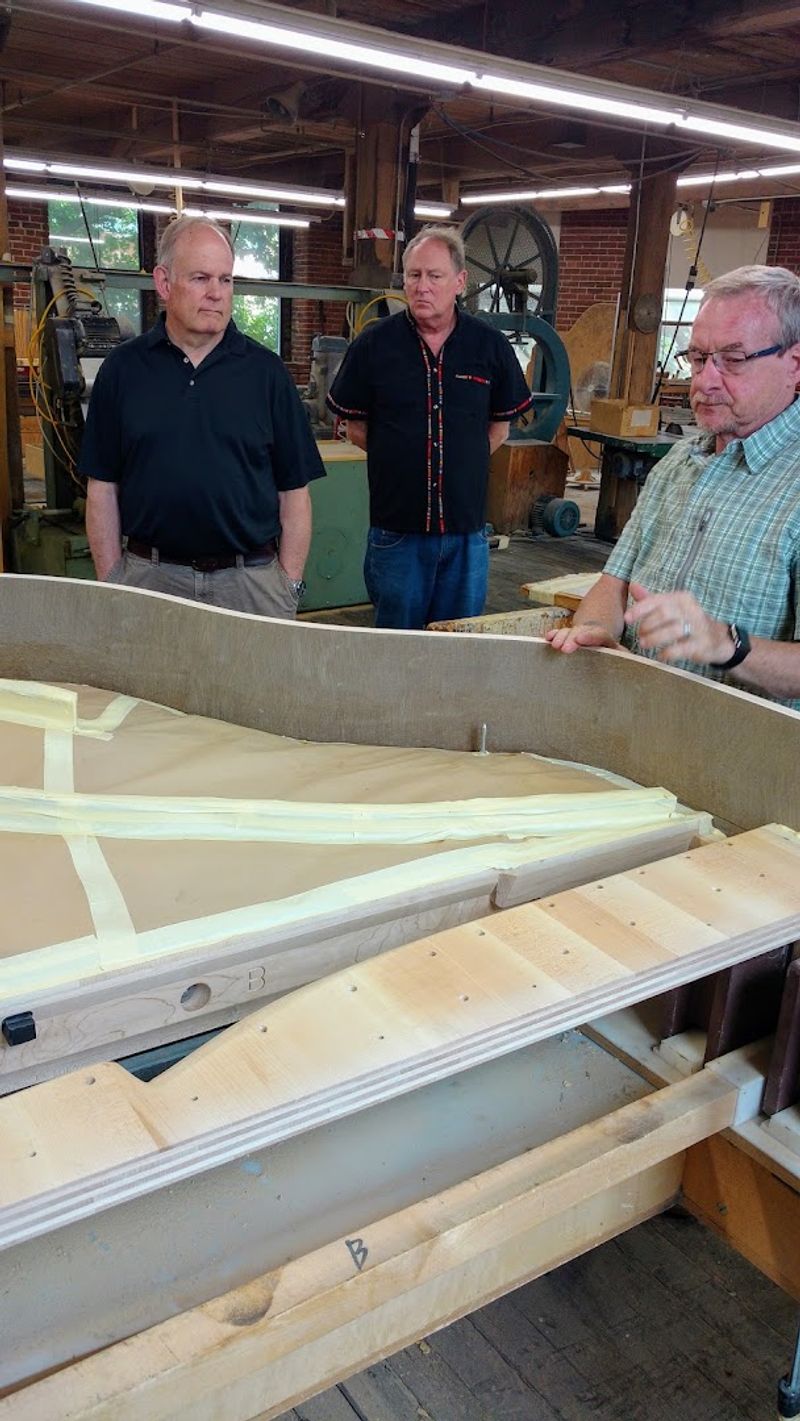
Piano action is one of the most intricate mechanical systems found in any musical instrument. A single grand piano action contains thousands of individual parts, each performing a specific function when a key is pressed.
At Mason and Hamlin, these components are fitted and regulated by hand, a process that demands both technical precision and an acute sensitivity to touch.
Regulation involves adjusting each key so that the response across the entire keyboard feels uniform. A note played softly at one end of the keyboard should respond with the same ease as a note played at the other end.
Achieving that consistency across 88 keys requires repeated testing and fine adjustment, often over several sessions as the materials settle and respond to the environment.
Voicing, the process of shaping the tone of individual notes by adjusting hammer felt density, adds another layer of artistry to the process.
A brighter tone or a warmer one can be coaxed from the same string by a technician who knows exactly where and how to work the felt.
Watching this level of attention applied to a single instrument makes it clear why Mason and Hamlin pianos carry the price and the reputation that they do.
Preserving A Heritage Of Musical Excellence
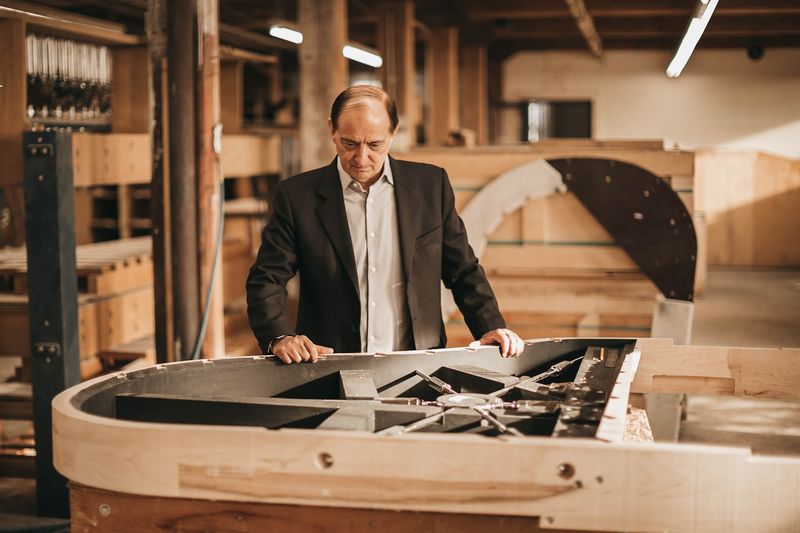
There are only a handful of American piano manufacturers still operating at this level of quality, and Mason and Hamlin is the most prominent among them.
The company’s survival through ownership changes, economic downturns, and the broader collapse of domestic piano manufacturing in the 20th century is a story worth telling on its own.
Current ownership has invested significantly in restoring and maintaining the standards that defined the brand in its early decades.
The Haverhill facility operates Monday through Friday, 9 AM to 5 PM, and the factory tour is available by arrangement for those who want to see the process in person.
The cost is modest, typically around twenty dollars, which makes it one of the more accessible windows into high-end American manufacturing available anywhere in New England.
The pianos produced here carry the weight of a tradition that connects directly to the instrument’s 19th-century origins. Mason and Hamlin has been the preferred instrument of concert pianists, educators, and serious home musicians for over a century and a half.
Preserving that heritage is not just a business decision. It is an act of cultural stewardship, and the factory tour makes that stewardship visible in the most direct way possible.
An Unwavering Commitment To Quality
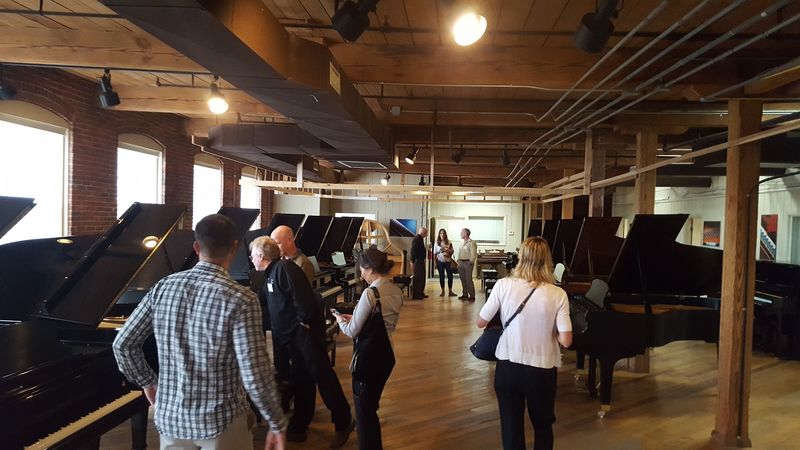
Quality at Mason and Hamlin is not a marketing position. It is a production standard applied at every stage of construction, from the selection of incoming lumber to the final regulation of the action before a piano leaves the building.
Each instrument is tested and adjusted by experienced technicians who understand the difference between a piano that meets specifications and one that genuinely sings.
The company can be reached at +1 978-914-1245, and the website at masonhamlin.com provides information on tours and instrument availability.
For those who want to understand what separates a world-class piano from a merely competent one, the factory tour offers a direct and honest answer.
The difference is time, attention, and the willingness to reject shortcuts.
Piano technicians who work with instruments from many manufacturers consistently single out Mason and Hamlin for build quality that holds up across decades of heavy use. The internal components resist wear in ways that cheaper construction cannot match.
An instrument built with this level of care does not just perform well in its first year. It performs well in its fiftieth, which is ultimately the most persuasive argument for everything the factory at 35 Duncan St, Haverhill, Massachusetts represents.