
This Massive Former Asylum In New York Has Been Turned Into One Of The State’s Most Unusual Hotels
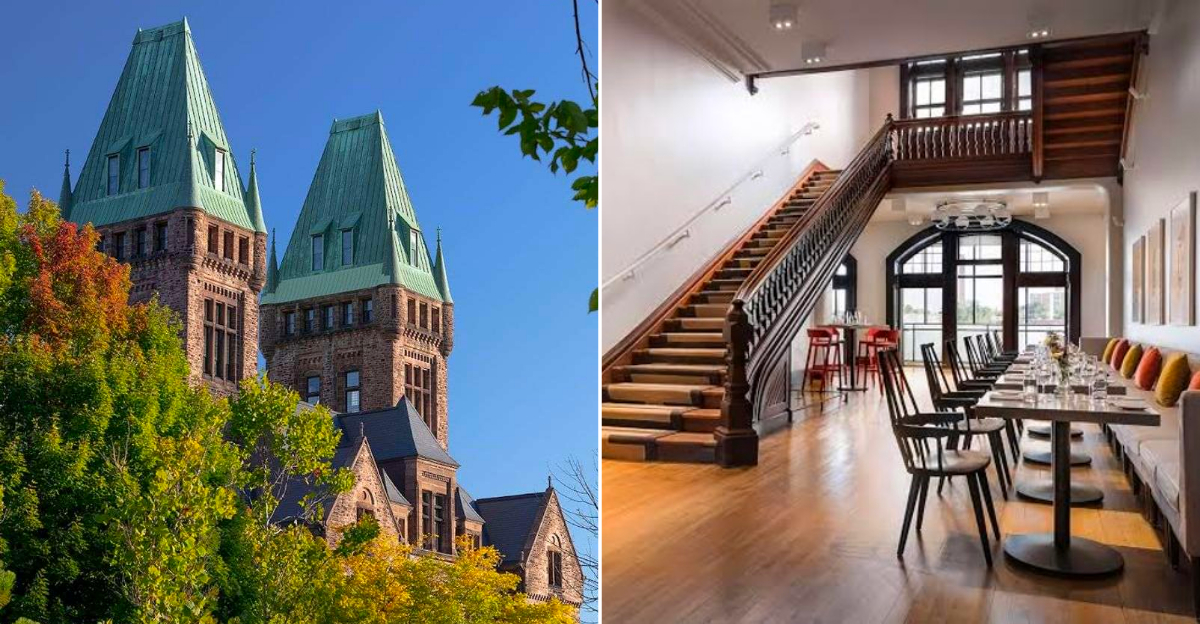
Few places offer an overnight stay quite like this. In New York, a massive former asylum has been transformed into one of the state’s most unusual hotels, where history and modern comfort meet in a setting that feels both intriguing and unforgettable.
The building itself still carries a strong sense of its past, making the experience far more than just a typical hotel stay.
Guests walk through grand corridors and expansive spaces that hint at the structure’s original purpose, while updated rooms provide a comfortable place to unwind. The contrast between old and new adds to the appeal, creating a stay that feels unique from the moment you arrive.
For travellers looking for something out of the ordinary, this New York hotel offers an experience that is equal parts history, curiosity, and adventure.
A Building That Stops You In Your Tracks Before You Even Walk Inside
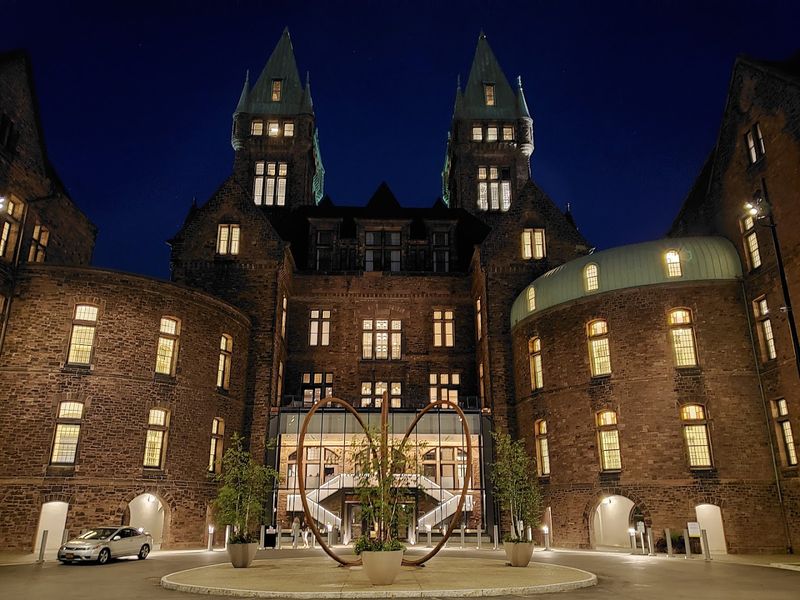
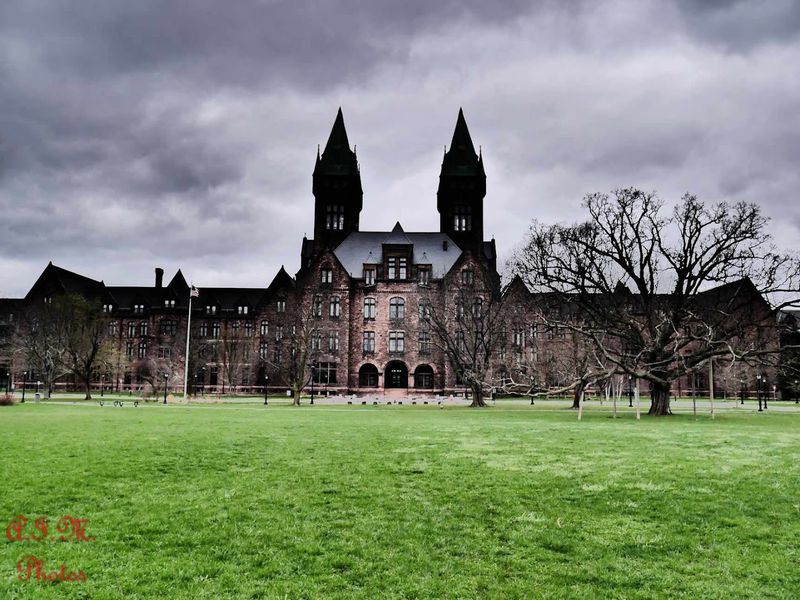
Few buildings in the northeastern United States command attention the way this one does from the street. The structure stretches across the landscape with long, sweeping wings, pointed towers, and a stone facade that reads more like a medieval fortress than a hotel.
Designed by the celebrated architect Henry Hobson Richardson and completed in 1880, the building was originally constructed as a psychiatric hospital. Its scale was intentional, meant to house hundreds of patients across carefully designed grounds.
The surrounding landscape was shaped by Frederick Law Olmsted, the same visionary behind New York City’s Central Park.
Standing outside and looking up at those towers, it becomes easy to understand why guests frequently describe their arrival as jaw-dropping. The building does not ease you in gently.
It announces itself with full confidence, and the experience of approaching it on foot feels genuinely cinematic. For architecture lovers especially, the exterior alone is worth the trip to Buffalo.
The Richardson Hotel And Its Remarkable Journey From Asylum To Destination
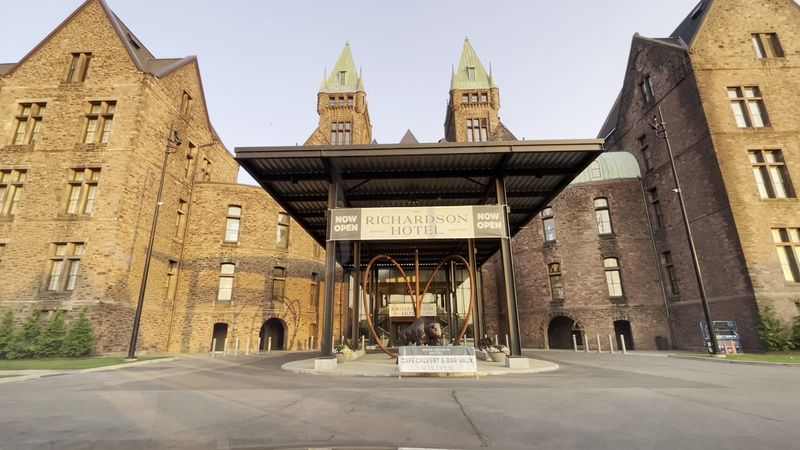
Officially known as The Richardson Hotel, this Buffalo landmark began its new chapter when a major renovation was completed in 2017.
The project transformed the former Richardson Olmsted Complex into an 88-room hotel with a restaurant, conference center, and event spaces available to guests and the wider community.
The effort required years of careful planning and a deep commitment to preservation standards that protected the building’s historic integrity throughout.
Architect Deborah Berke led the interior redesign with a philosophy that honored original details rather than concealing them. Vaulted ceilings were preserved.
Expansive windows were retained. Wide hallways that once served institutional purposes now give the hotel an atmosphere that feels genuinely unlike anything else in New York State.
Guests often describe the experience as staying inside a beautifully restored piece of living history.
The Richardson Hotel operates as a nonprofit-affiliated property, meaning that revenue supports the ongoing preservation of the broader Richardson Olmsted Complex. Staying here is not just a travel experience but a quiet contribution to one of Buffalo’s most significant cultural restoration efforts.
That added layer of meaning gives the visit a texture that standard hotel stays simply cannot replicate.
The Richardson Hotel sits at 444 Forest Ave in Buffalo, NY 14213, and its sheer physical presence is enough to make first-time visitors pause mid-step and stare upward.
On-Site Dining That Holds Its Own Against The Surroundings
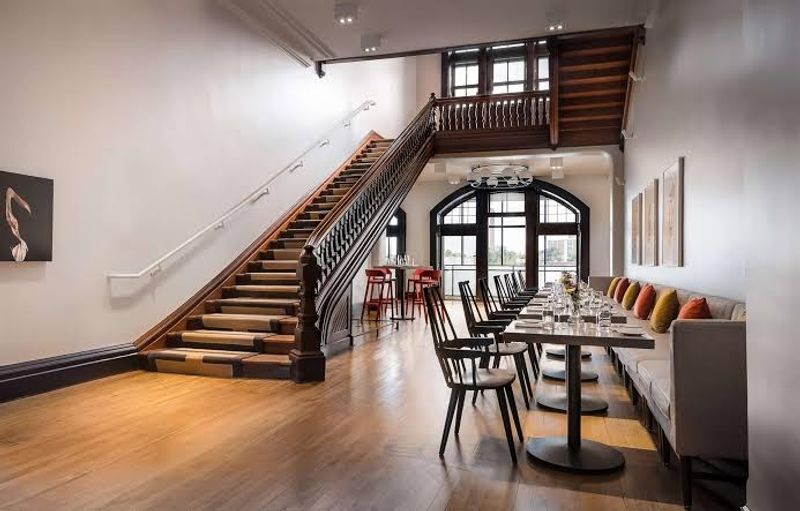
A hotel with this kind of atmosphere needs food and drink that can hold its own, and The Richardson Hotel delivers on that front. The on-site restaurant and bar occupy a lower level of the building, and the space has been praised by guests for its visual character as much as its menu.
Dinner service has earned positive feedback from guests who visited during busy evenings, including nights when large community events were happening on the hotel grounds.
The kitchen has demonstrated an ability to maintain quality and attentiveness even under pressure, which says something meaningful about the team running the operation.
Food described as fresh and flavorful appears repeatedly in guest accounts of the dining experience.
The restaurant sits within the same historic shell as the rest of the hotel, so the act of eating here carries that same layered quality that defines the whole property. Vaulted ceilings overhead, stone walls nearby, and a menu worth ordering from make for a dinner setting that is hard to find anywhere else in Buffalo.
Reservations are a smart idea on weekends.
The Museum Hidden Inside The Hotel That Most Visitors Do Not Expect
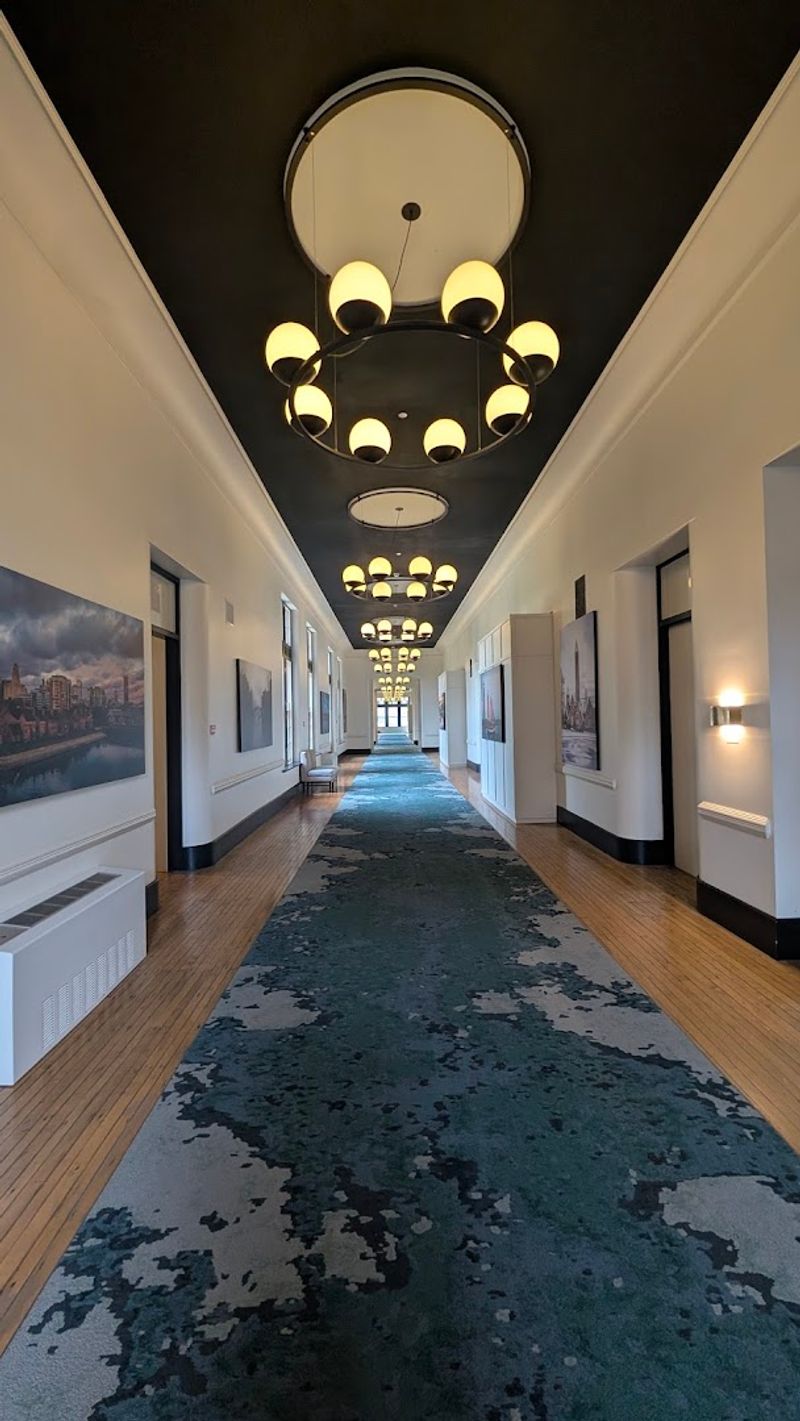
One of the most surprising features of The Richardson Hotel is not a room or a restaurant but a museum tucked into the ground floor of the building.
The exhibit documents the full history of the Richardson Olmsted Complex, from its origins as a 19th-century psychiatric hospital to its long journey toward preservation and eventual rebirth as a hotel.
The presentation is thoughtful and genuinely informative rather than a simple timeline on a wall.
A 30-minute PBS documentary about the hotel’s history and renovation is available for guests to watch, and it provides context that transforms the experience of walking through the building afterward.
Architecture enthusiasts, history buffs, and curious travelers who might not even be staying overnight have been known to visit specifically for the museum.
The exhibit is a reminder that The Richardson Hotel is not just a place to sleep but a genuine cultural institution embedded within one of Buffalo’s most important historic landmarks.
Plan extra time for it.
Henry Hobson Richardson And The Architectural Vision Behind The Walls
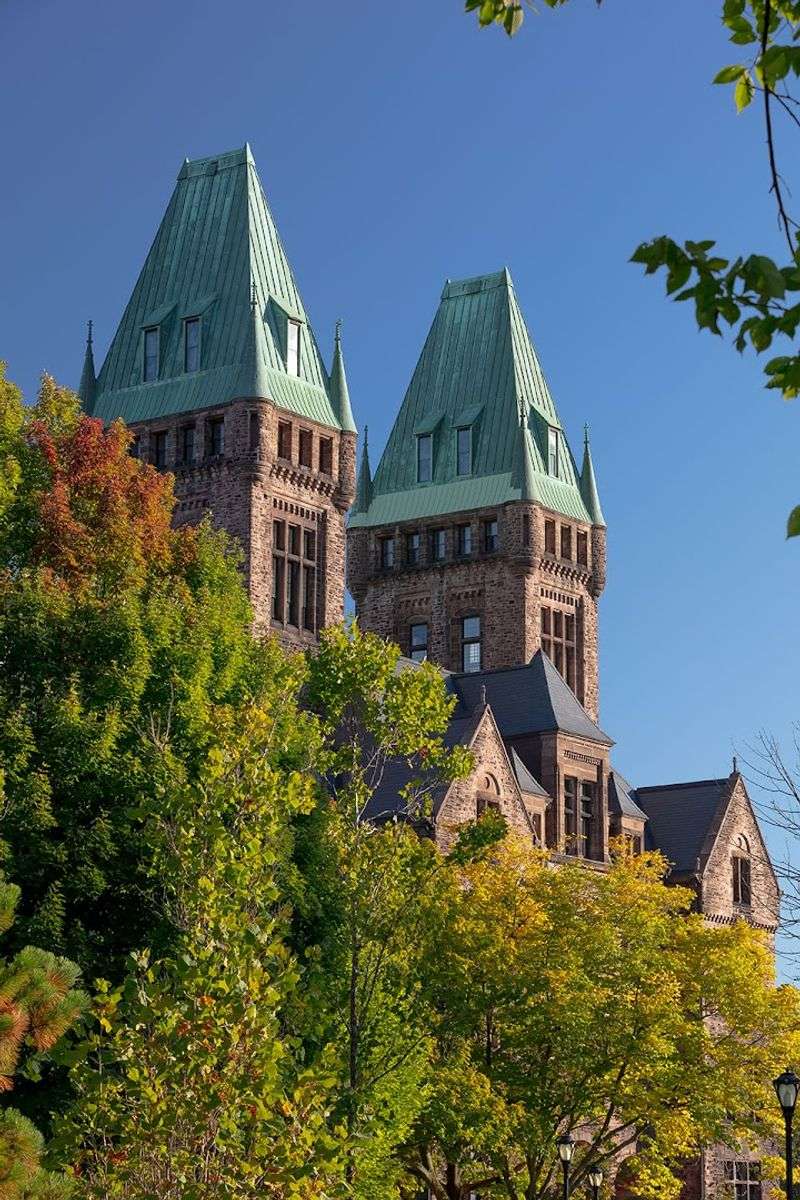
Henry Hobson Richardson was one of the most influential American architects of the 19th century, and the building that now carries his name in its title stands as one of his most ambitious works.
Completed in 1880, the Richardson Olmsted Complex was designed in the Romanesque Revival style, characterized by heavy stone construction, rounded arches, and a sense of solidity that feels almost geological.
The building does not just sit on the land. It grows from it.
Richardson’s philosophy centered on creating environments that promoted healing and calm for the patients who would live within them. Natural light was prioritized.
Proportions were considered carefully. The grounds, designed in partnership with Frederick Law Olmsted, extended that philosophy outward into the landscape surrounding the structure.
Together, the two designers created something that was as much a philosophy of care as it was a physical building.
Today, the National Historic Landmark designation the complex holds reflects that legacy. Preserving the building was not simply about saving old stone but about honoring a moment in American design history when architecture was understood as a form of medicine.
What It Actually Feels Like To Spend A Night Inside A Former Asylum
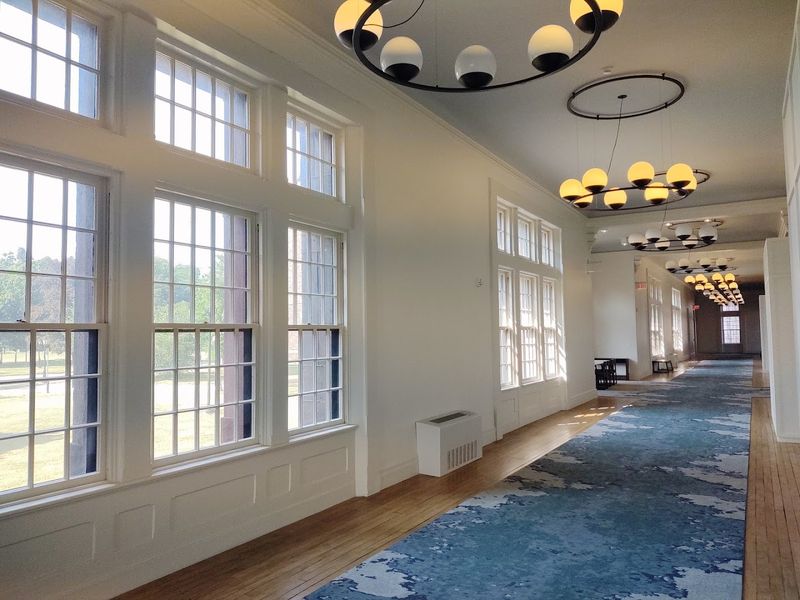
The honest answer is that spending a night inside The Richardson Hotel feels genuinely unlike staying anywhere else. The hallways are wide enough to feel like indoor streets, and the scale of the common spaces creates a quietness that is more architectural than eerie.
The history of the building as a former psychiatric hospital is not hidden or glossed over. The museum on the ground floor addresses it directly, and the architecture itself carries traces of its original purpose in the proportions of the rooms and corridors.
That transparency actually makes the experience more comfortable rather than less, because there is nothing lurking behind a polished surface.
Rooms are peaceful and well-appointed, and the combination of high ceilings and contemporary furnishings creates a sleeping environment that feels genuinely restful.
The Olmsted Grounds And The Open Space That Frames The Property
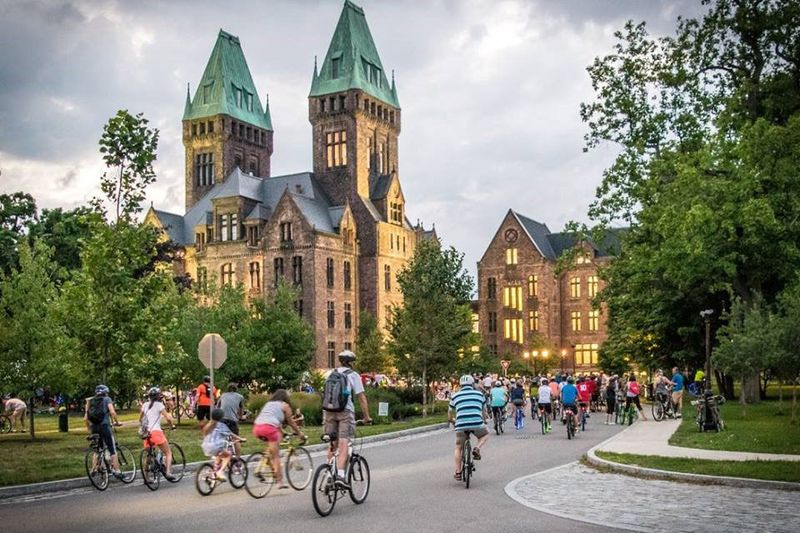
Frederick Law Olmsted’s contribution to the Richardson Olmsted Complex is often overshadowed by the drama of the building itself, but the grounds deserve their own moment of recognition.
Olmsted approached the landscape with the same care he brought to Central Park and other celebrated public spaces, designing open areas that gave patients access to fresh air, natural scenery, and a sense of calm within the institutional setting.
That intention is still readable in the land today.
The open space surrounding the hotel is generous by any urban standard, and it gives the property a breathing room that feels almost rural despite being located within a city.
Guests who arrive during warmer months have the opportunity to experience the grounds as Olmsted intended, with mature trees, open lawns, and sightlines that let the building reveal itself gradually as you approach.
The fall market held on the property each year draws visitors specifically to experience that outdoor setting.
Community events on the grounds have become a meaningful part of the hotel’s relationship with Buffalo as a city. The space functions as a gathering point for locals and travelers alike, reinforcing the idea that The Richardson Hotel is not a sealed-off destination but an active, living part of the neighborhood around it.
That connection to place gives the property an authenticity that is hard to manufacture.
Practical Details That Make Planning A Stay Straightforward
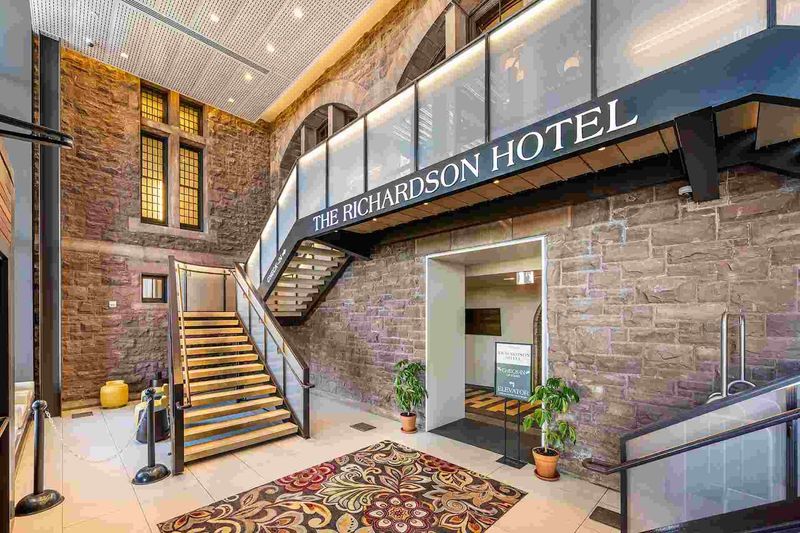
Beyond the history and the architecture, The Richardson Hotel functions as a fully equipped modern hotel with amenities that cover the practical needs of most travelers. Free parking is available on site, which is a genuine convenience in an urban setting and one that guests mention with noticeable appreciation.
The property also offers free Wi-Fi, a fitness center, a pool, a business center, and airport shuttle service, making it a viable choice for both leisure visitors and working professionals.
The hotel is pet-friendly and accessible, which broadens the range of guests who can comfortably plan a stay here. Air conditioning is standard, and the property is smoke-free throughout.
Breakfast is available on site, and the management team has indicated that a full-service breakfast option is being developed in response to guest feedback, which suggests an operation that listens and adjusts rather than standing still.
Rooms start at approximately $121 per night, which positions The Richardson Hotel as an accessible option given the scale and uniqueness of what it offers. For travelers who want something genuinely different from a standard chain hotel without paying a premium rate, the value here is clear.
The phone number for reservations is +1 716-493-2610, and the official website at richardsonhotel-buffalo.com provides current availability and booking options.
Why Travelers Who Seek The Unusual Keep Coming Back To This Place
There is a particular kind of traveler who finds standard hotels quietly exhausting, not because the rooms are bad but because they offer nothing to think about. The Richardson Hotel exists as the opposite of that experience.
Every surface has a story, every proportion carries a decision made by someone who thought carefully about space and human experience.
The staff has been consistently praised for creating a welcoming atmosphere that offsets any initial hesitation a guest might feel about the building’s unconventional history. Front desk teams have gone out of their way to make guests comfortable, and those small acts of genuine hospitality have left lasting impressions on many who have stayed here.
A hotel’s character is shaped by its people as much as its architecture, and The Richardson scores well on both counts.
Repeat visitors tend to describe the place as an adventure rather than simply a hotel, which is about the highest compliment a destination can receive. The building rewards multiple visits because there is always something new to notice, a detail in the stonework, a different quality of light, a corner of the grounds not explored on the last trip.
For travelers who want their accommodation to be part of the experience rather than just a backdrop to it, The Richardson Hotel in Buffalo makes a compelling and lasting case for itself.