
This Massive Massachusetts State Park Is Home To Rattlesnakes So Visitors Know To Watch Their Step
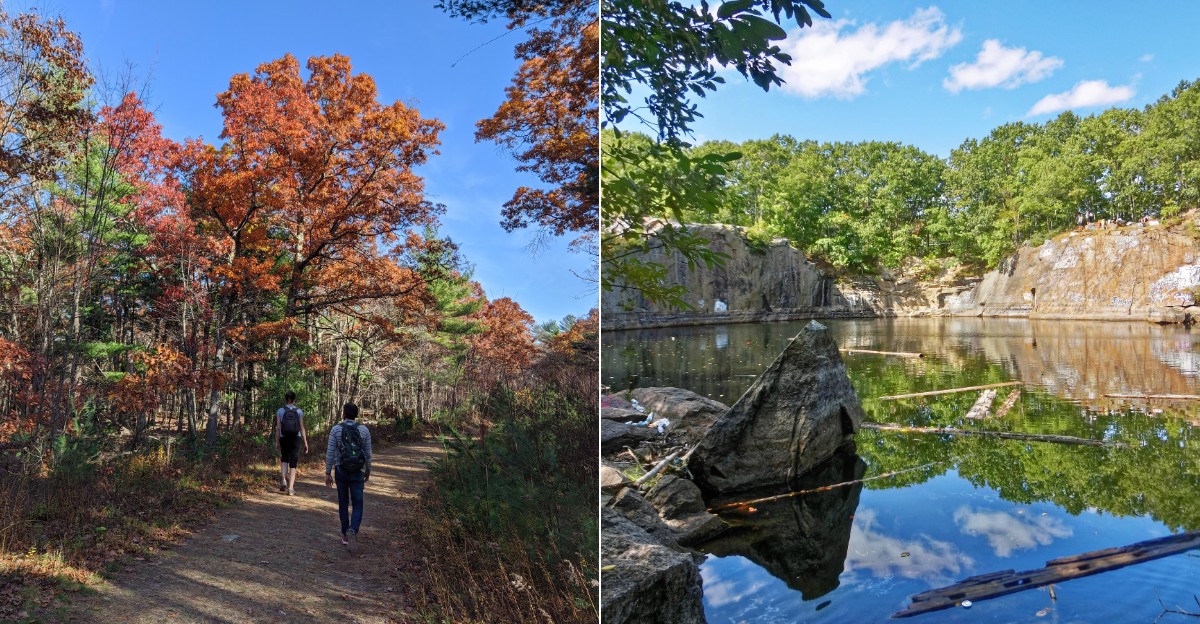
Somewhere on a sun warmed ledge in Massachusetts, a timber rattlesnake is lying perfectly still. It has been there most of the morning, and it has absolutely no interest in you.
So why does every hiker here glance down before sitting on a rock? Because knowing something rare and shy shares the trail changes how you walk it.
These snakes are endangered in this state, which makes them one of the most protected residents of the woods. Spotting one is lottery rare, and the odds favor the snake slipping away first.
Warm months bring them out to bask, roughly from spring through early fall. Stay on the marked paths, look before you sit, and keep the dog close.
That tiny flicker of caution is exactly what makes the hike feel wild. Thousands of acres of forest, rocky summits, and quiet ponds are waiting to reward it.
Rattles On The Rocks
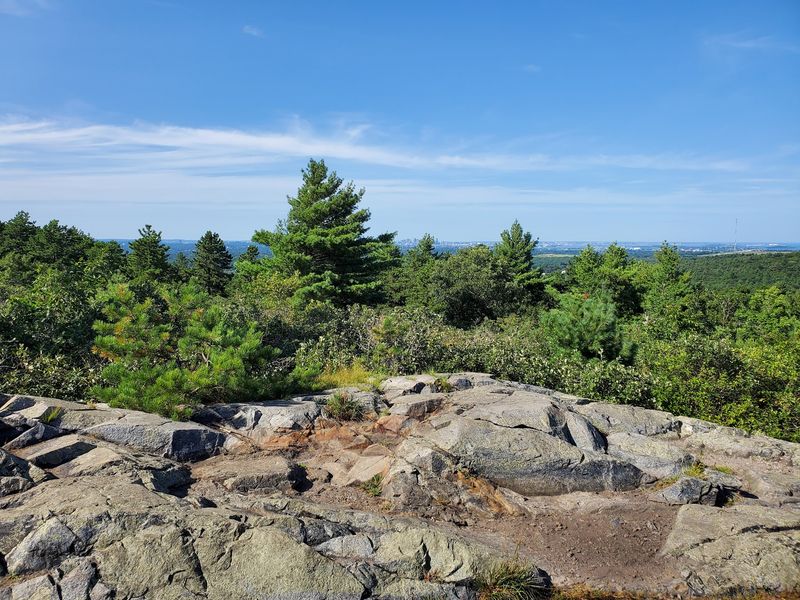
Shhh. Listen closely on a warm rocky ledge.
That faint sound could be one of the rarest neighbors in the park.
Blue Hills is home to two venomous snakes, the copperhead and the timber rattlesnake. The timber rattlesnake is listed as endangered in Massachusetts.
That makes these shy reptiles very special. They are usually active from mid-April to mid-October.
On sunny days, they sometimes bask on warm rocks to soak up heat.
Now for the good news. These snakes want nothing to do with you.
They are quiet and prefer to hide. Most visitors never see one at all.
Still, smart hikers follow a few simple rules. Stay on marked trails.
Look before you sit on a rock or step over a log. Keep dogs on a leash so they do not sniff into hidden cracks.
If you do spot a snake, stay calm. Give it plenty of space and slowly walk away.
Never try to touch it, poke it, or move it. Snapping a photo from far away is fine, but leave it alone to rest.
Protecting these snakes helps keep the whole forest healthy. They eat mice and other small animals, which keeps nature in balance.
Would you feel more excited or more nervous if you heard a rattle on the trail?
Thousands Of Acres Of Wild
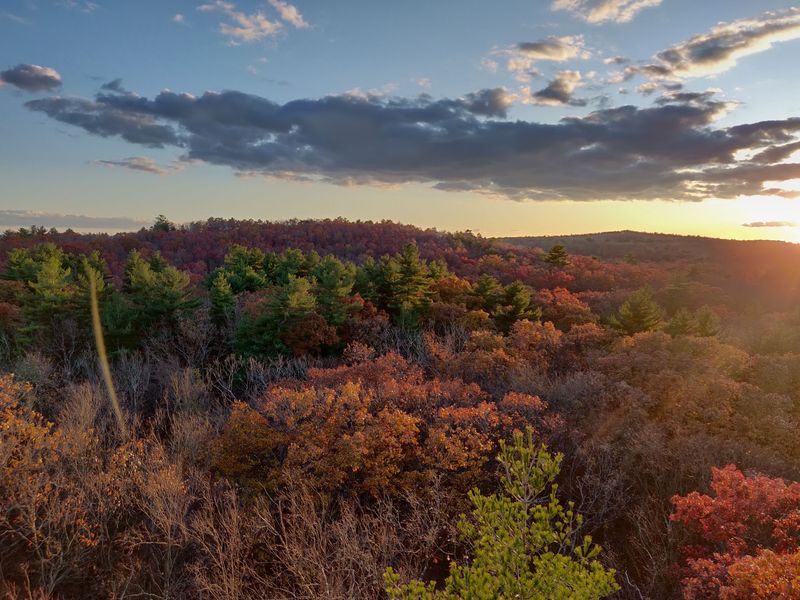
Big does not even begin to cover it. Blue Hills Reservation stretches across more than 7,000 acres of forest, meadow, swamp, and rocky hilltops.
That much wild space has room for some rare residents, including the timber rattlesnakes that bask on its sunny ledges. It spreads over several towns south of Boston, so it feels like a whole wild world on the edge of the city.
If you would rather keep the paragraph count the same, here is a tighter version that folds the snake line into the opening pair:
Parking is free, and the big lot at Houghton’s Pond has restrooms nearby. Lots of visitors start their day near the headquarters on Hillside Street in Milton.
Inside, the land changes fast. One minute you walk under tall oaks.
The next you hop over rocks on a steep ridge. Then you reach the calm edge of a pond with ducks floating by.
With so much space, planning helps. Grab a trail map before you head out.
Trails are marked with colored blazes and numbered junctions, which makes it easier to stay on track. Some visitors say a few spots can still get confusing, so keep your map handy.
Why The Hills Look Blue
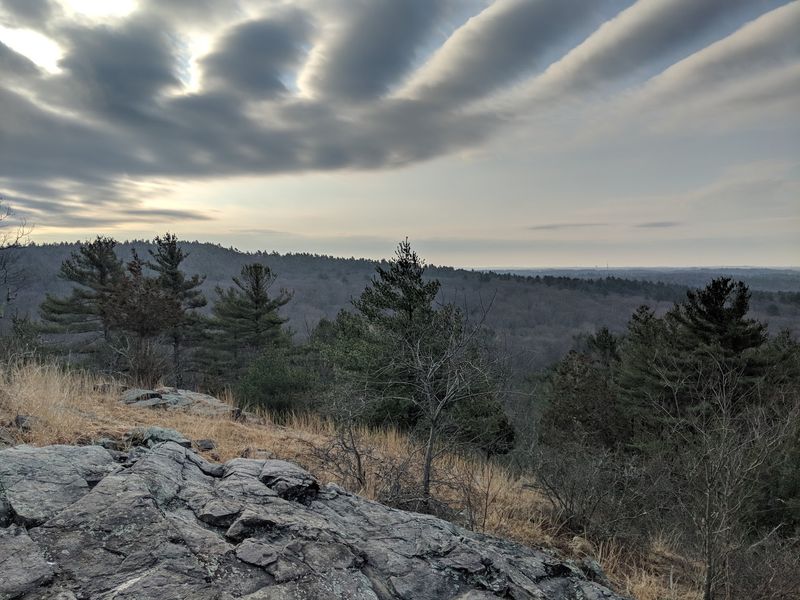
Long ago, sailors gliding along the Massachusetts coast looked inland and saw something odd. The hills looked blue.
So they gave them a simple name that stuck for centuries.
That blue color is not just a trick of the eye. Part of it comes from a mineral called riebeckite found in the local rock.
From far away, the slopes can take on a soft bluish glow. Up close, you will notice dark, speckled granite under your feet.
The park holds 22 hills in total. Each one has its own shape and feel.
Some are gentle bumps in the woods. Others are steep, rocky climbs that will get your heart pumping.
Here is a fun bit of history too. The Massachusett people lived on this land for a very long time.
Their name is often linked to the meaning people of the great hills. The state of Massachusetts gets its name from them.
Next time you hike, pick up a loose pebble and look closely. Can you spot the dark grains in the rock?
Then put it back where you found it, so others can enjoy the same view.
On a clear morning, look at the hills from a distance before you drive in. Do they look blue to you, or is it just the sky playing games?
Climb Great Blue Hill’s Summit
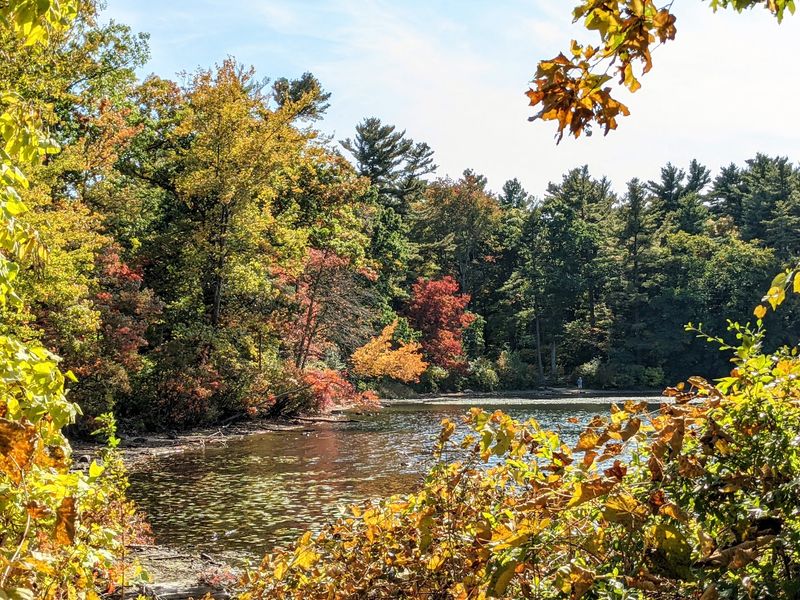
Lace up tight, because the tallest hill in the park is ready for you. Great Blue Hill rises 635 feet, and the climb is a real leg workout.
Many hikers tackle the loop that climbs from the Trailside Museum along the Skyline Trail, a route of around three miles. It goes up and down several summits, with rocky steps and steep sections.
Some parts are tough, so take your time. Good hiking shoes are a must here.
Visitors warn that the granite can be slippery, even on dry days.
The reward waits at the top. A stone lookout called Eliot Tower gives you wide views.
On a clear day, you can spot the Boston skyline far away. Some hikers say nearby Buck Hill also offers a great look at the city and the ocean.
Timing matters. Early mornings are cooler and calmer.
Weekends can get busy, so arriving early helps you find parking and quiet trails. In winter, watch for ice on rocks and paths.
Pack water and a light snack for the summit. Sitting on the rocks with a sandwich while the city glows in the distance feels like a prize.
It is a great spot for photos too.
Before you go, take a moment to plan your route. Are you ready to earn that view one rocky step at a time?
Trails For Every Kind Of Feet
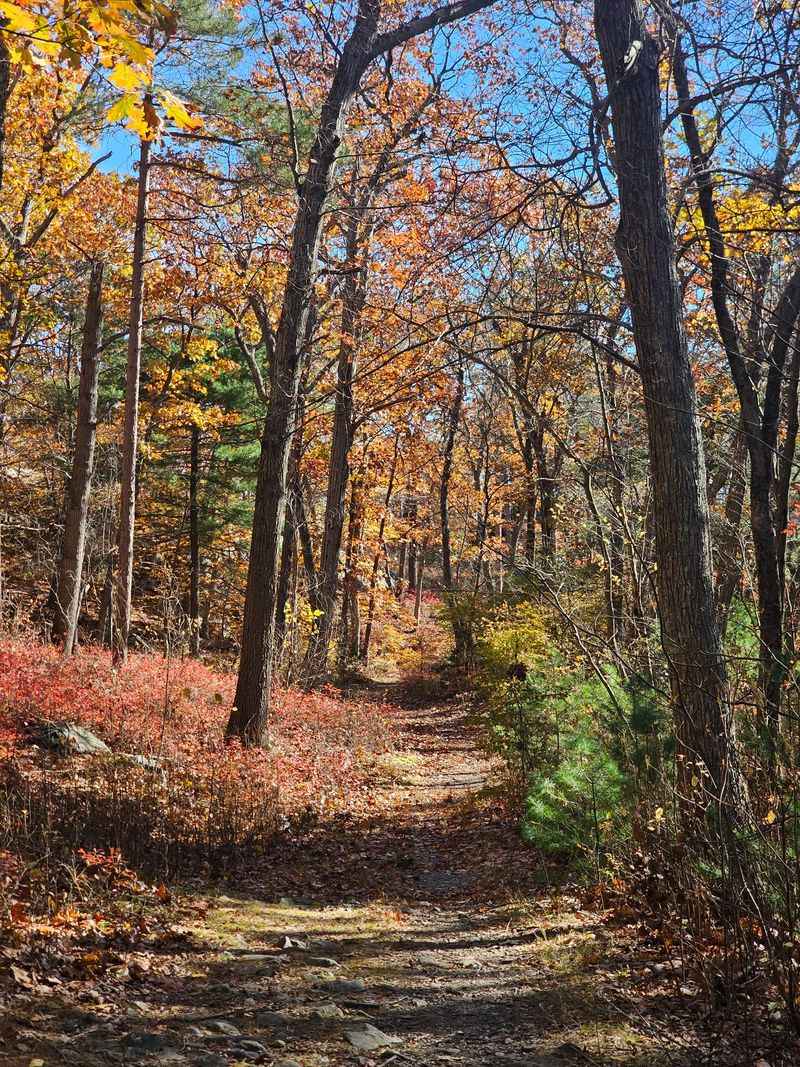
About 125 miles of trails twist through these woods.
Little hikers and relaxed walkers can try the easy loop around Houghton’s Pond. It is about three-quarters of a mile and fairly flat.
Kids love spotting ducks and fish along the way. Other trails are wide, smooth gravel paths that feel calm and steady.
Want more of a challenge? The rocky Skyline Trail has steep climbs and drops.
Some sections feel more like a rock scramble than a walk. Experienced hikers love the burn.
Bikers can enjoy select trails too. Check which paths allow mountain bikes before you ride, since not every trail is open to them.
Some routes even cross busy roads, so look both ways and be careful at crossings.
Fall is a favorite season here. The forest turns red, orange, and gold.
Crunchy leaves cover the paths, and the air feels crisp and fresh.
Remember that trail maps mark routes as easy, intermediate, or harder. Pick one that fits your energy for the day.
You can always come back for a bigger hike later.
Many visitors return again and again to try new routes. With so many choices, which trail will become your favorite first adventure?
Splash Days At Houghton’s Pond
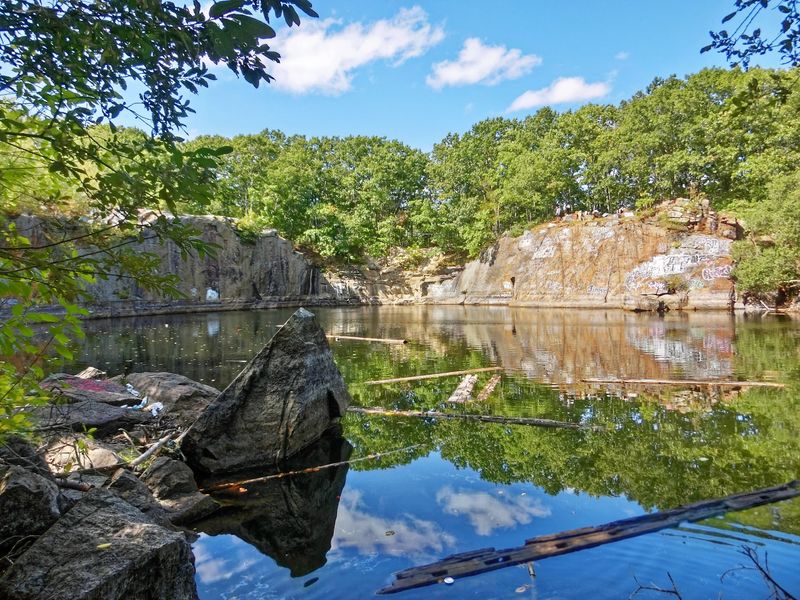
Hot summer day? Sweaty after a hike?
Houghton’s Pond is the cool reward waiting at the bottom of the hills.
This sandy spot is one of the most loved places in the park. In summer, a designated swimming area opens with lifeguards on duty during the season.
Visitors describe the water as calm and shallow, which is great for younger swimmers. Restrooms are nearby, and there are picnic tables for lunch breaks.
Not into swimming? No problem.
Grab a fishing pole and try your luck from the shore. You can also paddle a canoe or kayak on the quiet water, since only non-motorized boats are allowed.
There is a playground close by too. Kids can swing and climb while grown-ups relax in the shade.
Some visitors simply sit by the water with a journal and enjoy the peaceful view.
Bring sunscreen, towels, and plenty of snacks. Summer weekends can get busy, so arriving early is a smart move.
Lifeguard schedules and swim seasons can change, so check the official park website before you go.
When the sun starts to set, the pond turns soft and golden. It is a lovely way to end a big day outside.
So, will you be the first one to jump in, or the one with the fishing line?
Otters, Foxes, And Weather Watchers
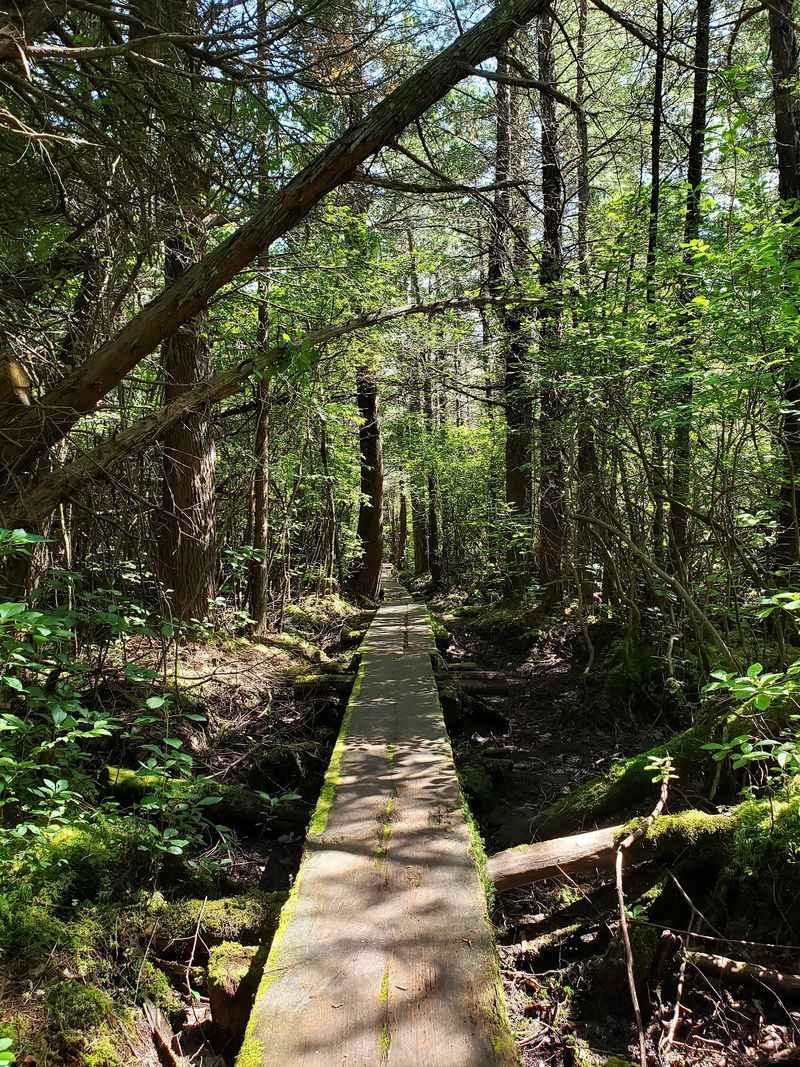
Ever looked a river otter right in the eye? At the Blue Hills Trailside Museum, you just might.
Mass Audubon runs this nature center, which serves as the interpretive center for the reservation. Inside, exhibits share the natural and cultural history of the area.
Outside, live native animals live in habitats you can visit. Many visitors say the playful otter steals the show.
You may also see a red fox, owls, and a peregrine falcon.
It is a great stop before a hike. Learning about these animals makes it more fun to look for wild ones on the trail.
You might later spot white-tailed deer, coyotes, or turkey vultures floating high above.
Up on Great Blue Hill, another special spot waits. The Blue Hill Meteorological Observatory is a National Historic Landmark.
It is known as the oldest continuous weather recording station in the United States. Scientists have tracked the weather from this hilltop for a very long time.
Tours at the observatory are not always offered every day. The museum also has its own schedule and admission rules.
Check both websites before your visit so you are not disappointed.
Bring your curiosity and lots of questions. Which do you think would be more fun, watching an otter splash or learning how to predict a storm?
Fall Colors And Safe Steps
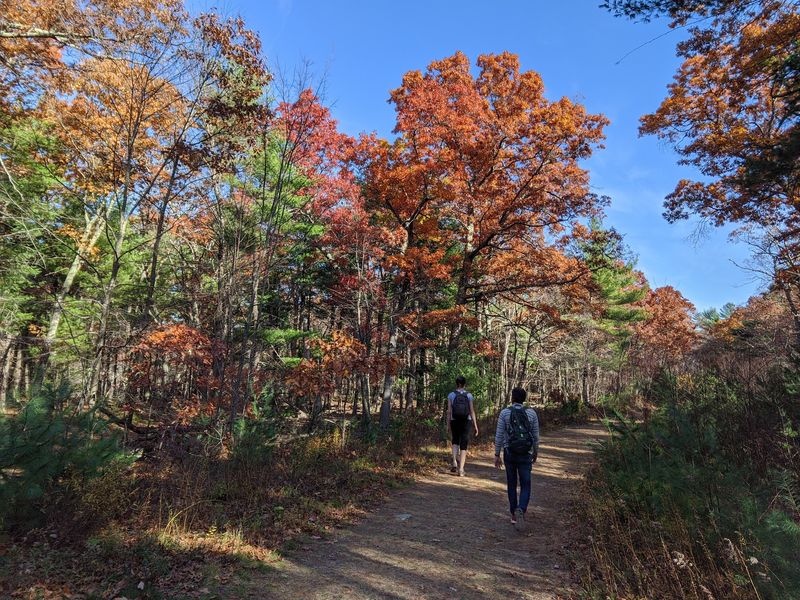
Autumn might be the best time to be here. The oaks and maples turn red, orange, and gold, and the air finally cools off.
Crunchy leaves cover the paths, and the crowds thin out after summer. Views from the summits stretch farther once the haze lifts.
Here is the part worth remembering. Timber rattlesnakes stay active into mid-October, so early fall hikes still cross their season.
They spend sunny afternoons basking on warm rock, gathering heat before the cold arrives. Those same rocky ledges are exactly where hikers like to stop for the view.
Simple habits keep everyone comfortable. Stay on marked trails, and look before you sit on a rock or step over a fallen log.
Leaf cover hides what is underneath, so watch where your feet land. Keep dogs leashed and away from rock piles and crevices.
Spot one? Stop, give it plenty of room, and back away slowly.
Never reach toward it or try to move it. A photo from a safe distance is plenty, and the snake gets to keep its sunny spot.
Sturdy boots help on wet leaves and slick granite. Daylight fades fast in fall, so start earlier than you think you need to.
Winter has its own charm, with quiet snowy trails and slopes close to the city. The snakes sleep through all of it.
Park hours shift with the seasons, and some buildings keep their own schedules. Check the official Massachusetts park website before you visit.