
This Massive Tennessee Science Museum Has Dinosaurs, A Planetarium, And A Million-Volt Tesla Show
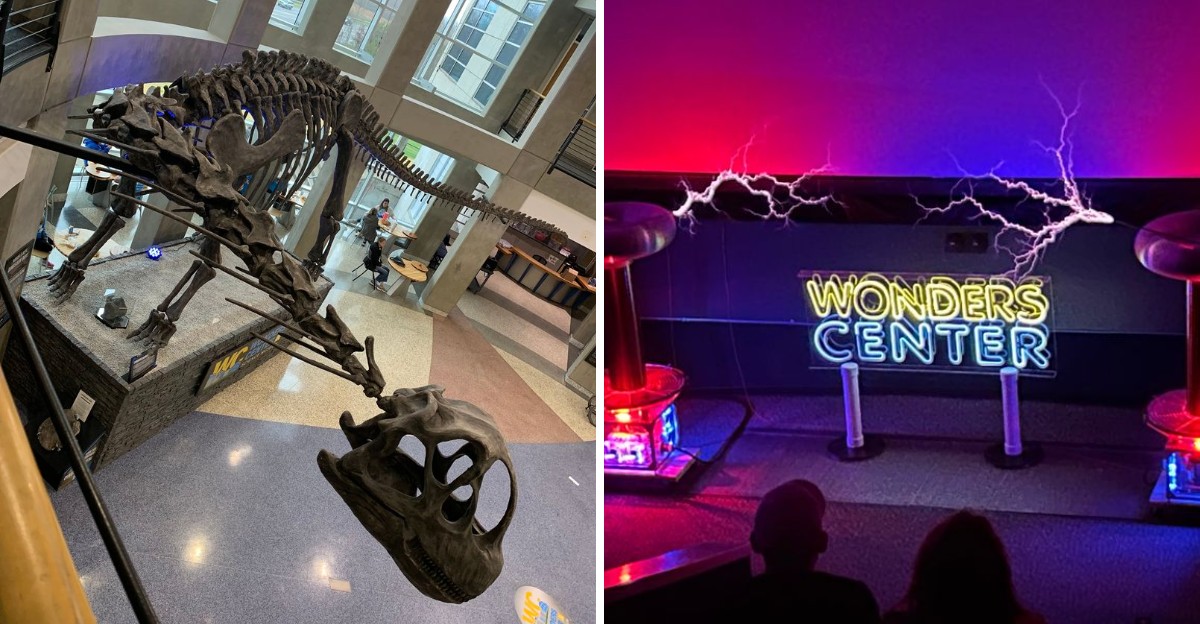
Dinosaurs are only the beginning here.
This massive Tennessee science museum brings together towering prehistoric creatures, fossils, space science, hands on exhibits, and a planetarium under one roof. Then the lights dim and a million volt Tesla show sends electricity cracking through the air.
The contrast makes the visit especially fun. One room can pull you millions of years into the past, while another points toward distant planets and stars.
There is always something new to look at, press, study, or stand beneath.
Families can spend hours moving between exhibits without the experience feeling repetitive. Kids get plenty of visual excitement, while adults have enough science and history to stay interested too.
It is the kind of museum that keeps changing the question. Just when you think you have seen the biggest attraction, something louder, taller, or stranger appears around the next corner.
The Largest Science Museum In Tennessee
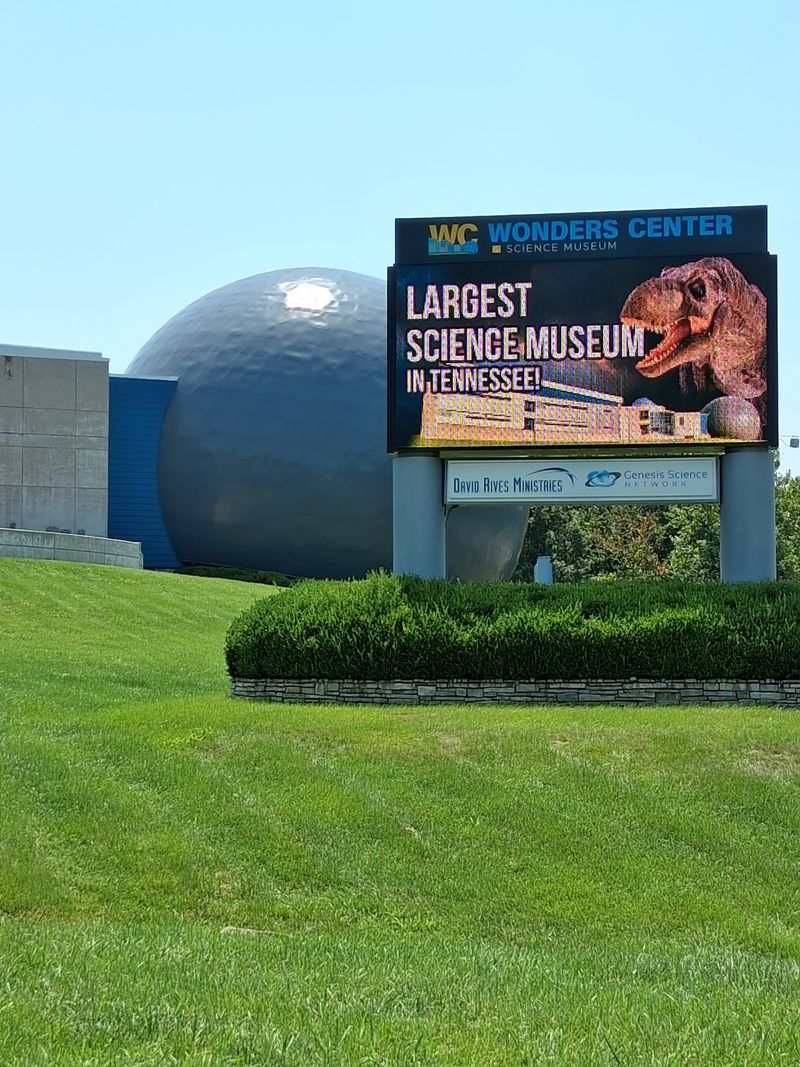
Big claims usually deserve a squint, but this one holds up. The Wonders Center & Science Museum spans more than 100,000 square feet, making it the largest science museum in Tennessee.
Three floors hold the collections, connected by both stairs and an elevator. That layout matters more than you might think. Strollers, tired legs, and grandparents all move through the space comfortably.
The address is 855 TN-46 in Dickson, TN 37055, an easy hop off the interstate. From downtown Nashville, the drive runs roughly 35 minutes.
That makes it a genuine half-day trip rather than a whole-weekend commitment.
Scale is the first thing that registers. Rooms are grouped by theme, so the flow feels logical instead of chaotic.
You are never wondering where to go next.
Because the building is so spread out, even busy holiday afternoons rarely feel packed. There is room to linger at a display without anyone breathing down your neck.
Plan for two to three hours at minimum. Plenty of families burn a full day and still leave with a list of things they missed.
Buying tickets online ahead of time lets you skip the counter line and head straight in, which is a small trick worth remembering.
A 55-Foot Camarasaurus Owns The Rotunda
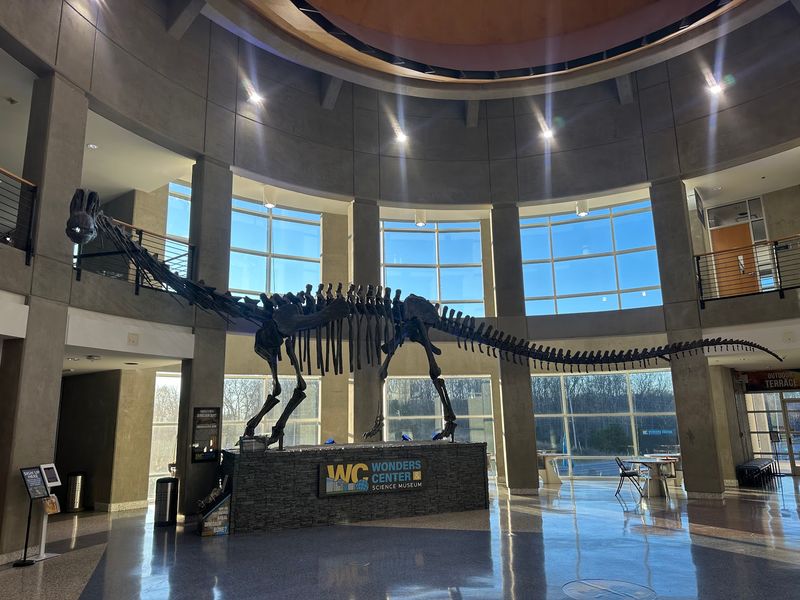
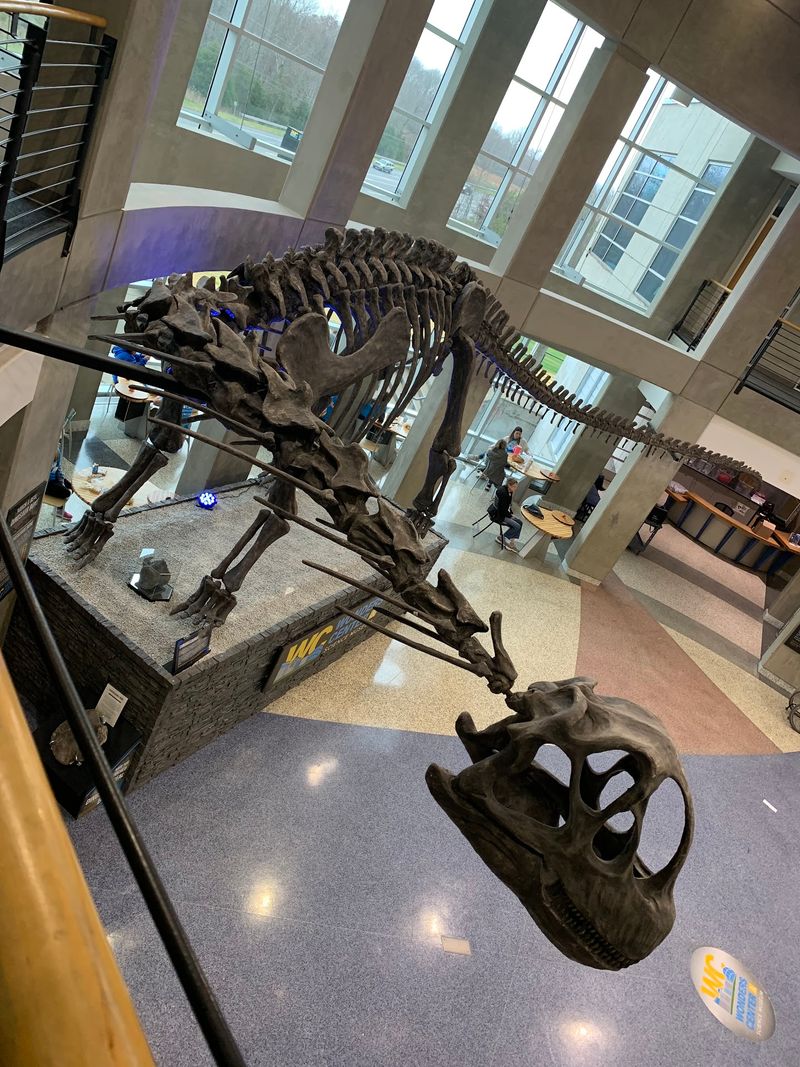
Few entrances announce themselves like this one. A 55-foot-long Camarasaurus stretches across the rotunda, its neck reaching toward the upper floors.
Necks crane. Phones come out. Small children go completely silent for about four seconds, which is its own kind of miracle.
Camarasaurus was a long-necked plant eater, a cousin of the more famous sauropods. Seeing one at full length does something a textbook diagram never manages.
You finally understand how much space these animals took up.
The rotunda placement is smart design. Instead of hiding the showstopper deep inside, the museum leads with it, setting expectations high from step one.
Around the giant, the tone shifts quickly from awe to curiosity. Signage explains anatomy, size, and how such creatures moved.
Kids start asking questions before anyone has to prompt them.
Animated dinosaurs elsewhere in the building keep the energy going. One small remote-controlled dinosaur roams the halls and interacts with guests, which delights younger explorers and startles a few adults.
Photographers should shoot from the lower floor looking up. The angle captures the full sweep of the body against the architecture.
Give the rotunda a second pass on your way out. You always spot details you missed the first time.
Digging For Bones In The Dino-Dig Sand Pit
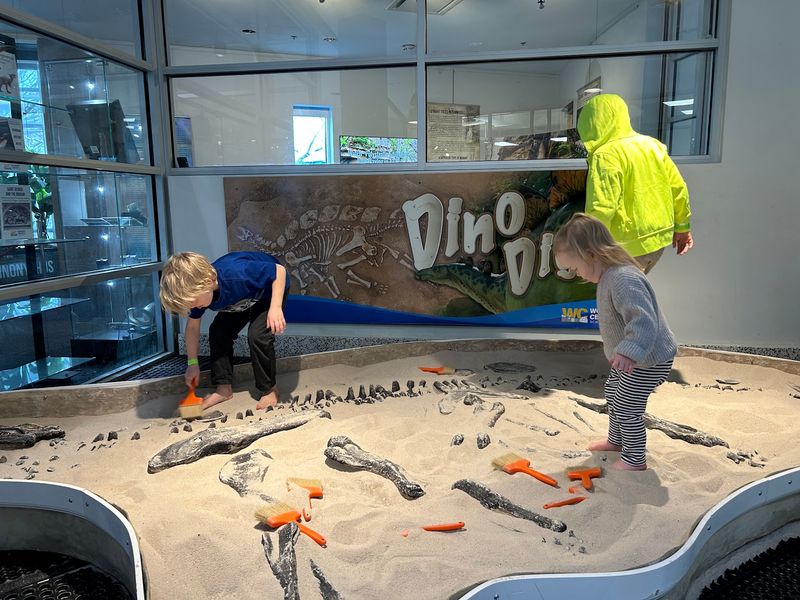
Every kid thinks they could find a dinosaur. Here they get to try.
The Dino-Dig sand pit hides a 12-foot Stegosaurus beneath a layer of sand, waiting for brushes and small determined hands. Uncovering plates and vertebrae feels like real fieldwork, just without the sunburn.
Part of the appeal is the patience it teaches. Paleontology is slow, careful work, and the pit quietly makes that point better than any sign could.
The Wonders of Paleontology exhibit surrounds the dig with life-size dinosaur models and authentic fossils. Replicas explain shape and scale, while the genuine specimens supply that jolt of the real thing.
One standout is the skull of the largest crocodilian ever unearthed. Stand beside it and the jaw line alone rearranges your idea of what a crocodile can be.
Gem and fossil panning is another crowd favorite. A basic package runs around ten dollars, and the sluice sends water over rough material until treasures appear.
Bring a small bag for whatever your family takes home. Little rocks have a way of ending up in pockets otherwise.
Younger children may need a hand reading the labels, since some panels carry a good amount of text. The hands-on stations keep them busy regardless.
Heavens Declare Planetarium Puts Space On An 8K Dome
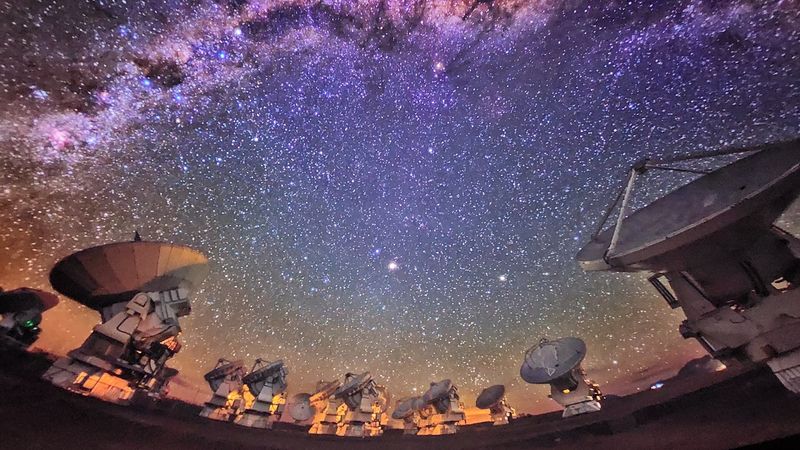
The dome is visible from the parking lot, an 85-foot sphere rising off the building like a dropped marble. Inside sits the Heavens Declare Planetarium.
Numbers help here. The screen measures 60 feet across, the projection runs at nearly 8K resolution, and 140 reclining seats face straight up.
Twenty-five speakers handle the sound. When a rocket lifts off or a nebula swells overhead, you feel the audio as much as hear it.
It has been recognized as the number one planetarium experience in the United States and ranks among the top ten worldwide. Those are unusual credentials for a town of Dickson’s size.
Shows present lifelike films of the universe, moving from planets to distant galaxies with startling clarity. The reclining seats mean no sore neck halfway through.
Presentations run each morning and afternoon, so most schedules can catch one. Check the day’s times when you arrive and build the rest of your route around your seat.
Arrive a few minutes early for the best position. The center of the room offers the most natural view of the dome.
Space nerds and complete beginners tend to leave equally impressed. It is the kind of thing you describe to friends badly and then insist they see for themselves.
A Million-Volt Musical Tesla Coil Show
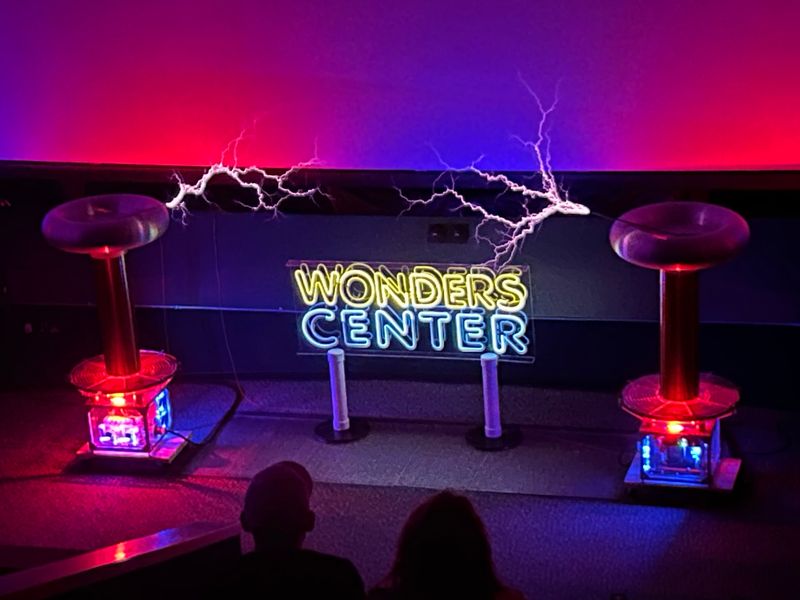
Lightning indoors, set to music. That is the pitch, and it delivers.
The million-volt musical Tesla coil show at the Wonders Center & Science Museum uses dual coils that throw crackling arcs of artificial lightning. The arcs pulse in time with the soundtrack, which is somewhere between a physics lesson and a rock concert.
Nikola Tesla invented the coil in the 1890s to study high-frequency electricity. Making one play melodies is a modern trick, achieved by switching the sparks on and off thousands of times per second.
Safety is built into the whole setup, so audiences watch from a comfortable distance while the current does its work. The buzz you hear is the air itself being heated and torn.
Showtimes typically follow the planetarium presentations, so many people knock out both in one sitting. Sequencing your day that way saves backtracking.
Expect a bright, loud performance. Sensitive ears may want to cover up for the biggest arcs, and that is perfectly normal.
Grown-ups often name this their favorite stop, which surprises them. Something about visible electricity resets the childhood wonder switch.
Stick around afterward if the presenter takes questions. The explanations of voltage and frequency land better right after you have seen them in action.
Hands-On STEM Stations For Restless Hands
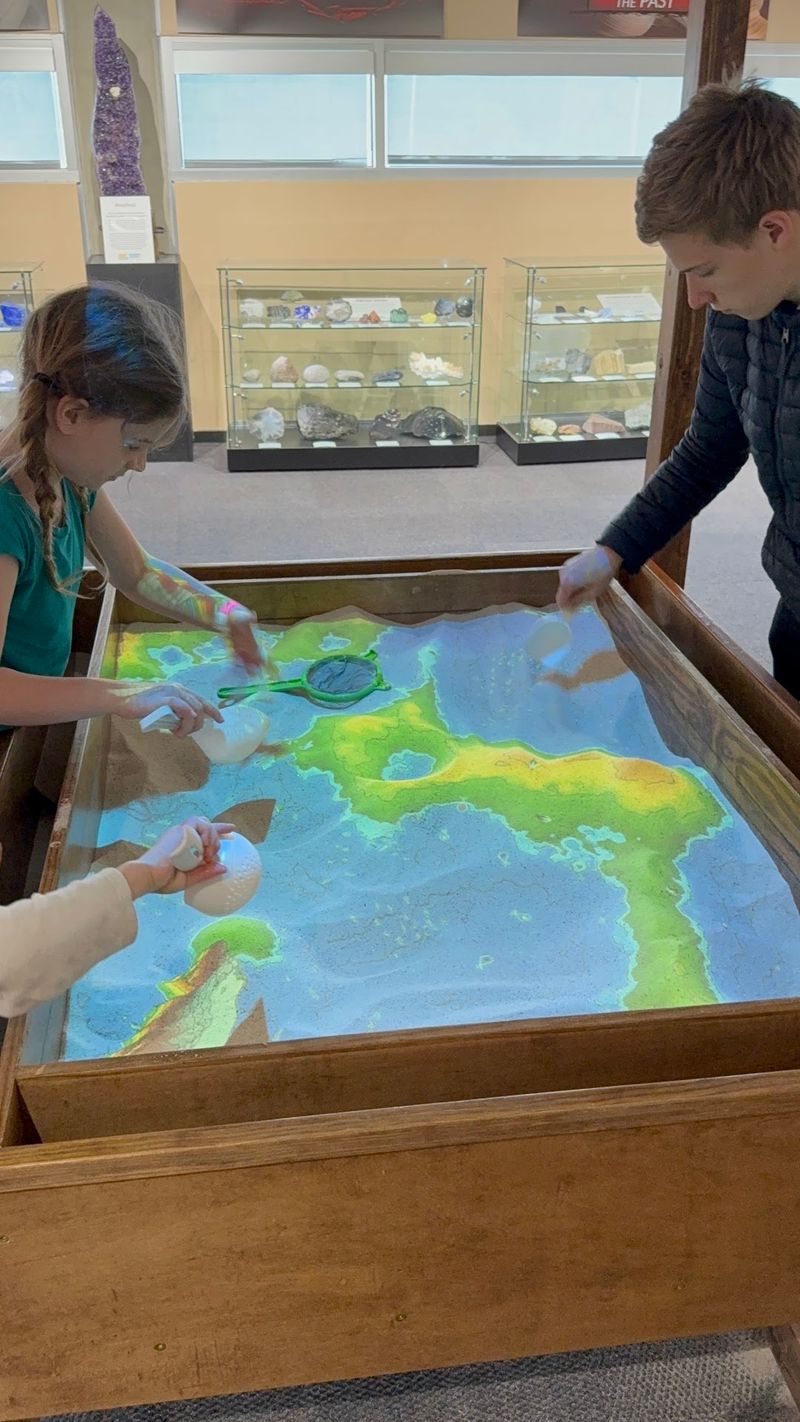
Some museums say do not touch. This one practically dares you to.
An Augmented Reality Sandbox tops the list, projecting elevation colors onto real sand. Push a hill up and it turns brown. Scoop a valley and blue water appears.
Physics gets a racetrack. Downhill car racing lets you test weight, slope, and speed, and everyone immediately wants a rematch.
At the gear station, engineering principles click into place as you connect wheels and watch motion transfer. It is trial and error in the most satisfying way.
An air station demonstrates the Bernoulli Principle, the same idea that helps airplanes fly. Balls hover in streams of air, which never stops being funny.
Optical illusions bend what your eyes report to your brain. Heat imaging cameras reveal warm handprints and cold windows in glowing color.
Then there are the themed halls. Wonders of Africa, Amazing Animals of Alaska, and the newer Wonders of the Sea Exhibit Hall each carry their own mood and displays.
A scavenger hunt ties the floors together, and completing it earns children a prize. Grab a sheet at the start so nobody has to double back later.
Two teenagers can find just as much here as a five-year-old, which is rarer than it sounds.
Ancient Scrolls And Live Reptiles Under One Roof
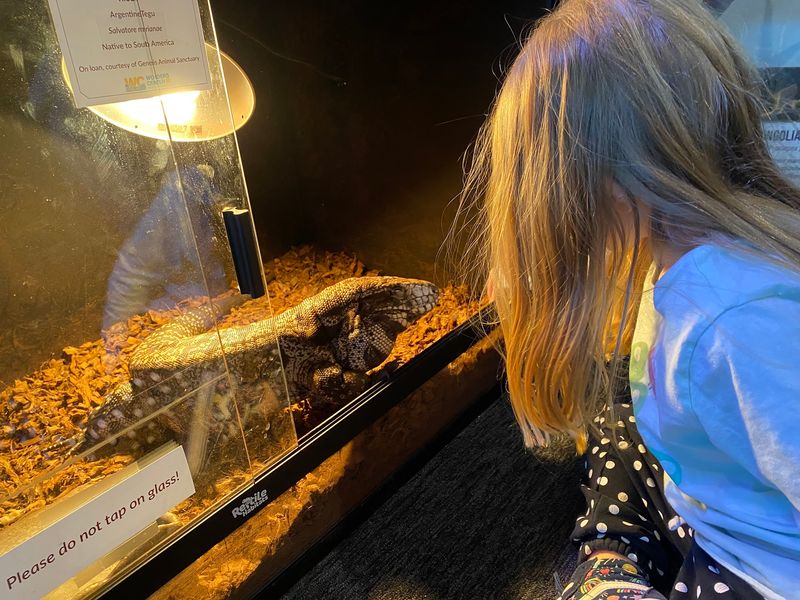
Not many places let you study centuries-old writing and then meet a gecko fifty steps later.
The Wonders Center & Science Museum holds a collection of ancient Biblical scrolls, displayed in cases that let you examine the script and materials up close. Handwritten text on aged parchment has a weight that printed copies lack.
The zoology area swings the mood completely. Live geckos and lizards live here, and staff sometimes bring a few out so guests can look closer.
Watching a gecko’s toes grip glass explains adhesion better than any diagram. Their feet use microscopic hairs, a design engineers still study for climbing robots.
Taxidermy animals fill nearby galleries with remarkably lifelike poses. The detail is convincing enough that guests occasionally do a double take.
A dragon figure also peeks out on a timer, roughly every half hour. Families with young children learn the schedule fast and plan accordingly.
The museum presents its exhibits within a biblical framework, which is worth knowing before you go. Guests come from all backgrounds and generally find the science content, artifacts, and animals engaging on their own terms.
Ask the staff questions. They know the collections well and clearly enjoy talking about them, which makes the galleries far more interesting.
Java Man Cafe, The Gift Shop, And Hours To Know
Long museum days run on caffeine and snacks, and the planners knew it.
The Java Man Cafe sits on site, serving coffee, snacks, and light lunch options. Being able to refuel without leaving the building is a small luxury that extends your afternoon considerably.
The gift shop is unusually well stocked. Over 2,000 books, toys, and educational resources fill the shelves, which means actual science kits rather than shelves of plastic filler.
Hours are the one thing to double-check. Monday, Tuesday, Wednesday, and Friday run 10 a.m. to 4 p.m. Central Time.
Thursdays stay open late until 8 p.m., which suits after-school or after-work trips. Sunday hours run 1 p.m. to 5:30 p.m., and the museum is closed on Saturdays. That Saturday closure catches weekend travelers off guard, so mark it before you drive out.
Planetarium and Tesla coil presentations run each morning and afternoon, so build your route around whichever showtime you want.
Set aside three hours if you are efficient and a full day if you are curious. Tennessee has plenty of famous stops, and this one in Dickson quietly outperforms its reputation. Go once and you will be recommending it too.