
This Minnesota Steakhouse Serves Ribeyes Worth Driving Two Hours To Taste
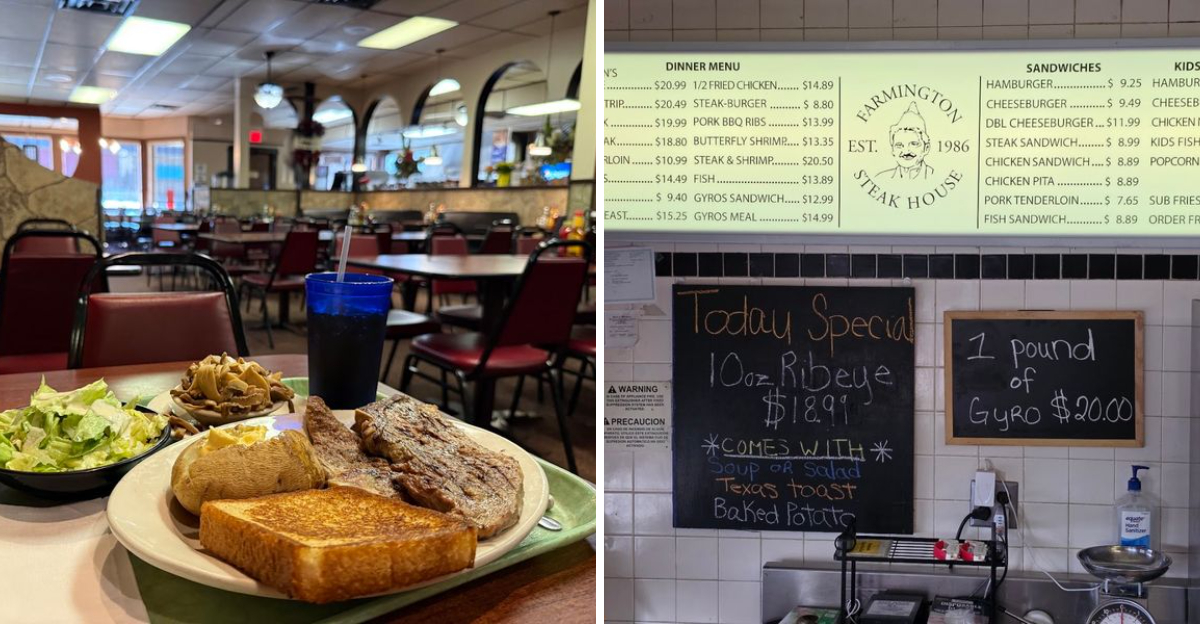
Forget polished dining rooms and complicated menus. This Minnesota steakhouse wins people over with thick ribeyes, hefty T-bones, and prices that feel almost impossible today.
The focus stays exactly where it belongs, on sizzling beef cooked with confidence and served without unnecessary fuss. Regulars know the routine.
Pick your cut, add a baked potato or another familiar side, then settle in for a meal that delivers far more than the bill suggests. Decades of practice have turned this straightforward approach into a local tradition, drawing hungry diners beyond the neighborhood.
Nothing tries too hard, and that is precisely the appeal. When steak tastes this good and costs this little, the drive suddenly feels like the easiest decision of the day.
Farmington Steak House Has Served The Town Since The 1980s
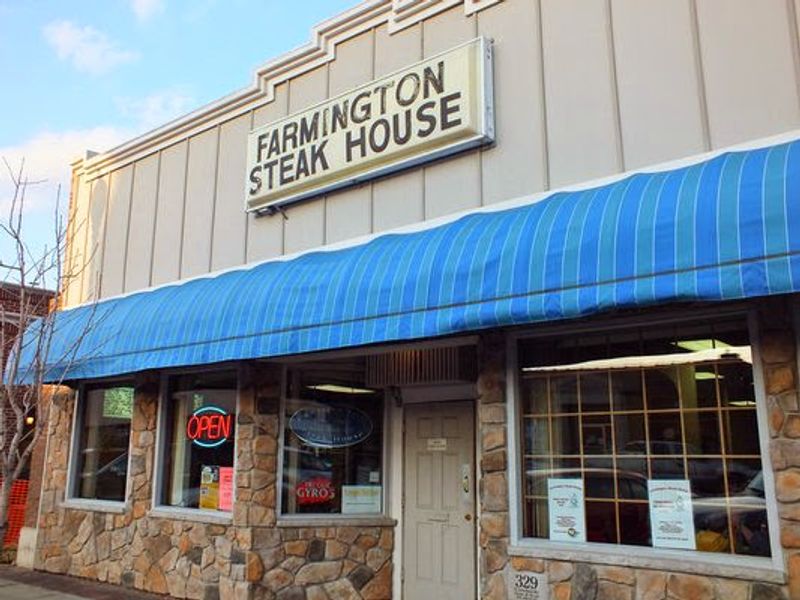
Farmington Steak House opened its doors when shoulder pads were in fashion and cassette tapes ruled the airwaves. The restaurant has remained a constant presence in this small Minnesota community ever since.
Families who ate here as children now bring their own kids through the same doors.
Walking into this establishment feels like stepping into a culinary time capsule that refuses to modernize just for the sake of trends. The family who runs the place has kept the original concept intact, serving straightforward American steakhouse fare without pretension.
Located at 329 3rd St, Farmington, Minnesota, the restaurant occupies a humble spot in a strip mall, but its reputation extends far beyond city limits.
Generations of diners have created memories around these tables, and the longevity speaks volumes about consistency. The place has survived economic shifts, changing food trends, and the rise of chain restaurants by simply doing what it does best.
The Ribeye Is One Of The Main Attractions
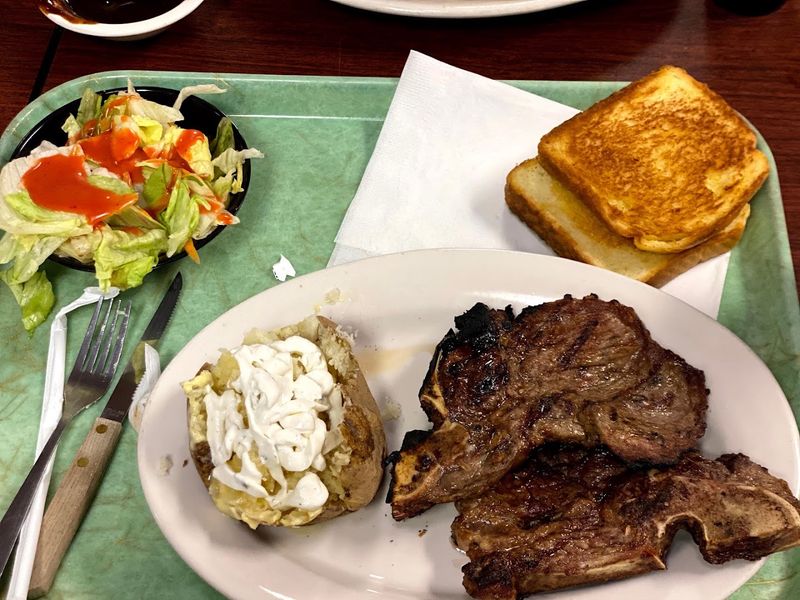
Ask anyone who has made the pilgrimage to Farmington Steak House what they ordered, and the ribeye comes up in nearly every conversation. This cut has earned its reputation through decades of consistent quality and proper preparation.
The marbling throughout the meat creates flavor that needs no elaborate sauce or garnish to impress.
Ribeyes here arrive hot off the grill with a proper sear on the outside and the exact level of doneness you requested. The thickness is substantial without being ostentatious, and the beef tastes like it came from cattle that actually ate grass at some point.
Diners who typically order filet mignon at upscale establishments find themselves converted after one bite.
The simplicity of the presentation allows the meat to speak for itself. No microgreens, no drizzled reductions, no architectural plating schemes.
Just a well-cooked piece of beef that reminds you why steakhouses existed long before molecular gastronomy became a thing.
Every Steak Is Cooked To Order
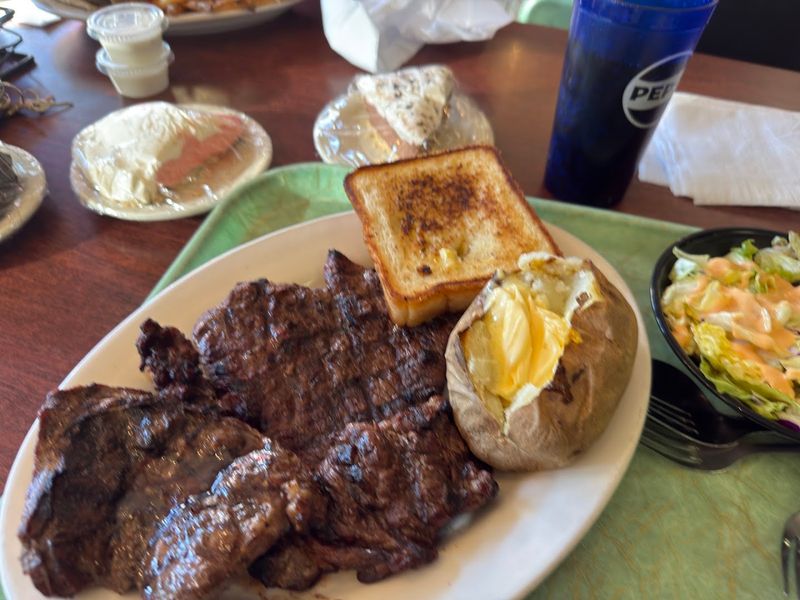
Nothing at Farmington Steak House sits under heat lamps waiting for someone to claim it. Each steak gets placed on the grill only after you’ve stated your preference and moved down the line with your tray.
The cook behind the counter has spent years mastering the timing and temperature required to deliver medium-rare, medium, or well-done with accuracy.
Watching your dinner cook while you wait adds an element of anticipation that modern fast-casual concepts try to replicate but rarely achieve authentically. The sizzle and aroma create an appetizer for your senses before the actual food reaches your table.
You can see the char forming and the juices beginning to pool on the surface.
This made-to-order approach means you might wait fifteen or twenty minutes during peak hours, but the result justifies the patience. Your steak arrives at the temperature you requested, not the temperature that was convenient for the kitchen.
That distinction matters more than most diners realize until they experience it.
Cafeteria Style Service Makes Dinner Different
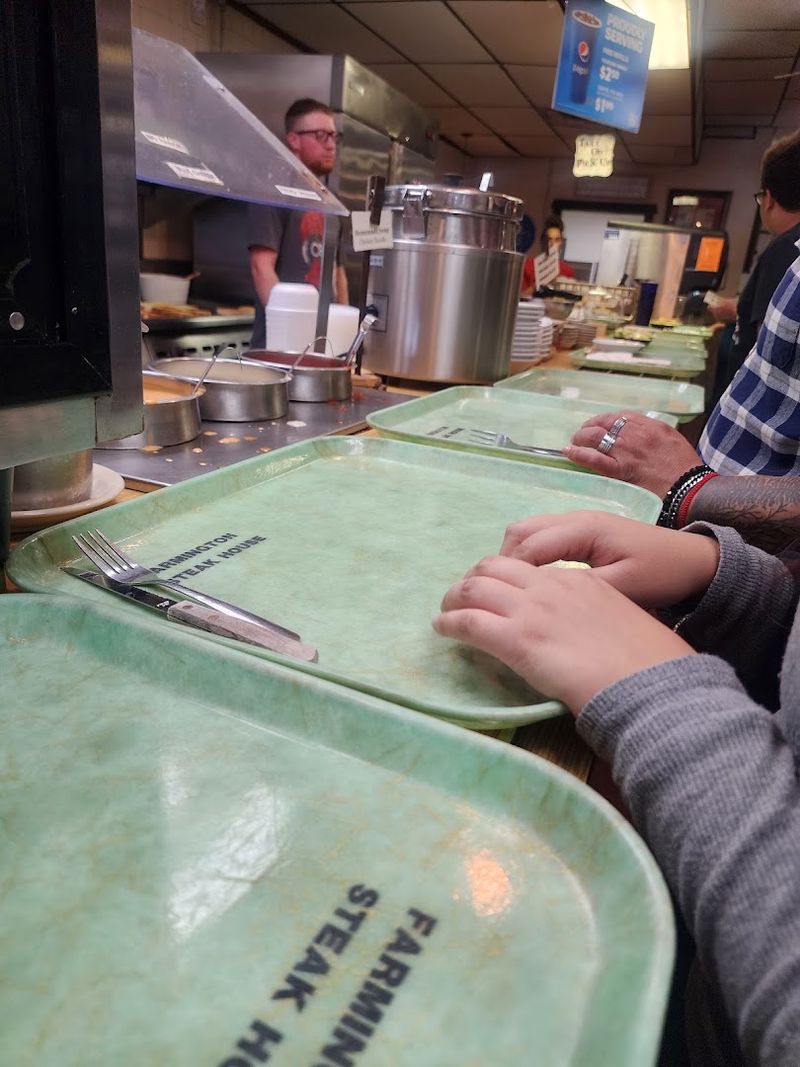
Farmington Steak House operates on a system that will feel familiar to anyone who attended public school before the year 2000. You grab a green tray, slide it along the counter, and tell the staff what you want as you progress toward the register.
There are no servers hovering to refill water glasses or recite specials in rehearsed tones.
This self-service model keeps overhead costs low, which translates directly to the prices on the menu board. Some diners initially balk at the informality, expecting table service when they order a steak dinner.
However, most come to appreciate the efficiency and the way it strips away the performative aspects of dining out.
The cafeteria approach also creates a certain democratic atmosphere where everyone stands in the same line regardless of whether they drove a luxury sedan or a pickup truck. You order, you pay, you find a seat, and you eat.
The simplicity feels refreshing in an era of complicated reservation systems and tipping anxiety.
Dinner Comes With A Baked Potato And Texas Toast
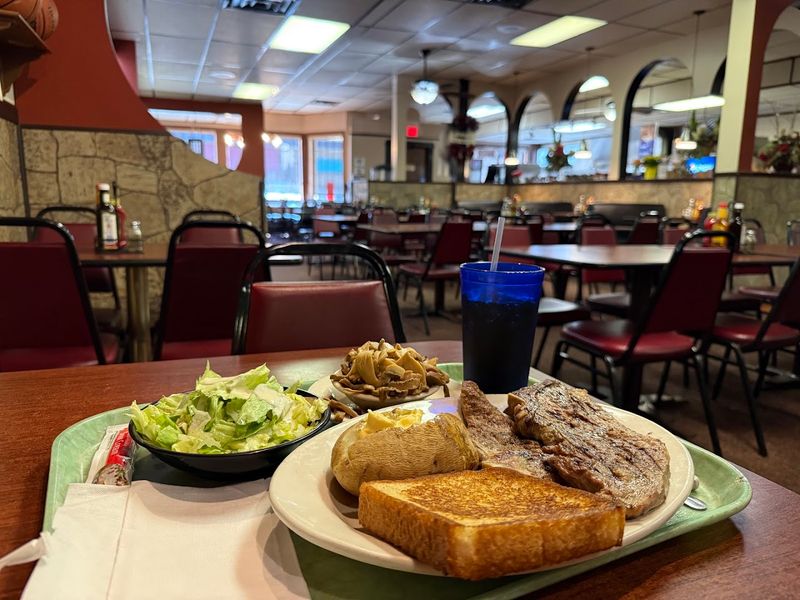
Your steak arrives accompanied by two supporting players that complete the classic steakhouse experience without requiring a separate order. The baked potato comes split open with a generous portion of butter that could probably be measured in tablespoons rather than pats.
The skin has the right amount of crisp, and the interior steams when you break it apart further.
Texas toast provides the carbohydrate contrast that somehow makes sense alongside beef, even though bread and steak seem redundant on paper. The thick slices arrive buttered and toasted to a golden brown that soaks up any juice your steak releases.
Some diners use it to create impromptu open-faced sandwiches with their remaining bites of meat.
A simple side salad rounds out the plate, offering a token vegetable presence that acknowledges nutritional balance without taking itself too seriously. The combination of starch, bread, and protein delivers satisfaction that fancier restaurants try to achieve with twice the components and three times the price.
Generous Portions Leave Few Diners Hungry
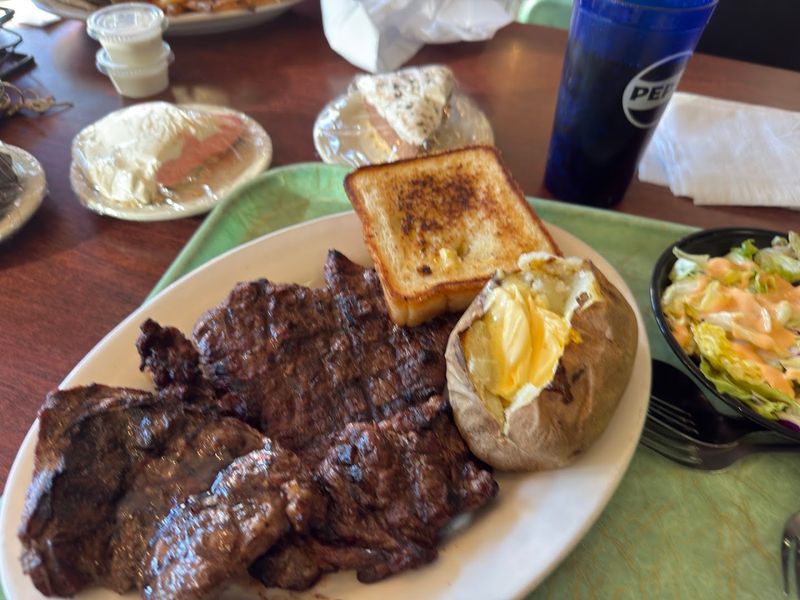
Farmington Steak House subscribes to the philosophy that diners should leave satisfied rather than still contemplating a stop for additional food. The ribeyes and T-bones measure large enough that finishing everything on your tray becomes a legitimate challenge for average appetites.
This is not the place for delicate tasting portions arranged with tweezers.
The baked potatoes could serve as weapons in a food fight given their substantial size and heft. Even the side salad arrives in a portion that would count as a full meal at certain trendy lunch spots.
First-time visitors often express surprise at the sheer volume of food that appears on their tray for the price paid.
Regulars know to skip lunch on days they plan to visit, arriving with appetites prepared for the abundance. Takeout containers see frequent use as diners admit defeat and pack up the remainder for tomorrow’s lunch.
The generous approach to portioning feels increasingly rare in an industry that has embraced smaller plates and tasting menus.
Affordable Prices Add To The Road Trip Appeal
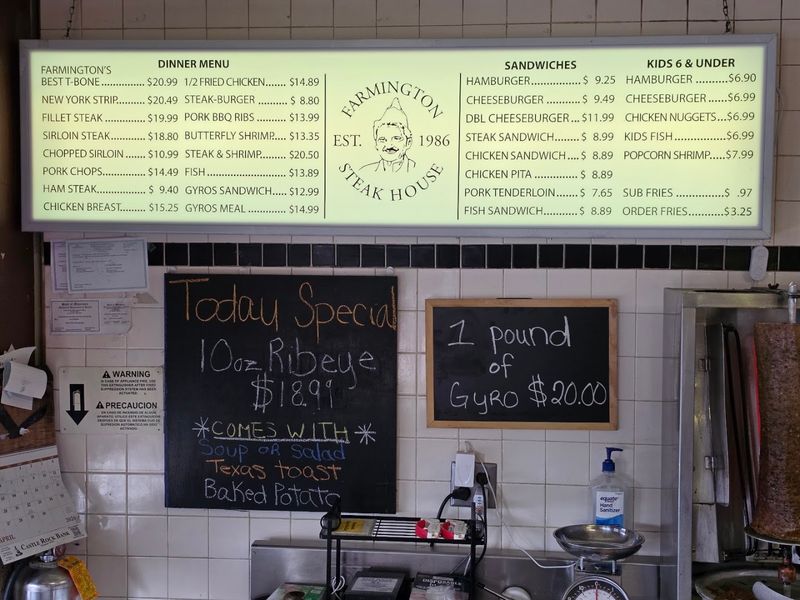
Seeing the menu prices at Farmington Steak House causes many first-time visitors to double-check that they read the numbers correctly. A complete ribeye dinner costs less than what many restaurants charge for a burger and fries.
The value proposition becomes even more impressive when you factor in the portion sizes and the quality of the beef.
Operating with minimal overhead through cafeteria-style service allows the restaurant to pass savings directly to customers rather than inflating prices to cover waitstaff and elaborate decor. The cash-and-check-only policy eliminates credit card processing fees that restaurants typically build into their pricing.
These practical decisions create affordability that seems almost anachronistic in the current dining landscape.
Families can feed four people for what two adults might spend at a mid-tier chain restaurant, making special occasions more accessible. The combination of quality, quantity, and cost creates a trifecta that explains why people willingly drive an hour or more from the Twin Cities metro area for dinner.
The Dining Room Keeps Its Old School Character
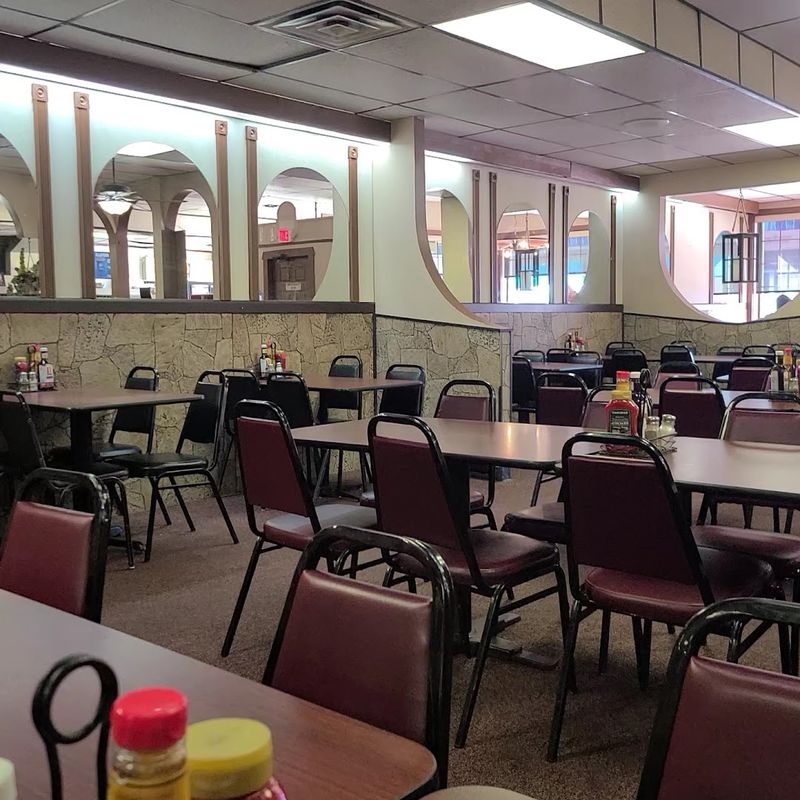
Farmington Steak House has resisted every trend toward industrial chic, rustic farmhouse, or modern minimalist design. The dining room maintains the aesthetic it established decades ago, complete with model cars on display and furniture that predates the smartphone era.
The trays still bear the restaurant’s name in lettering that looks lifted from a different century.
Some might describe the atmosphere as dated, but others recognize it as authentically preserved rather than artificially recreated. There are no Edison bulbs, no reclaimed wood accent walls, no chalkboard menus with elaborate hand lettering.
The space serves its function without trying to become an Instagram backdrop or a design magazine feature.
This commitment to maintaining original character creates an environment where diners focus on food and conversation rather than decor. The lack of pretension puts everyone at ease, from couples on a date to families with restless children.
Walking through the door feels like visiting a relative’s house where the furniture hasn’t changed since your childhood.
Friendly Service Feels Like A Family Tradition
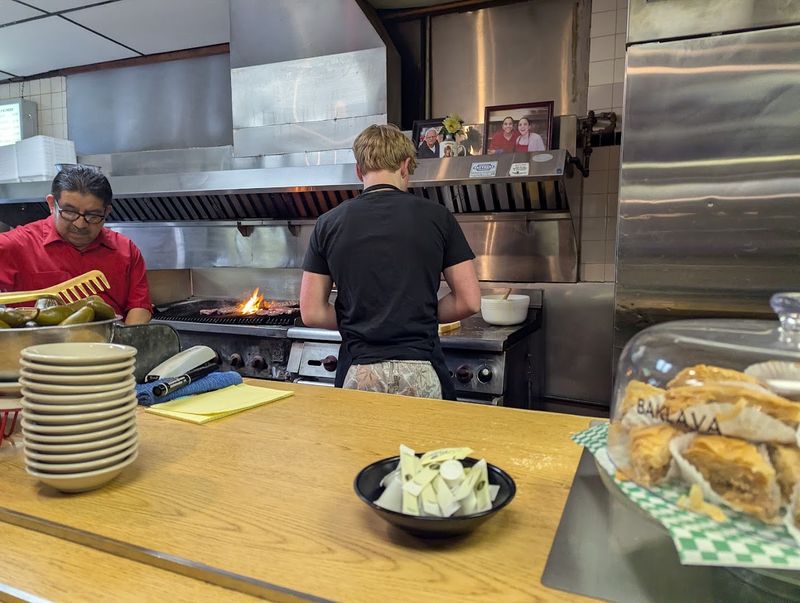
The people working behind the counter at Farmington Steak House treat customers with a warmth that corporate training programs try to manufacture but rarely achieve organically. Regulars get greeted by name, and newcomers receive patient explanations of how the ordering process works.
The family ownership creates a culture where employees genuinely seem invested in your satisfaction.
Staff members know the menu inside out because they’ve likely been preparing and serving it for years rather than weeks. They can tell you the difference between the cuts, recommend doneness levels based on your preferences, and estimate wait times with surprising accuracy.
The interactions feel more like conversations with knowledgeable neighbors than transactions with service workers.
This friendly approach extends to how they handle the inevitable complications that arise in any restaurant. Orders occasionally get delayed or confused, but the staff addresses issues with grace rather than defensiveness.
The personal touch transforms what could be a simple meal into an experience that keeps people returning for decades.
The T-Bone Gives Ribeye Fans Serious Competition
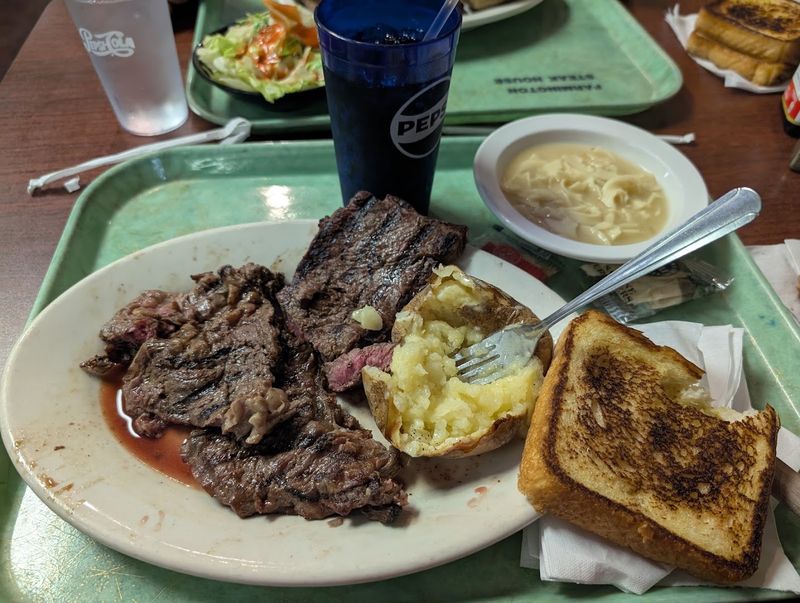
While the ribeye draws most of the attention and accolades, the T-bone at Farmington Steak House deserves equal consideration from anyone who appreciates a well-prepared piece of beef. This cut offers two distinct experiences on one bone: the strip side delivers robust, beefy flavor while the tenderloin section provides buttery texture.
Getting both in a single order feels almost indulgent.
The kitchen handles T-bones with the same care given to ribeyes, achieving proper doneness on both sides of the bone despite their different densities and fat content. This requires skill that separates competent grill cooks from excellent ones.
The result is a steak that satisfies multiple preferences simultaneously without compromise on either side.
Diners who order the T-bone often find themselves in friendly debates about which section tastes better, creating conversation that extends beyond the meal itself. The generous size means you’ll have plenty of both cuts to evaluate.
For those who struggle to choose between strip and filet at traditional steakhouses, the T-bone eliminates the dilemma entirely.