
This Nevada Cave Tour Leads Into A Hidden Underground World
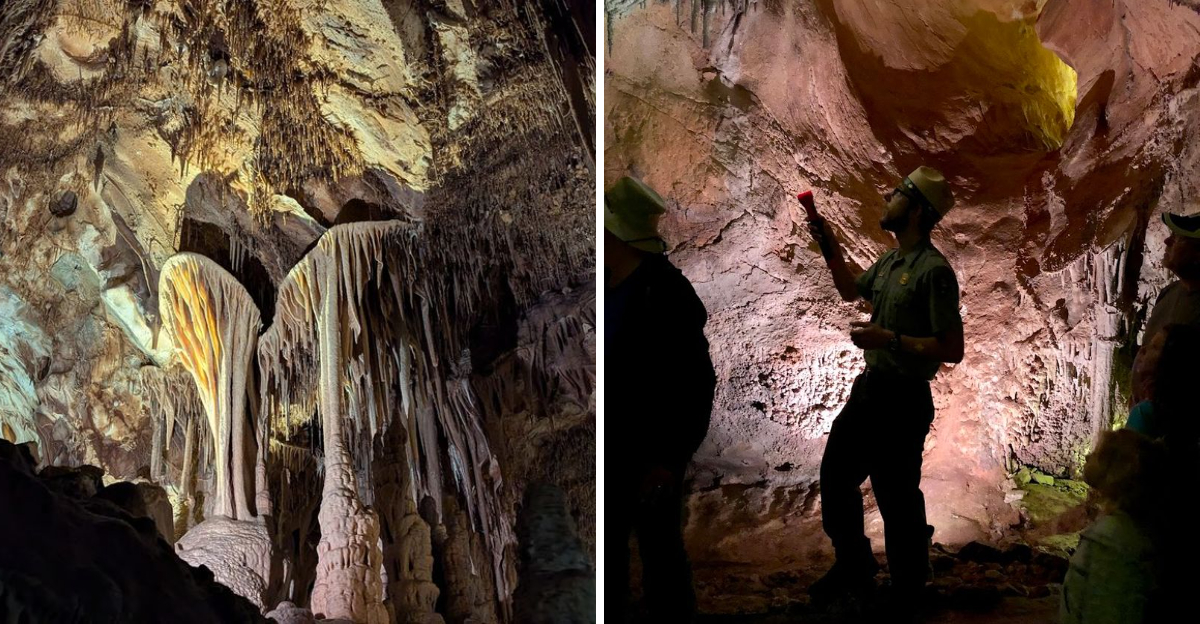
Eastern Nevada keeps one of its strangest surprises far below the desert surface. Above ground, the landscape looks wide, dry, and rugged.
Below it, everything changes. Cool passageways twist through limestone rooms filled with delicate shapes, dramatic ceilings, and formations that look almost too detailed to be natural.
This is the kind of place that makes you slow down and stare. Water, time, and minerals have spent ages building an underground scene that feels secretive, ancient, and a little unreal.
Add more than a century of guided exploration, and the story becomes even richer. For anyone who thinks Nevada is only desert views and bright city lights, this underground world has a few surprises waiting.
Lehman Caves Is Inside Great Basin National Park
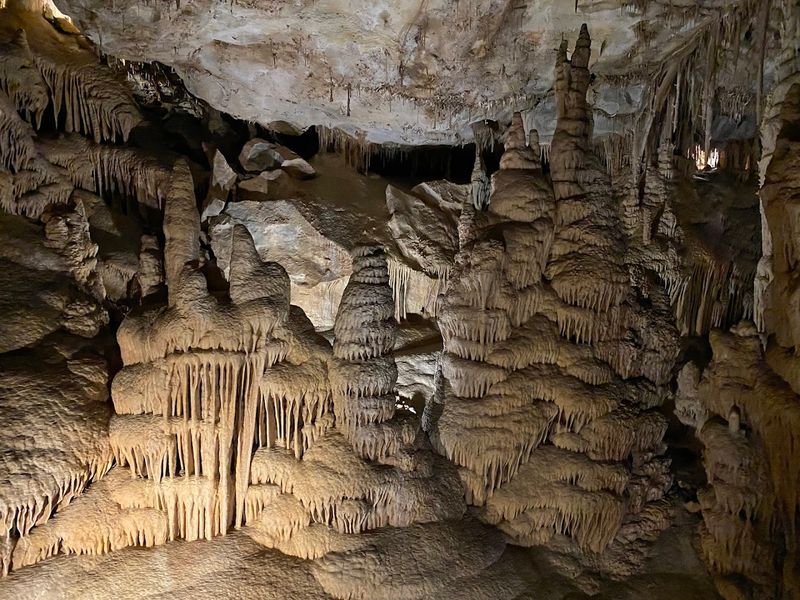
Great Basin National Park protects some of Nevada’s most dramatic landscapes, from ancient bristlecone pines to glacier-carved peaks. The cave system sits near the park’s eastern boundary, accessible from the Lehman Caves Visitor Center just off Nevada State Route 488.
Visitors coming from Baker will find the cave entrance about five miles up the winding mountain road. The location at 100 NF-448 places you at an elevation where desert transitions to forest, creating a unique ecological setting.
Park rangers staff the visitor center during operating hours, typically from 8 AM to 4 PM on weekdays. The facility provides educational exhibits about cave geology and the broader park ecosystem before tours begin.
Arriving early helps secure tour spots, especially during peak summer months when demand exceeds availability.
It Is The Longest Cave System In Nevada
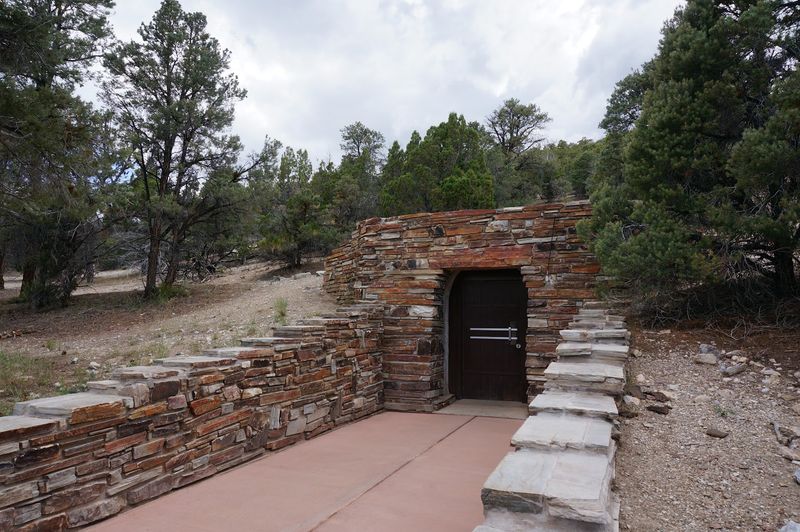
Stretching through the mountain’s interior, this cave system holds the distinction of being Nevada’s most extensive mapped underground network. Explorers have charted passages that wind through multiple levels of limestone, though only a fraction opens to public tours.
The cave’s length developed over geological time as water carved through soluble rock layers. Different sections formed at different periods, creating a complex three-dimensional maze beneath the surface.
Scientists continue discovering new passages and connections within the system.
Most visitors experience only the showcase sections during ranger-led tours. The full extent of the cave remains closed to protect delicate formations and maintain safety standards.
This preservation approach ensures future generations can appreciate what makes this underground landscape so remarkable across the state.
Tours Have Been Entering The Cave Since 1885
Absalom Lehman discovered the cave entrance in 1885 while ranching in the area. He immediately recognized the commercial potential and began offering tours to curious visitors willing to make the journey into remote eastern Nevada.
Early explorations required only candles and courage. Lehman himself guided many of the first tours, charging fifty cents for the experience.
His entrepreneurial spirit helped establish the cave as a destination long before modern park infrastructure existed.
The cave became a national monument in 1922, bringing federal protection and improved access. Lighting systems were installed gradually, replacing the candles and lanterns of earlier decades.
Today’s tours follow traditions established over more than a century, though with considerably better illumination and safety measures than Absalom Lehman could have imagined for his underground discovery.
The Cave Is Only Open On Ranger-Led Tours
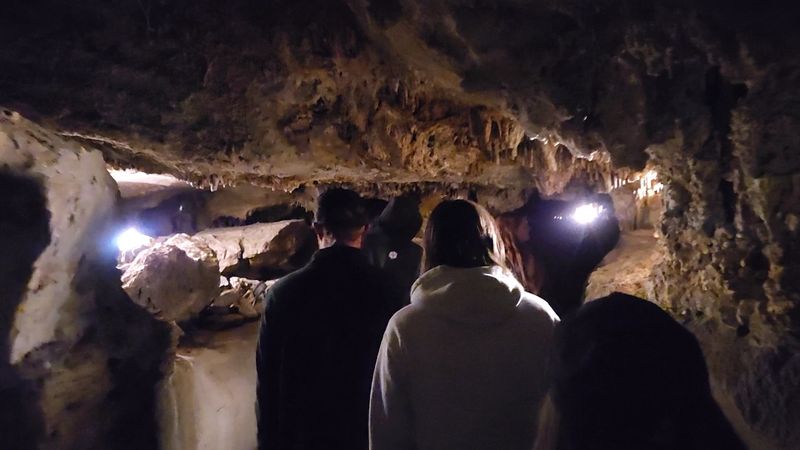
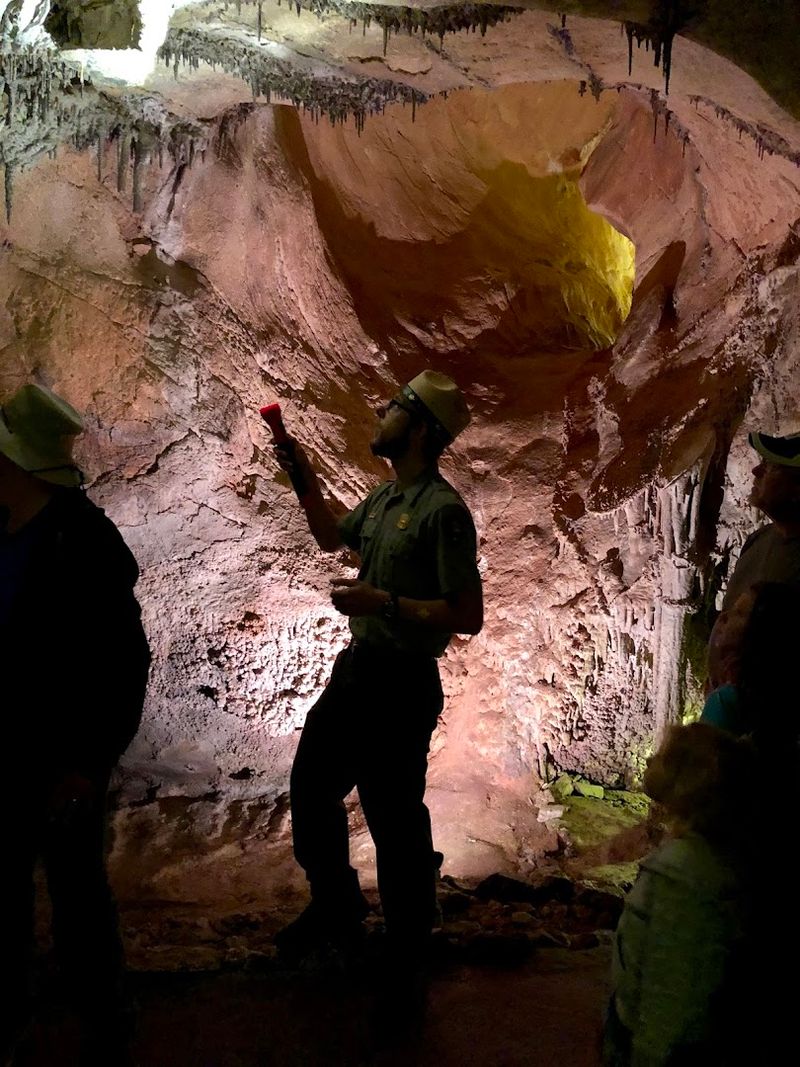
Self-guided exploration is not permitted inside the cave system. Every visitor must join a ranger-led tour, which serves both educational and conservation purposes.
This policy protects the fragile formations from accidental damage while ensuring guests learn about what they’re seeing.
Rangers guide groups of up to twenty people through the illuminated passages. Tour lengths vary from thirty minutes to ninety minutes depending on which route you select.
The parachute shield tour covers about a third of a mile and takes roughly an hour.
Advance reservations are strongly recommended, as walk-up tickets sell out quickly during busy periods. Tours depart on schedule, and late arrivals cannot be accommodated.
The structured approach maintains a quality experience for everyone while preventing overcrowding in the underground chambers where space is naturally limited and air circulation matters.
Its Shield Formations Are Some Of The Cave’s Biggest Highlights
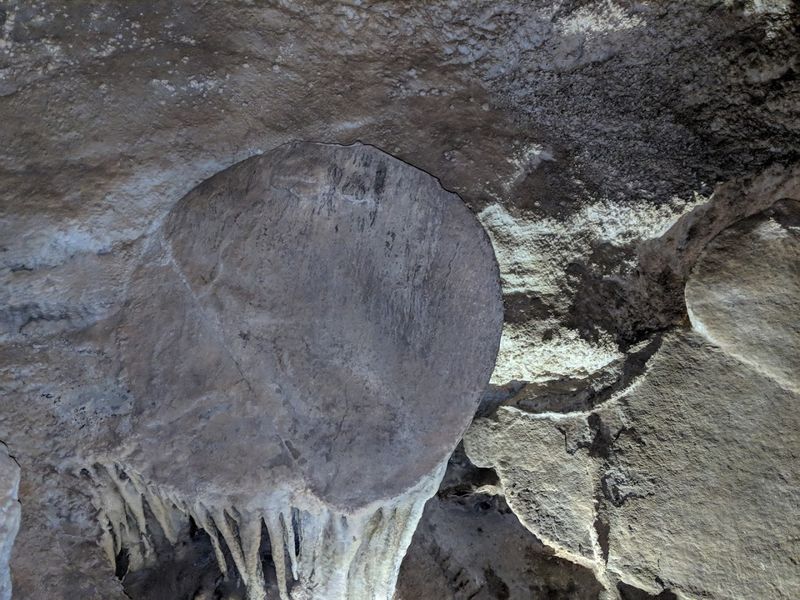
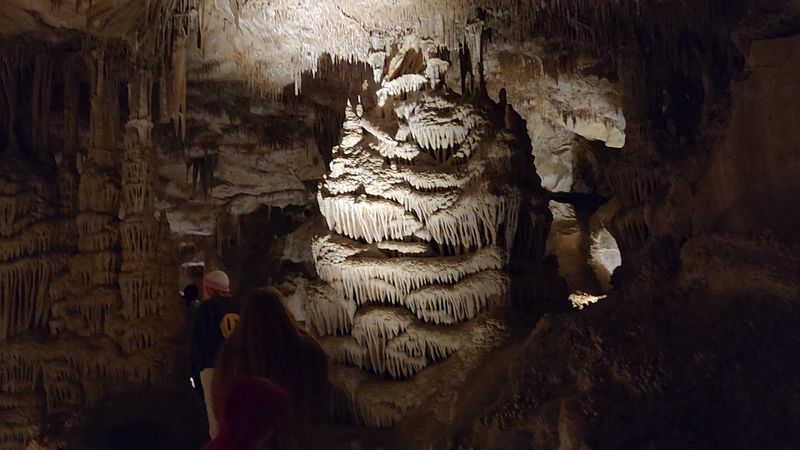
Lehman Caves contains more than two hundred shield formations, the highest concentration of any cave system in the world. These circular disc-like structures grow outward from cave walls in patterns that defy simple explanation, looking almost like dinner plates emerging from solid rock.
Shields form when mineral-rich water seeps through tiny cracks in the limestone. The deposits build outward in opposite directions, creating the distinctive disc shape.
Growth occurs incredibly slowly, requiring thousands of years to produce even modest-sized examples.
Most caves contain few if any shield formations, making this concentration scientifically significant. Geologists study the shields to understand groundwater movement and mineral deposition processes.
Visitors find them visually striking, often asking how nature could create something so geometrically precise without any apparent blueprint or intention behind the construction.
The Parachute Shield Is One Of Its Most Famous Features
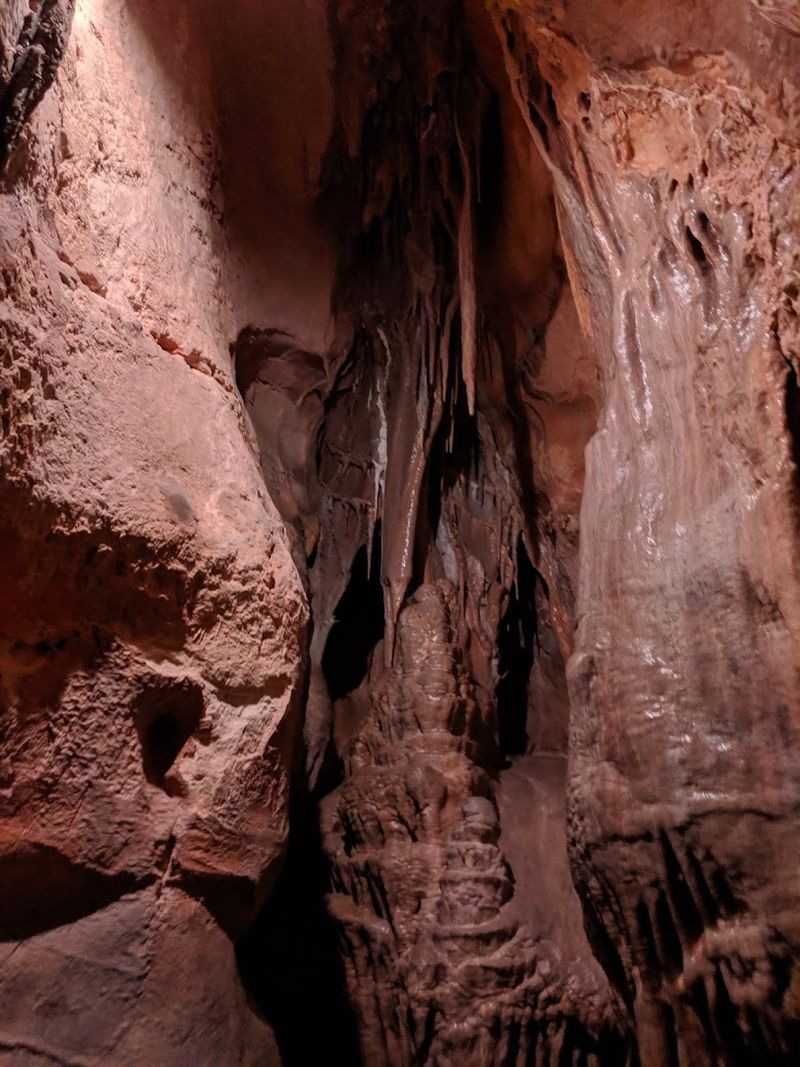
Among the many shields decorating the cave walls, one stands out for its remarkable size and distinctive appearance. The Parachute Shield earned its name from the way drapery formations hang beneath the main disc, creating an unmistakable resemblance to a deployed parachute frozen in stone.
This formation developed over millennia as water deposited calcite in precise patterns. The shield portion grew first, followed by the flowing draperies that give it such dramatic character.
Lighting installed around the feature emphasizes its three-dimensional qualities.
Rangers typically pause at this spot during tours to discuss cave geology and formation processes. Photographers find the Parachute Shield irresistible, though cave humidity and lighting conditions require some technical skill.
The formation appears on promotional materials for both the cave and the broader national park, serving as an iconic symbol of what lies beneath the Nevada desert.
The Cave Stays Cool Year-Round
Underground temperatures remain remarkably stable regardless of surface conditions. The cave maintains a constant temperature around fifty degrees Fahrenheit throughout all seasons, providing natural air conditioning during Nevada’s scorching summers and relative warmth during winter months.
This thermal stability results from the insulating properties of the surrounding rock mass. Heat and cold from the surface penetrate only a few feet into solid limestone.
The deep interior remains unaffected by daily or seasonal temperature swings.
Visitors should bring a light jacket or long-sleeved shirt even on hot summer days. The temperature difference between the parking lot and the cave interior can exceed forty degrees.
Humidity inside stays high, typically above ninety percent, which makes the cool air feel even more pronounced. The constant conditions also explain why certain delicate formations can survive and continue growing in this protected environment.
Stalactites, Stalagmites, Columns, And Draperies Fill The Rooms
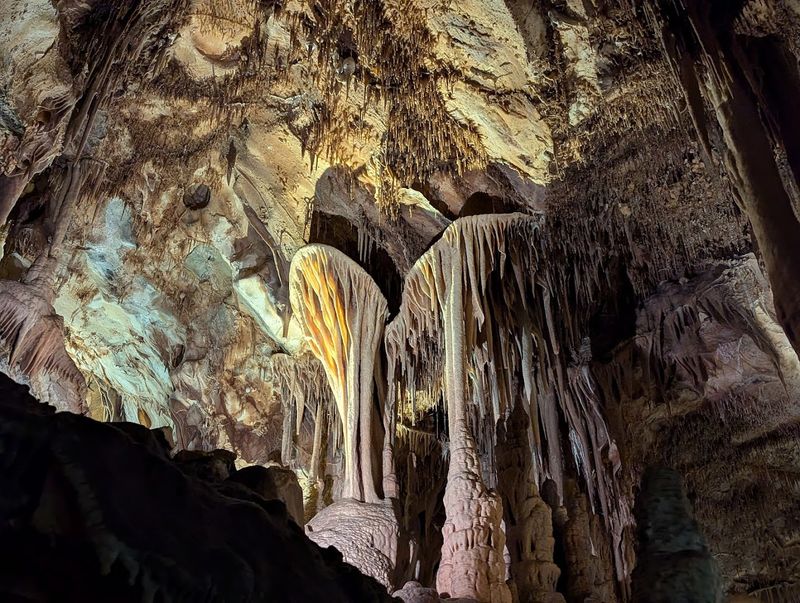
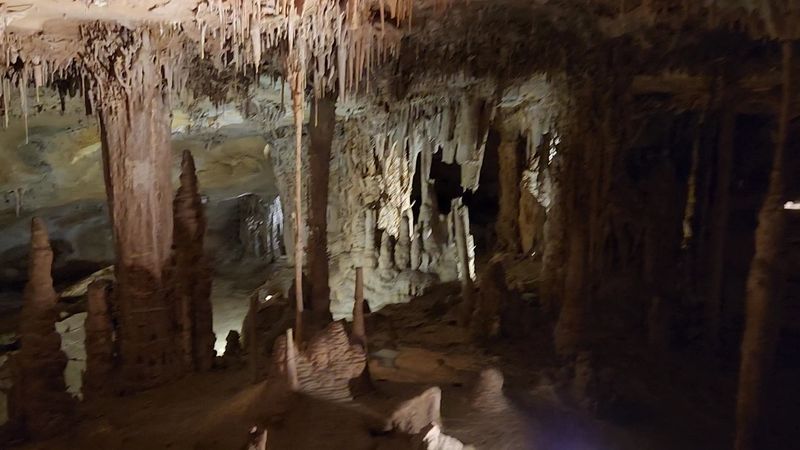
The standard repertoire of cave formations appears throughout the passages in impressive variety. Stalactites hang from ceilings like stone icicles, growing downward one drip at a time over thousands of years.
Stalagmites rise from the floor beneath them, built from the same mineral-laden water.
When stalactites and stalagmites meet, they form columns that span from floor to ceiling. Drapery formations develop where water flows down sloping surfaces, creating wavy curtains of stone.
Some are thin enough to transmit light when illuminated from behind.
Each room along the tour route showcases different combinations of these features. The Grand Palace contains some of the most elaborate displays, with formations in various stages of development.
Rangers explain how slight changes in water chemistry or flow patterns create the different shapes and textures visitors observe throughout the underground chambers.
The Cave Formed In Ancient Limestone Over Millions Of Years
The limestone containing the cave system began as ocean sediments more than five hundred million years ago. Ancient seas deposited layer upon layer of calcium-rich material that eventually hardened into solid rock.
Tectonic forces later lifted these marine deposits thousands of feet above sea level.
Water began its sculpting work once the limestone reached the surface environment. Slightly acidic groundwater dissolved the rock along fractures and bedding planes, creating the initial passages.
This process continued for millions of years, gradually enlarging the underground network.
Formation decoration came later, after the passages drained and air-filled spaces developed. Mineral-laden water dripping and flowing through the cave deposited the calcite formations visitors see today.
This decorative phase continues in the present, though at rates too slow for human observation. The cave remains geologically active, still growing and changing beneath the Nevada landscape.
Great Basin Has Many Caves, But Lehman Caves Is The Public Showpiece
Dozens of caves perforate the limestone formations throughout Great Basin National Park. Most remain undeveloped and closed to public access, preserved in their natural state for scientific study and bat habitat.
Lehman Caves stands apart as the only system developed for regular visitation.
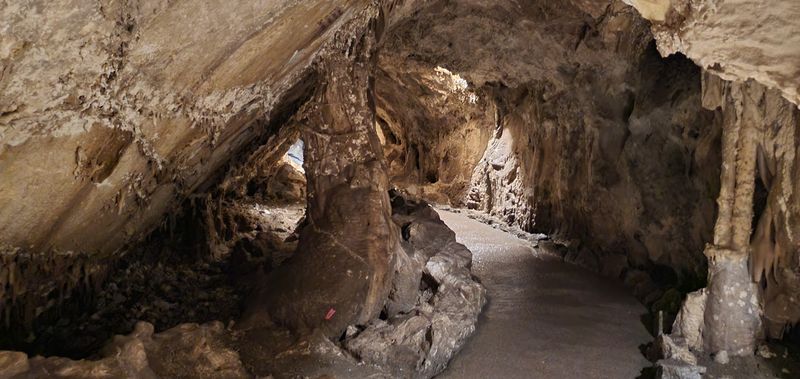
The decision to focus development on this single cave system protects the others while providing visitors with an outstanding underground experience. Infrastructure includes lighting, paved pathways, and accessibility features that would be impractical to replicate in multiple locations.
Rangers concentrate their interpretive expertise here rather than spreading resources thin.
Other caves in the park require special permits and technical skills to enter. Researchers occasionally access these systems to study cave biology and geology.
For the general public, Lehman Caves provides the best window into the park’s extensive underground world, showcasing formations and features representative of the broader cave network hidden beneath these Nevada mountains.