
This Nevada Lake Is So Clear You Can See The Bottom And Locals Want To Keep It That Way
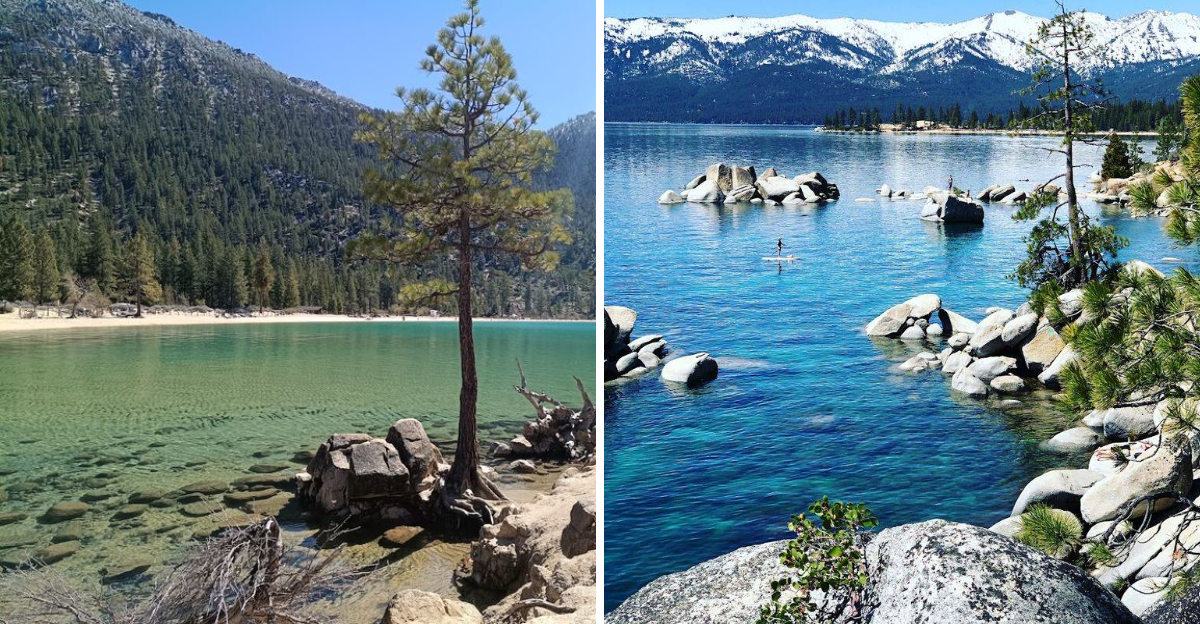
At Lake Tahoe, the water can look almost unreal, like the shoreline forgot how to be ordinary. On Nevada’s side, one beach turns a simple lake day into something you keep talking about after the towels are dry.
The water is so clear that stones, sand, and shallow ledges seem to float beneath the surface. Kids stare. Adults pull out their phones. Even people who swear they have seen it all usually pause for a second.
That postcard beauty needs care, though. Heavy crowds, careless trash, sunscreen, boats, and shoreline damage can all chip away at what makes this place special. Visit with respect, pack out every crumb, and enjoy the kind of blue that deserves protection.
The Water Is So Clear You Can See Rocks Beneath Your Feet
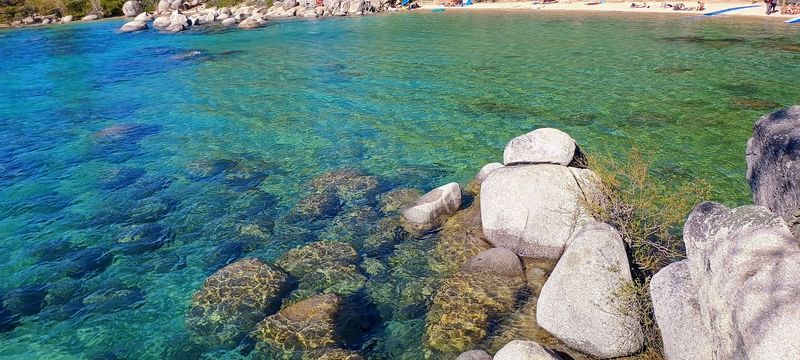
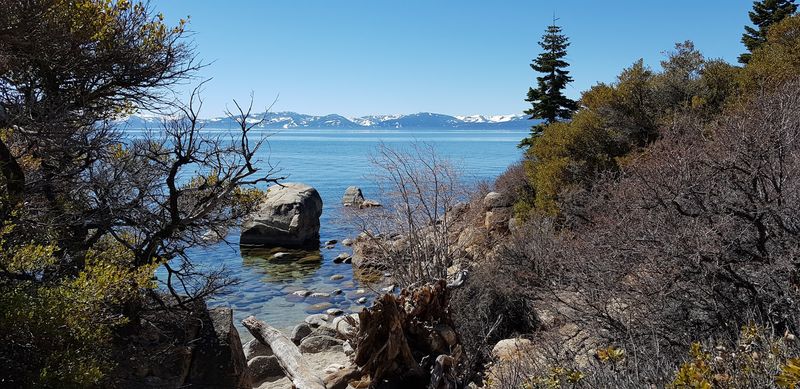
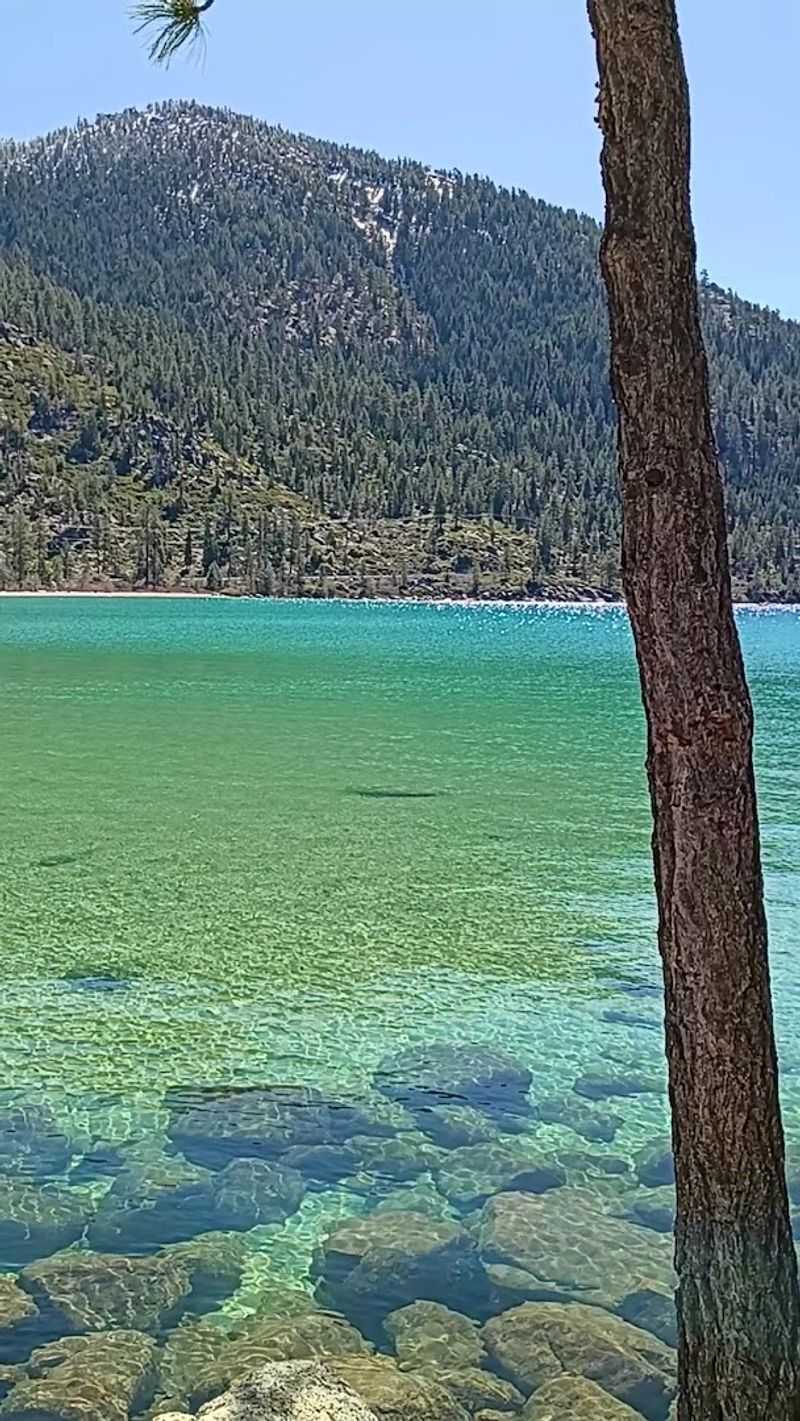
Standing at the edge of Sand Harbor feels like looking through the cleanest window imaginable. The water holds such clarity that pebbles twenty feet down appear within arm’s reach, creating an optical illusion that confuses depth perception in the most delightful way.
Sunlight penetrates deep into the lake, illuminating the rocky bottom and casting dancing shadows that shift with every ripple.
This transparency comes from Lake Tahoe’s unique position as an alpine lake fed by mountain snowmelt. The water contains remarkably few nutrients or sediments, which means algae struggles to grow and particles rarely cloud the view.
Visitors often stop mid-stride when they first glimpse this phenomenon, uncertain if they should trust their eyes.
The experience changes throughout the day as light angles shift. Morning brings a glassy stillness that turns the shallows into a perfect mirror, while afternoon sun creates brilliant turquoise hues that seem too vivid to be natural.
Sand Harbor Sits On Lake Tahoe’s Famous Nevada Shoreline
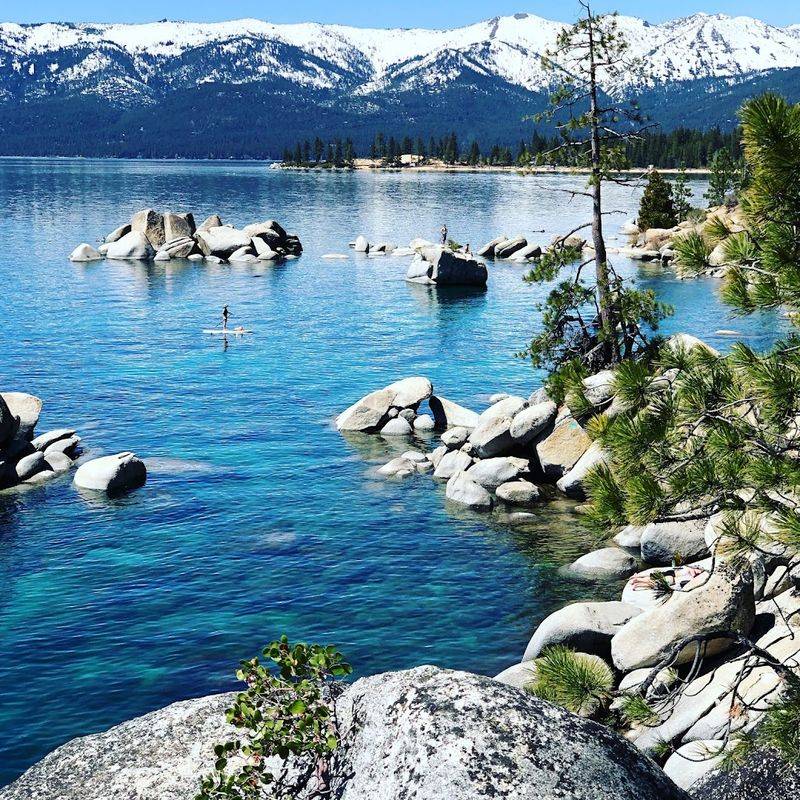
Geography placed Sand Harbor on the eastern edge of Lake Tahoe, technically within Nevada despite the lake straddling two states. This location matters more than casual visitors might realize, as it positions the beach to catch morning light while remaining somewhat sheltered from the prevailing winds that can churn the western shore.
The Nevada side tends to see slightly warmer temperatures and clearer skies during summer months.
Highway 28 runs along the shoreline here, making access straightforward for travelers circling the lake. The harbor sits within Lake Tahoe Nevada State Park, which provides structure and oversight that helps maintain the area’s condition.
Parking fills quickly during peak season, a practical reminder that this spot’s reputation has spread far beyond local knowledge.
The surrounding terrain features typical Sierra Nevada character: towering Jeffrey pines, granite outcroppings, and soil that drains quickly after storms. This environment creates the perfect frame for a beach that feels both wild and welcoming.
Giant Granite Boulders Make The Shore Look Almost Unreal
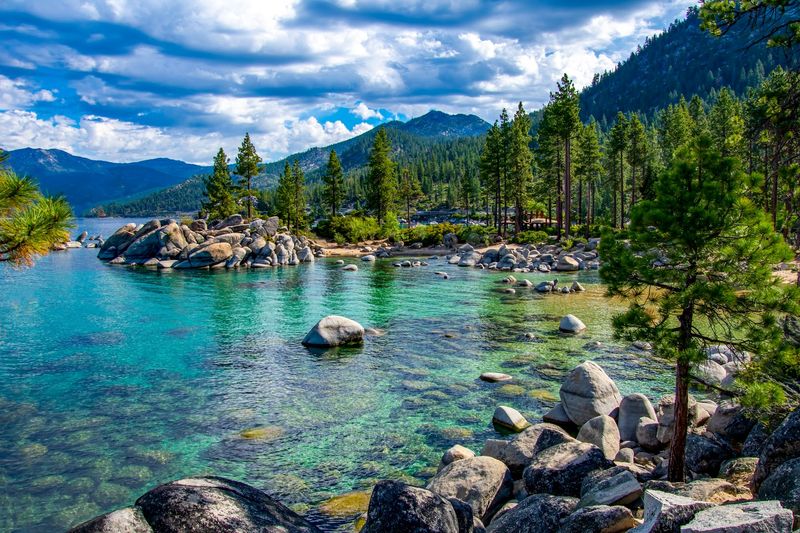
Massive rounded boulders scatter across Sand Harbor like toys left behind by giants. These granite formations rise from the sand and water, some as large as small cars, creating a landscape that photography cannot quite capture accurately.
The rocks have been shaped by centuries of water and weather into smooth, organic forms that invite climbing and exploration.
Geologists explain these boulders as remnants of the Sierra Nevada batholith, formed deep underground millions of years ago and later exposed through erosion. The granite here contains crystals of quartz, feldspar, and mica that sparkle when wet, adding another layer of visual interest to an already striking scene.
Children treat the formations as natural jungle gyms, while photographers circle them endlessly searching for the perfect angle.
The boulders also create sheltered pockets along the shore where water stays calmer and slightly warmer. These protected spots become favorite swimming areas for families who appreciate the natural windbreaks and the sense of privacy the rocks provide.
The Bright Sand Comes From Ancient Decomposed Granite
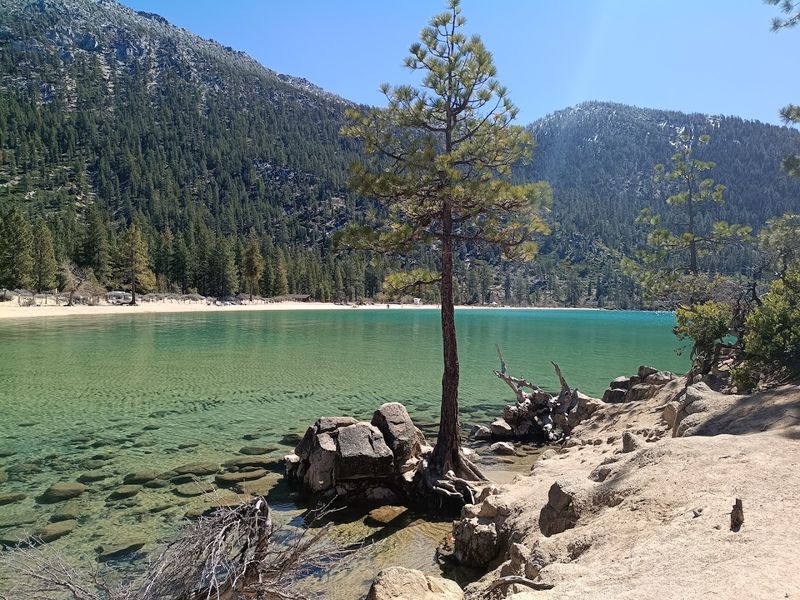
The sand beneath your feet at Sand Harbor tells a geological story millions of years old. Unlike coastal beaches built from shells and coral, this inland shore consists entirely of decomposed granite worn down from the surrounding mountains.
The grains feel coarser than ocean sand, with a gritty texture that comes from crushed quartz and feldspar crystals.
Color varies from pale tan to almost white depending on mineral content and how recently storms have churned the bottom. Fresh granite weathers into this sandy material through a process called granular disintegration, where temperature changes and water infiltration slowly break apart the rock’s crystalline structure.
The result spreads across the beach in layers that shift with each season’s wave action.
This composition means the sand drains exceptionally well after swimmers emerge from the water. It also stays relatively cool underfoot even during hot afternoons, though anyone planning extended beach time should still bring something to sit on.
The mineral makeup resists compacting, creating a surface that feels loose and mobile compared to finer coastal sands.
The Beach Has A Gentle Slope That Makes Swimming Feel Easy
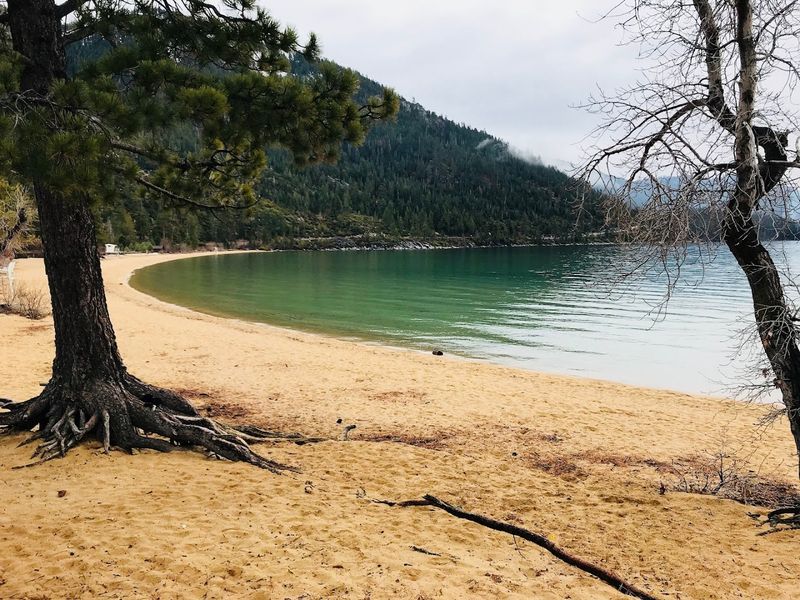
Sand Harbor’s underwater topography slopes away from shore at an angle that seems designed for human comfort. The gradual descent means swimmers can walk out thirty or forty feet before the water reaches chest height, giving everyone time to adjust to the temperature and find their confidence.
This gentle grade makes the beach particularly welcoming for children and nervous swimmers who appreciate being able to touch bottom far from shore.
The slope also creates ideal conditions for wading and playing in the shallows. Families spread out across the sunny area where water stays ankle to knee deep, warm enough for extended splashing without the commitment of full immersion.
The clear water lets parents keep constant visual contact with their children even when separated by distance.
As you move farther out, the bottom remains sandy and free of sudden drop-offs or hidden obstacles. The transition from shallow to deep happens predictably, without the surprise ledges that catch swimmers off guard at some beaches.
This reliable progression builds trust and encourages exploration.
Kayakers Get Some Of The Best Views On The Entire Lake
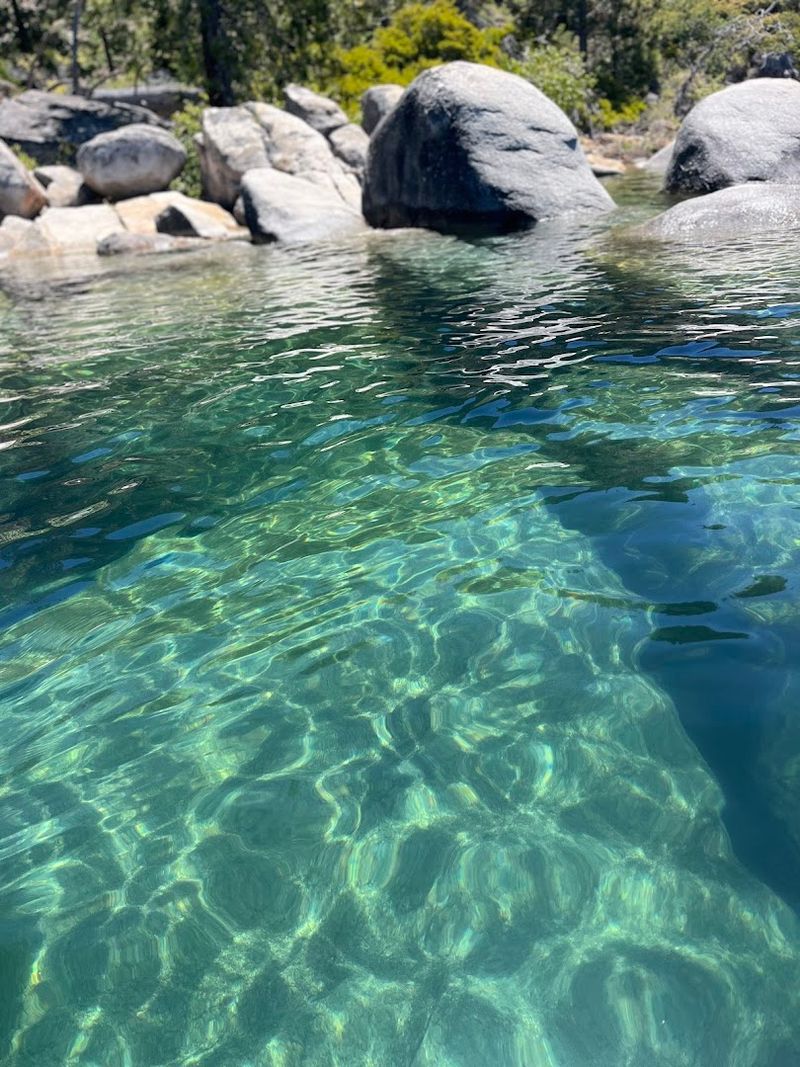
Launching a kayak from Sand Harbor opens perspectives impossible to gain from shore. Paddlers glide over water so transparent that the bottom remains visible even in deeper sections, creating the unsettling sensation of floating in midair.
The granite boulders that crowd the shoreline extend underwater, forming channels and passages that invite exploration by anyone willing to navigate carefully.
From water level, the surrounding mountains rise more dramatically than they appear from the beach. The scale shifts when you lose the reference point of solid ground, and suddenly the peaks seem to tower with new authority.
Paddling north or south along the shoreline reveals hidden coves and rock formations invisible to beachgoers, each turn presenting another composition of stone, water, and forest.
Morning kayaking offers the calmest conditions, when the lake surface mirrors the sky and every paddle stroke sends ripples across glass. Rental facilities operate near the beach during summer months, though many visitors bring their own boats to avoid the weekend crowds that form at the launch area.
Scuba Divers Come Here For More Than Just The Pretty Surface
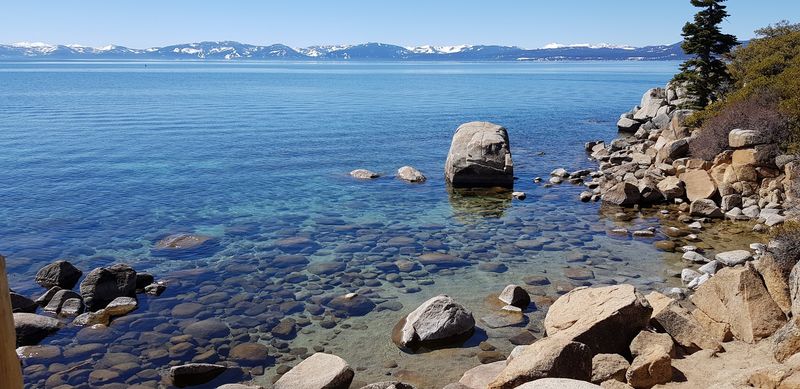
Below the surface that captivates swimmers and kayakers lies an underwater landscape that draws divers from across the country. The same clarity that makes shallow water so appealing extends down through deeper zones, offering visibility that can reach seventy feet or more on calm days.
Divers descend past granite walls and boulder fields, exploring a cold-water environment that feels more like an aquarium than a natural lake.
The rocky bottom supports limited life compared to ocean reefs, but the formations themselves provide the main attraction. Underwater photographers arrive hoping to capture the interplay of light, stone, and crystal-clear water that creates such unusual conditions.
The lake’s depth and cold temperatures preserve fallen trees and other objects with remarkable clarity, creating artificial reefs that host small fish populations.
Diving here requires proper cold-water equipment, as temperatures hover in the sixties even during summer. The effort rewards those who make it, offering an experience distinctly different from tropical diving yet equally memorable in its stark beauty and exceptional visibility.
Lake Tahoe’s Clarity Is Measured Scientifically Every Year
Scientists from UC Davis have been lowering a white disk into Lake Tahoe since 1968, tracking how deep they can see it before it disappears from view. This simple measurement, called Secchi depth, provides crucial data about the lake’s health and clarity over time.
The disk currently vanishes at around seventy feet down, a depth that seems remarkable until you learn it once exceeded one hundred feet in the clearest years.
The decline tells a concerning story about nutrient pollution, microscopic particles, and algae growth that gradually cloud the water. Researchers analyze these changes to understand what threatens the lake and how intervention might help.
Their work has identified sources of pollution ranging from urban runoff to disturbed soil from construction projects around the basin.
This ongoing monitoring shapes policy decisions about development, vehicle restrictions, and erosion control throughout the Tahoe region. The measurements prove that clarity can be lost gradually, almost imperceptibly, until one day the famous transparency has diminished beyond recovery.
Science provides the evidence that motivates protection efforts.
The Water Is Clear But Not Guaranteed To Stay That Way
Every car that drives to Sand Harbor carries tiny particles of brake dust, tire rubber, and leaked fluids that eventually wash into the lake during storms. Every footstep on eroding trails sends soil toward the water.
Every boat motor stirs sediment and deposits microscopic pollutants. The cumulative effect of millions of visitors over decades creates pressure that even a massive lake cannot ignore indefinitely.
Climate change adds another layer of concern, as warmer water temperatures could encourage algae blooms that cloud the famous clarity. Invasive species like Asian clams filter the water but deposit nutrients that feed unwanted plant growth.
Fire danger increases in the surrounding forests, threatening catastrophic burns that would send ash and debris cascading into the basin.
Local organizations work constantly to address these threats through everything from street sweeping programs to native plant restoration projects. They understand that clarity lost is nearly impossible to restore, making prevention the only realistic strategy.
The lake’s current condition represents not a permanent state but a temporary victory that requires ongoing effort to maintain.
Summer Crowds Prove This Place Is No Ordinary Beach Stop
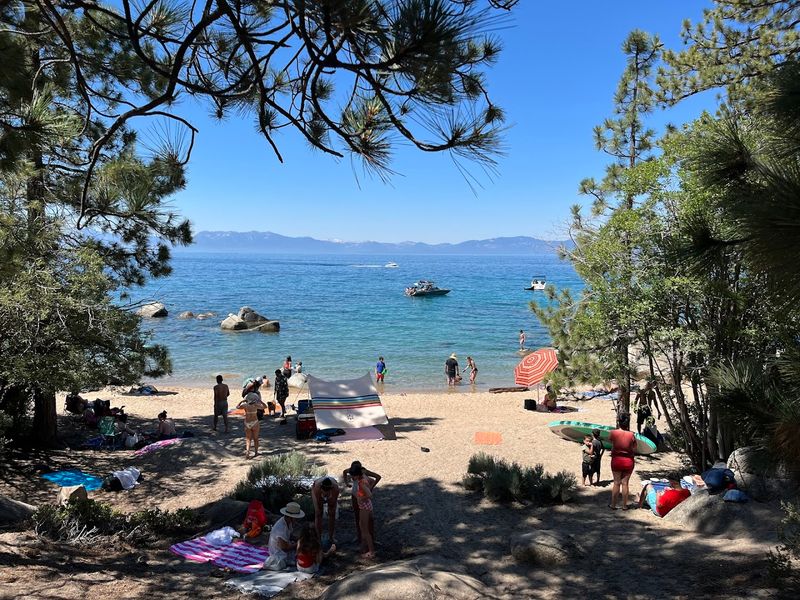
By mid-morning on July weekends, the parking lot at Sand Harbor reaches capacity and rangers turn away vehicles at the entrance. The beach fills with families claiming spots among the boulders, their colorful umbrellas and towels creating a patchwork across the sand.
This popularity creates its own set of challenges, as too many feet compact the soil, too much sunscreen enters the water, and too many cars idle on nearby roads waiting for parking spaces to open.
The crowds prove that Sand Harbor’s reputation has spread far beyond regional knowledge. International tourists add it to California road trips, while Bay Area residents make the three-hour drive for weekend getaways.
Social media amplifies the attraction, with photographs of the clear water and dramatic rocks drawing viewers who then become visitors themselves.
Arriving early or visiting during shoulder seasons provides the best chance of experiencing the beach without the summer masses. Weekday mornings in September offer nearly empty shores and water just as clear, with the added benefit of fall colors beginning to touch the surrounding forest.