
This Nevada Opera House Has Been Hosting Performers For Well Over A Century
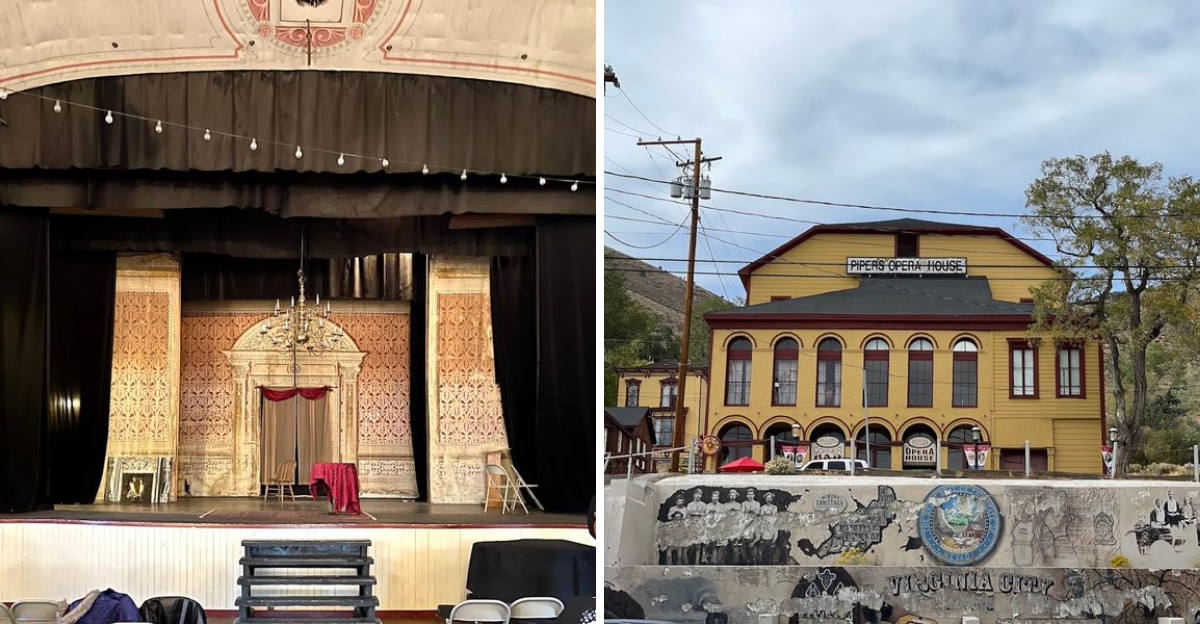
Flames tore through this stage twice, and somehow the curtain always rose again. That grit turned a remote mountain outpost into one of Nevada’s liveliest stops for touring legends.
Mark Twain traded jokes from this platform, and legendary Shakespearean actors owned it after him. A heavyweight boxing champion even trained here before his biggest fight.
Believe it or not, bears once brawled on this floor, and roller skates replaced them decades later. History here gets stranger and better the deeper you dig.
Staff still swear phantom applause drifts through an empty balcony after dark. No one has fully explained it, and that only makes it more fun to imagine.
Add this stop to your next Nevada road trip, and you might just walk away with a story worth retelling.
A Phoenix Rising From Ash
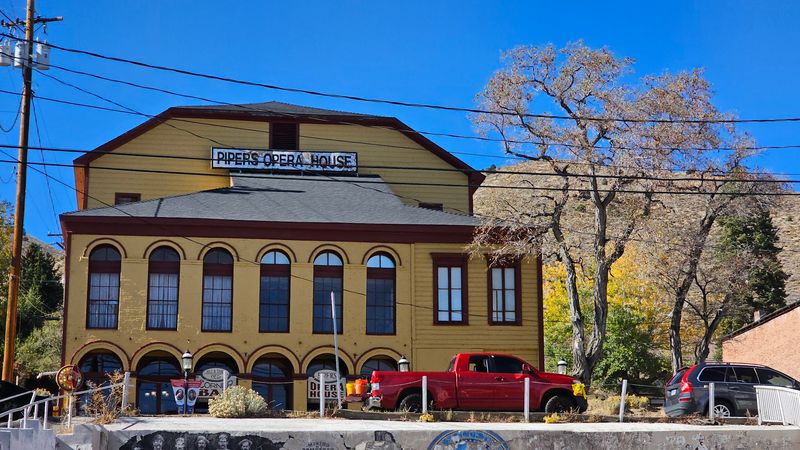
Fire tried twice to erase this place from history. It failed both times.The first opera house on this site opened in 1863, built to serve a booming silver mining community hungry for entertainment.
The Great Fire of 1875 reduced it to rubble. A second structure rose in its place by 1878, only to burn again in 1883.
Most people would have walked away. Instead, a new building was underway almost immediately after the second blaze.
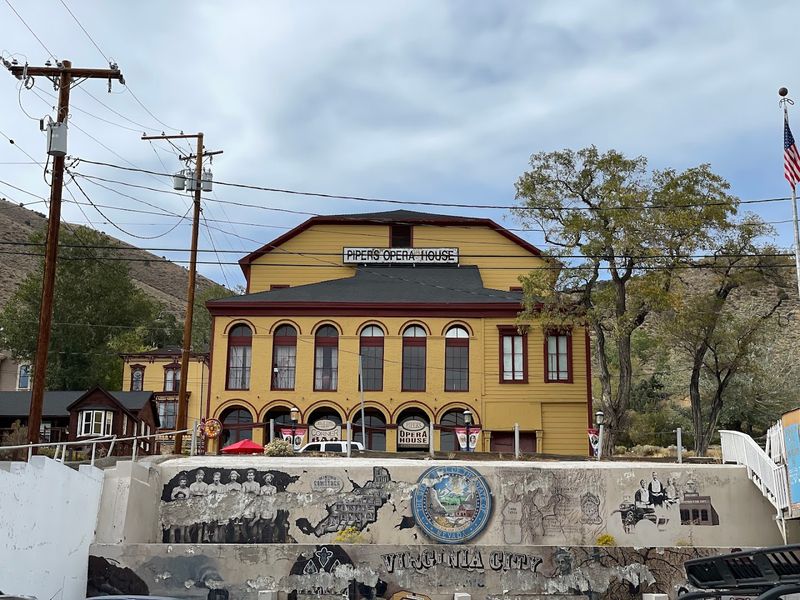
On March 6, 1885, the current Piper’s Opera House opened its doors at 12 B Street, Virginia City, NV 89440. It stands as the third version of a venue that simply refused to quit.
That stubborn resilience mirrors the spirit of Virginia City itself, a town built on grit and silver. The building’s survival feels almost defiant, like a final answer to every disaster that tried to silence it.
Nevada does not forget its landmarks easily.
The Legends Who Graced This Stage
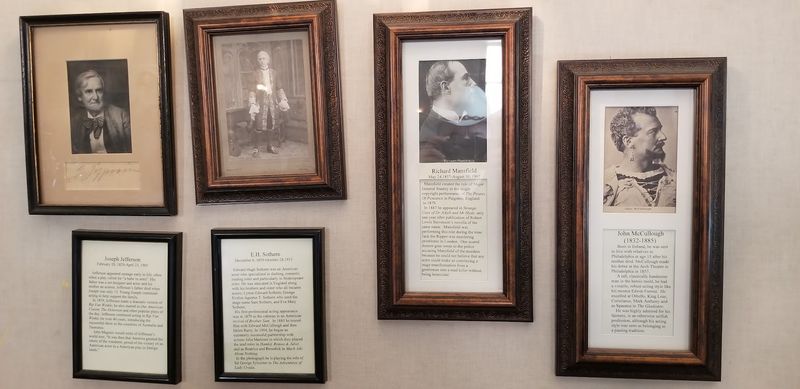
The roster of performers who once stood on this stage reads like a who’s who of 19th-century American celebrity.
Mark Twain delivered lectures here, charming crowds with his razor-sharp humor. The great Shakespearean actor Edwin Booth performed his most celebrated tragedies under these rafters.
Musical stars like Lilly Langtry, Al Jolson, and John Philip Sousa each brought something unforgettable to the house. Even heavyweight boxing champion Gentleman Jim Corbett used the venue for training ahead of an 1897 title bout.
Actresses Maude Adams and Lillian Russell both graced this stage during its heyday. Presidents and politicians passed through as well, drawn by the opera house’s reputation as the cultural crown of Nevada.
For a remote mining town, the caliber of talent that performed here was extraordinary. The stage did not just reflect what Virginia City aspired to be.
It proved what the town already was: ambitious, bold, and absolutely serious about the arts.
Built To Impress, Built To Last
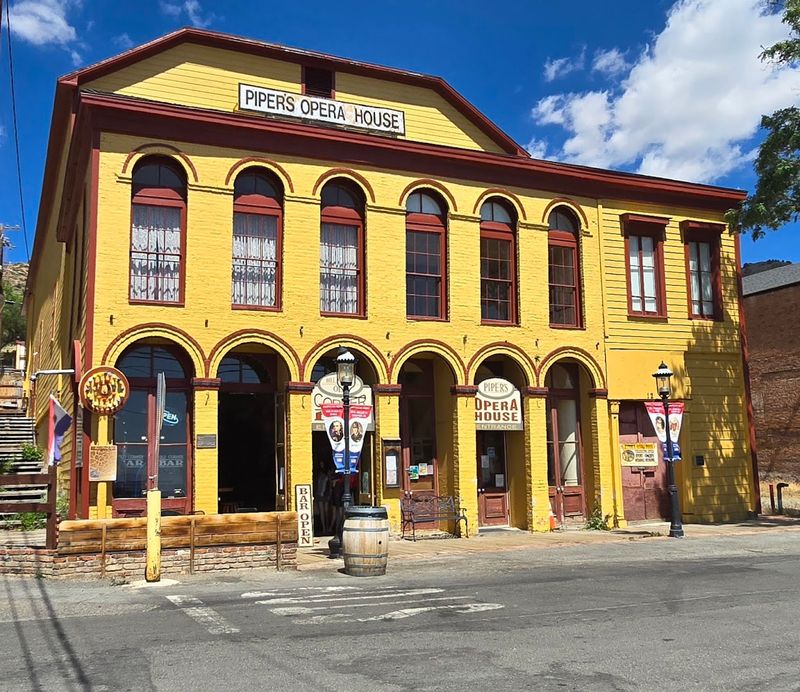
The moment visitors step inside, the architecture does the talking.
The building features a robust stone foundation topped with a masonry facade and wooden shiplap siding. Asymmetrical arched windows give the exterior a character that feels distinctly frontier yet surprisingly refined.
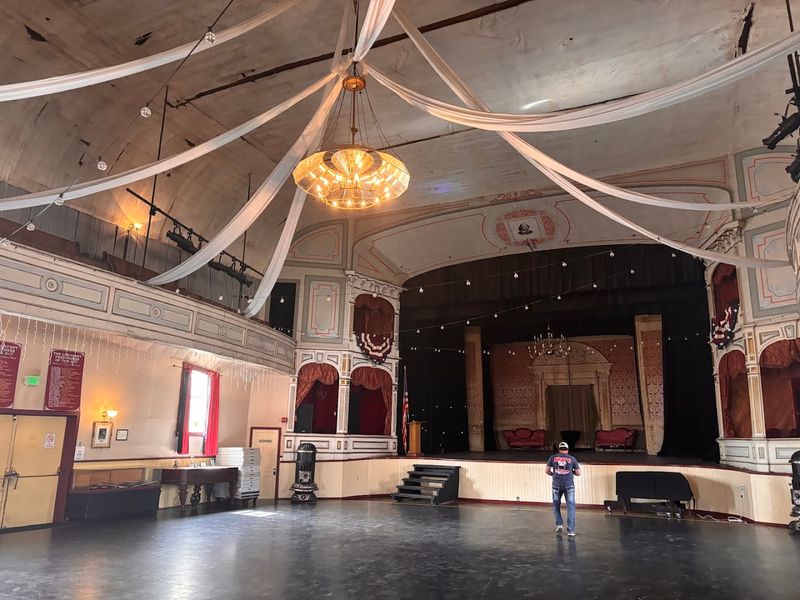
Inside, the auditorium is intimate but cleverly designed. A sloped stage ensures clear sightlines from every seat.
Two-tiered boxes flank the stage on either side, adding an elegant, almost regal quality to the room.
A suspended balcony wraps around the parquet seating area below. Colorful, textured wallpapers still line the walls, believed to be remnants of the original 1885 design.
The proscenium arch displays intricate Elizabethan strapwork, crowned with a portrait of William Shakespeare himself. Wooden flooring runs throughout, worn smooth by generations of footsteps.
Every detail in this space was chosen with intention. The result is a room that feels both historically grounded and genuinely alive, ready for the next performance at any moment.
This Opera House is located at 12 B St, Virginia City, NV 89440.
Far More Than Opera Ever Was
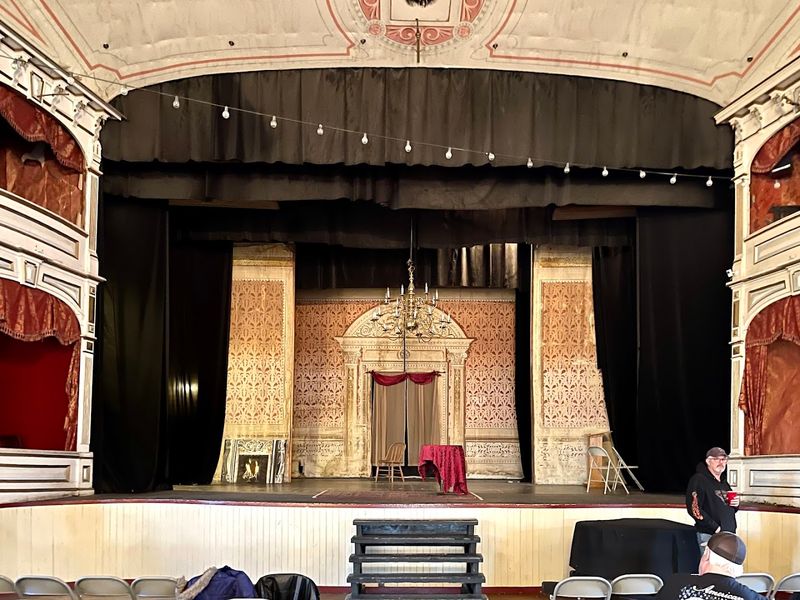
Opera was just the beginning of what this building agreed to host.
Throughout its long history, Piper’s Opera House functioned as the town’s all-purpose gathering space. Political debates echoed through its halls.
Religious revival meetings drew fervent crowds. Community dances filled the floor with energy and noise.
The venue even hosted boxing matches and, in a truly wild chapter of its past, bear fights. The 19th century had a very different definition of family entertainment.
As decades passed, the building reinvented itself again and again. It became a silent movie house when cinema swept the nation.
Roller skating and basketball games also found a home here. This extraordinary range of uses says something important about the venue’s relationship with the community.
It was never precious or exclusive. It opened its doors to whatever the people of Virginia City needed at any given moment.
That democratic spirit is part of what makes its history so endlessly fascinating and so deeply Nevada in character.
A National Treasure With Official Recognition
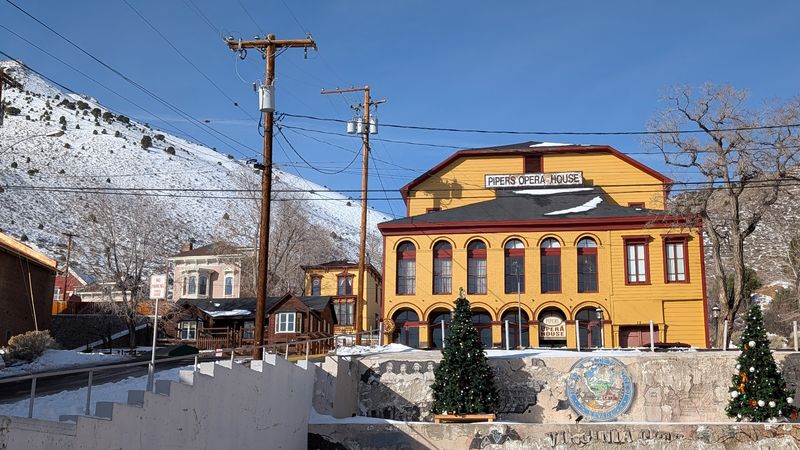
Not every old building earns a place on the National Register of Historic Places. This one did, and the recognition is well deserved.
Piper’s Opera House is listed among America’s most significant vintage theaters. It holds the designation of Nevada Historical Marker No. 236, a formal acknowledgment of its cultural weight.
The League of Historic Theaters also counts it among its honored members. These designations are not just ceremonial.
They reflect the opera house’s genuine importance to the story of American entertainment and westward expansion.
During the height of the Comstock Lode, this venue drew international talent to a remote mountain town. That achievement alone would be remarkable.
But the opera house did not stop there. It continued to serve its community through economic downturns, fires, and social change.
Its survival and continued use make it a living piece of American heritage, not a relic behind glass. For anyone serious about understanding the cultural history of Nevada, this is an essential stop.
Whispers, Shadows, and Unexplained Footsteps
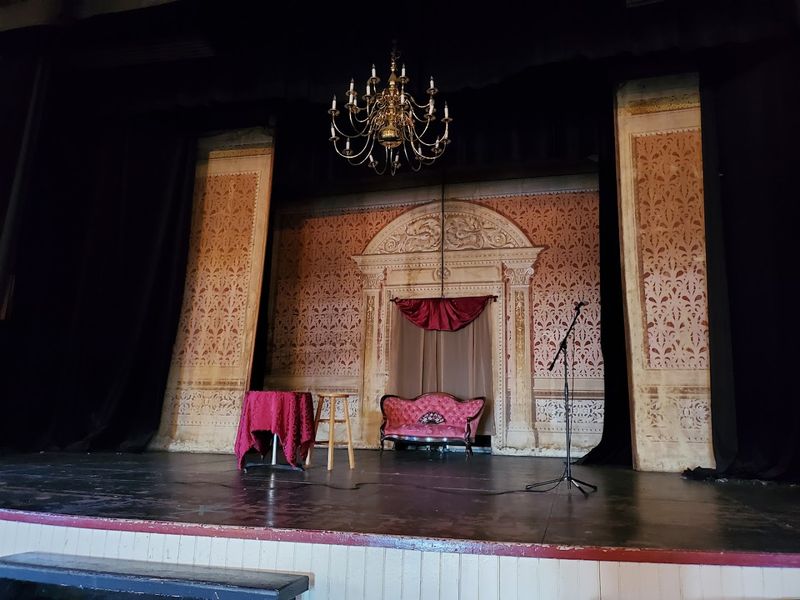
History is not the only thing said to linger inside these walls.
Visitors and staff have reported unexplained experiences inside the opera house for years. Some describe seeing ghostly figures seated in the balcony when the hall is otherwise empty.
Others mention hearing whispers drifting through corridors where no one stands. Phantom applause has reportedly broken the silence on more than one occasion, as though an unseen audience is still responding to a long-finished performance.
These accounts are taken seriously by many who visit. The creaky wooden floorboards and dim corners certainly set the mood.
Whether one believes in such things or not, the atmosphere inside Piper’s Opera House is undeniably charged. It carries the weight of thousands of performances and the energy of countless people who passed through over more than a century.
That kind of accumulated history has a presence all its own. Virginia City, Nevada, has always had a reputation for the unexplained, and this venue fits right into that tradition.
The Long Road to Restoration
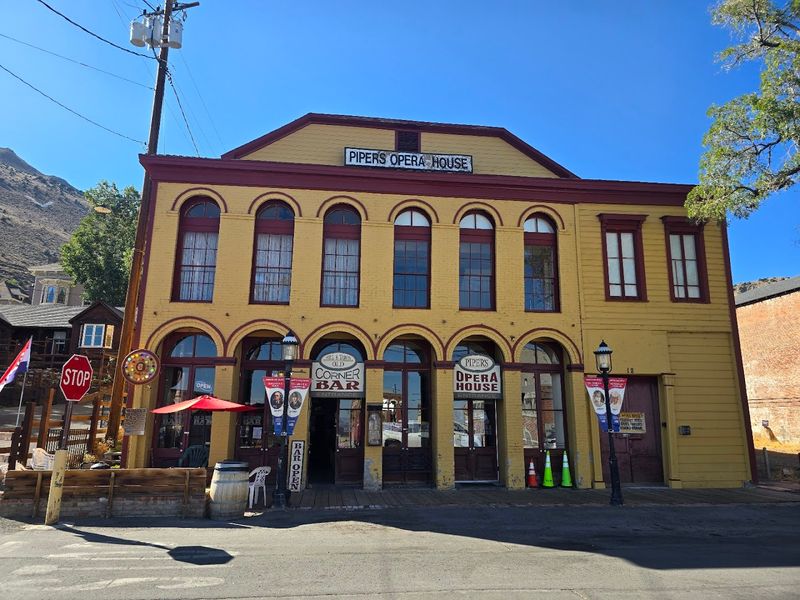
Surviving fires is one thing. Surviving neglect is another challenge entirely.
By the 1920s, the opera house had fallen into disuse and was officially condemned. It sat quiet for roughly two decades, its future uncertain.
The building eventually reopened as a museum, and meaningful restoration efforts gained momentum in the 1960s. A descendant of the original builder led much of this early preservation work, driven by a deep personal connection to the venue’s legacy.
Ownership eventually transferred to a non-profit organization dedicated to historic preservation. Grants from the Nevada Department of Cultural Affairs helped fund critical structural reinforcements.
A National Park Service Save America’s Treasures grant also contributed to the effort. Storey County stepped in to purchase the property in 2017, further securing its future.
Restoration work continues today, supported by grants and community fundraising. The commitment required to keep a building like this alive is considerable.
But Virginia City clearly believes the effort is worth every penny, and the results speak for themselves.
Still Alive, Still Performing
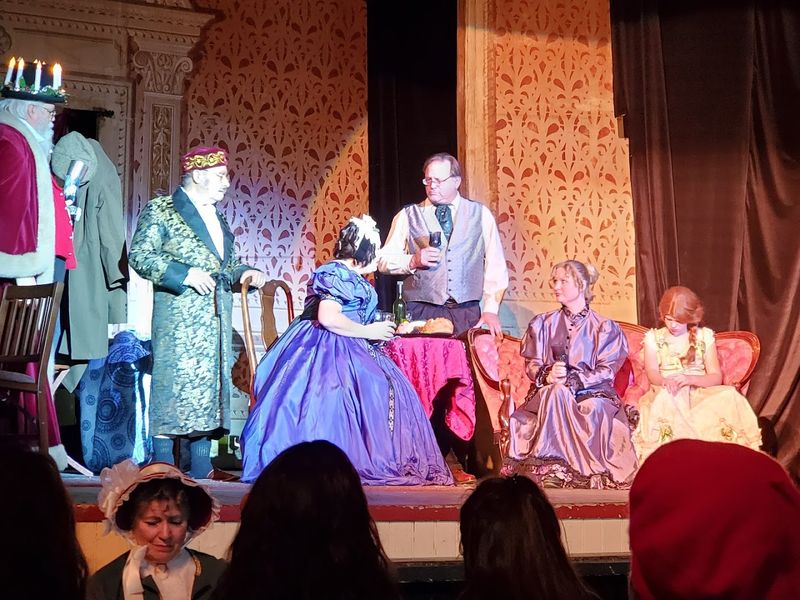
The curtain never really came down for good at this place.
Today, Piper’s Opera House operates as a fully active performing arts center. Theatrical productions take the stage regularly, ranging from dramatic plays to festive seasonal shows.
Past performances have included everything from Shakespearean productions to original works inspired by local history. Concerts bring live music back to a hall that has always thrived on sound.
The acoustics, shaped by the original 19th-century design, still serve performers remarkably well.
Private events also fill the calendar throughout the year. Weddings held inside the historic hall carry an atmosphere that modern venues simply cannot replicate.
Family reunions, fundraisers, and community meetings all find a home here. The venue’s adaptability has always been one of its greatest strengths, and that quality remains firmly intact.
For a building that once hosted bear fights and silent films, hosting a wedding or a concert feels almost understated. Nevada history, it turns out, makes for an extraordinary backdrop to just about anything.
Touring the Hall on Your Own Terms
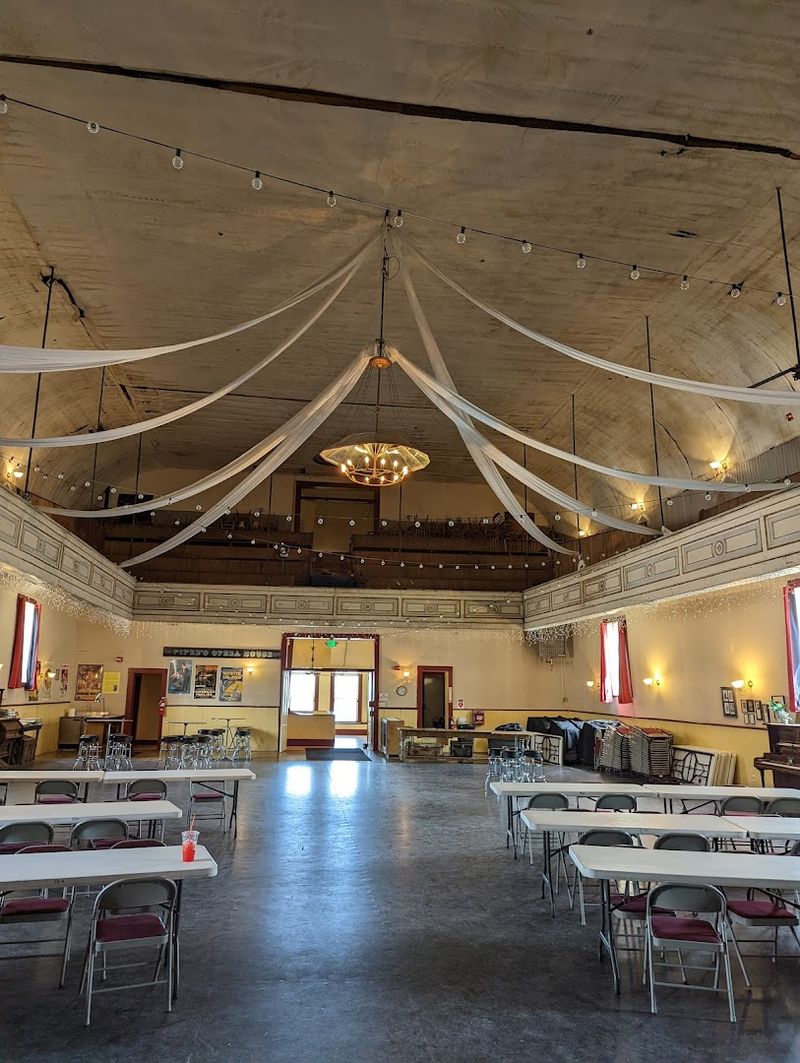
Seeing this place without a performance scheduled is still absolutely worth the trip.
Self-guided tours are typically available during the warmer months, running roughly from April through October. Visitors can roam the auditorium, examine the ornate proscenium arch up close, and soak in the layers of history embedded in every corner.
The tour experience is unhurried and personal, allowing guests to move at their own pace and spend time with whatever catches their eye.
Guided tours are also offered on certain occasions, with knowledgeable staff sharing detailed stories about the building’s past, its famous visitors, and the community that kept it alive through hard times. Lectures and educational programs round out the programming for those who want to go deeper into the history of Virginia City and the broader Nevada silver era.
Whether visiting for a show or simply exploring, the opera house rewards curiosity generously. Few buildings in the American West pack this much genuine history into a single address.
The Red Carpet Connection
One of the most charming pieces of trivia connected to this opera house involves something seen at award shows worldwide.
Local lore suggests that the tradition of rolling out a red carpet for distinguished guests has roots in Virginia City, with Piper’s Opera House often cited as part of that story. Whether the claim holds up under strict historical scrutiny is a matter of debate, but the idea fits perfectly.
This was a venue that treated its performers and patrons with genuine ceremony. Grand arrivals were part of the culture here long before Hollywood made them famous.
The story adds a layer of playful pride to an already impressive legacy. Visitors who hear it tend to look at the entrance a little differently afterward, imagining the procession of 19th-century stars sweeping through the doors.
It is the kind of detail that makes history feel immediate and personal rather than distant and dusty. Nevada has always had a flair for the dramatic, and this tale is no exception.
Why This Place Stays With You
Some places are interesting. This one is unforgettable.
Piper’s Opera House carries a rare combination of qualities that most historic venues can only approximate. It has survived catastrophe multiple times.
It has hosted figures who shaped American culture. It has served its community in ways that go far beyond entertainment.
And it has done all of this while remaining an active, functional space rather than retreating into museum-piece status. That vitality is what sets it apart.
Visitors consistently describe a feeling of genuine connection when they step inside. The building does not perform its history at you.
It simply exists, fully and authentically, in a way that draws people in and holds them there. Virginia City itself is a compelling destination, but Piper’s Opera House gives the visit a focal point and a story worth carrying home.
For anyone passing through Nevada with even a passing interest in American history, skipping this stop would be a decision worth regretting.