
This New York Bridge Dares Drivers To Take One Of The Most Intense Rides In The State
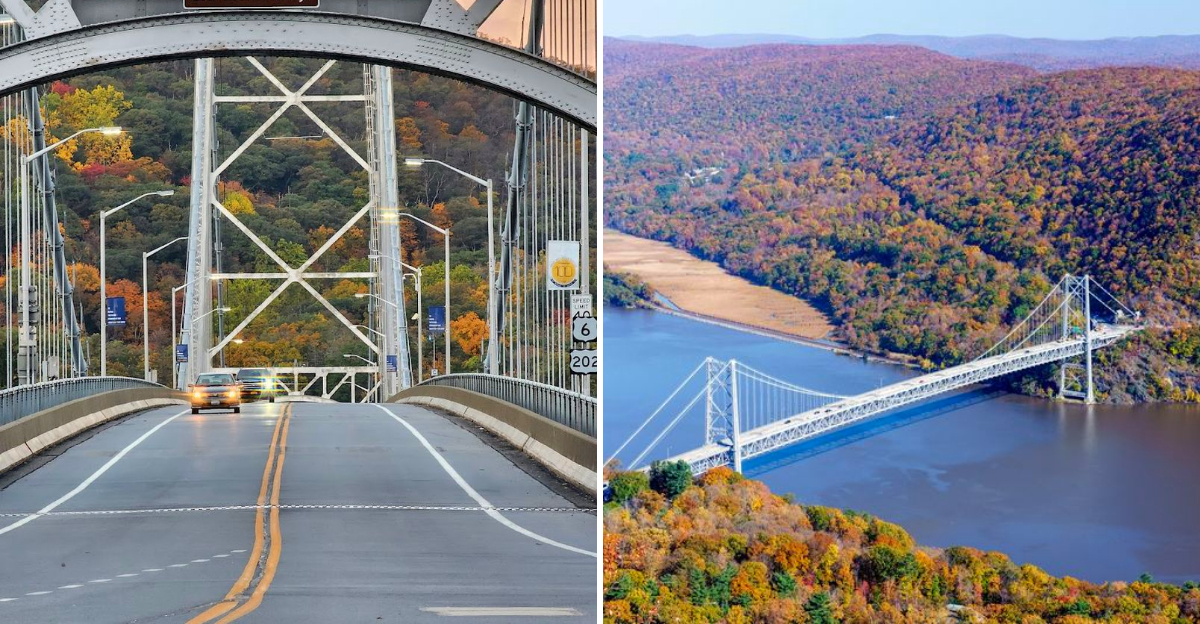
Crossing this New York bridge is not quite like any ordinary drive. The moment your car begins to climb, the structure stretches ahead in a way that instantly grabs your attention, turning what could be a routine crossing into something far more dramatic.
For many drivers, the experience feels equal parts thrilling and unforgettable.
As the road rises higher, sweeping views begin to unfold in every direction. The height, the length, and the sense of exposure combine to create a ride that feels surprisingly intense compared with most bridges in the state.
Some drivers approach it with excitement, others with a little caution, but almost everyone agrees on one thing. Crossing this bridge is an experience you will not forget anytime soon.
A Crossing That Commands Your Full Attention
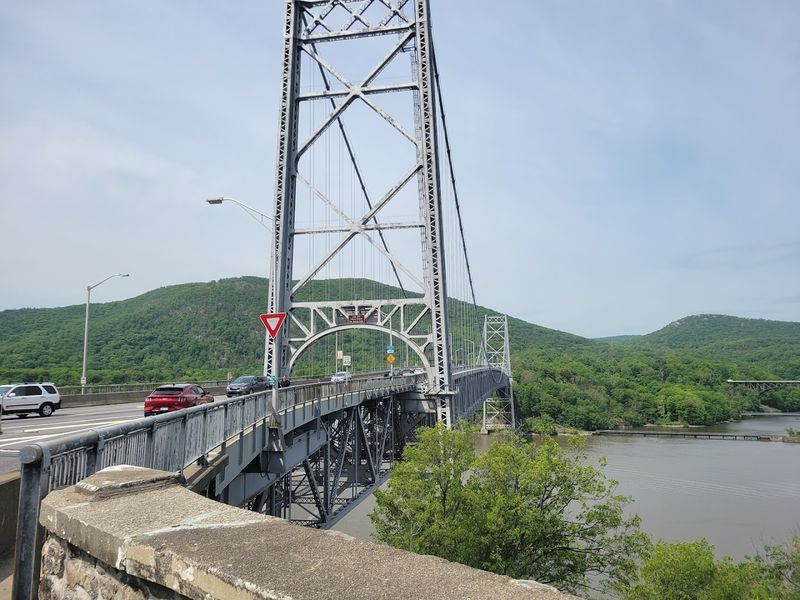
Few road experiences in New York prepare you for the moment Bear Mountain Bridge comes into full view. The approach alone sets a certain mood, with steep inclines and tight curves that keep drivers fully alert well before they even reach the span itself.
The road demands respect, and most drivers give it willingly.
The bridge was completed in 1924 and held the remarkable distinction of being the longest suspension bridge in the world at the time of its opening. That record has long since passed to other structures, but the engineering achievement still earns quiet admiration from anyone who studies the towers up close.
Standing beneath those cables feels like standing inside a piece of living history.
For drivers, the experience is less about speed and more about focus. The narrow lanes, the height above the water, and the sweeping curves leading onto the span create a driving environment unlike anything found on a typical New York highway.
Passengers tend to go quiet right around the midpoint, and that silence says everything.
Bear Mountain Bridge And Its Place In History
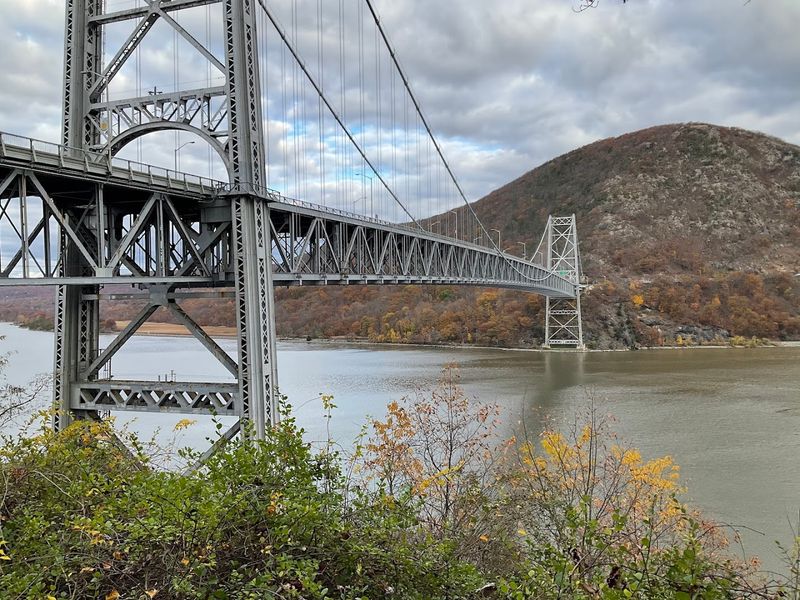
Bear Mountain Bridge opened to traffic on November 27, 1924, making it one of the most ambitious infrastructure projects of its era. Located near Garrison, NY 10524, the bridge connects Bear Mountain State Park on the western shore of the Hudson River to the town of Cortlandt on the eastern side.
The opening was celebrated as a genuine engineering triumph.
At the time of its completion, the main span measured 1,632 feet, surpassing every suspension bridge then in existence. That title passed to the Benjamin Franklin Bridge the following year, but the Bear Mountain Bridge never lost its character or its reputation.
Engineers and historians still reference it as a landmark in American bridge construction.
The bridge was originally built as a private toll venture and was later acquired by New York State. Today a modest toll is collected for eastbound crossings, currently just $1.65, which has to be one of the best value tickets in the state for what you receive in return.
The Appalachian Trail also crosses the bridge, giving it a dual identity as both a road crossing and a celebrated hiking landmark.
What The Hudson River Looks Like From Up There
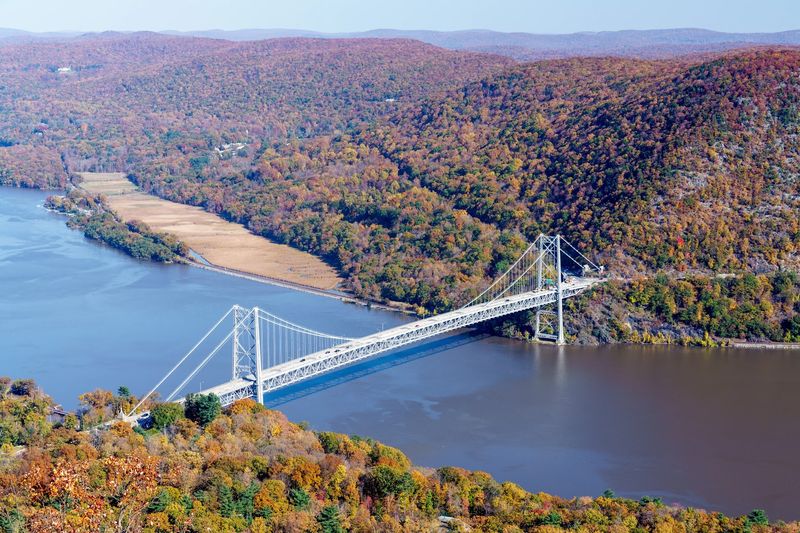
Standing on the pedestrian walkway of Bear Mountain Bridge and looking north or south along the Hudson River is one of those experiences that earns its reputation entirely on its own merits. The river stretches wide and calm in both directions, framed by forested hillsides that shift color dramatically with the seasons.
Late October tends to produce the most vivid scenes.
The walkway runs along the side of the bridge and is accessible to pedestrians and cyclists. Historical information panels are placed at various points along the route, giving walkers a chance to learn about the bridge’s construction and significance without having to seek out a separate museum or visitor center.
The combination of education and scenery works surprisingly well.
Photographers tend to find the midpoint of the bridge particularly rewarding. From there, the towers frame the sky on either side while the river below reflects whatever light the day has chosen to offer.
Morning visits produce a softer, more atmospheric quality of light, while afternoon crossings catch the sun hitting the water at sharper, more dramatic angles. Either way, the camera rarely stays in the bag for long.
Fall Foliage Turns This Drive Into Something Else Entirely
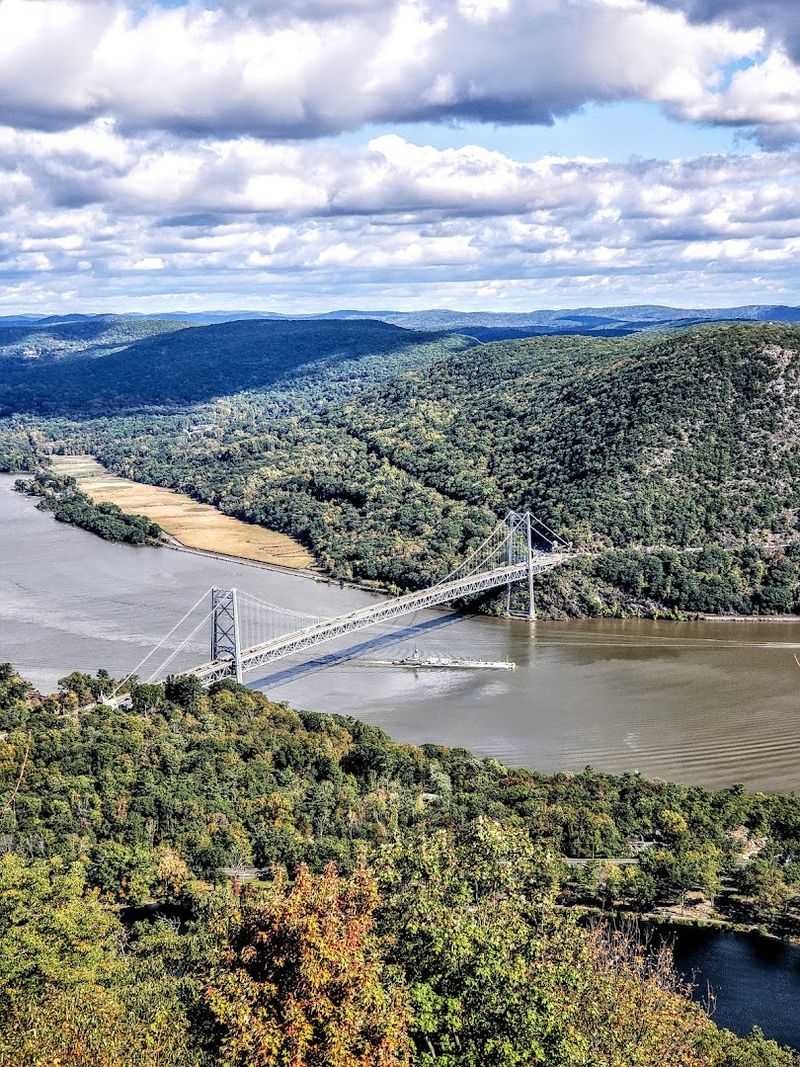
Autumn along the Hudson Valley has a well-earned reputation, and Bear Mountain Bridge sits at the center of some of the most celebrated fall foliage scenery in the northeastern United States. The surrounding hillsides ignite with color from late September through early November, turning an already memorable drive into something that feels almost unreasonably beautiful.
Locals plan their weekends around it.
The bridge itself becomes a kind of frame through which the landscape performs. Trees on both banks turn shades of deep crimson, burnt orange, and gold, and the river below picks up those colors in its surface on calm days.
Driving across during peak foliage season means every glance out the window delivers something worth remembering.
Nearby attractions add to the seasonal appeal. Anthony’s Nose trail sits close by and offers hikers an elevated vantage point above the bridge and river.
Cold Spring, a charming Hudson Valley town, is roughly five miles away and makes a natural companion stop for anyone spending a full day in the area. Perkins Memorial Tower is another popular destination that pairs well with a bridge crossing on a clear fall afternoon.
Walking And Cycling Across A Living Landmark
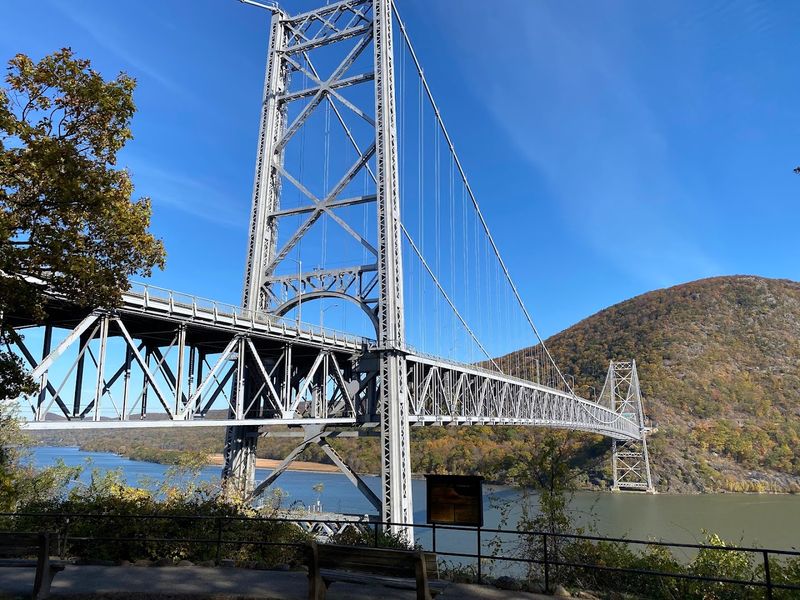
Not every great bridge experience happens from behind a steering wheel. Bear Mountain Bridge welcomes pedestrians and cyclists, and the walkway along its side offers a pace of engagement that drivers simply cannot access.
Moving slowly across the span means you hear the wind in the cables, feel the subtle movement of the structure, and actually have time to look around without worrying about traffic.
The Appalachian Trail passes directly through the bridge, which gives the crossing a special significance for long-distance hikers. Thru-hikers making their way along the trail use this bridge as a functional river crossing and a genuine milestone.
Sharing the walkway with someone carrying a full pack and a few hundred trail miles on their boots adds a certain texture to the experience that is hard to manufacture elsewhere.
Arriving by train is an option that deserves more attention than it typically receives. The Manitou train station sits within walking distance, and the route from the station to the bridge passes through quiet, forested terrain that eases you into the landscape before the bridge itself appears.
For anyone who wants to experience the Hudson Valley without a car, this approach offers a genuinely satisfying alternative.
The Engineering That Made It Possible
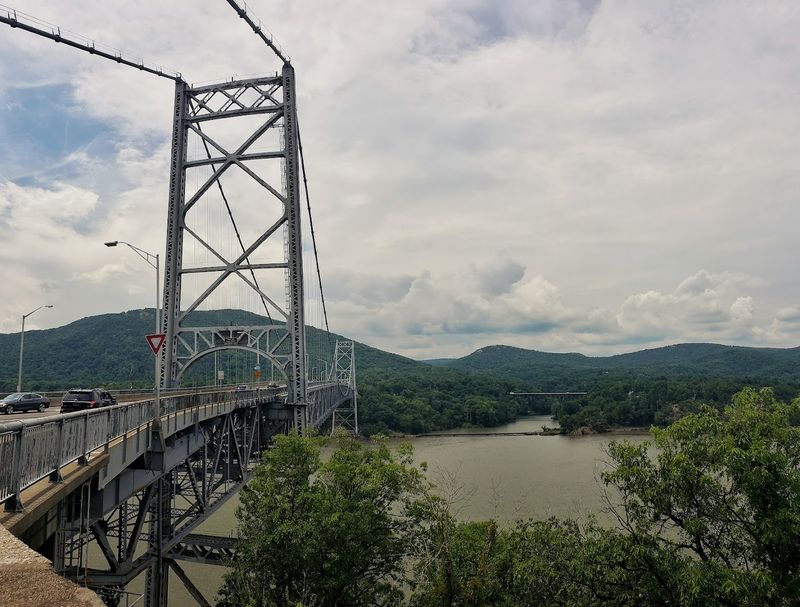
Building a suspension bridge across the Hudson River in the early 1920s was not a straightforward undertaking. The river at this location is both wide and deep, presenting significant challenges for the construction crews who worked on the project for several years before the 1924 opening.
The finished structure reflected the ambitions and technical capabilities of an era that believed large problems had large solutions.
The main span of 1,632 feet required careful calculation of cable tension, tower placement, and deck loading. The two stone-faced towers that anchor the suspension cables rise prominently above the roadway and give the bridge a visual solidity that purely steel structures sometimes lack.
Their appearance has aged gracefully, fitting naturally into the rocky, wooded landscape surrounding them.
The well-designed roundabout at the eastern approach is worth a mention because it manages traffic flow with an efficiency that feels almost elegant for a structure of this age. Large vehicles navigating the steep approaches and curves must take their time, which means the bridge naturally regulates its own pace.
There is something satisfying about infrastructure that encourages drivers to slow down and pay attention rather than simply passing through on autopilot.
Why Drivers Talk About This Bridge Long After They Cross It
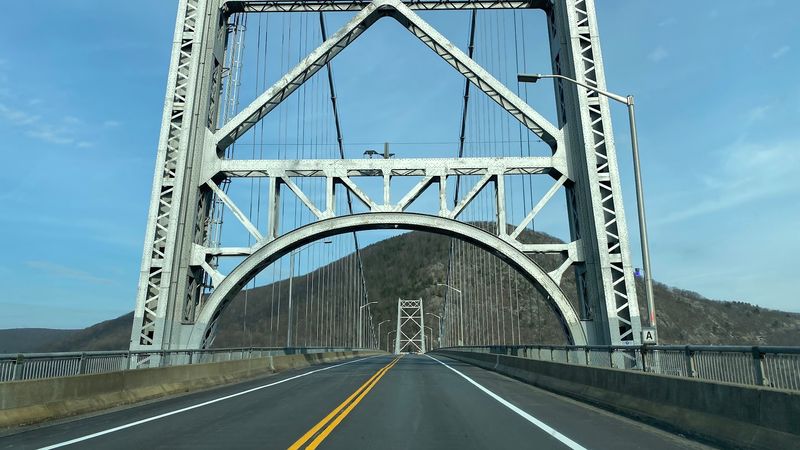
A bridge that earns genuine conversation afterward is rarer than it sounds. Bear Mountain Bridge manages this because the driving experience involves enough variables to keep the mind engaged throughout.
The steep approach grades, the tight curves on both ends, the narrow lanes across the span, and the constant awareness of the river far below all contribute to a crossing that feels active rather than passive.
Large vehicles find the approach particularly demanding. Trucks and RVs must navigate curves that were designed in a pre-interstate era, which means the geometry does not always accommodate modern vehicle dimensions with any generosity.
Passenger car drivers have a more comfortable time, but even they tend to grip the wheel a little more firmly than usual once the grade steepens and the bridge deck comes into view ahead.
The bridge is open 24 hours a day, which means night crossings are entirely possible. Driving across after dark, with the river invisible below and only the bridge lights marking the edges of the span, produces a different kind of intensity from the daytime experience.
It is quieter, more focused, and entirely worth doing at least once if the opportunity presents itself.
Surrounding Trails And Parks That Complete The Visit
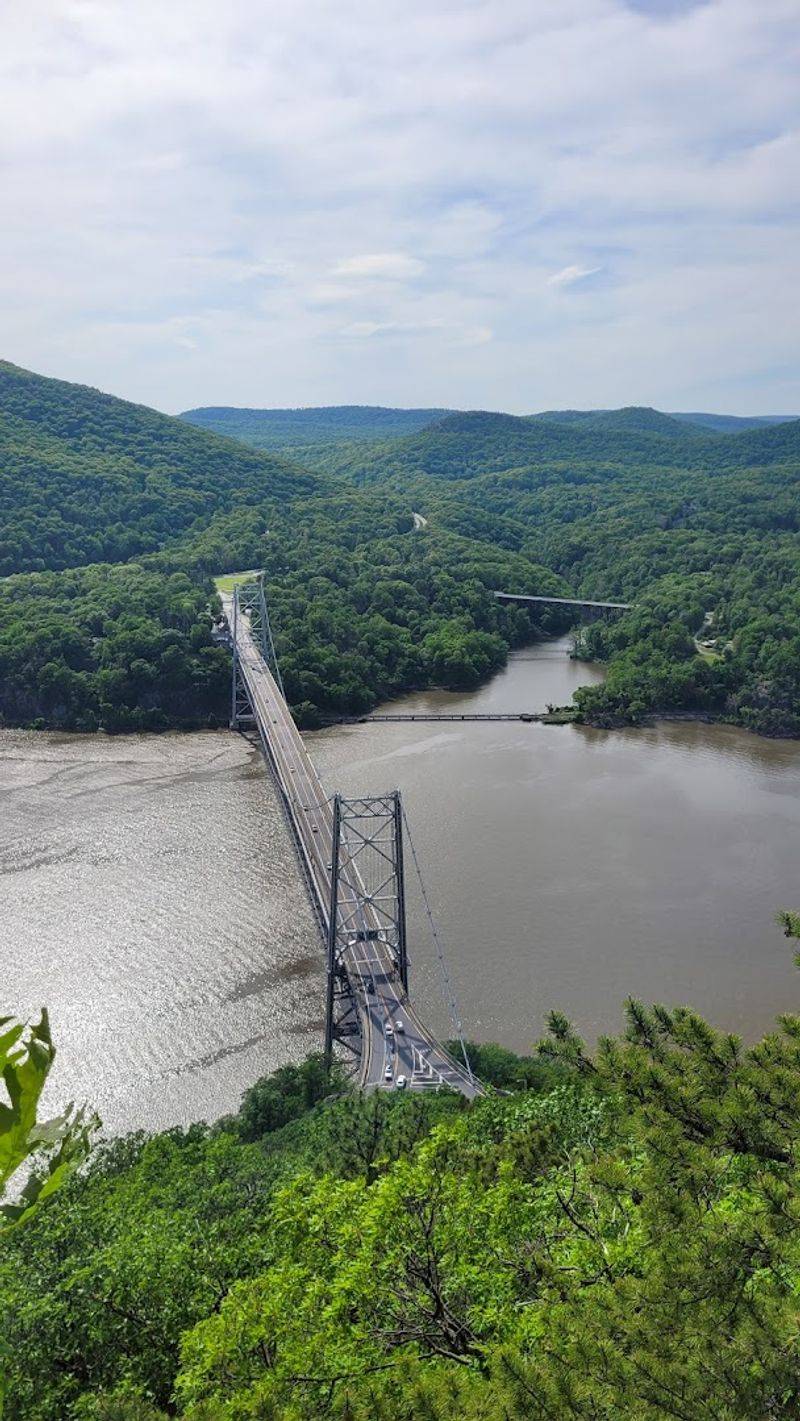
Bear Mountain Bridge does not exist in isolation. The surrounding landscape is dense with trails, state parkland, and natural features that reward anyone willing to spend more than a few minutes at the crossing.
Bear Mountain State Park occupies the western side of the bridge and offers a substantial network of hiking routes that range from accessible walks to more demanding ridge climbs.
Anthony’s Nose trail begins near the eastern end of the bridge and ascends to a ridge with broad views over the Hudson River and the surrounding highlands. The trail is popular among day hikers and delivers payoffs that feel proportional to the effort required.
On a clear day the bridge itself is visible from several points along the upper section of the route, providing a satisfying sense of perspective on the crossing you just made.
The broader Hudson Highlands region surrounds the bridge on all sides, and the combination of river, forest, and elevation makes the area one of the more complete outdoor destinations in the lower Hudson Valley. West Point sits nearby to the south, adding a layer of military and American history to what is already a landscape rich in geological and cultural significance.
A full day here rarely feels like enough.
Planning Your Visit To Bear Mountain Bridge
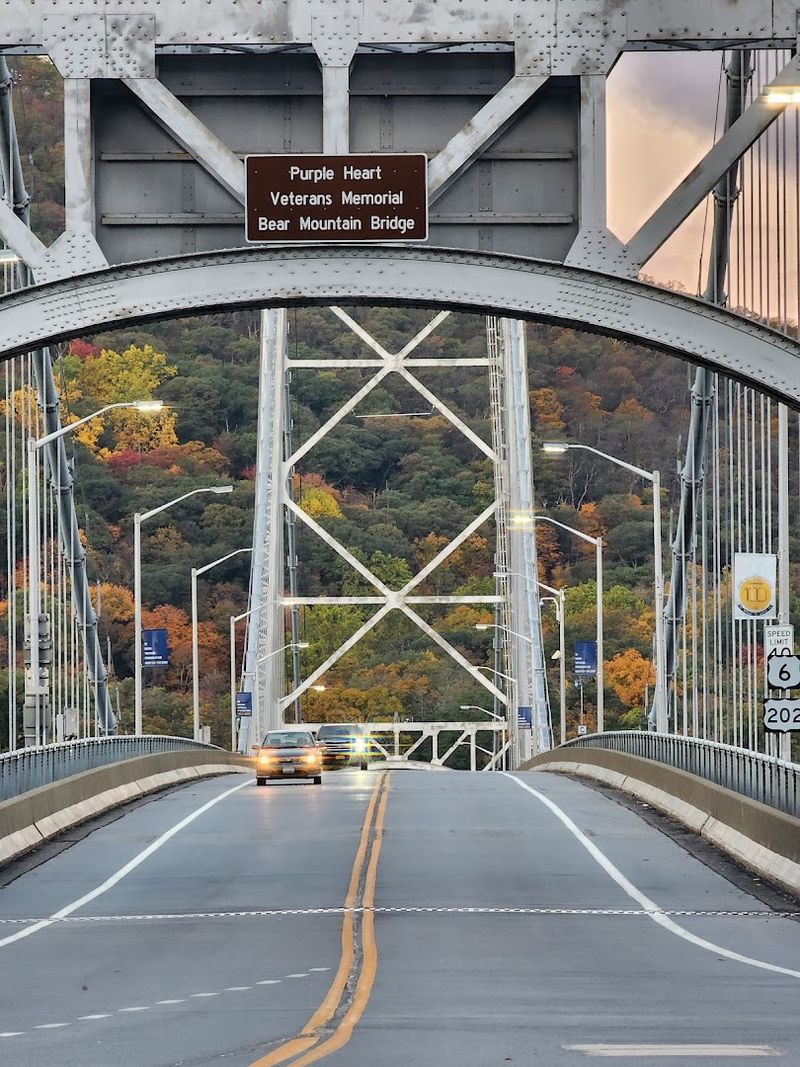
Getting to Bear Mountain Bridge is straightforward from most points in the New York metropolitan area. The bridge is located near Garrison, NY 10524, and is accessible via Route 9D on the eastern side and the Palisades Interstate Parkway on the western side.
Traffic on weekends during fall foliage season can be heavier than expected, so earlier departures tend to reward patience.
Parking near the eastern approach is available along the roadside, with enough space for visitors who want to walk the bridge rather than drive across it. The toll for eastbound vehicle crossings is currently $1.65, making it one of the most affordable scenic experiences in the Hudson Valley.
Westbound crossings are free of charge.
The bridge is open around the clock every day of the week, which gives visitors flexibility that many managed attractions cannot offer. Morning visits during autumn tend to combine the best light with the fullest foliage color and lighter foot traffic on the walkway.
For anyone planning a broader Hudson Valley itinerary, the bridge works well as either a starting point or a satisfying finale to a day that might also include Cold Spring, Bear Mountain State Park, or Perkins Memorial Tower. The combination never disappoints.