
This New York Deli Piles Its Pastrami Sandwich Sky High
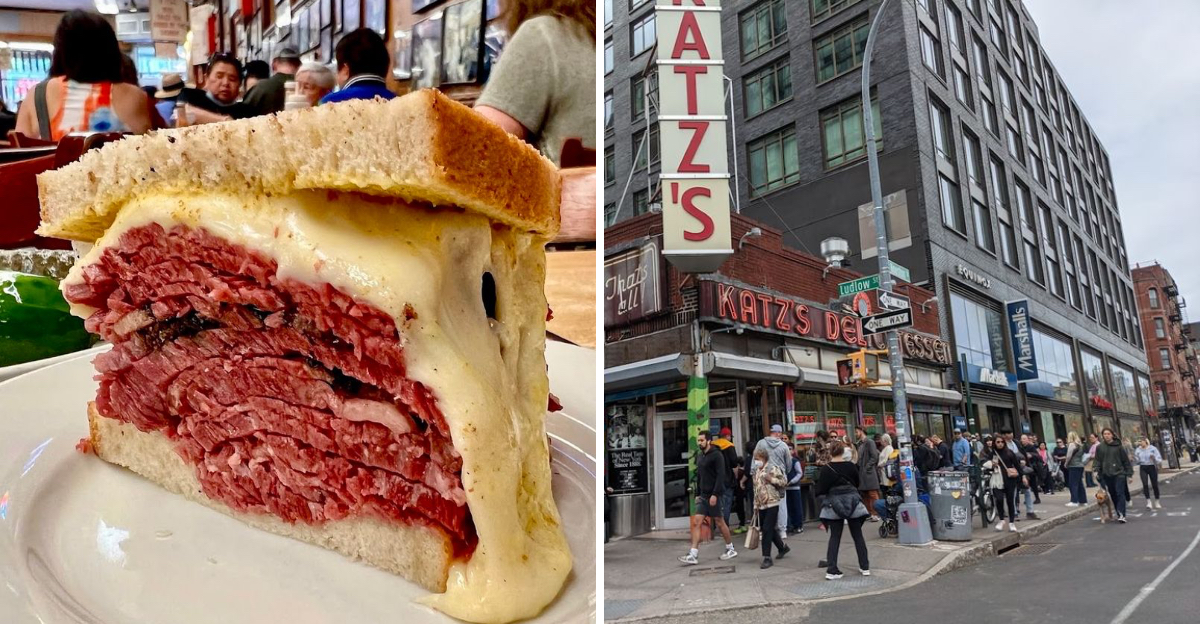
Picture a sandwich so tall it needs both hands and a strategy.
New York does not do subtlety when it comes to piling meat between bread, and this deli has been proving that point since the 1880s.
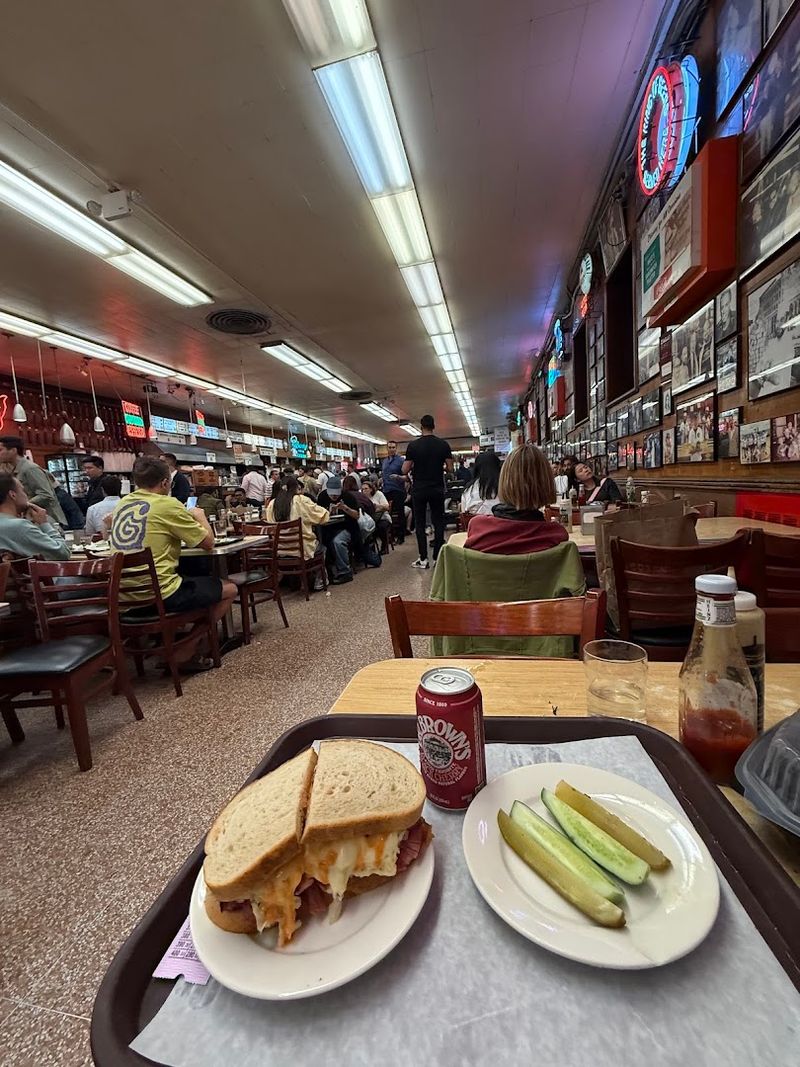
Noise hits first once you step inside, cutters calling out orders while trays clatter and strangers end up sharing tables like old friends.
A paper ticket lands in your palm before you even order, quietly tracking every bite of the visit.
Photographs of forgotten faces crowd every wall, watching over a counter that moves through a genuine fortune of cured meat each week.
New York built its appetite right here, one towering sandwich at a time. Curious how deep this story runs?
Keep this deli close for your next city wander.
A Deli That Has Outlasted Almost Everything
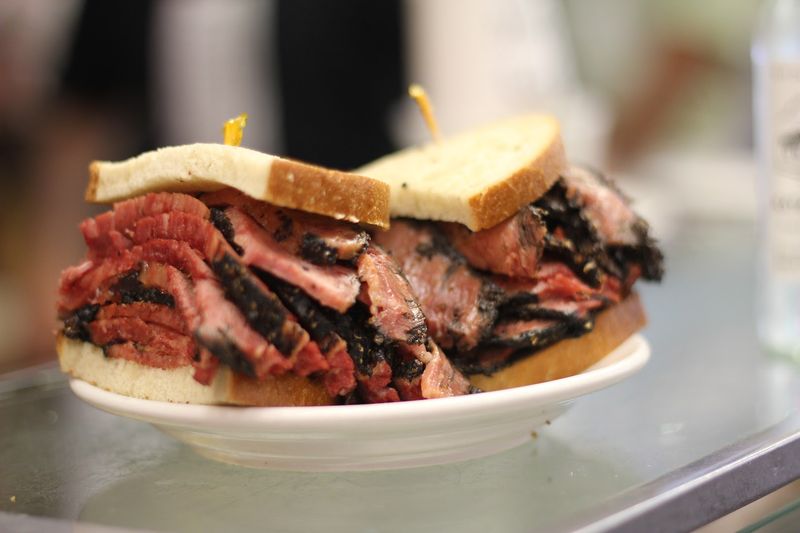
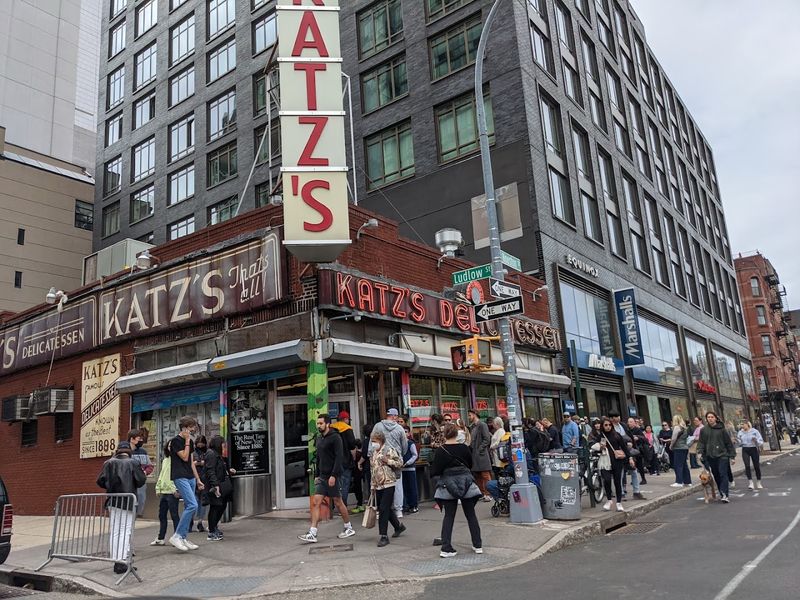
Over a century of serving sandwiches is not a small thing. Katz’s Delicatessen first opened in 1888, making it the oldest continuously operating deli in New York City.
That kind of staying power says everything about the food and the feeling of the place.
The Lower East Side has changed dramatically around it. Neighborhoods shift, restaurants close, trends come and go.
Katz’s keeps going, unchanged in the ways that matter most.
Generations of families have walked through those same doors. Immigrants, soldiers, city workers, and tourists have all shared space at its communal tables.
The deli has never tried to reinvent itself or chase a new audience. It simply keeps doing what it has always done, and people keep showing up for it.
The walls inside are covered in photographs of celebrities and everyday regulars alike. That mix of famous faces and familiar strangers gives the room a lived-in warmth that no amount of interior design could fake.
Katz’s Delicatessen sits at 205 E Houston St, New York, NY 10002.
The Pastrami That Became A New York Legend
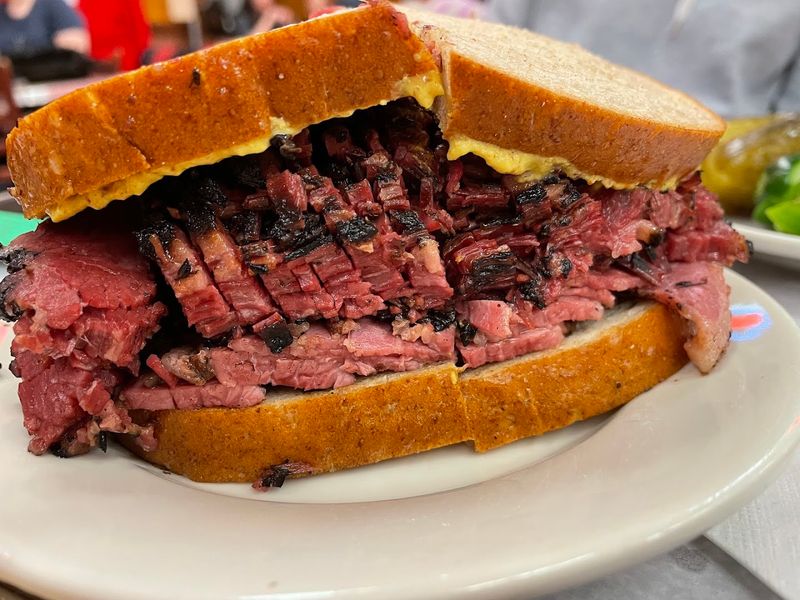
What does it take to build a legendary sandwich? At Katz’s, it starts with a navel cut of beef cured for up to 30 days in a spiced saltwater brine.
After curing, the meat is boiled and then steamed until it reaches that signature tenderness.
Each sandwich is hand-carved to order by skilled cutters working behind the counter. The portions are enormous, with roughly 16 ounces of smoky, juicy meat piled onto seedless rye bread.
A swipe of deli mustard and a side of crisp pickles complete the picture.
The classic pastrami on rye is the undisputed centerpiece of the entire menu. Around 15,000 pounds of pastrami move through the kitchen every single week.
That number alone tells you how seriously people take this sandwich.
Cutters often offer a sample slice while the sandwich is being built. That small gesture turns ordering into an experience rather than just a transaction.
The pastrami speaks for itself before the sandwich even reaches the table.
How The Ticket System Actually Works
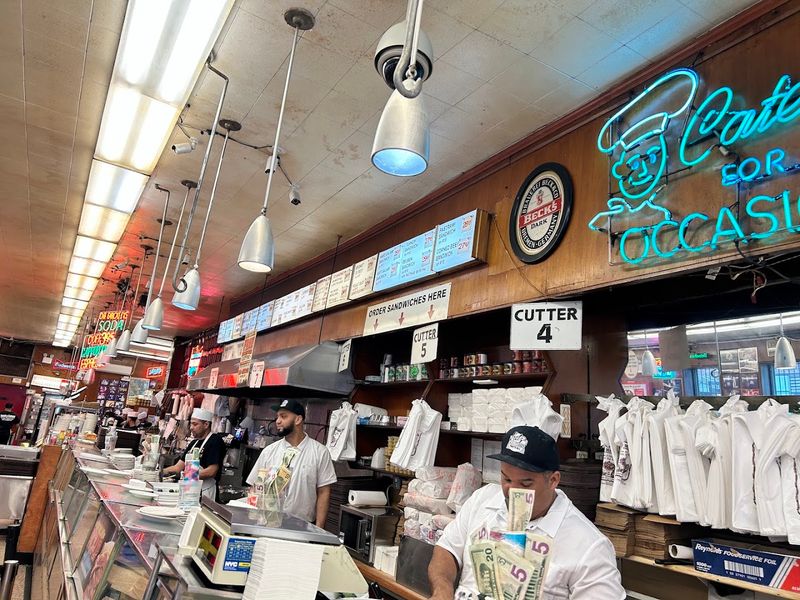
First-timers often look a little lost the moment they step inside. The ticket system at Katz’s is old-school and straightforward once understood, but it catches people off guard if they are not prepared for it.
Every person receives a paper ticket at the door. That ticket tracks every item ordered throughout the visit.
Losing it comes with a substantial replacement charge, so keeping it safe is non-negotiable.
Customers head to the long counter where cutters prepare sandwiches on the spot. The cutter marks the ticket for each item ordered.
At the end of the visit, the ticket goes to the cashier near the exit, where the total is settled.
Counter service is the most popular way to order. Some areas of the deli also offer traditional table service for those who prefer a slightly more relaxed pace.
Both cash and credit cards are accepted at payment. Understanding the flow before arriving makes the whole experience feel much smoother and more enjoyable from the start.
The Atmosphere Hits Different From Any Other Deli
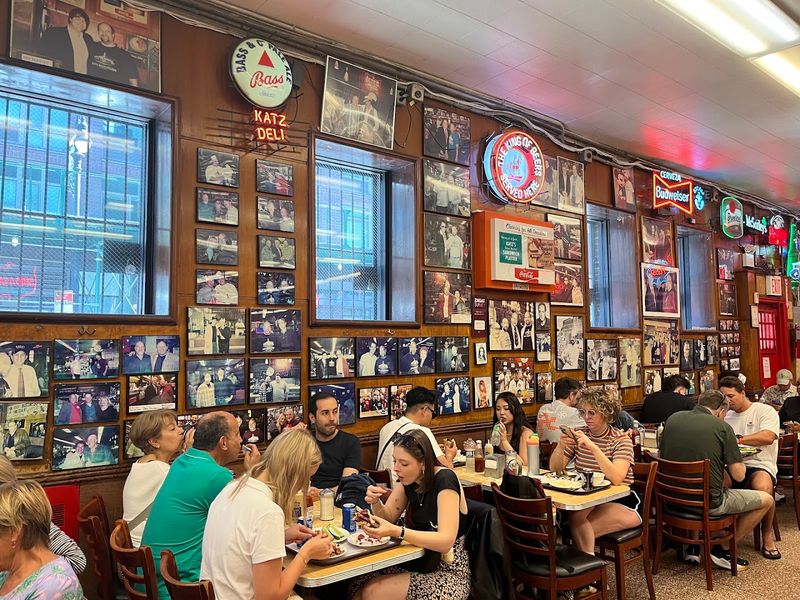
Loud, packed, and buzzing with energy, the inside of Katz’s feels like its own world. The noise level is part of the charm.
Conversations overlap, trays clatter, and cutters call out orders without missing a beat.
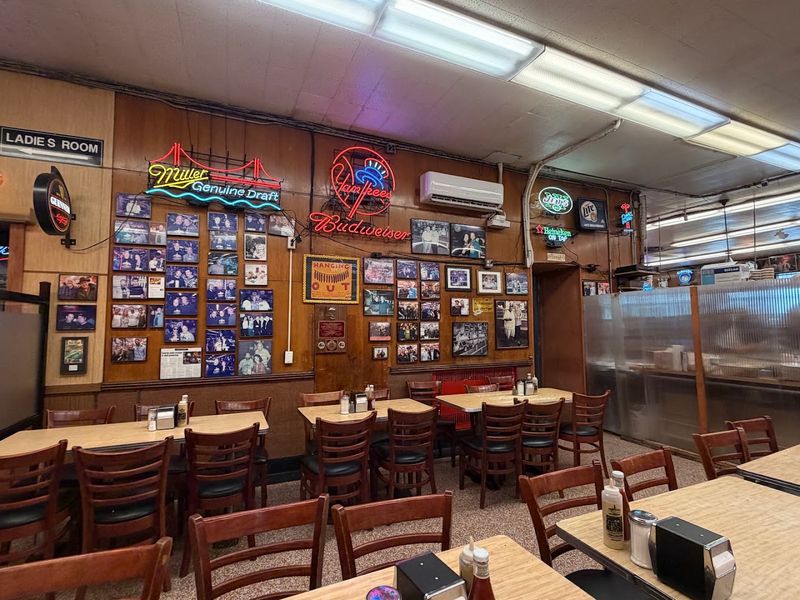
The walls are covered floor to ceiling with photographs. Celebrities, politicians, and regular customers from across the decades stare back from every direction.
That visual history makes the room feel like a living archive of New York City itself.
Seating is often communal, which means sharing a table with strangers is completely normal. The setup encourages a kind of easy, informal connection that feels rare in a city that can sometimes feel impersonal.
People tend to loosen up quickly once the food arrives.
Peak hours bring long lines that can stretch outside the door. Arriving before the midday rush or between lunch and dinner could help avoid the longest waits.
The staff manage the constant flow with a rhythm that looks chaotic from the outside but runs with surprising efficiency once watched closely.
Beyond Pastrami, The Menu Goes Deep
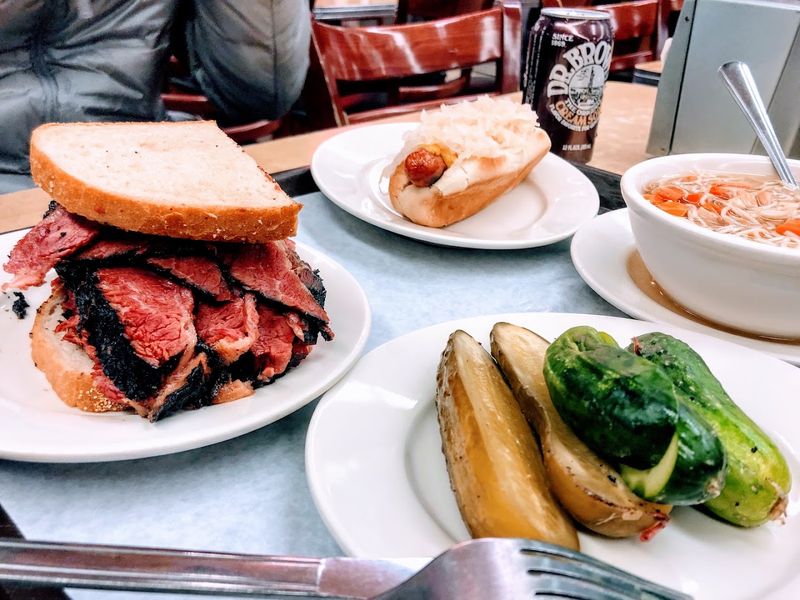
Pastrami gets most of the attention, but the menu at Katz’s runs much wider than one sandwich. The corned beef is slow-brined and hand-carved just like the pastrami, and it has its own devoted following among regulars.
The Reuben sandwich layers Swiss cheese, sauerkraut, and Russian dressing into something deeply satisfying. Matzo ball soup, often called Jewish penicillin, offers a hearty and comforting option that holds its own against any sandwich on the menu.
Traditional knishes, stuffed with potatoes and onions, give a nod to the deli’s deep roots in Jewish culinary tradition. Hot dogs, brisket sandwiches, turkey, and chopped liver round out the savory options.
Katz’s reportedly serves around 8,000 pounds of corned beef and 4,000 hot dogs every week.
Sides include creamy coleslaw, thick-cut steak fries, and potato salad. For dessert, New York cheesecake, babka, and black and white cookies are available.
Dr. Brown’s sodas, including Cream Soda, Cel-ray, and Black Cherry, are the classic drink pairings.
When Harry Met Sally Made This Table Famous
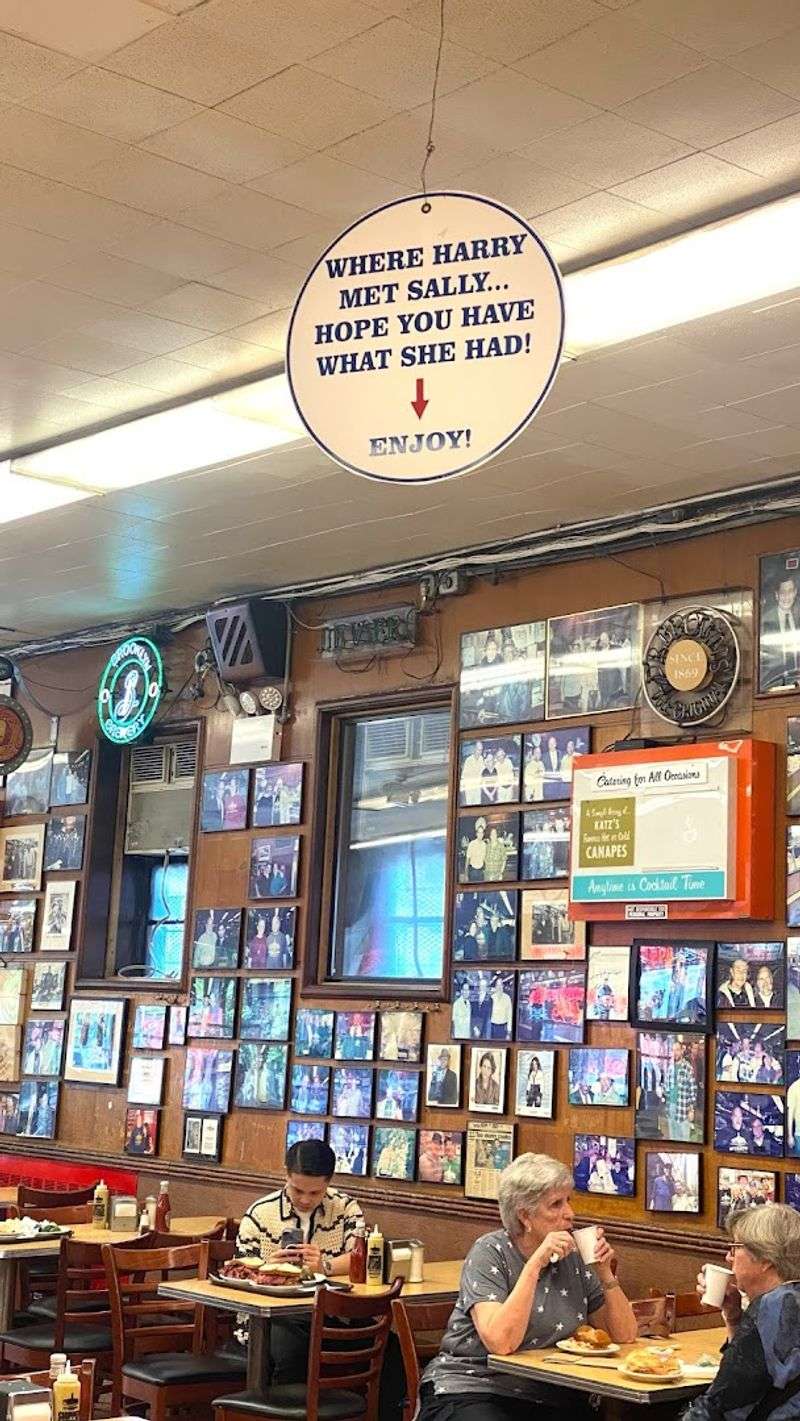
Few restaurants can claim a scene that became part of movie history. Katz’s Delicatessen earned that distinction in 1989 when the romantic comedy When Harry Met Sally filmed its most iconic moment right inside the dining room.
The scene became one of the most quoted and referenced moments in American film. It brought a whole new wave of visitors to the deli, many of whom came specifically to sit where it all happened.
Today, a sign marks the exact table where the scene was shot. Visitors regularly seek it out, snap a photo, and then order a sandwich to complete the experience.
The combination of great food and genuine cinematic history makes the visit feel layered in a way that is hard to replicate.
Katz’s has also appeared in numerous other films, television shows, and commercials over the decades. The deli did not need Hollywood to build its reputation, but the pop culture connection has added another dimension to what is already a deeply storied place in New York City.
Send A Salami To Your Boy In The Army
That slogan started during World War II and has stuck around ever since. Katz’s coined the phrase as a way for families to send comfort food to loved ones serving overseas.
It captured something real about the deli’s place in the lives of everyday New Yorkers.
The gesture was practical and deeply human. A cured salami could survive the journey and bring a taste of home to someone far away.
It turned food into a form of connection across distance and hardship.
That history is woven into the identity of the deli in a way that goes beyond marketing. Katz’s has always been a gathering place for communities navigating real life, whether that meant feeding immigrant families, fueling city workers, or offering a familiar meal to soldiers returning home.
The slogan still appears in the deli today as a reminder of that wartime chapter. It is one of those small details that transforms a restaurant into something more like a neighborhood institution with a memory, a conscience, and a genuinely long view of what it means to feed people.
The Ludlow Room Is Open Again After Decades
Hidden in plain sight for over 70 years, The Ludlow Room is one of the more surprising stories connected to Katz’s Delicatessen. The space had been closed to the public since 1949, functioning as an enormous walk-in refrigerator to support the deli’s massive demand for cured meats.
The room has since been thoughtfully restored to reflect its original character. Original tin ceilings and period-inspired lighting give the space a warm, textured quality that feels connected to the deli’s long past.
The same freight scale used to weigh meat for eight decades remains in the room as a piece of living history.
With 68 seats, The Ludlow Room adds meaningful capacity during the deli’s busiest hours. It also functions as a private event space, where an on-site cutter can hand-slice meats for guests during special gatherings.
The reopening offers visitors something beyond a meal. It is a chance to sit inside a room that was sealed off from public life for generations, now restored and breathing again as part of one of New York’s most enduring dining institutions.
Tips That Make The Visit Go Much Smoother
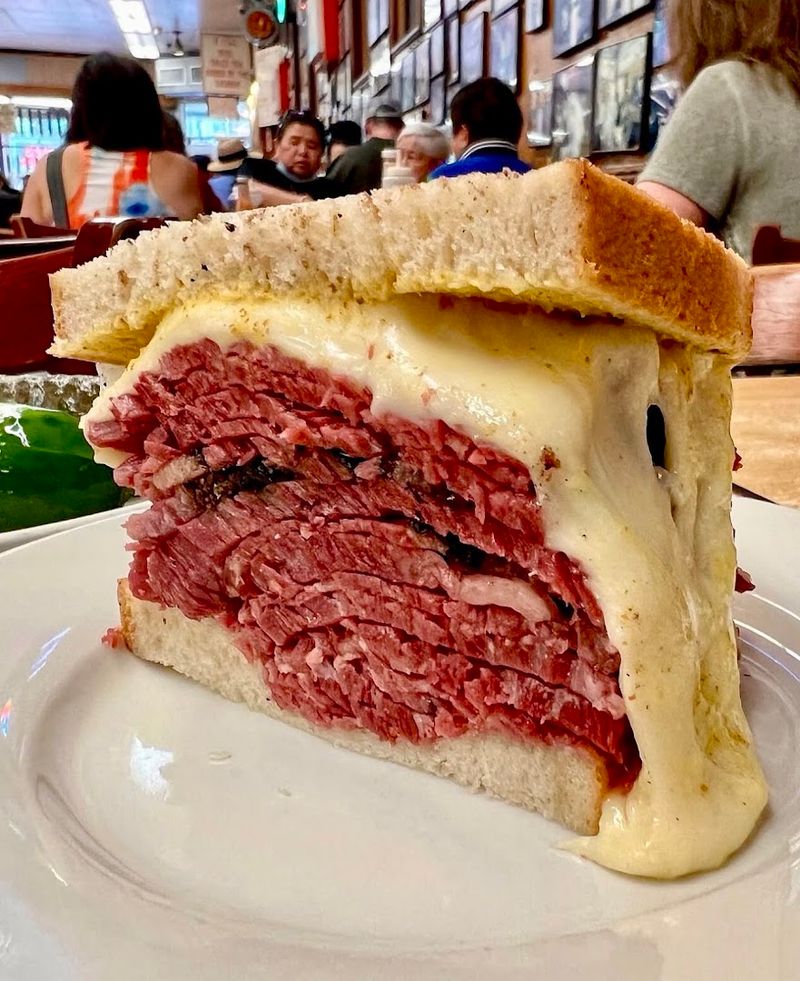
Knowing a few basics before walking through the door can completely change how the visit feels. The sandwiches at Katz’s are famously large, and one portion could comfortably serve two people.
Arriving with that in mind helps avoid over-ordering and keeps the experience enjoyable.
The paper ticket received at the entrance must be kept at all times. It is needed to exit the deli, even if nothing is purchased.
Losing it results in a substantial replacement charge, so tucking it somewhere safe immediately is worth doing.
Tipping the cutters is a well-established custom at Katz’s. These are the people hand-carving the meat and often offering a sample slice while the sandwich is prepared.
The gesture is both appreciated and expected in a place where counter service is central to the whole experience.
Both cash and credit cards are accepted. Arriving during off-peak hours, such as early in the day or between the lunch and dinner rush, could mean shorter lines and a more relaxed pace.
Coming prepared makes the organized chaos feel a lot more like fun.
Why People Keep Coming Back Year After Year
Repeat visits to Katz’s are not unusual. Many people who grew up going with their families now bring their own children.
The deli has a way of anchoring itself in memory, connecting different phases of a person’s life through the same food in the same room.
The consistency is a big part of it. The pastrami tastes the same as it always has because the process has not changed.
Hand-carving, slow curing, steaming, seedless rye, deli mustard, and crisp pickles on the side. That reliability is rare and genuinely valued by people who return often.
First-time visitors tend to arrive skeptical and leave converted. The sheer size of the sandwiches surprises almost everyone.
The energy of the room, the smell of the meat, and the rhythm of the cutters working the counter all add up to something that is hard to describe until experienced directly.
Katz’s is not trying to be the trendiest spot in New York. It is simply being exactly what it has always been, and that quiet confidence is perhaps the most compelling reason people return again and again.